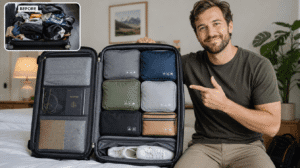
You open your suitcase on day three of your trip. Everything is a mess. You can’t find anything. Your clean clothes are mixed with dirty ones. Your socks are scattered everywhere. You end up wearing the same outfit twice because you can’t locate anything else.
This happens because you just threw stuff into your luggage without any system. No organization. No structure. Just random items shoved into available space.
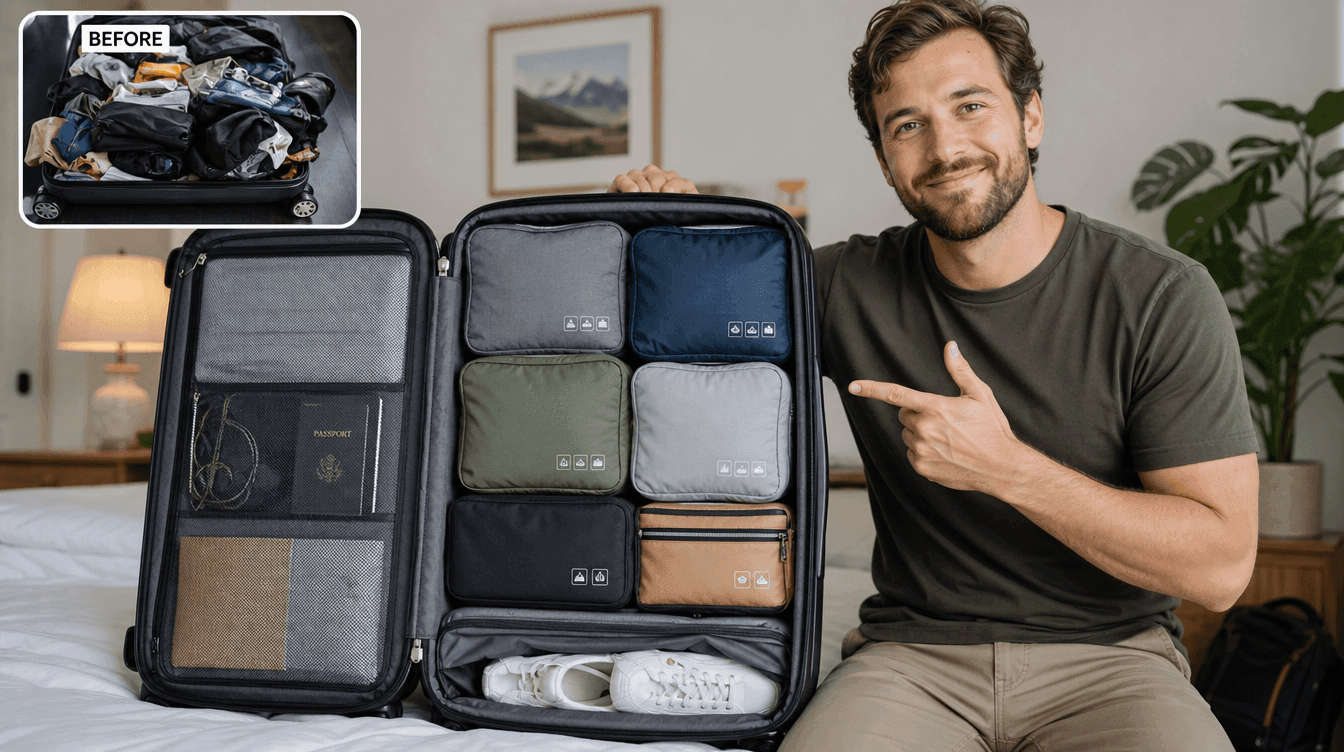
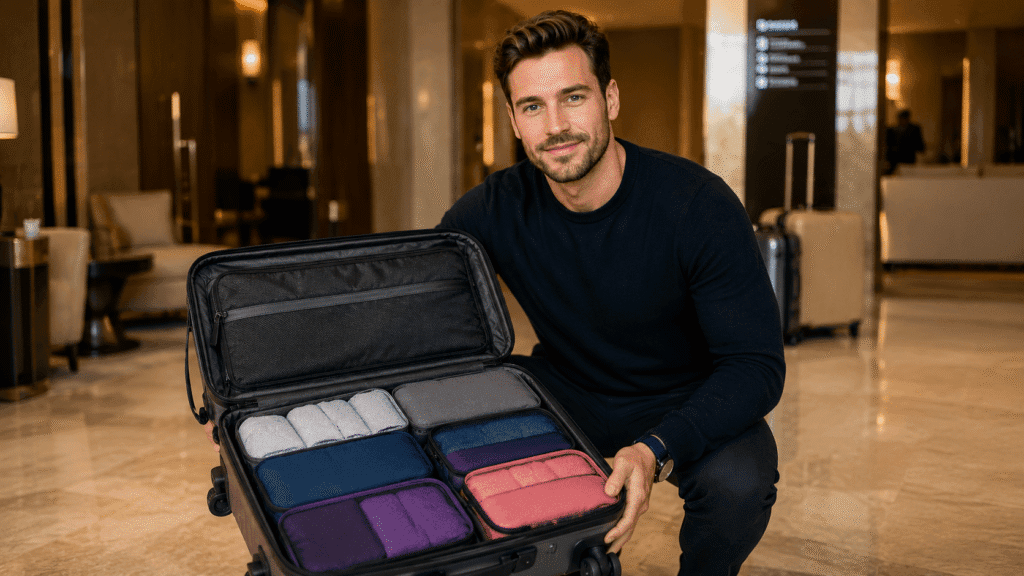
Packing cubes solve this completely. They’re small fabric organizers that keep your clothes separated and compact. Everything has a place. You can see what you have. You find what you need instantly.
The problem is that most packing cubes are bulky. They take up space. They defeat the purpose of traveling light. You’re supposed to be packing minimal stuff but you’re spending half your luggage on organization.
Minimalist packing cubes are different. They’re thin, lightweight, and designed specifically to fit more stuff into less space. They compress what you pack. They organize it efficiently.
I’ve tested probably twenty different packing cube sets. Some are too thick and waste space. Some don’t compress anything. Some fall apart after one trip. Some are so expensive they cost more than your entire luggage.
I’m going to walk you through what makes a good packing cube system, which ones actually work for minimalist travel, and how to use them so you pack fifty percent less stuff while staying perfectly organized.
Understanding Packing Cubes and Compression Systems
Before we talk about specific products, let’s understand what you’re actually buying.
What Are Packing Cubes
Packing cubes are fabric containers that compress your clothes into organized blocks. They’re not magic. They don’t miraculously make things smaller.
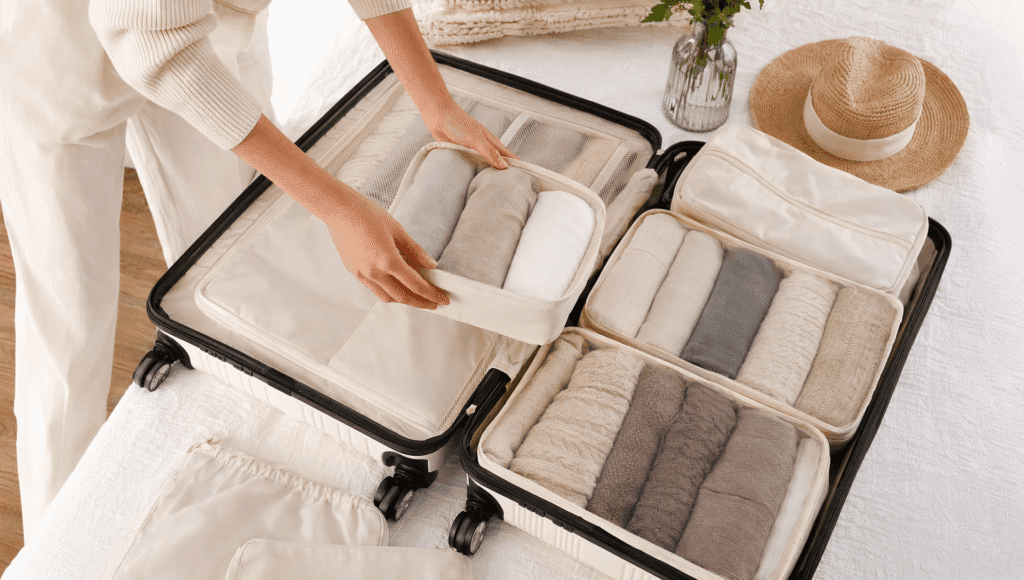
What they do is organize your clothes into categories. You have a cube for shirts. One for pants. One for underwear. Everything stays separated and accessible.
When you pack without cubes, your clothes spread out. They take up space inefficiently. Packing cubes contain your clothes so they take up less total space in your luggage.
Compression vs Non-Compression Cubes
Regular packing cubes just organize. Compression packing cubes also compress. They have zippers or vacuum sealing that squeezes air out of your clothes.
Compression cubes save significantly more space. They’re better for minimalist packing when you want to fit more into less luggage.
Non-compression cubes are lighter and thinner. They take up less space themselves. This matters if you’re already packing minimal stuff.
For minimalist travel, you want thin non-compression cubes. They stay lightweight and don’t add bulk to your luggage.
Size and Weight Matter
Cheap packing cubes are thick and heavy. They add two pounds to your luggage. That defeats the purpose of minimalist packing.
Quality minimalist cubes are thin fabric. They weigh almost nothing. The entire set weighs less than one pound.
Size matters too. You want cubes sized to actual clothing categories. Not massive cubes that force you to throw unrelated items together. This is especially true when figuring out how to pack for tropical Thailand, where lightweight, breathable clothes require less total volume
What Makes a Good Minimalist Packing Cube System
Before we look at specific products, here’s what separates good systems from bad ones.
Minimal Weight
A good minimalist cube set weighs less than one pound total. Each cube is thin fabric, not padded or thick material.
You’re trying to pack light. Adding heavy organizers defeats that purpose. You want cubes that help without adding weight.
Space Efficiency
The cubes themselves should take up minimal space. Thin walls matter. Flattening design matters.
You want cubes that compress your clothes without being thick organizers that take up space just sitting in your luggage.
Durable Fabric
Minimalist doesn’t mean cheap. The fabric needs to survive multiple trips without ripping or degrading.
Quality fabric holds up. Poor fabric tears after a few uses and then you’re replacing them.
Good Zippers
Zippers need to work smoothly. They can’t jam or break. If a zipper breaks mid-trip, your organized system falls apart.
Quality zippers last. Cheap zippers fail and ruin everything.
Logical Sizes
The set should come in sizes that match actual packing needs. Small for underwear and socks. Medium for shirts. Large for pants.
Sets with illogical sizes force you to overstuff some cubes and underutilize others. This logic applies to your entire packing list; keeping toiletries compact with options like the best travel size deodorant ensures you don’t waste precious space outside your cubes.
Washable
You’re going to touch dirty clothes. The cubes get sweaty. They need to be washable.
Good cubes can be hand washed or thrown in a washing machine. Cheap cubes fall apart when wet.
Best Packing Cubes and Organizers for Minimalist Travel
Here are the systems that actually work for packing light.
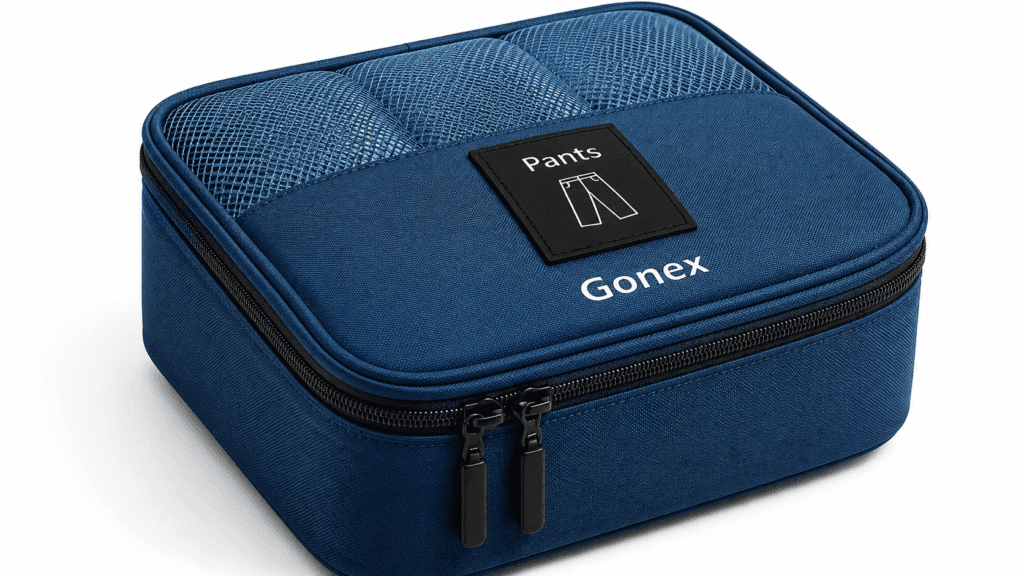
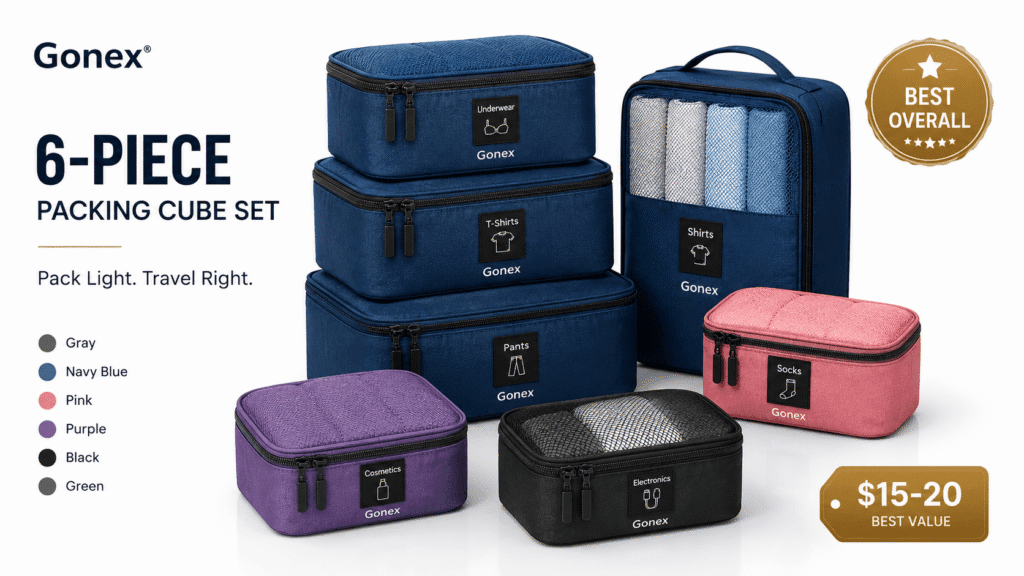
BEST OVERALL: Gonex Packing Cubes Set (6-Piece)
This is the gold standard for minimalist travelers. It works perfectly for light packing.
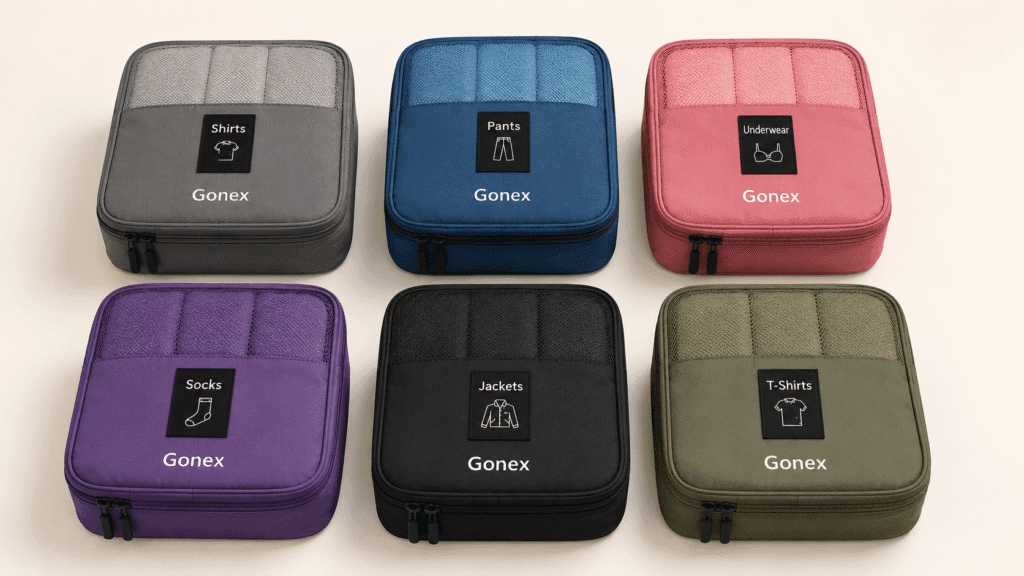
The set comes with six cubes in different sizes. Small for socks and underwear. Medium for t-shirts and underwear. Large for pants and sweaters. Extra large for heavier items. Plus two mesh bags for shoes and accessories.
The fabric is incredibly thin. You can barely feel it. Each cube weighs almost nothing. The entire six-piece set weighs less than eight ounces.
The zippers are smooth and durable. They work easily. They don’t jam. They’ve survived dozens of trips without issues.
The colors are distinct. Gray, blue, pink, purple, black, green. You instantly know which cube is which. No hunting through identical looking organizers.
Why it’s the best: Lightweight, durable, logical sizes, washable, affordable. This is exactly what minimalist travelers need.
Real downside: The cubes don’t compress. They organize but don’t squeeze air out. But for minimalist packing, that’s actually better because you’re using less stuff anyway.
Best for: Budget-conscious minimalist travelers. Anyone flying regularly. People who want simple organization without complexity.
BEST COMPRESSION OPTION: Eagle Creek Pack-It System
This is the best if you want both compression and minimalist efficiency.
The cubes are thin despite having compression zippers. They compress your clothes remarkably well. You get about thirty percent more space than regular cubes.
The zippers are exceptional. They’re industry-standard quality. They last through years of travel.
The fabric is durable but lightweight. It feels premium without feeling heavy. The entire system stays minimal.
Color-coded cubes help with organization. Different sizes for different clothing categories.
Why it works: It compresses without adding bulk. The zippers are reliable. The fabric is quality. It’s minimalist-friendly compression. If you’re using these to pack for long-haul international flights, you might also want to read our strategies on how to overcome jet lag to stay sharp when you land.”
Real downside: It’s more expensive than basic cubes. You’re paying for compression quality.
Best for: Frequent travelers who want compression but maintain light packing. People willing to invest in quality.
BEST BUDGET OPTION: Amazon Basics Packing Cubes
This is the cheapest option that actually works.
Five-piece set at very low price point. Small, medium, and large cubes plus two mesh bags.
The fabric is thin and lightweight. The zippers work fine. They’re not premium but they function.
Colors are distinct and helpful for organization.
Why it works: You get working packing cubes without spending much money. The quality is acceptable for the price.
Real downside: The zippers aren’t as smooth as premium options. The fabric is thinner, so it feels less durable. But for the price, it’s surprisingly reliable.
Best for: Budget travelers. First-time packing cube users who want to test the system before investing.
BEST ULTRA-MINIMALIST: Sea to Summit Ultra-Sil Packing Cubes
These are the lightest packing cubes available. They’re designed specifically for ultralight travel.
The fabric is so thin you can almost see through it. The weight is almost nothing. An entire set weighs about three ounces.
They compress air better than regular cubes despite being thinner. The material is special.
They’re washable and durable. They last despite being so lightweight.
Why it works: If you’re doing ultralight travel, this is it. Nothing lighter exists. Nothing compresses more efficiently at this weight.
Real downside: They’re expensive for what they are. You’re paying for the premium lightweight material.
Best for: Ultralight backpackers. Digital nomads traveling with one bag. People who’ve already optimized to the extreme.
BEST ORGANIZATIONAL SYSTEM: Coogli Packing Cubes 8-Piece
This is the most comprehensive system. More cubes means more organizational categories.
Eight different sized cubes plus two mesh bags. You can organize by clothing type, activity level, or any system you want.
The fabric is quality. The zippers are smooth. Everything is well-made.
The set is still lightweight despite having eight pieces. It doesn’t add unnecessary bulk.
Color-coding helps track which cube is which. Labeling system is intuitive.
Why it works: Having more cubes means better organization. You never overstuff anything. Everything has dedicated space.
Real downside: Eight cubes can be overkill for minimalist packing. You might have empty cubes if you’re packing very light. It’s designed for people packing moderate amounts of stuff.
Best for: Moderate travelers who want excellent organization. People doing trips longer than one week. Those who want separate cubes for different activities.
BEST HYBRID SYSTEM: Bagsmart Packing Cubes with Shoe Compartment
This combines cubes with a dedicated shoe organizer.
Four packing cubes plus a separate shoe bag designed to fit in luggage side pocket.
The shoe bag is genius. It keeps shoes separate from clothes. It prevents shoe smell from transferring to your stuff.
The packing cubes are thin and lightweight. The shoe bag is durable.
Everything is color-coded and organized. Setup is intuitive.
Why it works: Shoes are a packing problem. Most systems don’t address it. This does through a dedicated shoe organizer.
Real downside: The shoe bag adds a separate component. It’s one more thing to manage. But if shoes are ruining your packing, this solves it.
Best for: People with multiple shoes. Anyone whose shoes smell. Those who want separation between footwear and clothing.
BEST FLAT PACKING: Compression Packing Cube Flat Organizer Bags
These are flat instead of boxy. They look like large zippered pouches.
They compress significantly. You roll clothes, put them in the flat bag, and zip to compress.
They’re incredibly thin when not full. They take up minimal space in your luggage.
The fabric is durable. The zippers are quality.
Why it works: Flat design takes up less space than boxy cubes. They compress well. They’re minimalist-friendly.
Real downside: Flat design means less organizational separation. Everything goes in together and gets compressed. You can’t easily access items without unzipping.
Best for: Minimalist travelers who prioritize space savings over organization. Digital nomads with tiny luggage. People doing short trips with minimal items.
How to Use Packing Cubes for Minimalist Travel
Using cubes properly makes your minimalist packing actually work.
Organize by Category Not Color
Organize by clothing type. One cube for shirts. One for pants. One for underwear.
Don’t organize by color or outfit. That defeats the minimalist purpose. You want functional organization.
Compress as You Pack
Don’t fill cubes then compress. Compress as you add items.
Fold items, place in cube, add more, compress. Keep compressing throughout. This maximizes space efficiency.
Keep a Dirty Bag Separate
Have one cube dedicated to dirty clothes. Separate from clean items.
When you wear something, it goes immediately in the dirty cube. You always know what’s clean and what’s not.
Use Mesh Bags for Small Items
Socks, underwear, and accessories go in mesh bags. You can see what’s inside without opening.
This prevents small items from getting lost in larger cubes.
Label Everything
Use tags or markers to label what’s in each cube. Even color-coded cubes need labels.
When you’re tired and searching for something, labels help you find it instantly.
Pack Only What Fits in Cubes
If something doesn’t fit in your cube system, you’re overpacking.
Your cube system is your packing limit. Don’t exceed it. This forces minimalist packing discipline.
Packing Cubes for Different Trip Types
Different trip types need different approaches.
Weekend Trip (One Small Bag)
Use two small cubes. One for clothes. One for underwear and socks.
Skip the compression. Keep it simple and lightweight.
One-Week Trip (Carry-On Luggage)
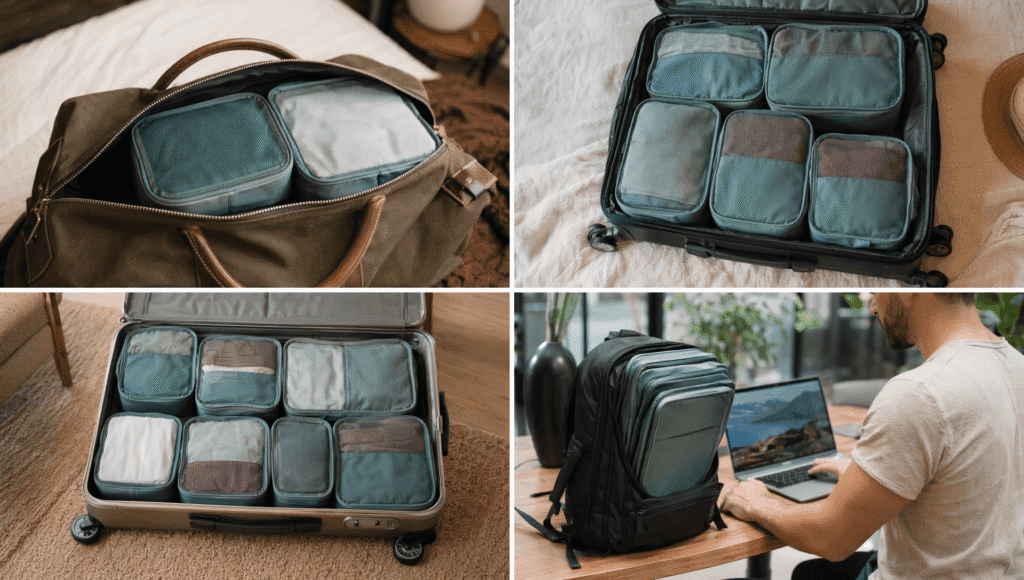
Use the basic five to six-piece set. One small cube for underwear and socks. Two medium cubes for shirts. One large cube for pants and sweaters.
You’re using most of your system. Everything has space.
Two-Week Trip (Checked Luggage)
Use the eight-piece comprehensive set. More cubes mean more categories.
You can have dedicated cubes for different types of items. Better organization for extended trips.
Digital Nomad (Permanent Packing)
Use the flat compression system. You want maximum space efficiency.
You need to repack constantly. Flat organizers compress better than boxy cubes.
Business Travel (Professional Look)
Use neutral-colored cubes. Black, gray, navy. Avoid bright colors.
Keep organization minimal and professional. You want clean efficiency, not colorful organization.
Quick Comparison Table
| System | Weight | Price | Compression | Organization | Best For |
|---|---|---|---|---|---|
| Gonex | 8 oz | $15-20 | No | Good | Budget minimalist |
| Eagle Creek | 12 oz | $50-70 | Yes | Excellent | Quality-focused |
| Amazon Basics | 10 oz | $10-15 | No | Good | Budget conscious |
| Sea to Summit | 3 oz | $40-50 | Yes | Good | Ultralight |
| Coogli 8-Piece | 14 oz | $25-35 | No | Excellent | Extended trips |
| Bagsmart | 11 oz | $20-30 | No | Excellent | Shoe management |
| Flat Compression | 9 oz | $20-25 | Yes | Minimal | Space saving |
Practical Packing Cube Tips
These tips make your system work better.
Roll Don’t Fold
Rolling clothes saves more space than folding. Especially in compression cubes.
Roll tightly and place in cubes. This maximizes space efficiency.
Remove Air Pockets
When packing cubes, deliberately remove air. Push out gaps.
This increases how much fits. It’s the difference between okay and great packing efficiency.
Keep Cubes Accessible
Pack frequently accessed items in cubes you can reach easily.
Put underwear and socks in a top cube. Put heavy items in bottom cubes.
Color Code Strategically
Use colors to indicate content. Black for pants. Blue for shirts. Pink for underwear.
This takes seconds to develop a system but saves time throughout your trip.
Wash Cubes Regularly
Packing cubes touch dirty clothes. Sweat gets on them. Wash them.
Hand wash or machine wash depending on fabric. Keep them clean so they last.
Replace When Worn
Packing cubes don’t last forever. Zippers eventually fail. Fabric eventually tears.
When your cubes are damaged, replace them. Don’t try to make broken cubes work.
FAQs
Do Packing Cubes Really Save Space
Yes, but not as much as you think. They save about fifteen to twenty percent space compared to loose packing.
Compression cubes save about thirty percent. The biggest space savings come from packing less stuff, not from cubes.
Are Packing Cubes Worth It
Yes. The space savings are minimal but the organization benefits are huge.
You find what you need instantly. Clothes stay separated from dirty items. Everything is accessible. Organization is worth the small weight.
Can You Use Packing Cubes in Carry-On Bags
Absolutely. Packing cubes work in any luggage. They’re especially useful in carry-on because space is tighter.
Do Packing Cubes Help With Wrinkles
Minimally. Compression cubes slightly reduce wrinkles. Regular cubes don’t help with wrinkles at all.
If wrinkles matter, pack pants separately from shirts. Use packing cubes for organization, not wrinkle prevention.
How Many Packing Cubes Do I Actually Need
For minimalist travel, you need three to five cubes. One for underwear and socks. One to three for clothes depending on trip length.
More cubes help with organization but add weight. Start with a basic set and add if needed.
What’s the Best Way to Organize Packing Cubes
Organize by clothing category. Underwear and socks together. Shirts together. Pants together.
Never organize by outfit or color. That defeats the minimalist purpose. You want functional categories.
The Bottom Line
Packing cubes make minimalist travel actually work. They keep you organized without adding bulk.
Gonex is the best overall. Affordable, lightweight, functional. It’s what you need.
Eagle Creek is best if you want compression. Sea to Summit is best for ultralight. Coogli is best for longer trips.
Pick based on your trip type. Test at home first. Use them to stay organized the entire trip.
You’ll pack less, find what you need instantly, and actually enjoy your minimalist travel experience.