Last updated: 2 November 2026
Short Answer
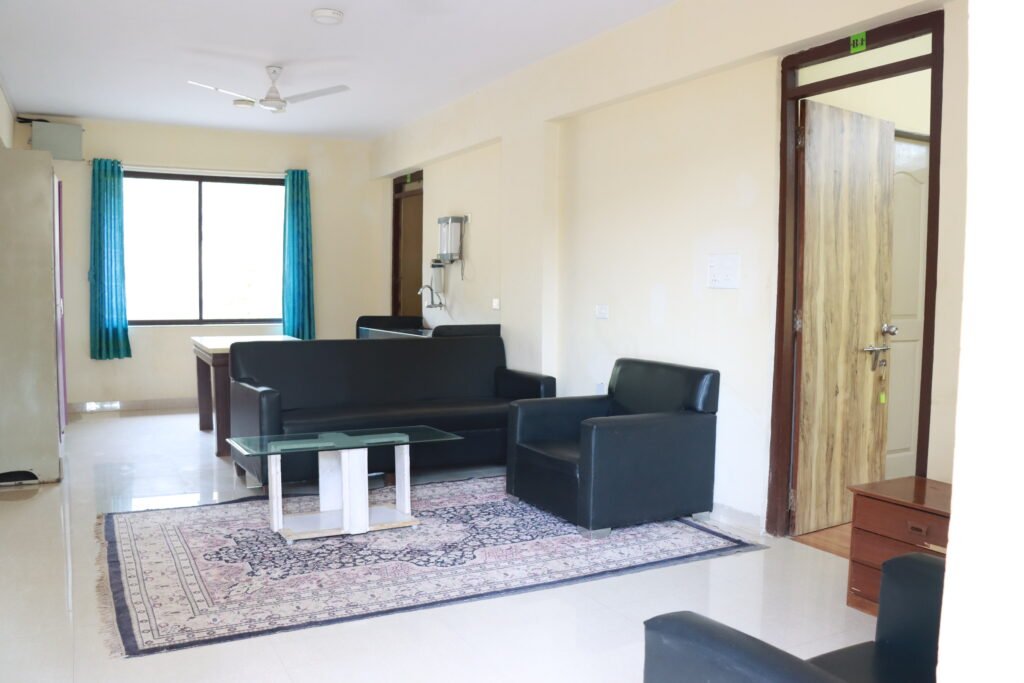
A budget trip to Gilgit-Baltistan is realistic, but only if you define budget honestly. The cheapest stays are family guesthouses, small hostels and homestays in towns and villages, not hotels, and the saving comes from simpler rooms, shared bathrooms and home-cooked meals rather than from a bargain hotel. Plan on guesthouse prices in the lower tier, carry cash, book the first night in each valley ahead, and spend the money you save on a reliable driver and on food, not on the cheapest room in the worst location. A budget stay that is clean, warm and well located is good value. A budget stay that is cold, far from transport and without hot water is not cheap at all, because it costs you the next day’s sightseeing.
What does “budget” actually mean here?
Budget in Gilgit-Baltistan does not mean a fixed dollar figure that holds across the region, because prices vary by valley, season and what is included. Use tiers instead. The lower tier is a simple guesthouse or hostel bed or room in a town or village, usually with a shared bathroom and breakfast either included or available for a small extra charge. The middle tier is a comfortable guesthouse or small hotel with a private bathroom, heating in winter and a restaurant. The upper tier is a well-known hotel with full facilities. This guide covers the lower tier, and the boundary between lower and middle tier is where most budget travellers should aim: a private room in a good guesthouse, rather than the absolute cheapest bed available. No specific prices are quoted here, deliberately, because rates change by season and a stale price misleads more than no price. Confirm the total price, including breakfast and heating, before you book.
Where do budget travellers actually sleep?
| Stay type | Where you find it | What you get | Best for |
|---|---|---|---|
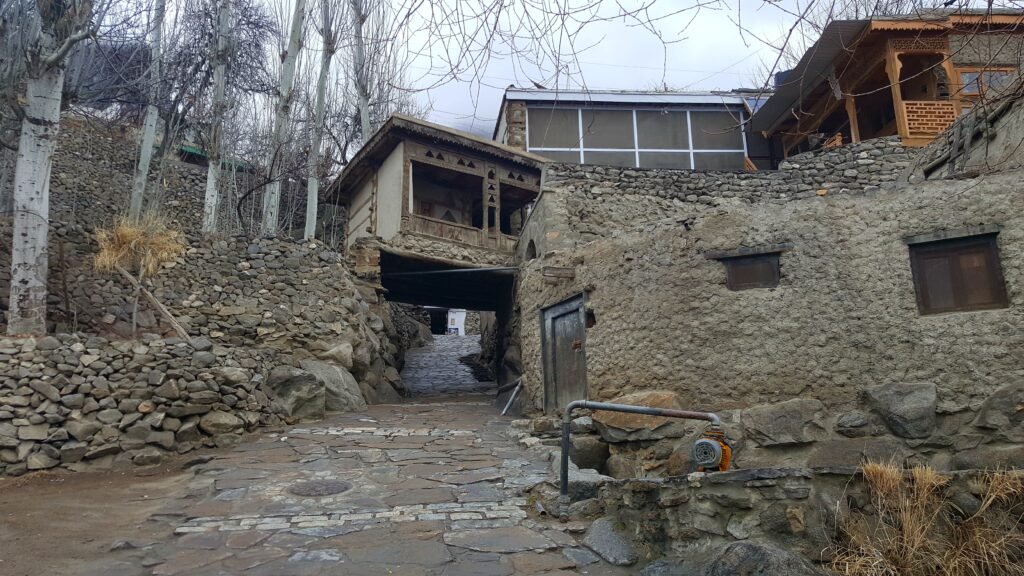
| Family guesthouse | Every valley town and many villages: Karimabad, Aliabad, Gulmit, Passu, Skardu, Gilgit, Phander, Khaplu | A private room, home-cooked meals, a host who knows the valley | Most budget travellers; the default good choice |
| Hostel or shared room | Mainly Karimabad, Gilgit and Skardu, with a few in Hunza and Baltistan towns | A bed in a shared room, shared bathrooms, a common area | Solo travellers and backpackers who want company |
| Homestay | Smaller villages, arranged through a local operator or host | A room in a family home, meals with the family, village life | Travellers who want culture, not just a bed |
| Budget hotel | Gilgit, Skardu and Karimabad town centres | A private room and bathroom, simpler than a large hotel | A transit night, or a rest day with a restaurant nearby |
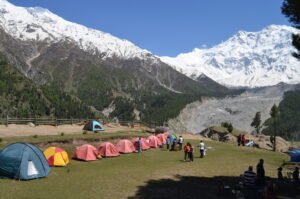
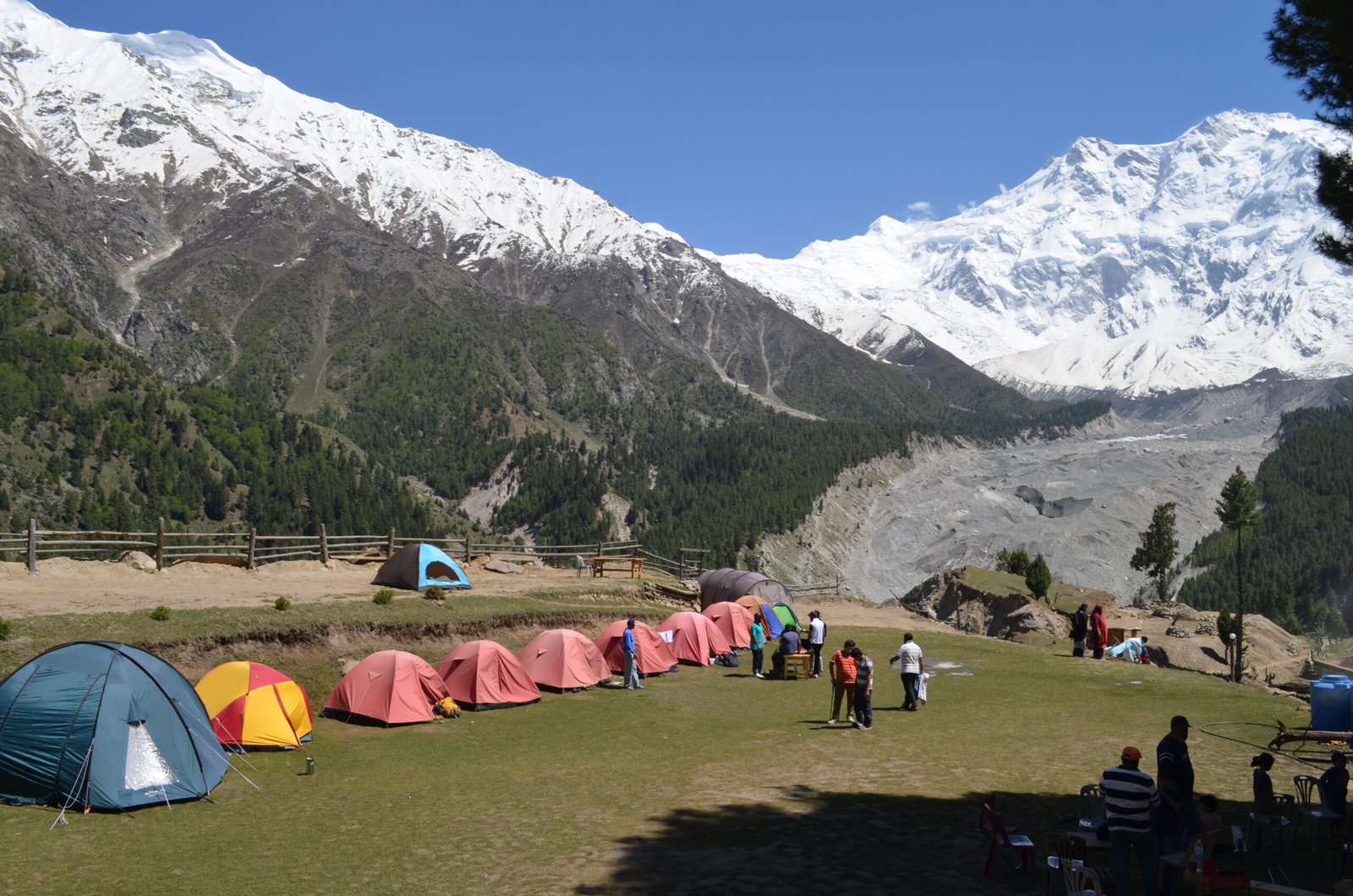
| Trekking lodge or camp | Trailheads and trekking routes, such as Fairy Meadows | A bed or tent on the route, meals arranged by the camp | Trekkers, not general budget travellers |
Hostels are the exception to the rule that budget means guesthouse: they exist in the main towns, but they are thin on the ground in smaller valleys, where a family guesthouse is the budget option. Do not plan a village itinerary around hostels that may not exist there.
How do you keep a budget stay comfortable?
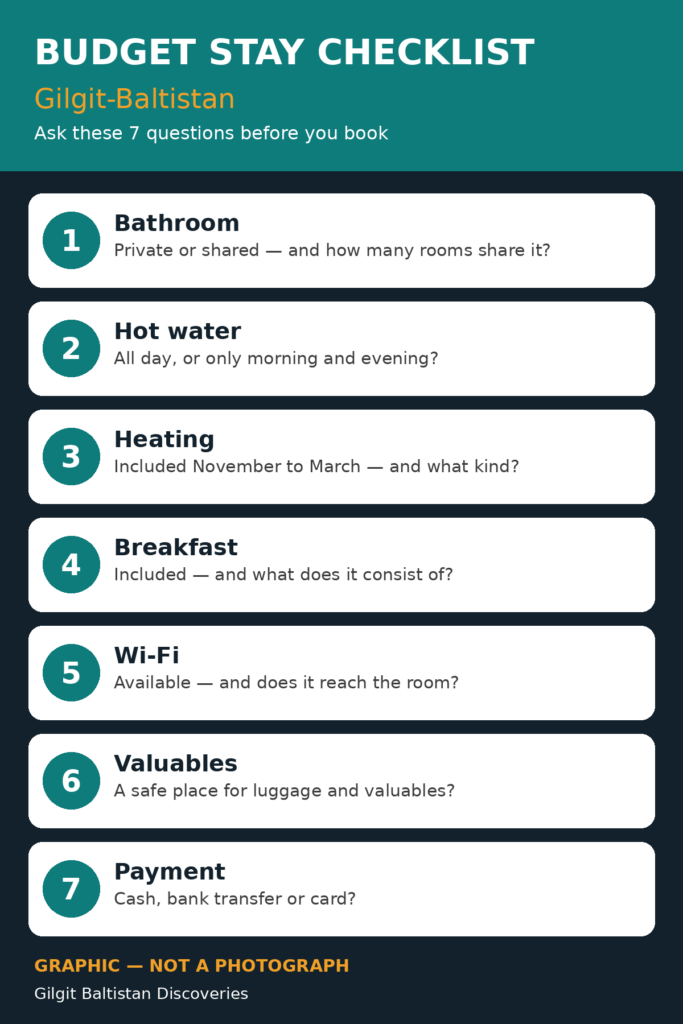
Comfort on a budget comes from asking the right questions, not from spending more. Before you book, confirm: Is the bathroom private or shared, and how many rooms share it? Is hot water available all day, or only in the morning and evening? Is heating included from November to March, and what kind is it? Is breakfast included, and what does it consist of? Is Wi-Fi available, and does it reach the room? Is there a safe place for luggage and valuables? And can you pay by cash, bank transfer or card? A guesthouse that answers all seven clearly is usually a good stay at any price. A guesthouse that cannot answer them is a risk, however cheap it looks.
Pack for the gap between the price and the facilities. A budget room may have thin blankets, a cold bathroom and no heating in the shoulder season, so a warm layer, a sleep sheet and a small towel are worth their weight. A power bank matters too, because budget rooms may have one socket, shared with other guests, and power cuts are normal in the valleys. The packing post on this site mentions the Anker PowerCore as a power bank option, but a budget trip does not require a new purchase if you already own a working power bank.
How do you save money without ruining the trip?
Save on rooms, not on transport or food. A reliable driver on mountain roads is worth more than a room upgrade, and a bad driver is the fastest way to lose a day. Eat where your host eats, or where local families eat, rather than at the most expensive restaurant in town: guesthouse meals are usually cheaper and better than hotel restaurants, and bazaar food in Gilgit, Skardu and Karimabad is good value. Travel in the shoulder months, late April to May and September to October, when rooms are cheaper and the weather is still good, rather than in the July and August peak. Share a jeep to a trailhead or a lake with other travellers where possible, and book a guesthouse for 2 or 3 nights rather than moving every night, which saves both money and packing time. Finally, keep a cash reserve: budget stays, meals and drivers in small valleys are usually paid in cash, and an ATM may be a valley away.
What are the common budget mistakes?
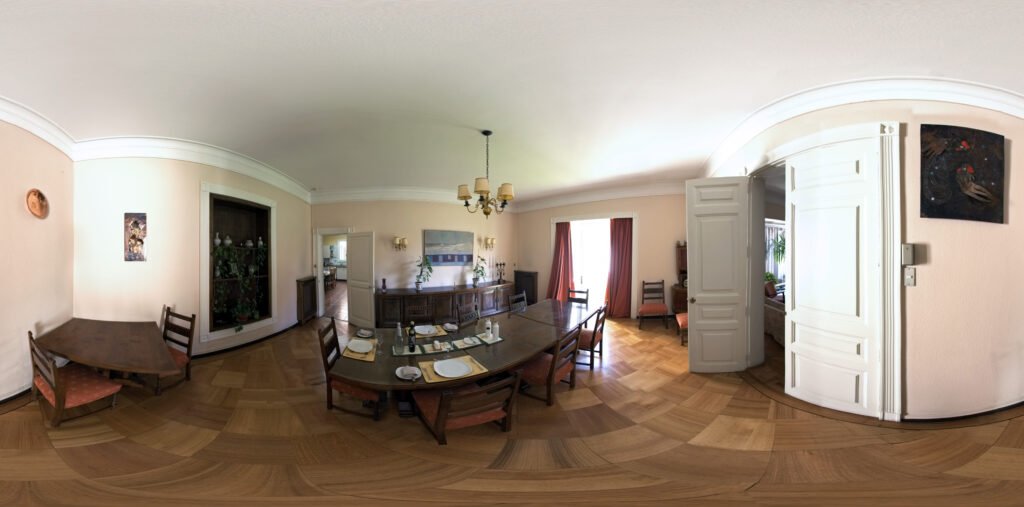
The most common mistake is booking the cheapest room in a town and then paying for taxis to every sight, which wipes out the saving. Location beats a small price difference every time. The second mistake is arriving in a valley without a booking in peak season and taking whatever is left, which is usually the worst room at the highest price. The third is assuming a budget price includes breakfast, heating and hot water, and then arguing about extras on arrival. The fourth is travelling without cash, on the assumption that cards and ATMs work everywhere: they do not, especially in smaller valleys. And the fifth is cutting the trip short to save a night’s room cost, when the night you cut is the one that would have given you the sunrise, the glacier walk or the market morning that made the valley worth visiting.
Frequently Asked Questions
Are there hostels in Gilgit-Baltistan?
Yes, but mainly in Karimabad, Gilgit and Skardu. Smaller valleys usually offer family guesthouses instead of hostels, so do not plan a village itinerary around hostel beds that may not exist there. For most budget travellers, a family guesthouse is the better and more widely available choice.
How much should I budget per night for a cheap stay?
Think in tiers, not fixed figures: a simple guesthouse or hostel bed sits in the lower tier, a comfortable guesthouse with a private bathroom in the middle tier, and a well-known hotel in the upper tier. Prices vary by valley and season, so confirm the total price, including breakfast and heating, before booking rather than relying on a quoted figure.
Is it safe to stay in a homestay in Gilgit-Baltistan?
Homestays arranged through a reputable local operator or a known host are generally safe and welcoming, and many travellers rate them as the highlight of a trip. Confirm the room, bathroom arrangement, meals and total price in advance, and let your host know your arrival time, since village homestays are not staffed like hotels.
Do budget guesthouses accept card payments?
Many do not, especially in smaller valleys. Hotels in Hunza, Skardu and Gilgit usually accept cards, but guesthouses, homestays and drivers often take cash or bank transfer only. Carry Pakistani rupees in cash, and confirm the payment method before you arrive.
When is the cheapest time to visit Gilgit-Baltistan?
The shoulder months, late April to May and September to October, usually offer lower room prices and good weather, outside the July and August peak and the winter closures. Blossom season in late March to April is popular and can be more expensive, despite being a shoulder period.
Related guides: Best Hotels in Hunza Valley, Best Hotels in Skardu, What to Pack for Northern Pakistan, SIM Card, Cash and ATMs in Gilgit-Baltistan, and Gilgit-Baltistan Trip Cost: A Road Trip Budget.