You’ve saved for this trip. You’ve got your money exchanged. You’re excited. And somewhere in Bangkok right now, someone is actively planning how to separate you from your cash.
This isn’t paranoia. This is just how Bangkok works. And the good news? Once you know what to watch for, you avoid 90% of the traps. The bad news? Most tourists don’t know, so they fall for the same tricks that have worked for decades.
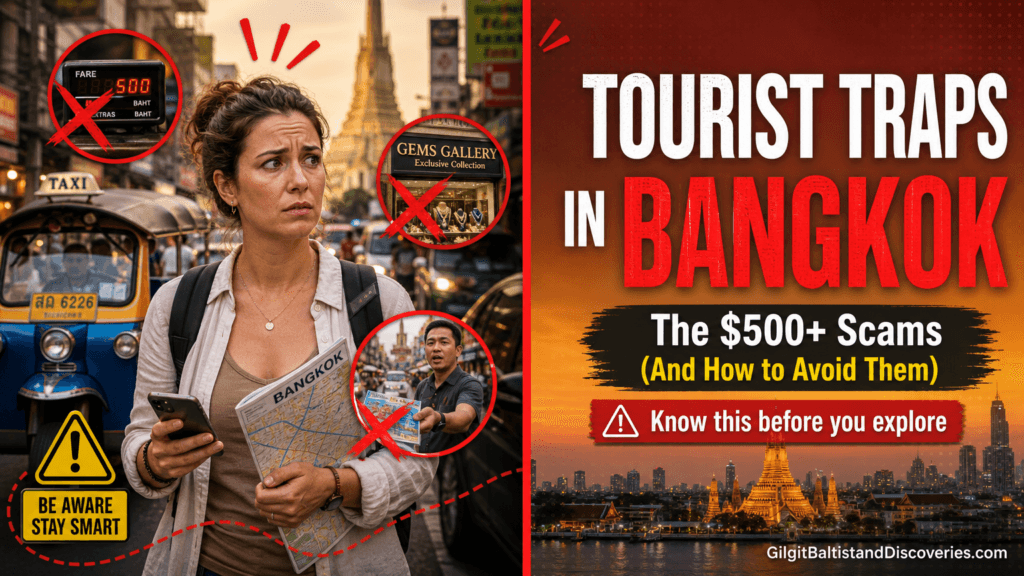
Here’s what actually happens when you arrive in Bangkok without this knowledge. You get overcharged on taxis. You walk into a “gem shop” that seems legit and end up buying rubies you’ll never wear. You miss the Grand Palace because it’s closed on a day you didn’t know about. You eat at a restaurant in the tourist zone and pay double what locals pay.
By the end of your trip, you’ve dropped an extra $500 to $1,000 on stuff that shouldn’t have cost anything. It’s not the end of the world. But it stings. Especially when you realize how easily it could have been avoided.
The Taxi Overcharge: The Most Consistent Ripoff
I’m going to walk you through exactly what happens in each scam, why it works on tourists, and what you actually do instead.
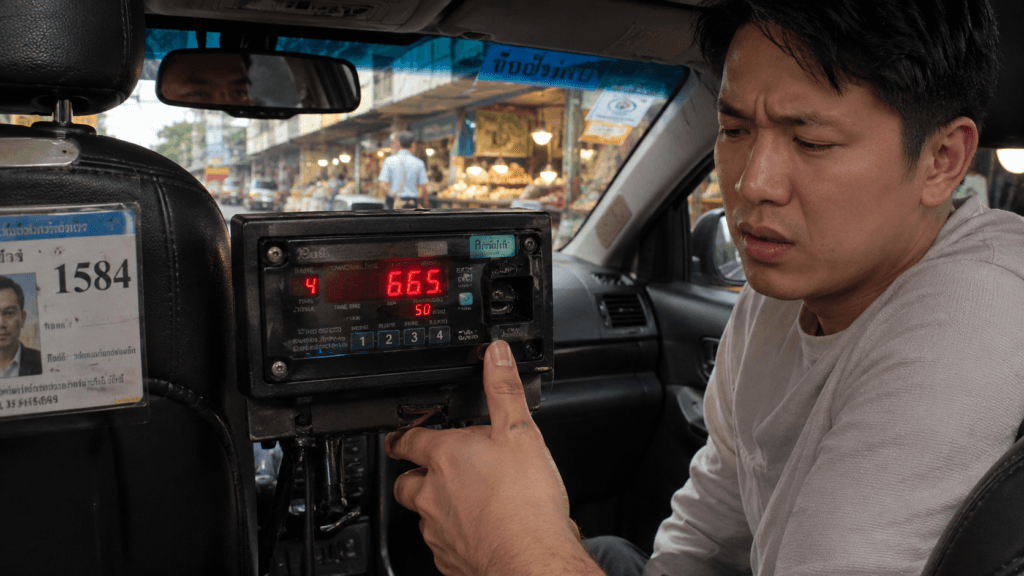
This happens to almost everyone. You land at Suvarnabhumi Airport. You’re tired. You want to get to your hotel. A taxi driver approaches you. He seems friendly. He says the meter is broken but he knows a good route. He quotes you a price.
You’re tired. You just want to get there. You agree.
Later, you realize that ride cost three times what it should have. A 20-minute ride from the airport should cost around 300 to 400 baht (about $8 to $11). If a driver quoted you 1,000 baht or more, you got played.
Here’s why it works. Most tourists don’t know baht values. They don’t know what’s reasonable. They’re tired and just want to move. And they’re in an unfamiliar place where they don’t speak the language. The driver has all the advantages.
What you actually do instead: Use Grab. It’s Thailand’s version of Uber. You order through the app before you even leave the terminal. The price is set before you get in the car. No negotiation. No surprises. No meter games. The driver picks you up, you arrive at your hotel, you pay exactly what the app said. Takes five minutes to download and set up.
Yes, Grab is sometimes slightly more expensive than a negotiated taxi rate. That’s fine. You know the price beforehand. You avoid the stress. You don’t get overcharged. For the difference of a dollar or two, that’s a good deal.
Alternatively, if you must take a taxi, only use official taxis from the official taxi rank. They have meters. The meters work. You’ll pay what the meter says. It’s more expensive than Grab but it’s fair and it’s official.
The Gem Shop Trap: The Con That Never Gets Old
This is the one that makes people actually angry when they realize what happened.
Here’s how it plays out. You’re walking around Bangkok. Someone approaches you. They’re friendly. They’re Thai, maybe they work at a shop. They say something like “Hey, where are you from? Nice to meet you. The Grand Palace is closed today, you should visit this temple instead.” They’re being helpful. They’re being nice.
Then they mention a gem shop. They say their cousin owns it. It’s famous. You can get amazing deals. They just need to take you there. Or they’ll tell you it’s on the way. No pressure.
You go. The shop is beautiful. The gems are stunning. The owner is incredibly knowledgeable and charismatic. He shows you rubies. He explains why these rubies are so special. He tells you about investment value. He says these stones are so rare that you won’t find them anywhere else. He offers you a deal you can’t pass up.
You buy. You feel smart. You feel like you got something special.
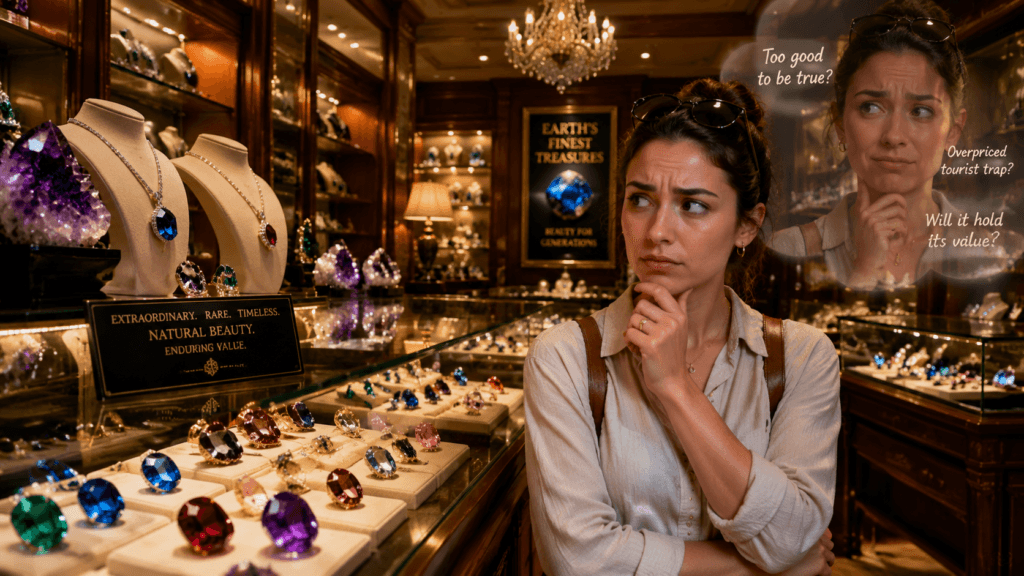
Then you go home. You try to resell the gems. You get them appraised. The appraiser laughs. The gems are worth maybe 20% of what you paid. Sometimes less.
Here’s what happened. The “friendly stranger” gets a commission from the gem shop. Maybe 30 to 50% of your purchase. The gem shop marks up their products like crazy because they know tourists won’t check the value. The gems themselves might be real, but they’re worth nowhere near what you paid.
It’s not technically illegal. It’s just exploitation of tourists’ ignorance.
What you actually do instead: Don’t go to gem shops that people suggest to you on the street. Period. End of discussion. If you actually want to buy gems, go to reputable shops that have been in business for decades and have real reviews from real people. GIT (Gems and Jewelry Institute of Thailand) has certified dealers. Those are your options.
But honestly? Just don’t buy gems. You don’t need them. The money you save by not falling for this scam is money you can spend on actual experiences.
The Grand Palace Closure Nobody Knows About
This one’s frustrating because it’s so easy to avoid if you know.
The Grand Palace is closed on specific days. It’s closed when there are state events. It’s closed on Buddhist holidays. It’s closed on days you might not expect. Most tourists arrive without checking. They show up ready to explore. The gates are closed. Their day is ruined.
Some people then get suckered into the gem shop trap because the “friendly stranger” convinced them the Palace was closed and suggested an alternative.
What you actually do instead: Check before you go. The Grand Palace website lists closure dates. Or just ask your hotel. They know immediately. It takes 30 seconds.
Also, dress appropriately. The Grand Palace requires covered shoulders and knees. Wear pants or a long skirt. Wear a shirt with sleeves. You’ll see tourists in tank tops and shorts getting turned away. They wasted a trip.
Restaurant Tourist Trap Pricing
This is less of a scam and more of a reality, but it’s still worth understanding.
There are restaurants in Bangkok’s tourist zones that charge significantly more than restaurants in local neighborhoods. A pad thai in a tourist restaurant costs 200 to 300 baht. The same pad thai five minutes away in a local spot costs 60 baht.
Is the tourist restaurant serving worse food? Usually not. It’s just charging more because tourists will pay it and don’t know the local prices.
What you actually do instead: Eat where locals eat. Go to the neighborhoods tourists don’t go to. Chinatown (Yaowarat) has amazing food at local prices. Or just ask locals for restaurant recommendations instead of looking at TripAdvisor. Your hotel staff can point you to good, affordable places.
Also, street food in Bangkok is incredible and cheap. Some of the best meals you’ll have cost less than $3. Eat street food. It’s safe. It’s delicious. It’s authentic.
ATM and Money Exchange Scams
This one’s less common now because credit cards are more widely accepted, but it still happens.
Some ATMs in tourist areas charge insane fees. You withdraw money and get charged 200+ baht for the transaction. That’s on top of your bank’s fees. You’re getting double charged.
Some money exchange shops offer terrible rates. They’ll exchange your money but give you significantly less than the market rate. You think you’re getting a good deal but you’re actually losing 5 to 10% on the exchange.
What you actually do instead: Use ATMs in banks or shopping malls. They charge less or nothing. Bangkok Bank ATMs are reliable. Major malls have ATMs inside. Skip the ATMs on random street corners.
For money exchange, only use official exchange shops. Bangkok Bank. Kasikornbank. Major places with known rates. Or just use your credit card. Most places accept Visa and Mastercard. You’ll get a fair exchange rate from your bank.
Tuk Tuk Overcharges
Tuk tuks are fun. They’re iconic. But they’re also how many tourists get overcharged.
A short tuk tuk ride should cost around 40 to 60 baht. If a driver wants 200 baht for a short ride, they’re overcharging tourists. They’ll use all kinds of tactics. “Traffic is bad.” “Special price today.” “You’re my first customer.”
What you actually do instead: Use Grab for the tuk tuk option (yes, Grab has tuk tuks). You get the same fixed price beforehand. Or if you want the authentic tuk tuk experience, negotiate clearly before you get in. Most locals pay 40 to 60 baht. That’s the real price. Don’t pay more just for the experience.
The Closed Shop and Fake Guide Scheme
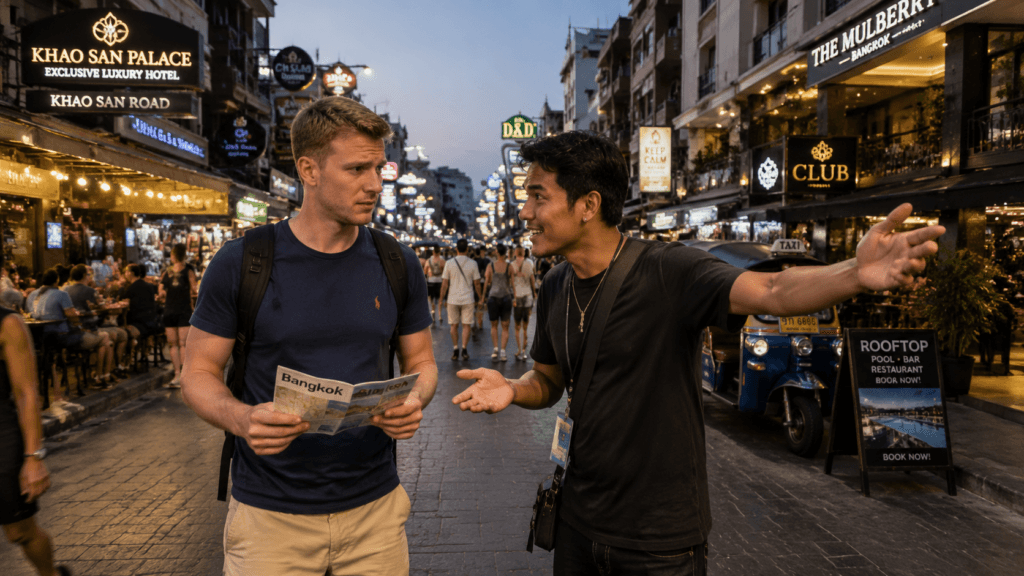
You’re walking around exploring. A guide approaches you and says they can show you Bangkok’s hidden gems. They seem knowledgeable. You agree to join their tour.
They take you to a temple that’s closed, a shop that’s closed, a restaurant that’s closed. Then they take you to a gem shop or a tailor shop where they get commission. They’re not actually showing you anything useful. They’re just routing you to commission-paying places.
What you actually do instead: Book tours through legitimate tour companies. Read real reviews. Or just explore on your own with Google Maps. You’ll see more and spend less.
How to Protect Yourself: The Real Strategy
Here’s the thing nobody tells you. The best protection isn’t paranoia or distrust. It’s knowledge.
Once you know these traps, they’re obvious. A stranger offering to help you? They want something. A shop owner being incredibly nice? They’re counting on you buying something. Prices that seem too good to be true? They are.
So here’s your actual defense system:
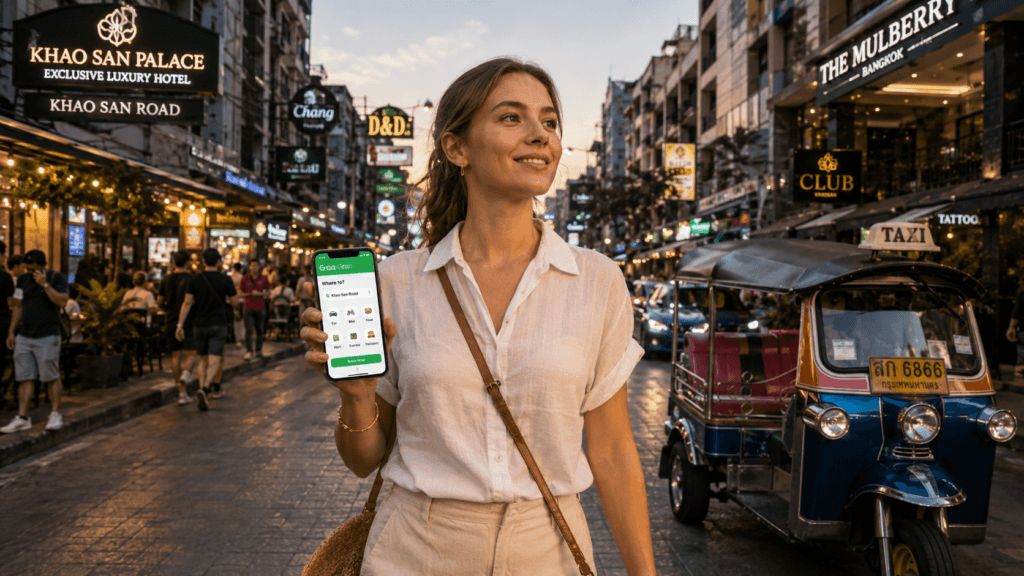
Use apps for transportation. Grab for taxis and tuk tuks. It removes the negotiation game entirely.
Ask hotel staff for recommendations. They have no incentive to lie. They just want you to have a good trip so you recommend their hotel.
Check closures before you go anywhere. Spend two minutes on your phone. It saves you an entire wasted day.
Don’t buy things from people who approach you on the street. Ever. Gems, tailored suits, tours, jewelry, nothing. If it’s good, people will find it through reviews. It doesn’t need street hustlers.
Use official transportation and official places. Banks for money. Licensed shops for shopping. Registered guides if you want guides.
Keep your money safe. Don’t flash cash. Don’t carry your passport around. Use money belts if you’re paranoid. Bangkok is generally safe but why make it easy for pickpockets?
The Real Bangkok Beyond the Traps
Here’s what’s important to understand. Bangkok is incredible. The food is amazing. The temples are beautiful. The people are friendly. The culture is rich.
The scams aren’t a reflection of Thai people. They’re just business. Enterprising people figured out that tourists don’t know prices and would pay more. So they charge more. It’s capitalism, not malice.
Once you know the prices and the tricks, you can navigate Bangkok like a normal person. You eat great food. You see beautiful things. You have real experiences. You don’t get overcharged.
The money you save by avoiding these traps? That’s money you can spend on things that actually matter. Better hotels. More meals. More experiences. Actual memories instead of regret.
Go to Bangkok. Enjoy it. Just know what to watch for. You’ll have an amazing trip and you’ll keep your $500.