You’re planning a trip. You’re excited. Then you remember what happens last time you traveled.
Your skin breaks out. Not just a little. Actual acne. Cystic breakouts. Angry red bumps right when you want to look good.
It happens to almost everyone who travels long distance. Your skin freaks out. Your carefully maintained skincare routine gets disrupted. You’re stressed. You’re eating different food. You’re on a plane for 14+ hours. The humidity changes. Your water intake is off.
By the time you arrive at your destination, your skin has already started rebelling.
Here’s the frustrating part: this is preventable. You don’t have to get acne breakouts while traveling long distance. There’s a system to prevent it. Most people just don’t know what it is.
I’m going to walk you through exactly why travel causes acne breakouts, how to prevent them before you leave, what to do during your trip, and which products actually help. By the end, you’ll have a travel skincare plan that keeps your skin clear no matter how far you’re traveling.
Why Travel Causes Acne Breakouts
Before we talk prevention, let’s understand why traveling long distance causes acne breakouts in the first place.
Airplane Cabin Air
Airplane cabins are low humidity environments. The air is recirculated. It’s dry. Your skin loses moisture constantly during a long flight.
Dry skin causes your oil glands to overproduce sebum (oil) to compensate. Extra oil plus bacteria equals acne.
Also, the recirculated air contains bacteria and germs. You’re breathing air that’s been circulating through the cabin for hours, shared with hundreds of other people. Your skin is exposed to environmental germs.
Dehydration
Most people don’t drink enough water on flights. They drink coffee or alcohol instead, which are diuretics and make dehydration worse.
Dehydrated skin is irritated skin. Irritated skin is acne-prone skin. Your skin barrier weakens. Bacteria can penetrate more easily.
Pressure and Altitude Changes
Cabin pressure during flight is lower than sea level. Your blood vessels dilate. Your face swells slightly. This swelling can trap bacteria and sebum in pores, causing congestion and breakouts.
The pressure changes also stress your body, which increases cortisol (stress hormone). Cortisol increases sebum production. More oil equals more acne risk.
Sleep Disruption
Long flights disrupt your sleep. You’re uncomfortable. You can’t sleep properly. Or you’re trying to adjust to a new time zone.
Poor sleep increases inflammation in your body. Inflammation shows up on your skin as acne. Your skin also repairs itself during sleep. Without proper sleep, your skin can’t maintain its barrier.
Stress
Travel is stressful. Your routine is disrupted. You’re in an unfamiliar environment. You might be worried about your trip, your luggage, your plans.
Stress increases cortisol, which increases sebum production and inflammation. Stressed skin breaks out.
Different Water Quality
The water where you’re traveling might have different minerals or bacteria than your home water. Your skin isn’t used to it.
Hard water (high mineral content) can cause congestion. Chlorinated water can irritate sensitive skin. Different bacteria can trigger breakouts.
Dietary Changes
You’re eating different food while traveling. Different cuisines, different ingredients, different sodium levels.
Your skin reacts to dietary changes. High sodium food causes inflammation. Spicy food increases body heat and sweating. Greasy food can trigger breakouts in acne-prone skin.
Touching Your Face Constantly
During flights and travel, you touch your face more. You’re touching armrests, tray tables, and then touching your face. You’re adjusting your mask. You’re resting your face on the window.
Every touch transfers bacteria to your face. More bacteria exposure equals higher breakout risk.
How to Prevent Acne Breakouts (Start 2 Weeks Before)
Prevention starts before you even leave home.
Start a Simple Skincare Routine
Two weeks before your trip, establish a consistent, simple skincare routine. Stick to it religiously.
Cleanser (gentle, non-stripping): Wash morning and night. Nothing fancy. Just clean your skin.
Exfoliant (gentle, 2-3 times per week): Use a gentle chemical exfoliant (AHA or BHA). This removes dead skin and prevents congestion. But don’t overdo it. Over-exfoliating makes skin reactive.
Hydrating Toner or Essence: Apply after cleansing. Hydration is crucial for preventing acne.
Lightweight Moisturizer: Use something non-comedogenic (won’t clog pores). Even oily, acne-prone skin needs moisture.
Sunscreen (SPF 30+): Use every single day. UV damage weakens skin barrier, increasing acne risk.
Spot Treatment (Optional): If you have active acne, use a targeted spot treatment with salicylic acid or benzoyl peroxide.
Stick to this routine for two weeks before your trip. Your skin will be balanced and prepared.
Reduce Potential Triggers
Two weeks before, reduce things that trigger your acne:
High sodium foods: Reduce salt intake. Salt causes water retention and inflammation.
Dairy: If dairy triggers your acne, eliminate or reduce it two weeks before travel.
High glycemic foods: Reduce refined sugars and processed foods. These spike blood sugar and increase sebum production.
Fried and greasy foods: Limit these. They can trigger breakouts.
This isn’t forever. Just for two weeks before your trip. You’re giving your skin the best possible starting point.
Stay Hydrated
Start drinking more water two weeks before your trip. Aim for at least 8-10 glasses daily. More if you exercise.
Hydrated skin is clearer skin. Hydration prevents your oil glands from overproducing sebum.
Manage Stress
Two weeks before travel, stress management helps. This includes sleep, exercise, meditation, or whatever calms you.
Lower stress before your trip means lower cortisol, which means less sebum production and less acne risk.
Get Facials (Optional but Helpful)
If you’re prone to acne breakouts while traveling, getting a professional facial one week before your trip can help. A good esthetician can:
Deep clean your pores to remove congestion Exfoliate deeply and safely Apply hydrating treatments Assess your skin condition
This gives your skin a fresh start before the trip stress hits.
Packing Your Travel Skincare Kit
What you pack matters as much as how you care for your skin.
Essential Travel Skincare
Gentle cleanser (travel size): You need to cleanse even while traveling. Pack a small bottle or bar cleanser.
Gentle exfoliant (travel size): BHA or AHA exfoliant in small format. Continue your routine while traveling.
Hydrating toner or essence (travel size): Hydration is crucial while traveling.
Lightweight moisturizer (travel size): TSA-compliant size (3.4 oz or smaller).
Packing the right skincare is just one part of the puzzle. If you want to make sure you don’t overpack or miss any essentials, check out our complete guide on how to pack for tropical Thailand.
Spot treatment (if needed): Small bottle of your preferred acne treatment.
Facial wipes or micellar water: For quick cleansing when you can’t do full skincare.
Face masks (sheet masks): Hydrating or clarifying masks for in-flight or hotel use.
TSA Considerations
All liquids must be 3.4 ounces or smaller. Get travel-size versions of your products.
Sunscreen sticks (solid format) don’t count as liquids. You can carry them without restrictions.
Sheet masks aren’t liquids. You can pack multiple.
Cleansing wipes aren’t liquids. Pack as many as you want.
Pack all liquids in a quart-sized clear bag together. This makes TSA screening faster.
During Your Flight: Preventing Breakouts in the Air
Your flight is probably 8-14+ hours. Here’s how to protect your skin during this time.
Hydrate Constantly
Drink water every 30 minutes. Set a phone alarm if needed. Aim for 8-10 glasses of water on a long flight.
Skip or minimize alcohol and caffeine. Both are diuretics and worsen dehydration.
Stay hydrated internally and your skin will be less likely to overproduce oil and break out.
Avoid Touching Your Face
This is harder than it sounds but crucial. Every time you touch your face, you’re transferring bacteria.
Use a barrier: wear a sleep mask, rest your head on a pillow instead of your hand, or literally remind yourself not to touch.
If you need to touch your face, use a hand sanitizer first.
Keep Your Face Clean
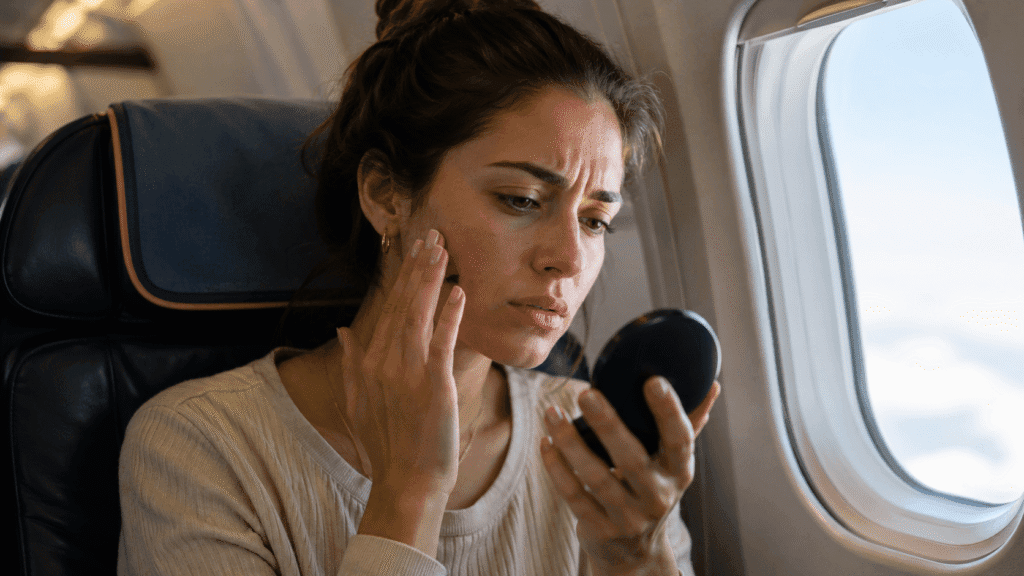
Early in the flight, wash your face with your travel cleanser. Use facial wipes if you can’t do a full wash.
Mid-flight, use facial wipes to gently clean your face and remove dirt and oil.
Before landing, do a final gentle cleanse.
This prevents bacteria and oil from building up on your skin during the flight.
Use a Hydrating Face Mask
Wear a sheet mask for 15-20 minutes during the flight. This hydrates your skin and protects it from the dry cabin air.
Hydrated skin is less likely to overproduce oil. Less oil means less acne risk.
Moisturize and Sunscreen Before Sleep
If you’re going to sleep on the plane, apply moisturizer and let it set before sleeping. Don’t sleep with your face on the seat or window without a barrier.
When you wake up, apply sunscreen. Even though you’re in a plane, some UV light comes through the windows.
After Landing: First 24 Hours
Your skin is vulnerable the first 24 hours after arrival. You’re tired. Your skin is dehydrated. Your routine is disrupted.
Gentle Cleanse
Within an hour of landing, do a gentle cleanser wash. Remove the built-up grime from the flight.
Don’t scrub. Just gentle cleansing. Your skin is already stressed.
Hydration Treatment
Apply your hydrating toner or essence. Then apply moisturizer while skin is still slightly damp.
This locks in hydration. Hydrated skin is less likely to have acne breakouts.
Skip Actives (For Now)
Don’t use exfoliants, retinoids, vitamin C, or other active ingredients the first day after arriving.
Your skin is stressed and dehydrated. Active ingredients can irritate stressed skin and cause breakouts.
Wait at least 24 hours after arrival before reintroducing actives.
Avoid Makeup (If Possible)
The first day, let your skin breathe. Skip makeup if you can. Your pores are probably congested from the flight.
If you need makeup, use minimal amounts. Focus on sunscreen and maybe a tinted moisturizer.
Daily Routine While Traveling
Once you’ve arrived, establish a simple daily routine to prevent breakouts.
Morning Routine
Gentle cleanser (just water or with cleanser if your skin feels grimy) Hydrating toner or essence Lightweight moisturizer Sunscreen SPF 30+
That’s it. Simple, non-irritating.
Evening Routine
Gentle cleanser (remove sunscreen, dirt, and sweat from the day) Optional gentle exfoliant (2-3 times per week, not daily) Hydrating toner or essence Moisturizer
Again, simple and non-irritating.
Every Few Days
Sheet mask (hydrating or clarifying): Use once every 3-4 days to boost hydration or gently clarify.
That’s your complete routine. Nothing fancy. Just keeping your skin clean, hydrated, and protected.
Lifestyle Factors While Traveling
Beyond skincare products, your lifestyle affects acne while traveling.
Eat Clean (Mostly)
You’re traveling and should enjoy the food. But try to eat mostly clean.
Limit fried foods, excessive salt, and sugar. But don’t be obsessive. Eating something that triggers your acne occasionally is fine. Just don’t do it daily.
Balance indulgent meals with clean meals.
Stay Hydrated
Drink water constantly. Especially in hot destinations. Dehydration causes acne.
Aim for at least 8-10 glasses daily. More if you’re exercising or in hot weather.
Sleep Well
Try to get proper sleep. Sleep deprivation increases cortisol and causes breakouts.
If you’re jet-lagged, follow the jet lag protocol from our earlier article. Getting your sleep schedule right matters for skin.
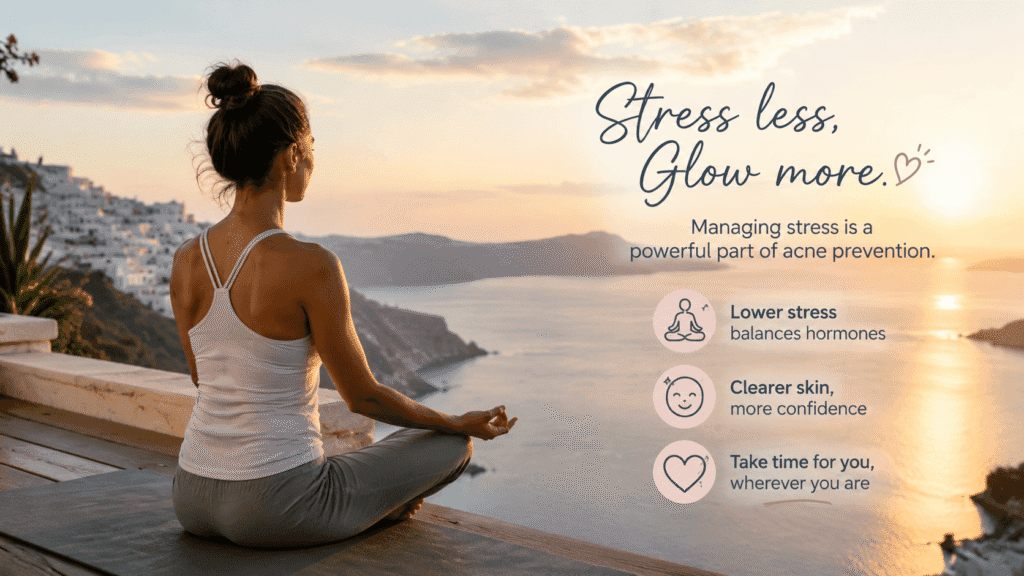
Minimize Stress
Stress increases cortisol, which increases acne. Do things that relax you while traveling.
Exercise, meditation, exploring relaxing areas, enjoying the trip. Reduced stress equals clearer skin.
Wash Pillowcases Frequently
Bacteria builds up on pillowcases. Wash them every 2-3 days if possible. Or use a clean towel as a pillowcase barrier.
This prevents bacterial transfer to your face while sleeping.
Avoid Tight Clothing on Face
Tight hats, masks, or headbands cause friction acne. Wear loose clothing if possible. If you need to wear a mask, take breaks to let your skin breathe.
Products That Specifically Help Prevent Travel Acne
Beyond your basic routine, these products help prevent acne breakouts while traveling long distance.
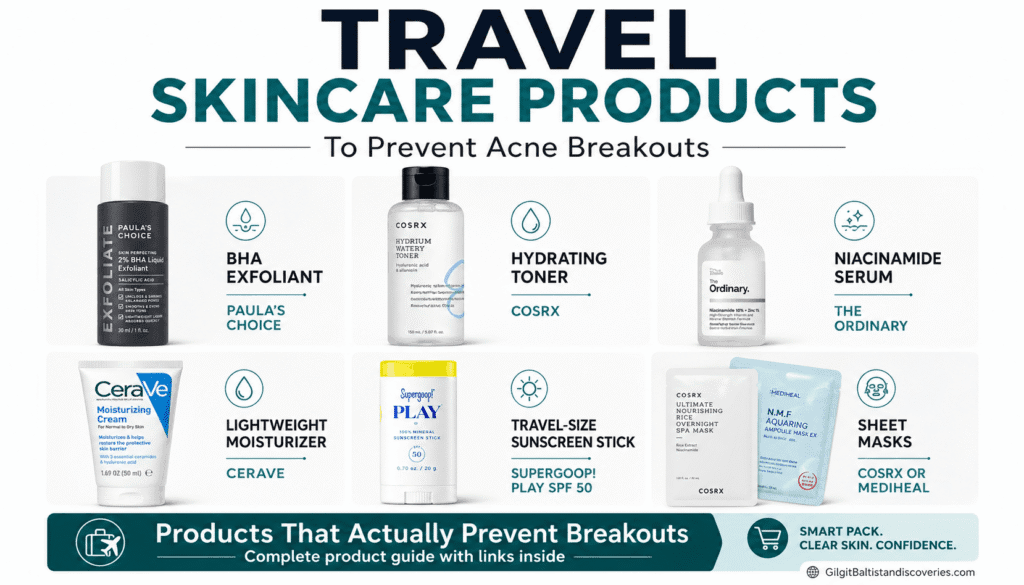
BHA Exfoliant (Salicylic Acid)
BHA penetrates pores and prevents congestion. Use 2-3 times per week while traveling.
Brands: Paula’s Choice, The Ordinary, CeraVe
Hydrating Toner
Hydration is crucial for acne prevention. A good hydrating toner provides moisture without heaviness.
Brands: COSRX, Isntree, Purito
Niacinamide Serum
Niacinamide reduces sebum production, reduces inflammation, and strengthens skin barrier.
Brands: The Ordinary, CeraVe, Paula’s Choice
Clay or Mud Masks
These draw out impurities and oil without over-drying. Use occasionally while traveling.
Brands: Origins, Aztec Secret, Glamglow
Lightweight Hydrating Moisturizer
You need hydration even if you have oily, acne-prone skin. Find a lightweight, non-comedogenic moisturizer.
Brands: CeraVe, Neutrogena, La Roche-Posay
Travel-Size Acne Spot Treatment
If you have active acne, a targeted spot treatment helps. Benzoyl peroxide or salicylic acid.
Brands: Neutrogena, Clean & Clear, Mario Badescu
Hydrating Sheet Masks
These provide intense hydration and are perfect for travel. Use every few days.
Brands: Cosrx, Mediheal, I’m From
Timeline to Prevent Acne Breakouts
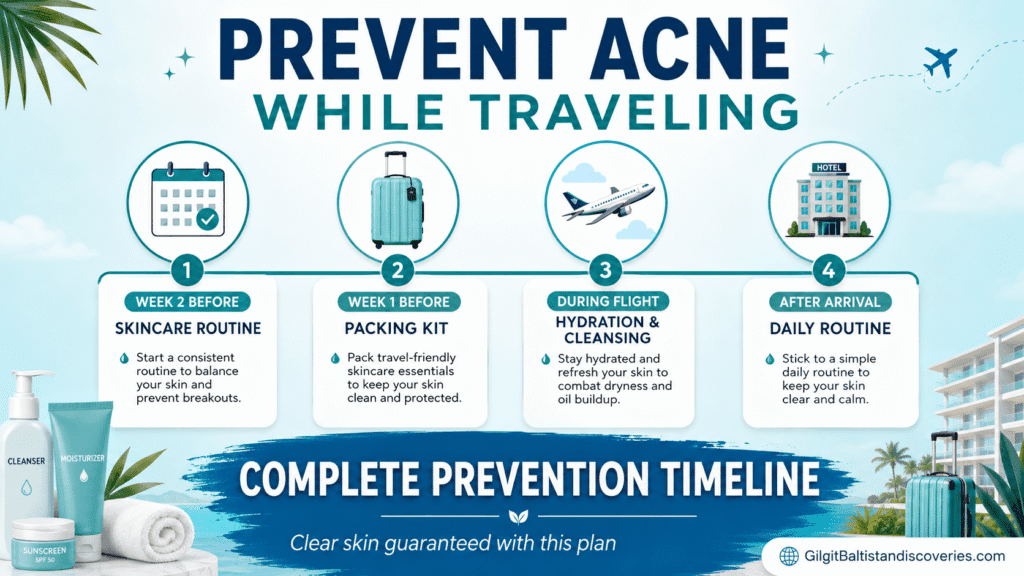
Here’s the complete timeline for preventing acne breakouts while traveling long distance.
Two Weeks Before
Establish simple skincare routine. Reduce acne triggers. Stay hydrated. Manage stress. Get a facial if needed.
One Week Before
Continue skincare routine. Pack travel skincare kit. Finalize what you’re bringing.
Day of Travel
Cleanse face before flight. Bring skincare kit in carry-on. Hydrate during flight. Use sheet masks if long flight.
First Day After Arrival
Gentle cleanse. Hydrate skin. Skip actives. Avoid makeup if possible.
Days 2-14
Establish simple daily routine. Eat mostly clean. Stay hydrated. Sleep well. Manage stress. Avoid tight clothing and frequent face touching.
Follow this timeline and you’ll prevent acne breakouts while traveling long distance.
Real Talk: Sometimes You Still Break Out
Despite all these precautions, sometimes you still get breakouts while traveling. This is normal.
Travel is stressful. Your skin is adjusting to new environment. Sometimes breakouts happen.
Don’t panic. Use your spot treatment. Keep your skin hydrated. Don’t pick at the acne. This makes it worse.
Most travel acne resolves within 3-5 days once you’re settled and your skin adjusts.
Bottom Line
Acne breakouts while traveling long distance are preventable with the right preparation and routine.
Start two weeks before with a consistent skincare routine. Pack travel-sized products. Stay hydrated during flight. Cleanse frequently. Keep your skin hydrated while traveling.
Follow this system and you’ll prevent acne breakouts. You’ll arrive looking fresh. You’ll maintain clear skin throughout your trip.
That’s what matters. Not stressing about breakouts. Just clear skin and enjoying your trip.