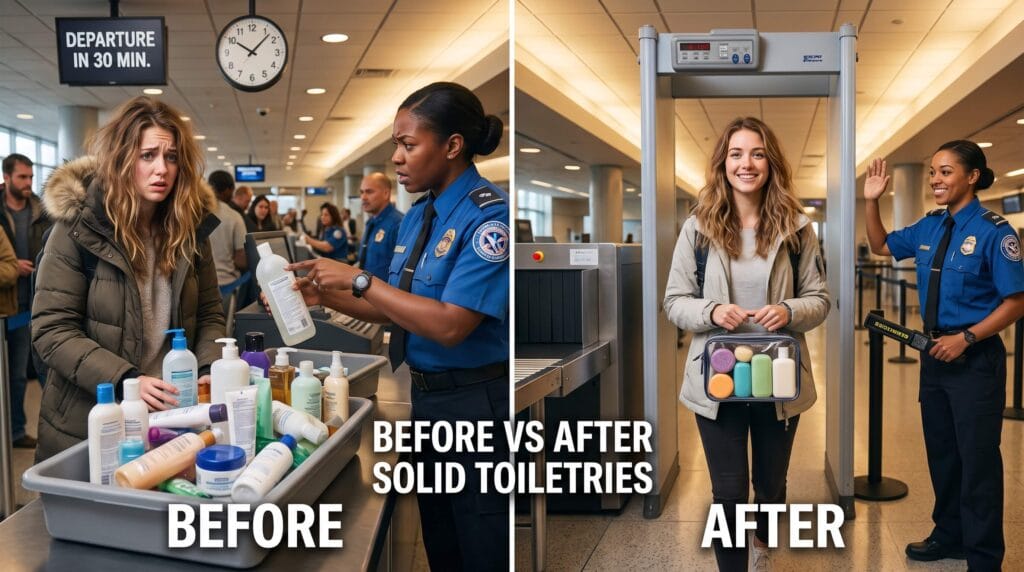
The line at TSA security moves at a snail’s pace and then you get to the front and a TSA officer pulls your bag aside.
Your moisturizer is 3.5 ounces instead of 3.4. Your shampoo bottle is just slightly over the limit. That expensive face serum you love does not fit the restrictions. You have two choices. Throw it away or go back and check your bag.
Every single time this happens, you think about how much easier travel would be if you could just bring your favorite products without worrying about ounce measurements and liquid restrictions.
The solution has been sitting right in front of you the entire time. Solid toiletries.
Solid shampoo bars that replace liquid shampoo. Solid deodorant instead of aerosol. Solid face cleansers, solid moisturizers, solid conditioners, solid everything. Products that have zero TSA restrictions because they are not liquids. You can pack as many as you want. They take up minimal space. They last longer than their liquid counterparts. And most importantly, they actually work just as well, sometimes better, than the liquids they replace.
The barrier to adoption for most travelers is not performance. It is not effectiveness. It is simply not knowing that solid toiletries exist in categories beyond just soap and deodorant. That solid options have expanded into nearly every toiletry category. And that switching to solid products can actually simplify your entire travel routine.
This guide covers everything. What makes a product legitimately solid and TSA-friendly. Which solid toiletries actually work and which ones are gimmicks. How to use solid products correctly so they perform like their liquid versions. And how to build a complete solid-only toiletries kit for travel that requires zero TSA worrying.
Why Solid Toiletries Change Everything About Travel Packing
The TSA Liquid Rule Is Genuinely Restrictive
The TSA 3-1-1 rule limits you to one quart-sized bag filled with containers of 3.4 ounces or less. This rule exists to prevent certain liquids from being brought onto planes, which is a legitimate safety concern. But the consequence for travelers is significant.
A full-size shampoo bottle is typically 8 ounces. A full-size moisturizer is often 2.5 ounces, which fits, but once you add your cleanser, your serum, your conditioner, your face oils, your other serums, your eye cream, your body lotion, your sunscreen, and your other products, the one quart bag is completely full and you still have products that do not fit.
This forces travelers to either check bags they would not otherwise need to check, buy expensive travel-size dupes of their favorite products, or leave behind products they actually use daily.
The frustration is compounded by the fact that the reason for the liquid restriction is safety, not practicality. Your moisturizer is not a security threat. Your shampoo is not dangerous. But the rule treats all liquids the same regardless of what they actually are.
Solid Toiletries Have Zero TSA Restrictions
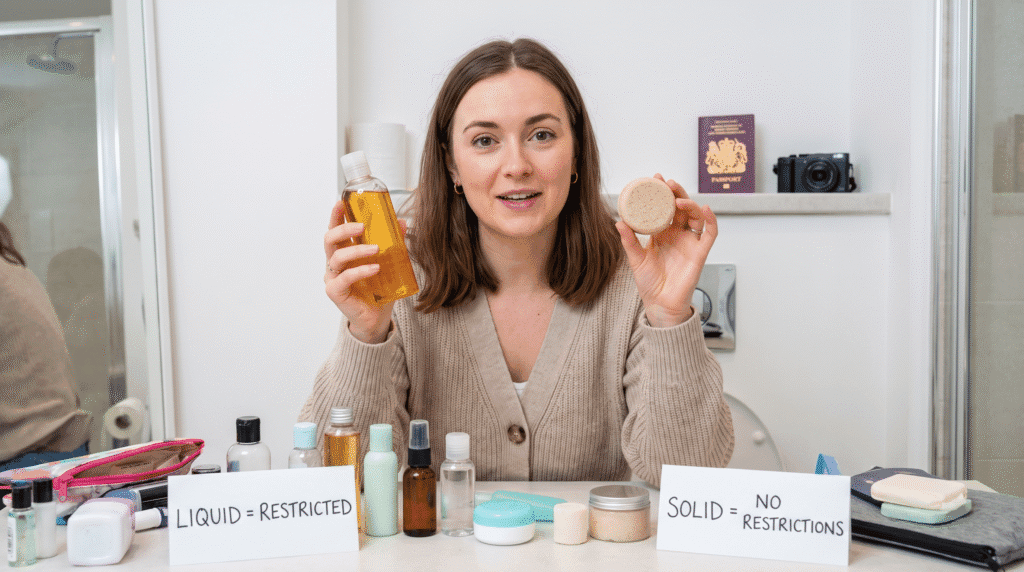
Solid toiletries are not classified as liquids, gels, or aerosols under TSA rules. This means they do not fall under the 3-1-1 restriction at all. You can pack as many solid products as you want in your carry on bag. You can bring full-size bars of shampoo and soap without any concern about ounce limitations.
This single fact changes the entire packing calculation. You are no longer optimizing for what fits in 3.4 ounce containers. You are optimizing for what your bag can physically hold. The stress of TSA restrictions simply disappears.
Solid Products Last Significantly Longer
This is a practical advantage that makes the switch economically sensible even if you never flew again. A solid shampoo bar typically lasts as long as two to three bottles of liquid shampoo of the same price. A solid deodorant stick lasts longer than a liquid spray deodorant.
For regular travelers, this extended longevity means your products survive a trip without needing backups. For frequent travelers, solid products actually cost less over time because they last longer relative to their price.
Weight and Space Savings Are Real
Solid toiletries weigh less and take up less space than liquids. A solid shampoo bar is half the weight of a liquid shampoo bottle but performs the same function. A solid face cleanser cake is tiny but cleans your face just as thoroughly as a liquid cleanser.
For backpackers especially, where every ounce and cubic inch matters, solid toiletries are genuinely transformative. You can eliminate an entire category of packing concern by switching to solids.
Understanding TSA Rules for Solid vs Liquid Toiletries
What Counts as a Liquid Under TSA Rules
TSA classifies items as liquids, gels, creams, pastes, or aerosols if they take the form of a liquid or have a liquid-like consistency. This includes things you might not immediately think of as liquids.
Grab this TSA-approved sunscreen stick on Amazon
Shampoo is obviously a liquid. But so is conditioner, face serum, moisturizer, face wash, body lotion, sunscreen, toothpaste, lip balm in a tube, and even dry shampoo aerosol. Essentially anything that pours, spreads, or sprays is classified as a liquid for TSA purposes.
The classification is based on the actual form the product takes, not on what it is made of. A gel, a cream, or a paste that has a liquid-like consistency gets classified as a liquid even though it is technically different from a water-based liquid.
What Counts as a Solid
A solid is anything that maintains its own shape without being poured or spread. Solid bar soaps, solid shampoo bars, solid deodorant sticks, solid face cleansers in bar form, solid moisturizers in stick or solid cake form. These count as solids and have zero TSA restrictions.
The test is simple. If it would spill if the container broke open, it is probably a liquid. If it would not spill and would maintain its shape, it is a solid and TSA-friendly.
The Key Exception: Solid Products With Liquid Cores
This is where some travelers get confused. Some products are marketed as solid but contain a liquid center. A lip balm that appears solid on the outside but has a liquid or very soft gel center might be questioned at security. A solid deodorant with a liquid center would fall under TSA restrictions.
Read product descriptions carefully. If it says gel or liquid inside, it might not count as a solid for TSA purposes even though it appears solid on the outside. True solids through and through are the safest choice for carry on packing.
What Makes a Solid Toiletry Actually Work While Traveling
Concentration of Active Ingredients
Solid toiletries have a higher concentration of active ingredients than their liquid counterparts because they do not have water diluting the formula. A solid shampoo bar is more concentrated than liquid shampoo, which means a small amount goes a long way.
This high concentration is why solid products last so much longer. You use less product per wash because it is more concentrated. Your bar or stick lasts multiple times longer than a liquid version of similar price.
For travel, this matters because it means your small solid products genuinely perform fully. You are not getting a watered-down version. You are getting a concentrated version that performs exceptionally well.
Binding Agents That Hold Form
What keeps a solid product solid during travel and use is the binding agent. For shampoo bars, this is typically a wax-based or clay-based binder that holds the cleansing ingredients together. For solid moisturizers, it is often a blend of butters and waxes.
The binding agent is crucial because it determines whether the solid maintains its form through travel, through humidity, and through repeated use in a shower. A well-formulated solid with appropriate binding agents holds its shape perfectly. A poorly formulated one can crumble or soften too much in humidity.
This is why not all solid toiletries are created equal. The quality of the binding agent determines real-world performance.
Water Content Is Minimal
Solid toiletries contain significantly less water than their liquid counterparts. Some are completely water-free. This low water content is what allows them to be solid and what makes them genuinely compact for travel.
The downside is that some solids can feel drying to skin if you are not used to them. This is particularly true for solid cleansers. The upside is that they last dramatically longer because water is not taking up half the container.
Understanding the water content helps you select solids that will work well for your skin type while traveling.
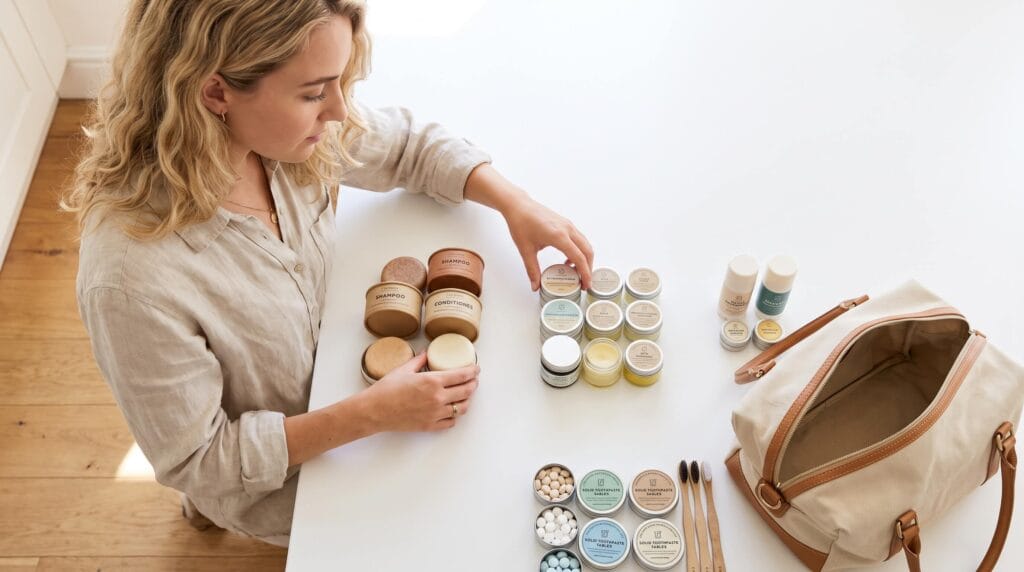
Complete Guide to Solid Toiletries by Category
Solid Shampoo Bars
Solid shampoo bars are the gateway solid toiletry product. Most travelers try these first and most are genuinely impressed by how well they work.
A solid shampoo bar is typically a compressed cake of cleansing ingredients, oils, and butters. You wet your hair, rub the bar directly on your scalp or rub it between your hands to create a lather, then wash as normal. One bar typically lasts as long as 50 to 100 milliliters of liquid shampoo, which means a bar that weighs 2 ounces replaces a much larger and heavier liquid bottle.
The transition from liquid to solid shampoo takes approximately two weeks for most people. Your scalp adjusts to the different formula and your hair begins responding to the concentrated ingredients. After this adjustment period, most people find their hair actually looks and feels better with solid shampoo bars.
For travel specifically, solid shampoo bars are transformative. One small bar travels easily, weighs almost nothing, lasts the entire trip, and TSA has zero issues with them. If you switch to nothing else, solid shampoo bars alone make travel packing significantly easier.
The downside is that you need a soap dish or a small container with drainage in your hotel or hostel so the bar can dry between uses. A wet bar left in a sealed container will start to break down. This is a minor inconvenience compared to the benefits.
Solid Conditioners and Leave-In Conditioners
Solid conditioner bars work similarly to solid shampoo bars. You can rub them directly onto wet hair ends or rub between your hands to create a conditioning paste.
A solid conditioner bar is slightly creamier than a solid shampoo bar because conditioner needs to coat the hair rather than strip it. A single bar typically lasts as long as 50 to 100 milliliters of liquid conditioner.
For travel, solid conditioner bars eliminate the need to pack a separate liquid conditioner bottle. Your hair gets the conditioning it needs from a product that weighs almost nothing and takes minimal space.
Solid leave-in conditioners are more specialized products but they exist and they work. These are typically in a stick or solid cake format and you apply them to damp hair. They provide the same nourishing benefits as liquid leave-in conditioners without the liquid restrictions.
The challenge with solid conditioners is making sure you use enough. The concentrated formula means a little goes a long way, but on long or very dry hair you need to use slightly more than you would with a liquid to get full coverage.
Solid Face Cleansers
Solid face cleansers are available in two formats: solid bars similar to shampoo bars, or concentrated paste or clay cakes that you activate with water.
A solid face cleanser bar works exactly like a solid shampoo bar. You wet your face, rub the bar on your face or between your hands to create a cleansing lather, and wash. These are remarkably efficient and a single bar lasts for dozens of uses.
Concentrated face cleanser pastes and clays are typically in small pots and you add water to activate them into a cleansing paste. These are particularly good for travel because a tiny amount goes extremely far and they are very concentrated.
For travel, solid face cleansers are excellent because they eliminate the need for a liquid cleanser bottle. A solid bar takes almost no space and zero TSA concern. The transition is quick since your face adjusts faster than your scalp does.
The only consideration is making sure you have a drainage dish for your solid bar or making sure a concentrated paste does not dry out in your bag. Both are minor management issues.
Solid Moisturizers and Face Oils
Solid moisturizers exist in several formats. There are solid balms that are 100 percent oil or butter based with minimal water. There are solid cakes or sticks that contain more structured ingredients. And there are concentrated moisturizer pastes that you melt slightly between your palms before applying.
A solid moisturizer typically has a higher concentration of nourishing ingredients than liquid moisturizers. This means you use less product per application and it lasts longer.
For travel, solid moisturizers are genuinely convenient. A small pot or stick of solid moisturizer weighs less and takes less space than a liquid moisturizer bottle. It has zero TSA restrictions. And it typically lasts longer than a liquid version.
The transition is immediate. You warm a tiny amount between your palms and apply to damp skin. The product absorbs just like a liquid moisturizer would. Most people find no transition period because the application is so similar. Solid face oils are less common but they exist and work extremely well for travel. (If your skin is particularly prone to dehydration in cabins, you can pair these solids with our full breakdown on the best skincare routine for long-haul flights with dry skin).
Solid face oils are less common but they exist. These are typically wax-based products that provide the benefits of a facial oil without the liquid format. They work extremely well for travel.
Solid Deodorants
Most people already know solid deodorant exists because solid deodorant sticks are extremely common. What might be less familiar is that solid deodorants have improved dramatically and now perform just as well as liquid or spray deodorants.
A solid deodorant stick is TSA-friendly because it is solid. You swipe it on like always. The antiperspirant and deodorant ingredients are the same as in liquid versions, just in a solid format.
For travel, solid deodorant is the most obvious choice. It takes minimal space, weighs almost nothing, and lasts longer than spray deodorants. Most people do not even consider the alternative.
The only consideration is making sure you get a formula appropriate for your skin type and activity level. Some solid deodorants are more effective for extreme heat and sweat than others.
Solid Sunscreen
Solid sunscreen in stick or balm form exists and is genuinely useful for travel. These are typically either mineral sunscreen in a solid balm format or chemical sunscreen in a waxy solid stick.
A solid sunscreen stick is TSA-friendly and actually performs very well for face and body application. The stick format makes application easy and you can easily apply exactly how much you need. For travel, solid sunscreen sticks are excellent for day trips and outdoor activities. (If you have reactive skin, you can read our curated recommendations for a TSA approved sunscreen stick for sensitive skin to avoid irritation on the go).
For travel, solid sunscreen sticks are excellent for day trips and outdoor activities. They weigh almost nothing, they do not spill, and they last significantly longer than spray sunscreens.
The downside is that stick sunscreens can be slightly more difficult to apply evenly than liquid sunscreens. You need to rub the stick on and then rub in well to avoid streaking. With practice this becomes second nature.
Solid Toothpaste
Solid toothpaste typically comes in one of two formats. Toothpaste tablets that you chew to activate and then brush with, or toothpaste pills with a similar concept.
Solid toothpaste tablets are extremely TSA-friendly and extremely compact for travel. A small container of tablets weighs almost nothing and takes minimal space. One container lasts for weeks of twice-daily brushing.
The transition from traditional toothpaste to tablets is immediate. You pop a tablet in your mouth, chew it briefly to activate it, then brush as normal. The sensation is slightly different from traditional toothpaste but the cleaning effectiveness is identical.
For travel, toothpaste tablets are exceptionally convenient. They are compact, lightweight, TSA-friendly, and they last a remarkably long time.
The only consideration is that some tablets take getting used to. The taste and sensation are slightly different from traditional toothpaste. Most people adapt immediately but it is worth testing at home before a trip.
Solid Perfume and Dry Shampoo
Solid perfumes are concentrated fragrance in a solid stick or balm format. These are TSA-friendly and much more travel-efficient than liquid perfumes.
A solid perfume stick lasts incredibly long because you use only a tiny amount. You rub it on your wrists, neck, or behind your ears just like you would dab on liquid perfume. The concentration is higher so a small solid stick provides weeks of fragrance.
Solid dry shampoo in powder or solid format is available and it works excellently. Powder dry shampoo is definitely solid and TSA-friendly. Solid dry shampoo in a compact format provides the oil-absorbing benefits without any spray or liquid.
For travel, both of these products eliminate liquid restrictions while providing their intended benefits. They are optional products but if you use them daily at home, the solid versions travel exceptionally well.
How to Use Solid Toiletries Correctly While Traveling
The Transition Period and What to Expect
Most solid toiletries require a brief transition period for your body to adjust. For shampoo and conditioner, this is typically two weeks where your scalp adjusts to the different formula and begins producing the right amount of oil.
During this transition period, you might experience slightly different hair behavior. Some people find their hair is greasier initially as their scalp adjusts. Some find it is drier. This normalizes within two weeks as your scalp acclimates to the new product.
For face cleansers and moisturizers, there is typically no transition period. Your face adjusts immediately to solid products.
For deodorant and toothpaste, the transition is also immediate unless you are switching from an antiperspirant to a deodorant-only formula, in which case you might notice you sweat slightly more initially as your body adjusts.
Planning your transition at home rather than waiting until travel ensures your body adjusts before you are on a trip.
Storage and Care While Traveling
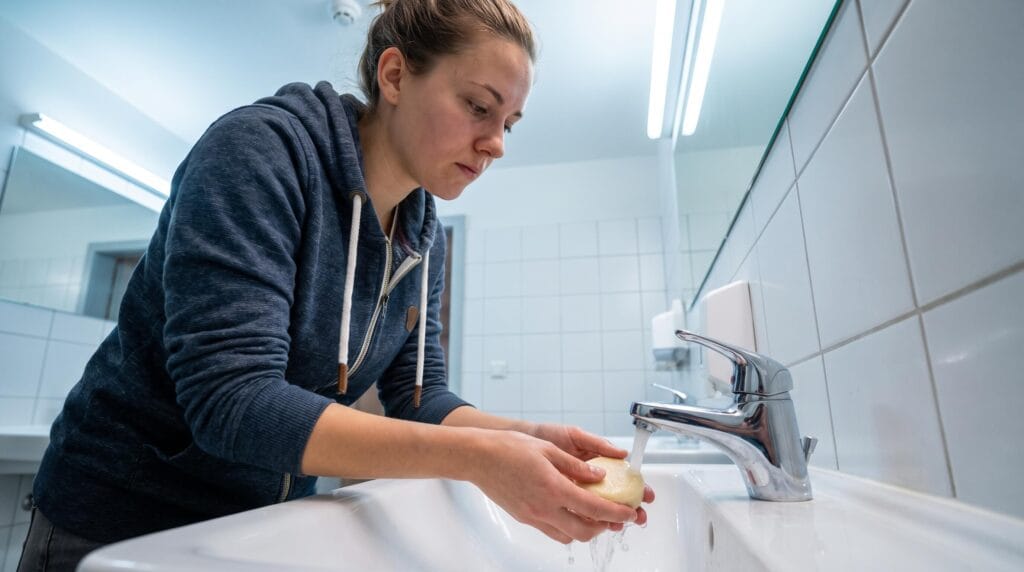
Solid products need proper care while traveling to maintain their form and effectiveness. A solid shampoo bar needs drainage and air circulation so it can dry between uses. Storing it in a sealed container will cause it to break down.
Travel-specific soap dishes with drainage are designed for this. They are small, lightweight, and let your solids drain and dry properly. Many hostels provide these but bringing your own ensures you have what you need.
For solid moisturizers and face cleansers in pots or containers, keep the lid tightly sealed between uses so they do not dry out or get contaminated.
For solid sticks like deodorant or solid perfume, keep the cap on between uses to prevent them from drying out excessively.
Temperature affects solid products. In high heat they can soften. In cold they might become slightly brittle. This does not affect performance but it affects ease of application. A solid deodorant that is slightly soft from heat is still effective, just slightly messier to apply.
Using Solid Products Effectively
For solid shampoo bars, wet your hair first, then either rub the bar directly on your scalp or rub it between your hands and distribute the lather. Use less than you think you need. A solid bar is concentrated so you need significantly less product than you would with liquid shampoo.
For solid conditioners, apply to the ends of your hair and work up slightly. Leave it on for a minute before rinsing. Again, less is more. A tiny amount of solid conditioner coats long hair effectively.
For solid face cleansers, wet your face, rub the bar on your face or between your hands to create a lather, wash gently, and rinse. The concentrated formula means you need very little.
For solid moisturizers, warm a tiny amount between your palms and apply to damp skin. Press it in gently. The heat from your hands helps the product absorb.
For solid deodorant and other sticks, apply as you normally would. The technique is identical to liquid versions, just without the spray.
For solid sunscreen sticks, apply directly to skin or rub between your hands and distribute. Make sure you use enough to cover adequately. The SPF rating assumes proper application depth.
Building Your Complete Solid Toiletries Travel Kit
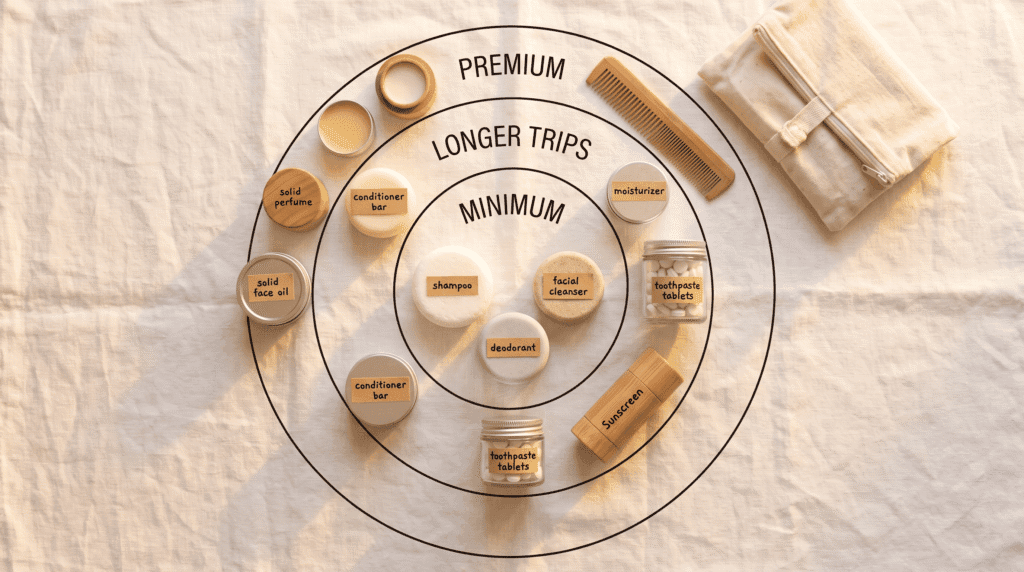
The Absolute Minimum Solid Kit
Check out this complete toiletries travel kit on Amazon
For any trip of any length, you need a solid shampoo bar or a solid face cleanser. These two items alone eliminate your biggest liquid toiletries concern. Add a solid deodorant and you have eliminated three of the most space-consuming liquid products.
These three items represent the starting point of a solid toiletries kit. They take minimal space, weigh almost nothing, have zero TSA restrictions, and cover your basic hygiene needs.
By Trip Length: What to Add
For a week-long trip, the minimum solid kit plus a solid conditioner if you have longer hair, and a solid moisturizer for your face is genuinely sufficient. You have every toiletry you need for a week of travel.
For two to three weeks, add a solid toothpaste tablet container so you have toothpaste for the entire trip. Add a solid face oil or additional solid moisturizer if your skin is dry.
For a month or longer trip, consider the complete kit. Solid shampoo, solid conditioner, solid face cleanser, solid moisturizer, solid deodorant, solid toothpaste, solid sunscreen, and solid perfume if you wear it. Everything is solid and carries zero TSA concern.
Even a complete solid toiletries kit for extended travel weighs and takes up significantly less space than a liquid kit would. (If you are specifically planning a shorter getaway, you can also see our step-by-step breakdown on how to pack cosmetics in a carry on bag for a 3-day trip to optimize your pouch).
Cost Considerations
Solid toiletries often cost slightly more upfront than their liquid counterparts. However, they last significantly longer. A $12 solid shampoo bar lasts as long as three $6 bottles of liquid shampoo, so the per-use cost is actually lower.
For frequent travelers, the investment in solid toiletries pays for itself within a few trips through the savings in checked bag fees and the extended life of products.
For occasional travelers, solid products are an excellent choice because they encourage you to pack lighter, which often saves on luggage fees.
Frequently Asked Questions
Are solid toiletries allowed in checked bags?
Yes absolutely. Solid toiletries have zero restrictions in either carry on or checked bags. You can pack as many as you want in either location.
Do solid products work as well as liquid versions?
Yes, generally better. The higher concentration of active ingredients means solid products are often more effective. Your shampoo will clean just as well, your deodorant will work just as well, and your moisturizer will moisturize just as well.
How long does a solid bar typically last compared to a liquid?
A solid shampoo bar typically lasts as long as two to three 8-ounce bottles of liquid shampoo. A solid conditioner bar lasts similarly. A solid face cleanser cake lasts dozens of uses. The extended longevity is one of the main benefits of solid products.
Can I bring solid products in my carry on bag without any restrictions?
Yes, completely. Solid toiletries are not subject to the 3-1-1 liquid rule. You can bring as many as you want. However, make sure they are legitimately solid. If a product has a liquid center or liquid component it might still be classified as a liquid.
What if I cannot find solid versions of my favorite products?
Decant your favorite liquid into a small solid container or buy travel-size versions that you know will fit TSA restrictions. Many brands now offer solid versions of popular products, but if you have a favorite that does not exist in solid format, travel sizes are the next best option.
Do solid products work in humid tropical climates?
Yes, though some solid products soften slightly in extreme heat. This does not affect their effectiveness but it might affect ease of application. A slightly soft solid deodorant still works perfectly. A moisturizer that softens slightly still moisturizes effectively.
Final Thoughts
TSA restrictions on liquids are a genuine inconvenience for travelers. But solid toiletries have made them completely optional.
By switching to solid products, you eliminate an entire category of packing stress. You do not need to measure ounces. You do not need to worry about spills ruining your bag. You do not need to check bags for toiletries you can easily fit in your carry on. You do not need expensive travel-size dupes of your favorite products.
You simply pack solid alternatives that often work better, last longer, and travel more efficiently than their liquid counterparts.
The barrier to adoption is simply unfamiliarity. Once you try solid shampoo and realize your hair looks just as good or better, once you pack a solid moisturizer and realize it lasts longer than a liquid version, once you realize you no longer have to stress about TSA liquid restrictions, the choice becomes obvious.
Start with one or two solid products. Test them at home so your body adjusts before travel. Then expand your solid toiletries collection based on what you discover works for you.
Travel lighter. Pack smarter. Never stress about TSA liquid restrictions again.