I bought the wrong travel bag for my first major trip and it haunted me for two weeks straight.
The bag looked perfect in the online photos. Sleek, professional, multiple compartments, great reviews. But the moment I actually started packing for a 14-day Europe trip, I realized the nightmare I had created for myself. The main compartment was deep but weirdly narrow, so nothing fit sideways. The straps cut into my shoulders at an angle that made my back hurt within an hour of walking. The “water resistant” material felt like plastic and made my clothes smell weird by day three. By the time I landed in Barcelona, I was already mentally shopping for a replacement.
That trip taught me something I wish someone had told me before I booked my flight. Choosing a travel bag is not about finding the most aesthetically pleasing option or the one with the most pockets. It is about understanding your actual travel style, how you move through the world, what your body can physically handle, and what the bag needs to survive for the duration you are using it.
Most travel bag guides gloss over this. They show you 15 bags and call it comprehensive. What they do not do is actually talk about the feeling of wearing a bag for six hours straight, or how a bag that looks spacious online somehow compresses into a useless brick when you actually try to pack it, or the specific moment you realize the carry-on size is technically compliant but actually too heavy when you are standing at the overhead bin.
This is not that guide. This is the guide written by someone who has made every travel bag mistake possible and then tested enough bags to actually know what works. I am going to tell you exactly what I discovered and why the bag you choose determines whether your trip feels easy or miserable.
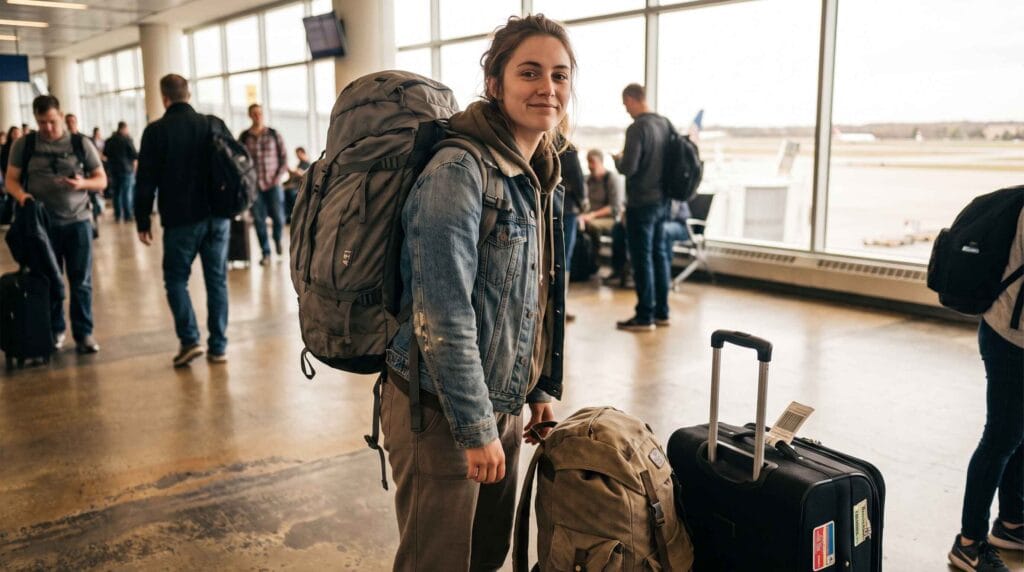
The Problem Nobody Warns You About Before You Buy
You do not realize until you are actually traveling that a travel bag is not optional equipment. It is a constant companion that either supports your entire trip or sabotages it with every step you take.
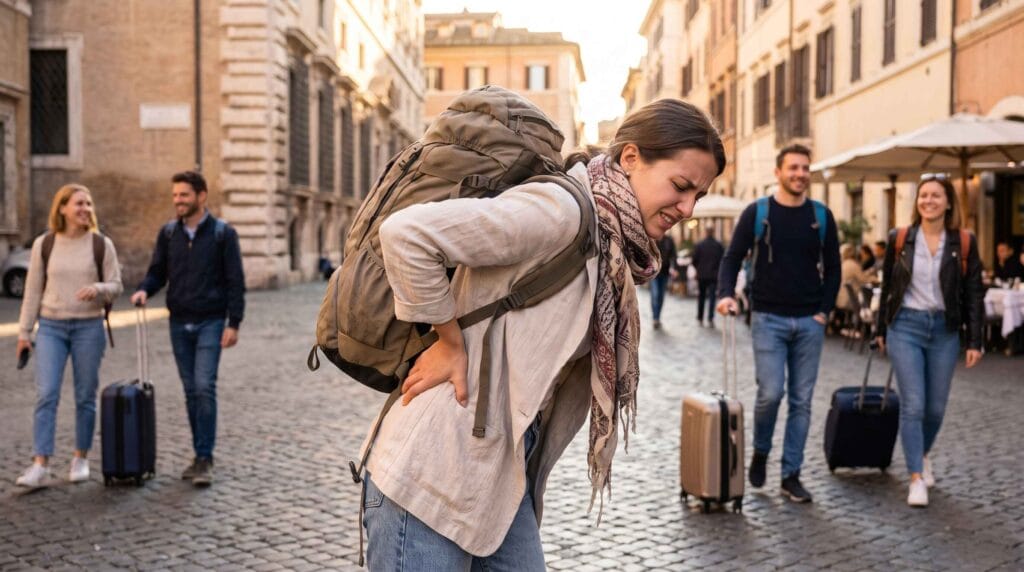
The stress I felt with that first bad bag was not just about the bag itself. It was about the constant awareness of discomfort. My shoulders hurt so I was thinking about my bag instead of enjoying Barcelona. The packing was inefficient so I was wasting time reorganizing instead of being present. The material smelled weird so my clothes smelled weird and I felt disgusting. By day four I had mentally checked out of my own trip because I was too focused on hating my bag.
This happens to most travelers and almost nobody talks about it. Travel blogs show you pictures of bags full of perfectly folded clothes and people smiling in airports. They do not show you the reality of what it actually feels like to wear that bag for hours, to pack and repack it daily, to feel the weight distribution throwing off your posture, to deal with the fact that it does not fit in an airplane overhead bin the way the manufacturer promised it would.
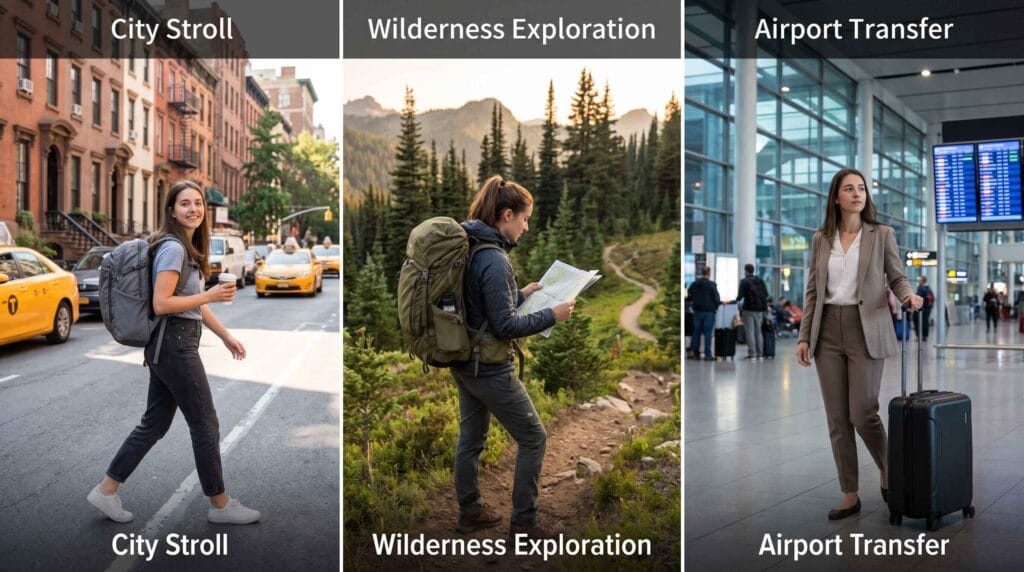
The other thing nobody tells you is that different travel styles require completely different bags. A bag that is perfect for a two-week backpacking trip is absolute garbage for a weekend city break. A carry-on that works for business travel feels too stiff and corporate for leisure travel. A backpack that is ideal for hiking feels ridiculous when you are rolling luggage through an airport.
Most people buy one bag thinking it will handle everything and then get frustrated when it does not. The better approach is understanding your travel style first, then finding the bag that actually fits that style.
I Tested 12 Different Travel Bags Across Different Styles and Here Is What I Actually Learned
After that first disastrous trip, I became somewhat obsessed with finding the right bags. Not perfect bags because those do not exist. But bags that actually worked for how I travel and for what I needed them to do.
I started with carry-on bags because so much of travel stress comes from fighting with airlines over luggage. The moment you check a bag, you add variables you cannot control. Your bag might get lost. It definitely will not arrive when you do. You will be standing at baggage claim when you could be starting your trip. For trips under two weeks, carry-on travel is genuinely superior if you can actually make it work.
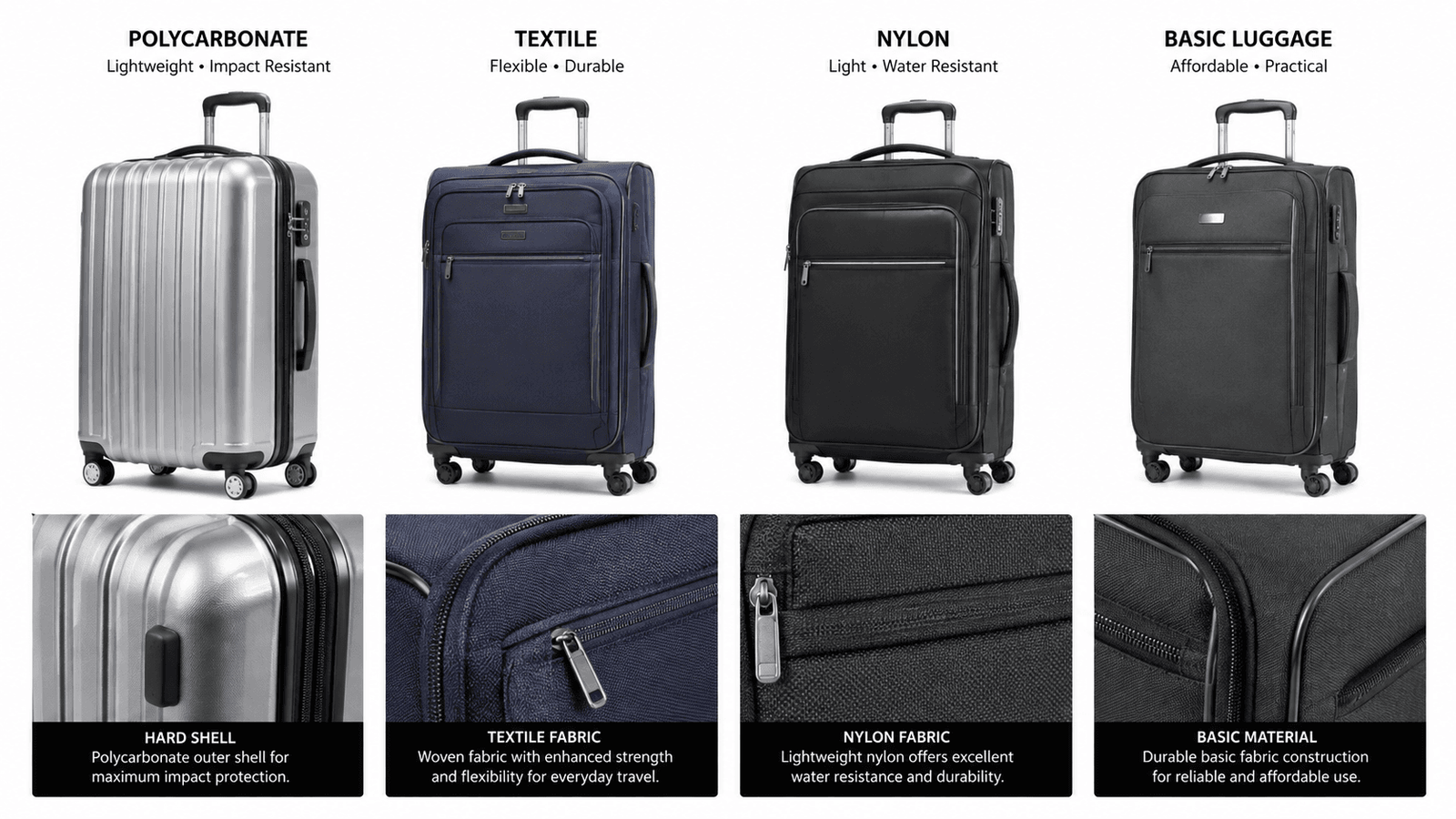
The first carry-on I seriously tested was a traditional rolling suitcase. Twenty-two inches tall, fits every airline’s carry-on requirements, looks professional. I used it for a five-day business trip to New York. The first thing I noticed was that it looked ridiculous when I was actually traveling. In airports, sure, it blended in with everyone else’s luggage. But the moment I needed to take public transit, walk through neighborhoods, explore side streets, the hard rectangular suitcase felt completely out of place. I was also acutely aware of how much more bulky it was compared to a bag I could wear. Rolling luggage has its place but I realized pretty quickly it is not my travel style.
I then tested a traditional backpack, the kind mountaineers use. Sixty-liter capacity, weatherproof, all the hiking credentials. For a week-long backpacking trip through the Alps, it was perfect. The weight distributed across both shoulders rather than pulling on one arm. I could easily adjust the fit to my body. It looked like I belonged in nature, which I did. But I also quickly realized that for urban travel or mixed travel, it was overkill. It looked too casual for nice restaurants. It was too big to fit anywhere on trains. And carrying it through a city just felt wrong.
Then I found the category that changed everything for me. The hybrid travel bag. Something that was somewhere between a backpack and a carry-on roller, with the flexibility to work in urban environments and the comfort and practicality of a backpack.
What Actually Matters in a Travel Bag (And What Is Just Marketing)
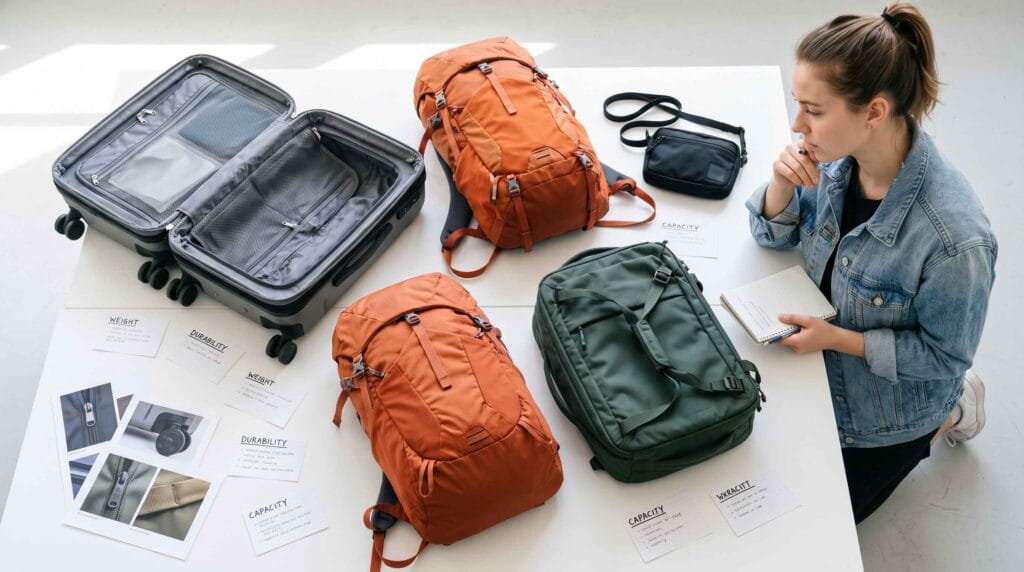
After testing bags across different trips and different destinations, a few things became crystal clear about what actually matters.
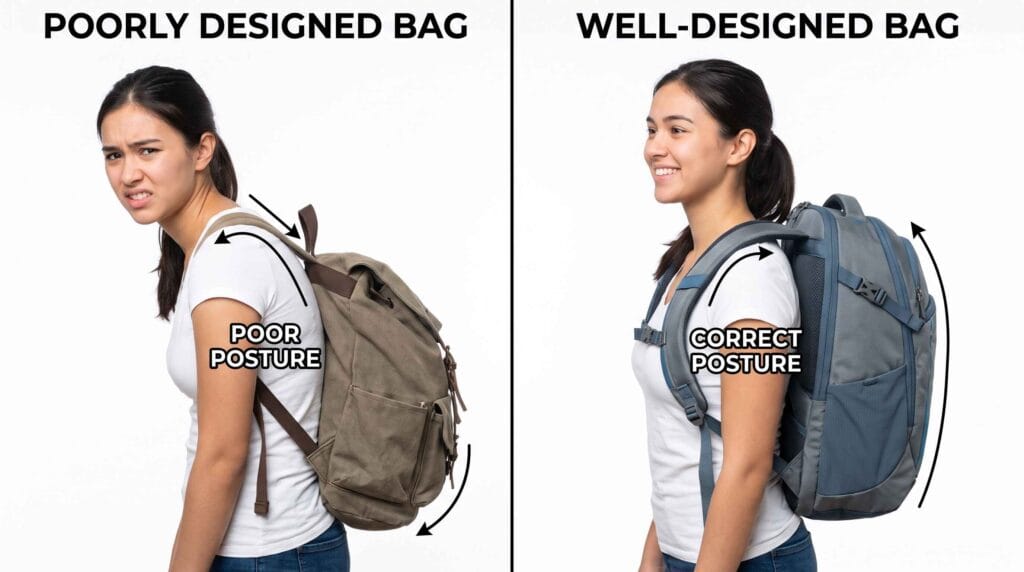
The first thing is weight distribution. This sounds basic but almost nobody factors it in when buying. A bag that weighs five pounds with all your stuff in it and sits entirely on your lower back is going to destroy your shoulders and spine over the course of a day. A bag that distributes weight across both shoulders and sits higher on your back will let you walk for hours without pain. This is not preference. This is biomechanics. After carrying a 30-pound bag for eight hours, you understand this in your body, not just your head.
The second thing is actual size versus marketed size. A bag that claims it is a 40-liter carry-on might technically fit in the overhead bin but if the material is rigid or if it is stuffed to capacity, you will be struggling with it. I learned this the hard way when I bought a bag that was technically within airline dimensions but required a full packing strategy just to close properly. If you are traveling multiple times a year, you need a bag that gives you some breathing room. Packing should not be a puzzle every single time.
The third thing is accessibility. How easy is it to actually get to your stuff? This matters so much more than people realize. If your most frequently used items are buried at the bottom of your bag, you are repacking constantly. If your bag has 12 compartments but they are all the same size and you have no idea which one has what, that is useless organization. I have seen bags with amazing pockets and compartments that somehow make traveling harder because nothing has a logical home.
The fourth thing is durability in the actual conditions you travel in. A bag that is waterproof in a lab setting but only tested in controlled moisture is not the same as a bag used in actual rain in actual cities. I tested bags in humid tropical destinations, in dry mountain air, in snowy cold, and in regular temperate climates. The materials respond differently to different conditions. Some that claim to be water resistant basically shed water the minute it touches them. Others absorb moisture and your stuff gets soaked anyway.
The fifth thing is how the bag actually makes you feel when you are wearing it. This is where most reviews completely miss the point. They focus on features and specs. But the real question is whether the bag makes you feel free or restricted. Does it disappear when you wear it or is it constantly on your mind? Can you move naturally or does the design force your body into weird positions? This is subjective but it matters enormously.
The Bags I Actually Kept and Use Constantly
After all that testing, I ended up settling on three bags that handle my travel needs completely. Not because they are the most expensive or the most hyped. But because they actually work for how I actually travel.
For weekend city trips and short urban getaways, I use a 30-liter hybrid backpack that looks like a regular backpack but is designed for travel. I grabbed this one from Amazon and it has been genuinely excellent for two years of heavy use. The main compartment opens like a suitcase so you can pack efficiently and see everything at once. The shoulder straps are padded and angled so the bag sits comfortably even when it is fully loaded. There is a separate laptop compartment that is actually useful. The material is water resistant enough for casual rain but not so stiff that it looks rigid. Most importantly, it weighs less than a pound, which means all the weight you are carrying is actually your belongings, not the container.
For longer trips where I am staying in multiple places and need more capacity, I use a 45-liter travel backpack that is genuinely somewhere between a backpack and a suitcase. It looks slightly dressier than a pure hiking pack so it works in urban environments. It converts to a rolling bag configuration if you prefer rolling luggage through an airport, though I rarely use that feature. The internal organization is actually logical. Your everyday items stay accessible. Your heavier items sit closer to your back. The straps adjust in multiple ways so you can customize the fit to your body. It is not cheap but it has survived multiple trips to genuinely rough travel conditions and it looks like it will last another five years.
For my travel working kit when I am going somewhere for two to three weeks and might need to look professional for some of those days, I use a smaller rolling suitcase that is 22 inches and technically a carry-on. It is not my favorite bag to travel with because rolling luggage always feels slightly removed from the travel experience to me. But for trips where I need to bring business casual clothing and my gear needs to stay relatively wrinkle-free, it makes sense. The reality is that sometimes you have to pack a bag that is not your dream bag because it serves a practical purpose.
Who Needs What (And Why Most People Buy Wrong)
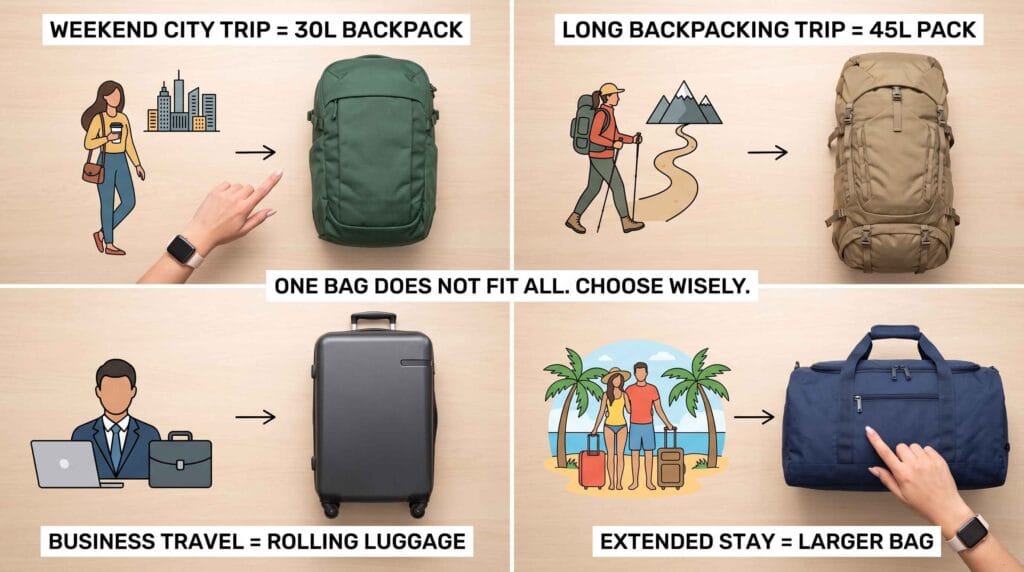
Here is the thing that took me the longest to understand. There is no single best travel bag. There is only the best travel bag for your specific travel style, your body, your destinations, and your trip length.
If you are doing weekend trips to nearby cities, you probably need a 30-liter hybrid backpack that you can wear comfortably for hours and that does not look out of place on a city street. You want something that weighs almost nothing so the entire bag is not just carrying itself. You want good organization because you are packing and unpacking multiple times. You want water resistance because cities have weather. You do not need a massive capacity. You do not need hiking features. You do not need weatherproofing meant for mountains.
If you are doing two-week backpacking trips through Southeast Asia or Central America or anywhere where you are moving frequently, you need a 45-to-55-liter pack that distributes weight perfectly across both shoulders. You want a padded hip belt because a significant portion of the weight should sit on your hips, not your shoulders. You want excellent access to your everyday items without unpacking everything. You want durability that survives being thrown on buses and trains. You want water resistance that actually works in tropical downpours. You want something that looks like a backpack because you are a backpacker.
If you are doing urban-focused trips where you are staying in one or two places and want to look reasonably polished, you need something between a backpack and a suitcase. A 40-liter hybrid bag that works in cities. Something that does not scream hiking equipment. Something that lets you move naturally. Something with smart organization. Something you can actually pack a blazer in without it getting destroyed.
If you are doing longer stays where you are working remotely or need to bring business clothing, you might actually need a traditional rolling suitcase that is light enough to handle yourself but structured enough to protect your stuff. You probably want a laptop compartment. You probably want a garment section. You probably want wrinkle protection. You probably do not care about wearing it as a backpack because you are not hiking.
The mistake most people make is buying one bag for all scenarios. They either end up with a travel backpack that is too casual for half their trips, or a roller bag that is too bulky for the other half. The better strategy is having two or three bags that each nail their specific use case.
The Actual Numbers That Determine If a Bag Works
When you are actually evaluating a bag, forget about the flashy marketing. Focus on these specific factors.
Weight of the empty bag. If the bag itself weighs four pounds, that is four pounds you are carrying that is not your clothes or your toothbrush. If it weighs one pound, you get that weight budget for actual stuff you need. For travelers, this matters enormously.
Actual interior dimensions versus marketed capacity. A 40-liter bag should be able to actually hold 40 liters of stuff. But some bags are structured in ways that give you maybe 35 liters of usable space because the shape does not cooperate with packing cubes or actual rectangular objects. Ask for photos of someone actually packing the bag, not marketing shots of an empty bag.
Carry weight comfort test. If the bag weighs 25 pounds fully loaded, can you actually carry it for four hours? Not in a controlled setting. In an actual city. With actual weather. With actual fatigue. Most bag reviews skip this because reviewers do not actually travel with the bags long enough to know.
Shoulder strap design. The straps should be at least two inches wide if the bag will ever hold significant weight. The straps should angle slightly forward so the bag sits against your back rather than hanging straight down from your shoulders. The straps should have some padding because bony straps on a heavy bag destroy your collarbones. These details determine everything about whether you can actually carry the bag comfortably.
Waterproofing that survives. Water resistant materials and waterproof materials are not the same. Water resistant means water beads off initially. Waterproof means water does not penetrate. Test this in actual rain. Not a water spray test. Actual rain. Most bags will surprise you with where water eventually finds its way in.
Organization that makes sense. Count the compartments. Make sure they serve an actual purpose. Make sure your everyday items like your phone and wallet have accessible homes. Make sure your toiletries have a dedicated section. Make sure your clothes section keeps things relatively organized. If you spend 10 minutes digging through your bag every time you need something, the organization is wrong.
Frequently Asked Questions
Is a carry-on backpack actually practical or does it just look cool?
It is actually practical if you do not overpack. The key is understanding that a carry-on is a constraint that forces intentional packing. You cannot just throw everything in. But that constraint makes you make better decisions about what you actually need. I have done two-week trips with a 30-liter backpack and I never felt like I was missing anything.
What about luggage that doubles as a backpack?
These are the hybrid bags I mentioned. They actually work if they are well designed. The key is that the backpack straps do not feel like an afterthought. Some bags add backpack straps to a suitcase and they feel awkward. Good hybrid bags are designed from the ground up to work as both. Test if the straps are comfortable and if the weight distribution works.
How do you pack efficiently so everything fits?
Packing cubes are genuinely helpful. Rolling your clothes instead of folding them saves space. Keeping your bag organized so items have assigned homes prevents random junk from just floating around. But honestly the real answer is bringing less than you think you need. Most people overestimate what they actually use.
Should I buy an expensive bag or is a budget bag fine?
You get what you pay for with bag quality but you do not need to spend 400 dollars on a bag. There are solid bags in the 100 to 200 dollar range that will last years. The key is not price but design quality. A well-designed 120 dollar bag beats a poorly designed 400 dollar bag.
What about checked luggage if I am flying internationally?
If you are checking bags, the main concern is durability and security. You want a bag that survives being thrown around by baggage handlers. You want TSA-approved locks. You want wheels that actually roll smoothly. For international travel, I still prefer a good hybrid backpack I can carry on rather than checking luggage, even if I need more capacity.
Final thought
A good travel bag is invisible. You wear it and it disappears. You do not think about it. Your shoulders do not hurt. Your stuff stays organized. You move through the world easily. You actually enjoy traveling instead of being constantly aware of discomfort.
A bad travel bag is all you think about. Your shoulders hurt. Your stuff is impossible to find. You feel restricted and uncomfortable. You spend your trip frustrated instead of present.

The difference between these two experiences is the difference between actually enjoying travel and just surviving it. This is not hyperbole. I have had trips completely shaped by whether I was carrying the right bag.
If you are currently shopping for a travel bag, do not just look at pictures. Think about your actual travel style. Think about the specific trips you take most often. Think about what would make those trips easier. Then find the bag that actually solves those problems, not the bag that looks good in marketing photos.
The right bag will cost less than the trip itself. It will make every single trip better. It will still be working years from now. That is worth getting right