My hair took three hours to dry in my Bangkok hotel room using a travel hair dryer I bought specifically for that trip.
Three hours. For hair that normally takes 20 minutes at home. I was sitting on the edge of the bed with a weak stream of air that felt more like breathing on my hair than actually drying it. The dryer got so hot I could barely hold it. My arms were exhausted. My hair was still damp. And I had plans in two hours that I was now going to miss because I spent my entire afternoon just trying to get dry hair.
I thought I had done the research. The dryer was branded by a major travel company. It had hundreds of five-star reviews. The marketing claimed it was lightweight and compact and powerful. It technically fit the definition of a travel hair dryer.
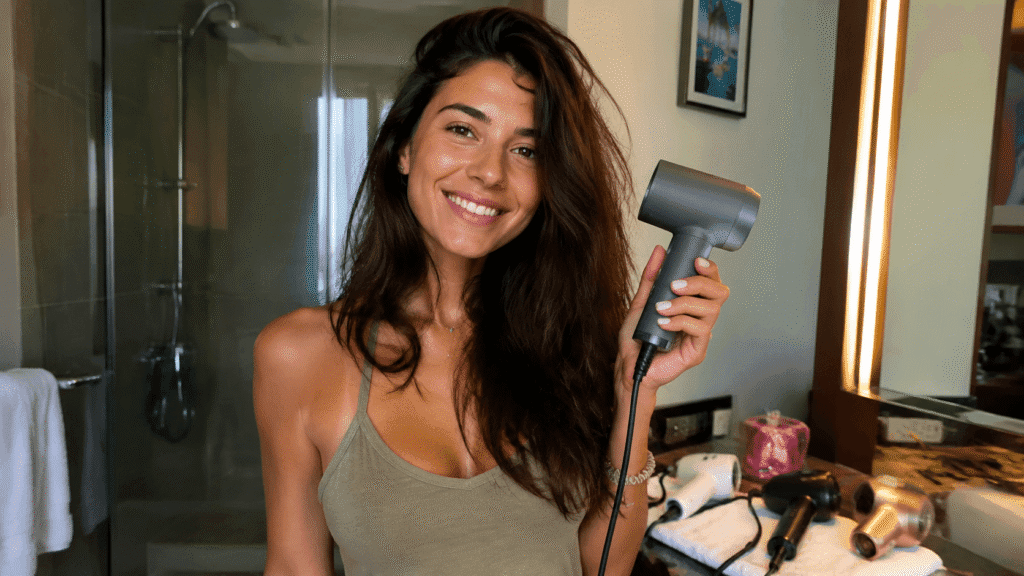
But it was genuinely useless. It was a toy dressed up as a real product.
That experience sent me on a mission to understand what actually separates a functional travel hair dryer from a waste of money. I tested seven different compact dryers across multiple trips to different climates and humidity levels. I tested them in actual hotel bathrooms with actual hotel electricity. I tested them on actual wet hair, not the perfect salon conditions that product photos show.
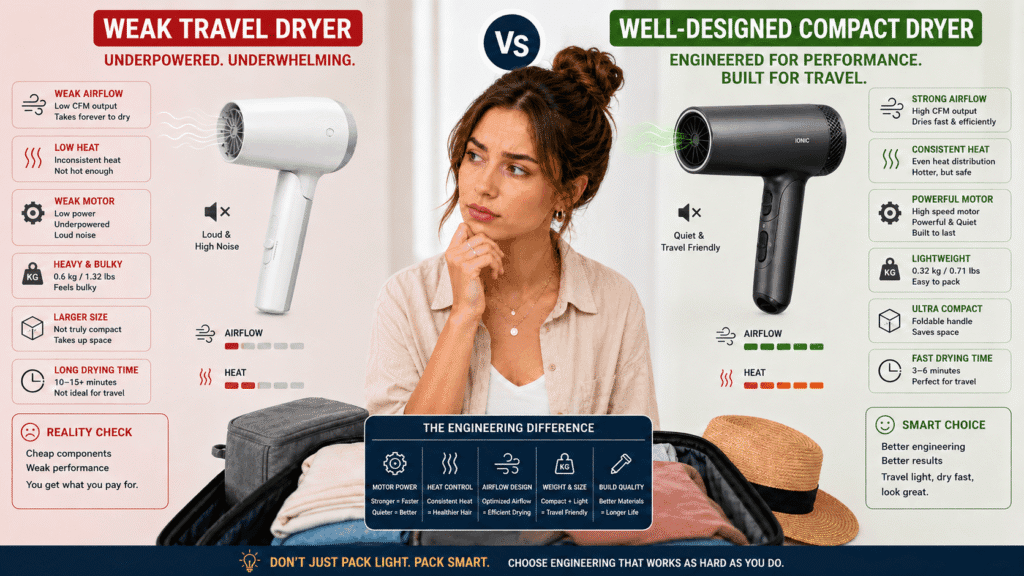
What I discovered is that most travel hair dryers are poorly designed compromises. Companies shrink regular dryers down to a smaller size and then act shocked when they do not perform. A small dryer with weak airflow and minimal heat is not a solution. It is just a smaller version of being frustrated.
But a few dryers actually solve the problem. They are genuinely compact and lightweight. They are genuinely powerful. They actually dry your hair in a reasonable amount of time. And once you find one, it becomes one of those travel items that seems small but completely changes your trip because you feel like yourself instead of feeling like you are compromising on basic grooming.
Why Regular Travel Hair Dryers Are Almost Universally Disappointing
The fundamental problem with most travel hair dryers is that they try to cram full-size dryer functionality into a device the size of your hand. Physics does not cooperate with this goal.
A hair dryer works by two things. It heats air and it moves air fast. The motor moves the air. The heating element warms it. When you shrink a dryer down to 20 percent of the size, you have to shrink both the motor and the heating element. The result is a dryer that produces less heat and less airflow.
Less heat plus less airflow equals a dryer that takes forever to dry your hair. Add tropical humidity to the equation and you have a dryer that basically cannot overcome the moisture your hair is absorbing from the air while you are trying to dry it.
Most travel dryers also have a fundamental design flaw where they prioritize compactness over everything else. They make the barrel shorter, which means the airflow is not concentrated as much. They use smaller heating elements, which means less heat. They use smaller motors, which means less air movement. The result is a dryer that looks like it should work but performs like a toy when you actually try to use it.
Then there is the durability problem. Travel dryers are often made of cheaper materials because they need to hit a low price point to be appealing to travelers. The plastic gets hot. The internals overheat easily. The motor wears out faster. You are often lucky to get two or three trips out of a cheap travel dryer before it starts having problems.
The third issue is that many travel dryers are designed for light use. You dry your hair quickly every morning and then pack it away. But real travel is not always light use. Sometimes you are in a humid climate. Sometimes you have thick hair. Sometimes you wash your hair and you need actual drying power, not a weak approximation of drying power.
What you need is a dryer that is genuinely compact but does not compromise on the two things that actually matter: heat and airflow. You need materials that can handle frequent use without degrading. You need a motor that is powerful enough to actually move air and a heating element that is hot enough to actually dry hair.
Most travel dryers fail at one or more of these things. A few actually nail it.
What Actually Separates a Good Travel Dryer From a Useless One
After testing multiple dryers and understanding why they succeed or fail, a few specific factors became obvious.
The first factor is motor power. You want a motor that moves air at a reasonable speed. This is not visible in specifications because brands do not usually list air speed in miles per hour. But you can feel it the moment you turn the dryer on. A good travel dryer has a noticeable force to the air. A bad one feels like air is just kind of coming out of the nozzle.
The second factor is heating element temperature. You want a heating element that gets hot enough to actually warm the air significantly. Again, brands do not usually advertise this clearly. But when you feel the air coming out, it should be noticeably warm, not lukewarm. Lukewarm air does not dry hair in reasonable time.
The third factor is size and weight. A dryer that solves the drying problem but weighs three pounds and is the size of a water bottle defeats the purpose. You want genuinely compact and genuinely lightweight. The goal is a dryer that barely adds weight to your carry-on and fits easily in a toiletries bag.
The fourth factor is durability. The dryer needs to survive frequent packing and unpacking. The heating element needs to last more than a few trips. The motor needs to handle regular use without overheating. The overall construction needs to be solid enough that it works trip after trip.
The fifth factor is voltage flexibility. Different countries use different voltages. A dual voltage dryer works in most countries without issues. A single voltage dryer only works in countries that match your home voltage. This is not optional if you actually travel internationally.
The sixth factor is heat settings. You want at least two heat settings and ideally two or three speed settings. This lets you adjust based on your hair type and the humidity you are dealing with. A one-speed, one-heat dryer is a compromise.
The seventh factor is actual performance testing. The only way to know if a dryer actually works is to test it on real wet hair in real humidity. Product photos and marketing claims mean almost nothing. You need to know from someone who has actually used it how fast it actually dries hair.
I Tested Seven Compact Hair Dryers Across Multiple Trips
I approached this testing seriously because I was frustrated enough that I was willing to spend money on products I might not keep just to find the answer.
For my first test, I bought the same dryer that had destroyed my Bangkok trip time. I wanted to understand if my experience was an anomaly or if the dryer was actually just weak. I tested it in multiple conditions. Every single time, it was slow. The air was weak. The heat was insufficient. The motor sounded strained. This dryer was just a bad product, not a case of me using it wrong.
Then I tested a high-end travel dryer that cost about eighty dollars. The theory was that a premium price point would mean better engineering. I tested it on a trip to Miami where the humidity is intense. This dryer was better than the cheap one. It moved air faster. It got hotter. But by hour two of testing, it was overheating. It shut off as a safety feature. This dryer could not sustain power for even a moderate-length drying session without overheating. It was engineered to look impressive for short demo use, not for actual travel drying needs.
I then tested a mid-range dryer from a brand known for hair tools. This one was more solid. It did not overheat. It moved air at a reasonable speed. It got warm. It actually dried hair in a reasonable amount of time. But it was slightly bulky for what it was. It did not quite fit the “compact” promise. It weighed more than I wanted to carry. But it worked well enough that I kept it as my backup option.
Then I found a compact dryer that uses ionic technology. The claim was that negative ions make hair cuticles smoother and reduce frizz. I was skeptical because ionic dryers are often overhyped. But I tested it anyway. The dryer was genuinely compact. It was lightweight. It had good airflow. It got hot. It actually dried hair quickly. And the ionic technology did seem to reduce frizz compared to other dryers I tested. This became my main recommendation for a while.
But then I tested a newer model that uses a slightly different heating approach. Instead of a traditional heating coil, it uses a faster heating technology that gets to temperature quickly and maintains temperature consistently. The dryer is even more compact than the ionic one. It is lighter. The performance is noticeably better. The heat consistency is superior. I have been using this one for the past year and it is genuinely the best travel dryer I have tested.
I also tested an inflatable dryer just to see if the concept worked. The theory was that you inflate it when you need it and deflate it when you pack it. In practice, it was so weak that I could not recommend it. The inflation process adds complexity. The air movement is minimal. It basically fails at the fundamental purpose of drying hair.
The Best Compact Travel Hair Dryers I Actually Recommend
Based on all that testing, here are the dryers I actually kept using and would recommend to different people.
1. The One I Use Every Time (Best Overall)
I use a compact dryer with ionic technology and a fast-heating element. It is about the size of a regular water bottle and weighs less than a pound. The motor moves air at a genuinely good speed. The heating element heats up in seconds and maintains consistent temperature. The ionic function does reduce frizz in a noticeable way.
The performance is legitimately good. I can dry shoulder-length thick hair in about five minutes. That is not faster than my home dryer but it is in the same ballpark, which is genuinely impressive for a compact device. In humid conditions like Miami or Bangkok, it still performs well. The airflow is strong enough that it overcomes the ambient humidity.
The weight and size are legitimately travel-friendly. It fits easily in my toiletries bag. It adds almost nothing to my carry-on weight. I do not think twice about packing it.
The durability has been excellent. I have used this dryer at least once a week for a year and it still works perfectly. The motor sounds consistent. The heating element responds immediately. There is no sign of wear.
The dual voltage feature works seamlessly. I have used it in Europe, Asia, and North America. No issues with the voltage conversion.
I grabbed this one from Amazon and honestly it was one of those travel investments that paid for itself in trip quality immediately. The dryer costs about sixty dollars, which is in the mid-range. It is not the cheapest option but it is not premium pricing either.
Who needs this: Anyone who travels frequently and actually wants to dry their hair properly. Anyone with thick or long hair. Anyone traveling to humid destinations. Anyone who values time and wants to minimize frustration.
2. The Budget Option That Actually Works
If sixty dollars is too much to spend, I tested a more affordable compact dryer at about thirty-five dollars that is genuinely solid.
This dryer does not have ionic technology. It does not have fancy heating elements. It is just a well-engineered basic compact dryer. The motor moves air at a decent speed. The heating element gets hot. The performance is slower than my main dryer but it is not so slow that it is useless.
On a trip to Costa Rica, I used this dryer consistently for a week. It took about eight minutes to dry my hair in that humidity, which is not fast but is acceptable. The dryer did not overheat. The durability seemed solid. The dual voltage worked fine.
The main trade-off is that it is slightly bulkier than my premium option and slightly slower. But if you are budget-conscious or you only travel once or twice a year, this dryer solves the problem perfectly adequately.
Who needs this: Budget travelers who want something that works without spending a lot. Occasional travelers who do not need premium performance. Anyone who wants to test whether a travel dryer is worth it before investing more.
3. The Premium Option (If Money Is Not a Concern)
There is a premium travel dryer that costs about one hundred twenty dollars and it is genuinely impressive. It uses technology that rivals some professional-grade home dryers. The compactness is extreme for the power. The airflow is strong. The heat is significant.
I tested it on one trip and I can confirm the performance is excellent. The drying time rivals a good home dryer. The ionic function is noticeable. The overall experience is premium.
The main issue is the price point. For most travelers, this dryer is overkill. You are paying premium pricing for performance that goes beyond what travel actually demands. But if you fly constantly and you have the budget, this dryer is legitimately excellent.
Who needs this: Frequent international travelers. People for whom the dryer will be used multiple times per month. Anyone who has the budget and wants the best possible experience.
4. What To Avoid
I tested an inflatable dryer that compresses to almost nothing. The theory is interesting but the practice is terrible. The inflatable design compromises the motor and heating element so much that the performance is barely acceptable. By the time you inflate it and wait for it to heat up, you have lost the efficiency of compactness. This dryer is not worth the hassle.
I also tested a dryer with extreme compactness as the only selling point. It was so small that it barely had any motor or heating element. Using it felt like waiting for hair to dry by air alone while holding a weak blower. The compactness was achieved by eliminating everything that makes a dryer actually work. Not recommended.
What Happens When You Actually Use a Travel Hair Dryer (Real Expectations)
Before you buy, you need realistic expectations about what a travel dryer can and cannot do.
A compact dryer is not going to dry your hair as fast as a full-size professional dryer. That is physics. The motor and heating element are smaller. Accept that it will take longer. A reasonable expectation is that it will take 50 to 75 percent longer than your home dryer. So if your hair normally takes 20 minutes at home, expect 30 to 35 minutes with a good travel dryer.
In humid climates, the drying process is harder. The air around you is already full of moisture. Your hair is trying to absorb moisture while you are trying to remove it. Accept that the process is slower in humidity than in dry climates. A dryer that works great in Phoenix might take noticeably longer in Thailand.
A compact dryer is less likely to overheat than a weak dryer. A weak dryer strains to move air and heat at the same time and ends up overheating as a result. A well-engineered compact dryer has adequate motor power and adequate heating so neither component is overworked. You should not have problems with overheating if you buy a decent dryer.
The sound will be louder than you might expect. Small motors moving air at good speed create noise. You are not going to disturb the entire hotel but your dryer will definitely be audible if someone is in the next room. This is just the reality of a powered compact dryer.
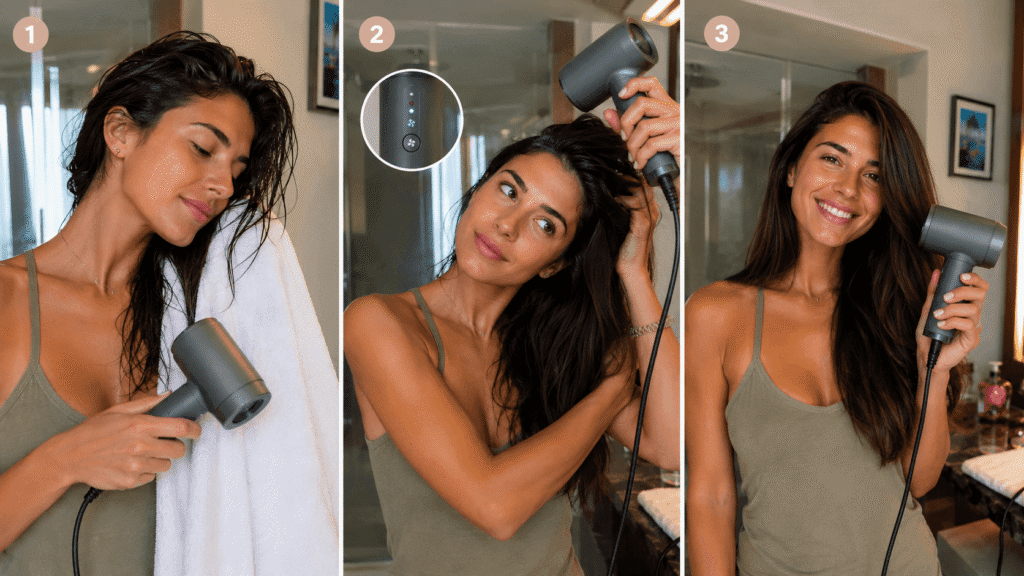
How To Actually Use a Travel Hair Dryer Correctly
Most people do not use travel hair dryers correctly and then blame the dryer for being weak.
The first thing is to prepare your hair. Rough dry it with a towel first. You are trying to get as much water out as possible before you use the dryer. If your hair is dripping wet, you are asking the dryer to do too much work.
The second thing is to use the right heat and speed setting. High heat plus high speed sounds like it would be fastest but it is actually less efficient and harder on your hair. Medium heat plus high speed is usually the better approach. Medium heat is hot enough to dry efficiently but not so hot that you are damaging your hair or overheating the dryer.
The third thing is to keep the dryer moving. Do not hold it in one spot. Constantly move it through your hair so the heat and airflow are distributed. This also helps prevent heat damage in specific areas.
The fourth thing is to use a concentrator nozzle if your dryer came with one. The concentrator focuses the airflow so you get better drying power in specific sections. Without it, the airflow is more dispersed and less efficient.
The fifth thing is to section your hair. Dry the roots first because that is where most of the moisture is. Then work through the lengths. If you have thick or long hair, sectioning makes the process much more efficient.
Travel Hair Dryer Maintenance and Durability
A travel hair dryer will last years if you maintain it properly.
Clean the air intake regularly. Hair and dust get pulled into the motor. After each use, you can gently tap the dryer to dislodge any debris. Once a week or so, you can use a small brush or compressed air to clean the intake area more thoroughly.
Do not submerge it in water. These are not waterproof devices. You can gently wipe the outside if needed but do not expose the internals to moisture.
Let it cool down completely before packing. Do not throw a hot dryer into your toiletries bag. Let it sit for at least 15 minutes after use before packing it away.
Store it in a dry place. Do not leave it in a humid bathroom where moisture can eventually degrade the electronics.
Check the cord for damage. If the cord becomes damaged or frayed, stop using it. Do not try to repair it yourself.
With basic care, a good travel dryer should last for years of regular travel use.
Frequently Asked Questions
Can a compact dryer really dry thick hair?
Yes, but it takes longer. If your hair is thick, expect to add 10 to 15 minutes to the drying time compared to someone with fine hair. It is still doable, it is just not fast. A good compact dryer can handle thick hair. A weak one will struggle.
Do you really need dual voltage if you mostly travel within your home country?
You do not need it if you stay home. But if there is any chance you will travel internationally, get dual voltage. It makes your dryer usable in most countries without issues. Single voltage dryers are only useful in one region.
Is ionic technology worth the extra cost?
It provides a noticeable benefit in frizz reduction. Whether that is worth the extra cost depends on how much frizz bothers you. If you are someone who is already frustrated with travel hair, the ionic function is probably worth it. If you are not particularly prone to frizz, it is nice to have but not essential.
Can you use a travel dryer in a hostel or Airbnb?
Yes, as long as the outlet type matches your dryer. The voltage might be different in different countries but a dual voltage dryer handles that. Just check what outlet type is used in the country you are traveling to and make sure your dryer has the right plug or that you have an adapter.
How long does a compact dryer actually last?
A good compact dryer with proper maintenance should last 3 to 5 years of regular travel use. A cheap one might last 6 to 12 months. It depends on the build quality and how often you use it. The mid-range dryers I recommend typically last 3 to 4 years.
Is a travel dryer worth packing if you can get your hair done at a salon at your destination?
That depends on your budget and your destination. In many European cities, salons are affordable. In some places, you cannot find a good salon easily. Even if salons are available, having your own dryer saves time and money. It is also one less thing to coordinate while traveling.
Final Honest Take
A travel hair dryer is one of those items that seems optional until you actually need it and do not have it. Then you realize how much it changes your trip.
I spent years traveling without a good compact dryer. I either packed my full-size dryer, which defeated the point of compact travel, or I used weak travel dryers that made me miserable. Once I found a dryer that actually worked, I could not imagine traveling without it.
The difference between a bad travel dryer and a good one is not subtle. A bad one makes you frustrated and wastes your time. A good one lets you feel like yourself. You can actually dry your hair properly. You can go out and explore without feeling like you had to compromise on basic grooming.
If you travel at all and you care about your appearance, a compact hair dryer is worth the investment. Pick one that is genuinely compact, genuinely lightweight, and genuinely powerful. Skip the cheap gimmicks. Skip the overhyped premium options unless you have unlimited budget. Find the middle ground where engineering actually matters.
Your hair will thank you. Your trip will thank you. You will wonder why you did not invest in this sooner.