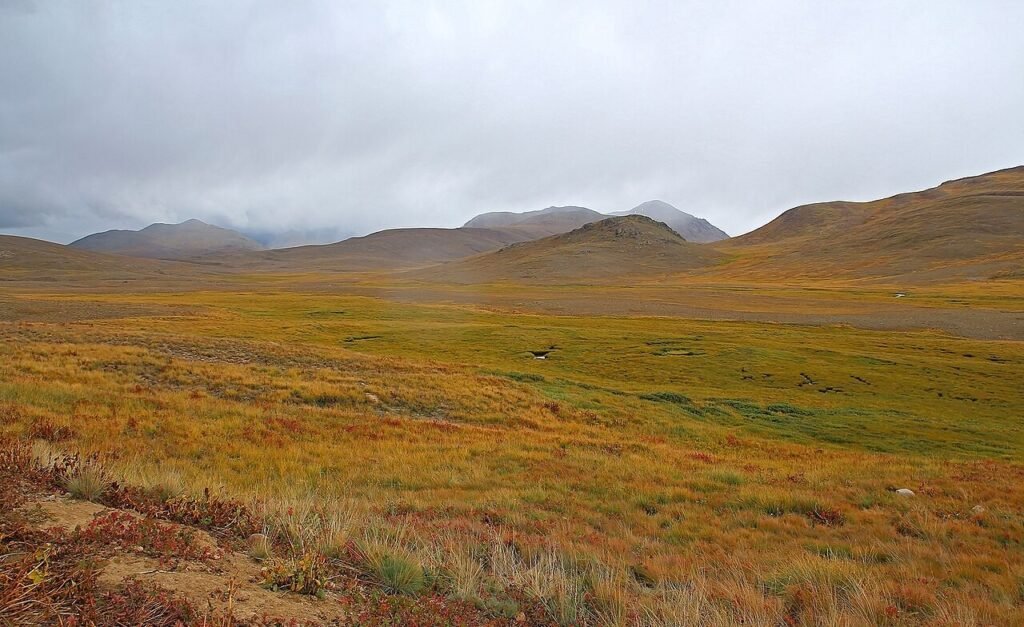
There is a moment on the Deosai plateau when the jeep track stops climbing and the world simply flattens out — no peaks crowding the horizon, no valley walls, just grass running to the edge of the sky in every direction, at an altitude where your lungs notice before your eyes do. I had read that Deosai is the second-highest plateau on Earth, and I had filed that away as brochure language. Standing on it, I understood it differently: this is not a viewpoint you drive to. It is a whole landscape that happens to sit higher than most mountains you will ever climb.
Deosai is also the trip most Skardu visitors get wrong. They go too early, before the road is properly open, or too late, when the first snow has already closed it. They arrive in a car that cannot handle the track, or they plan to camp overnight the way a five-year-old blog post told them to — and that rule changed in 2025. This guide is built to prevent all three mistakes, with the practical facts checked as of October 2026.
Affiliate disclosure: This article contains affiliate links. If you buy through them, we may earn a small commission at no extra cost to you — it helps keep these guides free and independent.
Short Answer
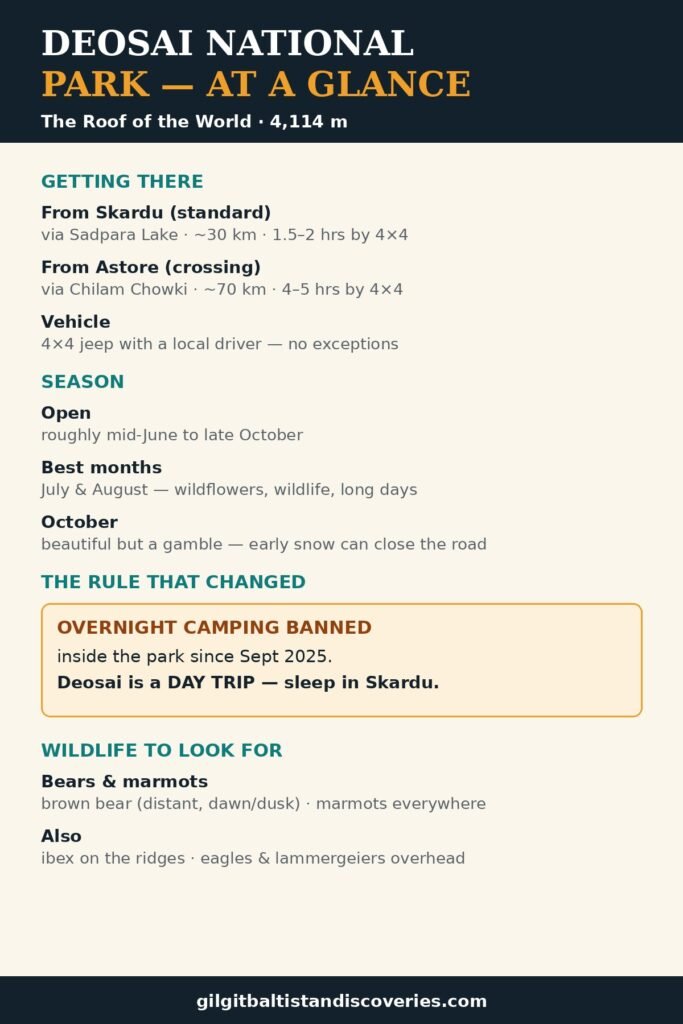
Deosai National Park is a high-altitude plateau in Gilgit-Baltistan, Pakistan, averaging 4,114 metres (13,497 ft) above sea level — the second-highest plateau in the world after the Changtang Tibetan Plateau. It sits between Skardu and Astore, opens roughly from mid-June to late October, and is reached only by 4×4, from Skardu via Sadpara Lake (about 30 km to the park entrance, 1.5–2 hours) or from Astore via Chilam Chowki (about 70 km, 4–5 hours). Overnight camping inside the park has been banned since September 2025 — plan Deosai as a long day trip and sleep in Skardu. The best window is July and August, for wildflowers and wildlife.
Deosai at a Glance
| Detail | What to know |
|---|---|
| Location | Between Skardu and Astore districts, Gilgit-Baltistan; east of Nanga Parbat, in the western Himalayas |
| Average elevation | 4,114 m (13,497 ft) — second-highest plateau in the world after Changtang |
| Park established | 1993, to protect the Himalayan brown bear |
| Skardu route | Skardu → Sadpara Lake → park entrance: ~30 km, 1.5–2 hrs by 4×4; Sheosar Lake adds another hour or so |
| Astore route | Astore → Chilam Chowki → Sheosar Lake: ~70 km, 4–5 hrs by 4×4; rougher and longer |
| Best vehicle | 4×4 jeep with a local driver — no exceptions, on either route |
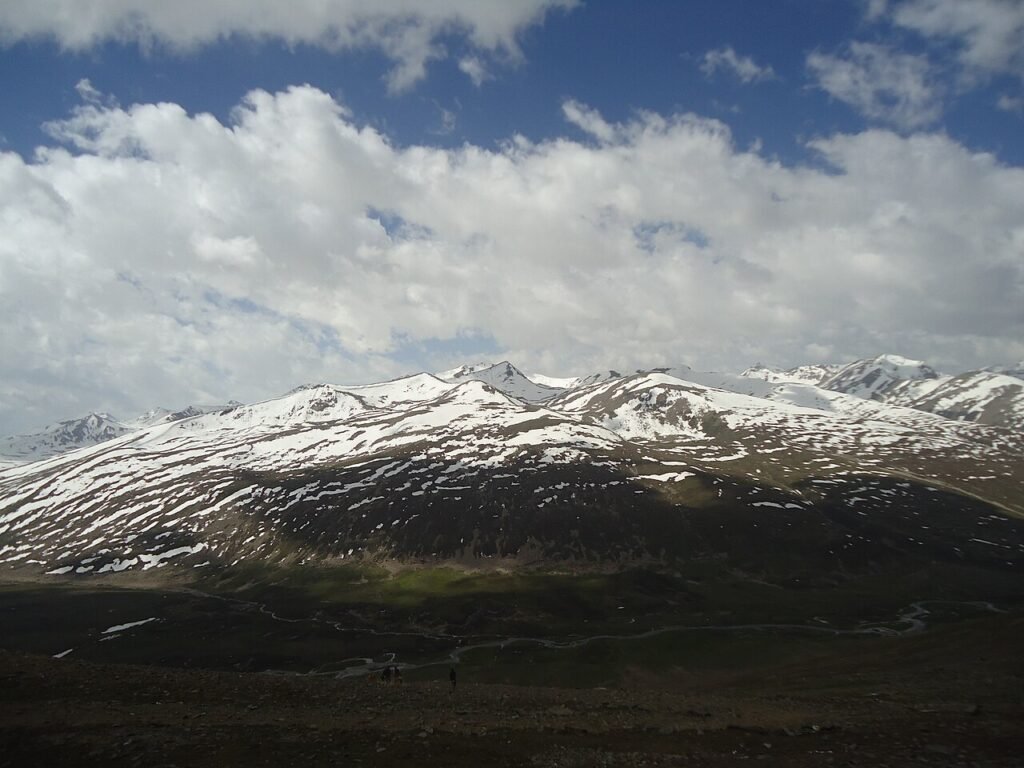
| Season | Roughly mid-June to late October; closed under snow November to May |
| Overnight camping | Banned inside the park since September 2025 |
| Entry fee | Charged at checkpoints; reported rates vary — carry cash and confirm at the gate (see below) |
| Signal / fuel / food | None on the plateau — none. Fill up, eat, and tell someone your plan before you leave Skardu |
What Is Deosai, Exactly?
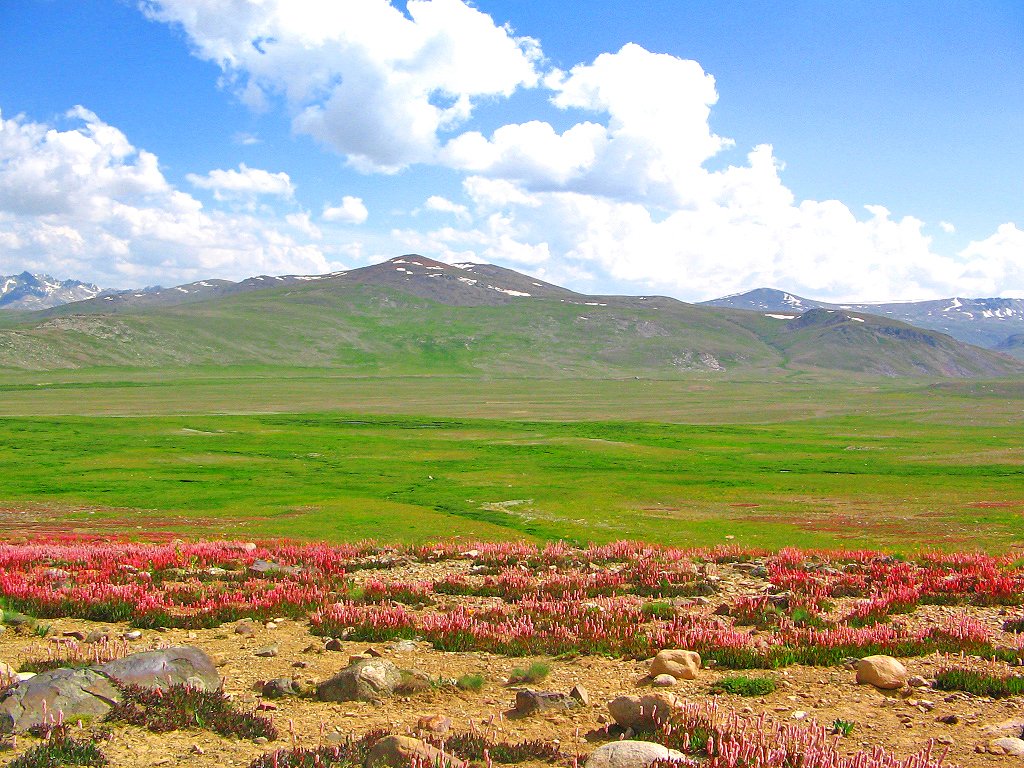
Deosai is not a valley with a lake in it, and it is not a mountain you climb. It is a plain — a vast, treeless alpine plateau where the land itself sits at an average of 4,114 metres, ringed by the Deosai Mountains, with the Bara Pani river cutting across it. The name comes from the Shina words deo (giant) and sai (shadow): the “land of the giant”. The Balti name is more practical — Ghbiarsa, “summer’s place” — because that is the only season it exists for visitors at all.
The park was established in 1993 for one animal above all: the Himalayan brown bear. In 1993 there were just 19 bears counted in Deosai. By 2005 there were 40. By 2022, 78. That recovery is one of Pakistan’s genuine conservation successes, and it is also the reason the rules below exist — more bears, meeting more tourists, on a plateau with no fences, is a combination that needs managing.
Beyond the bears, Deosai holds Himalayan ibex, grey wolf, red fox, musk deer, golden marmots — the whistling sentinels you will hear long before you see — and more than 124 resident and migratory bird species, including golden eagles, lammergeiers and the Himalayan snowcock. The snow leopard is present but so rarely seen that no honest guide should promise it.
How to Reach Deosai: The Two Routes
There are two ways in, and the choice shapes the whole day.
From Skardu (the standard route). This is how most visitors do it, and the sensible choice if you are flying into Skardu. Drive south past Sadpara Lake, climb through the jeep track to the park entrance — about 30 km and 1.5–2 hours — then continue across the plateau past the stream crossings at Shatung Pani and Bara Pani to Sheosar Lake at the far western side. Skardu to Sheosar and back is a full day: allow 2.5–3 hours each way of driving, plus your time on the plateau.
From Astore (the crossing route). From Astore town, the road runs via Chilam Chowki up onto the plateau and reaches Sheosar Lake from the west — roughly 70 km and 4–5 hours, on a road consistently reported as rougher than the Skardu side. Most travellers use this route as half of a one-way plateau crossing (Skardu to Astore, or the reverse), rather than as a day trip, because a return journey doubles an already long drive.
The vehicle question is not a question. Both approach roads are rough, partly unpaved, muddy and steep, with unbridged stream crossings. A 4×4 jeep with a local driver is required on either route — regular cars cannot handle the terrain, and there is no public transport into the park. Hire the jeep in Skardu (or Astore) with the driver, agree the full route in advance — entrance, Bara Pani, Sheosar Lake, and back — and confirm the price before departure, since it varies by season and route. (What to wear and carry for a day like this is covered in the packing section below.)
When to Go: The Season Table
Deosai’s season is short, and the edges are where trips fail. The road is snow-bound for roughly seven months of the year. Treat these as typical windows, not guarantees — at this altitude, a single storm rewrites the calendar, so confirm the road status with a Skardu operator before you set a date, especially in June or October.
| Month | Access | Weather & what you see |
|---|---|---|
| June | Road reopens, typically mid-June; snow patches remain | Cold, stark, thin crowds; wildflowers just starting; check conditions before going |
| July | Fully open | The best all-round month — flowers building, wildlife active, long days |
| August | Fully open | Peak wildflowers and peak wildlife activity; also the busiest month |
| September | Open | Golden grass, crisp light, colder nights; the plateau at its most photogenic |
| October | Edge month — the road can close with early snow, sometimes in the last week of the month | Quiet, golden, and a gamble; only go with a confirmed road report |
| November–May | Closed under snow | No access by road |
If you are choosing between a summer and an autumn trip to the region, the timing logic in our autumn in Gilgit-Baltistan colour calendar explains why October works beautifully in the valleys — and why it is a risk on the plateau.
What You Will Actually See
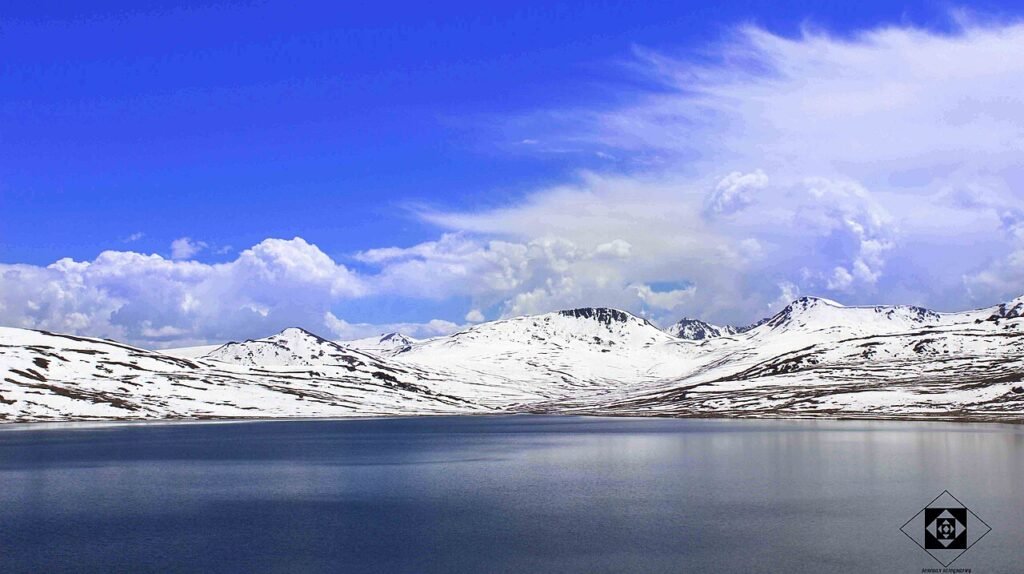
Sheosar Lake is the set-piece, at the western end of the plateau — a still, dark lake against a treeless horizon, and the turnaround point for most day trips. The drive to it is the experience as much as the lake: the crossings at Bara Pani (the largest of the plateau’s rivers), the marmot colonies whistling from the boulders, the wildflower meadows in July and August that genuinely do cover the ground in colour.
The wildlife is real but not a safari. You have a reasonable chance of a distant brown bear sighting in the early morning or late afternoon, particularly around Bara Pani — and that is the honest version. Bears are wild, the plateau is enormous, and no driver can promise one. What you will almost certainly see: golden marmots everywhere, birds of prey overhead, and ibex on the ridges if you stop and look properly. Bring binoculars; they matter more here than a longer lens. A water filter like the Sawyer Squeeze is worth carrying for stream water on the plateau, where there is nothing to buy.
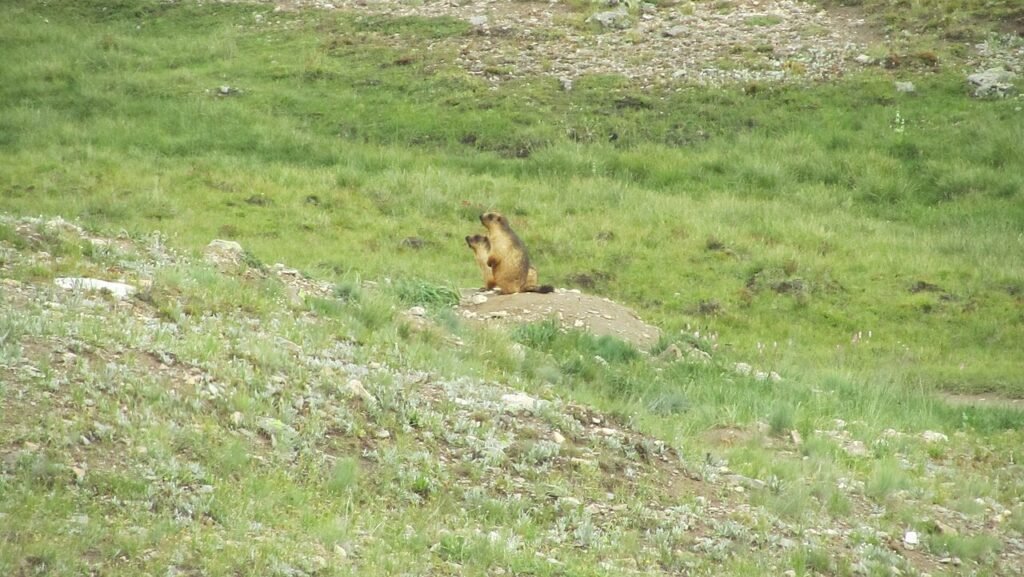
The night sky deserves a line of its own. With no towns, no lights and thin air at 4,114 m, Deosai’s darkness is absolute — which is a fine thing to admire from the jeep on the way back to Skardu, and one more reason the camping ban stings for photographers.
The Camping Rule Has Changed — Read This Before You Plan
This is the section that makes this guide different from the older ones ranking above it, and it matters more than any other paragraph here.
Overnight camping inside Deosai National Park is banned. In September 2025, after a brown bear attacked singer Quratulain Baloch (QB) near Bara Pani while she was camping — she survived with arm injuries — the Gilgit-Baltistan government imposed a ban on night-time camping in the park, and the government spokesperson stated plainly that no individual would be allowed to camp in Deosai at night. Then, in December 2025, the Forest, Parks and Wildlife Department went further and banned the establishment of seasonal hotels and all other commercial activities inside the park for the coming season, to protect the fragile ecosystem.
What that means for your trip, in practice:
- Do not plan to sleep in Deosai. No tent, no seasonal hotel inside the park — the older guides that tell you to camp at Bara Pani or Sheosar Lake are describing a Deosai that no longer exists.
- Base in Skardu. Do Deosai as a day trip, leave early, and be off the plateau before dark — which is also when bear activity rises.
- Rules can change again. If a future season reopens designated camping, it will be announced by the GB government, not by a blog. Check before you go; do not assume.
The ban is genuinely good news for the bears, and it is the price of their recovery from 19 to 78 animals. Treat it as part of the conservation story, not as an inconvenience to route around.
What a Deosai Day Actually Costs
Entry fees are collected at the park checkpoints on both sides — Satpara on the Skardu side, Chilam Chowki on the Astore side. Here is the honest position: reported fees disagree widely, and they have changed between seasons. Recent reports range from around PKR 500 for Pakistani nationals to roughly $10–40 (one October 2026 roundup reports about PKR 3,100) for foreign visitors, with lower rates for Gilgit-Baltistan residents. Do not budget from a single blog figure. Carry cash — there is no card machine on a plateau with no signal — and confirm the current fee at the checkpoint or with your driver before departure. No separate permit is generally needed for ordinary visitors, but foreigners should check for policy updates before travelling.
The jeep is the real cost of the day, and it varies by season, route and how far across the plateau you go. That is why the “agree the full route before departure” advice above is not filler: a Skardu–Sheosar–Skardu day and a one-way Skardu–Astore crossing are different jobs at different prices.
What to Pack for a Deosai Day
Deosai punishes the unprepared in specific ways: altitude, wind, sun and cold, all in one day. The full system is in our northern Pakistan packing guide — the short version for the plateau:
- Layers, not one big jacket. A windproof shell over a warm mid-layer; mornings at 4,114 m are cold even in August, and the wind across an open plain cuts through anything less. A packable down jacket earns its weight here.
- Sun protection at altitude. The UV at 4,114 m is fierce — sunscreen, sunglasses, a hat. Sunburn on Deosai is the most common souvenir and the most avoidable.
- Sturdy shoes. You will walk on rough, marshy ground around the lakes and crossings; sturdy walking boots like the KEEN Targhee 3 are the right call over trainers.
- Water and food for the whole day. There is nothing to buy on the plateau — no shop, no restaurant, no fuel. Carry more water than you think you need, plus food, and a power bank like the Anker PowerCore for your phone and camera, since cold drains batteries fast.
- Cash, ID, and a told plan. Cash for the entry fee, ID for the checkpoint, and someone in Skardu who knows where you went and when you expect to be back. Mobile signal on the plateau is patchy to non-existent — treat it as an offline day.
Safety: The Five Rules
- Acclimatise. Skardu sits at about 2,200 m; Deosai at 4,114 m. Spend at least a day in Skardu first, ascend slowly, and take altitude symptoms seriously — headache, nausea and unusual breathlessness mean descend, not push on.
- Respect the bears. Keep your distance, never leave food behind, never approach a bear for a photograph. The 2025 attack is what happens when that distance collapses.
- Watch the weather. A sunny morning on the plateau can turn to wind, rain or snow by afternoon. If your driver says turn back, turn back.
- Stay on the track. The plateau looks empty and drivable; it is marshy, fragile, and easy to get stuck in. Off-track driving damages the ecosystem the park exists to protect.
- Leave no trace. Take every scrap of rubbish back to Skardu. Litter is already a growing problem on the plateau, and at this altitude nothing decomposes quickly.
FAQs
When is the best time to visit Deosai National Park?
July and August are the best months — peak wildflowers, the most active wildlife, and the most reliable road. Mid-June to September is the wider safe window; October is beautiful but a gamble, as early snow can close the road.
How do I reach Deosai from Skardu?
Hire a 4×4 jeep with a driver in Skardu and drive via Sadpara Lake to the park entrance — about 30 km and 1.5–2 hours — then on across the plateau to Sheosar Lake. The full day trip takes a full day; leave early and return before dark.
Do I need a 4×4 for Deosai?
Yes, on either route. Both the Skardu and Astore approach roads are rough, partly unpaved and steep, with stream crossings. Regular cars cannot handle the terrain, and there is no public transport into the park.
What is the entry fee for Deosai National Park?
It is charged at the park checkpoints and the reported rates vary by season and nationality — roughly PKR 500 for Pakistani nationals and $10–40 (about PKR 3,100 in one October 2026 report) for foreigners. Carry cash and confirm the current fee at the gate.
Can you camp in Deosai National Park?
No — not anymore. Overnight camping inside the park has been banned since September 2025, after a bear attack on a camper near Bara Pani, and seasonal hotels inside the park were banned in December 2025. Visit as a day trip and sleep in Skardu.
Is one day enough for Deosai?
Yes, for the classic experience: Skardu to Sheosar Lake and back in a day covers the plateau, the wildlife and the lake. A one-way crossing to Astore takes longer and needs an overnight on the Astore side — but the plateau itself is a one-day landscape, not a multi-day trek.
The Honest Verdict
Deosai rewards the traveller who respects its constraints: the short season, the rough road, the altitude, and now the camping ban. Get those right and you get one of the strangest landscapes on Earth — a treeless plain at 4,114 metres, marmots whistling from the boulders, a dark lake at the end of the world, and a bear population that came back from 19 animals because a park was drawn around it. Go in July or August, go with a local driver, go for the day, and leave nothing behind. If you are building a Skardu trip around it, our Hunza timing guide shows how the region’s seasons fit together — and if Deosai has whetted your appetite for the high stuff, the K2 Base Camp packing list is the next step up.
Last updated: October 2026. Road status, entry fees and camping rules change between seasons — confirm with a Skardu operator or the park checkpoint before travelling.