The first decision of a Skardu trip is also the one that shapes it most: fly, or drive? I have done both, and I will not pretend one is obviously right. The flight is one of the great mountain flights on earth — an hour over the Karakoram, Nanga Parbat filling the window — and it is also the flight most likely to be cancelled on the morning you need it. The road is two long days of some of the finest scenery in Pakistan, and it is also a road that a single landslide can close for days, as it did in October 2026. This guide compares every realistic way in, with honest numbers, so you can pick the one that fits your time, your budget, and your tolerance for plans changing.
Short Answer
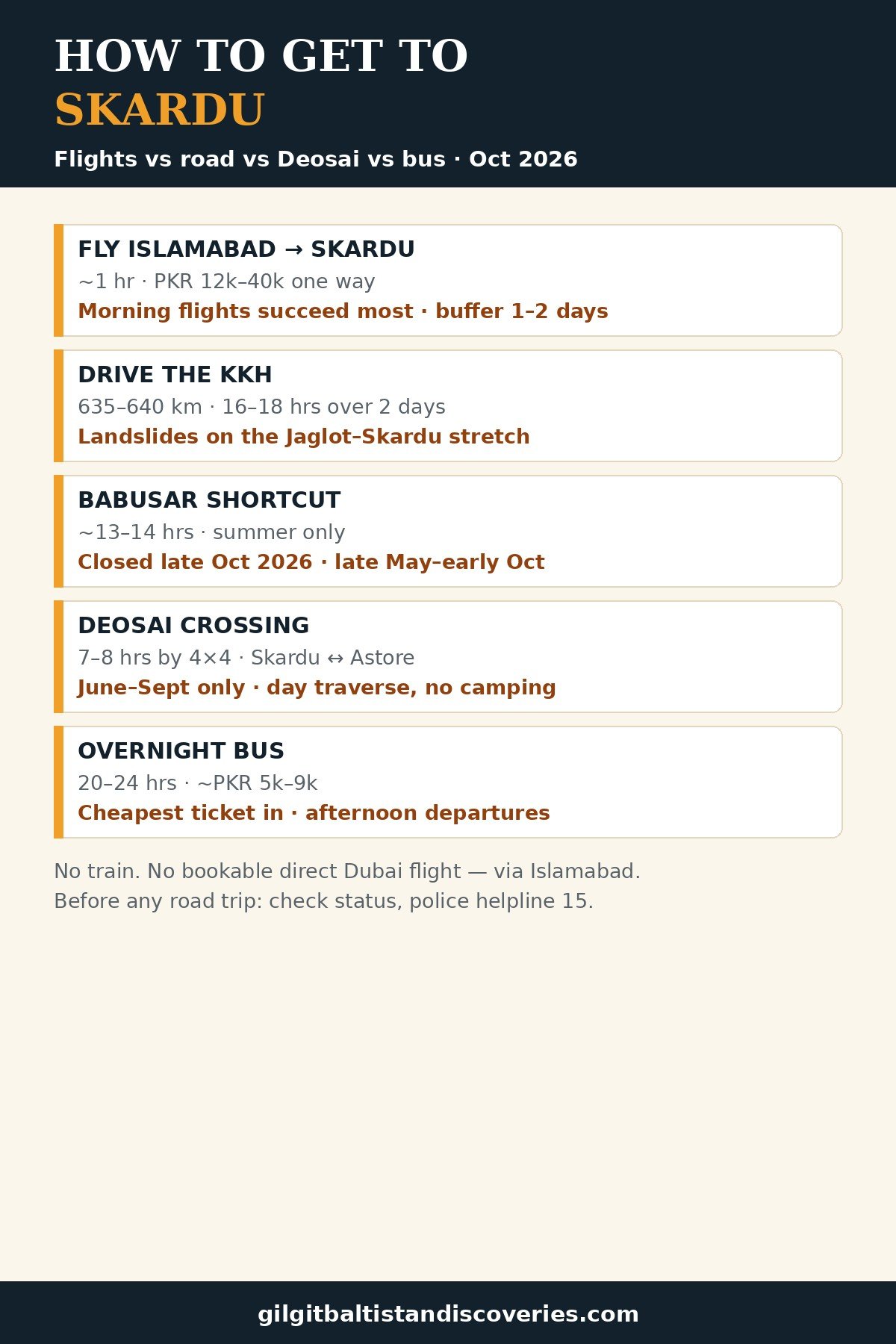
If you are short on time, fly from Islamabad to Skardu — about 1 hour in the air, morning departures, fares roughly PKR 12,000–40,000 one way — but build 1–2 buffer days into your itinerary, because Skardu flights cancel in bad weather and there is no reliable same-day alternative. If you have the days and want the journey itself, drive the Karakoram Highway — roughly 635–640 km, 16–18 hours of driving split over two days with an overnight stop in Chilas or Gilgit. If you are travelling between June and September and already have a 4×4 with a local driver, the Deosai plateau crossing (Skardu to Astore, 7–8 hours) is the most spectacular way out of Skardu. On a tight budget, take the overnight bus — roughly PKR 5,000–9,000, 20–24 hours. There is no train to Skardu, and there is currently no bookable direct flight from Dubai — plan international arrivals through Islamabad.
The routes at a glance
| Option | Time | Typical cost (one way) | Best for | Watch out for |
|---|---|---|---|---|
| Fly Islamabad → Skardu | ~1 hour in the air | PKR 12,000–40,000 | Short trips, tight schedules | Weather cancellations; book morning flights |
| Fly Karachi / Lahore → Skardu | ~1.5–2.5 hours | Varies; fewer weekly services | Travellers starting in those cities | Limited days; often routes via Islamabad instead |
| Drive via Karakoram Highway | 16–18 hrs driving, split over 2 days | Private car + driver varies; fuel + hotel stop | The journey-as-experience, flexible itineraries | Landslides, especially the Jaglot–Skardu stretch |
| Drive via Babusar Pass (seasonal) | ~13–14 hrs driving, still 2 days for most | Similar to KKH route | Summer travellers wanting the shorter, greener route | Open roughly late May–early October only; closed in late autumn and winter |
| Deosai crossing (Skardu ↔ Astore) | 7–8 hrs by 4×4 jeep | Jeep + driver, full day hire | Summer adventurers leaving Skardu south | June–September only; 4×4 and local driver essential |
| Overnight bus (NATCO, Faisal Movers, K2 Movers) | 20–24 hrs | ~PKR 5,000–9,000 | Budget travellers, backpackers | Long, tiring; afternoon departures, next-afternoon arrival |
All times and fares are planning ranges from October 2026 sources, not promises. Confirm flights and road status before you book — this is a mountain corridor, and conditions change faster than any guide can.
Option 1: Fly to Skardu — the hour that saves two days
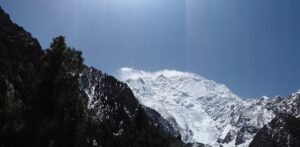
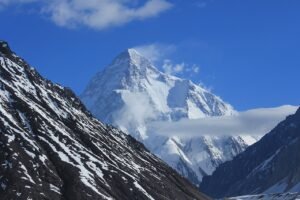
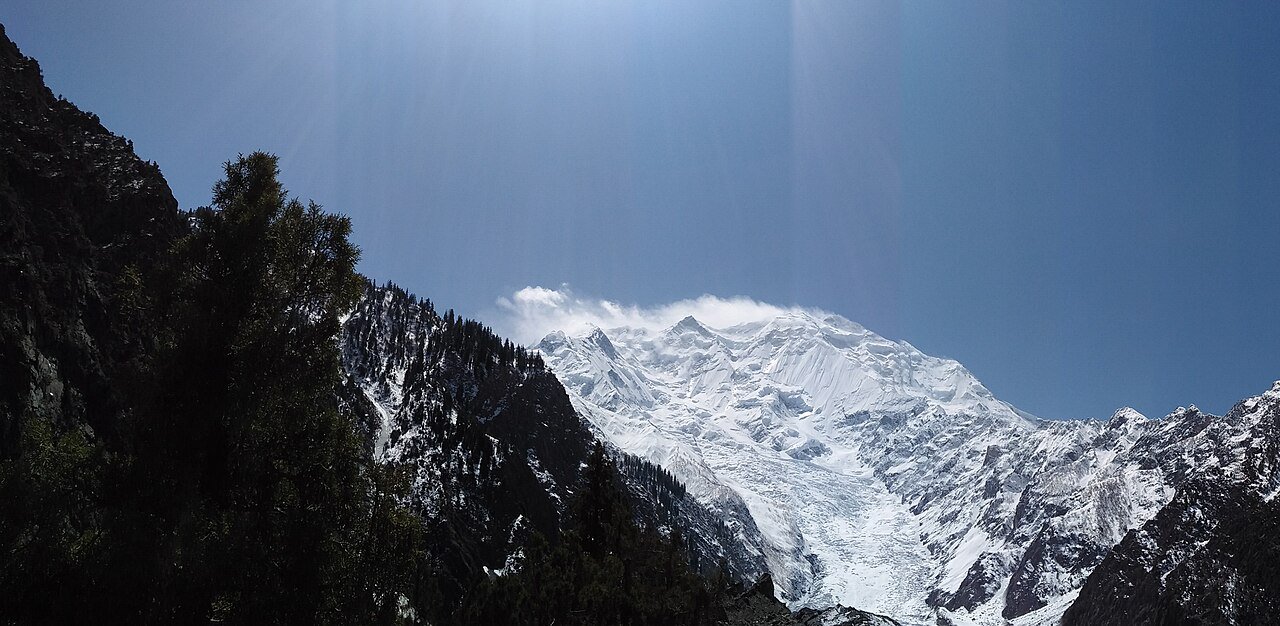
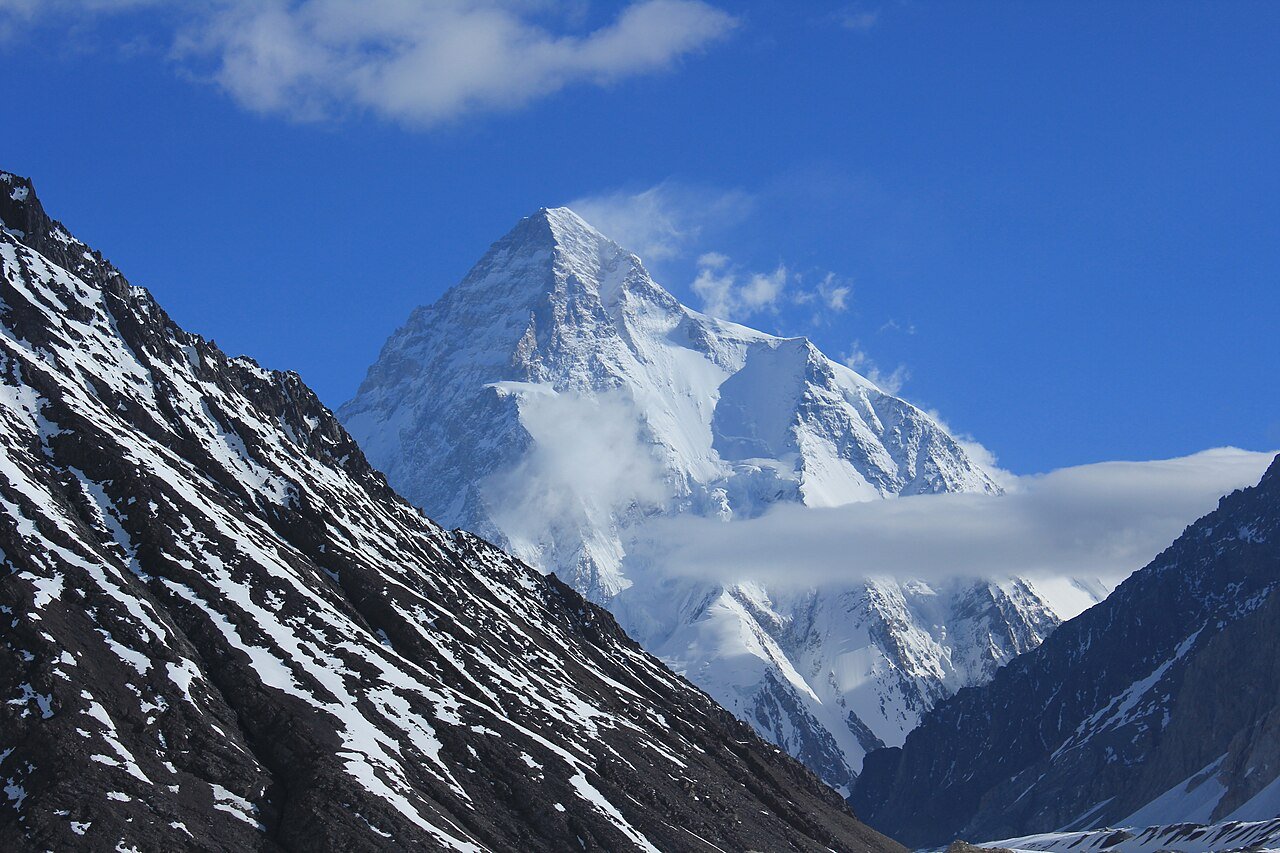
Skardu Airport (KDU) sits in a valley between high peaks, and that geography is the whole story of flying here. On a clear morning, the flight from Islamabad is extraordinary: about 318 km as the crow flies, roughly an hour in the air, threading the Indus valley with Nanga Parbat (8,126 m) and the Karakoram summits in view. Veterans argue endlessly about which side of the aircraft is best — take any window seat and you will not be disappointed.
Who flies, and when. Pakistan International Airlines (PIA) operates the flagship service, flight PK451, typically departing Islamabad around 08:00 most days aboard an Airbus A320. Airblue (PA702, around 08:45, daily) and AirSial (PF171, most days) also serve the route. PIA additionally lists services from Karachi (a few days a week) and Lahore (days vary by week); if no direct flight exists from your city on your dates, fly to Islamabad and connect to the next morning departure. Listings disagree on exact days and times by season — check the airline’s live schedule for your dates rather than trusting any single timetable.
What it costs. Recent booking-site comparisons put Islamabad–Skardu one-way fares roughly between PKR 12,000 and 40,000, varying sharply by season and how early you book. Peak summer (June–August) and autumn sell out early; book as far ahead as you can.
The cancellation reality — read this before booking. Skardu Airport operates under visual flight rules: pilots need clear visibility through mountain passes to land. Cloud, wind, or low visibility at either end cancels flights, and cancellations are common, not exceptional — one trekking operator puts peak-season cancellation rates at 30–40%, and even outside peak season cancellations happen (PIA’s 24 October 2026 PK451 was cancelled, while the previous day’s operated on time). Morning flights have the best success rate because mountain weather typically deteriorates through the day. Practical consequences:
- Build 1–2 buffer days into your itinerary, especially at the start. If your flight cancels, rebooking can mean waiting a day or more in busy periods.
- Book flexible or refundable onward arrangements (hotels, drivers) for your first night in Skardu.
- International cards often fail on PIA’s website — many travellers book through a tour operator or local agent instead. If you book yourself, confirm the payment actually went through before assuming you hold a ticket.
- If your flight cancels and you must still travel, the fallback is the road: a 16–18-hour drive, or the overnight bus. That is a real option, not a disaster — but it eats a day.
Option 2: Drive the Karakoram Highway — two days, and the trip itself
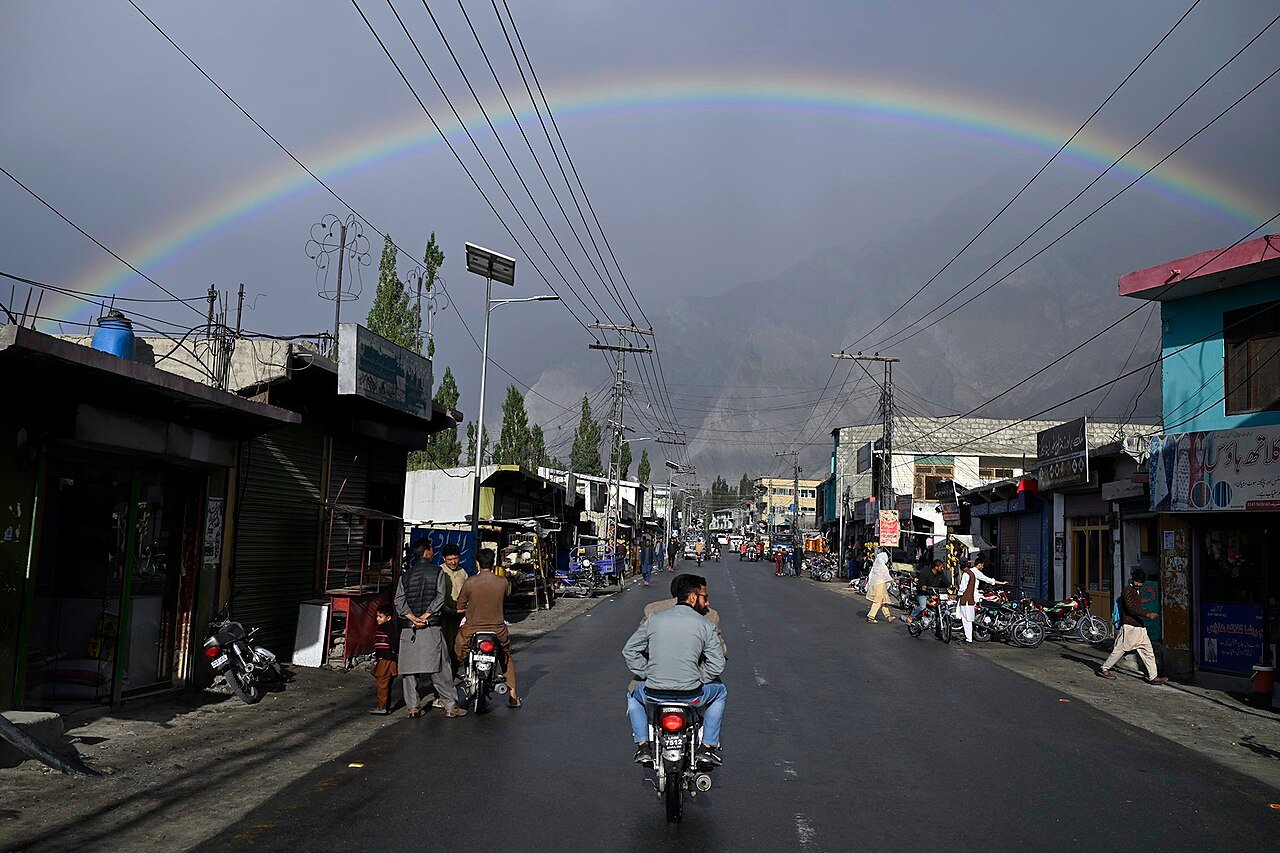
The year-round road route runs Islamabad → Hazara Motorway → Karakoram Highway (N-35) via Besham and Chilas → Jaglot → Skardu on the Jaglot–Skardu Road (S-1, now called Baltistan Road). Total distance is roughly 635–640 km; driving time is 16–18 hours in a private car, 18–22 hours by bus, which is why nearly every operator splits it over two days.
A realistic two-day split. Day 1: Islamabad to Chilas (or on to Gilgit if you start early and the road is kind). Day 2: Chilas or Gilgit to Skardu, including the final 167 km Jaglot–Skardu stretch along the Indus — the most landslide-exposed section of the whole journey. Overnight stops are functional rather than luxurious: Chilas has basic hotels, Gilgit has a wider range. Travel in daylight; mountain driving after dark on this road is something to avoid, not endure.
What the drive gives you. The KKH is the draw in itself — the Indus gorges, the meeting point of three mountain ranges at Jaglot, villages and roadside tea stops that flight passengers never see. The road is now largely paved and far better than its old reputation, and thousands of tourists complete it every season. It is a serious mountain drive, not a dangerous one, driven sensibly in daylight.
The landslide risk, honestly stated. This road closes. The Jaglot–Skardu section is repeatedly blocked by landslides, and on 22 October 2026 a major slide near Shangus in Roundu Valley completely blocked Baltistan Road, stranding thousands of travellers; the Gilgit-Baltistan Disaster Management Authority said it would stay closed at least until Friday 23 October, with a Frontier Works Organization blasting team mobilised because the boulders could not be shifted by machinery. At the time of writing, no reopening had been confirmed in the sources checked — so this guide deliberately does not claim the road is open. Before any road journey, check the current status: call the police helpline at 15, ask your hotel or driver in Skardu or Gilgit, and check recent Dawn or GBDMA advisories. Do not attempt to cross a slide zone on foot. If the road is closed, your options are to wait (usually days, not weeks, for clearance) or fly — which is exactly why the buffer-day advice matters for drivers too.
Option 3: The Babusar shortcut — summer only
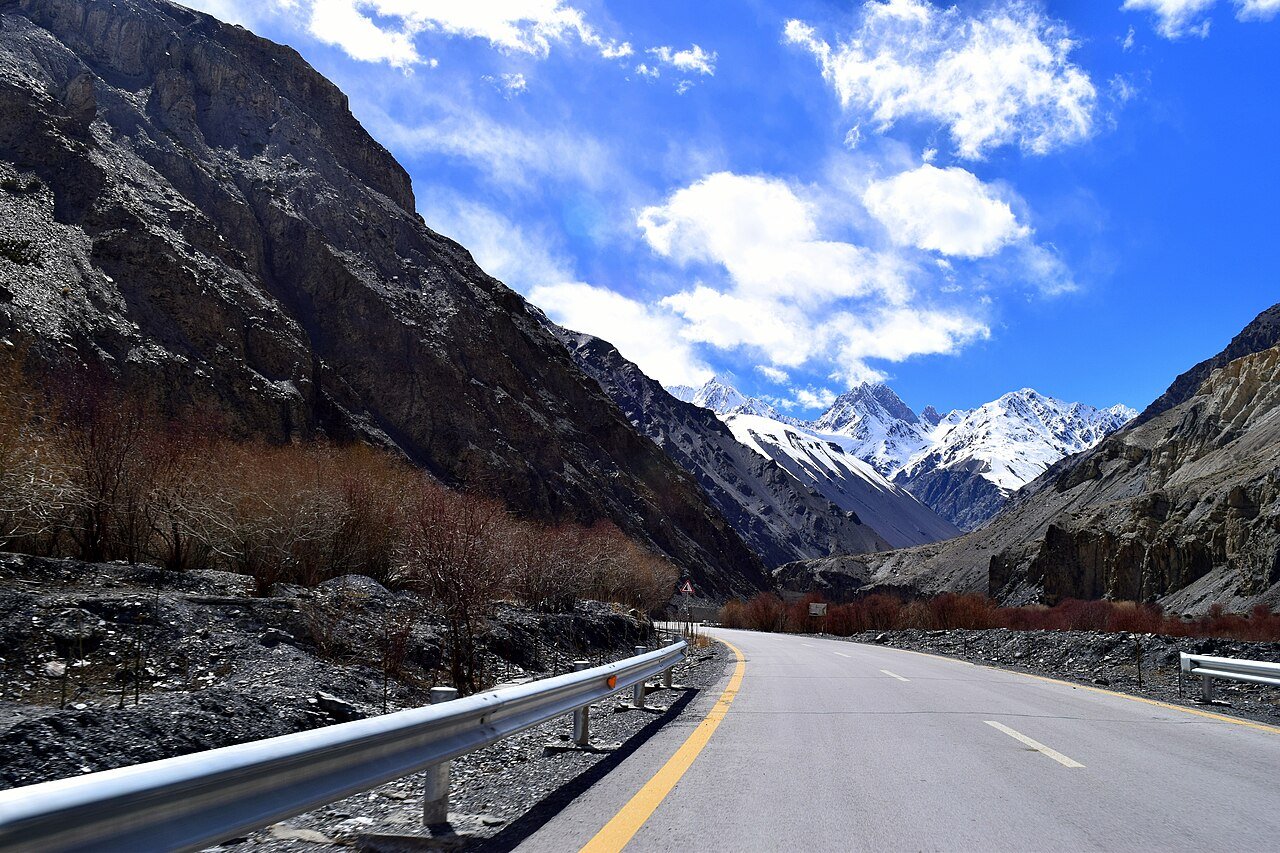
In summer, the Babusar Pass route (via Naran and Babusar Top) cuts the Islamabad–Skardu drive to roughly 13–14 hours of driving, and it is greener and gentler than the Besham–Chilas corridor. But it is strictly seasonal — typically open from late May to early October — and it closes with snow. In 2026, Babusar shut on 11 October, so by late October this shortcut is already gone for the year. If you are travelling in June–September, ask your driver which route is open; if you are travelling in late autumn or winter, the KKH via Chilas is your road, full stop. Note that public buses do not use Babusar — this shortcut is for private cars and hired vehicles only.
Option 4: The Deosai crossing — Skardu to Astore over the roof of the world
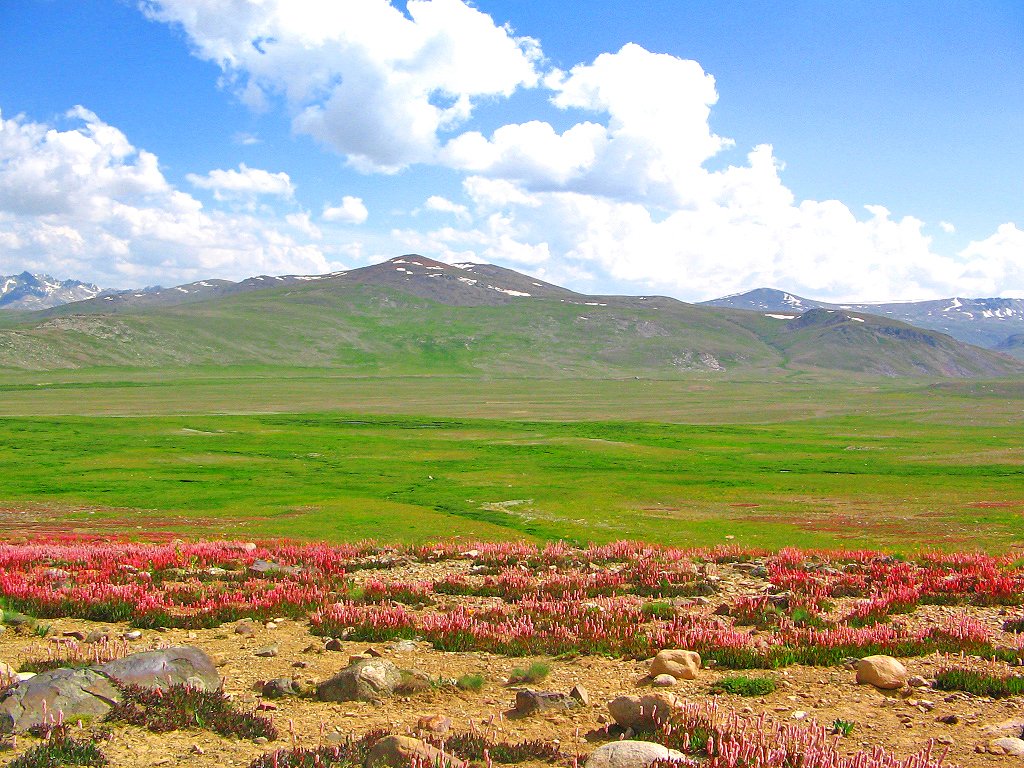
If you are leaving Skardu southwards in summer, there is a third road that is really an experience: the Deosai plateau crossing. From Skardu, the jeep track climbs past Sadpara Lake onto the Deosai plateau (averaging over 4,000 m) and descends via Sheosar Lake and Chilam to Astore, where it rejoins the Karakoram Highway. The full crossing is about 150–152 km and takes 7–8 hours by 4×4 jeep with a local driver. The Astore-to-plateau leg alone is about 70 km and 3–5 hours on a rough, unpaved track.
This route is open June to September only; snow closes the plateau for the rest of the year. A 4×4 is not a suggestion here — it is the only realistic vehicle — and an experienced local driver is essential. One rule to know before you romanticise it: overnight camping on the plateau has been banned since September 2025, so the Deosai crossing is a day traverse, not a camping trip. Plan it as a full, early-start day, and acclimatise in Skardu first — you will spend hours above 4,000 m.
Option 5: The overnight bus — cheapest way in
For budget travellers, the bus is a genuine option, not a punishment — but go in with open eyes. NATCO (the government-owned Northern Areas Transport Corporation), Faisal Movers, and K2 Movers run Islamabad/Rawalpindi–Skardu services, typically departing in the afternoon and arriving the following afternoon, a journey of roughly 20–24 hours. Fares vary by operator and class; recent listings cluster around PKR 5,000–9,000 one way, but figures conflict across sources, so confirm the fare and departure time at booking — NATCO’s own listings have shown both 1:00 PM and 2:00 PM departures at different times. Buses use the KKH route (not Babusar), so the same landslide caveat applies. For families, most experienced voices recommend a private car over the bus; for solo backpackers, the bus is the cheapest ticket into the Karakoram.
What can go wrong — and the backup for each
- Flight cancelled? Rebook for the next morning first; if you cannot wait, take the road or the overnight bus, and tell your Skardu hotel and driver immediately.
- Road blocked by a landslide? Wait it out in Gilgit or Chilas, or fly if seats exist. Never walk a slide zone.
- Babusar closed when you planned to use it? Fall back to the KKH via Chilas — longer, but open year-round.
- Deosai crossing weather turns? The plateau road can close with early snow even inside the nominal season. Confirm locally the day before, and keep a KKH-based Plan B.
- Arriving late or in winter? Winter travel to Skardu is possible — flights operate when weather allows and the KKH stays open — but expect thinner services, colder nights, and more cancellations. The most forgiving months for first-timers are May–October.
Alternative worth knowing: fly to Gilgit, drive to Skardu
If Skardu flights are cancelled for days but Gilgit flights are operating, consider flying to Gilgit instead. Gilgit sits about 200 km from Skardu — roughly 6 hours by road along the same Baltistan Road — so it is a workable back door, not a different holiday. Note there are no direct flights between Skardu and Gilgit airports; both connect only to Islamabad, so this alternative means a fresh Islamabad–Gilgit flight plus a hired car or van onward. It is worth asking your operator about it before you write off a trip over a cancelled Skardu flight — but the same landslide caveat applies to the Gilgit–Skardu road, so check its status too.
Arriving in Skardu: the last few kilometres
Skardu Airport is only about 7 km from the town centre — roughly 20 minutes by taxi, typically PKR 500–1,000. Taxis wait outside the terminal; agree the fare before you set off, as meters are rarely used. Many hotels offer airport pickups, which is the smoothest option if you are arriving on a morning flight. From town, Shigar and Khaplu are onward day-trip or overnight range by hired car or jeep, and Deosai day trips leave early in summer — agree vehicle and fare the evening before, not at dawn.
One last practical note: whatever route you choose, pack for the journey you actually have. A flight that cancels becomes a two-day drive; a road trip in October can meet snow at the passes. The layering system in our packing guide for northern Pakistan is built for exactly this kind of plan change — and if your Skardu trip sits in autumn, the autumn colour calendar will tell you which valleys are peaking when you arrive.
Frequently asked questions
What is the fastest way to get to Skardu?
Fly from Islamabad. The flight takes about an hour, against 16–18 hours of driving split over two days. Book a morning departure for the best chance of operating, and keep 1–2 buffer days in case weather cancels it.
What is the cheapest way to get to Skardu?
The overnight bus, at roughly PKR 5,000–9,000 one way from Islamabad/Rawalpindi, taking 20–24 hours. NATCO, Faisal Movers, and K2 Movers operate the route; confirm fare and departure time at booking, as listings vary.
Is the road to Skardu safe?
Driven in daylight with a sensible driver, yes — it is largely paved and thousands of tourists use it every season. The real risk is landslides, especially on the 167 km Jaglot–Skardu (Baltistan Road) stretch. Check current status before departure (police helpline 15) and never cross a slide zone.
How reliable are flights to Skardu?
Unreliable enough to plan around. Skardu Airport needs clear visibility, so cloud or wind cancels flights, including in peak season — one operator puts peak-season cancellations at 30–40%. Morning flights succeed most often. Always have a buffer day and a road fallback.
When is the Deosai route to Skardu open?
Roughly June to September, and only by 4×4 with a local driver. The Skardu–Astore crossing takes 7–8 hours. Outside those months the plateau is snowbound, and overnight camping on the plateau has been banned since September 2025, so treat it as a day traverse.
Last updated: October 2026. Flight schedules, fares, and road status change with season and weather — confirm your dates before booking. For the Fairy Meadows approach, which shares the KKH as far as Raikot, see our Fairy Meadows logistics guide; for what a Skardu trip costs once you arrive, see our K2 trek cost guide for the expedition economics of the region.