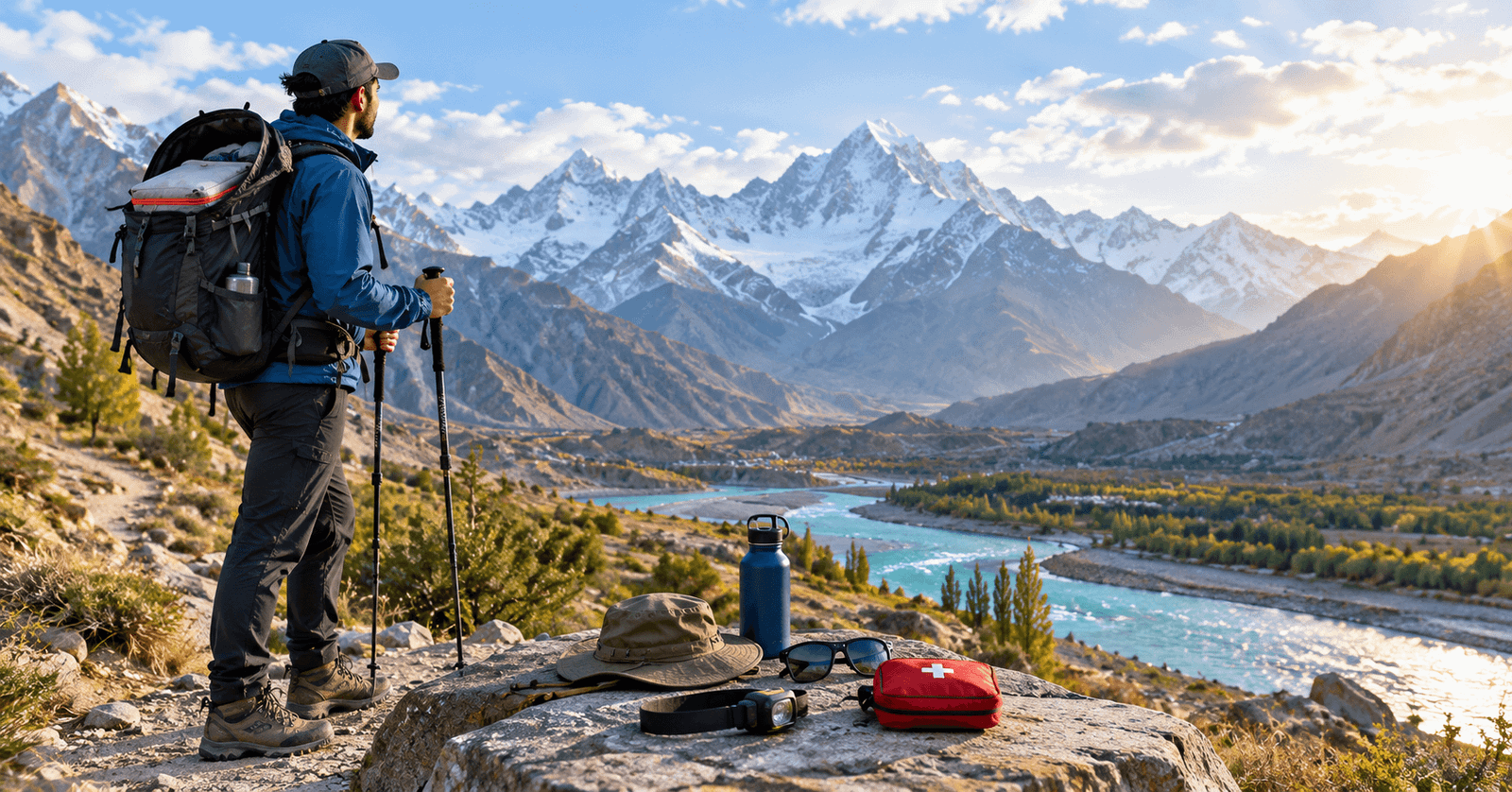
Gilgit-Baltistan, Pakistan’s breathtaking mountainous northern region, is far more than towering peaks and crystalline valleys. Nestled between the Karakoram, Himalayan, and Hindu Kush mountain ranges, this strategic frontier holds a treasure of human spirit remarkable women who have shattered centuries of constraint to reshape their communities.
These women, rightfully dubbed the “Iron Ladies of Gilgit-Baltistan,” have emerged as pioneers in education, sports, business, law enforcement, and social activism. Yet their journeys remain largely invisible beyond the regional consciousness. This is their story.
The Context: Understanding Women’s Struggles in Gilgit-Baltistan
For centuries, women in Gilgit-Baltistan have faced formidable barriers. Societal norms, conservative traditions, limited educational access, and economic constraints have confined female ambitions within rigid boundaries. Government policies, combined with family pressures and patriarchal structures, have historically restricted women’s participation in public life.
The numbers tell a stark story. According to UNICEF, 74 percent of secondary school-aged girls in Gilgit-Baltistan remain out of school. Female literacy rates hover around 12 percent in some tribal areas—a sobering reminder of the challenges these women overcome.
Yet something has shifted in the past two decades. A new generation of determined women is rewriting this narrative entirely. They are doctors, pilots, mountaineers, journalists, police officers, educators, and entrepreneurs. They are proving that determination and vision can transcend even the most entrenched barriers.
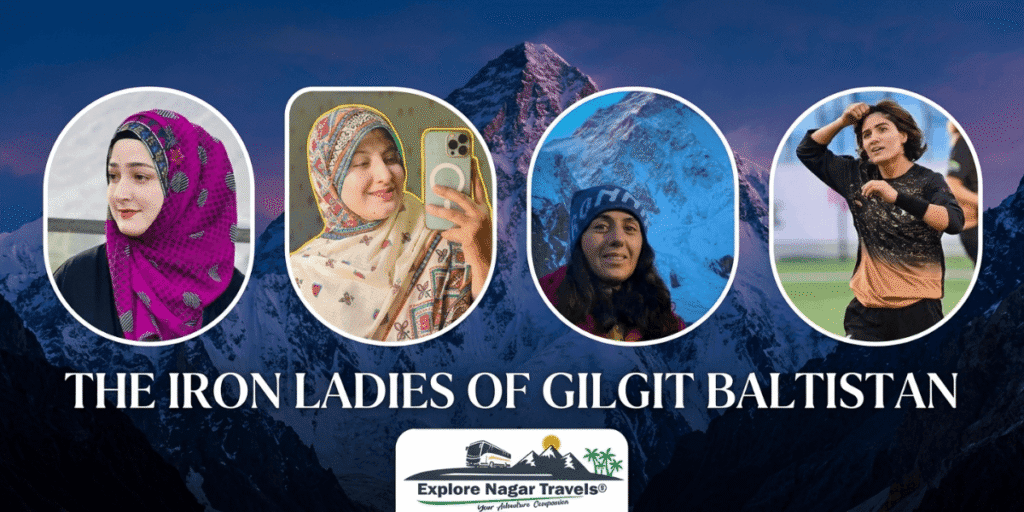
The Iron Ladies: Defying Gravity, Redefining Possibility
1. Samina Baig: The Mountaineer Who Touched the Sky
Samina Khayal Baig, born September 19, 1990, in Shimshal Valley in Hunza, Gilgit-Baltistan, became the first Pakistani woman to climb Mount Everest in 2013 at age 21.
Her story begins in a remote mountain village where her brother Mirza Ali, himself an accomplished mountaineer, became her first mentor. What sparked in childhood as admiration grew into obsession. Beginning training at age 15, Samina climbed the peak Chashkin Sar above 6,000 meters in Pakistan in 2010, which was later renamed Samina Peak.
But Everest was her dream. In May 2013, Samina summited Mount Everest, accompanied by Indian twin girls, where the three planted the national flags of Pakistan and India side-by-side atop the peak to spread a message of Indo-Pakistani friendship.
The symbolism was powerful. Her brother, Mirza Ali, stopped 248 meters short of the summit and let his sister ascend alone—a deliberate gesture of female empowerment.
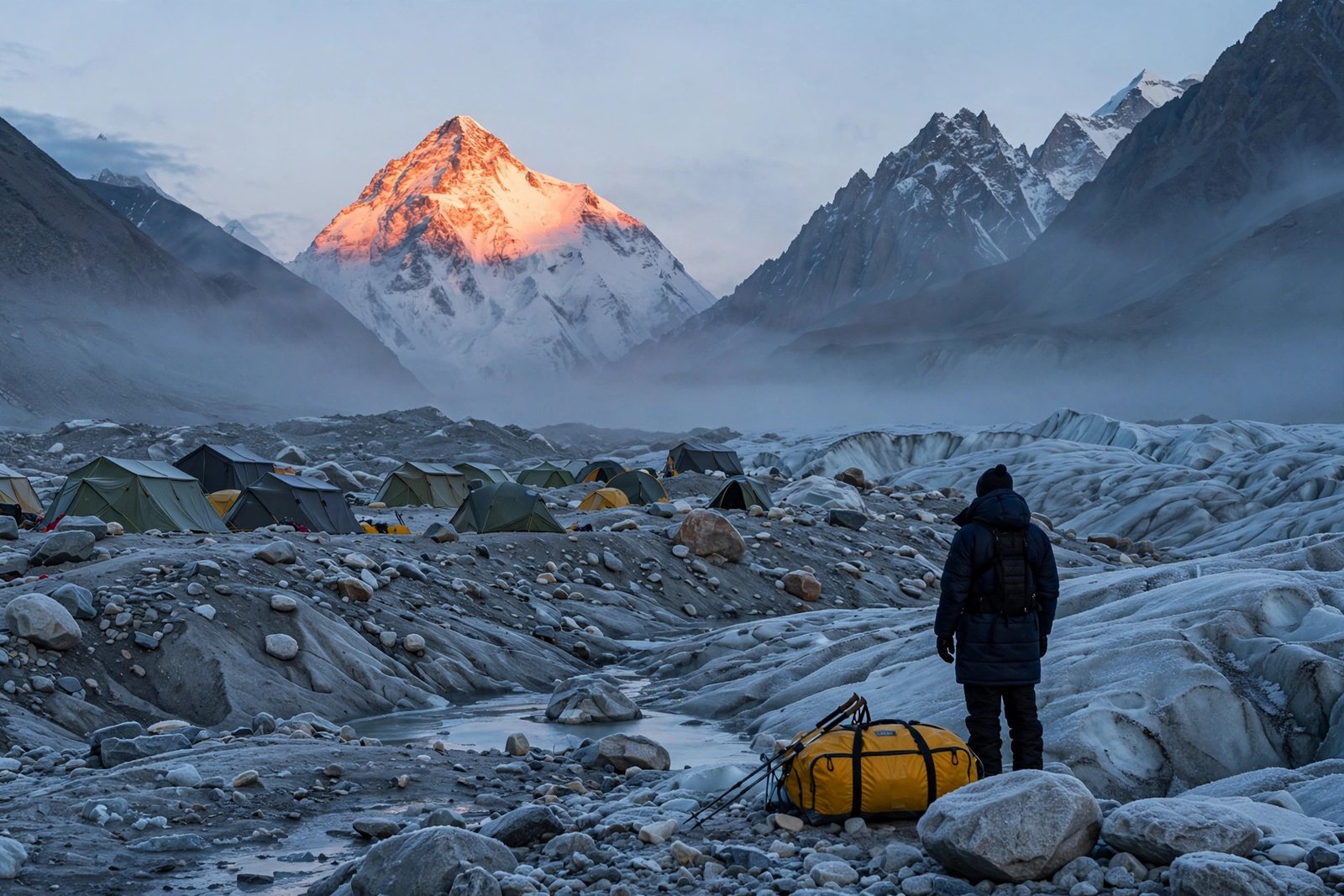
By age 23, Samina had summited all Seven Summits, and in July 2022, she became the first Pakistani woman to climb K2, the world’s second highest mountain. In February 2018, the UNDP appointed her as Pakistan’s National Goodwill Ambassador.
Today, Samina runs Samina Baig Travels and mentors young climbers. Her legacy extends beyond peaks—she has inspired thousands of girls to believe they can conquer mountains, both literal and figurative.
2. Ambreen Ali: The Trailblazing Police Officer
Ambreen Ali, after passing her CSS exam in 2012, became an Assistant Superintendent of Police (ASP) in the Police Service of Pakistan, making her one of the first female police officers from Gilgit-Baltistan.
Growing up in a deeply conservative society, Ambreen’s decision to join law enforcement was radical. The police force itself had never seriously recruited or accommodated women. Yet she persisted.
Her achievement carries weight beyond her uniform. By breaking into an institution defined by masculinity and hierarchy, Ambreen has opened doors for other women. She now mentors younger female recruits and advocates for gender-sensitive policing practices. Her presence in the ranks signals to Gilgit-Baltistan’s girls that they belong in spaces traditionally reserved for men.
3. Samreen Nagari: The Entrepreneur from Nagar Valley
Samreen Nagari represents the emerging class of Gilgit-Baltistan’s young female entrepreneurs building businesses in a region where women’s economic participation was historically minimal.
Working in the tourism and handicrafts sector, Samreen has established herself as a bridge between traditional Nagar Valley crafts and modern digital markets. She connects local artisans—predominantly women—with international buyers through online platforms, ensuring fair compensation while preserving cultural heritage.
Her work demonstrates that entrepreneurship in Gilgit-Baltistan need not mean abandoning tradition. Instead, it means leveraging modern tools to dignify and scale traditional livelihoods. Young women in Nagar now view her as proof that business success is achievable without compromising cultural identity.
4. Alina Shigri: The Journalist with a Mission
Alina Shigri is a broadcast journalist who has worked with multiple Pakistani news channels including PTV News, Indus News, and Aaj TV, and now serves as an anchor for 92 News.
Born in Gilgit-Baltistan, Alina pursued journalism at a time when media careers for women in the region were virtually nonexistent. Her reporting spans politics, environment, and social issues, frequently centering on problems affecting her community.
She has emerged as a vocal advocate for environmental journalism in Gilgit-Baltistan, organizing workshops for young journalists to report on climate change and glacial melt—issues directly threatening the region’s survival. Through her platform, Alina amplifies the voices of Gilgit-Baltistan’s women and marginalized communities.
5. Natasha Sultan: The Pilot Breaking Through Clouds
Natasha Sultan is currently the only female pilot flying with Shaheen Airlines, having trained at AYLA Aviation Academy in Jordan.
Aviation was never considered a space for women in Pakistan. The technical demands, the military-adjacent culture, and the sheer male dominance of the sector seemed insurmountable. Natasha’s ascent into the cockpit represents more than personal achievement—it symbolizes the expanding possibilities for Gilgit-Baltistan’s daughters.
Her uniform serves as an inspiration to young girls in the region. It demonstrates that the highest ambitions are not beyond reach, even in conservative societies.
6. Salima Begum: The Educator Changing Lives
Salima Begum is the only Pakistani teacher nominated for the Global Teacher Prize in 2017, earning international recognition for her educational innovation.
Working in remote areas of Gilgit-Baltistan where educational resources are scarce, Salima has developed innovative teaching methodologies that overcome infrastructural limitations. Her classroom practices have influenced teacher training across the region.
But Salima’s impact extends deeper. By being a visible, accomplished female educator, she has shifted young girls’ perceptions of what is possible. She proves that women can be knowledge-creators and community leaders, not just passive recipients of education.
7. Amna Zamir: The Jurist Making Legal History
Amna Zamir holds distinction as the first Civil Judge from Gilgit-Baltistan and currently serves as a Senior Civil Judge in Ghizer District.
Her presence on the bench is transformative. In a legal system historically dominated by men, Amna brings perspectives informed by her understanding of women’s rights and community dynamics in Gilgit-Baltistan. She has presided over landmark cases involving women’s inheritance rights, divorce protections, and domestic violence.
Young women in Gilgit-Baltistan now see the judiciary—an institution once utterly closed to them—as a possible career path. Amna has literally rewritten the script.
8. Diana Baig: The Sportswoman Shattering Stereotypes
Diana Baig became the first Pakistani female to represent Pakistan in both cricket and football, a dual achievement unmatched in Pakistani sports.
In communities where women playing sports was considered culturally inappropriate, Diana’s athletic career sent shockwaves. Yet she persisted, training, competing, and representing her country despite societal disapproval.
Today, girls across Gilgit-Baltistan see Diana’s achievements and understand that their bodies are not objects to be hidden—they are instruments of strength and capability.
9. Lakshan Bibi: The Pilot and Cultural Preservationist
Lakshan Bibi hails from the Kalash Valley in Chitral, adjacent to Gilgit-Baltistan, and represents an intersection of modern ambition and cultural preservation. She became the first female pilot from her region while also founding the Kalash Indigenous Survival Project (KISP).
Her dual roles demonstrate a sophisticated understanding: modernization need not mean cultural erasure. Women can pilot aircraft and simultaneously protect ancestral traditions.
10. Nida Zehra: The Young Entrepreneur
Nida Zehra represents the emerging generation of Gilgit-Baltistan’s digital entrepreneurs. In her early twenties, she established technology and e-commerce ventures, focusing on digital literacy for small businesses.
Her work is particularly significant because it addresses a critical gap: access to digital business skills among rural entrepreneurs. By training other women entrepreneurs in digital marketing, Nida is building an ecosystem of economic empowerment.
11. Shehla Aman: The Rights Activist
Shehla Aman has dedicated her career to advocating for women’s rights across Gilgit-Baltistan. Her activism addresses education access, health services, and protection from domestic violence.
Operating at the grassroots level, Shehla conducts awareness campaigns, organizes workshops, and collaborates with civil society organizations. Her work is unglamorous but foundational—creating the conditions for other women’s advancement.
12. Jahan Ara: The Educator Expanding Opportunity
Jahan Ara established a girls’ school in a Gilgit-Baltistan village where educational infrastructure was completely absent. This single act created pathways for dozens of girls to access secondary education.
Her contribution illustrates a fundamental truth: sometimes the most transformative action is the simplest. By opening a school, Jahan Ara didn’t just educate students; she challenged the assumption that girls’ education was a luxury rather than a necessity.
13. Kalsoom Shafa: Pakistan’s Top LinkedIn Creator Redefining Digital Leadership
Kalsoom Shafa stands as one of Pakistan’s most prominent LinkedIn creators, a distinction reserved for influential voices shaping professional discourse across the nation and beyond. Her recognition as a Top Pakistan LinkedIn Creator places her among an elite group of digital thought leaders transforming how Pakistanis and South Asians approach careers, entrepreneurship, and social progress.
From her base in Gilgit-Baltistan, Kalsoom has built a substantial professional following on LinkedIn, where her content on women’s empowerment, leadership development, and entrepreneurship reaches hundreds of thousands monthly. Her influence extends beyond content consumption she actively shapes policy conversations, mentors aspiring entrepreneurs, and challenges conventional thinking about women’s roles in Pakistani society.
The Power of Her Platform
What makes Kalsoom’s achievement remarkable is not merely the follower count, but her ability to drive meaningful engagement on topics historically marginalized in Pakistani professional discourse. Her articles on women’s workplace rights, entrepreneurial pathways, and navigating gender discrimination in Pakistani corporations generate thousands of comments, shares, and follow-ups from professionals across the region.
Her content strategy reflects deep understanding of her audience. Rather than abstract inspiration, Kalsoom provides tactical frameworks: how to negotiate for equal pay, strategies for starting businesses with limited capital, methods for building professional networks in conservative societies, and techniques for leveraging digital platforms for economic independence.
A New Model of Influence
Kalsoom’s status as Pakistan’s Top LinkedIn Creator represents a seismic shift in how influence functions in the modern era. A generation ago, influence required institutional gatekeeping—access to newspapers, television studios, publishing houses. Today, Kalsoom demonstrates that influence can be built through authentic engagement, consistent value creation, and deep understanding of audience needs.
She proves that a woman fromgilgit baltistan a region historically underrepresented in national conversations can become a voice shaping how millions of Pakistanis think about their careers and their futures. Her LinkedIn presence is a kind of soft power, bending the arc of professional culture toward greater inclusion.
Impact on Her Community
For young women in Gilgit-Baltistan, Kalsoom’s status carries particular weight. When educational and economic opportunities are limited, seeing a woman from your region recognized as a national thought leader at the highest levels of professional social networks fundamentally shifts what feels possible.
Girls in remote GB villages who might never have access to business school or MBA programs can now access Kalsoom’s frameworks directly. Young entrepreneurs can apply her strategies. Professionals facing discrimination can draw confidence from knowing that someone who shares their cultural context has not just succeeded she has become a nation-shaping voice.
Beyond Individual Achievement
Kalsoom’s work transcends personal accomplishment. By using her platform to consistently elevate women’s narratives, challenge systemic barriers, and provide practical pathways for economic advancement, she is building infrastructure for women’s progress. Her LinkedIn presence functions as a form of collective empowerment each article, each interaction, each mentorship moment contributes to shifting cultural norms.
In this sense, Kalsoom Shafa represents the Iron Ladies of Gilgit-Baltistan in their newest form: not just breaking barriers in traditional institutions, but reimagining how influence itself is generated and deployed in service of collective liberation.
The Challenges Persist: The Unfinished Struggle
Despite these remarkable achievements, the Iron Ladies of Gilgit-Baltistan continue facing formidable obstacles.
Geographic Isolation: Many communities remain accessible only by treacherous mountain passes, limiting access to higher education and employment opportunities.
Economic Constraints: Poverty remains widespread. Many families cannot afford to send daughters to school, regardless of cultural preferences.
Cultural Conservatism: While attitudes are shifting, traditional gender roles remain deeply embedded. Women pursuing unconventional careers often face social ostracism.
Institutional Barriers: Government institutions remain male-dominated. Women navigating these spaces often encounter resistance, harassment, and limited advancement opportunities.
Healthcare and Nutrition: Limited maternal healthcare contributes to complications during pregnancy and childbirth. Malnutrition affects educational outcomes.
Digital Divide: Internet connectivity in remote areas remains inconsistent, limiting access to online education and economic opportunities.
Yet these women persist. They navigate these obstacles not through individual heroism alone, but by creating networks, mentoring younger women, and systematically challenging the structures that constrain them.
The Ripple Effect: How One Woman’s Success Multiplies
The significance of these women extends far beyond their individual achievements. Each breakthrough creates psychological and practical pathways for others.
When Samina Baig planted Pakistan’s flag on Everest, thousands of girls in Gilgit-Baltistan learned that their gender was not a ceiling but merely a starting point. When Natasha Sultan stepped into the cockpit, aviation transformed from an impossible dream to an achievable goal.
This is how systemic change happens: not through sweeping policy reforms alone, but through the cumulative impact of individuals proving that yesterday’s impossibilities are today’s realities.
Looking Forward: The Next Frontier
The women profiled here represent progress. Yet significant gaps remain. Rural areas lag far behind urban centers. Representation in technical fields engineering, technology, medicine remains low. Political participation, while growing, still falls short of equitable representation.
The next phase of women’s empowerment in Gilgit-Baltistan requires:
Educational Infrastructure: Expanding secondary schools and vocational training centers in remote areas.
Digital Connectivity: Ensuring reliable internet access as a foundation for economic participation.
Financial Inclusion: Strengthening women’s access to credit and investment capital for entrepreneurship.
Institutional Reform: Implementing gender-sensitive policies within government, police, judiciary, and business sectors.
Cultural Dialogue: Engaging religious and community leaders in reframing women’s participation not as cultural betrayal, but as community strengthening.
Mentorship Systems: Scaling initiatives that connect successful women with aspiring girls.
Conclusion: The Iron Will of Gilgit-Baltistan
The women of Gilgit-Baltistan are not exceptional because they operate in a supportive environment. They are remarkable precisely because they have succeeded despite formidable constraints. Their achievements are not sidelines to the region’s story they are its central narrative.
These Iron Ladies have demonstrated an incontrovertible truth: that geography is not destiny, that tradition and progress are not opposites, and that societies thrive when women’s talents are unleashed rather than confined.
Gilgit-Baltistan’s future depends not on physical infrastructure alone, but on recognizing and nurturing the human infrastructure already present the determination, intelligence, and vision embodied in these women and countless others like them.
Their struggle continues. But their presence has already transformed what is possible.
Resources and Further Reading
- UNDP Pakistan. “Samina Baig: National Goodwill Ambassador.” (2018)
- Gilgit-Baltistan Legislative Assembly. “Women’s Participation in Government.” (2023)
- UNICEF Pakistan. “Education and Gender in Gilgit-Baltistan.” (2022)
- International Labour Organization. “Women Entrepreneurs in South Asia.” (2021)
This article celebrates the remarkable achievements of Gilgit-Baltistan’s women while acknowledging the systemic barriers they continue to face. Their stories remind us that progress is possible when determination meets opportunity.