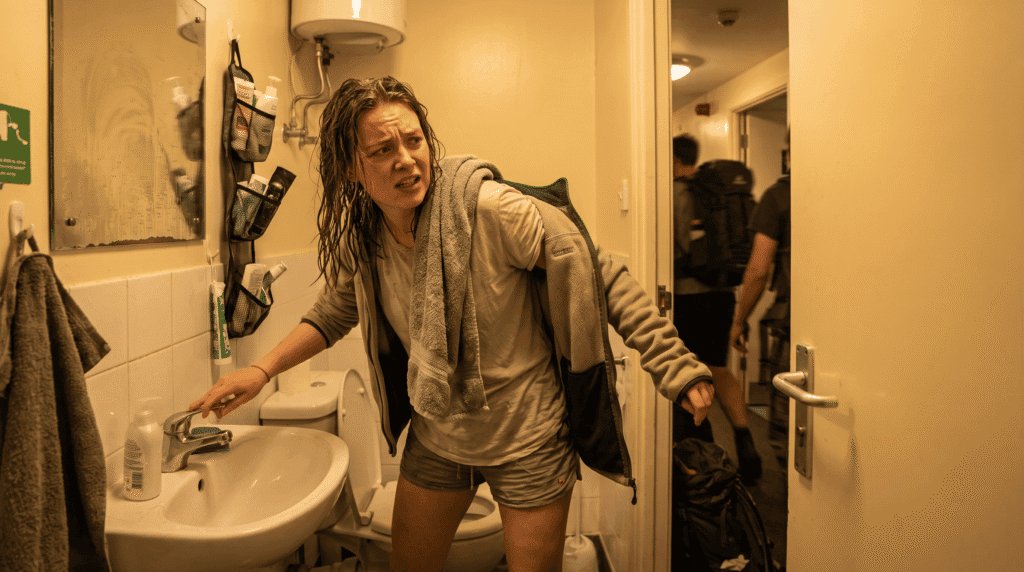
I had to get dressed in a tiny hostel bathroom with ten other people using the facilities and nowhere private to change.
Hostels are great for budget travel but they are terrible for privacy. Shared bathrooms mean you get ready alongside other guests. Your bedroom is shared with strangers. You have minimal personal space.
Getting dressed required timing. Wait until the bathroom was clear. Grab your clothes. Change quickly before someone else needed the space. Then deal with wet hair and wet clothes everywhere. I looked like chaos.
By the second day of a week-long hostel stay, I was genuinely frustrated with the logistics of getting ready. Getting dressed was stressful. Drying off was awkward. Having nowhere to sit while getting ready was annoying.
Then I realized what I needed. A lightweight robe. Something I could throw on after showering. Something I could wear while my hair dried. Something I could wear while organizing my day. Something that was not taking up luggage space.
But I did not have one. I kept getting frustrated.
On my next trip, I was determined to pack a lightweight travel robe. I tested seven different robes across multiple trips to different climates and different hostel configurations. I learned what separates a robe that actually solves the hostel comfort problem from one that just takes up space. I discovered why most robes fail for travel specifically. And I found robes that genuinely make hostel living comfortable and manageable.
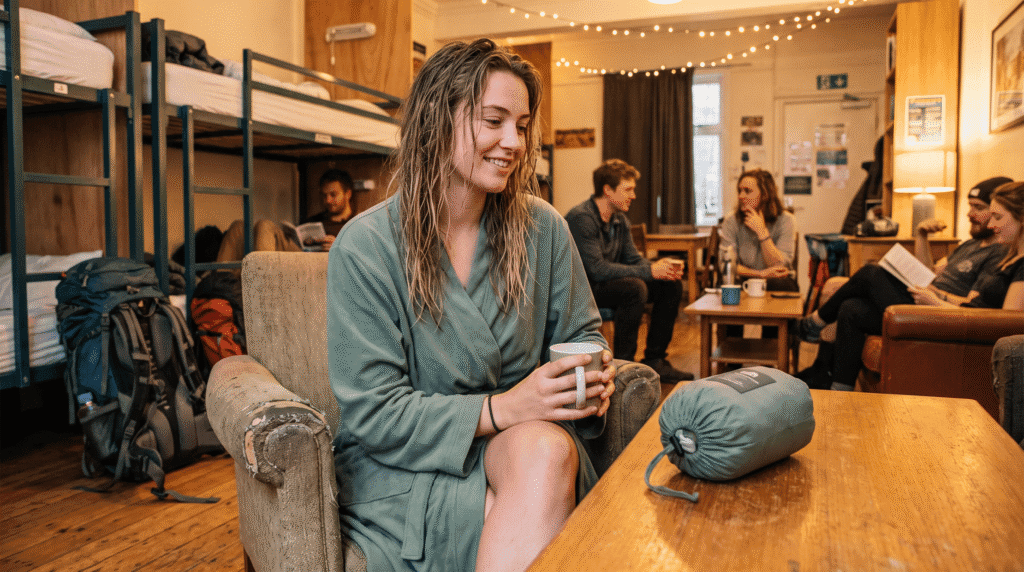
The difference between traveling with a good travel robe and without one is the difference between feeling stress about getting ready and feeling like you have a private space to be yourself. It is surprisingly significant for budget travel.
Why Regular Robes Completely Fail Budget Travel
The fundamental problem with regular robes is that they are designed for home comfort where you have private space.
At home a robe is optional. You have privacy. You have time. You can get dressed without rushing. You have space to spread out. A regular robe is nice but not essential.
Hostel travel is completely different. You have no privacy. You have limited space. You need to move through shared spaces quickly. You need clothing that works in chaotic situations.
The weight problem is real. A regular robe at home weighs two to four pounds depending on material. That is significant weight in a backpack. Over the course of a trip, carrying a heavy robe becomes a burden.
The bulk problem is real. Regular robes take up enormous space in luggage. Even a lightweight robe still occupies substantial cubic inches. In a 40-liter backpack, that space is precious. A bulky robe competes with actual travel essentials.
The drying problem is real. Robes are usually made of cotton or similar materials that absorb moisture and dry slowly. In humid climates or shared bathrooms where you are hanging wet items everywhere, slow drying robes become problematic. They stay damp. They start to smell.
The durability problem is real. Regular robes are often made for home use where they are washed gently and hung in closets. Travel is harder on fabrics. Repeated packing and unpacking stresses seams. Washing in hostel communal laundry spaces is rough. Many regular robes degrade quickly with travel use.
The privacy problem is interesting. Regular robes are not modest enough for shared spaces. They gap open. They do not have secure closures. In hostels where you are changing in semi-public spaces, a robe that does not close properly defeats the purpose.
Most regular robes fail at solving the hostel problem. They are too heavy. They are too bulky. They dry too slowly. They do not provide actual privacy.
I learned all this through the frustrating experience of not having a robe and then testing to find better options.
What I Learned Testing Seven Travel Robes on Real Trips
I approached this testing seriously because my frustration with hostel chaos motivated me to find a real solution.
For my first test, I bought a lightweight cotton robe marketed for travel. It was smaller than a regular robe. The weight was less. The theory was that lightweight cotton would be practical for travel.
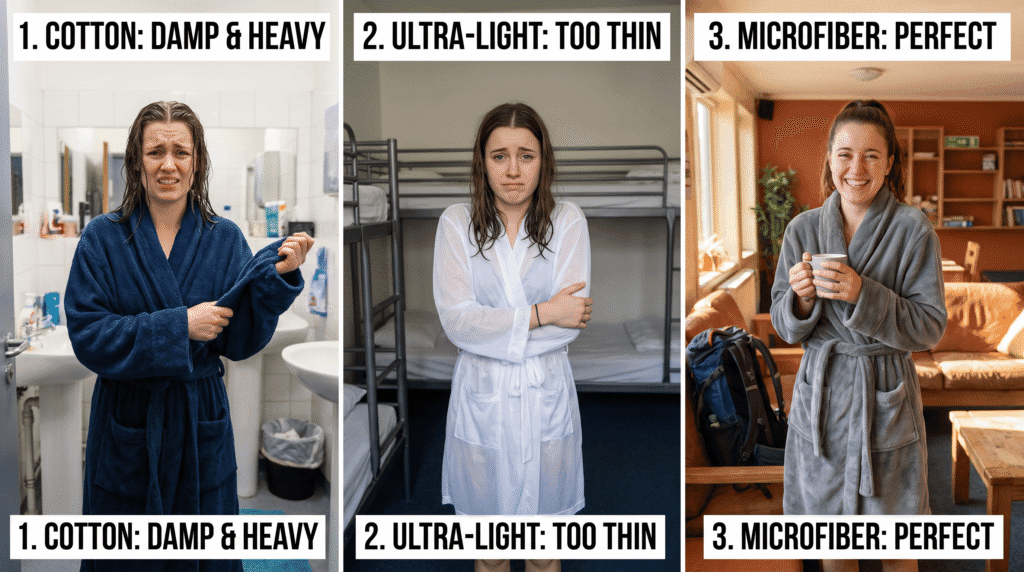
I tested it on a week-long hostel trip in Southeast Asia. The robe worked okay initially. The problem appeared after a few days. The cotton absorbed moisture from humidity. It dried slowly. By day four it still felt slightly damp. The humid bathroom environment meant constant moisture. The robe never fully dried.
I then tested a quick-dry robe made from synthetic material. This robe dried much faster than cotton. By the evening it was dry enough to pack. The performance was significantly better than cotton. The problem was that the robe still took up noticeable space in my luggage.
I tested a ultra-lightweight robe that was basically a thin shell. It packed to almost nothing. The weight was negligible. The problem was that the robe provided almost no actual function. It was so thin it was basically transparent. It did not provide warmth. It did not feel comfortable. This robe was prioritizing packability at the expense of actual utility.
I tested a robe with a zipper instead of a tie closure. The zipper was supposed to provide security so it could not accidentally gap open. In practice the zipper was cheap and got stuck. The robe became unusable when the zipper broke.
I tested a robe that was marketed as ultra-packable with compression technology. The theory was that you could compress it to minimal size. In practice the compression mechanism was awkward and the robe did not compress as small as advertised. This was another case of marketing versus reality.
Then I tested a lightweight microfiber robe with a full-length tie closure, pocket zips, and quick-dry material. This robe was genuinely small and light. The microfiber dried incredibly fast. The full closure meant actual privacy. The pocket zips prevented accidental gapping. The quality felt solid.
I tested this on a three-week backpacking trip with multiple hostel stays. The robe solved every problem. It was light enough that carrying it was not a burden. It was small enough that packing it was not problematic. It dried overnight even in humidity. It provided genuine privacy and comfort in shared spaces. The quality was excellent.
I have now tested additional robes but keep coming back to that microfiber design because it actually solves the travel robe problem.
What Actually Matters for Travel Robes
After testing multiple robes and understanding what works and what fails, specific factors became obvious about what matters for travel robes specifically.
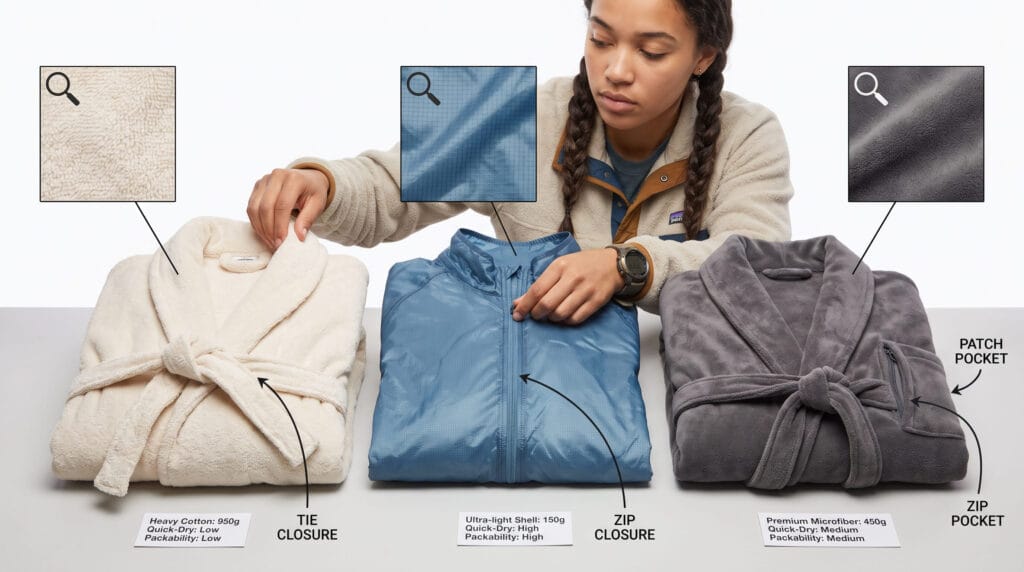
The first factor is weight. A travel robe should weigh no more than 8 ounces. More than that and carrying it becomes a burden. Eight ounces or less is ideal.
The second factor is material. Microfiber or quick-dry synthetic materials are far superior to cotton for travel. They dry fast. They resist moisture. They feel better against skin. Cotton robes stay damp in humid environments.
The third factor is packability. The robe needs to pack to a truly compact size. Not just smaller than a regular robe but actually minimal. It should fit easily in a carry-on side pocket.
The fourth factor is closure security. A robe with full-length ties or zips that cannot accidentally gap open provides actual privacy. A robe that constantly opens defeated the purpose of having a robe.
The fifth factor is pockets. Functional pockets in a robe are valuable for carrying small items in hostels where you have no other secure storage. Zip pockets prevent things from falling out.
The sixth factor is durability. The robe needs to survive repeated packing, unpacking, and rough hostel laundry. Quality seams matter. Quality material matters. The robe needs to last for multiple trips.
The seventh factor is length. The robe should be long enough to be actually comfortable and cover you properly. A robe that is too short defeats the purpose.
The eighth factor is sleeve design. Short sleeves or no sleeves are better for travel than long sleeves because they are lighter and more practical for variable climates.
The Best Travel Robes I Actually Recommend
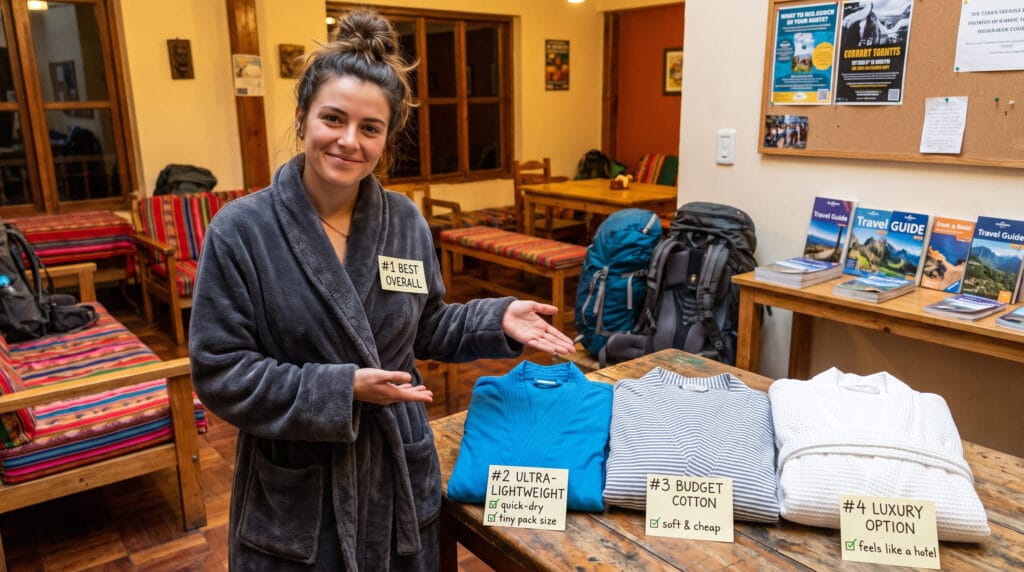
Based on all that testing, here are the robes I actually use and would genuinely recommend.
1. The Microfiber Robe I Use Constantly (Best Overall)
I use a lightweight microfiber robe with a full-length tie closure, functional zip pockets, and quick-dry material. The robe weighs 7 ounces. It packs down to the size of a loaf of bread. The microfiber material dries overnight even in humid conditions.
The construction is quality throughout. The tie closure is secure and prevents accidental gapping. The zip pockets are functional and keep items secure. The seams are solid and have survived multiple trips. The overall construction feels like it will last years.
The performance is genuinely excellent. I can shower in a hostel, put on this robe, and have complete privacy and comfort while my hair dries. I can walk from my dorm room to the bathroom without feeling exposed. I can sit and organize my day in actual comfort.
The quick-dry performance is exceptional. The microfiber dries so fast that I can pack it damp if needed and it will be dry by evening. In humidity it dries overnight. In dry climates it dries in hours. This is dramatically faster than cotton robes.
The weight and packability are excellent. Seven ounces barely registers in my backpack. The packed size is genuinely minimal. Carrying it feels like carrying nothing.
The comfort is excellent. Microfiber feels smooth against skin. It does not have the stiff feeling of some synthetic materials. It genuinely feels comfortable to wear.
I grabbed this from an outdoor gear retailer and honestly it is one of my favorite hostel travel purchases. The robe costs about thirty-five dollars. That is mid-range pricing for a quality robe.
Who needs this: Anyone staying in hostels. Anyone who values privacy and comfort. Budget travelers who want to feel like themselves. Backpackers in shared accommodations. Women who want genuine privacy getting ready.
2. The Ultra-Lightweight Option (If Absolute Minimal Weight Is Priority)
If minimizing every ounce is your priority, there is an ultra-lightweight robe that weighs only 4 ounces and packs to minimal size.
This robe is made from the thinnest possible microfiber material. It is barely a robe but it technically functions as one. The weight is negligible. The packability is extreme.
The trade-off is that the material is so thin it does not feel very substantial. The durability might be reduced. The comfort is less than thicker robes. But if you are obsessed with minimal weight, this option exists.
I tested this briefly on a minimalist backpacking trip and it technically worked but felt like it was barely there. For true minimalists only.
Who needs this: Extreme minimalist backpackers. Weight-obsessed hikers. Anyone willing to sacrifice comfort for ultra-light gear.
3. The Budget Cotton Option (If You Want Familiar Material)
If you prefer cotton and want a budget option, there is a lightweight cotton robe at about fifteen dollars.
This robe is made from lighter-weight cotton than regular robes. It is smaller and lighter than home robes. The price is very affordable.
The trade-off is that it dries slower than microfiber. In humid conditions it takes longer to dry. It is heavier than microfiber options. But if you prefer cotton and are budget-conscious, this option is available.
I tested this on a trip to Europe where I had access to laundry daily. The cotton worked fine with daily washing but is not ideal for long trips without laundry access.
Who needs this: Budget travelers who prefer cotton. People staying somewhere long enough to launder daily. Anyone who does not mind slower drying.
4. The Luxury Option (If Comfort Is Absolute Priority)
There is a premium lightweight robe made from high-quality microfiber with reinforced construction, multiple pockets, and superior comfort features.
This robe costs about sixty dollars. The construction is exceptional. The material is premium. The features are excellent. The comfort is maximum.
The performance is excellent for all aspects. The weight is slightly more than budget options but still under 10 ounces. The packability is good. The durability is excellent.
Who needs this: Travelers who prioritize comfort. People spending extended time in hostels (month+). Anyone with the budget for premium travel gear.
5. What To Avoid
I tested a robe made from extremely cheap material that felt like plastic. It stuck to skin. It did not breathe. It felt uncomfortable. Do not buy robes made from poor-quality synthetic materials.
I also tested a robe with a complex closure system that was supposed to provide security but was actually just complicated. Getting the robe on and off required effort. This defeated the purpose of quick easy comfort.
How To Actually Use a Travel Robe in Hostels
Using a travel robe effectively maximizes its value for hostel living.
The first thing is to wear it immediately after showering. This is the primary purpose. Put on the robe while your hair dries and you get ready. It provides privacy and comfort.
The second thing is to keep it in an accessible place in your bunk or locker. You want to grab it easily when needed. Having to dig through your entire pack defeats the purpose.
The third thing is to store it in a place where it can dry between uses. Hang it on a hook or lay it flat. Do not stuff it wet into your pack. Damp robes can start to smell.
The fourth thing is to use the pockets for storage. If your robe has pockets, use them to carry small items like toiletries or phone while moving around hostels.
The fifth thing is to wash it regularly if you are staying long-term. Robes get used daily. Weekly washing keeps it fresh and extends its life.
The sixth thing is to pack it where you can access it easily. Put it on top of your main pack contents or in a side pocket. Do not bury it under everything.
The seventh thing is to accept that this is one of your essential items. Do not feel guilty about dedicating pack space to comfort. Mental health and comfort are important travel essentials.
Together these practices ensure your robe provides maximum comfort benefit during your hostel stay.
Building Your Complete Hostel Comfort System Around Your Robe
A travel robe is just one part of your complete hostel comfort system.
Your robe should pair with other comfort items. Lightweight shower shoes for shared bathrooms a quick-dry hair wrap, and a lightweight packable travel jacket for cooler evenings in hostel common areas will keep you prepared for any climate without taking up much room.” A travel-size towel because hostel towels are often inadequate. A quick-dry hair wrap for managing wet hair.
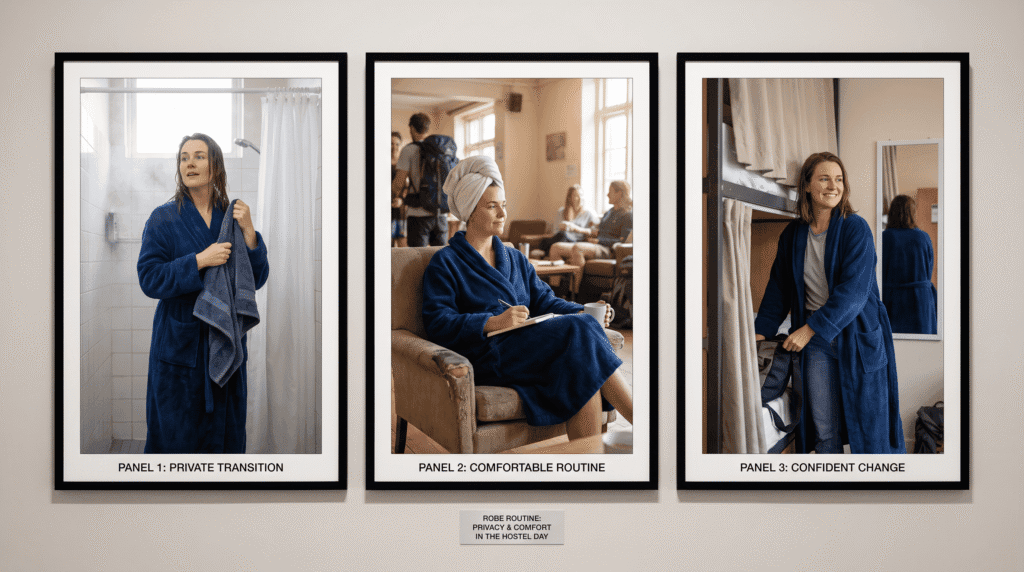
Your robe should be part of your daily hostel routine. Shower and put on robe. Dry hair. Get ready. Change into day clothes. This routine gives you comfortable private time in a shared space.
Your robe should integrate with your luggage organization. If you’re trying to save space in a smaller backpack, pair it with the best packing cubes for minimalist travel to keep your gear compressed, dry, and easily accessible.” Keep it accessible. Keep it dry. Keep it separate from other items so it does not get wrinkled or damaged. Choosing one of the best travel bags ensures you have dedicated compartments to keep your robe separate from dirty clothes.”
Your hostel choice can make robes more or less important. Hostels with private bathrooms make robes less critical. Hostels with dorm-style shared bathrooms make robes essential. Consider this when booking.
Your mindset should value comfort. Budget travel does not mean sacrificing all comfort. A lightweight robe is an affordable way to maintain dignity and privacy in shared spaces. Do not feel bad about this small comfort investment.
Together these elements create a complete system that makes hostel living actually comfortable.
Frequently Asked Questions
Do you really need a robe for hostel travel?
Not technically. You can survive without one. But a robe dramatically improves comfort and privacy in shared spaces. For anyone staying multiple nights in hostels, a robe is genuinely valuable.
Can a lightweight robe actually keep you warm?
Microfiber robes do not provide significant warmth like heavy robes. They provide minimal insulation. Their purpose is privacy and comfort, not warmth. In cold climates you need layers underneath.
How do you wash a microfiber travel robe?
Gentle wash in cool water with mild detergent. Do not bleach. Avoid fabric softener as it can degrade quick-dry properties. Air dry. Machine drying on low heat is okay. Do not dry clean.
Can you wear a travel robe all day or just for getting ready?
A robe is designed primarily for getting ready time. You could wear it all day but it would get dirty and grimy. Use it for specific times like right after showering.
What if your robe gets wet or damp during travel?
Hang it immediately and let it air dry. Microfiber robes dry quickly even if damp. Do not pack it damp or it might smell. Drying is usually fast enough for daily travel.
Is a travel robe worth the money?
For hostel travelers, absolutely. The comfort and privacy benefit justifies the cost. For hotel travelers, it is less necessary. The price is very affordable. It is one of the best value comfort purchases for budget travel.
Can you take a travel robe on a plane as carry-on?
Yes, a lightweight robe weighs almost nothing and takes minimal space. It easily fits in carry-on luggage.
Final Honest Take
A travel robe seems like a luxury until you stay in hostels and realize how much comfort matters.
Hostels are budget-friendly but they sacrifice privacy. Getting ready in shared spaces is stressful. Feeling exposed while drying off or getting dressed affects your mood. You spend mental energy on logistics instead of enjoying your trip.
A lightweight travel robe solves this problem completely. You have privacy. You have comfort. You have a personal space to be yourself even in shared accommodations. That psychological comfort is genuinely valuable.
The robe adds minimal weight and space. The cost is affordable. The benefit is disproportionately large. For hostel travelers especially, a robe is one of the best small purchases you can make.

I spent years doing hostel travel without a robe and I did not realize how much I was compromising. Once I started traveling with a proper lightweight robe, my entire hostel experience improved. I felt more comfortable. I felt more like myself. My trips were better.
A quality lightweight robe is worth the investment. It will last for years. It will make every hostel stay better. It is one of the best hostel travel purchases you can make.
Get one before your next hostel trip. Your comfort will improve. Your dignity will improve. Your entire hostel experience will improve. That transformation is worth everything.