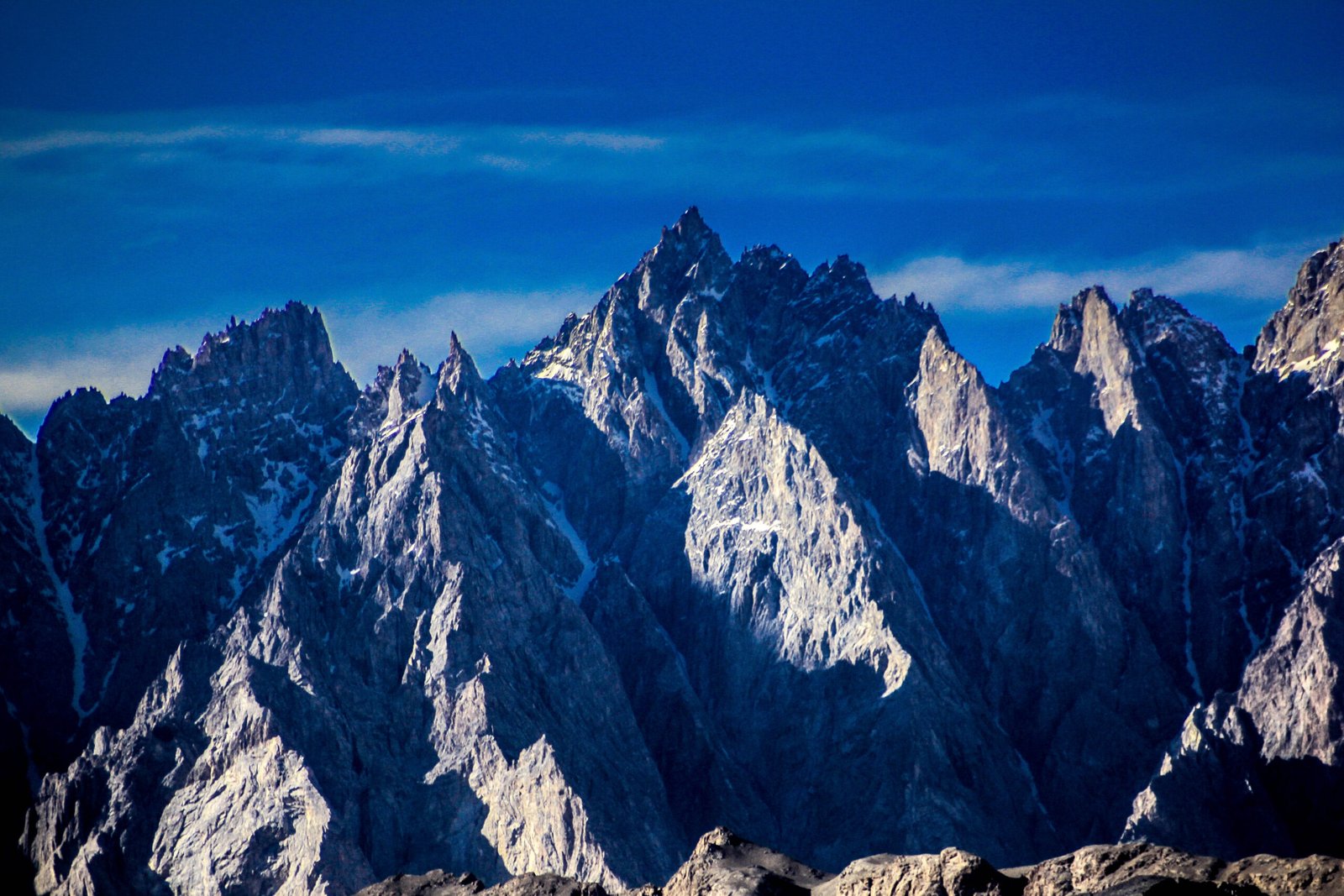
Short Answer
Karimabad — formerly Baltit — is Hunza’s old capital and the valley’s best base: two restored forts, a walkable bazaar, and the Eagle’s Nest sunrise viewpoint at Duikar above it all. Give it two full days: one for Baltit Fort, Altit Fort and the bazaar, and one for Duikar at dawn plus a slow afternoon in the orchards. The town sits on the Karakoram Highway (KKH) about 100 km north of Gilgit; April to October is the main season, with mid-October to mid-November the autumn-colour peak.
Where Karimabad sits
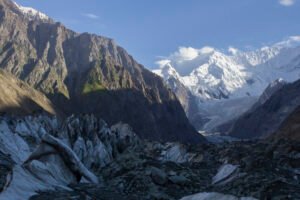
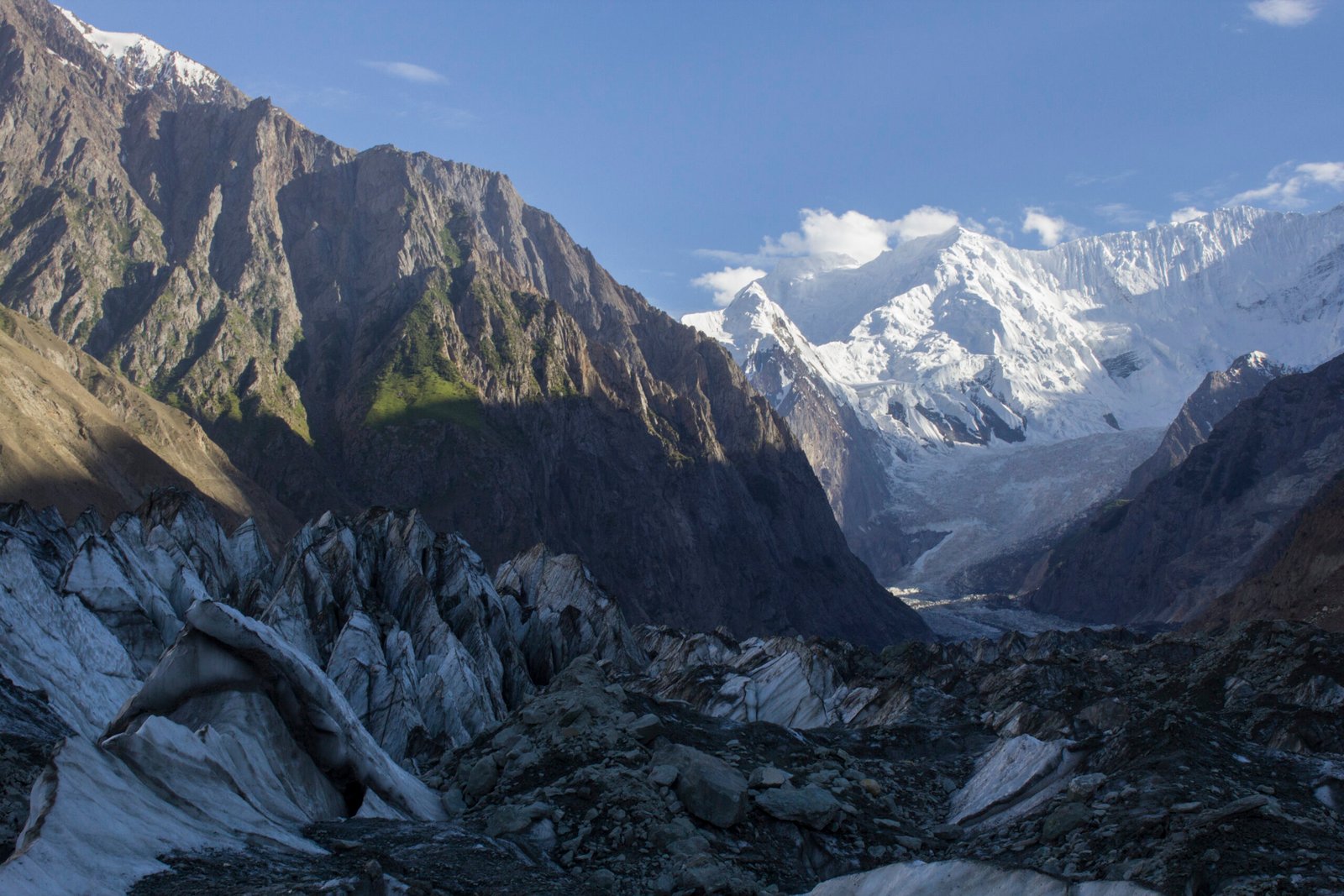
Karimabad is the main town of central Hunza, in Hunza District, on a hillside above the Hunza River where the Ultar Glacier moraine meets the valley floor. It was the seat of the Mirs (rulers) of Hunza, and its two forts tell the story of that small princely state in stone and timber. Across the river lies Nagar District — a separate district, not part of Hunza — a distinction worth keeping straight when planning day trips.
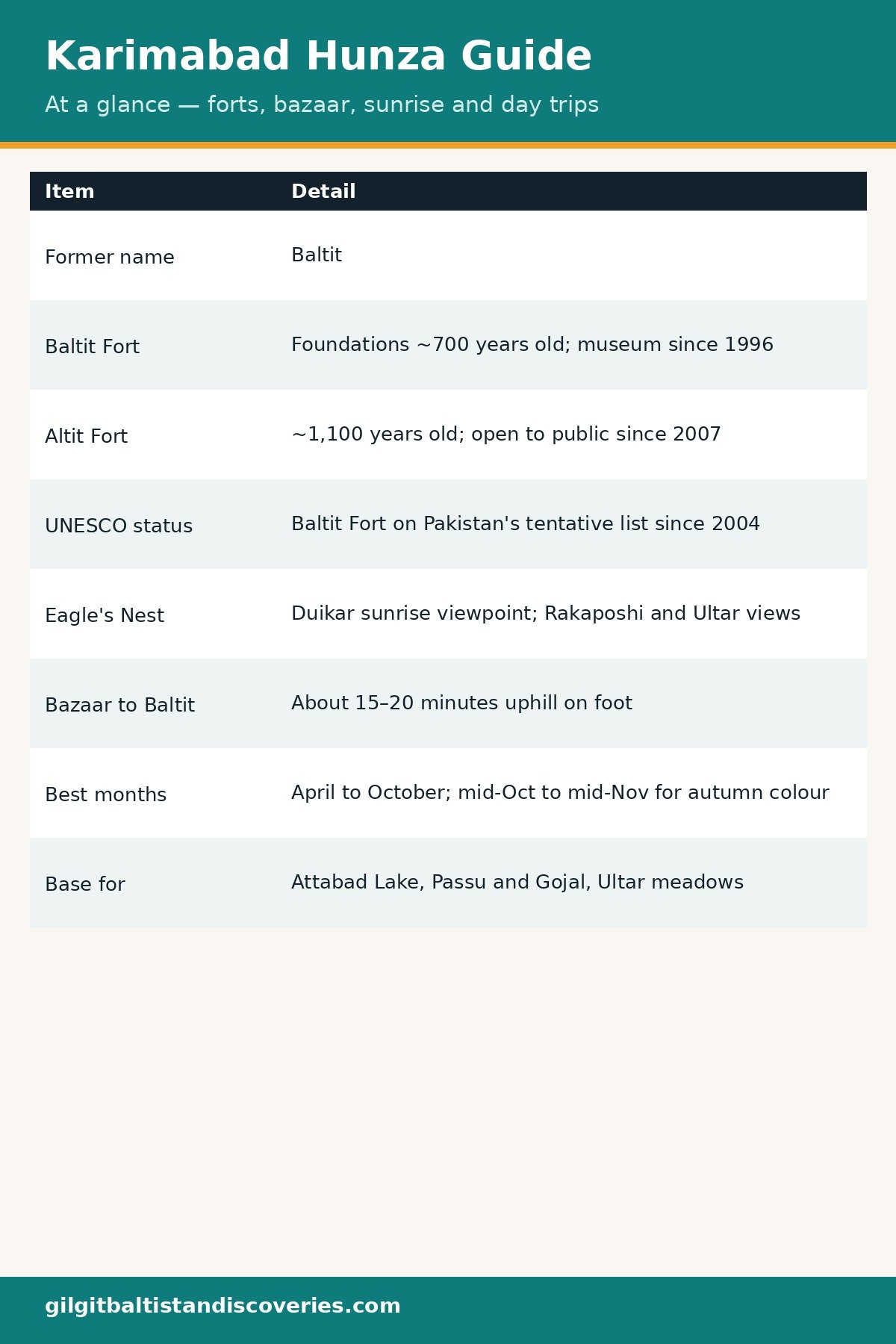
| Karimabad at a glance | Detail |
|---|---|
| Former name | Baltit |
| Baltit Fort | Foundations about 700 years old; museum since 1996 |
| Altit Fort | About 1,100 years old; open to the public since 2007 |
| UNESCO status | Baltit Fort on Pakistan’s UNESCO tentative list since 2004 |
| Eagle’s Nest (Duikar) | Sunrise viewpoint above Karimabad, views of Rakaposhi and Ultar |
| Walk from bazaar to Baltit Fort | About 15–20 minutes uphill |
| Best months | April to October; mid-October to mid-November for autumn colour |
| Base for | Attabad Lake, Passu and Gojal, Ultar meadows |
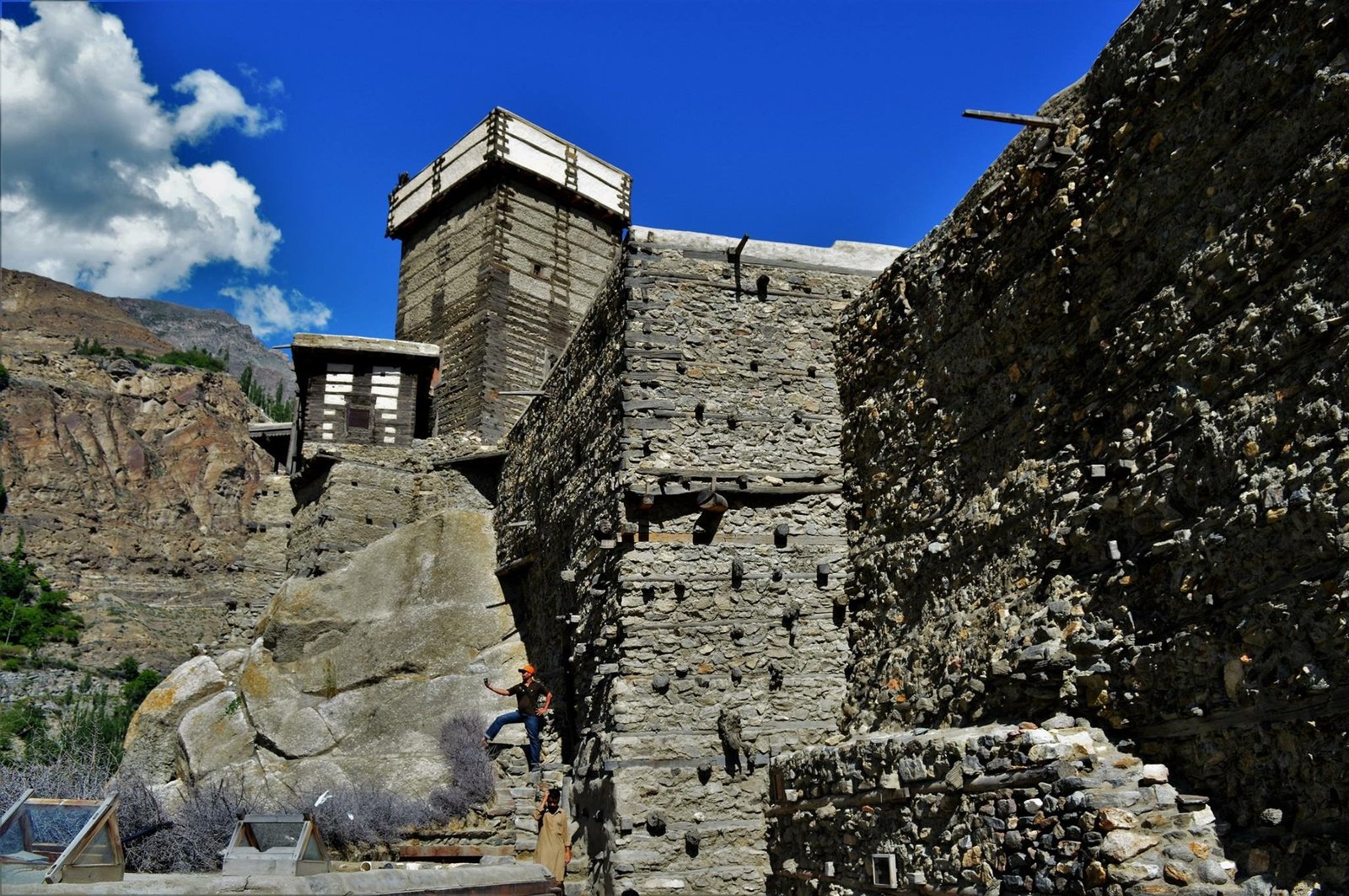
Baltit Fort
The fort itself
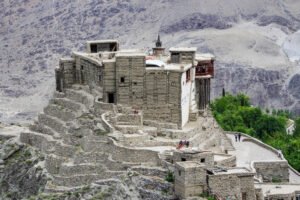
Baltit Fort rises above Karimabad on the moraine of the Ultar Glacier, its tiered stone-and-timber form showing the Tibetan and Ladakhi influences that came with a 16th-century marriage alliance: tradition says the Mir Ayasho II married a Baltistan princess, and Balti craftsmen rebuilt the fort in the style of their homeland. The Mirs lived here until 1945, when they moved to a new palace downhill. After decades of decay, the Aga Khan Trust for Culture restored the fort between 1990 and 1996, and it reopened as a museum in 1996. It has been on Pakistan’s UNESCO tentative list since 2004.
Visiting
Allow one to two hours, including the 15–20 minute uphill walk from the bazaar. Guided tours run through the fort’s rooms, royal quarters and rooftop, where the views run to Rakaposhi (7,788 m) and Ultar Sar. Ticket prices and opening hours change, so confirm locally before you go — do not rely on a price quoted in an old blog post.
Altit Fort and the old village
The older seat
Altit Fort, in the village of Altit below Karimabad, is the older of the two seats: its Shikari tower is about 1,100 years old, making it the oldest monument in Gilgit-Baltistan. The Mirs lived at Altit before moving to Baltit, and the fort was restored by the Aga Khan Trust for Culture with the Historic Cities Support Programme and the Government of Norway, opening to the public in 2007. Its small rooms, low portals and carved woodwork feel older and more intimate than Baltit — visit both, because they are not the same experience twice.
Altit village walk
The walk through Altit village, past old houses, irrigation channels and apricot orchards, is half the visit. The village’s royal garden and the viewpoint over the Hunza River are worth an unhurried hour, and the path between Altit and Karimabad is walkable for anyone comfortable with hillside steps.
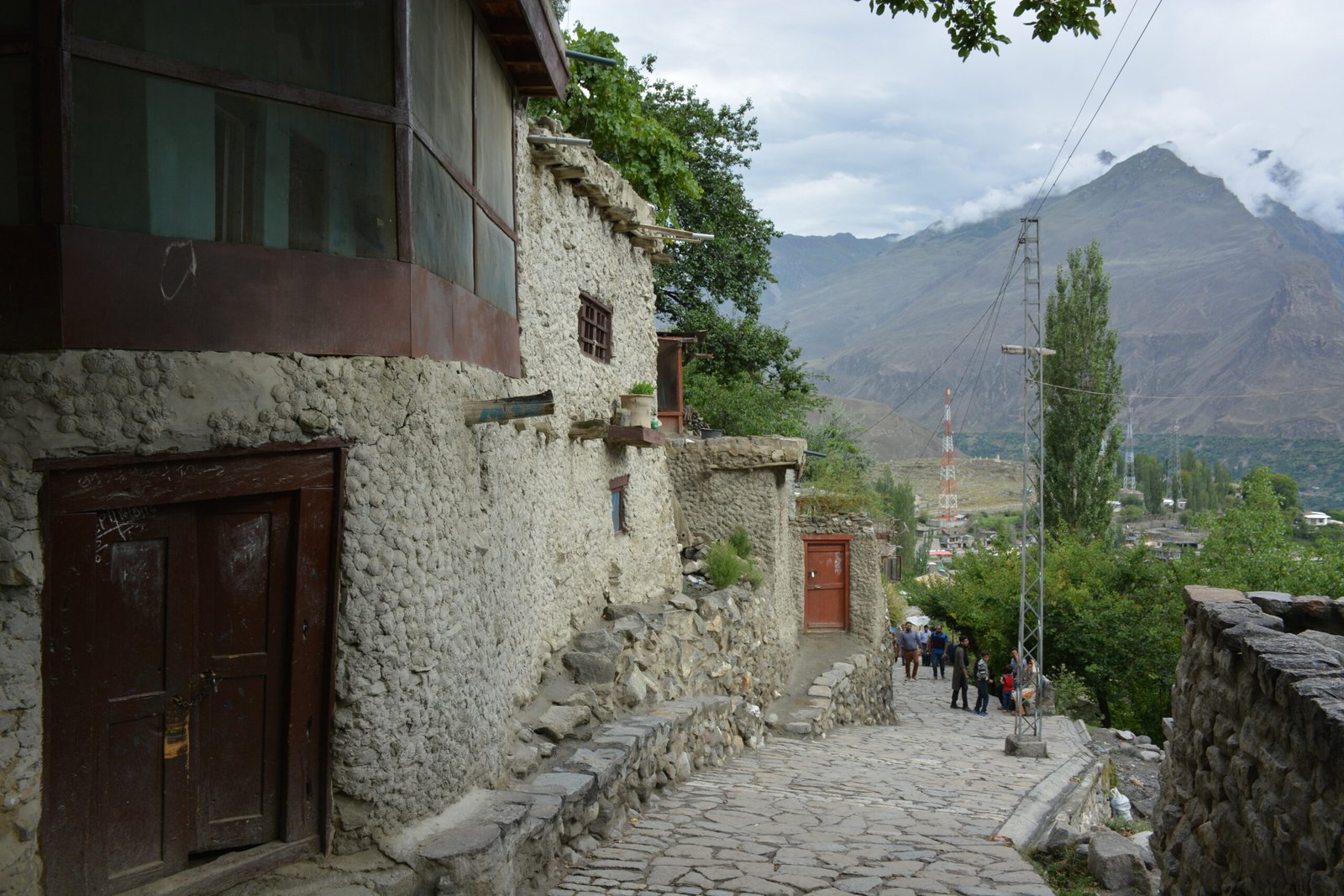
Karimabad bazaar
The bazaar is small, walkable and genuinely local: dried apricots and apricot oil, Hunza’s famous gemstones (buy only from reputable dealers and keep receipts), woollen caps and shawls, and cafés serving Hunza’s apricot cake and sea-buckthorn juice. It is also the practical heart of town — the place to arrange jeeps to Duikar, confirm KKH conditions, and buy supplies before heading to Gojal or Nagar. Haggling is gentle here; a smile and a first offer near two-thirds of the asking price is the normal rhythm.
Duikar and the Eagle’s Nest sunrise
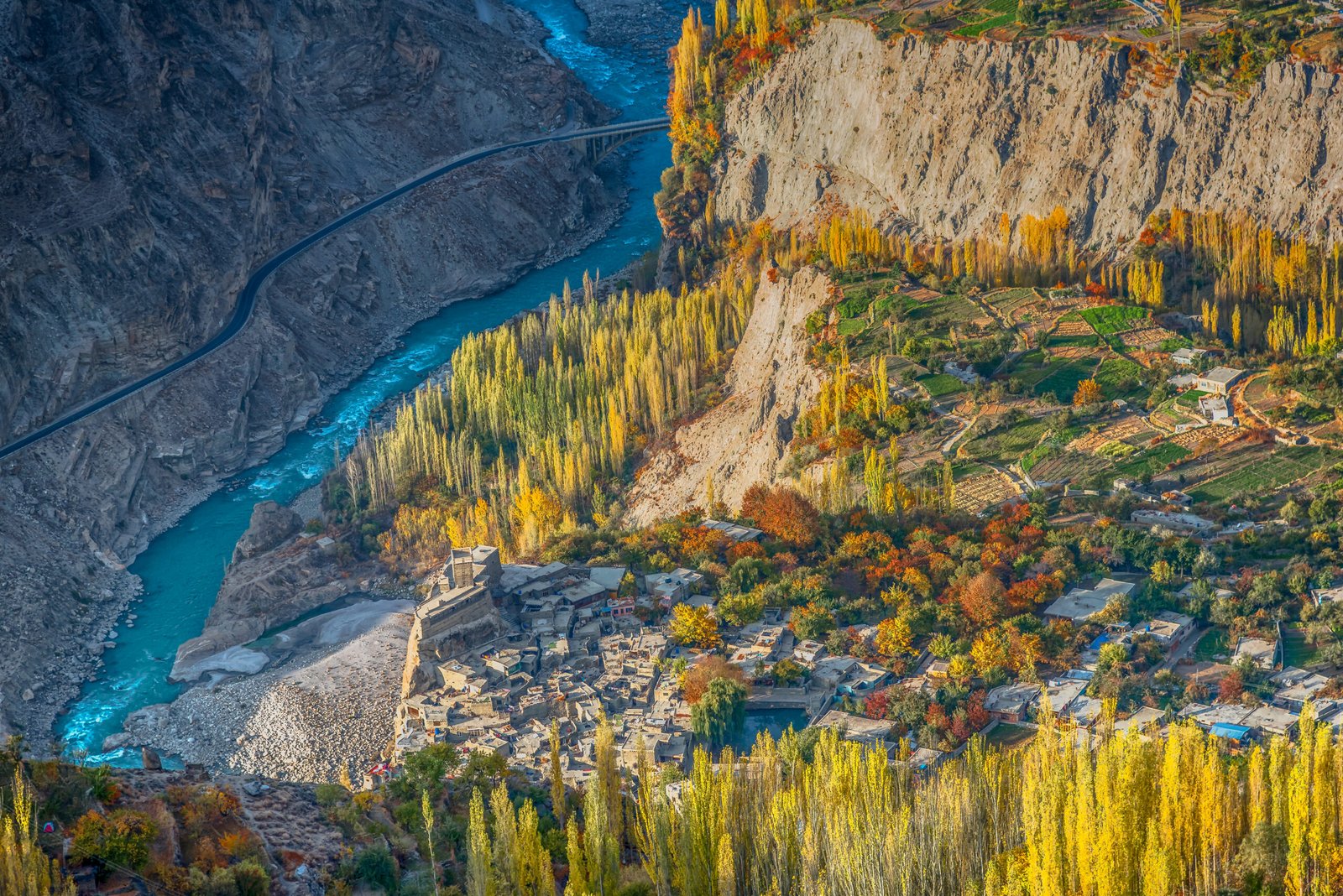
Duikar village, above Karimabad, holds the Eagle’s Nest viewpoint — the classic Hunza sunrise spot, looking across to Rakaposhi and Ultar Sar with the valley floor far below. Go for sunrise, not sunset: the light hits the peaks first, and the viewpoint fills with photographers. A jeep from Karimabad takes about 30 minutes on a steep road; walking up takes over an hour and is best done in daylight. Take a warm layer even in summer — the viewpoint is exposed and cold before dawn.
Day trips from Karimabad
Attabad Lake and Gojal
Attabad Lake is a short drive north on the KKH, and Passu and the Gojal valley lie beyond it (see the companion Passu & Gojal guide). A full Gojal day needs an early start; Attabad alone fits a half day.
Ultar meadows
Above Karimabad, the Ultar meadows offer a half-day walk with views back over the town and across to Rakaposhi. The trail is steep in places; go with a local guide if you are unsure of the route, and carry water — there are no shops on the upper trail.
Where to stay and eat
Karimabad has the widest choice of stays in Hunza, from the Serena Hunza (the valley’s best-known hotel) to family guesthouses and cafés with terrace views. Stay in town, not on the highway, for the evening light and the morning bazaar. Food ranges from Hunza home cooking to tourist-menu staples; the local dishes — chapshuro, mamtu dumplings, apricot soup (locally called dawdo) — are the ones to order.
Practical tips for Karimabad
- Two days, not a stopover: Travellers who pass through Karimabad in an afternoon see a fort and a bazaar; the town repays a second day at Duikar and in the orchards.
- Altitude is mild here: Karimabad sits at about 2,500 m, so most visitors feel fine — but take it easy on the first afternoon if you have flown straight in from Islamabad.
- Cash: ATMs exist in Karimabad but are not always reliable; carry rupees from Gilgit for jeeps, guides and small purchases.
- Seasons: For month-by-month timing, see the Best Time to Visit Hunza Valley guide. For what to pack, see What to Pack for Northern Pakistan.
- Budgeting: Karimabad is the valley’s spending hub — hotels, jeeps and meals add up fastest here. The Hunza Valley Trip Cost breakdown covers realistic tiers.
Frequently Asked Questions
What is Karimabad famous for?
Karimabad, Hunza’s old capital, is famous for Baltit Fort and Altit Fort, the seats of the Mirs of Hunza, its bazaar, and the Eagle’s Nest sunrise viewpoint at Duikar above the town.
How old is Baltit Fort?
Baltit Fort’s foundations are about 700 years old, with rebuilds across the centuries. The Mirs lived there until 1945; it was restored by the Aga Khan Trust for Culture in 1990–1996 and is now a museum.
How long does the Baltit Fort visit take?
Allow one to two hours in total, including the 15–20 minute uphill walk from the Karimabad bazaar. Guided tours cover the rooms, royal quarters and rooftop viewpoints.
What is the Eagle’s Nest viewpoint?
The Eagle’s Nest is the sunrise viewpoint at Duikar village above Karimabad, reached by jeep in about 30 minutes. It looks across to Rakaposhi and Ultar Sar and is best visited at dawn.
Is Karimabad in Nagar or Hunza?
Karimabad is in Hunza District. Nagar is a separate district across the Hunza River — the two valleys are neighbours, not the same place, and day trips cross between them.
Last updated: 26 October 2026