Short Answer
Altitude sickness can affect travellers in Gilgit-Baltistan because many popular stops sit well above 2,400 metres, where the air holds less oxygen. Early signs are usually headache, tiredness, nausea, loss of appetite, dizziness, and poor sleep, starting within hours of arriving higher. The safest response is to stop climbing, rest, and descend if symptoms worsen. Confusion, unsteadiness, or breathlessness at rest need urgent descent and medical help. Plan gradually, drink enough fluids, avoid alcohol for the first 48 hours at altitude, and talk to your own doctor before the trip about preventive medication or any heart or lung condition.
Last updated: 28 October 2026
How high are the places travellers actually visit?
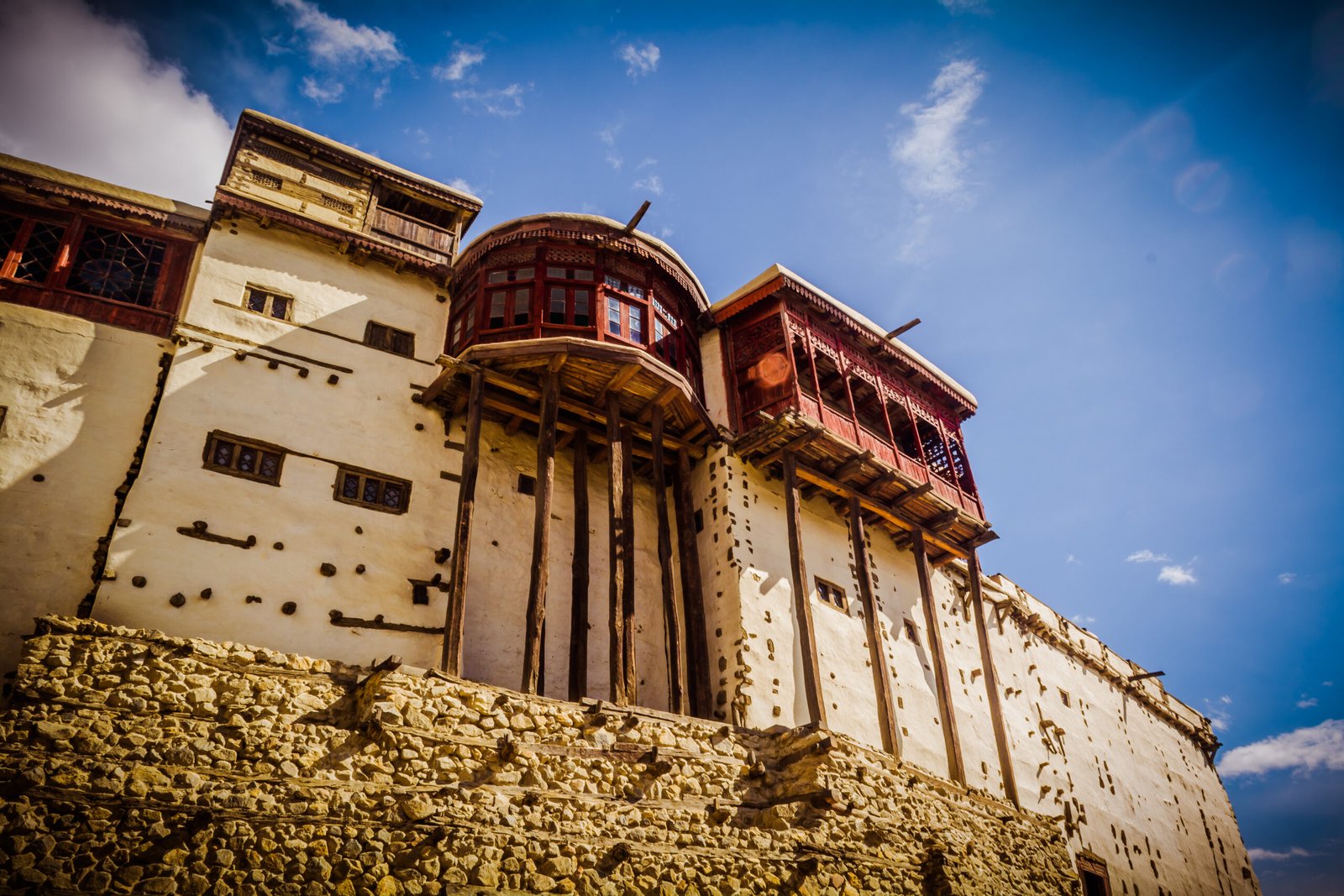
Gilgit-Baltistan is not uniformly high. Gilgit city sits at about 1,500 metres, which most travellers tolerate well, but the risk rises as you climb into Hunza and Baltistan, and sharply on day trips to Deosai and Khunjerab Pass. A comfortable night in Gilgit does not prove you will feel fine at 4,000 metres the next day.
| Place | Approximate altitude | What it means for your plan |
|---|---|---|
| Gilgit city | About 1,500 m | A useful lower first stop. |
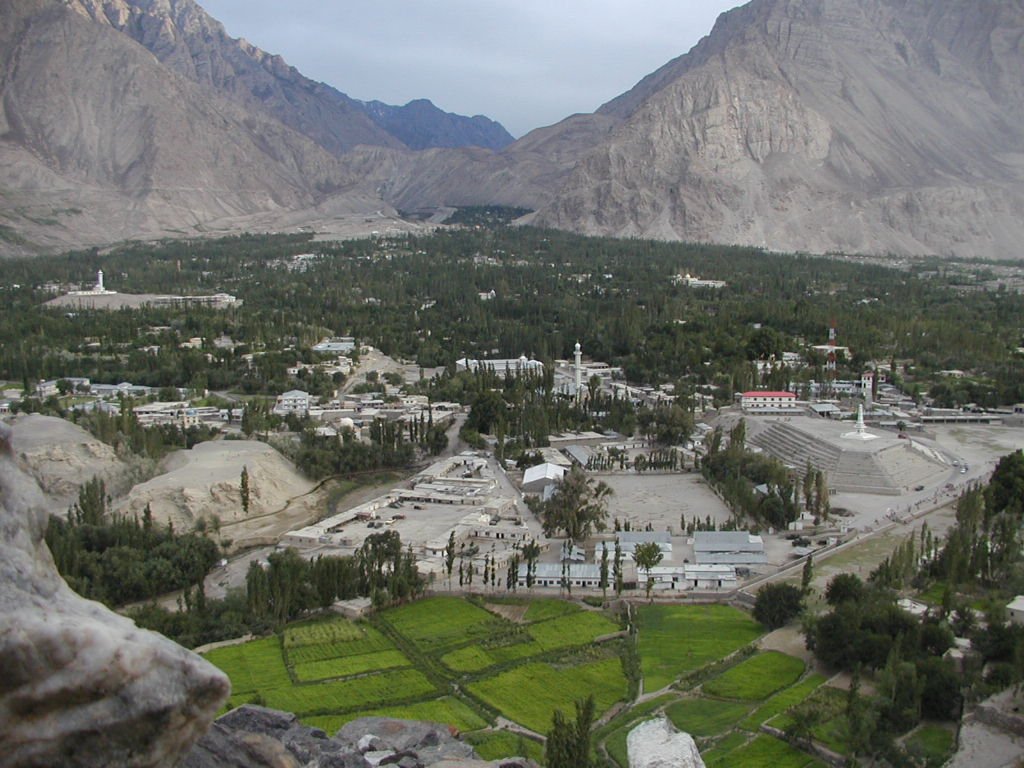
| Skardu city | 2,228 m | Take the first day gently, especially after a flight. |
| Karimabad, Hunza District | About 2,400–2,600 m across its terraces | Sleep low on your first Hunza night if you can. |
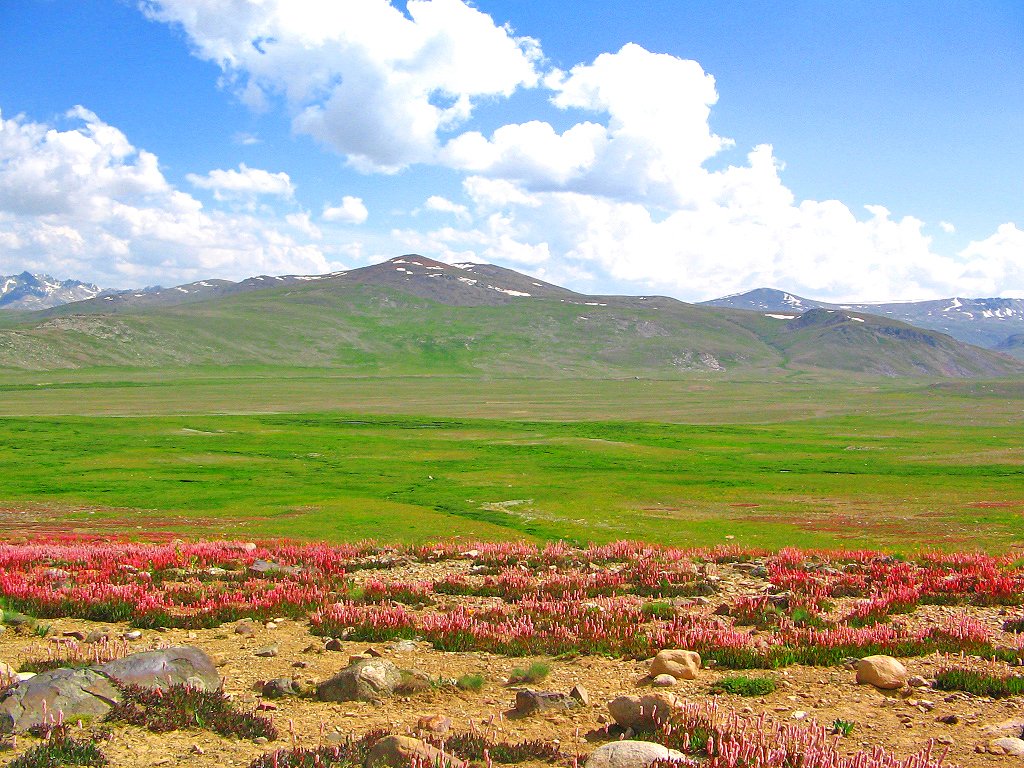
| Deosai National Park | 4,114 m on average | A very high day trip; return to sleep lower. |
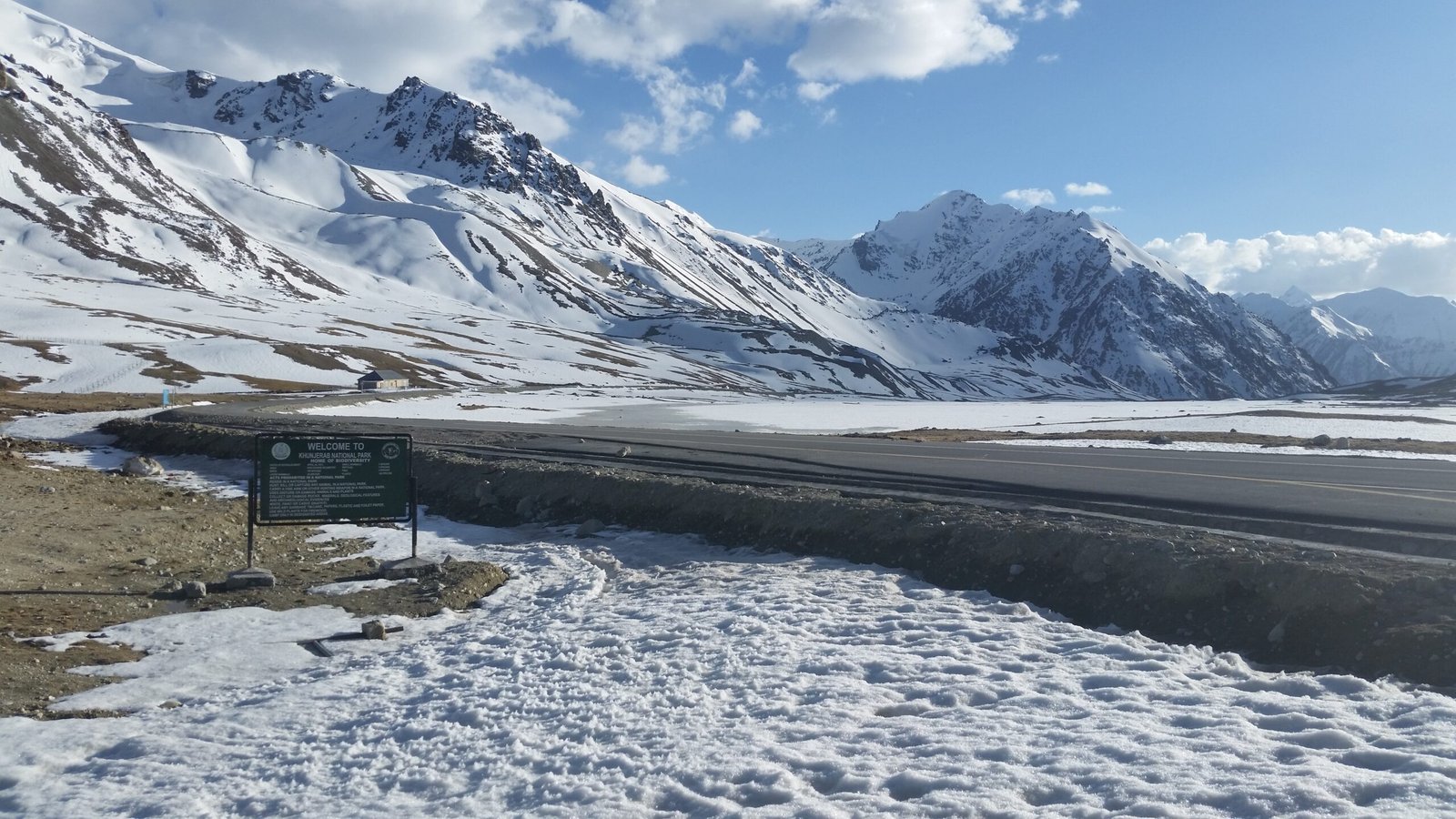
| Khunjerab Pass | 4,693 m | A very high day trip; do not plan to sleep here without local advice. |
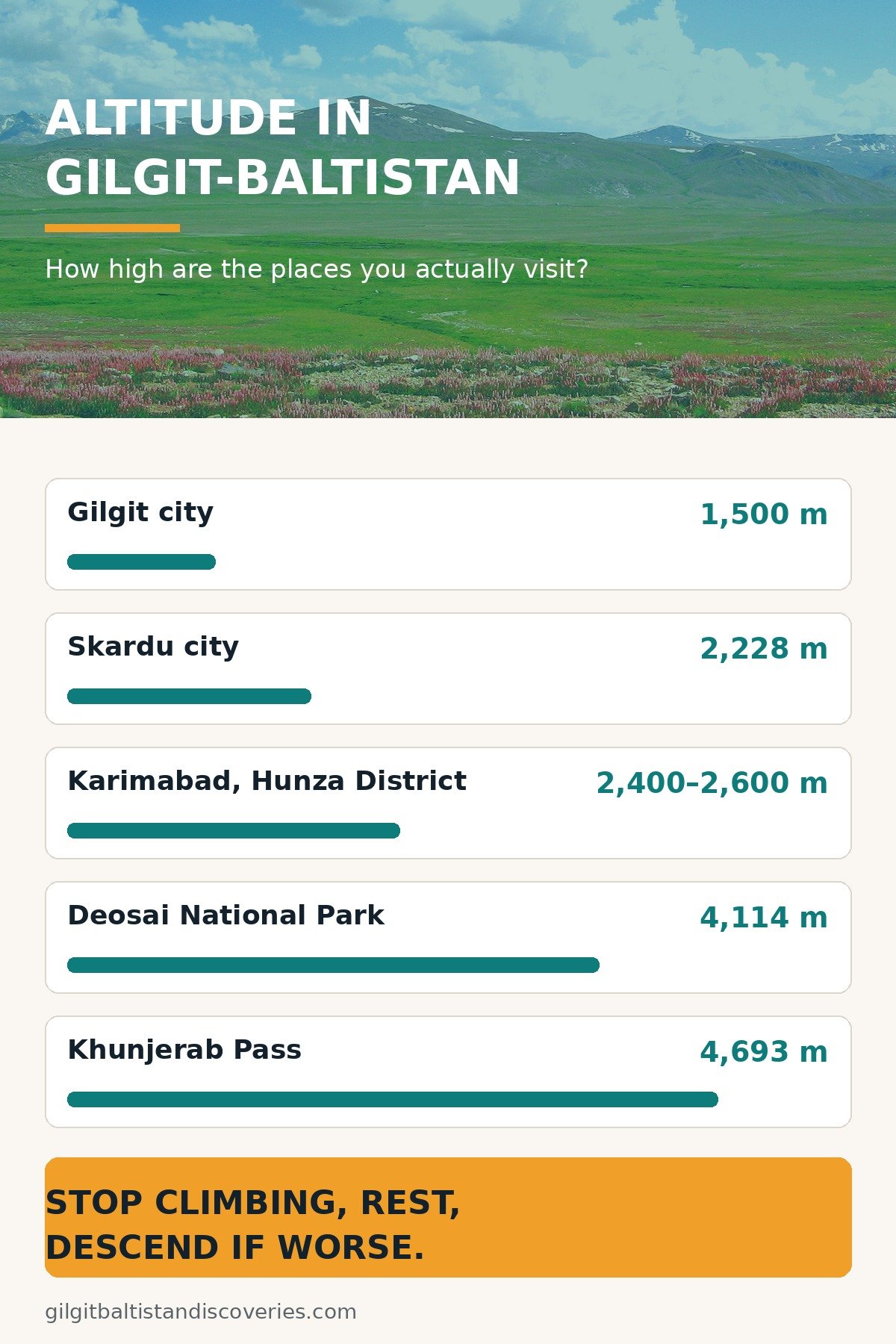
Karimabad needs a note because sources give different single figures for it: the town is built on steep terraces, so the bazaar and the lanes above it sit at different heights. This guide therefore uses a range, not one terrace figure for the whole town. Hunza and Nagar are separate districts and valleys, even though they face each other across the Hunza River near Karimabad.
For season and road access, see our guide to the best time to visit Gilgit-Baltistan — it helps you keep the highest stops off day one.
What is altitude sickness, and why does it happen?
Altitude sickness, also called acute mountain sickness, happens when reduced air pressure at height lowers the oxygen available to your body. The United States Centers for Disease Control and Prevention (CDC) calls this hypoxia, caused by the decreased partial pressure of oxygen. Your body can adjust, but acute acclimatisation takes three to five days after ascent.
That timing explains the most common mistake here: arriving by air or a long road journey and then climbing again the next morning. Fitness does not remove the risk — the CDC states that training and physical fitness do not affect risk, and that any unacclimatised traveller sleeping at 2,450 metres or higher is at risk.
What are the symptoms of altitude sickness?
Early symptoms often resemble a hangover. Headache is the cardinal symptom, usually with tiredness, nausea, loss of appetite, or dizziness, and poor sleep, vomiting, a rapid pulse, or breathlessness on exertion can also occur. Symptoms usually begin 2 to 12 hours after arrival higher, often during or after the first night.
Severe illness is less common but far more serious, involving the brain or the lungs. Watch for confusion, drowsiness, an unsteady walk, chest tightness, a cough, breathlessness at rest, or coughing up blood. These are not symptoms to sleep off. MedlinePlus states that the main treatment for all forms of mountain sickness is to descend as rapidly and safely as possible, and that you should not continue moving up if you develop symptoms.
| Mild to moderate signs | Severe warning signs — act urgently |
|---|---|
| Headache, tiredness, dizziness, poor sleep | Confusion, drowsiness, or reduced alertness |
| Nausea, vomiting, or loss of appetite | Unsteady walking or inability to walk in a straight line |
| Breathlessness on exertion, rapid pulse | Breathlessness at rest, chest tightness, or coughing up blood |
If you are unsure whether symptoms are mild or severe, stop ascending, rest, tell your companions or guide, and seek local medical help. Do not let someone with confusion or severe breathlessness descend alone.
How can I acclimatise in Gilgit-Baltistan?
Ascend gradually, and protect your sleeping altitude above all. The CDC, summarising Wilderness Medical Society guidance, recommends avoiding a jump straight to a sleeping altitude of 2,750 metres or higher in a single day, and once above 3,000 metres, raising sleeping altitude by no more than 500 metres per night, with an extra acclimatisation night for every 1,000 metres gained. MedlinePlus gives a similar rule: rest for a day or two for every 600 metres climbed above 2,400 metres.
In Gilgit-Baltistan, that usually means:
- Spend your first night or two lower — in Gilgit or Skardu — before heading higher.
- Keep the first 48 hours at altitude gentle: mild activity only, no alcohol, plenty of fluids, and regular meals.
- Prefer day trips to very high places. Visit Deosai or Khunjerab Pass during the day and return to sleep lower.
- Never sleep higher while you still have symptoms, however minor they seem. The CDC lists this as one of three rules that help prevent death or serious consequences from altitude illness, alongside knowing the early symptoms and descending if symptoms worsen despite rest.
- Build spare days in, so a fixed schedule never forces you higher while your body is still catching up.
For a Hunza route that spaces the climb, see this 7-day Hunza Valley itinerary. For Baltistan, this 5-day Skardu itinerary keeps Skardu as the base before higher day trips. Be ready to reorder days if you feel unwell.
What should I do if I feel unwell at altitude?
First, stop climbing. Rest at the same altitude, drink fluids, and avoid alcohol. Mild symptoms often settle within 12 to 48 hours if you do not ascend further, according to the CDC. If symptoms worsen despite rest, descend — even 300 metres or more can bring rapid improvement.
Second, tell someone at the first sign of trouble: your guide, driver, or travel companions. Agree in advance who will go down with you, because on remote roads and high plateaus help can be far away.
Third, seek medical help urgently for severe signs. If breathing trouble, confusion, or unsteadiness appears, descend as rapidly and safely as possible and get medical attention.
Talk to your own doctor before departure about preventive medication if your itinerary climbs rapidly or sleeps high, or if you have had altitude illness before. This guide does not recommend a particular drug or dose: that decision depends on your medical history and trip plan.
Who should take extra care?
Everyone who ascends quickly is at risk, but some travellers should plan more conservatively: people who live at or near sea level, people who have had altitude illness before, and people with heart, nervous-system, or lung problems or anaemia, according to MedlinePlus. Children are as susceptible as adults, the CDC notes, and young children may simply seem fussy or lose appetite.
Pregnant travellers, older travellers, and anyone with a chronic condition should discuss the itinerary — including the highest sleeping altitude, not just the highest viewpoint — with their own doctor before booking. Carry a note of your medicines and emergency contacts, and share your plan with someone not travelling with you.
How you arrive also changes the risk: flying in puts you at altitude within hours, while a road journey spreads the gain but still ends high. Our guide on how to travel to Gilgit-Baltistan from Islamabad compares the routes, so you can choose an arrival that leaves room for a slow first day.
What should I pack for altitude?
Pack for cold, sun, and dehydration as well as height. Temperatures can drop sharply at Deosai and Khunjerab Pass even in summer, and the CDC notes that high-altitude environments also expose travellers to cold, low humidity, and increased ultraviolet radiation, so layers and sun protection are practical, not optional.
Carry enough clean drinking water for road days, and a way to refill safely where tap water is not drinkable. A portable filter such as the Sawyer Squeeze water filter can be useful on treks, but it does not prevent altitude sickness — only gradual ascent, rest, and descent do that. Keep snacks, regular medicines, and emergency contacts within easy reach.
Finally, keep the trip flexible: a rest day in Karimabad or Skardu and a high pass visited as a day trip will serve you better than a rigid schedule. The mountains will still be there tomorrow if you need an extra night lower down.
Frequently Asked Questions
Can I get altitude sickness in Gilgit city?
Gilgit city sits at about 1,500 metres, well below the heights where most travellers develop altitude illness, so most visitors feel fine there. Risk rises as you climb higher, particularly above 2,400 metres, so use Gilgit as a gentle first stop before Hunza, Skardu, or the high passes.
Is Karimabad high enough to cause altitude sickness?
Yes, it can be. Karimabad’s terraces span roughly 2,400 to 2,600 metres, which is at or above the level where unacclimatised travellers can develop symptoms. Take the first day gently, sleep at the lower end of town if possible, and do not climb to a higher viewpoint while you still feel unwell.
Should I sleep at Khunjerab Pass or in Deosai?
No, not as a casual plan. Both places sit above 4,100 metres, far higher than a normal first-week sleeping altitude. Visit them as day trips and return to sleep lower, and follow a gradual itinerary with local advice before considering any high overnight stay.
How long does mild altitude sickness usually last?
Mild symptoms often begin within hours of arriving higher and usually settle within 12 to 48 hours if you rest and do not climb further. If symptoms worsen despite rest, or if severe signs appear, descend promptly and seek medical help rather than waiting it out.
Can I take preventive medication for altitude sickness?
Discuss this with your own doctor before you travel, especially if your itinerary climbs quickly or you have had altitude illness before. This guide does not recommend a specific drug or dose, because the right choice depends on your medical history, other medicines, and exact itinerary.