Short Answer
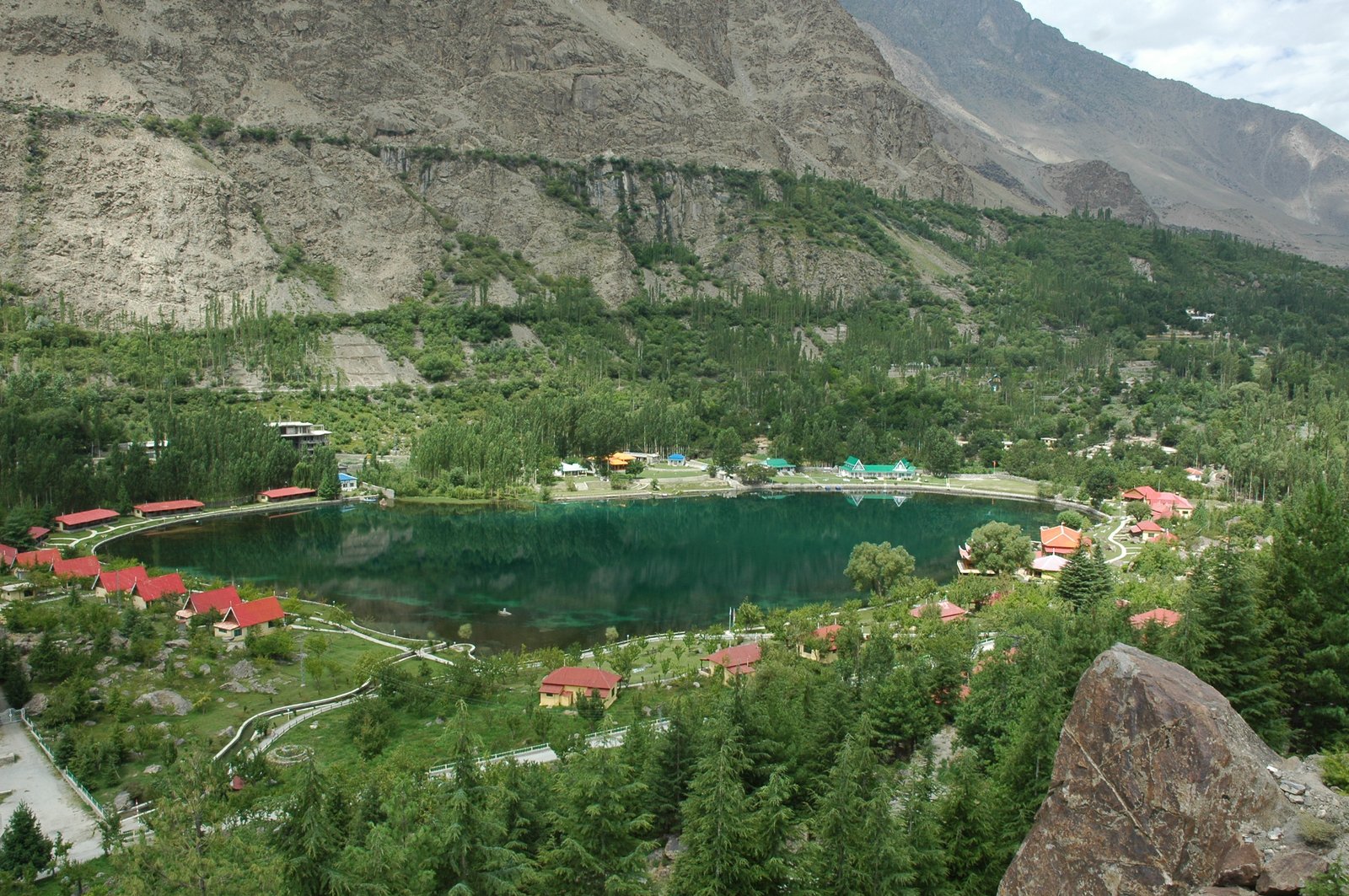
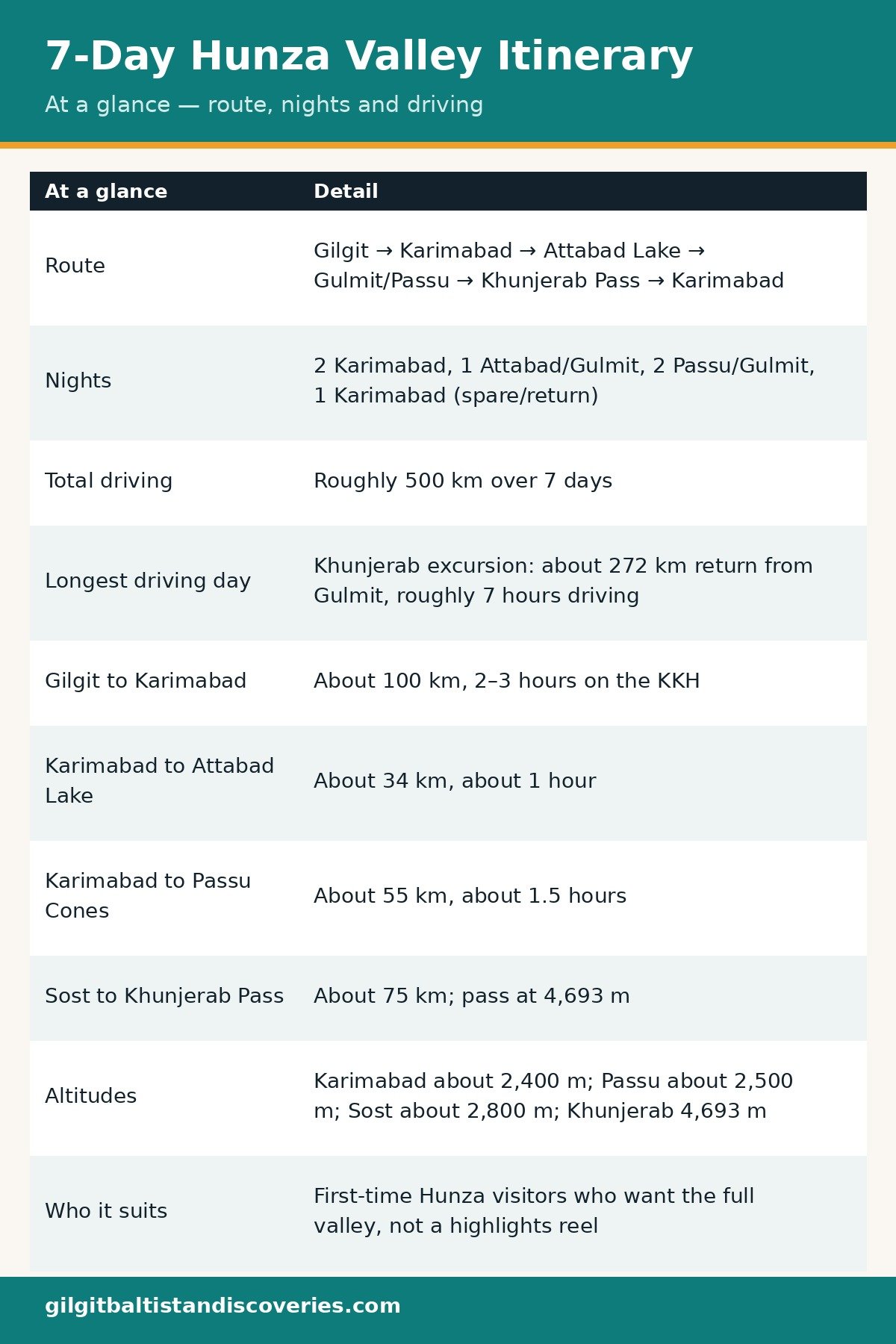
This 7-day Hunza itinerary runs in one direction — up the Karakoram Highway (KKH) and back — so you never retrace a valley you have already seen. Two nights in Karimabad for the forts and the bazaar, one night on Attabad Lake, two nights in Passu and Gulmit for the glaciers and bridges, and a full day for the Khunjerab Pass excursion, with a spare day built in for weather or a slow morning. Total driving for the week is roughly 500 km, and no single day asks for more than about 7 hours behind the wheel. This itinerary covers what order to visit things in; for when to go, see the site’s Best Time to Visit Hunza Valley anchor.
| 7-day Hunza itinerary at a glance | Detail |
|---|---|
| Route | Gilgit → Karimabad → Attabad Lake → Gulmit/Passu → Khunjerab Pass → Karimabad |
| Nights | 2 Karimabad, 1 Attabad/Gulmit, 2 Passu/Gulmit, 1 Karimabad (spare/return) |
| Total driving | Roughly 500 km over 7 days |
| Longest driving day | Khunjerab excursion: about 272 km return from Gulmit, roughly 7 hours driving |
| Gilgit to Karimabad | About 100 km, 2–3 hours on the KKH |
| Karimabad to Attabad Lake | About 34 km, about 1 hour |
| Karimabad to Passu Cones | About 55 km, about 1.5 hours |
| Sost to Khunjerab Pass | About 75 km; pass at 4,693 m |
| Altitudes | Karimabad about 2,400 m; Passu about 2,500 m; Sost about 2,800 m; Khunjerab 4,693 m |
| Who it suits | First-time Hunza visitors who want the full valley, not a highlights reel |
Day 1: Why start in Karimabad, not Passu?
Arrive from Gilgit — about 100 km and 2–3 hours on the KKH — and base yourself in Karimabad, Hunza’s old capital. The reason for starting here rather than driving straight to Passu is altitude and sense: Karimabad at about 2,400 m lets you acclimatise gently, and its forts, bazaar and viewpoints teach you the valley before you chase its far end. Spend the afternoon walking the bazaar and finding your bearings; the valley rewards travellers who arrive slowly.
Day 2: Which fort first — Baltit or Altit?
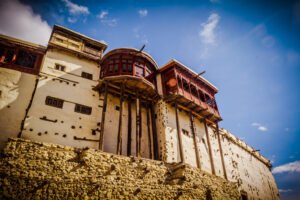
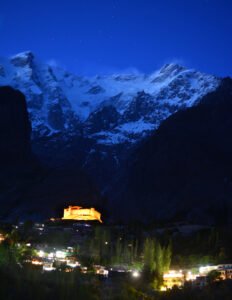
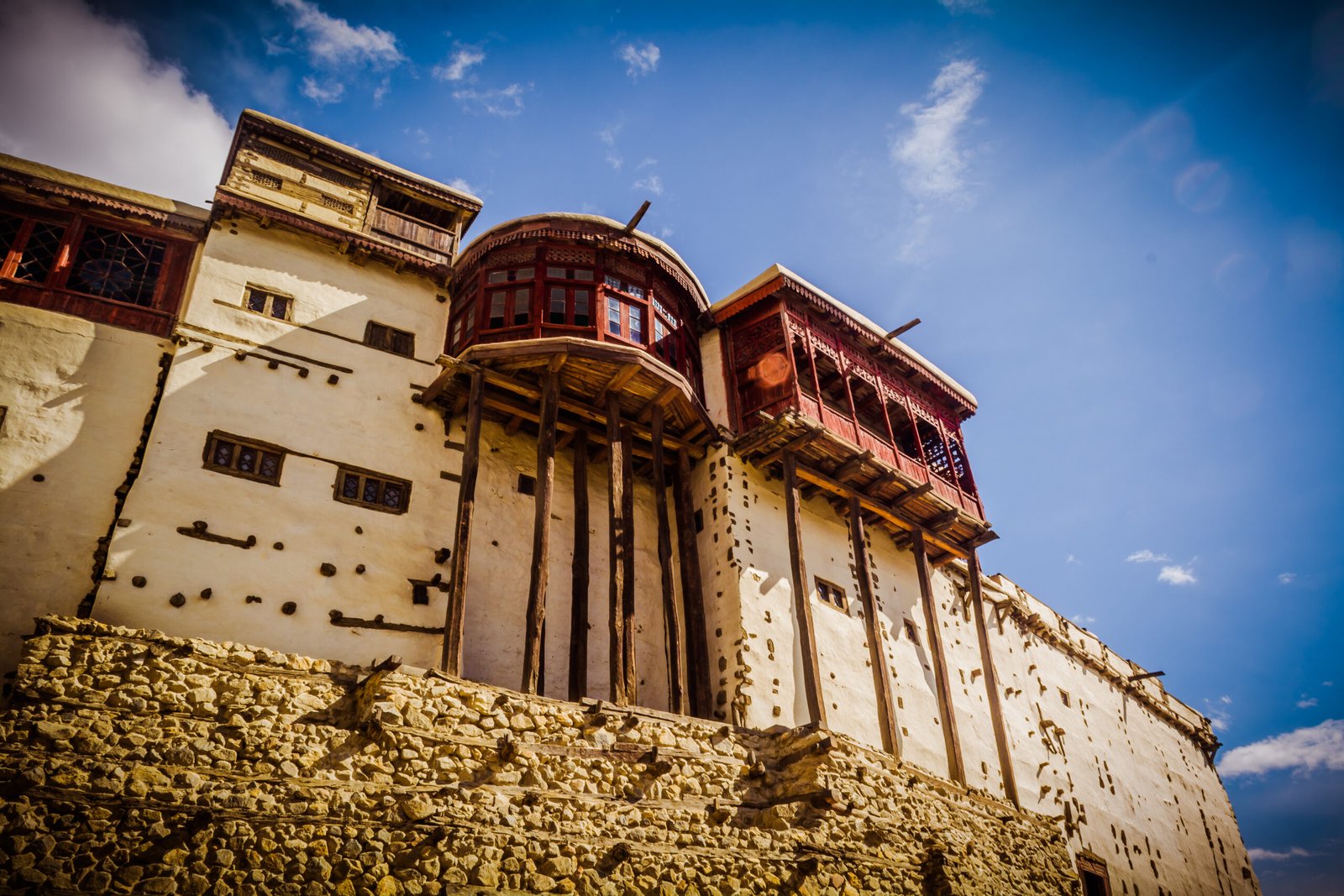
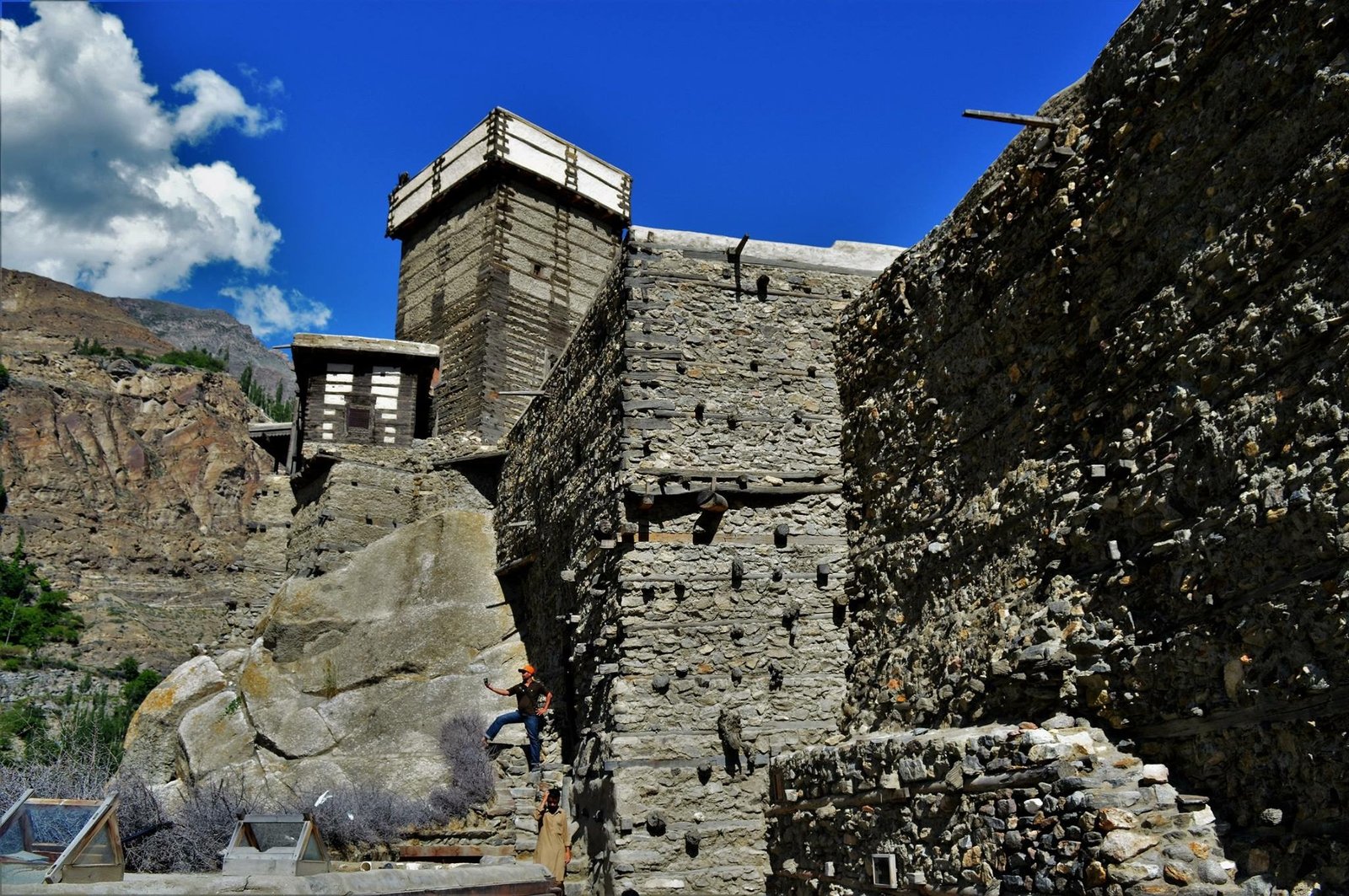
Do both, in this order: Altit first, Baltit second. Altit Fort, about 4 km from the bazaar, is the older of the two — roughly 900 years old by local accounts — and sits above the Hunza River with a royal garden below it. Baltit Fort, above Karimabad itself, is the better museum and the better viewpoint, and its terrace looks straight across to Ultar Sar and Ladyfinger. Finish the day at Duikar (Eagle’s Nest), 5–6 km up a steep road, about 20 minutes each way, for sunset over the whole valley. For the full town story, see the Karimabad guide.
Day 3: What does Attabad Lake change about the route?
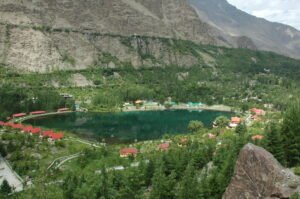
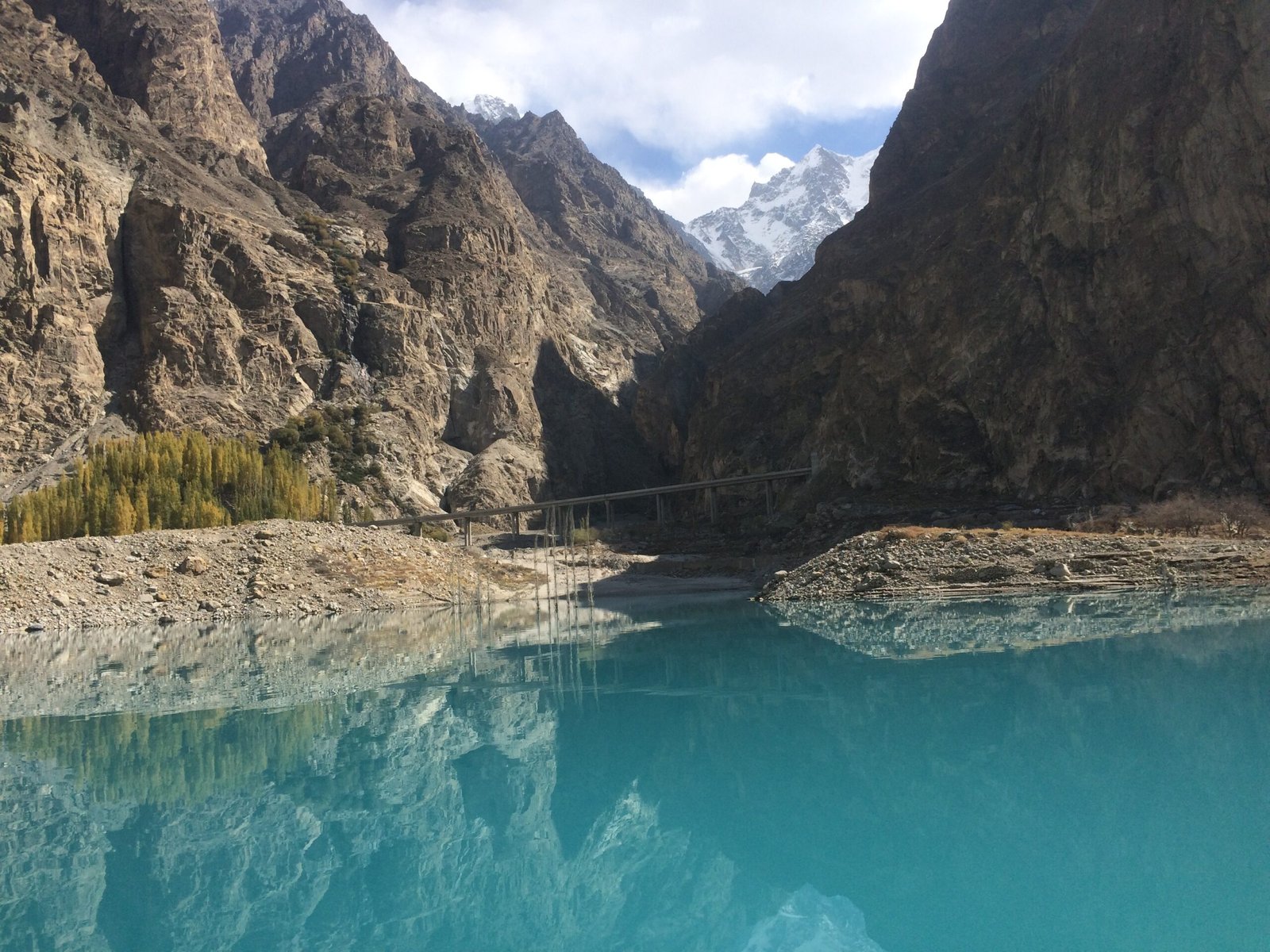
Drive about 34 km, roughly an hour, north to Attabad Lake — and understand what you are looking at. On 4 January 2010 a landslide at Attabad village dammed the Hunza River, killed 20 people and created a lake about 21 km long and over 100 m deep; the KKH now runs beside it through five tunnels opened in September 2015. Take a boat ride, have lunch on the shore, and sleep on the lake or in nearby Gulmit rather than driving back to Karimabad. The point of this day is to move your base north, not to tick a viewpoint and retreat.
Day 4: Why does Passu deserve two nights?
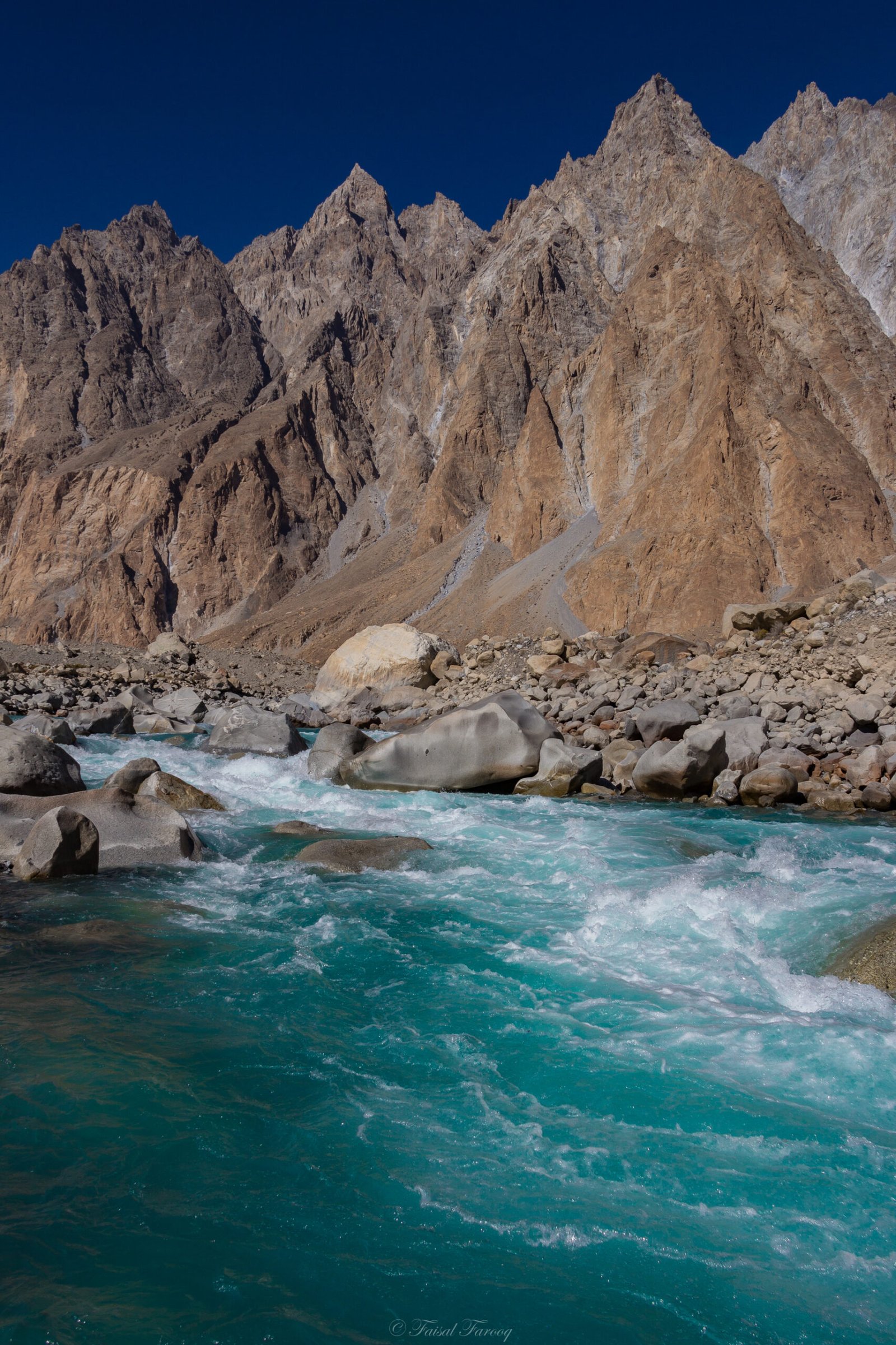
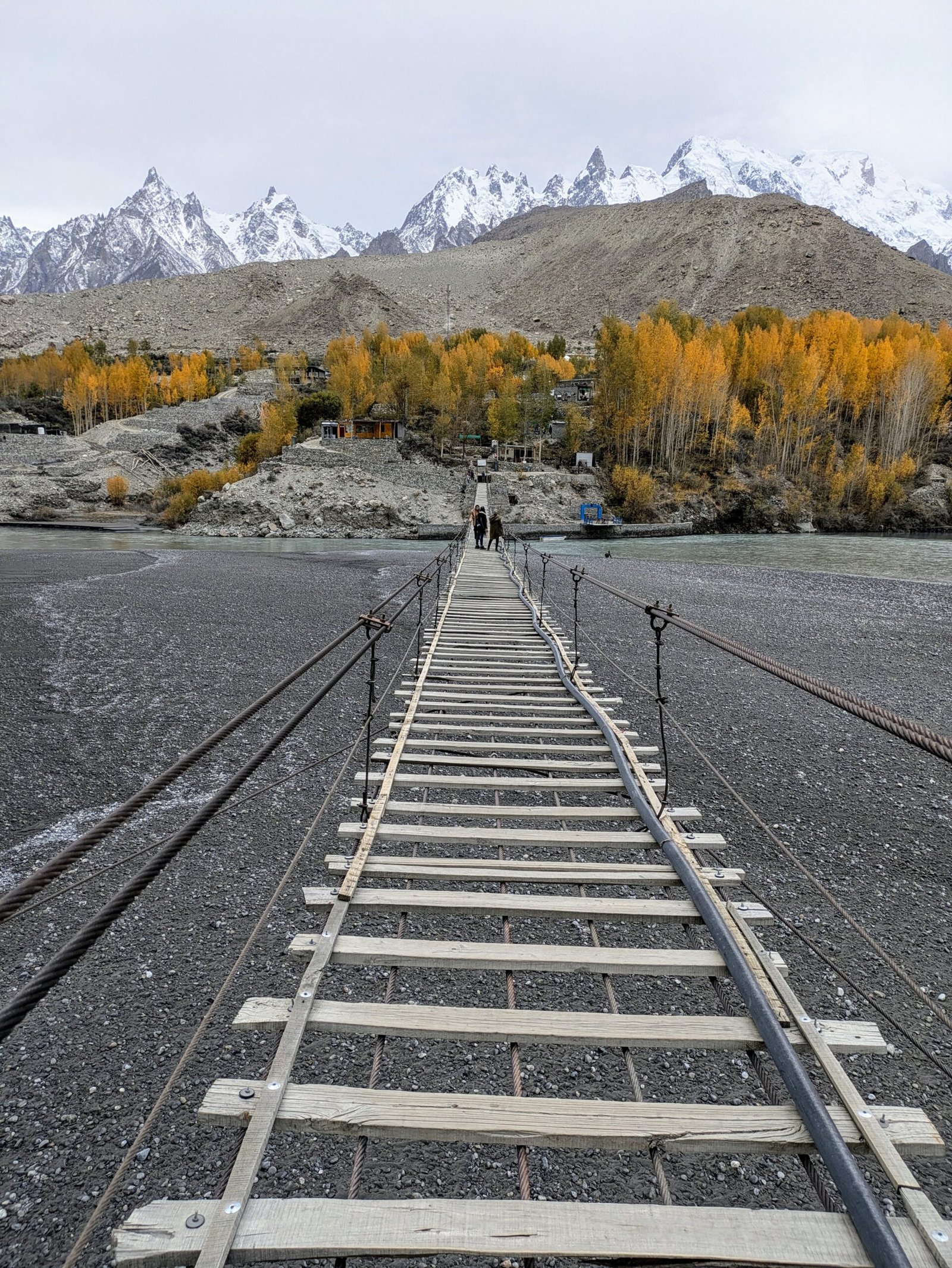
From Gulmit, Passu’s cones are about 55 km and 1.5 hours from Karimabad, and the village itself is the reason for the second night. Walk to the Passu Glacier viewpoint in the morning, cross the Hussaini suspension bridge in the afternoon — it is a real working bridge over the Hunza River, not a photo prop, so cross it steadily and respect local foot traffic — and finish at Borith Lake, a short drive above Hussaini village. Two nights here means the glacier walk and the bridges fall on different days, which is exactly how you avoid the rushed single-day Passu dash most tours attempt. The full Gojal story is in the Passu & Gojal guide.
Day 5: Is the Khunjerab Pass day worth a full day?
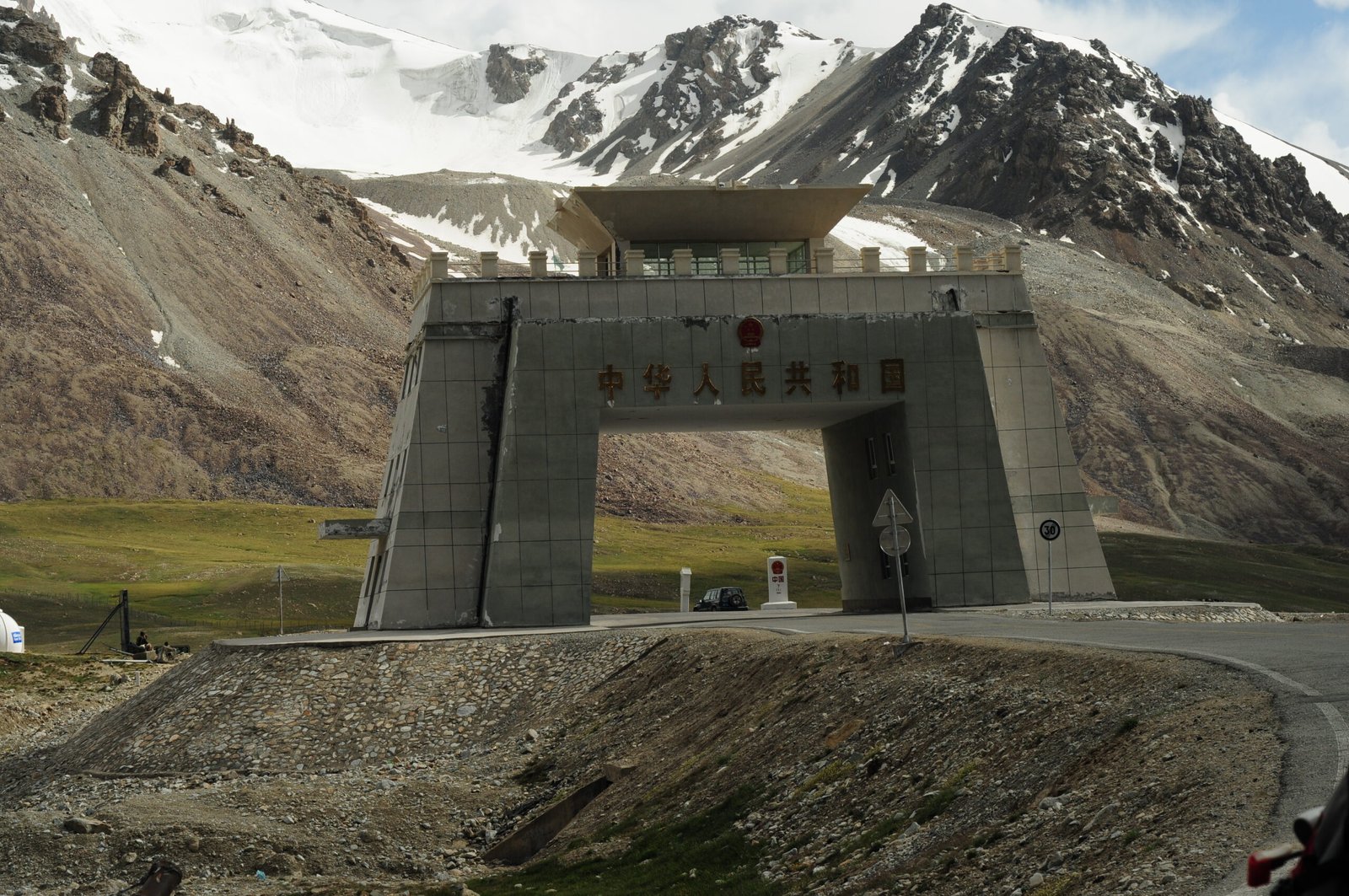
Yes — and it needs one. From Gulmit the return trip to Khunjerab Pass is about 272 km and roughly 7 hours of driving, so leave early, pass through Sost (about 2 hours from Karimabad without stops), and climb through Khunjerab National Park to the Pakistan–China border gate at 4,693 m, the highest paved international border crossing in the world. At that altitude the air is thin: walk slowly, drink water, and do not plan anything strenuous for the evening. Confirm the tourist visiting window locally before you go — trade traffic and tourist access follow different calendars, and winter snow can close the road. Sleep back in Gulmit or Passu.
Day 6: What is the spare day for?
Keep Day 6 deliberately unplanned. The best uses, in order: a second morning at Passu Glacier in different light; the Gulmit old house and museum, a 700-year-old Wakhi home that most tours skip; or a slow drive back to Karimabad with stops at the Attabad viewpoints you rushed past on Day 3. If you want a different valley entirely, this is the day for the Nagar side of the river — Hoper Valley in Nagar District, across from Hunza, with its glacier day walk (see the Hoper Valley guide). Note the district line: Hoper and Rakaposhi are Nagar District, not Hunza, and guides and contacts differ across the river.
Day 7: How do you leave without wasting the last day?
Drive back to Karimabad in the morning — about 1.5 hours from Passu — for a final bazaar walk and a last look at Rakaposhi from the valley floor, then continue to Gilgit (about 100 km, 2–3 hours) for an onward flight or night. If your flight is the next morning, sleep in Gilgit, not Karimabad: Gilgit flights are weather-dependent and an early start beats a missed connection. For the full logistics picture, see How to Get to Hunza Valley.
Practical tips for the 7-day Hunza itinerary
- Book the first two Karimabad nights before you arrive: Karimabad’s best rooms go first, and arriving without a booking wastes your acclimatisation afternoon.
- Hire a local driver for the whole week: KKH driving, the Duikar climb and the Khunjerab day are all easier with a driver who reads landslides and checkpoints. Agree the full-week price up front.
- Carry cash from Gilgit or Karimabad: ATMs thin out fast north of Aliabad, and Passu and Sost run on cash.
- Pack for 2,400 m and 4,693 m in the same week: Layers, sun protection and a water filter cover the range — see What to Pack for Northern Pakistan and the Sawyer Squeeze for stream and tap water on day walks.
- Charge for the Khunjerab day: There is no reliable charging at the pass; the Anker PowerCore covers cameras and phones for the full day out.
- Visas and permits: Most foreign visitors need only the standard tourist e-visa for Hunza’s open valleys; the Khunjerab border area has its own checkpoint rules, so confirm locally. The general position is in the Pakistan Tourist Visa Guide.
Frequently Asked Questions
Can you do Hunza in 7 days without rushing?
Yes, if you move your base north as you go: two nights in Karimabad, then nights on Attabad Lake and in Passu/Gulmit, with a full day for Khunjerab. The mistake is basing all seven nights in Karimabad and day-tripping everywhere, which turns every day into a long return drive.
Why visit Karimabad before Passu?
Karimabad at about 2,400 m is the gentler acclimatisation stop, and its forts and bazaar explain the valley before you reach its wilder end. Driving straight to Passu skips the history and stacks altitude, driving and sightseeing into a single exhausting first day.
How long is the drive from Karimabad to Khunjerab Pass?
Allow a full day. Karimabad to Sost is about 83 km and two hours without stops, and Sost to the pass is about 75 km further. From Gulmit the return trip is about 272 km and roughly seven hours of driving, so leave early and keep the evening free.
Is the Hussaini suspension bridge safe to cross?
It is a working village bridge, used daily by locals, and safe to cross carefully on foot — walk steadily, hold the side ropes, and do not crowd it. It spans the Hunza River high above the water, so it is not for anyone with a serious fear of heights.
Do you need a special permit for Khunjerab Pass?
No special tourist permit is generally required for the pass itself, but you pass through Khunjerab National Park checkpoints and a border area, so carry your passport and visa documents. Confirm the current tourist visiting window locally, as it differs from the year-round trade calendar.
Last updated: 27 October 2026