
You’re packing for a beach trip with your kids. You reach for the sunscreen and freeze.
You remember reading something scary about chemical sunscreens. Then you looked at mineral sunscreen and thought it looked too thick. Then you wondered if stick format even works on kids’ skin.
Now you’re standing in the store surrounded by sunscreen options, completely unsure which one is actually safe for your children.
This is the sunscreen confusion that every parent experiences. The stakes feel high because you’re protecting your kids’ skin. You want to pick right. But there’s so much conflicting information.
I’m going to break down exactly what mineral and chemical sunscreens actually are, what the real differences are for kids, and which one you should actually bring on your family beach trip.
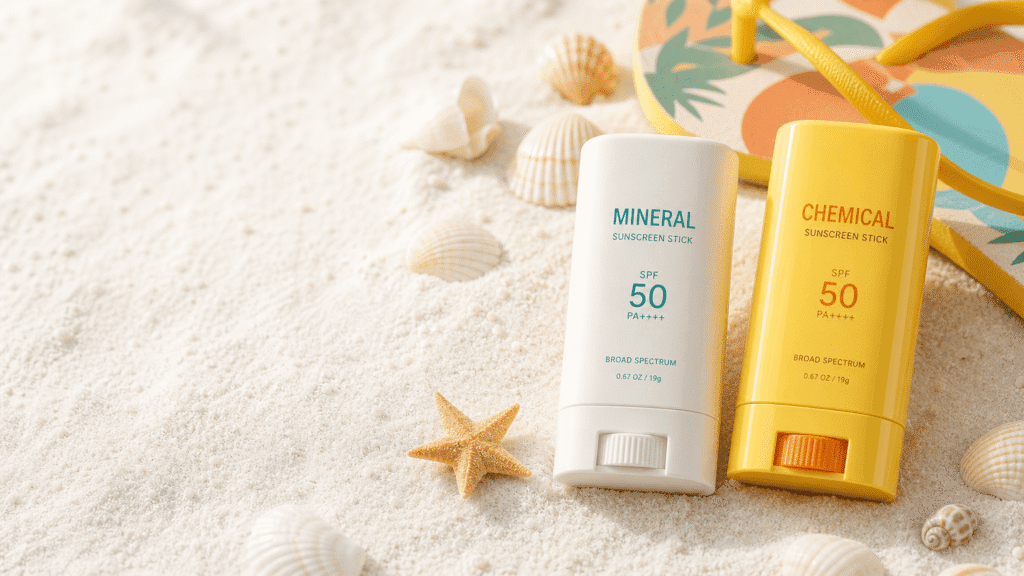
Understanding Mineral vs Chemical Sunscreen
Before we talk about what’s best for kids, let’s understand what you’re actually buying.
What is Mineral Sunscreen
Mineral sunscreen (also called physical sunscreen) uses natural minerals to block UV rays.
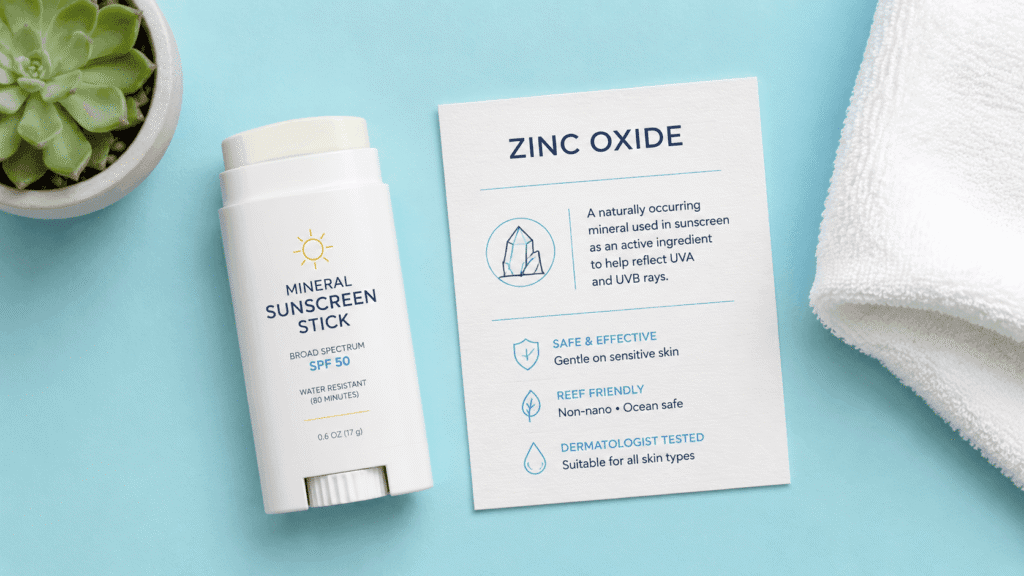
The main active ingredients are zinc oxide and titanium dioxide. These are literally minerals that sit on top of your skin and reflect UV rays away. Think of them like tiny mirrors bouncing the sun away from your skin.
Mineral sunscreen doesn’t get absorbed into your skin. It stays on the surface. This is why it feels thicker and sometimes leaves a white cast.
What is Chemical Sunscreen
Chemical sunscreen uses organic compounds to absorb UV rays.
Common ingredients include oxybenzone, avobenzone, octinoxate, and others. These get absorbed into your skin and convert UV rays into heat, which your body releases.
Chemical sunscreen is thinner. It spreads easier. It doesn’t leave a white cast. Most sunscreens you’ve ever used are probably chemical.
Which One Actually Protects Better
Both protect your skin equally when used correctly.
Both can be SPF 50 or higher. Both block UVA and UVB rays. Both are reef-safe versions available. If they’re the same SPF and applied properly, protection is identical.
The difference isn’t in how well they work. It’s in how they feel on skin and what ingredients you’re comfortable with.
Mineral Sunscreen for Kids: The Benefits
It Doesn’t Get Absorbed into Their Bodies
This is the main advantage for parents. Mineral sunscreen sits on your child’s skin. It doesn’t get absorbed into their bloodstream.
With chemical sunscreen, some amount gets absorbed into the body. For kids, this feels riskier. You’re protecting their skin with something that stays on top rather than soaking in.
Lower Risk of Skin Reactions
Kids’ skin is more sensitive than adult skin. Mineral sunscreen has fewer ingredients that cause reactions.
Chemical sunscreens contain organic compounds that can irritate sensitive skin or cause allergic reactions in some kids. Mineral sunscreen is less likely to cause these issues. (If you or your teens are prone to skin issues during trips, you might also want to read our guide on how to prevent acne breakouts while traveling long distance)
If your kid has eczema, sensitive skin, or a history of reactions to products, mineral is usually the safer bet.
It Works Immediately
Chemical sunscreen needs 15 minutes to absorb and become effective. Mineral sunscreen works immediately.
For kids, this matters. You apply it. They’re ready to go play. No waiting around.
No Absorption Concerns
Parents worry about what gets into their kids’ bodies. Mineral sunscreen eliminates that concern entirely.
You’re not wondering if the sunscreen is getting absorbed. You’re not reading studies about chemical ingredients. You’re just putting a mineral barrier on their skin.
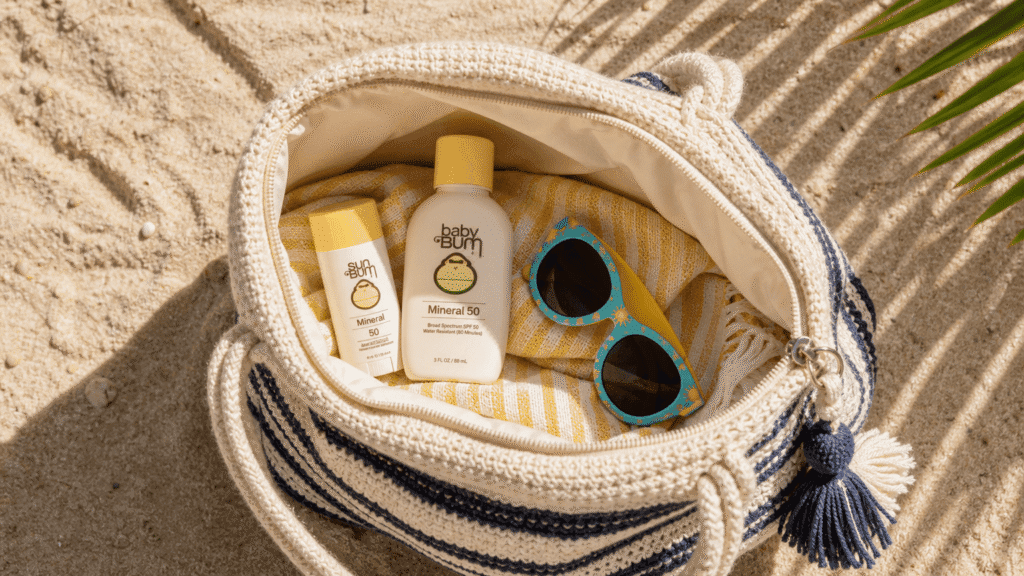
Mineral Sunscreen for Kids: The Drawbacks
It Leaves a White Cast
Mineral sunscreen looks white or pale on skin. Some kids don’t mind. Some hate it.
If your kid cares about appearance (especially older kids), the white cast might bother them. They might not want to go out looking ghostly.
It Feels Thicker
Mineral sunscreen has a different texture. It feels thicker. It doesn’t spread as easily as chemical sunscreen.
Young kids especially might not like the feeling. They might complain it’s sticky or uncomfortable. This could lead to them not wanting to wear sunscreen at all, which is worse.
Harder to Get Even Coverage
Because mineral sunscreen is thicker, you have to rub it in more to get even coverage.
With young kids who move around constantly, getting thorough even coverage is already hard. Mineral sunscreen makes it harder.
Fewer Options for Sensitive Areas
Not many mineral stick sunscreens are made specifically for faces. Stick format makes this more limited.
You might have to use a lotion mineral sunscreen on their face, which defeats the purpose of bringing a stick for travel.
Chemical Sunscreen for Kids: The Benefits
Easier Application
Chemical sunscreen spreads easily. It covers evenly without much rubbing.
For kids who are restless and don’t want to sit still for sunscreen application, this matters. Quick application means less resistance.
No White Cast
Chemical sunscreen blends into skin. No white ghost appearance. Kids might be more willing to wear it.
For older kids and tweens who care about how they look, this is significant.
Better for Stick Format
Chemical sunscreen sticks work better in stick format. They apply smoothly. They don’t require heavy rubbing.
For travel with stick sunscreen, chemical formulas are generally better.
More Options Available
Way more kids sunscreens are chemical. Face formulas. Body formulas. Stick formats. You have choices.
If your kid has specific needs or preferences, chemical sunscreen probably has an option that works.
Chemical Sunscreen for Kids: The Drawbacks
Gets Absorbed into the Body
Some amount of chemical sunscreen ingredients are absorbed through the skin into the bloodstream.
Studies show this happens, though the amount and health impact are debated. For concerned parents, this is a real worry.
Higher Risk of Reactions
Chemical sunscreen ingredients can cause skin irritation or allergic reactions in sensitive kids.
If your child has reactive skin, chemical might cause problems.
Needs Time to Work
Chemical sunscreen requires about 15 minutes to become effective after application.
With kids who want to run to the water immediately, this timing issue is annoying.
Can Cause Eye Irritation
If chemical sunscreen gets in kids’ eyes, it can sting and irritate.
Mineral sunscreen doesn’t have this problem because it doesn’t soak into skin and reach eyes.

The Real Question: Which for Your Kid
The answer depends on your kid and your priorities.
Choose Mineral If Your Kid Has:
Sensitive, reactive, or eczema-prone skin. Mineral is gentler and less likely to cause problems.
History of allergies to skincare products. Mineral has fewer ingredients that trigger reactions.
Very young age (under 2 years old). Doctors recommend mineral for babies anyway.
You’re worried about absorption and want maximum safety. Mineral doesn’t get absorbed.
Choose Chemical If Your Kid:
Has normal, non-sensitive skin. They tolerate most products fine.
Cares about appearance and hates white cast. Chemical doesn’t leave visible residue.
Is a stick-only sunscreen user. Chemical sticks work better in stick format.
Resists sunscreen application. Chemical spreads easier and applies faster.
You’re okay with the ingredient absorption since it’s minimal and considered safe by the FDA.
Travel Considerations for Kids’ Sunscreen
Stick Format Advantages for Family Travel
Sunscreen sticks are better for family beach trips. Here’s why.
Kids touch everything. If you bring a liquid sunscreen bottle, they’ll squeeze it. They’ll get it all over themselves and your beach bag. A stick prevents this mess.
Sticks are easier for kids to apply themselves. As they get older, they can apply their own sunscreen without your help. Sticks work better for independent application.
No spills in luggage. A stick won’t leak on your clothes. This matters when you’re packing for multiple kids.
TSA friendly. Sticks aren’t liquid. No quart bag needed. No restrictions. Easy travel.
Portable. Kids can carry a stick in their pocket or backpack. They can reapply without asking you.
Chemical Stick Sunscreens Spread Better
If you’re buying a stick, chemical formula spreads more smoothly than mineral.
This matters for kids. They want easy application. Chemical sticks require less rubbing and work faster.
Mineral Lotions Might Be Better Than Sticks
If you choose mineral for safety reasons, you might be better off with a lotion instead of a stick.
Mineral sticks are thicker and harder to apply. Mineral lotions spread better while still providing mineral protection.
Just bring a small travel-size lotion bottle instead of a stick. TSA allows 3.4 oz in cay-on.
Specific Product Recommendations
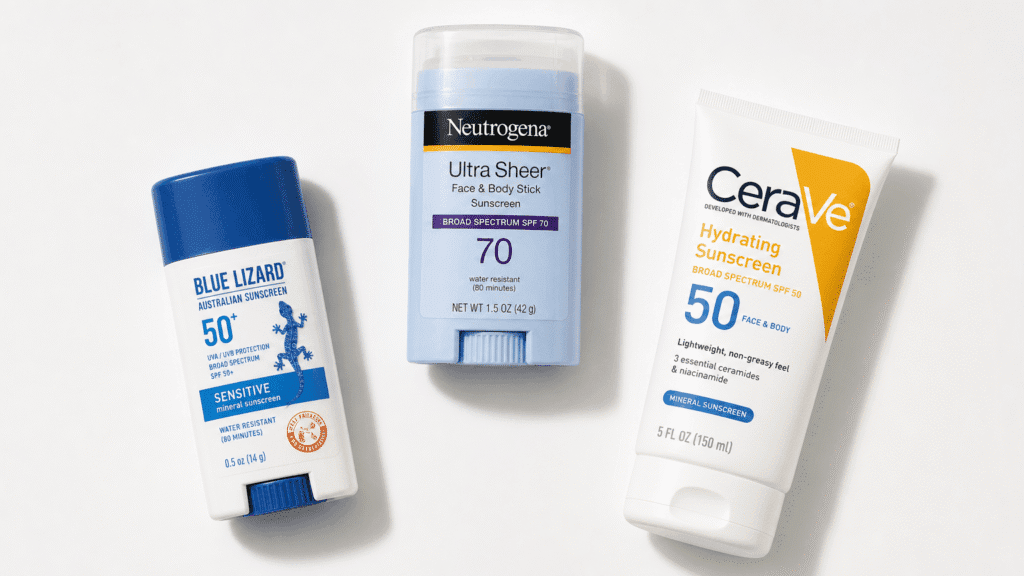
Best Mineral Stick for Kids: Blue Lizard Australian Sunscreen Kids Stick
This is mineral sunscreen specifically formulated for kids.
Zinc oxide protection. No chemical worries. Safe for sensitive skin. Won’t irritate.
The stick format works decently because it’s designed for this format. Spreads easier than typical mineral sticks.
Cost: Around $15 per stick.
Best for: Parents prioritizing safety. Kids with sensitive skin. Those who want mineral protection in stick format.
Best Chemical Stick for Kids: Neutrogena Ultra Sheer Dry-Touch Kids Sunscreen Stick
Chemical formula. Easy application. No white cast. Spreads smoothly.
Designed for kids. Friendly ingredients. Easy application is the biggest advantage.
Cost: Around $10 per stick.
Best for: Active kids. Those who care about appearance. Parents wanting easy application.
Best Mineral Lotion for Kids (If Stick Doesn’t Work): CeraVe Kids Face Lotion SPF 50
Mineral sunscreen in lotion format. Spreads better than mineral sticks. Safe and gentle.
Specifically for kids’ sensitive skin. Dermatologist recommended. Won’t irritate.
Cost: Around $12 for travel size.
Best for: Parents wanting mineral protection that actually applies well. Kids with very sensitive skin.
Application Tips for Kids
Get Them Used to Sunscreen Early
Start when they’re young. Make sunscreen application routine, not a battle.
If kids grow up with daily sunscreen, they don’t resist it as much. It becomes normal.
Let Them Help Apply It
For older kids, let them apply their own sunscreen. Gives them control and ownership.
Show them how to use it correctly. Make it their responsibility. They’re more willing to do something they chose.
Reapply More Often with Kids
Kids play hard. They sweat. They get wet. Sunscreen comes off faster.
Reapply every hour during intense play. Every 80 minutes if they’re mostly on the beach.
Set phone reminders. Make it a routine part of beach time, not something you have to remember.
Use Enough
Most people don’t use enough sunscreen. For kids, use a generous amount.
For face: About a nickel-sized amount. For entire body: About one shot glass full.
If it doesn’t look like enough, it probably is. If it looks like a lot, it’s probably right.
Don’t Forget Easy-to-Miss Spots
Kids get sunburned on weird spots. Tops of ears. The part in their hair. Tops of feet. Back of neck.
Pay special attention to these areas. They’re easy to miss and easy to burn.
Safety Considerations
The FDA and Sunscreen Safety
The FDA says both mineral and chemical sunscreens are safe for kids over 6 months.
For kids under 6 months, stick to shade and protective clothing. No sunscreen yet.
For kids over 6 months, either mineral or chemical is fine from a safety standpoint.
Reef-Safe Matters
If you’re going to beaches with coral reefs, use reef-safe sunscreen.
Some chemical sunscreens damage coral. Mineral sunscreen is naturally reef-safe.
For travel to tropical beach destinations, reef-safe is the right choice.
Water Resistance
Kids are in water constantly. Make sure sunscreen is water-resistant to at least 80 minutes.
Reapply after swimming, not just after 80 minutes. Water washes sunscreen off faster than the rating suggests.
The Real Answer for Your Family
Here’s the honest truth: both mineral and chemical sunscreen are safe for kids.
The FDA says both are safe. Pediatricians say both are fine. The difference is in comfort and application ease, not safety.
For most families: Chemical stick sunscreen is easiest. It applies fast. Kids don’t resist. It works well in stick format.
For concerned parents: Mineral lotion provides peace of mind. It’s safe. It doesn’t get absorbed. It’s worth the slightly thicker texture.
For sensitive skin kids: Mineral lotion every time. It’s gentler. Less likely to cause reactions.
Pick whichever one fits your family best. Then use it consistently. That’s what actually matters.
Getting your kids to wear sunscreen every single day is more important than choosing the perfect formula. A kid with consistent sunscreen use is safer than a kid with the perfect sunscreen that gets worn sporadically.
Questions Parents Ask
Can I use adult sunscreen on my kids?
Yes, it’s safe. But kid-specific formulas are often gentler and easier to apply. For travel, kid formulas are convenient since they’re smaller.
What age can kids use sunscreen sticks?
Any age that sits still long enough for you to apply it. Usually around 6 months and up. Before that, stick to protective clothing and shade.
Does mineral sunscreen really not absorb?
Correct. Mineral sunscreen (zinc oxide and titanium dioxide) doesn’t get absorbed. It stays on the skin surface.
Is chemical sunscreen actually in my kid’s bloodstream?
Some small amount gets absorbed. But the amount is minimal and considered safe by the FDA. Studies are ongoing but current evidence shows it’s safe.
How often should kids reapply?
Every hour during beach play. Every 80 minutes if they’re mostly sitting under an umbrella. Always reapply after swimming.
Can kids get too much sun protection?
No. Sunscreen prevents damage. More consistent protection is always better. There’s no such thing as “over-protecting” from sun.
Bottom Line
Mineral and chemical sunscreen sticks both protect your kids’ skin equally well.
Mineral is safer from an absorption standpoint. Chemical is easier to apply in stick format.
For family beach trips, chemical stick is most practical. For kids with sensitive skin, mineral lotion is best.
The real key is consistency. Get your kids in the habit of wearing sunscreen every single day. The exact formula matters less than whether they’re actually wearing it.
Pick what works for your family. Bring enough. Reapply frequently.
Your kids’ skin will be protected either way.