You finally booked that beach trip. Thailand, Bali, Hawaii, wherever it is, you’re excited. But then the panic sets in.
What do I do with my skin in that heat?
If you’ve ever landed in a humid destination and watched your carefully applied makeup slide off your face by noon, you know exactly what I’m talking about. Your foundation looks cakey, your skin feels suffocated, and you spend the whole trip blotting instead of enjoying yourself.
Here’s the thing though. The right tinted moisturizer with SPF changes everything.
Not just any tinted moisturizer. One that actually works in humidity. One that doesn’t leave you looking like a glazed donut. One that protects your skin from brutal tropical sun while still letting it breathe.
I’ve tested a lot of these. Some were disasters. Some were genuinely life-changing for travel. This guide breaks it all down so you don’t waste money on the wrong product.
Why Regular Foundation Fails in Humid Weather
Before we talk products, let’s talk about why your usual foundation just doesn’t cut it when the humidity hits 80 or 90 percent.
Most foundations are formulated for temperate climates. They’re built to add coverage and stay put in mild conditions. In humidity, all bets are off.
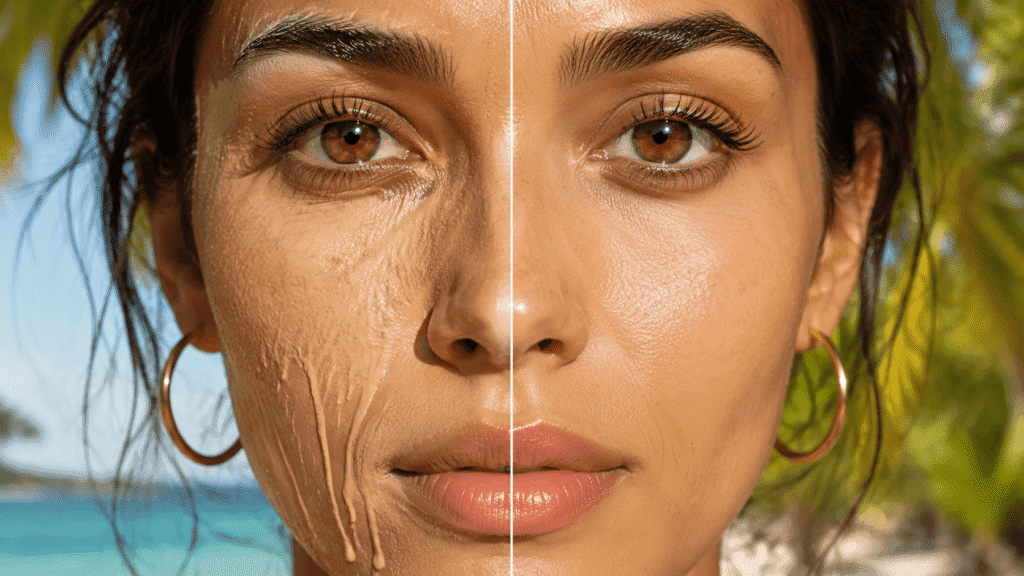
The moisture in the air mixes with your sweat and the oils your skin produces. Your foundation basically has nowhere to sit. It starts sliding, creasing, and oxidizing. That’s when your skin tone starts looking three shades darker and patchier than it did when you left the hotel.
Heavy coverage products make this worse. They sit on top of your skin like a mask, and in humidity, that mask melts. You end up with a streaky mess that makes you look worse than if you’d worn nothing at all.
Tinted moisturizers solve this problem because they work with your skin instead of against it. They hydrate, even out your tone lightly, and let your skin do its natural thing. Add SPF into the mix and you’ve basically got a one-product morning routine that actually survives tropical weather.
If you still prefer carrying your favorite makeup on the plane, make sure to read our guide on how to carry liquid foundation on flight without leaks or TSA issues.
What “Non-Greasy” Actually Means (And Why It Matters More in Humid Weather)
This one trips people up a lot. “Non-greasy” doesn’t mean drying. It doesn’t mean matte to the point where your skin looks dusty.
A good non-greasy formula means it absorbs into your skin quickly without leaving a heavy residue. Your skin still looks healthy and natural, just not like you’ve dunked your face in cooking oil.
In humid weather, this matters enormously. Your skin is already dealing with external moisture and heat-triggered oil production. If your tinted moisturizer is also heavy and occlusive, you’re adding another layer to an already overwhelmed complexion.
The result: breakouts, congestion, and that awful feeling of your skin being suffocated.
Non-greasy formulas that work for humidity typically have a few things in common.
They absorb fast, usually within 60 seconds of application. They contain some form of skin-balancing ingredient like niacinamide, kaolin clay, or silica. They feel almost weightless on the skin, more like skincare than makeup. And the finish is either natural or skin-like, not dewy or glassy in a way that slides.
SPF in Tinted Moisturizers: What You Need to Know Before You Buy
Here’s where a lot of people get confused. They see SPF 30 on the bottle and assume they’re covered. But SPF in tinted moisturizers works differently than in dedicated sunscreens.
For SPF to actually do its job, you need to apply a generous amount. For your face alone, that’s about a quarter teaspoon. Most people apply tinted moisturizer much more lightly than that because they’re treating it like makeup, not sun protection.
This doesn’t mean SPF in tinted moisturizer is useless. It just means you need to understand what you’re working with.
What SPF in tinted moisturizer is good for:
Daily sun protection when you’re not spending hours in direct sun. Added protection on top of your regular sunscreen. Light coverage days when you want to streamline your routine.
What it’s not a replacement for:
Long beach days. Outdoor activities for more than an hour. Tropical destinations where UV index regularly hits 10 or 11.
For serious sun exposure, you still want a dedicated sunscreen underneath. The tinted moisturizer with SPF goes on top and gives you extra protection plus that skin-evening effect you’re after.
For travel days, city exploring, and light outdoor time, it works perfectly as your primary product.
The 7 Best Non-Greasy Tinted Moisturizers with SPF for Humid Weather
Let’s get into the actual products. These are ranked based on their performance in humid conditions specifically, not just general reviews.
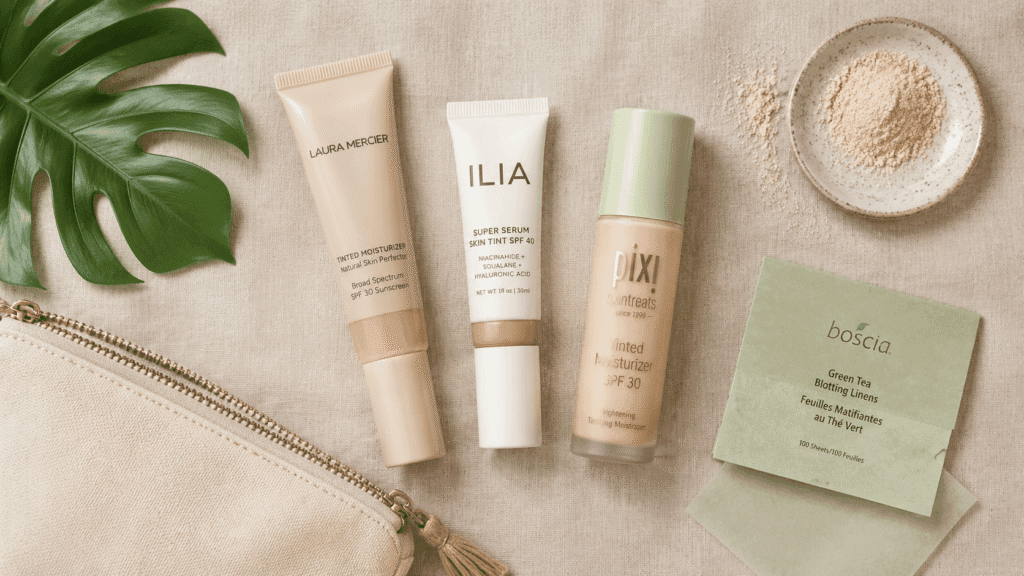
1. Laura Mercier Tinted Moisturizer Oil Free SPF 20
This has been a gold standard for a reason. The oil-free formula is specifically designed for people who struggle with shine, and it shows.
In humidity, this one holds up remarkably well. The coverage is light but buildable, which means you can layer it slightly for a bit more evening without it looking heavy. The SPF 20 isn’t the highest, but for a product that doubles as skincare and light makeup, it works.
The finish is what they call “natural matte,” which in real life means your skin looks like your skin, just better. Not flat. Not shiny. Just even and clean.
Shade range is decent and they’ve expanded it over the years. Works well for light to medium skin tones, though deeper shades exist now too.
Best for: City travel, everyday wear, those who want trusted brand reliability.
Price range: Mid to high end, but one bottle lasts a long time.
2. Neutrogena Healthy Skin Enhancer SPF 20
Don’t let the drugstore price tag fool you. This one punches well above its weight for humid weather performance.
The formula is incredibly lightweight. On skin, it feels like you’re wearing almost nothing, which is exactly what you want when it’s 90 degrees and humid. It has a sheer coverage that just evens out redness and blotchiness without adding any heaviness.
The SPF 20 is consistent with most tinted moisturizers in this category. It also contains retinol, which some people love for skin texture and others prefer to avoid if they’re sensitive.
For humid weather travel, this is one of the best budget options available. It doesn’t oxidize dramatically, it doesn’t slide, and it doesn’t clog pores. On Amazon, it’s usually well under $20, which makes it a smart pick if you’re not sure how your skin will react to a tinted moisturizer in tropical heat.
Best for: Budget-conscious travelers, first-timers trying tinted moisturizer, sensitive skin (minus the retinol consideration).
3. NARS Pure Radiant Tinted Moisturizer SPF 30
If you want the highest SPF in this category without sacrificing the lightweight formula, NARS is your answer.
SPF 30 is the standard recommendation for everyday sun protection, and NARS manages to hit that number without making the formula feel heavy or sunscreen-like. A lot of products fail at this. The more SPF filters you add, the more chalky or heavy a product can feel. NARS gets the balance right.
The coverage is buildable and the finish leans slightly luminous, which looks beautiful in photos and good in person. In very high humidity, you might find it a touch dewier than you’d like, but nothing a light dusting of setting powder can’t handle.
The shade range is excellent and caters to a wide range of skin tones, which is a genuine strength compared to some competitors.
Best for: Anyone prioritizing SPF protection, those who want a slightly glowy finish, photography-heavy travel days.
4. Bare Minerals Complexion Rescue Tinted Hydrating Gel Cream SPF 30
This one is special because the gel-cream texture is genuinely different from most tinted moisturizers. It’s water-based, which makes it feel incredibly refreshing on skin. In humid weather, that matters.
The gel texture absorbs lightning fast. We’re talking seconds. And it leaves behind a natural finish that doesn’t look or feel like anything is on your skin.
Coverage is light to medium. You can build it a bit, but don’t expect it to cover significant redness or hyperpigmentation on its own. For uneven skin tone and general brightness though, it’s fantastic.
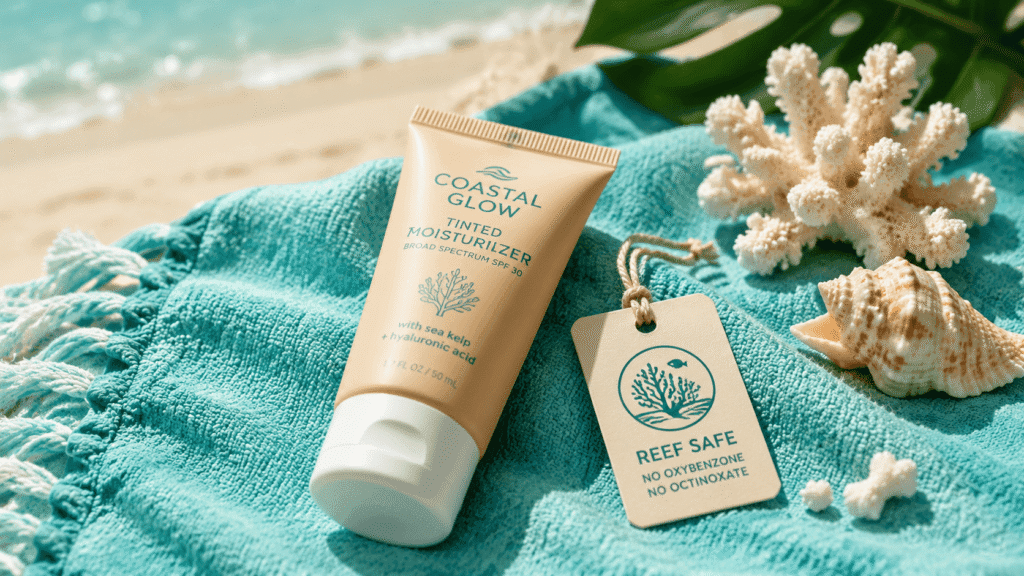
It’s also mineral SPF 30, which is worth noting. Mineral sunscreen sits on top of skin rather than absorbing into it, which some people strongly prefer. It’s also reef-safe, which matters when you’re traveling to ocean destinations.
The moisture it provides is real and lasting. Even in air-conditioned spaces where your skin can get dry, this keeps skin comfortable.
Best for: Travelers who prefer mineral SPF, those with combination or dry skin, reef-safe priorities.
5. Tatcha The Silk Canvas Protective Primer SPF 30
Okay, this one is technically a primer, but it has skin tone-evening and SPF 30 built in, so it functions exactly like a light tinted moisturizer. I’m including it because the results in humid weather are exceptional.
Tatcha uses Japanese botanical ingredients, and whatever they’re doing in this formula, it works. The finish is absolutely non-greasy. It controls shine in humidity better than almost anything else in this list. Your skin looks smooth and even for hours.
The “tint” here is more of a skin-adjusting glow than actual coverage, so if you have significant texture or discoloration you want to address, this works best layered with a bit of concealer on problem spots.
Price is premium. But for a beach vacation or high-stakes travel where you want to look good in photos without heavy makeup, it earns its cost.
Best for: Oily skin, those who already use concealer, anyone who wants shine control as a priority.
6. Kiehl’s Clearly Corrective Brightening and Smoothing Moisture Treatment SPF 30
A slightly different entry because this one focuses heavily on brightening alongside its tinting and SPF functions.
For travel skin that’s tired from long flights, jet lag, and different water quality, the brightening effect here is genuinely noticeable. It’s got Vitamin C and white birch extract doing the heavy lifting. Your skin looks more awake and alive even when you’re running on four hours of sleep.
The formula is lightweight and absorbs well. In humidity it performs solidly, though it’s more on the hydrating side than the mattifying side. If you have oily skin, you might want a light powder over this.
For most skin types, especially normal to dry, this is one of the better options for looking healthy and fresh throughout a tropical trip.
Best for: Travel fatigue skin, jet-lagged complexions, those who want brightening benefits alongside coverage.
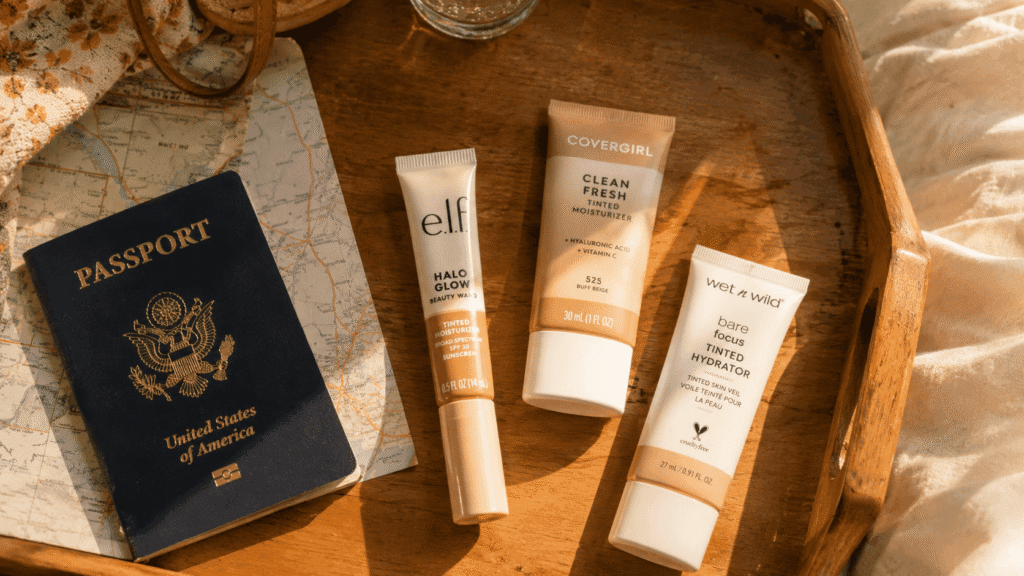
7. e.l.f. Halo Glow Tinted Moisturizer SPF 25
One more budget option because not everyone can or wants to spend $50 on a tinted moisturizer.
e.l.f. has genuinely improved their formulas in recent years, and this one is a standout. SPF 25, lightweight texture, and a healthy skin finish that doesn’t lean greasy. For the price, it’s genuinely impressive.
In humidity testing, this holds up well for 4-6 hours before you’d want to do any touch-ups. It doesn’t oxidize dramatically, which is a common complaint with budget tinted products.
Shade range is limited compared to the bigger brands, but if you find your match, the formula delivers beyond its price point.
Best for: Budget travel, anyone skeptical about spending more before knowing if tinted moisturizer works for them.
How to Apply Tinted Moisturizer in Humid Weather for Best Results
Even the best product will underperform if you apply it wrong. Humid weather application has some specific tricks worth knowing.
Start with clean, dry skin. This sounds obvious but people rush it. If your skin still has any moisture on it from washing, your tinted moisturizer won’t absorb properly. Pat your face completely dry and wait 30 seconds.
Apply your actual skincare first. A lightweight serum or just a simple moisturizer if your skin needs it. Let it fully absorb. Don’t pile products on top of each other while they’re still wet.
Use your fingers, not a brush, in humidity. Fingers warm up the product slightly and help it melt into skin more naturally. This prevents any streaking or unevenness that can happen with tools.
Apply thin layers. One thin, even layer first. If you need more coverage, wait 60 seconds and add a second thin layer. Don’t dump a lot of product on at once.
Set it if you need to. If you’re going to be outside in serious heat, a light dusting of translucent powder over your T-zone helps everything stay in place. You don’t need a lot.
Carry blotting papers, not powder, for touch-ups. Powder builds up and can look cakey as the day goes on in humid weather. Blotting papers remove excess oil without adding product.
Ingredients to Look For (And Avoid) in Humid Climates
Not all ingredients are equal when humidity is a factor.
Look for these:
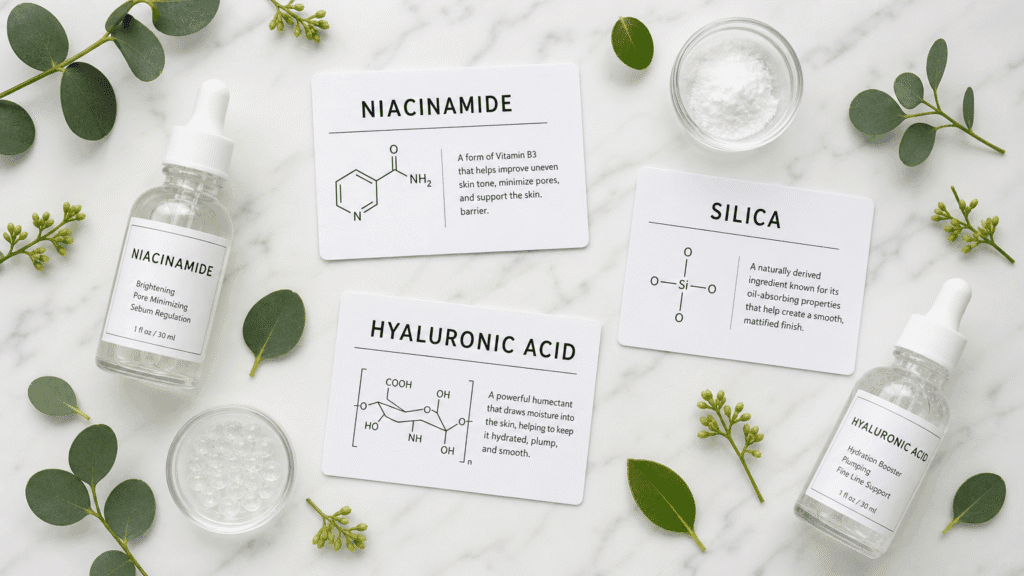
Niacinamide controls oil and keeps pores looking smaller. Silica absorbs excess oil without drying your skin. Hyaluronic acid provides hydration without heaviness. Dimethicone creates a smooth base that helps makeup stay put without feeling heavy. Mineral filters like zinc oxide or titanium dioxide in SPF products are less likely to pill or feel heavy than chemical filters.
Try to avoid these:
Heavy oils like coconut oil, marula oil, or argan oil. They’re great for dry climates but in humidity they just add to the grease factor. Thick emollients and heavy creams. Anything that takes a long time to absorb. If it sits on your skin rather than sinking in, it’s going to be a problem by hour two in tropical heat.
Tinted Moisturizer vs BB Cream vs CC Cream in Humid Weather
Since these three products often get confused, a quick breakdown.
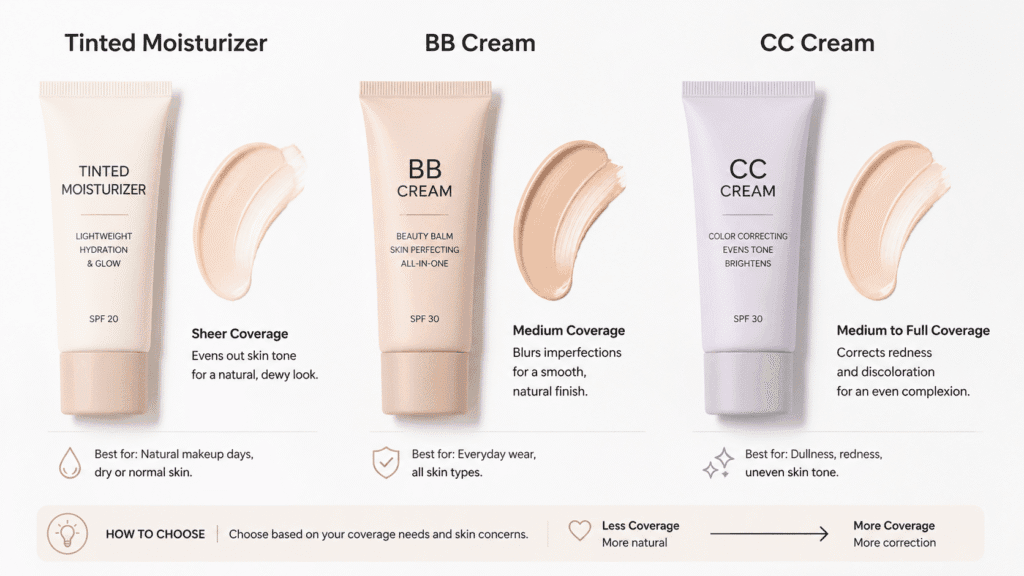
Tinted moisturizer: Most sheer coverage. Best for humid weather because it’s the lightest. Focuses on hydration and skin enhancement rather than coverage.
BB cream (Beauty Balm): More coverage than tinted moisturizer, often includes SPF and skincare benefits. Slightly heavier texture. Still works in humidity but choose an oil-free or gel-based formula.
CC cream (Color Correcting): Focuses on correcting color issues like redness or sallowness. Coverage ranges from sheer to medium. Some are very lightweight and work well in humidity.
For strictly humid tropical travel, a lightweight tinted moisturizer or a gel-based BB cream is usually your best bet. The sheerer the formula, the better it handles heat and moisture.
Building a Simple Humid Weather Morning Routine Around Your Tinted Moisturizer
One of the best things about tinted moisturizers is how they simplify your routine. In a hotel bathroom with limited counter space and no humidity control, simple is everything.
Here’s a routine that actually works:
Step 1: Gentle cleanser. Nothing stripping. You want clean skin, not tight dry skin.
Step 2: Lightweight toner or mist if your skin needs it. Skip this if your skin feels fine after cleansing.
Step 3: Thin layer of serum if you use one. Niacinamide serum is particularly great for humid destinations.
Step 4: Your tinted moisturizer with SPF. This replaces both your moisturizer and your foundation.
Step 5: Concealer on any spots you want more coverage on. Eyes, blemishes, wherever.
Step 6: Setting spray or light powder if you want extra longevity.
That’s it. Six steps maximum, and step two and six are optional. You’ve got protected, even, natural-looking skin that can actually survive the day.
Frequently Asked Questions
Can I use tinted moisturizer with SPF instead of regular sunscreen in Thailand or other tropical destinations?
For everyday activities with limited direct sun exposure, yes. For beach days, outdoor markets, or any extended time in direct sun, apply a dedicated SPF 30 or higher sunscreen first and use the tinted moisturizer on top. The SPF in tinted moisturizers isn’t usually applied in thick enough layers to provide full protection on its own.
Will tinted moisturizer oxidize and look dark or orange in humid weather?
Less likely than traditional foundation, but it can happen with some formulas. The products recommended here are specifically chosen for minimal oxidation. Testing a product on your jaw area before a trip is always smart.
How do I touch up tinted moisturizer throughout the day without looking cakey?
Blotting papers first to remove excess oil, then a light mist of setting spray to refresh the skin. If you need to add any product, apply a tiny amount with fingertips to areas that need it. Avoid applying more product over product that’s been sitting for hours.
Is SPF 20 enough in tropical destinations like Thailand?
For minimal sun exposure days, SPF 20 provides some protection. But for a tropical destination where UV index regularly reaches 10 or above, SPF 30 minimum is recommended by dermatologists. If your tinted moisturizer is only SPF 20, consider adding a dedicated sunscreen for tropical travel.
Can I use tinted moisturizer on oily skin in humid weather?
Yes, and it often works better than heavy foundation on oily skin in humidity. Choose specifically oil-free formulas and consider setting with a translucent powder. The Laura Mercier Oil Free and Tatcha Silk Canvas options in this guide work particularly well for oily skin types.
Final Thoughts
The right tinted moisturizer with SPF isn’t just a makeup product. For humid weather travel, it’s genuinely a skin management tool.
It keeps your skin comfortable, protected, and natural-looking without the drama of heavy makeup in tropical heat. It simplifies your routine down to one product that does the work of three. And it means you’re spending your time enjoying your destination instead of fixing your face in a bathroom mirror.
From budget options like Neutrogena and e.l.f. to investment pieces like NARS and Tatcha, there’s something on this list for every traveler.
If you’re packing for a humid destination and you haven’t tried a tinted moisturizer with SPF yet, this is the trip to start. Your skin will thank you somewhere around day two when everyone else is blotting and you’re just living.
Pack light, protect your skin, and actually enjoy where you are.