You’re three days into your trip. You get a minor cut on your hand. Nothing serious. But you don’t have a bandage. You search your entire luggage. Nothing. You end up at a pharmacy in a foreign country trying to explain what you need. The pharmacist doesn’t understand. You pay triple what you would at home for basic supplies.
Or you get a headache. You have paracetamol at home but didn’t bring any. You spend an hour finding a pharmacy. You can’t read the labels because they’re in another language. You guess and hope it’s the right thing. It works but you waste precious travel time.
Or someone in your group gets food poisoning. You have nothing to help. You’re stuck in a hotel room for a day because you weren’t prepared.
A travel first aid kit prevents all of this. Small, lightweight medical supplies that handle most common travel problems. You’re prepared for minor injuries, stomach issues, headaches, and small emergencies. You don’t waste time hunting pharmacies. You don’t overpay for basic supplies.
The problem is that most travel first aid kits sold are either too small or too bulky. The tiny ones have basically nothing useful. The big ones are designed for camping trips and way too heavy for travelers.
I’ve tested probably fifteen different travel first aid kits. I’ve also built my own kit based on what actually happens while traveling. Some products are essential. Some are useless. Some kits cost way too much for what’s inside.
I’m going to walk you through what you actually need in a travel first aid kit, which pre-made kits are worth buying, how to build your own if you want to customize it, and how to pack medical supplies so they don’t take up your entire luggage.
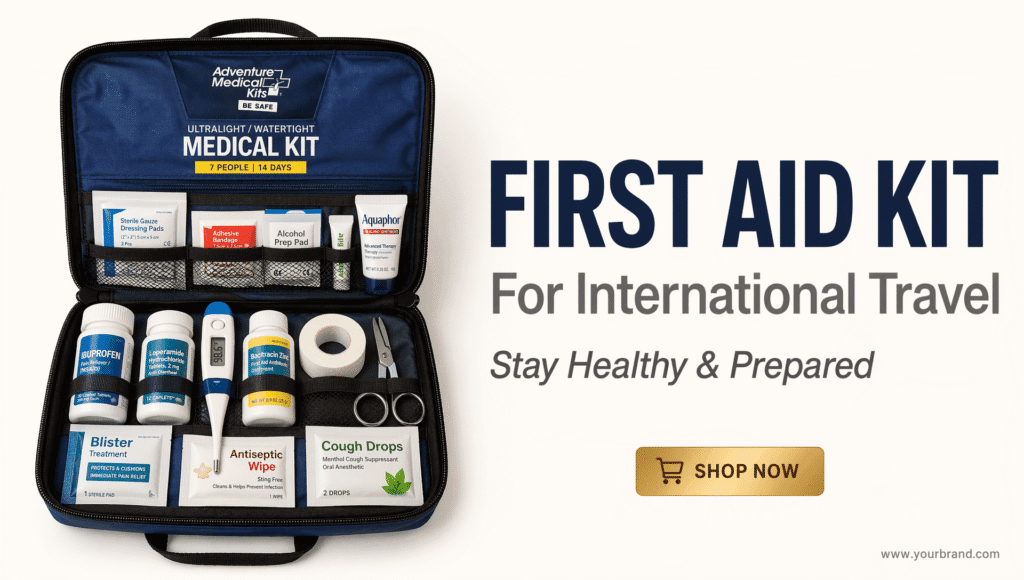
Understanding Travel Medical Needs
Before we talk about specific kits, let’s understand what actually happens medically while traveling.
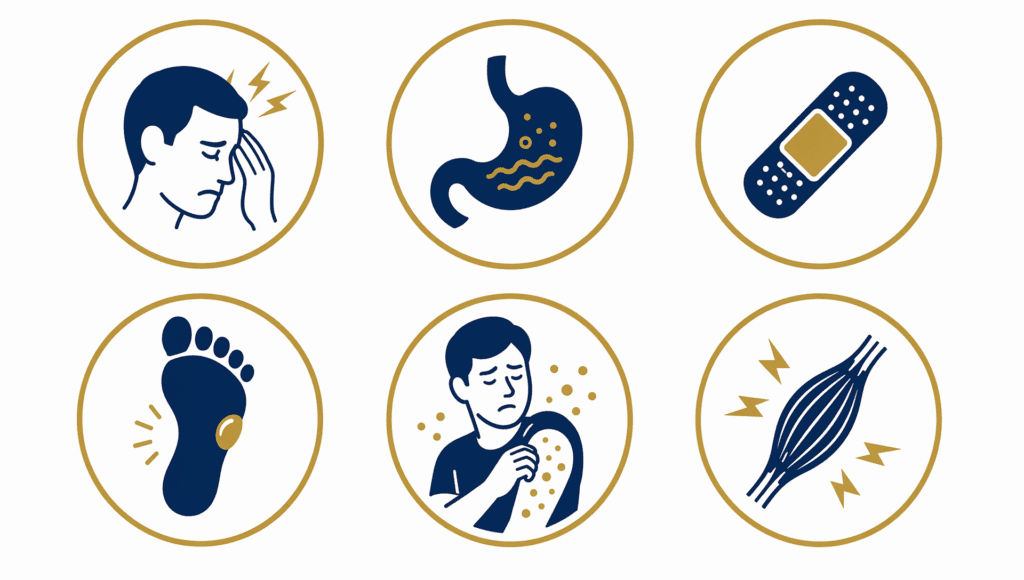
Common Travel Health Problems
Most travel health issues are minor. They’re not emergencies. But they’re annoying and they interrupt your trip if you’re not prepared.
Headaches happen. Change in climate, dehydration, different sleep schedule. You get a headache on day two of your trip. If you have paracetamol, you’re fine. If you don’t, you’re hunting pharmacies.
Stomach issues are common. Different water, different food, different bacteria. Most people experience minor digestive issues while traveling. A few days of different food and your system reacts. It’s not serious but it’s uncomfortable.
Minor cuts and scrapes happen when you’re active. You’re exploring. You trip. You get a cut. Nothing serious but it needs cleaning and covering.
Blisters happen. New shoes, walking more than usual. Your feet get blisters. They hurt. You can’t explore as much.
Allergic reactions happen. Something you ate has an ingredient you’re allergic to. You get itchy or swollen. Minor allergy medicine stops it.
Muscle aches happen. New activities, different beds, walking constantly. Your muscles hurt. Pain relief helps. Sleeping awkwardly on the plane is another huge culprit; pairing your medical prep with the best travel pillow for long flights can prevent neck stiffness and back strain before you even land.
These are the actual problems people face while traveling. Not appendicitis. Not broken bones. Just annoying minor issues that interrupt your trip.
Why Pre-Made Kits Often Fall Short
Most travel first aid kits are designed by companies that have never actually traveled.
They include items nobody needs. Tweezers for splinters. CPR instruction cards. Tourniquets. These are useful for home but pointless for traveling.
They’re missing items people actually use. Extra strength pain relief. Multiple bandage sizes. Antacids. Allergy medication.
They’re either too small to be useful or too heavy to pack. There’s no middle ground.
The better approach is knowing what to actually pack rather than buying a kit someone else designed.
International vs Domestic Travel Medical Needs
International travel has different needs than traveling within your own country.
At home, if you get sick, you call your doctor. You know where the hospital is. You speak the language. You understand the system.
Internationally, you’re lost. You don’t know where the hospital is. You don’t speak the language. You can’t read medication labels. Getting medical help is complicated.
This is why international travel first aid kits need to be more comprehensive. You need basic supplies to handle things yourself because getting medical help is difficult.
For domestic travel, a minimal kit works. For international travel, you need more, especially if you are navigating regional health risks like health concerns in Thailand where local water quality, mosquito-borne illnesses, and food safety require specific preparation
What Actually Belongs in a Travel First Aid Kit
Here’s what you genuinely need for international travel.
Pain Relief
Paracetamol or ibuprofen. Get both if possible. Some pain responds better to one than the other. Include more than you think you’ll need. Headaches are common while traveling.
Include enough for the entire trip plus extra. If you think you’ll need five, bring ten.
Digestive Relief
Antacids for heartburn. Antidiarrheal medication for stomach issues. These are the most commonly used items in travel first aid kits.
Bring more antidiarrheal than anything else. Stomach issues are the most common travel health problem.
Bandages and Wound Care
Multiple bandage sizes. Small for blisters and minor cuts. Medium and large for bigger injuries.
Include antibiotic ointment. Wounds get infected easily when traveling because you’re dirty and sweaty constantly.
Include sterile gauze if you want to be thorough. But bandages are usually sufficient.
Blister Treatment
Blister pads. You’re walking more than usual. You’ll get blisters. Blister pads let you keep walking without pain.
This is essential for any trip involving exploration or hiking.
Allergy Medication
Antihistamine tablets. Something for minor allergic reactions.
You don’t know exactly what’s in every food or drink. Allergic reactions happen. Antihistamine stops them quickly. Similarly, skin reactions and breakouts can easily trigger during travel if you use dirty or low-quality tools; packing the best travel makeup brush set that stays clean and compact in your pack is a great way to keep your skin irritation-free.
Anti-Inflammatory
Ibuprofen serves double duty as pain relief and anti-inflammatory.
Muscle aches and inflammation are common. Anti-inflammatory medication helps.
Decongestant
Something for congestion from colds or altitude. Helps you sleep better when congested.
Not essential but helpful if you get sick.
Thermometer
Small digital thermometer. If you get really sick, you need to know if you have a fever.
Essential for deciding if you need actual medical help.
Other Useful Items
Tweezers for splinters. Scissors for cutting tape and gauze. Cotton balls. Alcohol wipes for cleaning wounds. Antihistamine cream for bug bites and irritation.
These are optional but helpful.
Best Pre-Made Travel First Aid Kits
Here are kits that actually work for travelers.
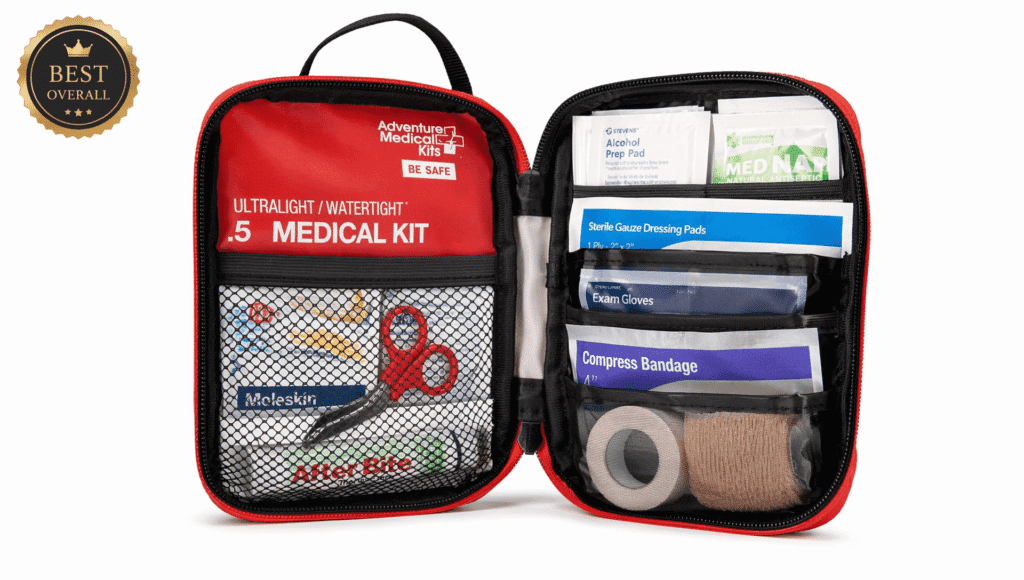
BEST OVERALL: Adventure Medical Kits Ultralight
This is designed specifically for international travelers. The company actually knows what travelers need.
It includes pain relief, antidiarrheal, antihistamine, antibiotic ointment, various bandages, blister pads, and a small thermometer.
The kit is compact. Everything fits in a small case that takes almost no luggage space.
Weight is minimal. About four ounces total. You barely notice carrying it.
Everything inside is practical. No filler items. Just what travelers actually use.
Refill packs are available so you can restock used items without buying a new kit.
Why it works: Designed by people who understand travel. Everything useful. Nothing wasted.
Real downside: Price is higher than generic kits. You’re paying for quality and practicality.
Best for: Serious travelers. International trips. Anyone wanting the best kit available.
BEST BUDGET OPTION: First Aid Only Travel First Aid Kit
This is affordable and surprisingly comprehensive.
Includes bandages, gauze, pain relief, antibiotic ointment, and basic supplies.
The kit comes in a small case. Compact and easy to pack.
Quality is acceptable. Not premium but functional.
Why it works: You get a useful kit at a price that doesn’t hurt.
Real downside: Includes some items you don’t need. Less curated than premium kits. But for the price, it’s solid.
Best for: Budget-conscious travelers. First-time users wanting to test kits. Backpackers.
BEST PREMIUM OPTION: Surviveware First Aid Kit
This is designed for serious outdoor travel.
Comprehensive kit with pain relief, antidiarrheal, antihistamine, antibiotic, bandages, gauze, tweezers, scissors, thermometer, and more.
Premium materials throughout. Everything feels quality.
The case is durable and organized. Multiple compartments.
Everything is waterproof and protected.
Why it works: If you want the best kit regardless of price, this is it. Nothing cheap. Nothing wasted.
Real downside: Expensive. Includes more than many travelers need. Overkill for standard travel.
Best for: Serious adventurers. People doing extreme travel. Those who value quality.
BEST COMPACT OPTION: Portable Travel First Aid Kit by Vitals
This is incredibly small. Fits in a pocket.
Includes essentials only. Bandages, pain relief, antidiarrheal, antihistamine.
No extra items. Just what you need.
Weight is negligible. You don’t notice carrying it.
Why it works: For minimal packing, this is perfect. No wasted space. No unnecessary items.
Real downside: Limited supplies. If you use several bandages, you run out. Minimal on some items.
Best for: Minimalist travelers. Quick trips. People who want ultra-light packing.
BEST CUSTOMIZABLE OPTION: Generic First Aid Supplies (Build Your Own)
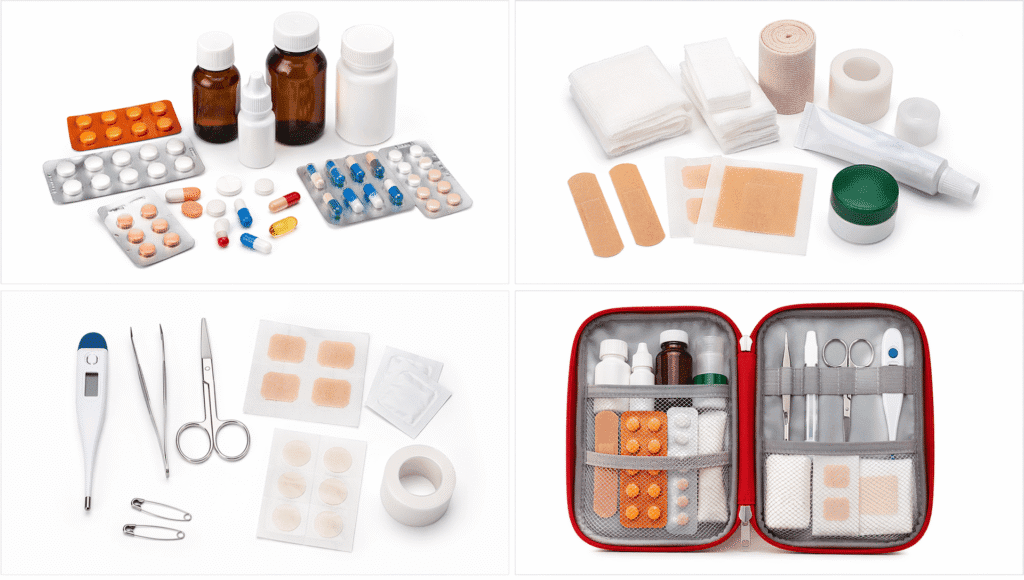
Buy items individually and assemble your own kit.
You control exactly what goes in. You can add more of items you use frequently.
Often cheaper than pre-made kits.
You learn exactly what you have.
Why it works: You get exactly what you need. Nothing wasted. Often cheaper.
Real downside: Takes time to assemble. You have to research what to buy. No organized case.
Best for: Experienced travelers. People who know exactly what they use. Those who want to customize.
How to Build Your Own Travel First Aid Kit
If you want to customize, here’s what to buy.
Medications
Get a small plastic container. Label it clearly.
Pack paracetamol tablets (500mg, about twenty tablets).
Pack ibuprofen (200-400mg, about twenty tablets).
Pack antidiarrheal (loperamide, about twelve tablets).
Pack antihistamine (about ten tablets).
These are your core medications.
Wound Care
Get assorted adhesive bandages in different sizes. Fifteen to twenty total.
Get sterile gauze pads (two by two inch, about five pads).
Get antibiotic ointment (small tube).
Get alcohol wipes (ten to fifteen).
Specialized Items
Get blister pads (six to eight).
Get small scissors.
Get tweezers.
Get cotton balls (about ten).
Get thermometer (small digital).
Organization
Put everything in a small zippered bag or plastic case. Label clearly.
Organize by category. Pain relief in one section. Wound care in another.
Keep a list of what’s inside and where everything is.
Storage
Keep your kit in a cool, dry place in your luggage.
Don’t leave it in direct sun or extreme heat. Heat degrades medications.
Check expiration dates before your trip.
Travel First Aid Kit for Different Trip Types
Different trips need different supplies.
Weekend City Trip
Minimal kit. Bandages, pain relief, antidiarrheal, antihistamine.
Small container, minimal weight.
You’re not doing extreme activities. Basic supplies cover everything.
One-Week International Trip
Standard kit with everything mentioned above.
More supplies because you’re gone longer.
Better thermometer because medical help is harder to get.
Adventure Travel or Hiking
Comprehensive kit with extra bandages, gauze, and blister treatment.
Pain relief because muscles will hurt.
Anti-inflammatory for strain injuries.
Extra antibiotic ointment because injuries are more likely.
Digital Nomad or Extended Travel
Comprehensive kit with backup supplies.
More antidiarrheal because stomach issues accumulate over time.
More pain relief for aches.
Multiple thermometers in case you lose one.
Practical Travel First Aid Kit Tips
These tips make your kit more effective.
Know Where Pharmacies Are
When you arrive, locate the nearest pharmacy.
Ask your hotel where to find medical help.
This knowledge helps if you need to get additional supplies.
Keep Medications in Original Containers
Some countries restrict medications in unmarked containers.
Keep medication in labeled original containers when possible.
Or keep labels from containers.
This prevents problems at customs and borders.
Know Generic Names Not Brand Names
Brand names vary by country.
Paracetamol is called acetaminophen in some places.
Know the generic name so you can find it internationally.
Bring Enough for the Entire Trip
Don’t rely on finding supplies locally.
Bring enough pain relief for the whole trip plus extra.
This prevents emergencies and gives you peace of mind.
Refill Before You Leave
Before returning home, refill your kit if you used supplies.
Don’t wait until your next trip to discover you’re out.
Restock immediately so you’re ready for the next trip.
Check Expiration Dates
Old medications are less effective.
Check expiration dates before your trip.
Replace expired items.
Update regularly throughout the year.
FAQ: Travel First Aid Kit Questions
Can I Bring Medication in Carry-On Luggage
Yes. Most common medications are allowed.
Liquid medications have restrictions (TSA limits).
Solid tablets and pills are generally unrestricted.
Check the specific country you’re traveling to for restrictions.
What if My Medication is Prescription Only in My Country
Some countries have different medication regulations.
Common travel medications like antidiarrheal are available without prescription in many countries.
Check before traveling.
Bring enough of your medication for the entire trip if it’s prescription-only.
Should I Tell Customs About My First Aid Kit
You don’t need to unless asked.
Keep it easily accessible in case inspectors want to see it.
Be prepared to explain what’s inside.
Most countries allow basic first aid supplies.
What’s the Best Container for a Travel First Aid Kit
Small zippered bag or plastic case.
Clear or translucent so you can see contents.
Organized with compartments if possible.
Waterproof is better than not waterproof.
How Often Should I Replace My Kit
Check expiration dates every six months.
Replace used items as soon as you return from a trip.
Replace damaged or broken items immediately.
Replace the entire kit every two years to ensure quality.
Do I Need a Travel First Aid Kit for Domestic Travel
Less essential but still helpful. You’re closer to medical facilities at home. But having basic supplies is still useful. Minimal kit is sufficient for domestic travel.
Quick First Aid Kit Comparison
| Kit | Price | Weight | Best For | Included Items |
|---|---|---|---|---|
| Adventure Medical | $25-35 | 4 oz | Serious travelers | Pain relief, antidiarrheal, antihistamine, bandages, blister pads, thermometer |
| First Aid Only | $15-20 | 8 oz | Budget travelers | Bandages, gauze, pain relief, ointment, basic supplies |
| Surviveware | $50-70 | 12 oz | Premium quality | Comprehensive, all items, organized, premium materials |
| Vitals Compact | $12-18 | 2 oz | Minimalists | Essential items only, ultra-light |
| Build Your Own | $20-30 | Variable | Customizers | Whatever you choose to include |
The Bottom Line
A travel first aid kit isn’t a luxury. It’s practical preparation. You’ll use it. Someone in your group will get a headache. Someone will get a stomach issue. Someone will get a blister. Having supplies means you handle it yourself instead of hunting pharmacies in a foreign country. Adventure Medical Kits Ultralight is the best overall. It’s designed for travelers. Everything useful. Nothing wasted. Budget travelers should get First Aid Only. It’s affordable and functional. If you want premium, Survive ware is the best. If you want minimal, Vitals Compact works. If you want to customize, build your own. Pick based on your needs. Check expiration dates before your trip. Pack it where you can reach it. You’ll be glad you have it when you need it.