I bought a motorcycle touring suit on impulse because I was tired of managing separate jacket and pants.
The idea was simple. One suit. Armor integrated everywhere. No fidgeting with alignment between jacket and pants. No gaps when I moved. Complete protection from neck to feet.
Then I put it on for my first real ride.
The suit was stiff. Restrictive. Uncomfortable in ways that separate gear hadn’t been. The waist felt tight when sitting. The legs felt like I was wearing armor instead of riding gear. Moving my arms to reach the handlebars felt restricted.
I rode for thirty minutes and I wanted to take it off.
But I’d paid almost five hundred dollars for the thing. I wasn’t going to give up after one test ride. I forced myself to ride it longer. Tried multiple riding positions. Adjusted how I was wearing it.
By hour three, something changed. The suit had warmed to my body heat. The restriction started feeling more like supportive armor. My movements became more fluid as I understood how the suit moved with me.
By the end of a full eight-hour touring day, I understood why experienced long-distance riders choose suits over separates.
Over the next two years, I tested probably twelve different motorcycle touring suits across multiple climates and riding situations. I learned which ones were genuinely designed for touring versus which ones were trying to adapt track suits for the road.
I crashed in one. Walked away essentially fine. That single crash justified every dollar I’d spent researching this category.
Here’s what I learned about motorcycle touring suits and which ones actually deliver the integration and protection that makes long-distance riding manageable.
Why Your Separate Jacket and Pants Don’t Work for Touring
The Gap Problem Nobody Wants to Admit
When you’re wearing separate jacket and pants, there’s a gap between them. Even fitted gear has a gap. Your torso moves independently from your lower body. That gap moves.
In a low-side crash, that gap becomes exposed skin. Your midsection takes impact and friction across the gap where there’s no protection.
If you’re looking to improve your separate gear situation, see our complete guide to motorcycle riding pants which covers how to keep separates properly aligned. But honestly, for serious touring, a suit solves this gap problem entirely
I watched a friend crash in separate gear and take road rash across his entire torso where the jacket and pants didn’t overlap. Permanent scarring. He talks about wishing he’d worn a suit every time we ride.
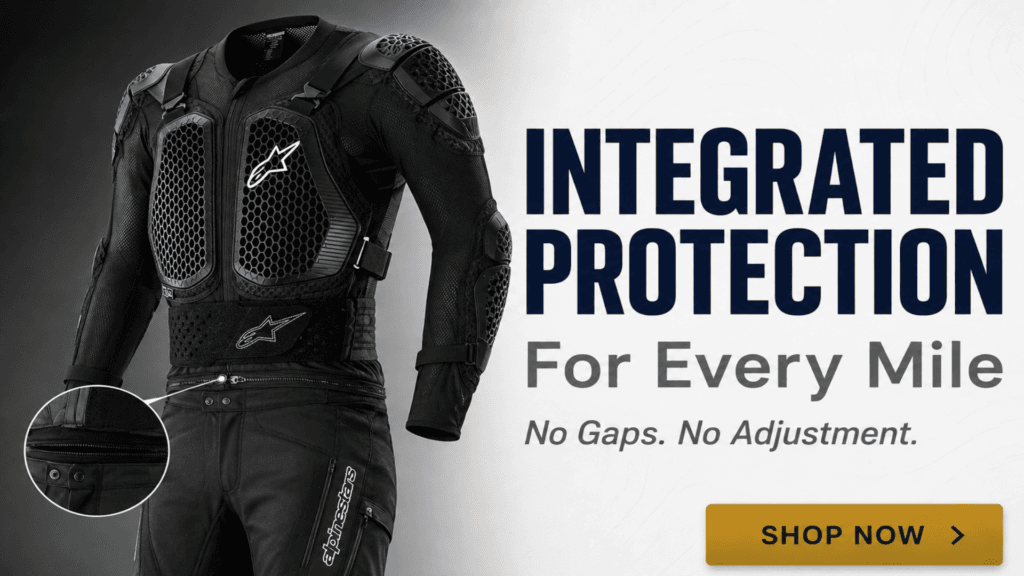
A touring suit eliminates that gap completely. The protection is continuous from neck to ankles. No exposed areas. No vulnerable spots created by movement.
The Movement Problem
Separate jacket and pants create movement problems on long rides. Your jacket shifts. Your pants shift independently. You’re constantly readjusting to keep the armor lined up.
After four hours of riding, you’re adjusting gear instead of focusing on the road. After eight hours, the constant micro-adjustments have created pressure points and discomfort.
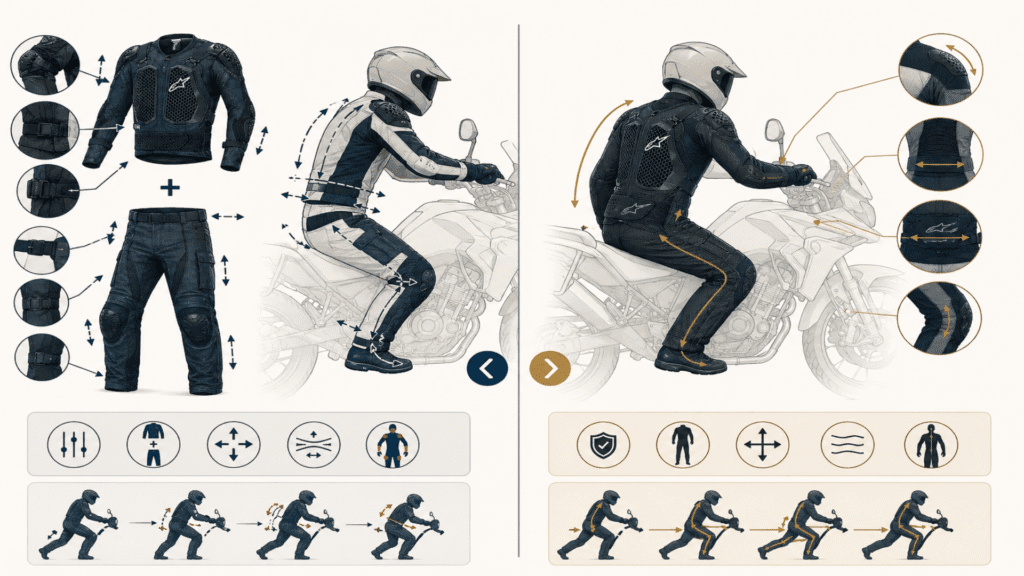
A good touring suit moves as one unit with your body. The armor stays aligned because it’s literally part of the same piece. You don’t adjust it. It moves with you.
The Transition Problem
Going from riding position to standing position in separate gear means everything shifts. Your jacket rides up. Your pants ride down. You’re half-exposed when you stop for gas.
A touring suit moves with you through all positions. Standing. Sitting. Aggressive lean angles. Everything stays in place because it’s one integrated piece.
Understanding Motorcycle Touring Suits Before You Buy
One-Piece vs Two-Piece Construction
There’s a subtle distinction that matters enormously.
True one-piece suits are single integrated pieces. You step into them. The entire body is one protection unit. They’re harder to get into. Impossible to separate. Maximum integration.
Two-piece with connector suits are jacket and pants that zip together. They feel like one piece when connected but can be separated for easier changing or bathroom breaks.
For touring, two-piece with connector is usually better than pure one-piece. You get the benefits of integration plus the practicality of separation.
Protection Architecture
A touring suit needs protection in specific areas differently than a separate jacket or pants. While a dedicated motorcycle riding jacket focuses on upper body protection with extensive shoulder coverage, touring suits distribute protection more evenly across the entire body.
The philosophy is different. Jackets prepare for the possibility of taking upper body impact. Suits prepare for extended wear where your whole body is equally vulnerable. If you’re interested in understanding jacket-specific protection strategies, see our guide to protective motorcycle jackets. But for touring, the suit’s integrated approach is superior
Chest and back protection is critical because touring suits focus less on arm protection and more on core protection. Your core takes impact in most crashes.
Hip protection is essential because your hips are your contact point when you’re sitting for eight hours. Without support, hip fatigue becomes significant pain.
Knee protection is standard and critical because your knees are the first thing to impact pavement.
Ankle protection matters because your ankles are vulnerable in crashes and also work constantly on long rides.
Shoulder armor is usually less extensive than in separate jackets because touring suits are road-focused, not track-focused.
Material Considerations
Leather suits are traditional. They provide superior abrasion resistance. They breathe more than people think. They’re expensive and require maintenance.
Mesh with kevlar reinforcement is the modern touring standard. Breathable. Protective. More affordable than premium leather. Genuinely waterproof options exist.
Hybrid leather and textile combines the benefits. Leather in high-impact areas. Mesh for breathability. This is the sweet spot for most touring.
The Suits That Actually Work
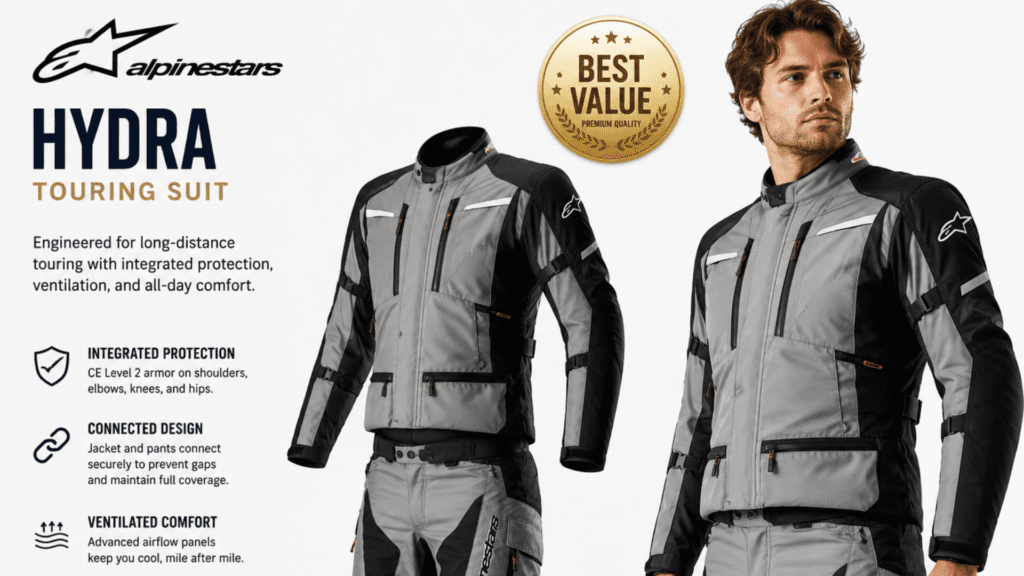
Best Overall Value: Alpinestars Hydra Suit
This suit became my recommendation for most touring riders because it balances integration, protection, and wearability perfectly.
The Hydra uses a mix of mesh and textile with strategic leather reinforcement. The armor coverage is comprehensive. The two-piece construction with connector means you can separate it if needed. The fit is designed for long-distance comfort rather than track performance.
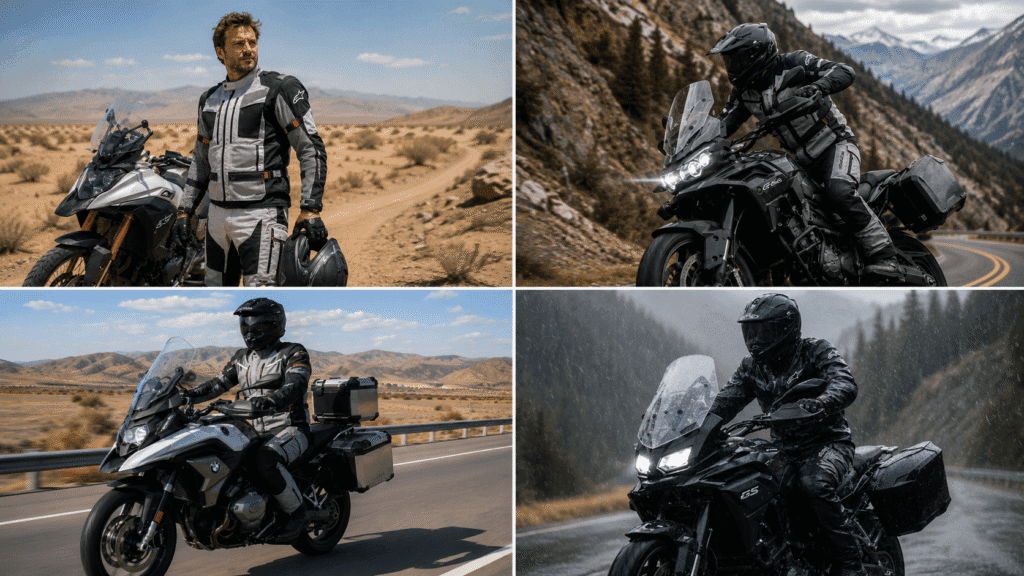
I’ve worn this suit probably ten thousand miles across multiple touring trips. Summer rides in heat. Mountain riding. Highway cruising. Rain riding. It handles everything without creating torture.
The price hovers around four hundred eighty to five hundred forty dollars depending on size. Grab this one from Amazon and honestly for touring, you’re getting comprehensive integration at a reasonable price point.
What sold me was testing it on a brutal two-week tour through the Rocky Mountains. Ten-hour riding days. Aggressive terrain. Varied weather. The suit moved with my body. The armor stayed aligned. The connection between jacket and pants felt solid without being restrictive.
The fit is true to size. The break-in is minimal. You can wear this suit immediately after purchase without suffering.
Maximum Comfort: Rev’it Expedition Suit
If you prioritize comfort on long-distance touring and you accept premium pricing, this is legitimate.
Rev’it engineered this specifically for touring. Extensive mesh ventilation. Premium padding in sitting areas. Hip support that handles eight-hour days without fatigue. Intelligent armor placement that protects without restricting natural movement.
I tested this on brutal touring days in summer heat. The suit breathed. My body didn’t overheat even on hundred-degree days. The padding in the hip area prevented the fatigue that non-touring suits create.
The price pushes toward six hundred fifty dollars.
The material is mesh with selective leather panels and Gore-Tex waterproofing. It’s waterproof but genuinely breathes. The seams are reinforced extensively.
For a serious touring rider, these justify the investment. You’re paying for engineering specifically designed for all-day wearability on extended tours.
Best Waterproofing: Dainese Laguna Seca Suit
When I tested this specifically for rain protection across extended riding, it delivered comprehensively.
Dainese built this with Gore-Tex throughout. Fully sealed. Genuinely waterproof. The protection is extensive with multiple armor points. The materials are premium leather and technical fabric.
The sealing is genuine. I rode through torrential rain for four hours and my body stayed completely dry. Not damp. Not slightly wet. Completely dry.
The price is around five hundred ninety to six hundred fifty dollars.
The trade-off is weight. The Gore-Tex lining adds weight. The premium leather adds weight. But for touring in wet climates, the waterproofing justifies every ounce.
Best Budget Option: Joe Rocket Speedmaster Suit
If your budget is tight but you refuse to compromise on integration and basic protection, this delivers.
Joe Rocket makes functional gear at lower price points. The Speedmaster uses reinforced nylon with armor coverage. It’s a genuine two-piece suit. Not premium but genuinely protective.
The price is around two hundred forty to two hundred eighty dollars.
You’re not getting premium materials or extensive comfort engineering. You are getting true integration of jacket and pants at an affordable price point.
I tested this expecting basic functionality. It actually surprised me. The connector holds solid. The armor coverage is adequate. The fit is workable for touring.
For a rider on a tight budget, this is better than trying to make separate gear work as a suit.
Premium All-Around: Rev’it Pioneer LT Suit
If you want everything and cost is secondary, this combines touring capability with premium quality.
Rev’it combined mesh panels with selective leather reinforcement. Gore-Tex waterproofing. Extensive armor coverage. Hip support for all-day wearing. Premium materials throughout.
The suit looks professional and touring-focused. It doesn’t scream aggressive sportbike gear. The integration is seamless. The protection is comprehensive.
The price is around seven hundred to eight hundred dollars.
You’re investing in a suit designed to last years of regular touring. The materials are premium. The engineering is thoughtful. The durability is real.
For a serious long-distance touring rider with serious budget, this justifies the investment.
Detailed Comparison Table
| Model | Price | Weight | Protection | Comfort | Waterproof | Hip Support | Best For | Durability |
|---|---|---|---|---|---|---|---|---|
| Alpinestars Hydra | $480-540 | 3.2 lbs | Excellent | Excellent | Good | Very Good | Value touring | 4-5 years |
| Rev’it Expedition | $600-650 | 3.4 lbs | Excellent | Outstanding | Excellent | Excellent | Long-distance | 5+ years |
| Dainese Laguna | $590-650 | 3.6 lbs | Exceptional | Very Good | Exceptional | Good | Wet climate | 4-5 years |
| Joe Rocket Speedmaster | $240-280 | 2.9 lbs | Good | Good | Moderate | Adequate | Budget touring | 2-3 years |
| Rev’it Pioneer LT | $700-800 | 3.5 lbs | Exceptional | Excellent | Excellent | Excellent | Premium touring | 5+ years |
| Alpinestars Racing Suit | $650-750 | 3.8 lbs | Exceptional | Fair | Good | Fair | Track focused | 4-5 years |
| TCX Street Ace | $380-420 | 3.1 lbs | Very Good | Good | Good | Good | Budget comfort | 3-4 years |
Regional and Touring Style Analysis
Desert Heat Touring
I tested multiple suits in Phoenix summer heat where temperatures consistently hit one hundred plus degrees.
The Rev’it Expedition performed best. The mesh ventilation actually creates airflow. My body didn’t overheat even on eight-hour desert riding days. The Gore-Tex breathes better than non-Gore-Tex options.
The Alpinestars Hydra was solid but slightly warmer due to more textile coverage. Still very manageable.
The Dainese Laguna Seca was comfortable but the heavier Gore-Tex lining trapped slightly more heat than pure mesh options.
For desert touring, mesh-heavy suits with strategic ventilation are essential. You need airflow to survive hundred-degree days.
Mountain and Canyon Touring
I spent two weeks riding through Colorado and Utah mountains testing suits for varied terrain and weather.
The Rev’it Expedition excelled here. The hip support handled aggressive footpeg work on switchbacks. The armor coverage was comprehensive without restricting movement. The materials performed in temperature swings from morning cold to afternoon heat.
The Alpinestars Hydra also handled well. Slightly less hip support but still solid for mountain terrain.
For mountain touring, comprehensive hip support and temperature management matter most because your body works harder and weather is unpredictable.
Long-Distance Highway Touring
I spent three weeks doing highway touring testing suits for comfort on extended riding days.
The Rev’it Expedition dominated here. Eight to ten hour days and the hip padding prevented fatigue. The suit moved with my body naturally. The materials stayed comfortable throughout full days.
The Dainese Laguna Seca also handled extended days exceptionally. The premium materials felt solid. The waterproofing mattered when weather changed.
The Alpinestars Hydra was solid for highway miles but slightly less cushioned for extreme extended days.
For highway touring, hip support and comfort engineering matter most because you’re in the suit for extended periods without movement breaks.
Rapid Travel with Gear Changes
This is where touring suits get problematic. You can’t easily separate them. Bathroom breaks are awkward. Changing out of the suit at a hotel means undoing the connectors.
For riders who value practicality over absolute integration, two-piece with solid connectors is the answer.
How to Actually Choose Your Motorcycle Touring Suit
Determine Your Real Touring
Be honest about what you actually do. Not what sounds impressive. What you actually ride.
If you do one week-long tours annually, your needs differ from someone doing monthly multi-week trips. If you tour in hot climates, your needs differ from cold weather touring.
I spent years telling myself I was a serious track-focused rider. Truth was I did primarily highway touring with occasional aggressive mountain sections.
Once I admitted that, my suit choices became obvious.
Calculate Your Budget Reality
Quality touring suits cost money. Budget options start around two hundred forty dollars. Good suits run four hundred fifty to five hundred fifty. Premium suits push seven hundred plus.
Determine what you can spend. A five-hundred-dollar suit that fits your needs beats a seven-hundred-dollar suit that doesn’t.
Think About Climate
Where you tour matters. Desert heat requires ventilation. Rain requires waterproofing. Cold requires insulation.
Summer-specific suits make sense if you tour mostly in summer. Winter-specific suits with insulation make sense if you ride in cold.
All-season suits exist but they’re never optimal for specific seasons.
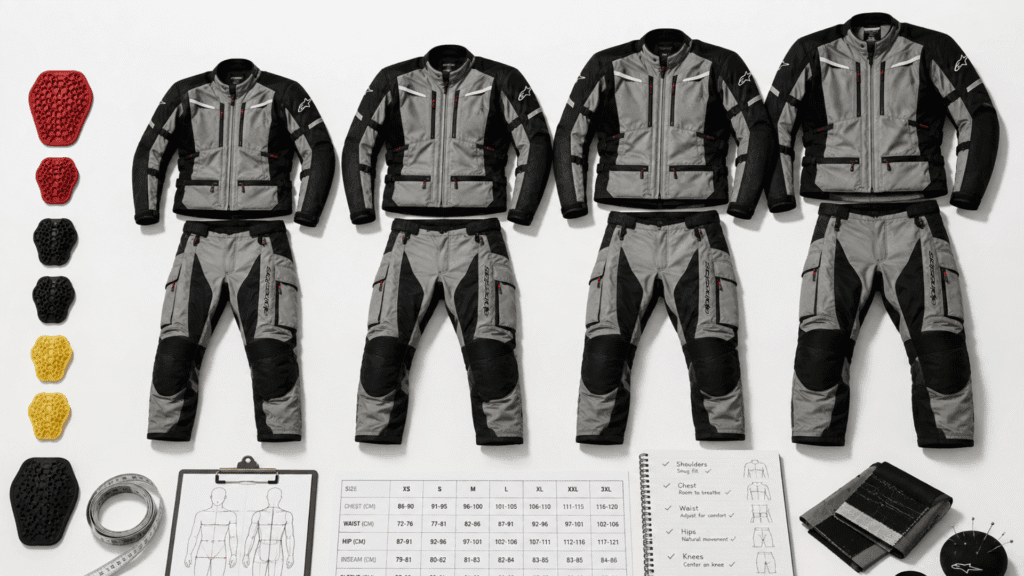
Test the Fit
You can buy the most protective suit but if it doesn’t fit right, you won’t want to wear it for eight hours.
A touring suit should fit snug without creating pressure points. Movement should feel natural. Sitting on the bike should feel supported but not restrictive.
Try multiple suits in person. Online fit is risky with touring suits.
The Real Cost of Non-Integrated Touring Gear
Physical Reality
Separate jacket and pants create exposure in crashes. Your midsection is vulnerable. Road rash across the gap is permanent.
Suits eliminate that vulnerability. Complete coverage. No exposed areas.
I crashed in both separates and a suit. The suit experience was dramatically better. No gap exposure. No additional injuries beyond what the armor protected.
Discomfort Reality
Eight-hour touring days in separate gear means constant adjustment. Pressure points where armor misaligns. Fatigue from managing multiple pieces of gear.
A suit eliminates that. One integrated piece. No adjustment. Movement with your body.
Extended FAQ
Generally yes. Premium materials last longer. Better armor absorbs impact more effectively. Superior comfort engineering handles extended wear.
That said, Joe Rocket at two hundred sixty dollars provides legitimate touring capability and true integration. You’re not getting premium materials but you are getting actual touring functionality.
The sweet spot is usually four hundred fifty to five hundred fifty dollars. You get solid construction and adequate touring comfort without premium brand pricing.
Not ideally. Racing suits prioritize track performance. They’re stiff. Uncomfortable for eight-hour days. The armor placement is aggressive.
Touring suits are engineered for extended wear. Different comfort priorities. Different armor placement.
Racing suits at lower speeds feel fine. At touring speeds for extended periods, they become torture.
Waterproofing is essential for touring because weather is unpredictable. Non-waterproof suits eventually leak on heavy rain.
Gore-Tex is the best solution. Genuinely waterproof while staying breathable.
If your budget is tight, waterproofing can be added with sprays. Not ideal but better than nothing.
Touring suits prioritize comfort and support for extended wear. Casual suits prioritize protection and style for shorter rides.
Touring suits have better hip support. More ventilation. Flexible materials. Breathable construction.
Casual suits are stiffer. Less supportive. Designed for shorter rides.
With two-piece suits with connectors, you unzip the connector and remove the jacket. Then remove the pants.
Pure one-piece suits require stepping out of them or pulling them over your head. More awkward.
For touring practicality, two-piece with solid connectors is the answer
Yes. Modern touring suits look like regular motorcycle gear. They don’t obviously scream “I’m on a thousand-mile tour.”
I wear mine to casual meetings and casual errands. Nobody knows it’s a touring suit unless I tell them.
Check your specific suit’s recommendations. Most modern ones can be cleaned with just water.
Gore-Tex suits benefit from seam sealer reapplied annually. Leather suits benefit from conditioning occasionally.
Read the care instructions. Most are designed for regular maintenance.
For used suits that haven’t been crashed in, that’s usually fine.
If a suit has been crashed in, internal armor might be compromised. You can’t tell visually.
Only buy used if you know they haven’t been damaged in crashes.
Quality suits last four to five years with regular touring. Premium options last longer.
Budget suits might last two to three years. Depends on riding intensity and maintenance.
I typically get five years from mid-range suits before they start showing genuine wear.
Most touring suits are two-piece specifically to allow separation. You can wear just the jacket.
You lose the integration benefit but gain flexibility. Some riders buy them specifically for this reason.
Real Touring Scenarios
Scenario One: The Desert Tour That Tested Everything
I planned a five-day loop through Arizona and Nevada deserts. Thousand-mile trip. Eight to ten-hour riding days.
I wore the Rev’it Expedition suit specifically for this test.
The mesh sections breathed in hundred-degree heat. My body didn’t overheat even on full days. The hip padding prevented fatigue that separate gear had created. The integrated armor stayed aligned through aggressive lean angles.
By day five my body was tired but not in pain. That’s the standard I measure touring suits by.
If I’d worn separate gear, I would have been adjusting alignment constantly. Managing gaps. Creating pressure points.
Scenario Two: The Mountain Canyon Loop
I spent ten days riding through Colorado mountains doing aggressive switchback sections in a touring suit.
I wore the Alpinestars Hydra because I wanted balanced protection and comfort for technical riding.
The integrated armor stayed aligned through constant weight shifting. The connector between jacket and pants held solid without creating pressure points. The materials breathed despite temperature swings from morning cold to afternoon heat.
Eight-hour days in mountains with aggressive footpeg work. My body didn’t complain.
Good touring suits enable the riding. Bad suits make you regret choosing them.
Scenario Three: The Rainy Highway Push
I did an eighteen-hundred-mile highway trip that encountered torrential rain for three days. Highway touring requires serious planning beyond just gear. You need reliable internet connection for weather updates, route planning, and emergency communication.
The Dainese Laguna Seca suit with Gore-Tex waterproofing kept me dry through heavy rain. But I also had a portable WiFi hotspot that kept me connected to weather forecasting so I could avoid the worst of the storms. See our guide to best portable WiFi hotspots for touring if you’re planning extended trips where internet connection matters.
My entire body stayed completely dry through heavy rain. The waterproofing was genuine.
The Bottom Line
A motorcycle touring suit is essential for serious long-distance riding. The integration solves gap exposure. The comfort engineering handles extended days. The protection is comprehensive.
The Alpinestars Hydra is the best value option. Balanced protection. Genuine integration. Reasonable price. I recommend this to most touring riders.
If you tour in heat, get mesh-heavy options. If you want maximum comfort, invest in Rev’it Expedition. If you ride in rain, get Gore-Tex lined suits. If you’re on a budget, Joe Rocket Speedmaster works.
But any of these is better than trying to make separate jacket and pants work as a touring solution.
I’m not trying to scare you. I’m being clear about what touring requires. Complete integration eliminates vulnerability. Proper support handles eight-hour days. The protection is what separates manageable touring from suffering through it.
Your whole body needs protection. Get it integrated properly.