Short Answer
Khaplu, the capital of Ghanche District in eastern Baltistan, is the slow alternative to Skardu: a green Shyok Valley town at about 2,600 m, home to Khaplu Palace — the 1840 Yabgo royal residence, restored by the Aga Khan Trust for Culture and now a Serena heritage hotel with a museum. Allow two days: one for the palace and town, one for the valley. Best months May to October.
Why Khaplu, when Skardu is closer?
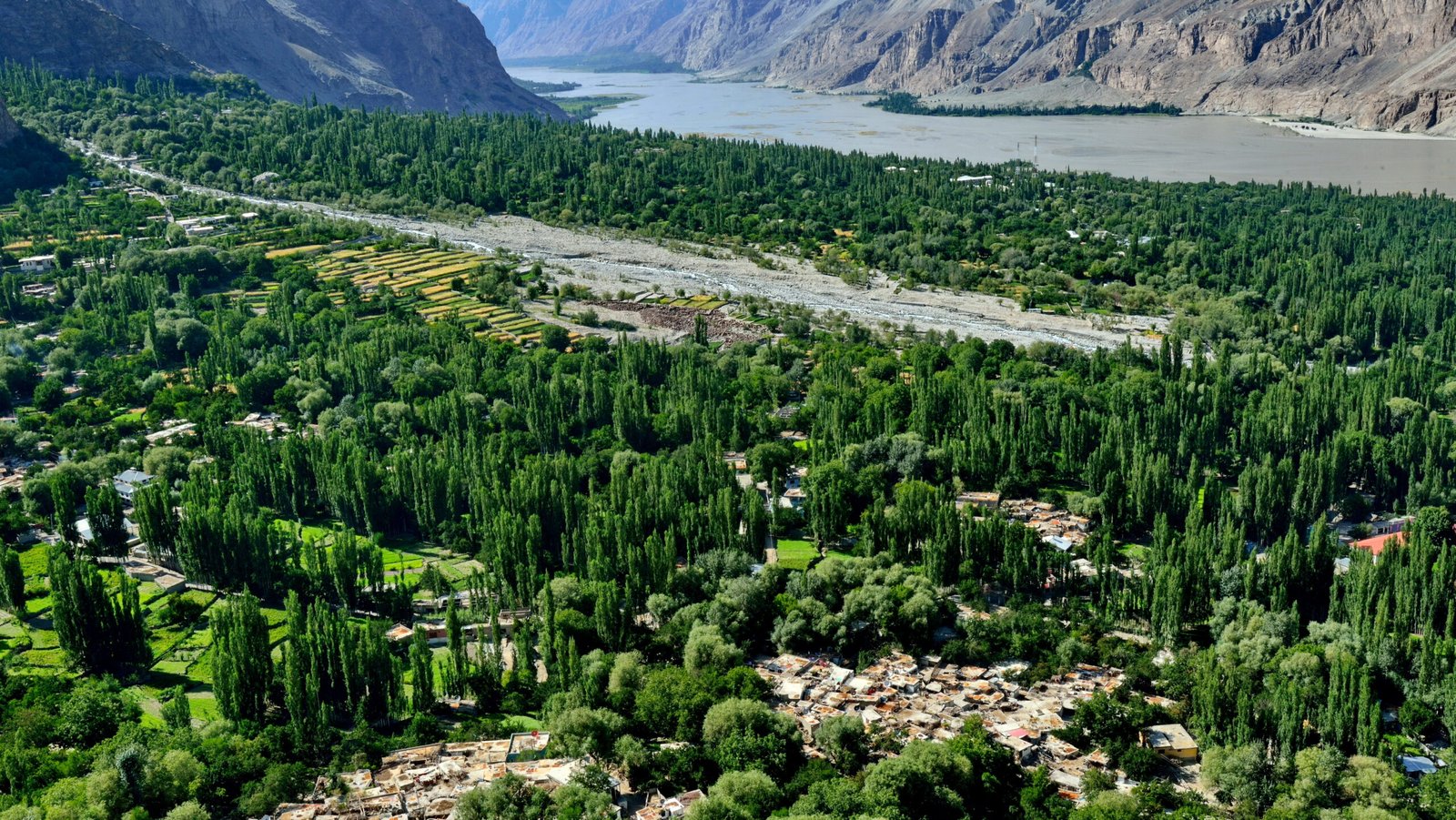
Skardu is the hub; Khaplu is the exhale. The drive east from Skardu follows the Shyok River into a wider, greener valley, and the pace drops with every kilometre. Khaplu has no airport, no bazaar crowds, and no expedition traffic — which is exactly why travellers who have already done Skardu come here. It is also the gateway to Hushe Valley and the Masherbrum trekking country, so it suits walkers as well as slow travellers.
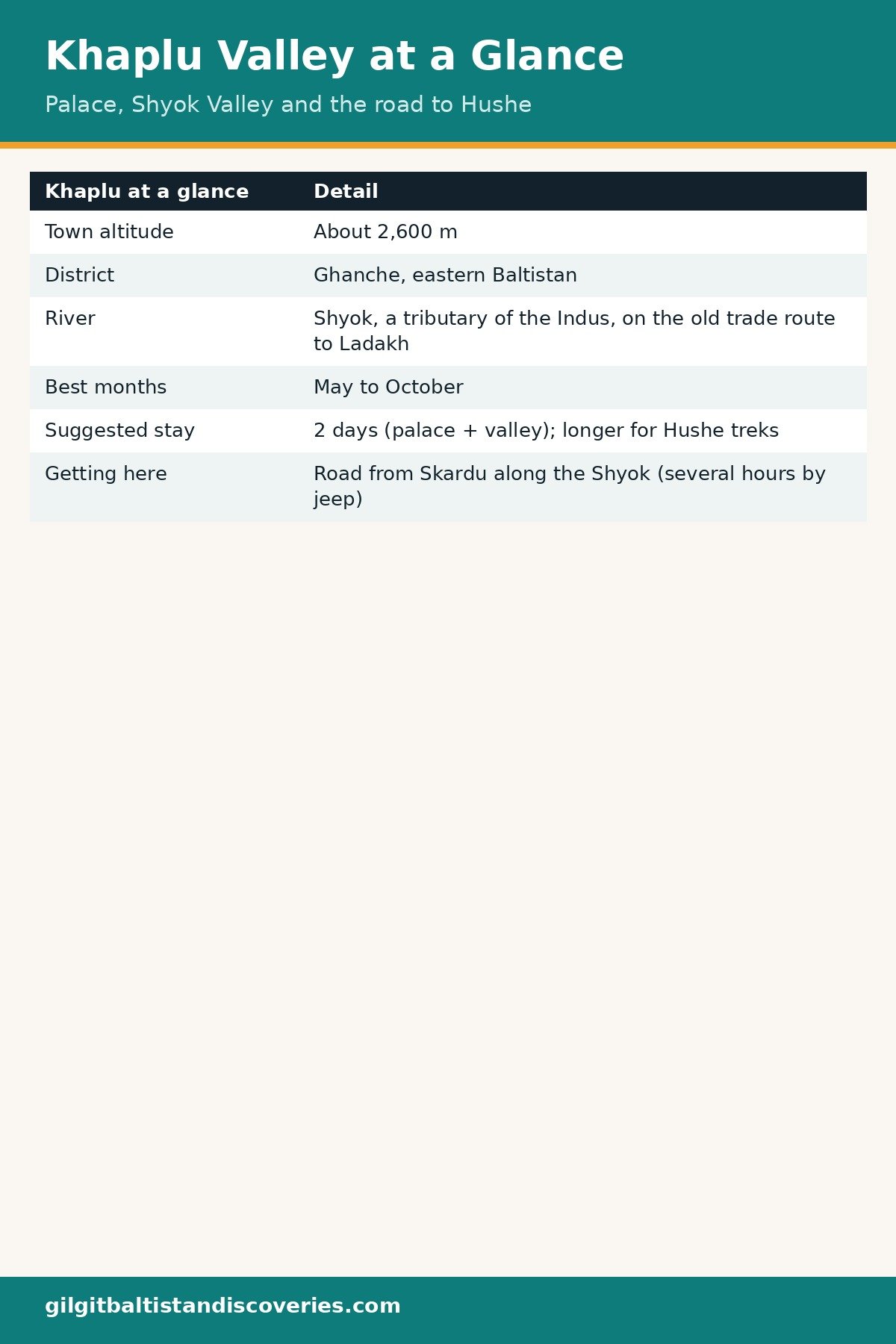
| Khaplu at a glance | Detail |
|---|---|
| Town altitude | About 2,600 m |
| District | Ghanche, eastern Baltistan |
| River | Shyok, a tributary of the Indus, on the old trade route to Ladakh |
| Best months | May to October |
| Suggested stay | 2 days (palace + valley); longer for Hushe treks |
| Getting here | Road from Skardu along the Shyok (several hours by jeep) |
Khaplu Palace (Yabgo Khar)
The palace and its story
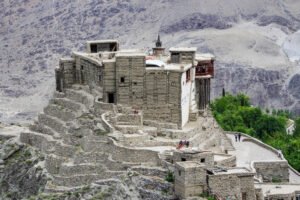
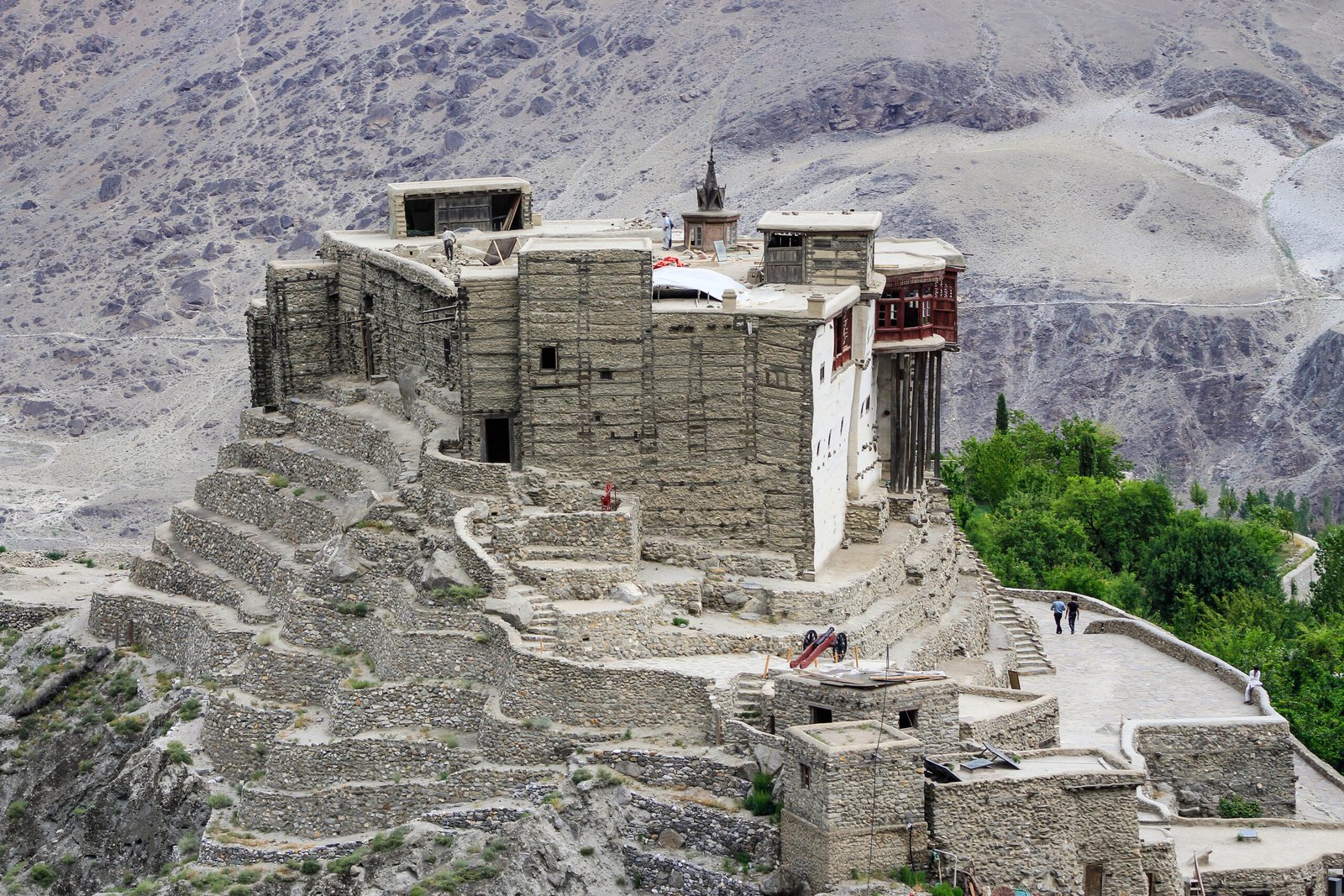
Khaplu Palace, locally Yabgo Khar — “the fort on the roof” — was built in 1840 by the Yabgo Raja Daulat Ali Khan, after the seat of government moved from the old fort. Local legend says the site was chosen by rolling a stone down from a nearby cliff; the palace stands where the stone stopped. The Yabgo family lived here for over a century; the kingdom was abolished in 1972, and the last Raja to live in the house died in 1983.
The restoration
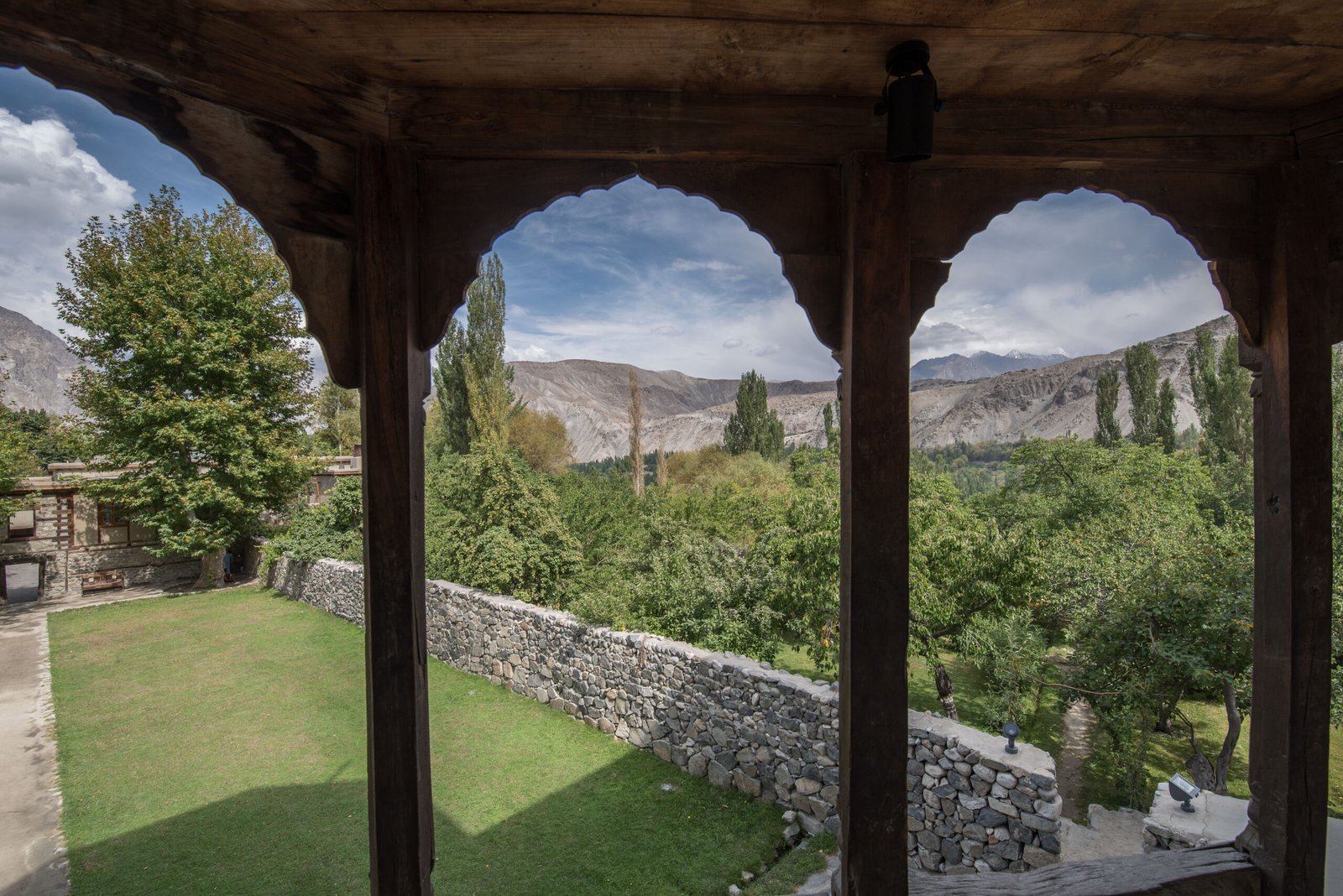
Between 2005 and 2011 the palace, by then in a vulnerable state, was restored by the Aga Khan Trust for Culture under its Historic Cities Programme, and it now houses a Serena-operated heritage hotel and a museum of Baltistan’s history and culture. The result is one of the finest surviving royal residences in Baltistan: carved timber balconies, a semi-octagonal entrance that becomes a balcony above, and rooms that still hold the family’s belongings — clothes, utensils, documents and photographs.
Visiting
Allow at least half a day. The museum rooms reward slow looking, and the terraces give the valley’s best viewpoint. Staying a night is the full experience — the palace has only about 21 rooms, so it stays quiet — but a daytime visit from Skardu is possible if you start early and accept a long day.
What else to do in Khaplu Valley
Walk the town and the Shyok banks
Khaplu town is small, walkable and green: apricot orchards, poplar-lined lanes, and the Shyok running below. The old mosque and the bazaar are modest — that modesty is the appeal. An evening walk along the river, with the Karakoram across the valley, is the valley’s simplest pleasure.
Hushe Valley and the Masherbrum country
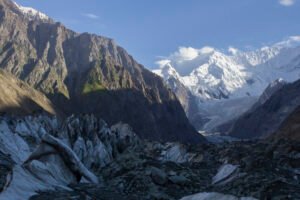
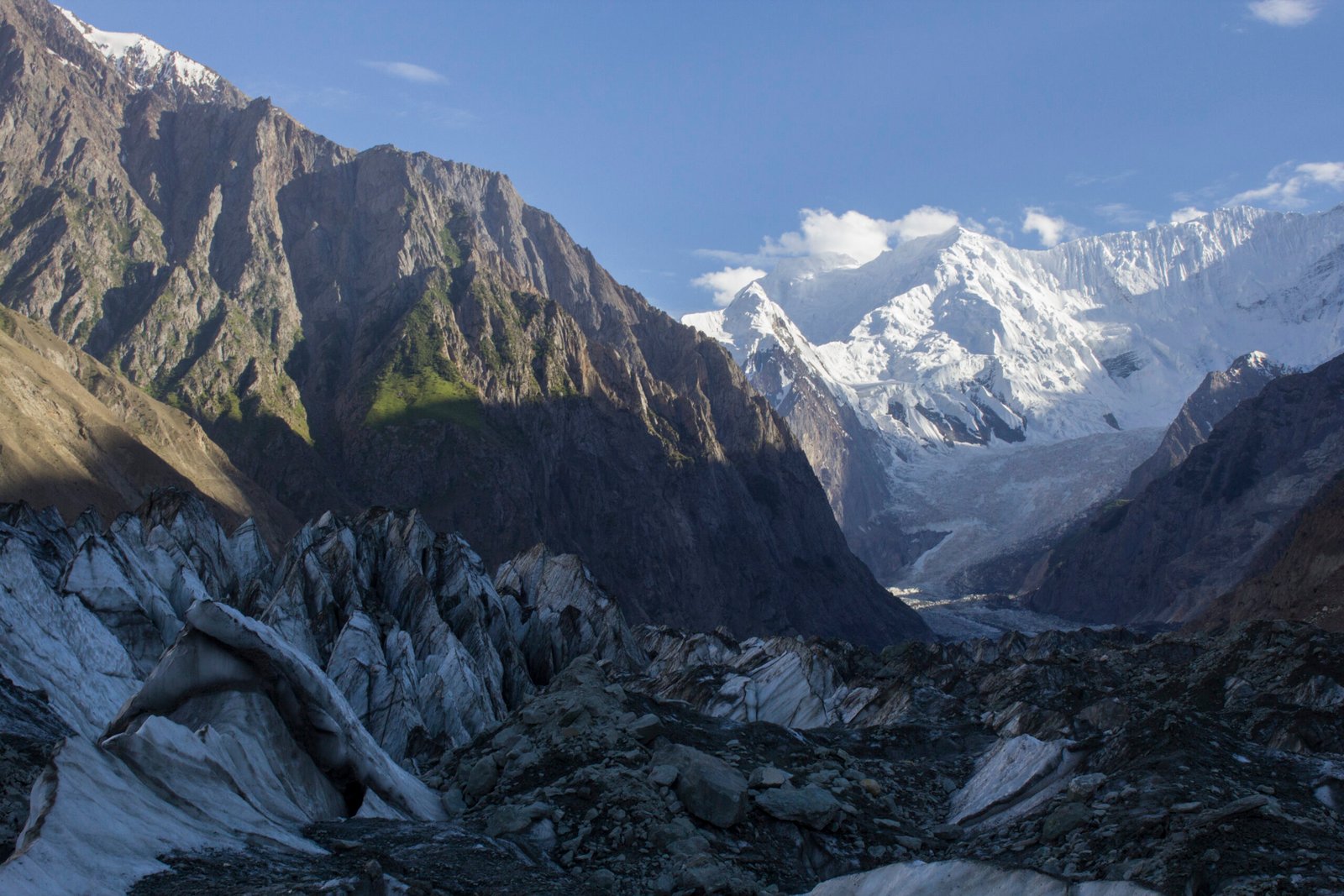
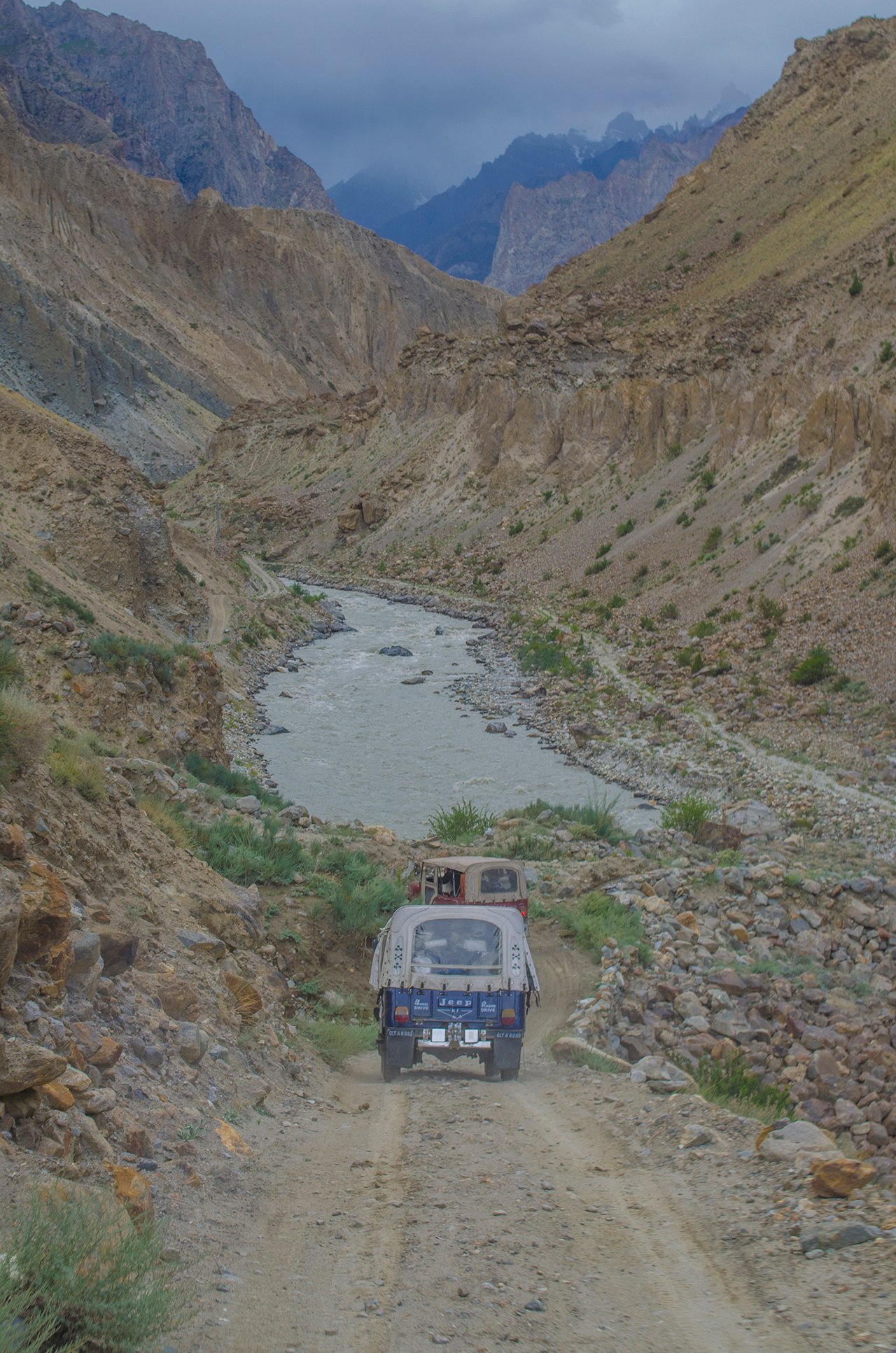
From Khaplu, the road to Hushe leads into serious trekking country — the approaches to Masherbrum and the Gondogoro La from the Hushe side. Hushe is a village stay, not a day trip, and treks here need a local guide and porter arrangements made in Khaplu or Skardu. Do not attempt the high routes without them.
The Siachen road viewpoint (know the limit)
The road east from Khaplu heads towards the Siachen region. Civilian travel stops well before any restricted area; do not plan an itinerary that assumes access beyond the permitted points, and ask locally where the current limit is. The valley itself is the destination, not the border.
Where to stay and eat
Khaplu Palace is the landmark stay; book ahead in season, as 21 rooms fill fast. Guesthouses in Khaplu town cover the budget end, and the PTDC-era lodges in the valley are simple but well placed. Food is Balti home cooking — bread, apricot products, local vegetables, trout where available. Stock up in Khaplu town before heading to Hushe; shops thin out fast.
Practical tips for Khaplu
- Transport: Jeep from Skardu is the standard; the Shyok road is scenic but long, so start early and do not plan to return the same day unless you must.
- Cash and connectivity: Carry rupees from Skardu — ATMs in Khaplu are not something to rely on — and expect patchy mobile signal beyond town.
- Altitude: At about 2,600 m, Khaplu is higher than Skardu town. The same easy-first-day rule applies, especially if you have just flown in.
- Combine with Skardu: Khaplu works best as the second half of a Skardu trip — town sights first, then two slow days here. See the companion Skardu guide, and the site’s packing advice before you travel: What to Pack for Northern Pakistan.
- Visas: Khaplu town and the open valley need no special permit for most foreign visitors; restricted border areas are the exception. Current position: Pakistan Tourist Visa Guide.
Frequently Asked Questions
How do I get to Khaplu from Skardu?
By road east along the Shyok River — a scenic jeep journey of several hours. There is no airport in Khaplu, and the road is the only way in. Start early and plan at least one night; a same-day return is a very long day.
Is Khaplu Palace a hotel or a museum?
Both. The restored 1840 palace houses a Serena heritage hotel of about 21 rooms and a museum of Balti history and culture in the main building. Day visitors can see the museum and terraces; guests get the full residence experience.
How many days do I need in Khaplu?
Two days for the palace, town and valley walks. Add days for Hushe Valley or any trekking, which needs separate planning, guides and porters arranged locally.
When is the best time to visit Khaplu?
May to October, when the road is reliable and the valley is green. Winter brings snow and very limited services, and the higher routes close.
Is Khaplu better than Skardu?
It is not better — it is different. Skardu is the hub with the airport, forts and lakes; Khaplu is quieter, greener and slower. Most good Baltistan trips include both, with Skardu first and Khaplu as the exhale.
Last updated: 25 October 2026