
You’re packing for a beach trip. You grab a bottle of liquid sunscreen. Then you remember you have a sunscreen stick somewhere in your bathroom drawer.
Now you’re standing there wondering which one to throw in your bag.
This is more complicated than it should be. Both protect your skin. Both work fine. But one might actually be better for your specific trip. And you’re probably going to make the wrong choice if you just guess.
I’ve been to beaches everywhere. Caribbean, Hawaii, California coast, international trips. I’ve used both sunscreen sticks and liquid versions. I’ve watched them melt in my bag, dry out on my face, and disappoint me in ways I didn’t expect.
Here’s what I’ve learned. The answer isn’t as simple as “sunscreen stick is better” or “liquid sunscreen wins.” It depends on your actual situation. Your skin type. Your travel style. How much time you’re spending in the water. Whether you’re hiking or sitting on the beach.
Let me break down the real differences and help you pick the right one for your trip.
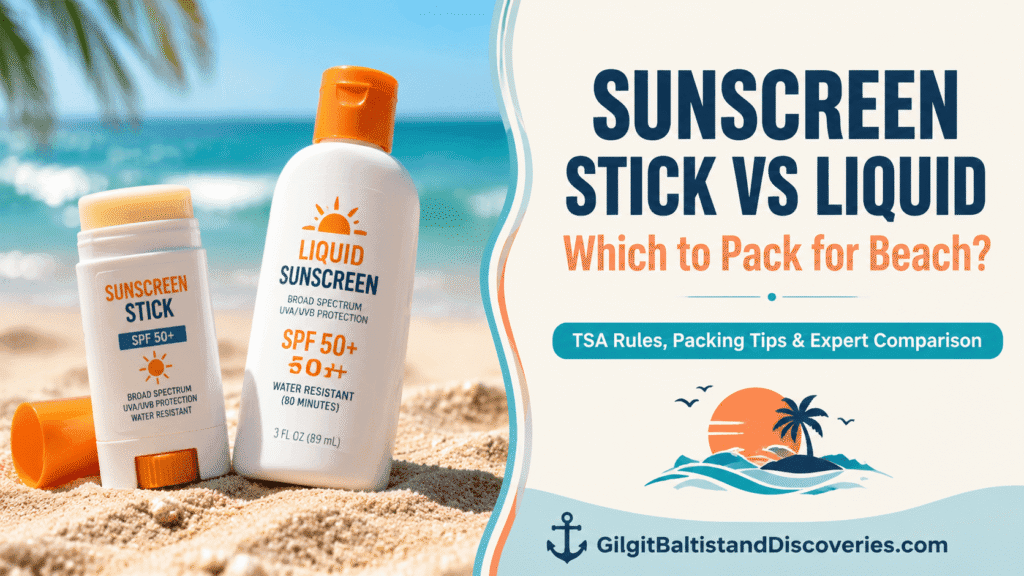
What’s Actually Different Between Them
Before we get into which is better, let’s understand what you’re actually buying.
Sunscreen Sticks: How They Work
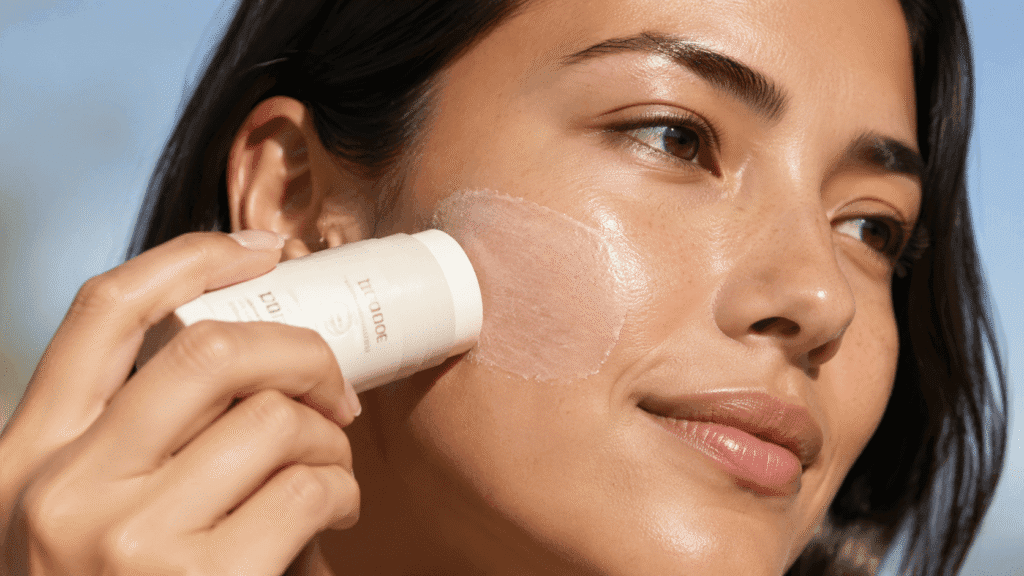
Sunscreen sticks are solid products in a tube format. Think of it like a solid deodorant. You twist it up and apply it directly to your skin.
The formula is usually a blend of waxes, oils, and sunscreen ingredients. The waxes keep it solid at room temperature. The oils help it spread and sink into skin. The sunscreen ingredients (either mineral or chemical) do the actual UV protection.
When you apply it, the waxes melt slightly from your body heat. That’s what lets it spread and blend into skin. It works best when you rub it in a bit rather than just swiping it on and leaving it.
Liquid Sunscreen: The Standard Format
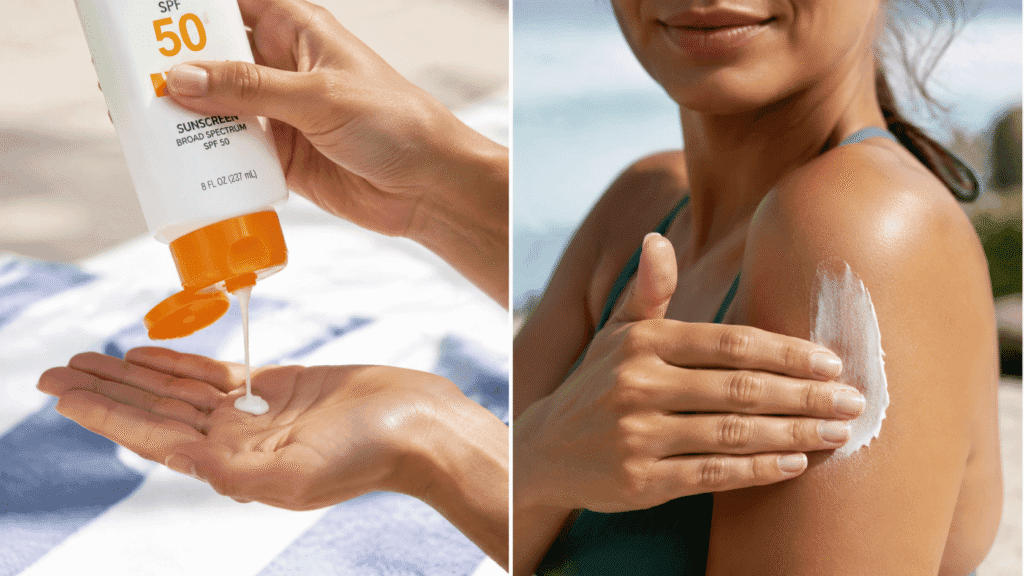
Liquid sunscreen is what you’re used to. It’s a lotion or spray in a bottle. You squeeze it out (or spray it) and rub it on your skin.
The formula is sunscreen ingredients mixed with water, oils, and other ingredients that keep it liquid. Some liquids are thicker (lotions). Some are thinner (sprays).
Liquid sunscreen spreads easily. It doesn’t require as much rubbing to cover your skin. It blends seamlessly. Most people find it easier to apply overall.
The Real Difference in Protection
Here’s the thing that matters most: if you use either one correctly, they protect your skin equally.
Both can be SPF 50 or higher. Both can be reef-safe. Both block UVA and UVB rays effectively. The sunscreen ingredient doing the work is basically the same.
The difference isn’t in protection. It’s in practical stuff. How they feel. How they work in certain situations. How long they last. Whether they stay put or melt away.
Sunscreen Stick: The Pros and Cons
Why Sunscreen Sticks Are Actually Great
They don’t spill in your luggage.
Seriously. This is huge. A sunscreen stick is solid. It’s not going to leak all over your clothes no matter what happens to your bag. You don’t need to wrap it up or put it in a special bag. Just throw it in and move on.
They’re portable.
A stick takes up minimal space. It weighs almost nothing. You can literally throw it in your beach bag without thinking about it. Some people keep one in their car for emergencies.
They apply fast.
No squeezing. No spreading lotion all over your hands first. You just pick it up and swipe it on. If you’re in a hurry or your hands are wet, a stick is easier.
You use less product.
With liquid sunscreen, you squeeze out way more than you need. Then you’re rubbing excess onto your skin and wasting product. Sticks are more controlled. You get what you need and stop.
They work for touch-ups.
During the day when you need to reapply, a stick is convenient. You don’t need your hands super clean. You don’t need water. Just swipe it on over your existing sunscreen.
Where Sunscreen Sticks Fall Short
They can feel waxy.
Some sticks leave a slight waxy residue on your skin. For most people it’s not a big deal. But if you hate that feeling, you’ll notice it. It feels different from liquid sunscreen’s smooth finish.
They don’t cover as evenly sometimes.
This depends on the formula. But some sticks require more rubbing to blend in and cover completely. You have to actually work it in rather than just spreading lotion around.
They can be harder to find for your face.
Many sunscreen sticks are marketed for lips or for body. Face-specific sticks exist but are fewer options than face sunscreens in liquid form.
They melt faster in extreme heat.
If you’re in intense tropical sun and your bag is getting roasted, a stick can start to get mushy faster than liquid. Not ideal but manageable.
Liquid Sunscreen: The Pros and Cons
Why Liquid Sunscreen Is Still Popular
It spreads easily.
This is why most people use it. You squeeze it out. You rub it on. It blends immediately. Minimal effort. This matters when you’re trying to cover your whole body quickly.
It works on wet skin better.
If you just got out of the water and your skin is wet, liquid sunscreen actually works okay. Sticks struggle more with wet skin.
More options exist.
Face sunscreens, body sunscreens, spray sunscreens, tinted sunscreens. The liquid format has way more variety. If you need something specific, liquid probably has it.
It feels lighter.
Many people prefer the feeling of liquid sunscreen on their skin. It’s less heavy. It doesn’t leave that slight waxy feeling. If you care about how your skin feels, liquid might win.
Easier for full-body coverage.
Trying to apply sunscreen stick to your back? Good luck. Liquid sunscreen is way easier for getting everywhere on your body. This matters for beach trips where you’re exposing a lot of skin.
Where Liquid Sunscreen Disappoints
It leaks.
This is the number one problem. Bottles get squeezed in luggage. Caps pop off. Sunscreen gets everywhere. You open your bag and your favorite shirt is covered in sunscreen.
You need a container system.
The TSA liquid limit means you need to pack it in a quart bag in carry-on. In checked luggage it’s fine but there’s still risk. More to think about when packing.
It evaporates faster.
Once you apply liquid sunscreen, it starts evaporating. Especially in wind or heat. You need to reapply more frequently.
It’s messy.
Your hands get slippery. You’re touching sunscreen. Then you’re touching your face, your towel, everything. Sticky and annoying.
Bottles take up space and weight.
A full-size sunscreen bottle is bulkier than you think. And it’s heavy if you’re trying to pack light.
Sunscreen Stick vs Liquid for Beach Travel Specifically
Now we get to the real question. You’re going to the beach. Which should you bring?
If You’re Flying to the Beach
Bring a sunscreen stick for your carry-on.
Here’s why. You can’t bring a full bottle of liquid sunscreen in carry-on (TSA liquid rules). You could bring a small travel-size bottle in a quart bag but that’s annoying.
A sunscreen stick bypasses this entire problem. Put it in your carry-on. No restrictions. No quart bag. No thinking about it.
You could also pack liquid sunscreen in your checked bag since it’s not subject to the liquid limit there. But if your bag gets delayed, you’re stuck without sunscreen on day one.
A stick in your carry-on solves everything.
If You’re Driving to the Beach
Either works. But honestly? I’d still bring a stick.
You can throw it in your beach bag. You can leave it in your car. You can keep it in your pocket. Liquid sunscreen creates logistics. Where’s the bottle? Is it secure? Will it leak?
Sunscreen stick is just… there. No stress.
If You’re Spending All Day at the Beach
This matters. How much time are you spending in the water versus on the sand?
In the water constantly: Liquid sunscreen. It reapplies better over wet skin. After you get out of the water, liquid sunscreen applies more evenly.
Mostly on the sand: Sunscreen stick. You can reapply during the day without dealing with mess. Your hands don’t get all slippery. Everything stays cleaner.
Mix of both: Bring both if you can. Use stick for quick reapplication during the day. Use liquid for full-body application after swimming.
If You Have Sensitive Skin
Sunscreen stick, probably.
Here’s why. Most sunscreen sticks have fewer ingredients. Less water. Less emulsifiers. Fewer preservatives needed. If your skin is reactive, a simpler formula is usually better.
Also, you’re applying a stick directly to your skin versus rubbing lotion all over your face. Some people find sticks less irritating overall.
If You’re Packing Minimalist
Sunscreen stick wins easily.
A stick takes the space of a lipstick. Liquid sunscreen takes the space of a full bottle. If you’re trying to pack light, this is an obvious choice.
The Actual Performance Comparison
Let’s talk about what matters most: does it actually protect your skin.
UV Protection: Identical
Both sunscreen sticks and liquid sunscreens can be SPF 50 or higher. Both can offer UVA and UVB protection. Both can be reef-safe.
If they’re the same SPF and formula, they protect equally. The format doesn’t change the protection.
Water Resistance: Basically the Same
Both can be water-resistant to 40 minutes or 80 minutes. Format doesn’t matter here either.
The difference is that liquid sunscreen spreads easier initially. But once it’s on your skin, a stick and liquid both stay on equally well.
Reapplication Ease: Stick Wins
This is where things differ. Sunscreen stick is easier to reapply during the day.
You’re sitting on the beach. Sun’s beating down. You need sunscreen again. Do you want to:
A) Dig through your beach bag for a bottle, squeeze some out, get your hands messy, and apply it?
B) Grab a stick, swipe it on, done?
Stick is faster. Stick is cleaner. Stick is less annoying.
Coverage Evenness: Liquid Wins
When applying the first time, liquid sunscreen spreads and covers more evenly.
Sunscreen stick requires a bit of rubbing to blend and get full coverage. If you don’t blend it well, you can get streaks or uneven coverage.
For thorough coverage, liquid is slightly better. But this matters less if you’re actually careful with application.
Longevity: Stick Lasts Longer
A sunscreen stick lasts longer because you’re not wasting product. With liquid, you squeeze out more than you need. Over a week at the beach, this adds up.
You’ll probably go through a liquid bottle faster than you’d go through a stick of equivalent amount.
Different Beach Scenarios
Beach Day #1: Relaxing on the Sand
Bring: Sunscreen stick
You’re sitting under an umbrella mostly. You’re getting up occasionally. You want sunscreen but you don’t want to deal with a messy bottle.
Sunscreen stick is perfect. Reapply every couple hours without any mess. Keep your hands clean. Enjoy your day.
Beach Day #2: Water Sports or Swimming
Bring: Liquid sunscreen
You’re in the water constantly. Every time you get out, you need to reapply. Liquid sunscreen is easier to apply over wet skin.
Also, if you’re active, you might need sunscreen on your entire body frequently. Liquid covers faster.
A stick could work but you’ll feel the friction of the stick on wet skin. Not as pleasant.
Beach Day #3: Day Trip (In and Out)
Bring: Sunscreen stick
You’re going to a beach for a few hours. You need something quick and portable. A stick is perfect.
Apply once before you go. Reapply once during your time there. Done. No bottle to carry around.
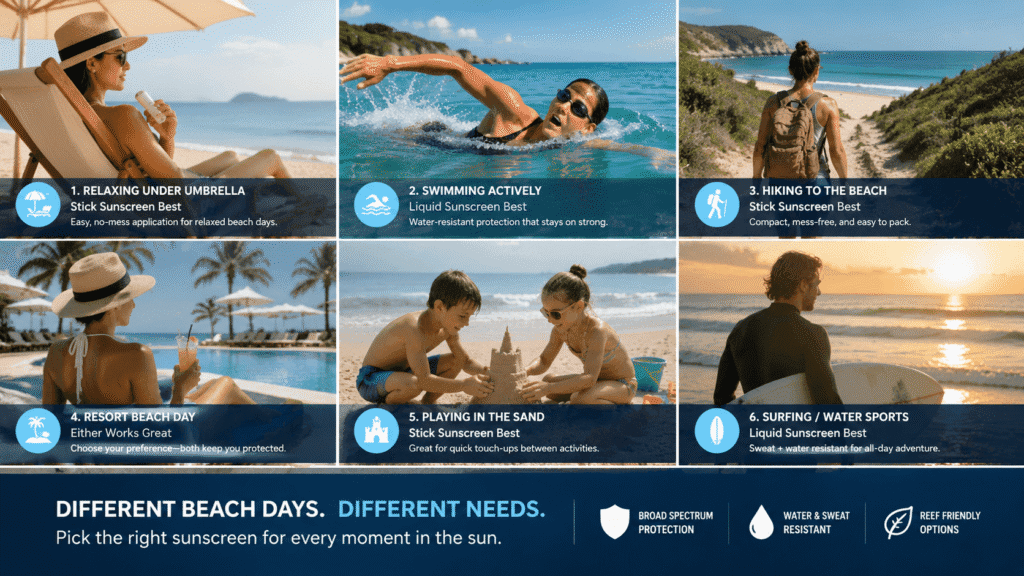
Beach Day #4: Hiking to a Secluded Beach
Bring: Sunscreen stick
You’re walking through trails to get to the beach. You don’t want to carry a heavy water bottle of sunscreen. A stick is light and takes no space.
Apply it before you leave. Reapply if needed. Easy.
Beach Day #5: Resort Beach with Activities
Bring: Both or mostly liquid
You’re doing various activities all day. Some water time. Some beach time. Some activities away from the beach.
Liquid sunscreen is more versatile here. You can apply to your whole body easily. You can reapply quickly between activities.
The Money Question: Which Costs More
Sunscreen sticks and liquid sunscreen have different price structures.
Stick Sunscreen
Usually $15-35 per stick. One stick lasts maybe 2-3 weeks if you’re using it daily on your face and body.
For a week-long beach trip, one stick is plenty. Cost: one stick.
Liquid Sunscreen
Usually $10-30 per bottle. Bottles are often 4-8 ounces. You use more product. A bottle might last 1-2 weeks of regular use.
For a week-long beach trip, you might go through half a bottle or more. Cost: half of one bottle or more.
Neither is significantly cheaper for a single trip. But if you’re a frequent beach person, sticks might save money over time because you use less product.
Real Talk: The Hybrid Approach
Here’s what smart beach travelers actually do.
Bring a sunscreen stick for daily use and touch-ups. It’s convenient. It’s portable. It handles most situations.
Also pack a smaller bottle of liquid sunscreen for full-body application after swimming. Or for applying to your back. Or for situations where you need coverage fast.
This covers every scenario. You’re not choosing one or the other. You’re using the right tool for each situation.
Total weight and space: still minimal. Total hassle: minimal. Total protection: maximum.
Questions People Actually Ask
Can I use a sunscreen stick on my face if it’s not marketed for faces?
Technically yes. But body sunscreen sticks might be thicker or have different ingredients than face sunscreen sticks. If it’s not causing irritation, it’s fine. But face-specific formulas are gentler and blend better on face skin
Do sunscreen sticks work on wet skin?
They work better if your skin is just slightly damp. If you’re dripping wet, it’s tougher. Liquid sunscreen works better on very wet skin. Let your skin dry a bit, then apply the stick.
Will my sunscreen stick melt in my beach bag?
Depends on how hot it gets. In normal summer heat, probably not completely. But it might get softer or start to melt around the edges. Keep it in a pocket or under your towel in shade to minimize melting.
Is spray sunscreen better than stick or liquid?
Spray is convenient but it’s also a liquid (or aerosolol). Same TSA issues as liquid in carry-on. Also, spray doesn’t always provide as thorough coverage as stick or liquid if you’re not careful. All three work. Choose based on your preference.
Can I mix sunscreen stick and liquid on the same day?
Yes. Totally fine. Apply stick in the morning. Reapply with liquid after swimming. Mix and match. Your skin doesn’t care. It just cares about the UV protection.
Which one is better for sensitive skin?
Generally, sunscreen sticks because they have fewer ingredients. But some sticks use irritating ingredients. Some liquids are specifically formulated for sensitive skin and work great. Check the ingredient list regardless of format. Understanding health concerns in Thailand can also help you choose the right skincare products for tropical weather.
The Real Answer
You want to know which one to bring.
If you’re flying: Sunscreen stick. No luggage complications. No TSA issues.
If you’re primarily on the beach relaxing: Sunscreen stick. Easier daily reapplication.
If you’re swimming constantly: Liquid sunscreen. Better for wet skin reapplication.
If you want the best of both: Bring a stick and a small liquid bottle. Use whichever works best for each situation.
Honestly? Most people overthink this. Both protect your skin. Both work fine. Pick the one that feels less annoying to you and move on.
But if I had to choose one for a typical beach vacation, I’m bringing a sunscreen stick. It solves most of the logistical problems. It works for most situations. It doesn’t leak in my luggage. That matters more than which format technically spreads slightly more evenly.
Your skin will be protected either way. Pick the one that’s less of a hassle for you.
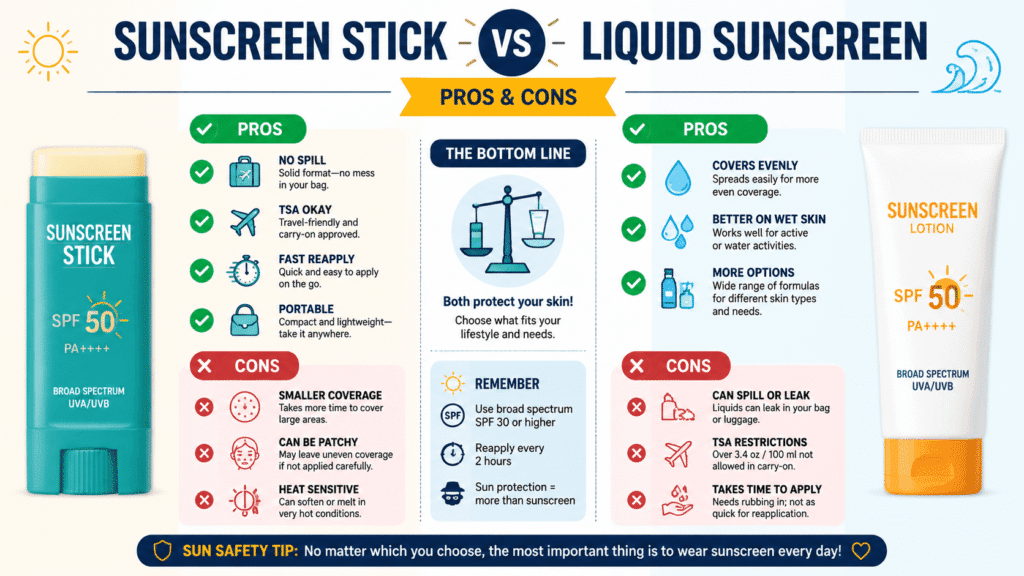
Sunscreen Stick vs Liquid Sunscreen for Beach Travel: Quick Comparison
| Factor | Sunscreen Stick | Liquid Sunscreen |
| Packing | No spills, minimal space | Potential leaks, bigger bottle |
| TSA Friendly | Yes, no restrictions | No for carry-on (liquid rules) |
| Application Speed | Fast, direct application | Slightly slower, need to spread |
| Coverage Evenness | Requires slight rubbing | Spreads evenly easily |
| Reapplication During Day | Clean, mess-free | Hands get sticky |
| Water Resistance | Same as liquid | Same as stick |
| Cost Per Use | Less product wasted | More product wasted |
| Variety Available | Fewer options | More options |
| Sensitive Skin | Usually better | Depends on formula |
| Wet Skin Application | Harder | Works better |
Sunscreen stick and liquid sunscreen both protect your skin equally when used correctly. The choice comes down to practical stuff: how you pack, where you’re going, and what annoys you less.
For most beach trips, sunscreen stick wins on convenience. For water-heavy vacations, liquid sunscreen has advantages. For people who want options, bring both.
Don’t overthink this. Pick one. Use it consistently. Don’t get sunburned. That’s what actually matters.