Table of Contents
ToggleEssential Travel Gear for Gilgit-Baltistan
Gilgit-Baltistan is one of the most dramatic places on earth. Within a single trip you might walk past glacier-fed rivers, stand beside towering peaks of the Karakoram and Himalayan ranges, and drive winding roads above deep valleys. The landscape is breathtaking, but it is also unpredictable. A sunny morning in Skardu can turn into a cold, windy afternoon, and a short hike in Hunza can become a longer trek than expected. Packing the right gear makes the difference between a memorable journey and an uncomfortable one.
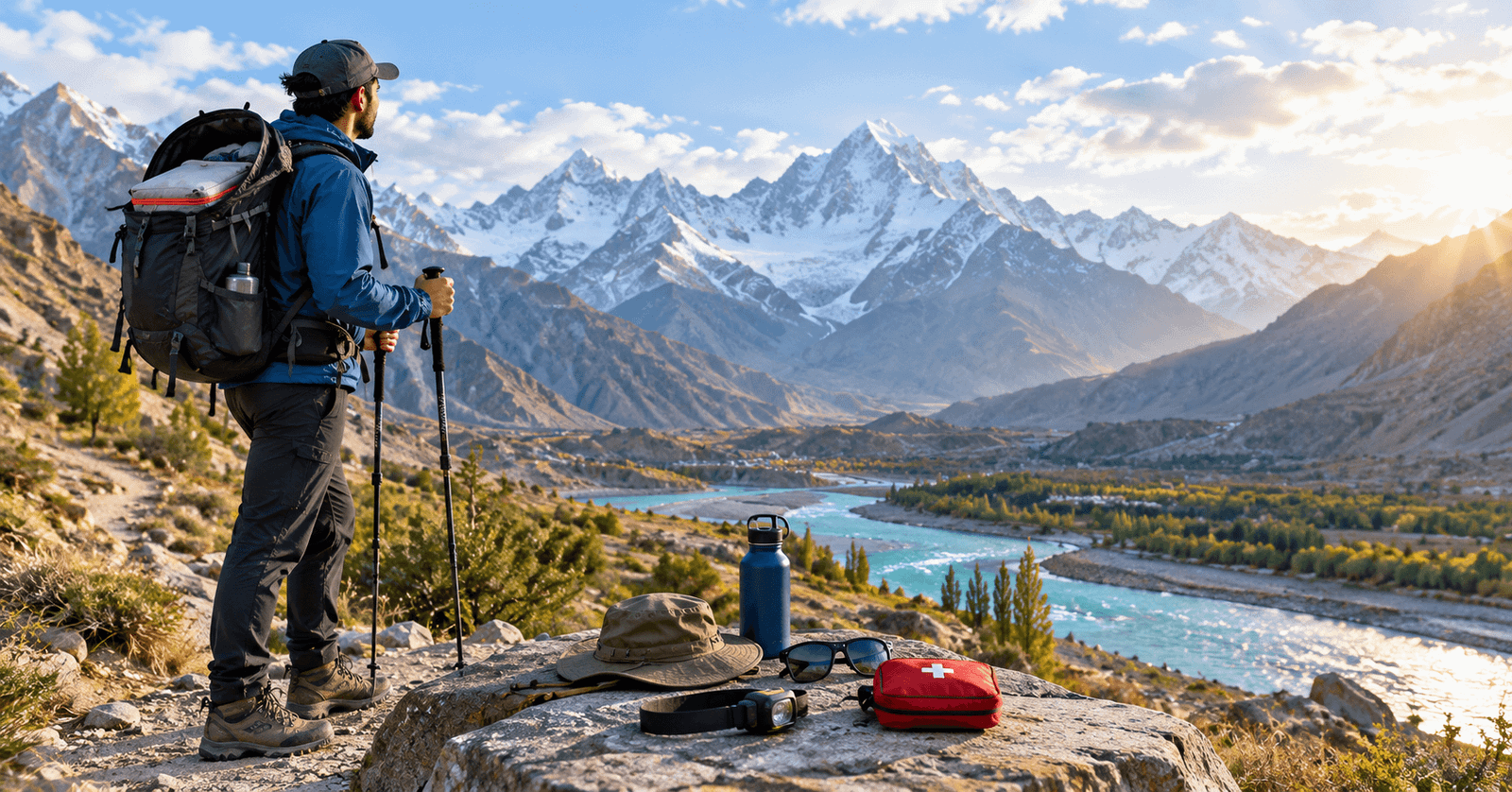
Start with the region itself. Many routes in Gilgit-Baltistan involve steep, rocky trails, loose gravel, and long descents. Trekking poles are one of the most useful items you can carry. They reduce strain on your knees during downhill sections and help you keep your balance on uneven ground, especially at higher altitudes where your body is working harder. Choose collapsible poles that fit easily in your bag. Waterproof bags are equally important. Mountain weather can change within minutes, and river crossings or sudden rain can soak your belongings. Dry bags or heavy-duty zip-lock bags will protect your phone, passport, cash, and electronics. Keep important documents in a separate waterproof pouch.
Clothing deserves special attention because the temperature can shift dramatically through the day. Pack in layers rather than bulky single items. A moisture-wicking base layer keeps sweat away from your skin, a fleece or light down jacket provides warmth, and a windproof, waterproof outer shell handles rain and wind. Bring a warm hat, gloves, and a scarf for cold mornings and high-altitude evenings, even in summer. Sturdy, broken-in hiking boots with good grip are essential, since sandals or worn sneakers can make rocky trails dangerous. Quick-drying trousers and a few long-sleeved shirts also offer sun protection and suit the conservative dress customs common across the region.
If you plan to go hiking or trekking, a few additional items will make the experience safer and more comfortable:
- A daypack of around 20 to 30 liters for water, snacks, and extra layers
- At least two liters of water capacity, plus a water filter or purification tablets
- A headlamp with spare batteries, since electricity can be unreliable in remote villages
- A sun hat, sunglasses with UV protection, and high-SPF sunscreen, because the sun is strong at altitude
- A basic first-aid kit with blister plasters, pain relief, rehydration salts, and any personal medication
- A lightweight sleeping bag liner or warm sleeping bag if you plan to stay in guesthouses or camps at higher elevations
Finally, do not forget the small things that often get overlooked. A portable power bank helps keep your phone charged during long days without reliable outlets. A reusable bottle and a microfiber towel are practical and easy to carry. A pair of flip-flops or lightweight slippers is handy for guesthouse showers and resting your feet after a long day on the trail.
With the right gear, Gilgit-Baltistan becomes far more enjoyable. You can focus on the mountains, the rivers, and the warm hospitality of the people rather than worrying about the cold, the rain, or a sore ankle on the trail.
Clothing Essentials for Various Weather Conditions
Weather in Gilgit-Baltistan rarely stays the same for long. A morning in Skardu may start with crisp, near-freezing air, turn warm and bright by noon, and cool quickly once the sun drops behind the peaks. In Hunza and Nagar, valley floors can feel mild while higher viewpoints stay windy and cold. Because temperatures swing so widely, the smartest way to dress is in layers, combined with fabrics and accessories that handle sun, wind, and rain.
Layering for temperature changes
Layering gives you control. Instead of carrying one heavy coat, wear several lighter pieces that you can add or remove as the day changes. A base layer sits closest to your skin and should be made from moisture-wicking synthetic fabric or merino wool. These materials pull sweat away from your body so you do not feel chilled after a climb. Over the base, add a mid layer such as a fleece pullover or a light down jacket. This layer traps body heat and is the piece you will reach for most in the early morning and at high-altitude camps. The outer layer is a windproof and water-resistant shell. It blocks cold winds that can sweep across the mountain passes and protects you when clouds bring sudden rain or sleet.
Pay attention to the lower body too. Quick-drying trousers or hiking pants made from nylon or polyester blends dry fast after a river crossing or a wet trail. Avoid heavy cotton jeans, which stay damp and cold for hours once they get wet. Carry a pair of warm thermal leggings for chilly nights in guesthouses or camps.
Materials that work on the trail
Fabric choice matters as much as the number of layers. Moisture-wicking fabrics such as polyester, nylon, and merino wool keep you comfortable during steep uphill walks, when your body temperature can rise quickly. Cotton, by contrast, absorbs sweat and loses its warmth, which is risky in the mountains. Choose breathable materials for your shirts and socks, and bring at least two pairs of hiking socks so you can change into a dry pair each day. Blisters are one of the most common problems on trekking routes, so thick, well-fitting socks are worth the space in your bag.
Protection from the sun
The sun is much stronger at high altitude than most visitors expect, and the thin mountain air filters less of its ultraviolet light. Even on a cloudy day, your skin can burn quickly, especially on the face, neck, and the tops of the ears. A wide-brimmed hat or a cap with a neck flap offers good coverage on the trail. Sunglasses with UV protection guard your eyes against glare from snow and rock. Apply a broad-spectrum sunscreen with at least SPF 30 every morning and reapply it after sweating or swimming in glacial streams. A lightweight long-sleeved shirt with sun protection also reduces the amount of sunscreen you need and helps you stay cool in strong sunlight.
Cold-weather accessories
Many travelers are surprised by how cold it can be at night, even in summer. Pack a warm beanie, a pair of gloves that still allow you to handle a camera or map, and a light scarf or buff that can be pulled over your face against wind and dust. These small items add a surprising amount of warmth and comfort without taking up much space.
Footwear for changing conditions
Your shoes should match the terrain as well as the weather. Waterproof hiking boots with good grip are the best choice for rocky trails, wet stones, and muddy paths after rain. For days spent walking through villages or along flat roads, a pair of breathable trail shoes is more comfortable. Pack lightweight slippers or sandals for the guesthouse, so your boots can dry out overnight.
A well-chosen wardrobe will keep you warm when the wind picks up, cool when the sun is strong, and dry when the clouds open. With layers, quick-drying fabrics, and strong sun protection, you can enjoy the stunning scenery of Gilgit-Baltistan in any weather.
Health and Safety Items to Pack
A trip to Gilgit-Baltistan is rewarding, but the region is remote and far from large hospitals. Clinics in towns like Gilgit and Skardu are limited, and in villages along the Karakoram Highway or near trekking routes, care may be hours away. Packing a well-stocked health kit and knowing how to protect yourself from common problems will help you handle small issues before they become serious ones.
A first-aid kit built for the region
Start with a basic first-aid kit and adapt it to the kinds of problems travelers most often face in the mountains. Include adhesive bandages, blister plasters or moleskin, antiseptic wipes, sterile gauze, medical tape, and a small pair of tweezers. Blisters are very common on rocky trails, so a few blister plasters are worth more than many other items. Add an elastic bandage for sprained ankles, which are easy to get on uneven ground, and a thermometer to check for fever.
Pack pain relief for headaches, muscle aches, and general discomfort. Ibuprofen or paracetamol (acetaminophen) are common choices. Antihistamines can help with allergic reactions, and anti-diarrheal tablets and oral rehydration salts are essential for stomach upsets, which can happen when food or water is unfamiliar. Dehydration is easy to miss at altitude, so rehydration salts are one of the most useful items in the kit. Keep any prescription medication in its original packaging with a copy of the prescription, and bring enough for your entire trip plus a few extra days in case your plans change.
Protecting yourself from water and food problems
Waterborne illness is one of the most common health problems for travelers in mountain areas. Glacial streams look clean, but they can carry bacteria and parasites. Never drink untreated water from rivers or taps unless you know it has been purified. Bring a water filter, purification tablets, or a UV water purifier. Boiling water also works if you have access to a stove. Carry at least two liters of treated water for each day on the trail, and refill your bottle at guesthouses where the water has been filtered or boiled.
Be careful with fresh food, especially salads, unpeeled fruit, and dishes that may have been washed in untreated water. Eat hot, freshly cooked meals when possible, and wash your hands with soap or use hand sanitizer before eating. Pack a small bottle of sanitizer, since soap and clean water are not always available on the trail.
Preventing and managing altitude sickness
Altitude sickness can affect anyone who climbs quickly to higher elevations, regardless of fitness. Symptoms include headache, nausea, dizziness, loss of appetite, and difficulty sleeping. The best prevention is to ascend slowly, allow a rest day for every few hundred meters gained above about 3,000 meters, drink plenty of fluids, and avoid alcohol and heavy meals at high camps. Many travelers also use supplements or medication to help. Ginkgo biloba and some herbal products are popular, but their effectiveness is not well proven. Acetazolamide is a prescription medication that many doctors recommend to help the body adjust to altitude. Ibuprofen or paracetamol can ease a mild headache. Because medications have side effects and interactions, speak with a doctor before your trip to decide what is right for you. If symptoms worsen, especially with confusion, shortness of breath while resting, or loss of coordination, descend immediately and seek medical help.
Sun, insects, and personal care
The strong sun and dry air increase the risk of sunburn, dehydration, and dry skin. Pack lip balm with SPF, moisturizer, and high-SPF sunscreen. Insect repellent is useful in lower valleys and around guesthouses in warmer months. A small supply of tissues, hand wipes, and a face mask can also help in dusty villages and on crowded roads.
Keep important information close
Write down the phone numbers of your hotel or guide, your country’s embassy contact details, and the emergency number for the area. Store a digital copy of your insurance policy, which should cover high-altitude trekking and emergency evacuation if you plan to hike. Carry a card with your blood type, allergies, and any medical conditions, and keep your insurance and emergency contacts in a waterproof pouch with your passport.
Packing Tips for Efficient Travel
Packing for Gilgit-Baltistan can feel like a puzzle. You need warm layers for cold mornings, sun protection for bright afternoons, waterproof gear for sudden rain, and enough space for trekking supplies. Yet most travelers end up carrying more than they use. A smart packing strategy keeps your load light, your belongings organized, and your mind free to enjoy the mountains. The goal is not to pack less for its own sake, but to pack better.
Start with a tailored checklist
Before you open your suitcase, write a checklist designed for your specific trip. A checklist built for Gilgit-Baltistan will look different from one for a beach holiday or a city visit. Begin with the essentials you cannot replace easily, such as your passport, visas or permits, insurance documents, medication, and a copy of your itinerary. Then add the region-specific items: warm layers, a waterproof jacket, trekking poles if you are hiking, a water filter, and a first-aid kit. Finish with comfort and convenience items like a power bank, a headlamp, and a reusable bottle.
A tailored list has several benefits. It stops you from forgetting critical items at the last minute, especially when shops in remote towns are limited. It also helps you spot duplicates and unnecessary extras. Many travelers return home with unused items, which means they carried weight for no reason. Once you have a draft list, review it a few days before departure and cross out anything you can borrow, rent, or buy in Pakistan if needed.
Choose the right bag
A 40 to 50 liter backpack is a good size for most trips that combine town visits with light trekking. It is large enough for layers and gear but small enough to discourage overpacking. If you are staying mostly in hotels and traveling by road, a soft-sided suitcase or duffel bag can work well, though a backpack handles rough roads and uneven village paths more easily. Whichever you choose, look for a bag with compression straps and a rain cover.
Use packing cubes and organizers
Packing cubes are one of the simplest ways to save space and stay organized. Group your items by category, such as tops, bottoms, underwear, and electronics, and place each group in its own cube. Compress the soft items inside the cubes to remove air and reduce bulk. Cubes also make it easier to find things in a dark guesthouse room without emptying your entire bag. Use a small pouch for toiletries, another for chargers and cables, and a dry bag for anything that must stay dry. A separate pouch for important documents keeps them protected and easy to grab at checkpoints.
Roll, don’t fold
Rolling clothes tightly saves space and reduces wrinkles compared with folding. Roll your lightweight shirts, trousers, and thermal layers, then fit them snugly into your cubes or bag. Place heavier items such as jackets and boots near the back and bottom of the bag, close to your back, so the load feels balanced on your shoulders. Keep items you may need during the day, such as sunscreen, a water bottle, and a light jacket, in an outer pocket for quick access.
Pack for layers, not quantity
Many travelers over-pack because they fear unexpected weather. Instead of bringing several bulky sweaters, choose a few versatile pieces that work together. Three quick-drying tops, two pairs of trousers, one fleece, and one waterproof shell can cover most conditions. Pack one more set of clothes than the number of days you expect to be away, in case of rain, a muddy trail, or an unplanned stay. Laundry services are available in larger towns such as Gilgit and Skardu, so you do not need to bring a week’s supply for a long trip.
Keep the essentials within reach
Some items should never be buried deep in your luggage. Keep your passport, cash, phone, medication, and a basic first-aid kit in an easy-to-reach pocket or daypack. Carry a small bag with snacks, a water bottle, and a power bank for long drives, where you may not be able to stop for a while. This approach saves time at checkpoints and prevents frustration when you need something quickly.
Make the most of every inch
Small habits add up. Fill the gaps inside your shoes with socks or small items. Use your toiletry bag to hold chargers, cables, or a headlamp. Choose travel-sized containers for shampoo, sunscreen, and lotion, and refill them as needed. Avoid bringing single-use items you can replace locally, like extra toiletries or plastic bags. Before closing your bag, shake it gently and check that nothing has shifted or come loose.