Short Answer
Shigar Valley, a half-hour to an hour’s drive from Skardu along the Shigar River, is Baltistan in miniature: the restored Shigar Fort (now a Serena heritage hotel and museum), the still waters of Blind Lake (Jarba Zhou), apricot orchards, and the road that leads on to Askole — the last village before K2 Base Camp. Come May to October. One full day covers the valley; trekkers pass through on the way to the Baltoro.
Where Shigar sits — and why it matters
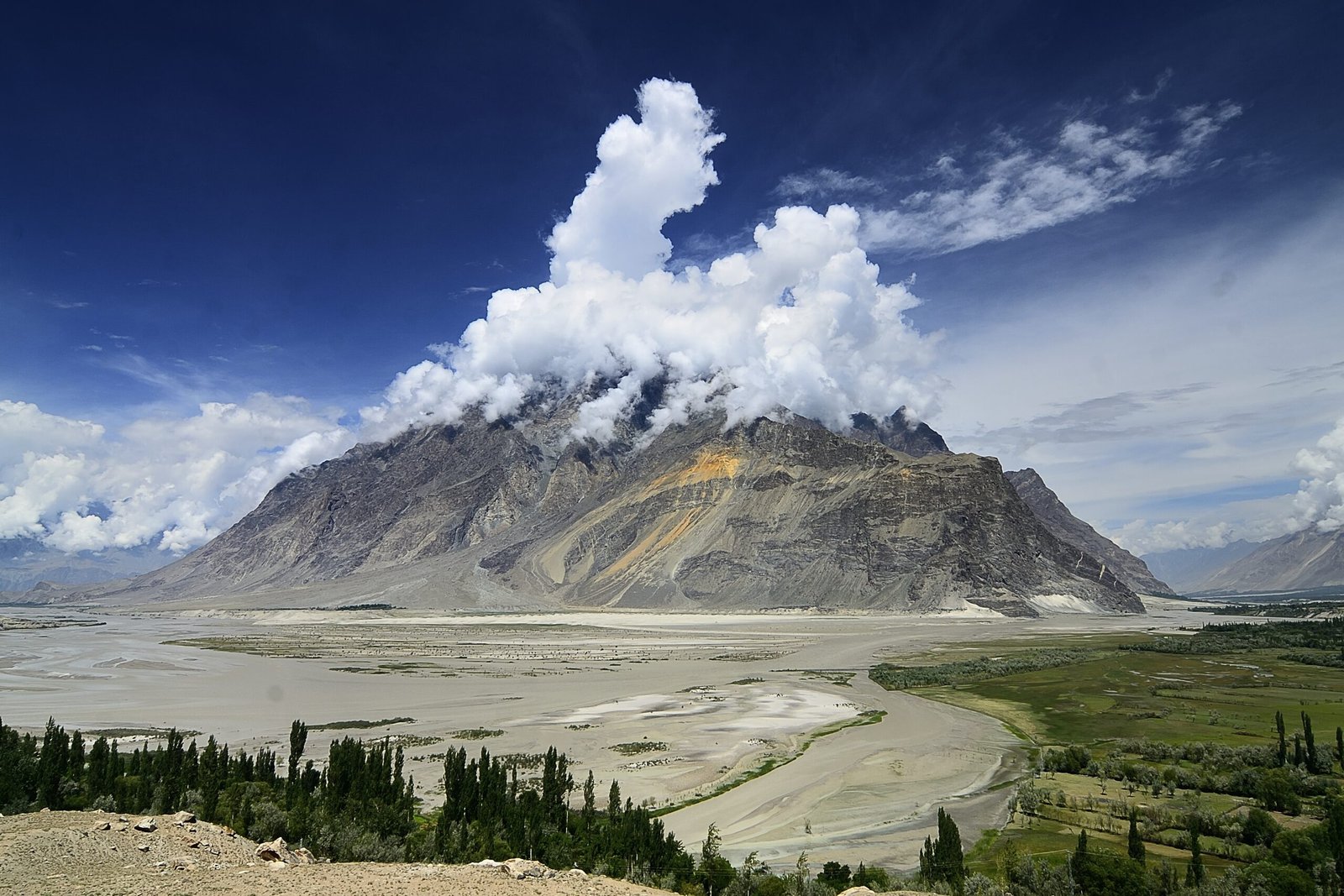
Shigar is the valley every K2 trekker passes through and almost no guide covers properly. The Shigar River joins the Indus at Skardu, and the valley runs north-east from there: Shigar town first, then a string of villages, then Askole, where the road ends and the Baltoro trek begins. That position gives the valley a double character — a gentle cultural valley at its lower end, and a serious expedition staging ground at its upper end.
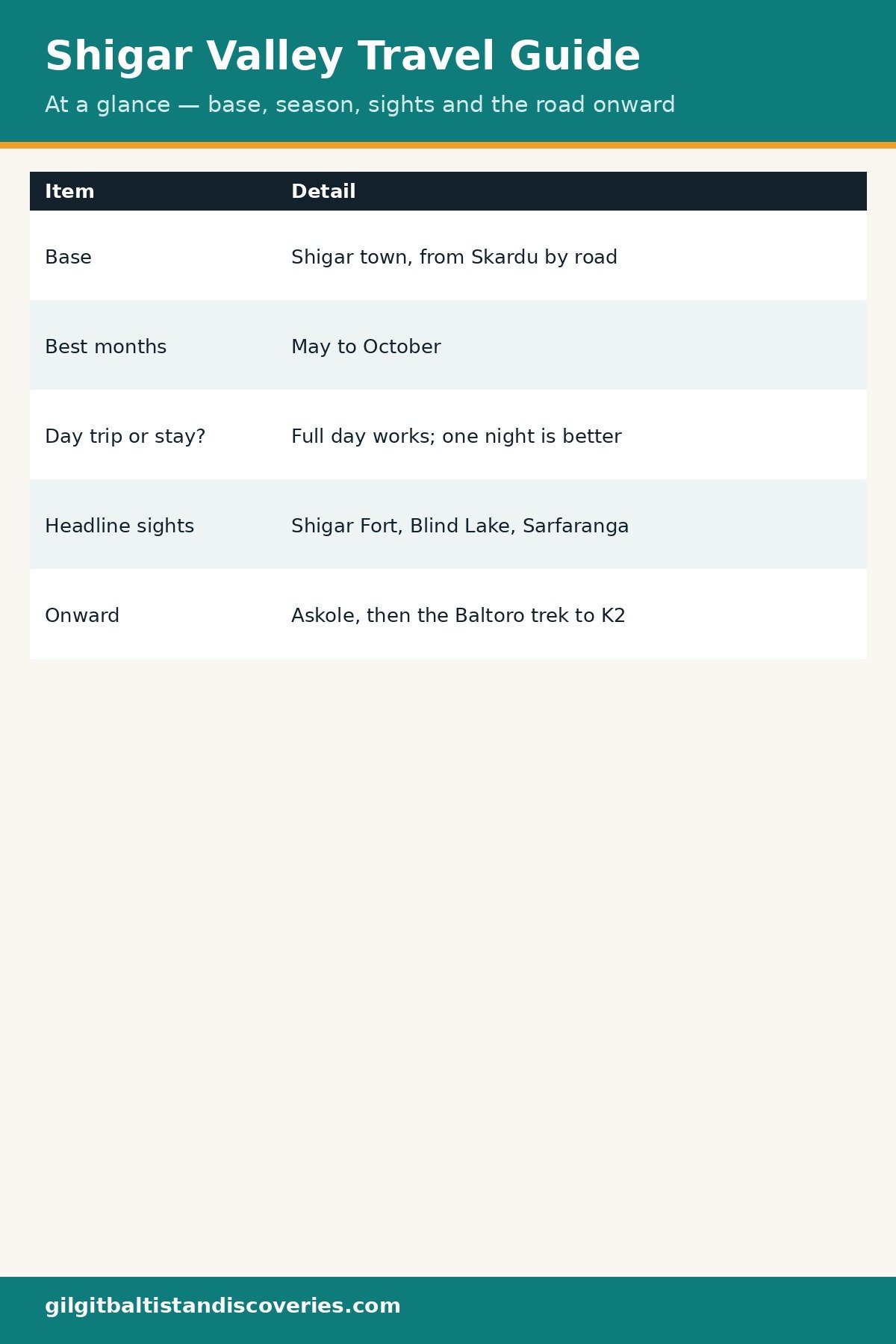
| Shigar at a glance | Detail |
|---|---|
| Base | Shigar town, reached from Skardu by road |
| Best months | May to October |
| Day trip or stay? | Full day from Skardu works; one night at the fort is better |
| Headline sights | Shigar Fort, Blind Lake, Sarfaranga desert en route |
| Onward | Askole, then the Baltoro Glacier trek to K2 Base Camp |
What to see in Shigar Valley
Shigar Fort
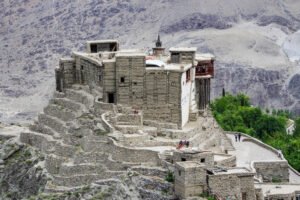
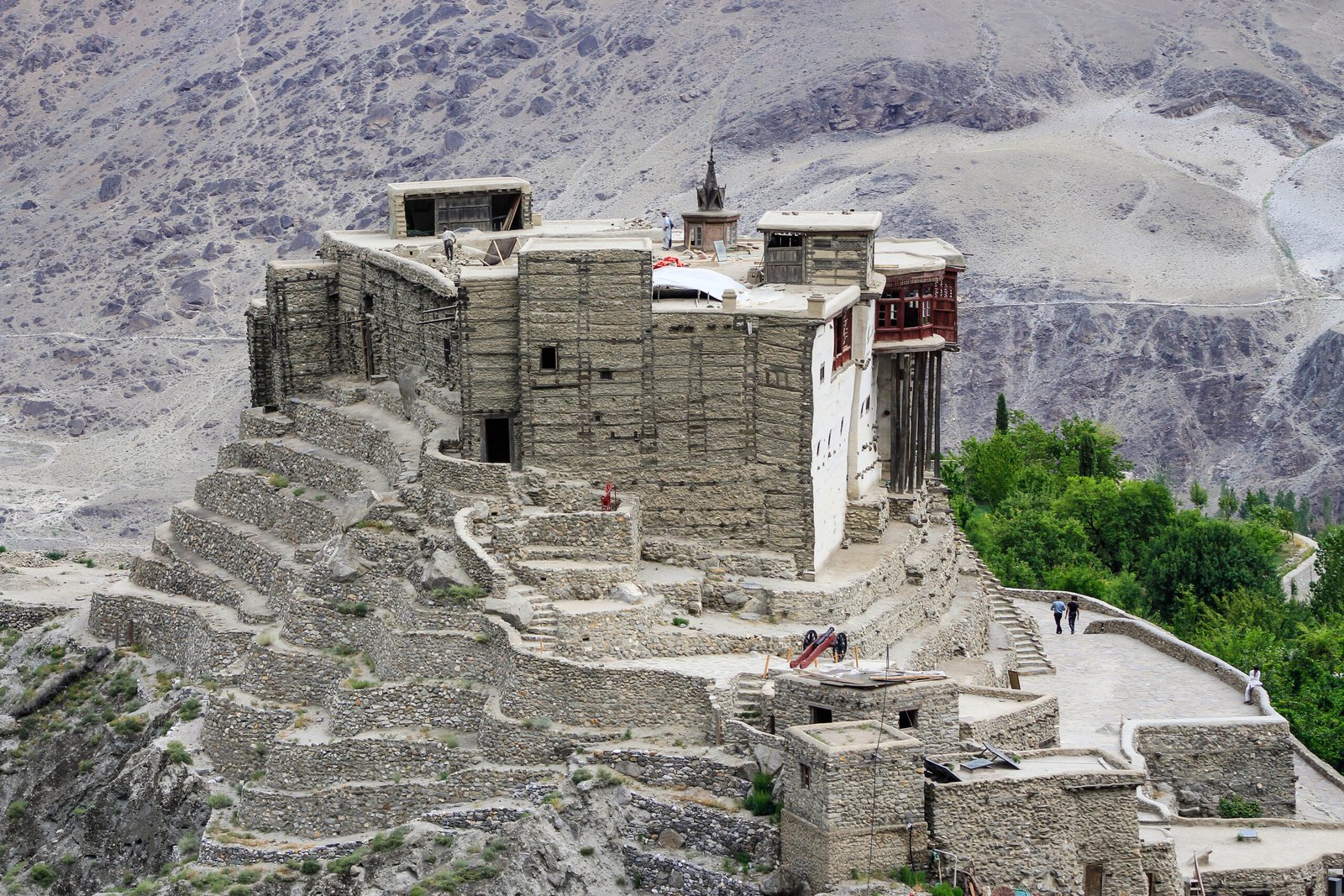
Shigar Fort is the valley’s centrepiece: a 17th-century royal residence of the Amacha dynasty, restored by the Aga Khan Trust for Culture and now operated as a Serena heritage hotel, with a museum of Balti life. Even if you are not staying, the fort’s carved wooden balconies, stonework and gardens are worth an unhurried hour. Staying a night is the better experience — the valley is quiet after the day-trippers leave, and dinner at the fort is the most comfortable meal in the valley.
Blind Lake (Jarba Zhou)
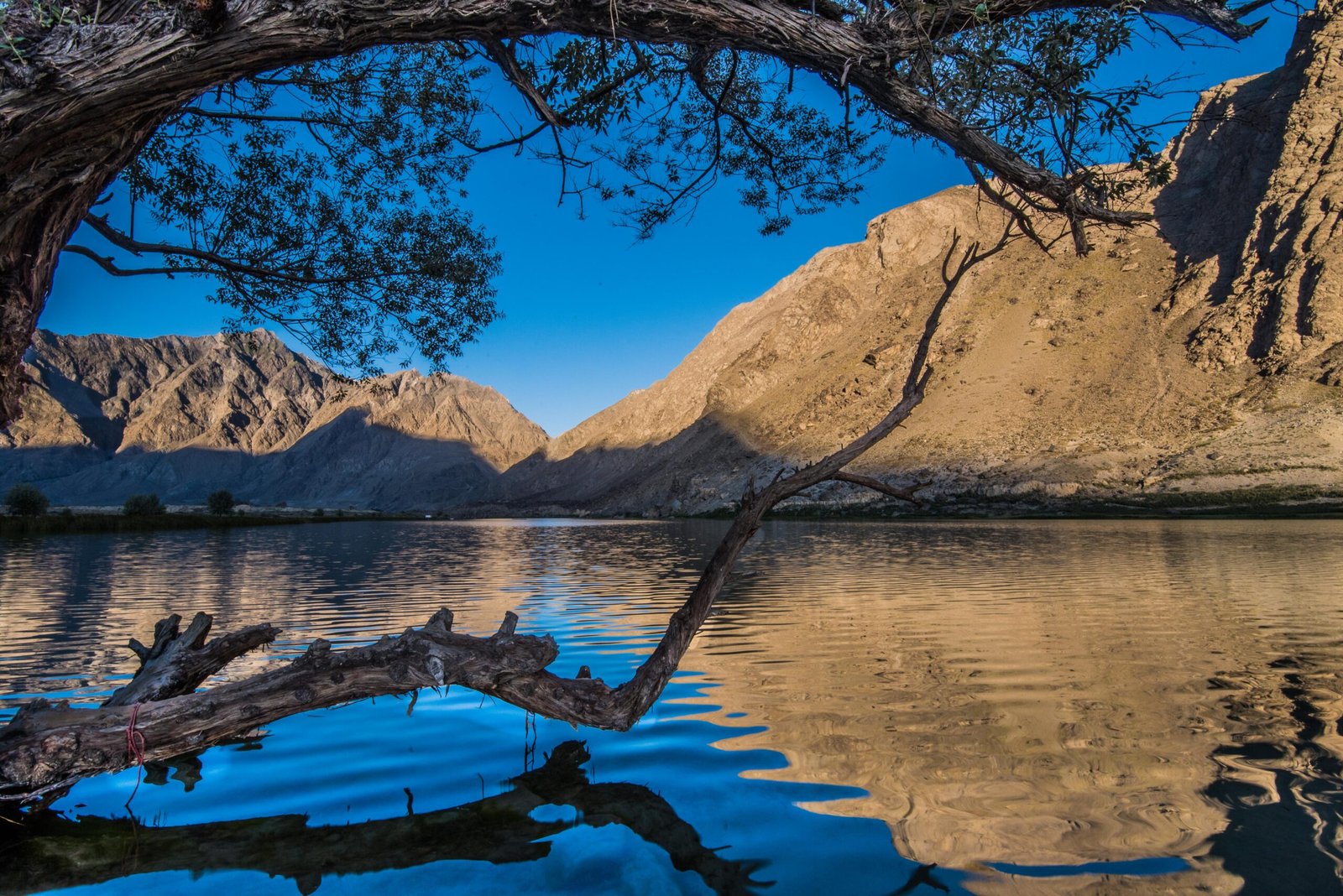
A short drive from Shigar town, Blind Lake is a small, still lake fed by springs, surrounded by mountains and orchards. Its local name, Jarba Zhou, refers to the “blind” lake with no visible outlet. It is a picnic-and-photography stop rather than a trek — go in the morning, when the water is calmest.
The valley villages and orchards
Between the fort and the lake, the valley floor is green with wheat, apricot and poplar — a contrast to the barren rock above. Walking a village lane here, with permission and a local guide, is the most ordinary and most memorable part of a Shigar day. Ask before photographing people; Balti hospitality is generous, but it is not a performance.
Sarfaranga cold desert (on the way)
The Skardu–Shigar road passes the Sarfaranga dunes, the larger cold-desert field near Skardu. If you have already done Katpana from Skardu town, treat Sarfaranga as a photo stop on the way, not a second desert expedition — the two are the same phenomenon, and the light matters more than the location.
Shigar as the road to K2
Askole: where the road ends
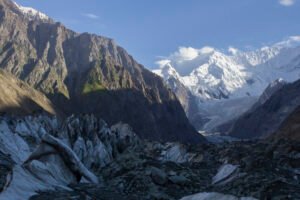
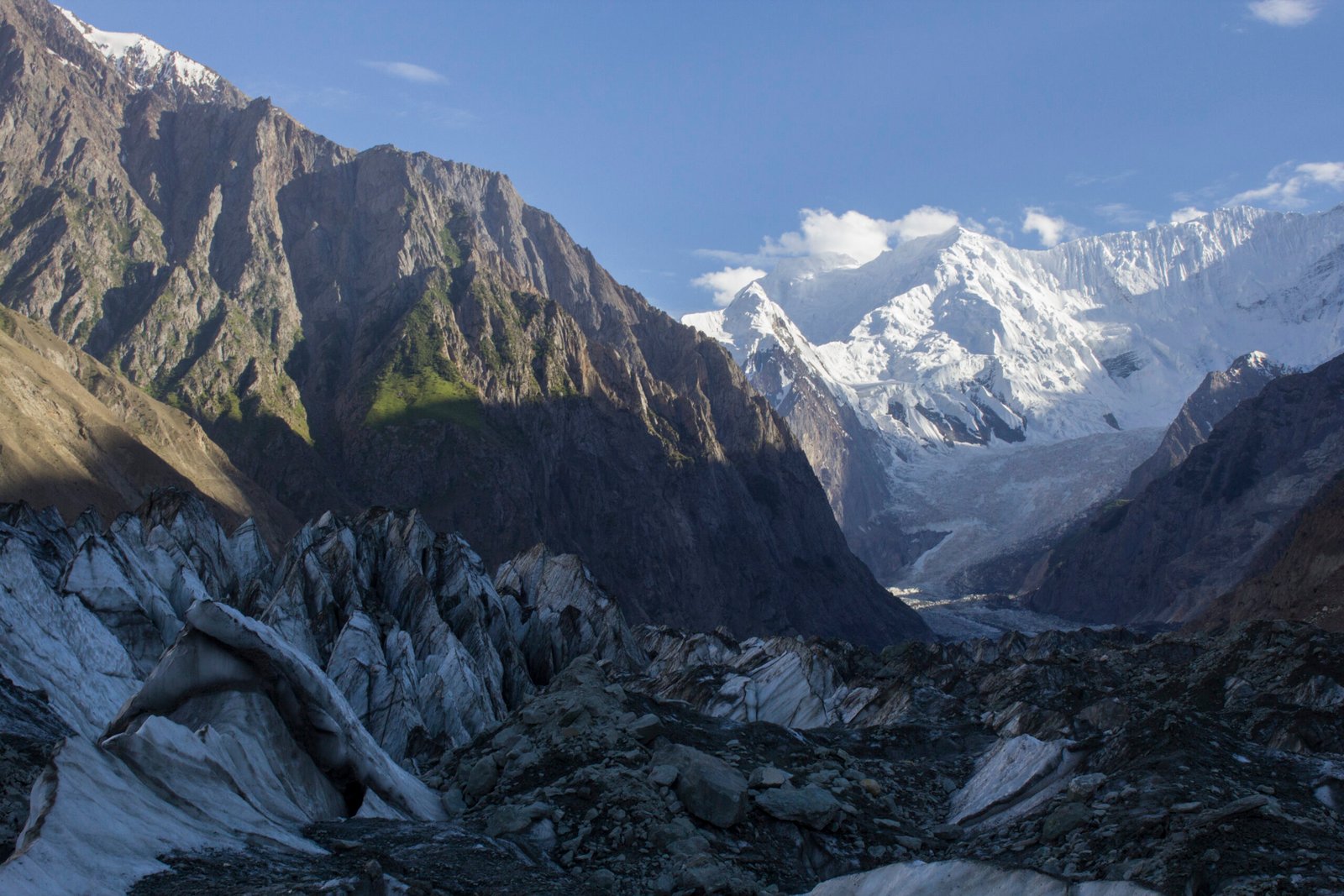
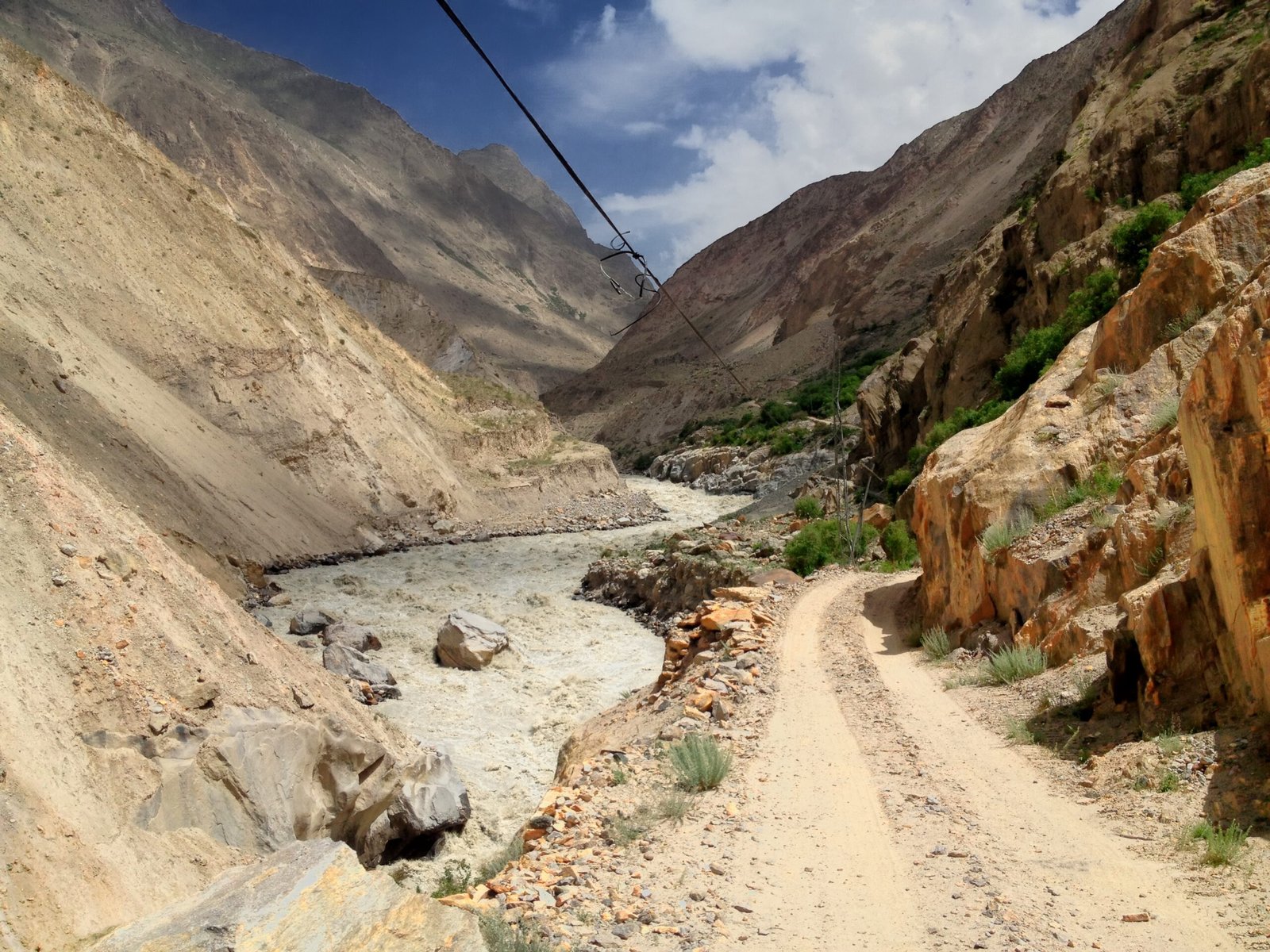
Beyond Shigar town, the road continues through villages to Askole, the last settlement before the Baltoro Glacier. Trekkers bound for K2 Base Camp, Broad Peak and the Gondogoro La all start walking here. If you are not trekking, Askole is still worth the drive for the sense of scale: the valley narrows, the peaks close in, and the expedition world begins.
What the K2 trek actually costs and requires
Shigar is where the K2 dream meets its logistics: porters, jeeps, permits and fees are arranged in Skardu and Shigar before anyone walks. Readers planning the trek should start with the site’s cost and packing guides — K2 Base Camp Trek Cost and K2 Base Camp Trek Packing List — before booking anything in the valley.
Where to stay and eat in Shigar
Stay at Shigar Fort if the budget allows — it is the valley’s only heritage stay and the experience is the point. Otherwise, guesthouses in Shigar town and basic lodges further up the valley cover the budget end. Food is simple Balti cooking: bread, apricot oil, local trout where available, and endless tea. Carry snacks for the Askole road; there are few shops beyond Shigar town.
Practical tips for Shigar Valley
- Transport: Hire a jeep in Skardu for the day; the road to Shigar town is good, but the onward road to Askole needs a high-clearance vehicle and a driver who knows it.
- Water on the trail: If you walk beyond the roadheads, carry a reliable filter rather than relying on bottled water. The site’s packing guide uses the Sawyer Squeeze.
- Cash: No reliable ATMs beyond Skardu. Carry rupees for the fort, meals, jeeps and any village purchases.
- Timing: Shigar town is a full day from Skardu; Askole and back is a very long day and better done as an overnight. Do not promise yourself both in one day.
- Combine it: Pair Shigar with the Skardu town sights in our Things to Do in Skardu guide.
Frequently Asked Questions
How far is Shigar Valley from Skardu?
Shigar town is a short drive from Skardu along the Shigar River — roughly half an hour to an hour depending on the vehicle and stops. Askole, at the valley’s end, is several hours further and needs a jeep and a full day.
Is Shigar Fort worth visiting if I am not staying there?
Yes. The restored fort and its museum are the valley’s main cultural sight, and a daytime visit covers the architecture, gardens and Balti exhibits. Staying overnight is better, but not required to appreciate the place.
Can I see K2 from Shigar Valley?
No — K2 is days of trekking beyond Askole, up the Baltoro Glacier. Shigar gives you the roadhead and the expedition atmosphere, not the mountain itself. Anyone promising a K2 view from the valley road is selling something else.
What is Blind Lake?
Blind Lake (Jarba Zhou) is a small spring-fed lake near Shigar town with no visible outlet — hence “blind”. It is a calm, photogenic stop, best in the morning, and an easy add-on to a fort visit.
When is the best time to visit Shigar Valley?
May to October. Winter closes the higher road and empties the valley of services; the fort and town are quiet, and Askole is effectively shut. Trekkers use the same window for the Baltoro.
Last updated: 25 October 2026