Short Answer
Gilgit-Baltistan’s spring blossom runs roughly from mid-March to late April, with lower valleys blooming first and higher valleys following weeks later. Hunza is the headline act — cherry, apricot and almond trees beneath snow-covered Karakoram peaks — but the same wave rolls through Nagar, Skardu, Shigar, Khaplu, Ghizer and Gilgit. Plan late March to mid-April for Hunza and Nagar, late April for Baltistan’s higher villages, and keep dates flexible: altitude and weather shift any valley’s bloom by roughly a week either way.
Spring blossom at a glance
| Question | Short answer |
|---|---|
| Best overall window | Mid-March to late April; higher villages into early May |
| Best single base | Karimabad, Hunza — forts, bazaar and viewpoints in one walkable town |
| What actually blooms | Apricot first and most widely, then cherry and almond, plus apple, peach, plum and pear |
| Colours | White to soft pink, sometimes deeper pink, against snow-covered peaks |
| How long does one valley’s bloom last | Roughly two to four weeks from first flowers to petal fall, depending on altitude and weather |
| When to book | As early as you can for late March and April — blossom season is popular and rooms in Karimabad fill fast |
| Route in spring | The Karakoram Highway (KKH) via Besham runs all year; Babusar Pass is still closed in spring (see below) |
When does blossom season start in Gilgit-Baltistan?
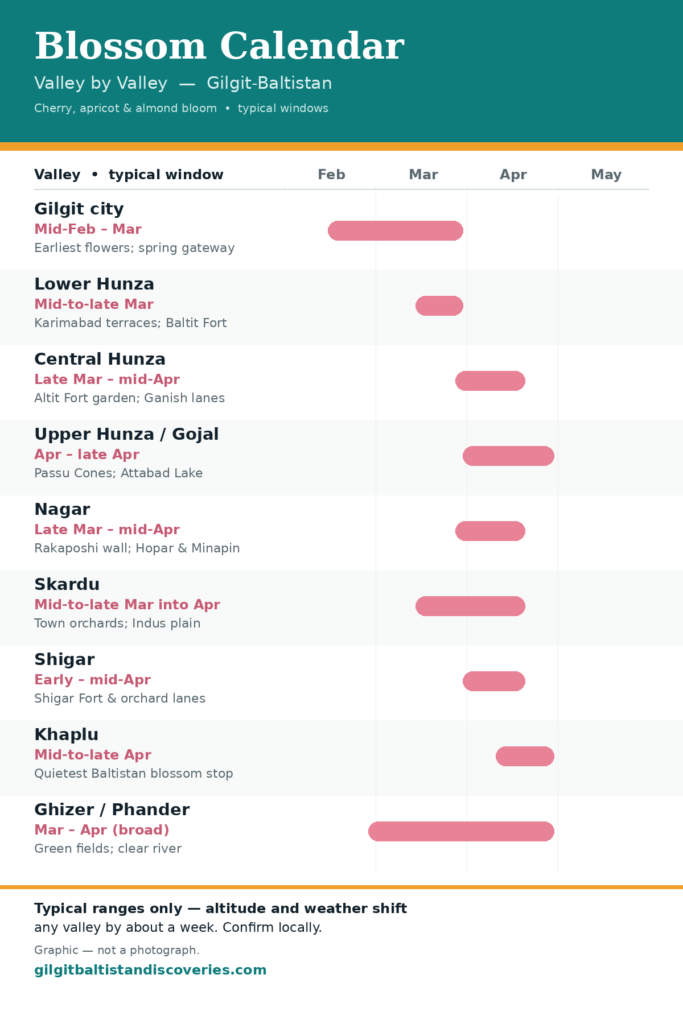
There is no single blossom date for the whole region. Flowering follows altitude: warm, low valleys open first, and the wave climbs into higher villages as spring advances. A cold snap in March can hold a valley back by a week or more; a mild winter can pull it forward by about the same amount. Treat every window here as a typical range, not an appointment.
The broad pattern is this: Gilgit city and the lowest valleys may show early flowers from mid-February, Hunza and Nagar peak from late March to mid-April, and Baltistan’s higher villages run later, into late April and sometimes early May. If you have a week, follow the bloom: start low, then travel up-valley, rather than fixing one village for the whole trip.
What is the difference between cherry, apricot and almond blossom?
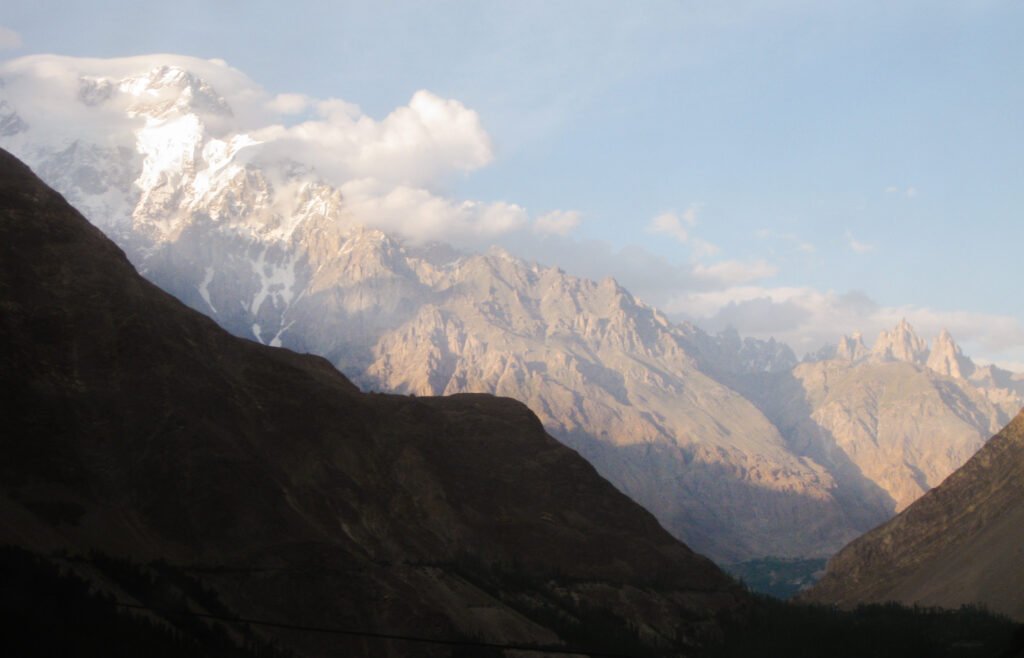
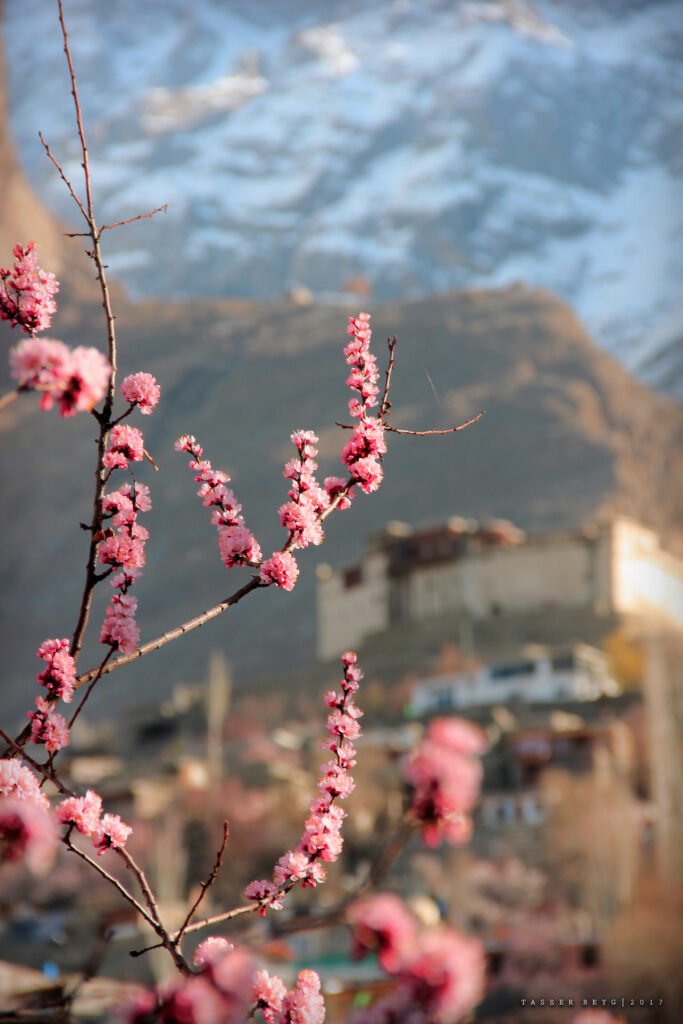
Visitors often call the whole season “cherry blossom”, but apricot is the tree you will see most. Apricots dominate the orchards of Hunza, Nagar and Baltistan, and they usually open a few days before cherry trees in the same valley. Cherry blossom adds the deeper pink patches; almond, apple, peach, plum and pear fill in the rest of the palette in white and pale pink.
You do not need to tell the species apart to enjoy the season, but it sets expectations: a valley “in full blossom” may be mostly apricot, with cherry trees scattered through it. If cherry specifically is your goal, Hunza’s central villages — Karimabad, Altit and Ganish — are the safest bet; ask locally which orchards are at cherry peak that week.
When is Hunza cherry blossom season?
Hunza’s season runs from mid-March to late April, moving up the valley as it goes:
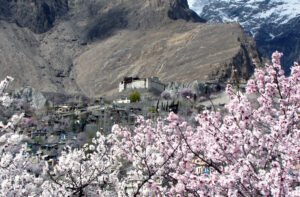
- Lower Hunza (Aliabad and Karimabad): blooms first, typically from mid-to-late March. Karimabad’s terraced fields and stone lanes are the classic blossom scene, with Baltit Fort above the town and Rakaposhi and Ultar Sar behind it.
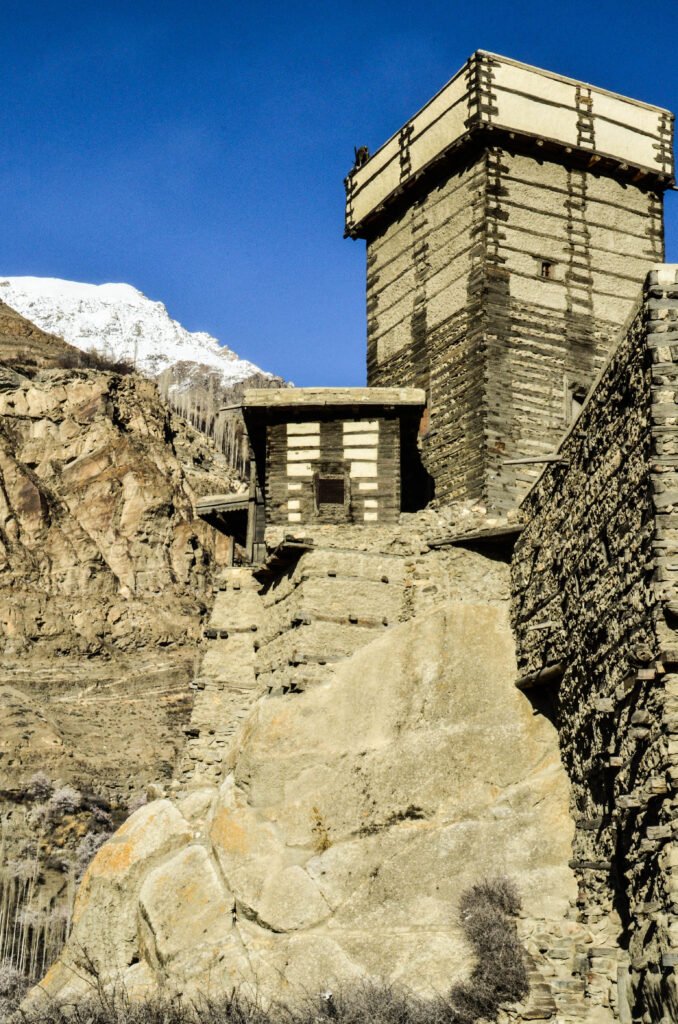
- Central Hunza (Altit and Ganish): typically late March to mid-April. Altit Fort’s royal garden and Ganish’s old lanes are among the most photographed blossom spots in the valley.
- Upper Hunza / Gojal (Gulmit, Ghulkin and Passu): typically April, running into late April. Here the blossom sits against the Passu Cones and the turquoise of Attabad Lake — a wilder, quieter version of the Karimabad scene.
For most visitors, the strongest single window is late March to mid-April, spent moving slowly up the valley. Base yourself in Karimabad, then take day trips towards Attabad Lake and Passu as the upper villages come into flower. Our places to visit in Hunza guide covers Karimabad, the forts, Attabad Lake and Duikar in more detail.
When does Nagar Valley bloom?
Nagar is a separate district and valley from Hunza, across the Hunza River — not a suburb of it, and not the same place. Its blossom window closely tracks Hunza’s, typically late March to mid-April, with the same altitude rule applying: lower villages first, higher settlements later.
Nagar’s signature blossom view is Rakaposhi itself, rising directly from the valley, so orchard walks around Hopar (Hoper) and Minapin pair flowering trees with one of the Karakoram’s most dramatic mountain walls. Nagar is quieter than Karimabad in blossom season — a good second base — but confirm accommodation before you arrive, as it has fewer hotels and restaurants.
When do Skardu, Shigar and Khaplu bloom?
Baltistan runs a little later than Hunza, and its season stretches longer because its villages sit at a wider range of altitudes:
- Skardu town and nearby orchards: typically mid-to-late March into April.
- Shigar Valley: typically early to mid-April, with Shigar Fort and its orchard lanes as the natural centrepiece.
- Khaplu and Ghanche: typically mid-to-late April — the least crowded of the main Baltistan blossom stops.
- Higher villages (for example Chunda Valley): into late April and early May, as the last buds open.
Skardu’s blossom feels different from Hunza’s: the same white and pink flowers, but against Baltistan’s drier, rockier landscape and the wide Indus plain rather than Hunza’s green terraces. Combining regions, catch Hunza in late March, then Baltistan in April.
What about Ghizer, Phander and Gilgit?
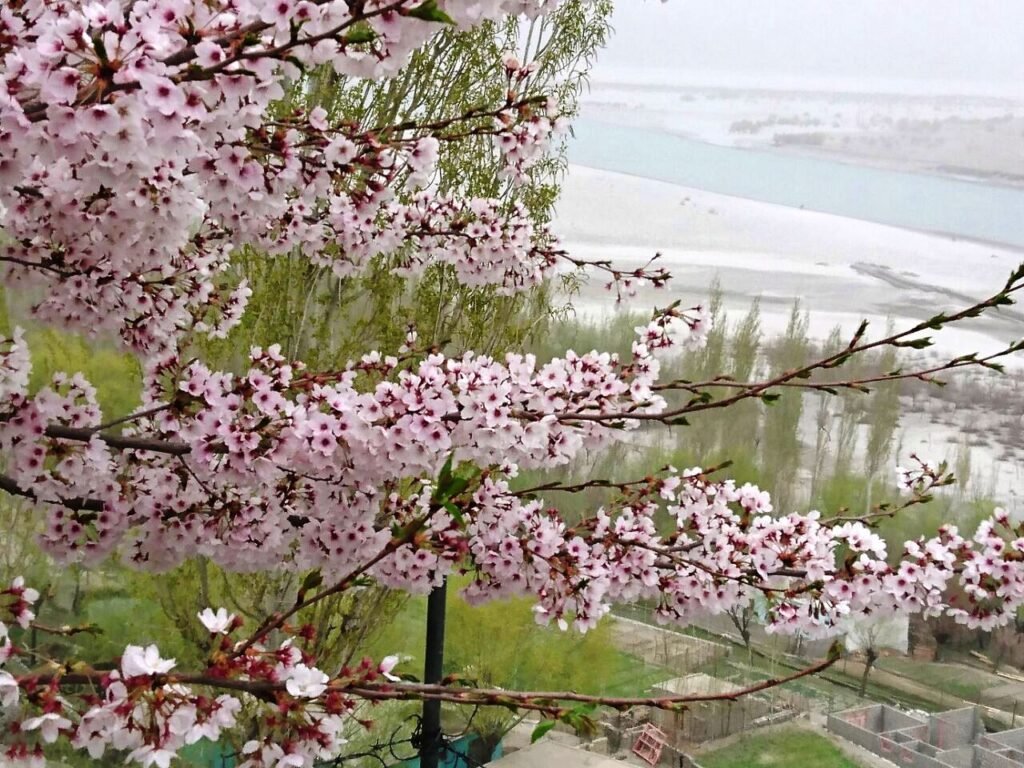
Ghizer’s Phander Valley is regularly listed among the region’s blossom valleys, and its green fields, clear river and quiet villages make it one of the most peaceful spring stops. Its typical window is March to April, but no valley-specific peak week could be pinned down from an opened source, so treat that range as broad and check locally.
Gilgit city, lower and warmer, flowers earliest — early blossom may appear from mid-February, with the main show in March. Gilgit works best as a spring gateway: fly or drive in, then head north to Hunza or east to Skardu as higher valleys open. Naltar, above Gilgit, is a spring side trip for pine forest and lakes rather than a blossom hotspot; check its road and snow conditions locally in early spring.
Are there blossom festivals in spring?
Spring in Gilgit-Baltistan is celebrated, but travellers should not expect a single fixed-date “cherry blossom festival” on the model of Japan’s sakura events. What exists is more local and more fluid: village-level spring celebrations, music and food stalls around the forts and bazaars, and orchard walks that hotels and guides organise as the bloom peaks.
The one date that does recur is Navroz, the spring and Persian New Year celebration observed by Hunza’s Ismaili community around 21 March. It often falls just as the first lower-valley blossoms open — a lovely coincidence, not a guarantee of peak bloom. Local blossom events in Hunza and Nagar are advertised in March and April, but dates vary by year and village, so confirm with your hotel close to travel. Note that Ginani, the wheat-harvest thanksgiving, is a summer event, not a blossom festival.
How do I photograph the blossom?
Blossom photography rewards patience more than equipment. The photographs people remember combine blossom with something else: a fort, a peak, a lake, or a village lane.
| Tip | Why it works |
|---|---|
| Shoot at sunrise and golden hour | Low light warms the petals and throws long shadows across terraces; midday light flattens the scene |
| Start at Duikar (Eagle’s Nest) at dawn | The classic sunrise panorama over Karimabad’s blossom-covered valley floor, with Rakaposhi and Ultar Sar behind |
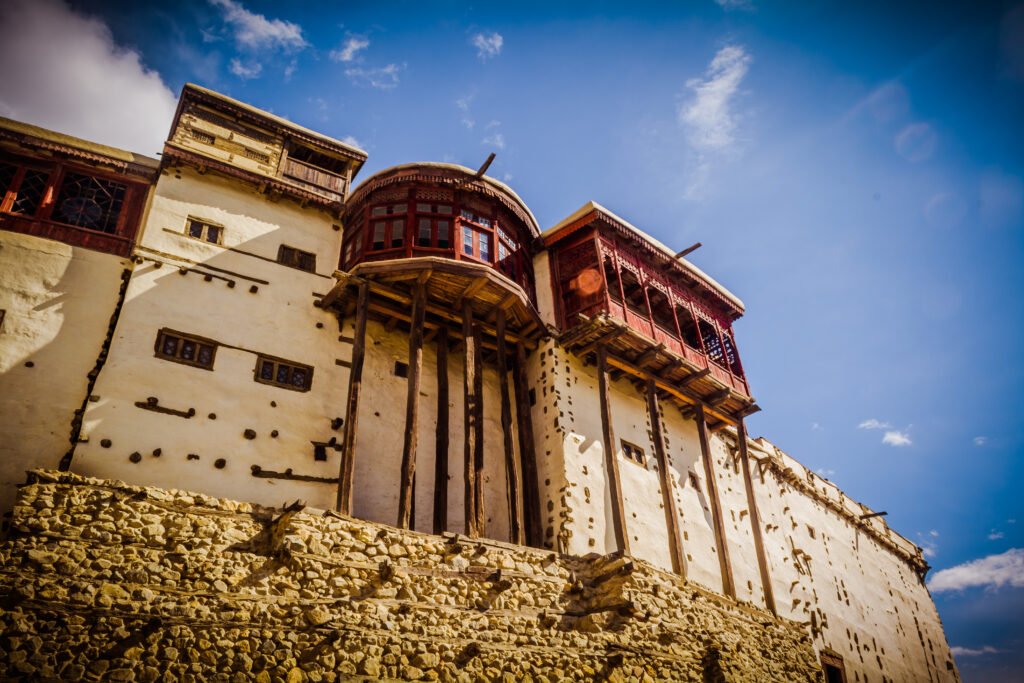
| Use the forts as frames | Baltit Fort’s viewpoint and Altit Fort’s royal garden put stone architecture against flowering orchards |
| Walk the village lanes, not just the viewpoints | Ganish’s old lanes and Karimabad’s back streets put blossom at eye level, with people and daily life in frame |
| Pair blossom with water | Attabad Lake’s turquoise shore and the rivers of Ghizer and Skardu add a second colour to pink and white |
| Pack a power bank | Long days of walking and photographing drain a phone fast, and village charging points are not guaranteed — a compact bank such as the Anker PowerCore is worth its weight |
| Ask before photographing people | Orchards are working farmland and villages are people’s homes; permission matters more than the shot |
How do I plan a spring blossom trip?
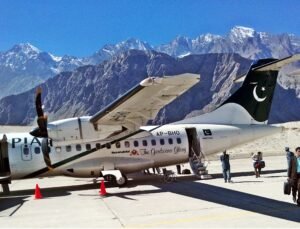
Getting there. The reliable spring route is the Karakoram Highway via Besham, which runs all year, or a flight to Gilgit or Skardu plus a road transfer — flights are weather-dependent, so keep a buffer day. Babusar Pass, the scenic Naran–Chilas shortcut, usually opens only in late May or June and closes around October or November, so it is not an option for a March or April trip. Our guide to travelling to Gilgit-Baltistan from Islamabad sets out the options with distances and driving times.
What to pack. Spring days can be pleasantly mild, but mornings and evenings stay cold, and snow still sits on the high peaks. Pack a warm jacket and layers rather than summer clothes, comfortable walking shoes for terraced lanes and village paths, sun protection for the strong mountain light, and a reusable water bottle. A light waterproof layer is sensible: spring showers and rapid weather changes are normal.
How long to stay. Four to six days covers Hunza alone at blossom pace — two days around Karimabad and Altit, a day towards Attabad Lake and Gulmit, and a day in hand for weather. Add at least two travel days in each direction, and more if combining Hunza with Skardu or Ghizer.
Etiquette. Blossom orchards are livelihoods, not parks. Stay on paths, do not pick flowers or break branches for photographs, ask before entering private terraces, and buy dried apricots or handicrafts from village shops where you can.
Frequently asked questions
When is the best time to see Hunza cherry blossom?
Late March to mid-April is the strongest window for most visitors. Lower Hunza around Karimabad opens first in mid-to-late March, central Hunza follows, and Upper Hunza blooms through April. Altitude and weather shift any village by roughly a week, so build flexibility into your dates.
Is April too late for blossom in Gilgit-Baltistan?
No — April is often the best month overall. Hunza is at or near peak in early April, Upper Hunza and Shigar are coming into flower, and Khaplu and the higher Baltistan villages peak from mid-to-late April. Only the lowest valleys around Gilgit will mostly be finished by then.
Which valley is best for blossom photography?
Hunza is the classic choice: Karimabad’s terraces, Altit Fort’s garden, Duikar at sunrise and the Passu Cones give the widest range of compositions in one valley. Skardu and Shigar suit photographers who prefer quieter orchards and a drier, rockier backdrop with fewer visitors in frame.
Do I need to book hotels early for blossom season?
Yes, especially in Karimabad and around the forts, where rooms for late March and April are booked well ahead. Smaller valleys such as Nagar and Ghizer have fewer beds overall, so confirm accommodation before arrival rather than assuming you can walk in during peak weeks.
Can I see blossom and still travel on to Khunjerab Pass?
It depends on the month and the year’s snow clearance, so check locally before relying on it. Blossom season is early spring, when high routes are still shaking off winter, whereas the pass road is a summer proposition. Enjoy the valleys in March and April, and treat Khunjerab as a separate, later-season trip.
Last updated: 29 October 2026