Last updated: 30 October 2026
Short Answer
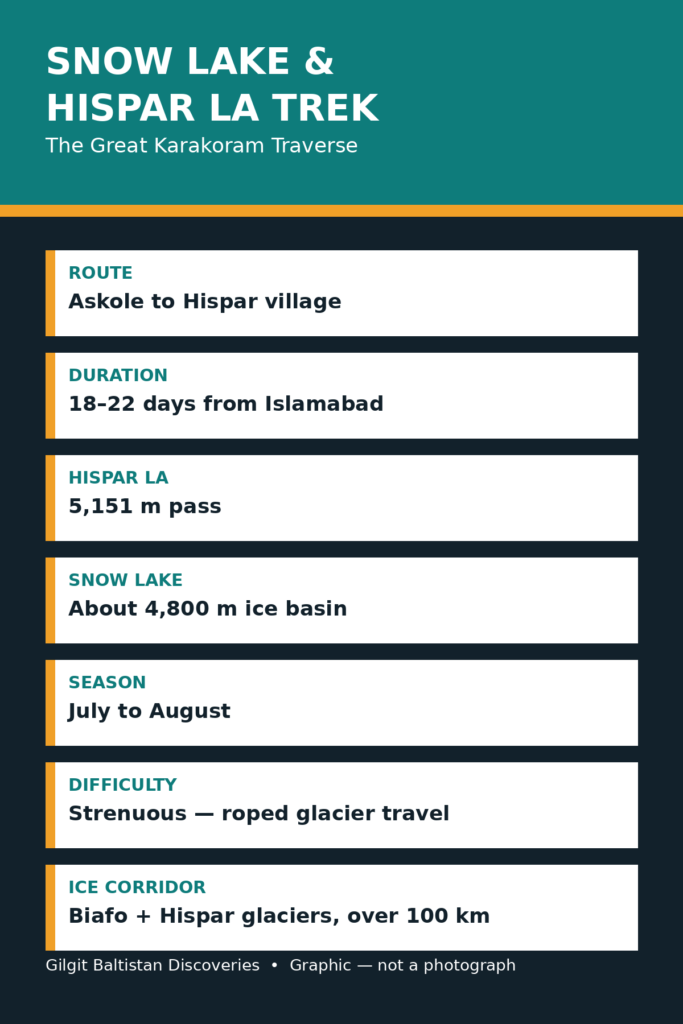
The Snow Lake and Hispar La trek is the Karakoram’s great glacier traverse: from Askole in Baltistan, up the Biafo Glacier to Snow Lake — a 16 km-wide basin of ice at about 4,800 m — then over Hispar La at 5,151 m and down the Hispar Glacier to Hispar village in Nagar District. Allow 18–22 days from Islamabad, including travel and rest days, with roughly two weeks on the ice. It is graded strenuous, harder than the standard K2 Base Camp trek, and it is an expedition, not a walk: roped glacier travel, nights camped on ice, and a licensed operator are all part of the deal.
What Makes Snow Lake Different from Other Karakoram Treks?
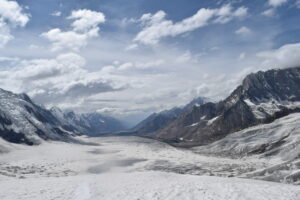
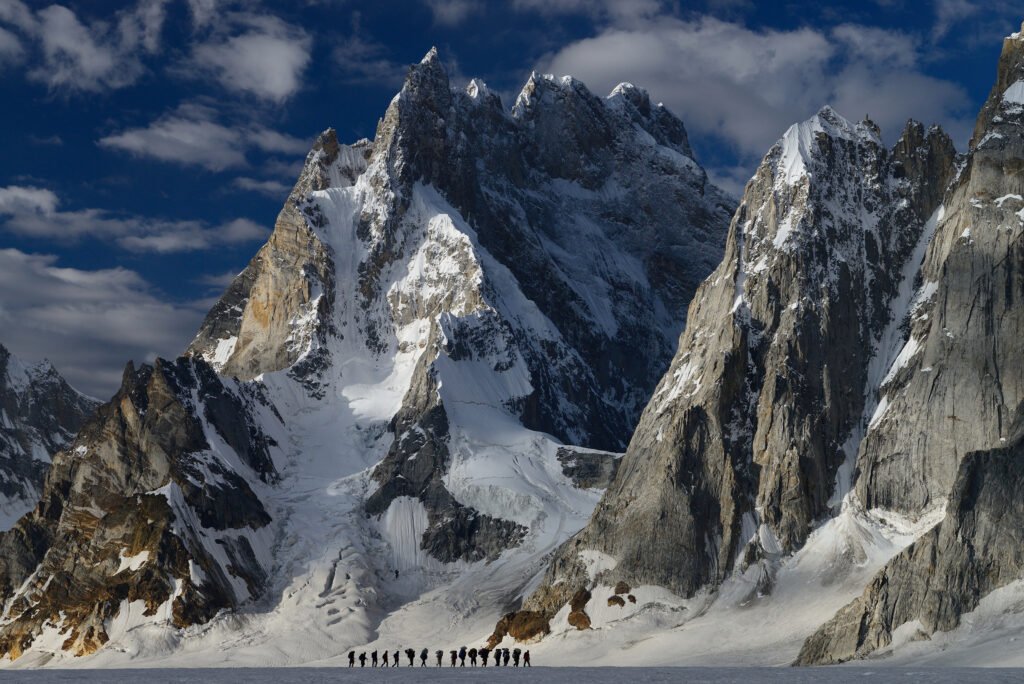
Most Karakoram treks follow a valley to a base camp and return the same way. This one crosses from one culture to another: you start in Balti-speaking Baltistan, walk for days on the Biafo Glacier, cross the ice divide at Hispar La, and finish in Burushaski-speaking Nagar District. The Biafo and Hispar glaciers together form a corridor of ice over 100 km long — one of the longest glacial systems outside the polar regions — and Snow Lake itself, known locally as Lukpe Lawo, is a basin about 16 km wide and roughly 77 square kilometres, ringed by peaks over 6,000 m.
There is also a historical echo worth knowing: in olden times, warriors from Hunza used this natural ice highway to reach Baltistan. You are walking a route that was a strategic corridor long before it was a trekking route, and the emptiness of it — days without a village, a road or a phone signal — is the point.
What Is the Route, Day by Day?
Operator itineraries vary by a day or two, but the shape is consistent:
| Stage | What happens | Approx. altitude |
|---|---|---|
| Islamabad → Skardu | Fly (weather-dependent) or drive; acclimatisation and preparation day in Skardu | ~2,230 m |
| Skardu → Askole | Jeep drive, roughly 6–7 hours, to the last settlement before the Biafo Glacier | ~3,000 m |
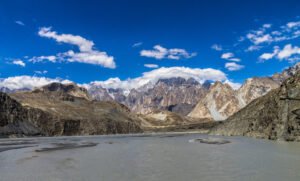
| Askole → Namla → Mango | Walk alongside the Braldu River, then onto the Biafo Glacier | Namla ~3,570 m; Mango ~3,800 m |
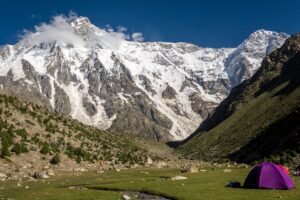
| Mango → Baintha | Glacier days beneath the Latok group and Baintha Brakk (The Ogre, 7,813 m); rest day at Baintha | ~4,200 m |
| Baintha → Marfoghoro → Karphogoro | Continue up the Biafo towards Snow Lake, first views of Hispar La | ~4,300–4,400 m |
| → Snow Lake base camp | Cross onto the great ice basin; rest and exploration day | ~4,800 m |
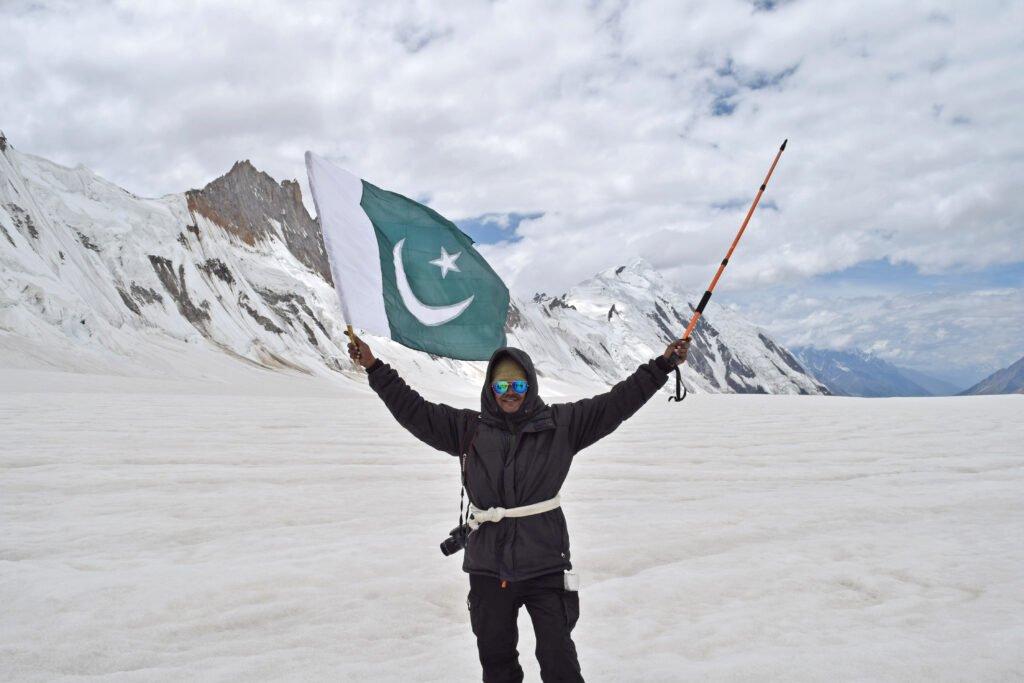
| Snow Lake → Hispar La | The pass day: steady slopes of about 30 degrees, roped, 6–7 hours, with crevasse care throughout | 5,151 m |
| Hispar La → Kani Basa / Khani Basa | Long descent day, more than 8 hours for some itineraries, to grass camps on the Hispar side | ~4,500 m |
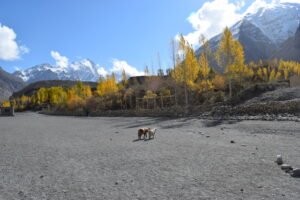
| Kani Basa → Hispar village | Descend the Hispar Glacier through summer pastures | Hispar village ~2,500 m approx. |
| Hispar village → Karimabad | Jeep drive to Hunza’s main town, then onward travel | Karimabad ~2,400 m |
Snow Lake’s own altitude is quoted between about 4,800 m and 4,877 m depending on the source; the pass at 5,151 m is consistent across operators. For the approach and packing, see the K2 base camp trek packing list and how to travel to Gilgit-Baltistan from Islamabad.
When Is the Best Time for Snow Lake?
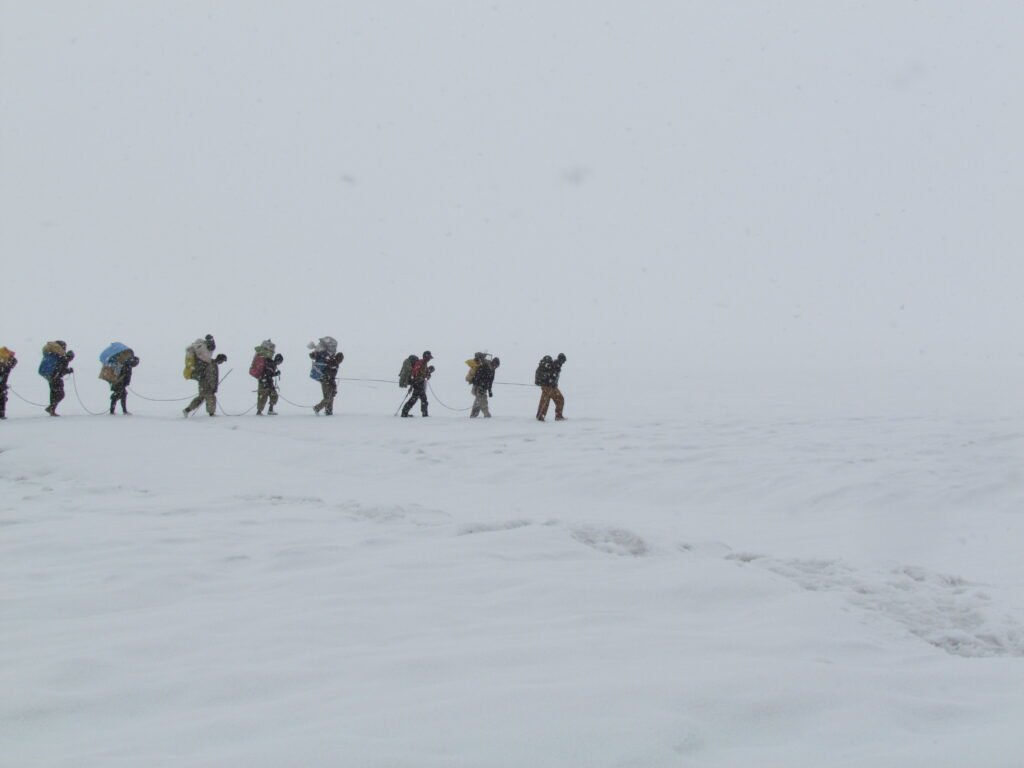
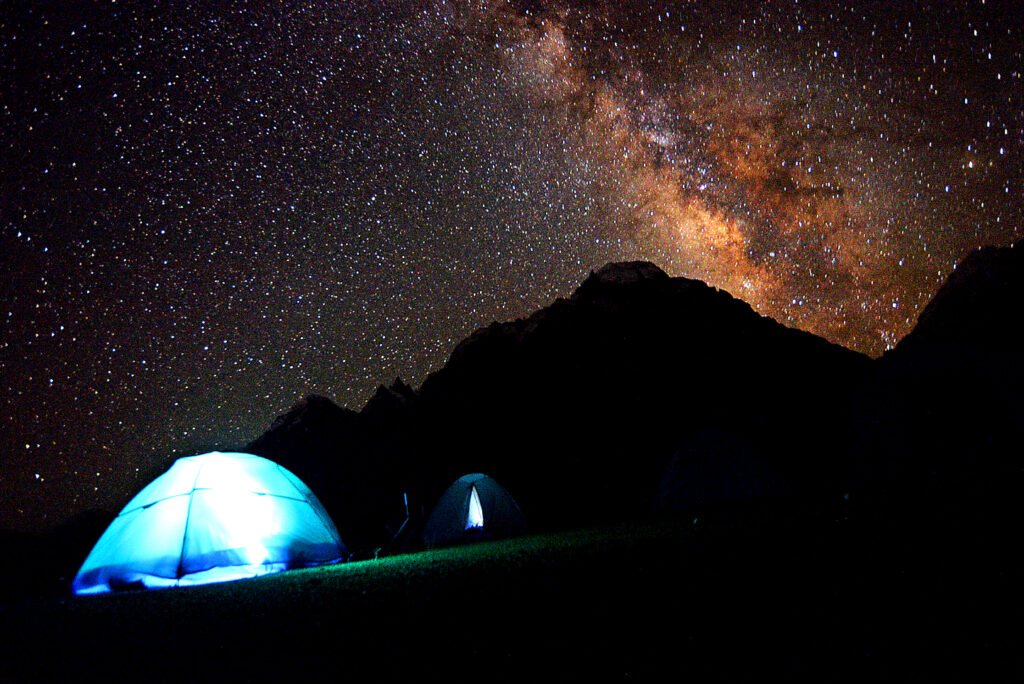
July to August is the core window, with some operators extending it from early June to mid-September. The pass needs the snow bridges and crevasse conditions of high summer; too early and the route is not established, too late and autumn storms close it. Even in July and August, expect 6–9 hours of walking a day on ice, moraine and slush, and nights camped directly on the glacier for at least 6–8 nights. This is not a trek to attempt in a shoulder season on a tight schedule.
How Hard Is the Snow Lake Traverse?
Strenuous, and operators are explicit that it exceeds the standard K2 Base Camp route in difficulty. The reasons stack up: the duration (nearly three weeks), the altitude (days above 4,500 m, a 5,151 m pass), the terrain (crevassed glaciers requiring roped travel every day), and the camping (nights on ice, with the cold, damp and mental fatigue that brings). You need previous multi-day, high-altitude trekking experience, strong fitness, and comfort with rope work and glacier safety under a guide’s direction.
Acclimatisation is built into the slow ascent up the Biafo, with a rest day at Baintha and another at Snow Lake. Do not skip those days to save time. Altitude illness at 5,000 m, far from any road, is a serious emergency: persistent headache, vomiting, breathlessness at rest or confusion mean stop, descend and follow your guide’s instructions, not your itinerary.
What Should You Pack Differently for a Glacier Traverse?
Beyond standard high-altitude trekking kit, this trek needs glacier gear: crampons, ice axe, harness and helmet, plus gaiters and waterproof boots for the slush and meltwater of summer glaciers. Confirm with your operator what group gear (ropes, tents, cooking equipment) is included and what you must bring or hire. A sleeping bag rated well below freezing is essential for ice camps, and a filter bottle helps on glacier streams; for example, the Sawyer Squeeze. Sun protection is critical: UV on snow at 5,000 m burns fast, and glacier sunglasses (not fashion sunglasses) are a safety item, not an accessory.
Do You Need a Guide, Porters and Permits?
Yes. The route is a roped glacier traverse through crevassed terrain, far from roads, and it is run as a supported expedition with guides, porters and cooks from Baltistan and Nagar District. Book through a licensed operator and confirm permit and fee arrangements with that operator before you travel — Baltistan trekking permits and fees change, and no current official fee schedule was verified for this draft, so none is quoted here. For the same reason, no trek price is quoted: expedition prices vary widely with group size, duration and inclusions, and a single figure would mislead. Get itemised quotes from two or three licensed operators.
Frequently Asked Questions
How long is the Snow Lake trek?
Typically 18–22 days from Islamabad, including travel to Skardu and back from Hunza, with about 13–14 nights of camping on the route itself. Some itineraries run 19 nights/20 days and others 21–22 days; the difference is rest days and buffer days, both of which you want on a glacier expedition.
How high is Hispar La?
Hispar La is 5,151 m (16,896 ft). Snow Lake itself sits at about 4,800 m, and the Biafo–Hispar corridor runs above 4,000 m for most of its length. The pass day is a steady climb on slopes of about 30 degrees, made hard by the altitude and the crevassed ground rather than by steepness.
Is Snow Lake harder than K2 Base Camp?
Yes, by the operators’ own grading. K2 Base Camp is a long, high walk with a defined trail and regular camps. Snow Lake adds roped glacier travel every day, nights camped on ice, a longer duration and a higher pass, with no road access for most of the route. Treat K2 Base Camp as the preparation trek, not the equivalent.
Can you do Snow Lake as a shorter out-and-back?
You can walk part of the Biafo Glacier from Askole as a shorter trip, but the Snow Lake traverse itself is a one-way expedition: the point is to cross from Baltistan into Nagar District. A shorter Biafo-only walk still needs a guide and glacier safety, and it will not reach Snow Lake, which lies days up the glacier.
What happens if the weather closes Hispar La?
You wait at Snow Lake or below the pass until your guide judges it safe, using the buffer days built into the itinerary. There is no road alternative and no shortcut: the only ways out are over the pass or back down the Biafo to Askole. So keep a buffer day before any onward flight home.