Last updated: 3 November 2026
Short Answer
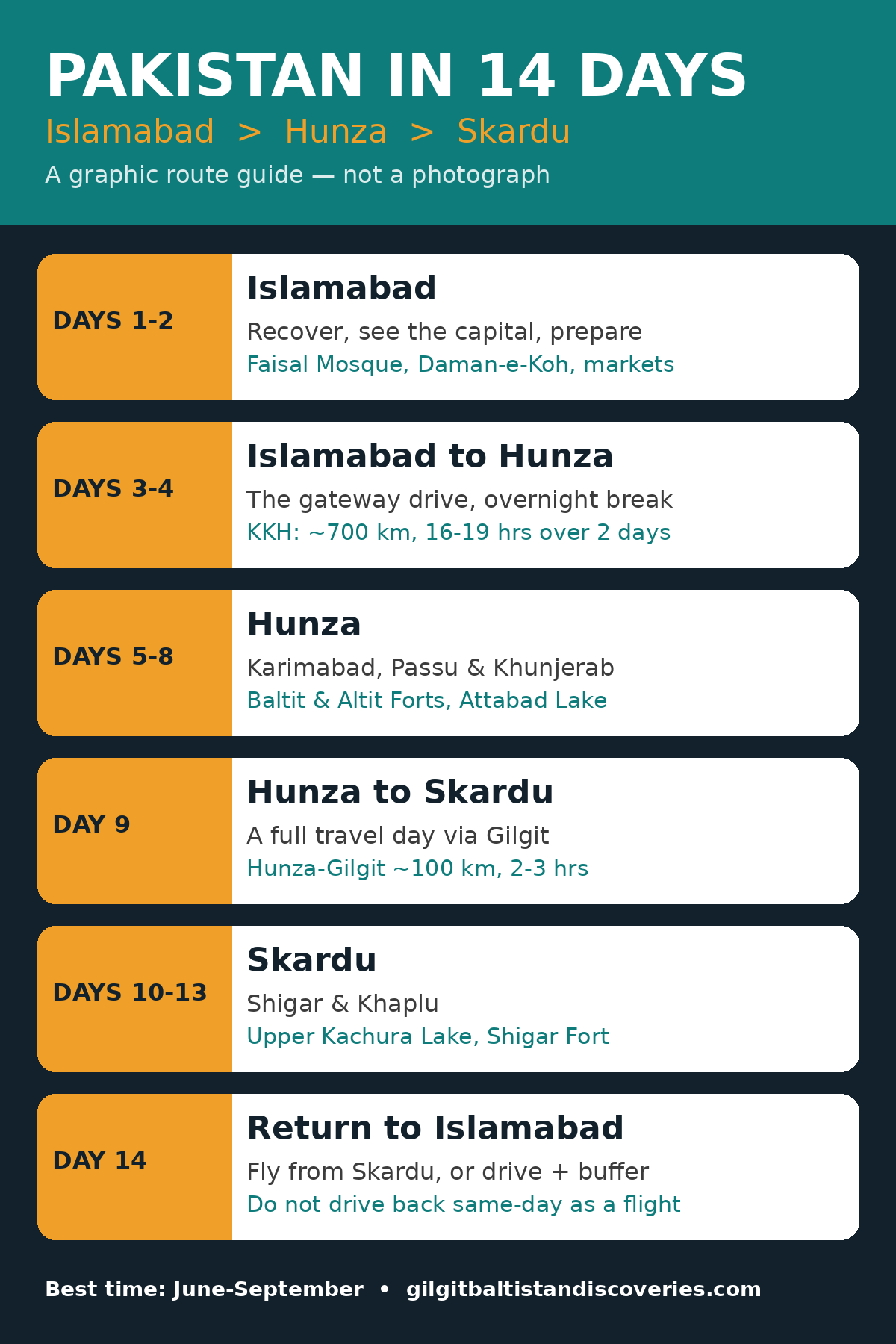
Two weeks is enough for a first Pakistan trip that does real justice to the north: 2 days in Islamabad, 5 days in Hunza, 4 days in Skardu, and 3 days for the journeys between them and the return. The route below uses the Karakoram Highway and, in summer, the Babusar road, and it is built around the site’s own Hunza, Skardu and Gilgit-Baltistan guides, which this itinerary links to rather than repeating. The best time is June to September, when Babusar Top is open and the full route is available; in winter, the same 14 days work with the KKH via Besham and without the Babusar shortcut, but with fewer high-valley options. If you have only 10 days, cut Skardu and spend the extra days in Hunza and the Kaghan Valley instead — a rushed Hunza-plus-Skardu trip in 10 days is mostly driving. No prices are quoted in this itinerary, deliberately, since fares, hotel rates and jeep charges change by season.
How is this itinerary structured, and what does it assume?
| Block | Days | Where | Purpose |
|---|---|---|---|
| Arrival and the capital | Days 1–2 | Islamabad | Recover, see the capital, prepare for the mountains |
| The gateway drive | Day 3–4 | Islamabad to Hunza via the KKH or Babusar | The journey north, with an overnight break |
| Hunza | Days 5–8 | Karimabad, Passu and Khunjerab | Forts, lakes, glaciers and the border road |
| The crossing to Skardu | Day 9 | Hunza to Skardu via Gilgit | A full travel day, not a sightseeing day |
| Skardu | Days 10–13 | Skardu, Shigar and Khaplu | Lakes, forts and the cold desert |
| Return | Day 14 | Skardu to Islamabad by air or road | The journey home, with a buffer |
This itinerary assumes you fly into Islamabad, travel by private car and driver or hired vehicle in the north, and are comfortable with long driving days. It does not assume trekking experience: the walks in Hunza and Skardu below are day walks, not multi-day treks. If you want a trek — Rakaposhi Base Camp, Rush Lake or K2 Base Camp — add days or swap a block, and use the site’s trek guides rather than stretching this itinerary.
What do you do in Islamabad (Days 1–2)?
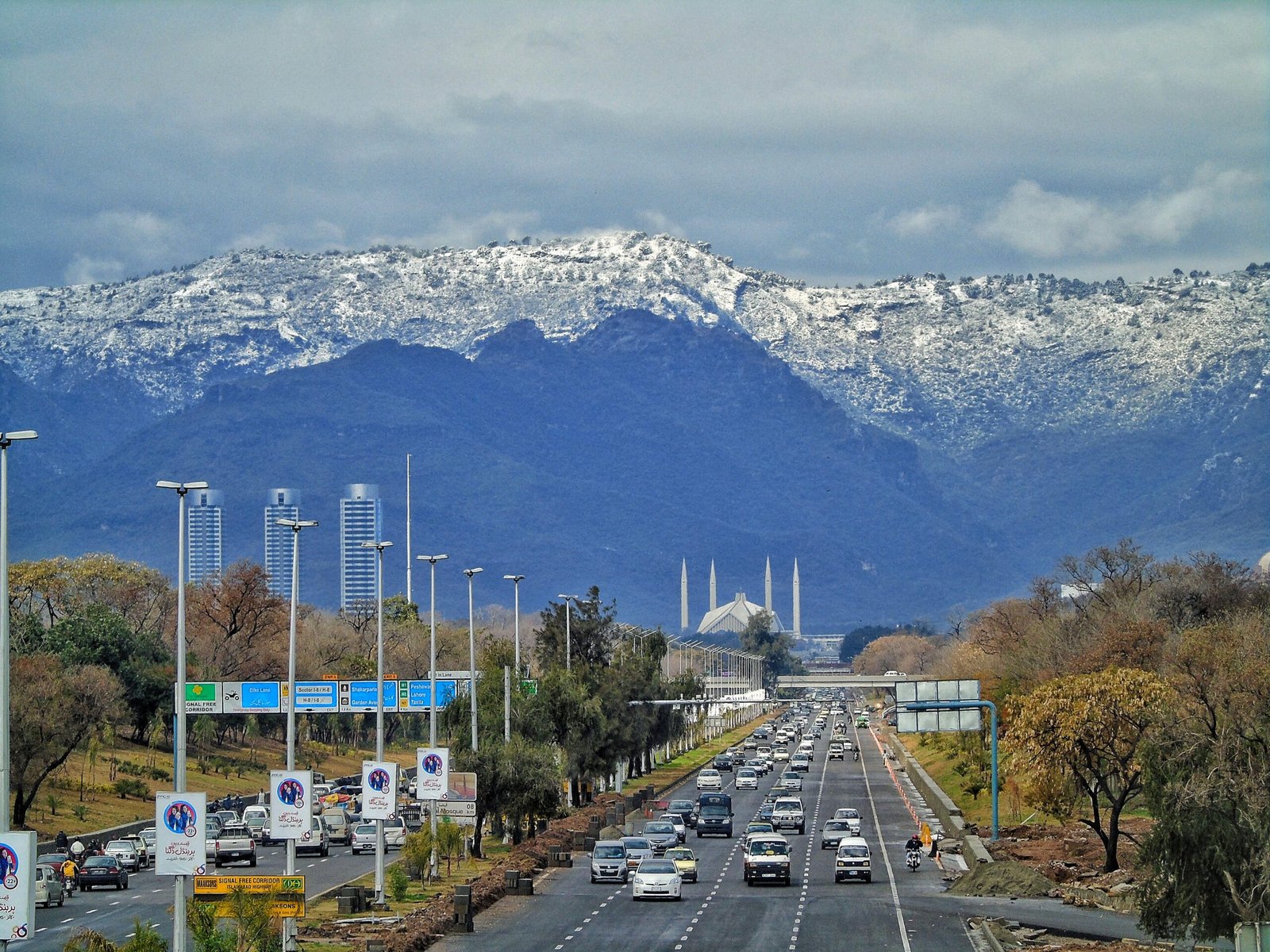
Day 1 is arrival and recovery: settle into your hotel, walk the Margalla Hills viewpoint at Daman-e-Koh if you arrive early, and eat in the F-7 or F-6 markets. Day 2 is the capital at a relaxed pace: Faisal Mosque, the Pakistan Monument and Lok Virsa Museum, and the Saidpur Village lanes for an evening walk. Use Day 2 for practical preparation too: confirm your driver and vehicle, withdraw cash, buy a local SIM if needed, and check the road status for the KKH or Babusar route. Islamabad is a planned, green capital at the foot of the Margalla Hills, and two days here is enough to see it without losing mountain time — but do not skip it entirely, since the contrast between the capital and the Karakoram is part of the trip.
How do you get from Islamabad to Hunza (Days 3–4)?
Drive, with an overnight break. Via the Karakoram Highway, the drive to Karimabad is about 700 km and 16 to 19 hours of driving time, split over 2 days with a night at Besham or Chilas. Via Babusar in summer, the route runs through Naran (about 240 to 285 km, 6 to 7 hours from Islamabad), then over Babusar Top (4,173 m) to Chilas and on to Gilgit and Karimabad. Either way, treat Day 3 as a driving day and Day 4 as arrival: reach Karimabad in the afternoon, walk the bazaar, and sleep early. The site’s Islamabad to Hunza by Road guide covers this drive stop by stop, and the How to Get to Hunza Valley guide covers flights and buses for travellers who prefer to fly to Gilgit and drive the final 100 km to Karimabad.
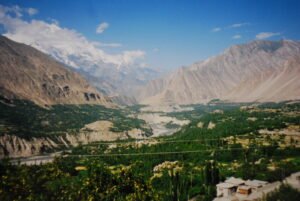
What do you do in Hunza (Days 5–8)?
| Day | Plan | Highlights |
|---|---|---|
| Day 5 | Karimabad | Baltit Fort, Altit Fort and the bazaar, with an evening viewpoint over the valley |
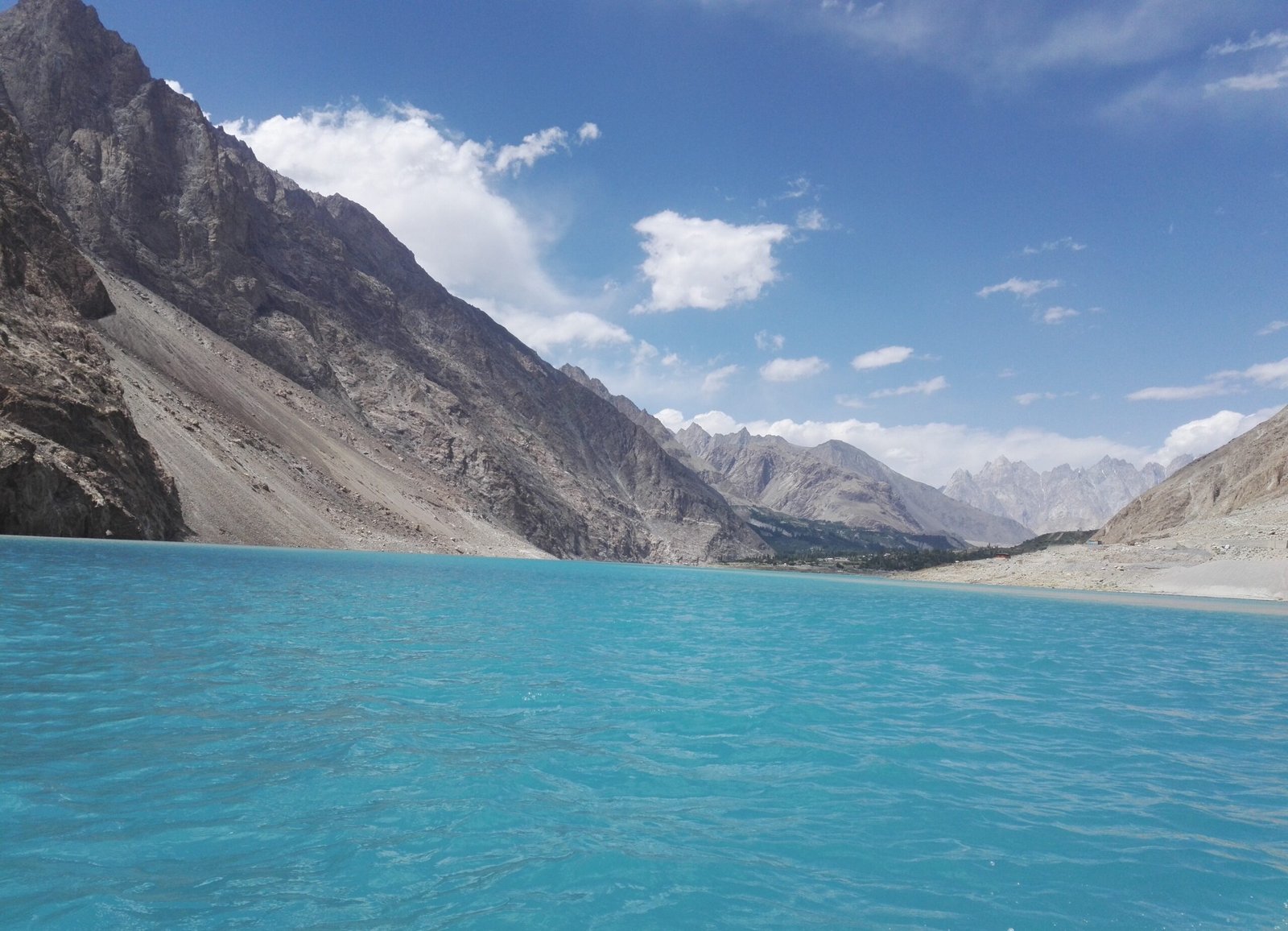
| Day 6 | Upper Hunza | Attabad Lake, Gulmit and the Hussaini Bridge area, returning to Karimabad |
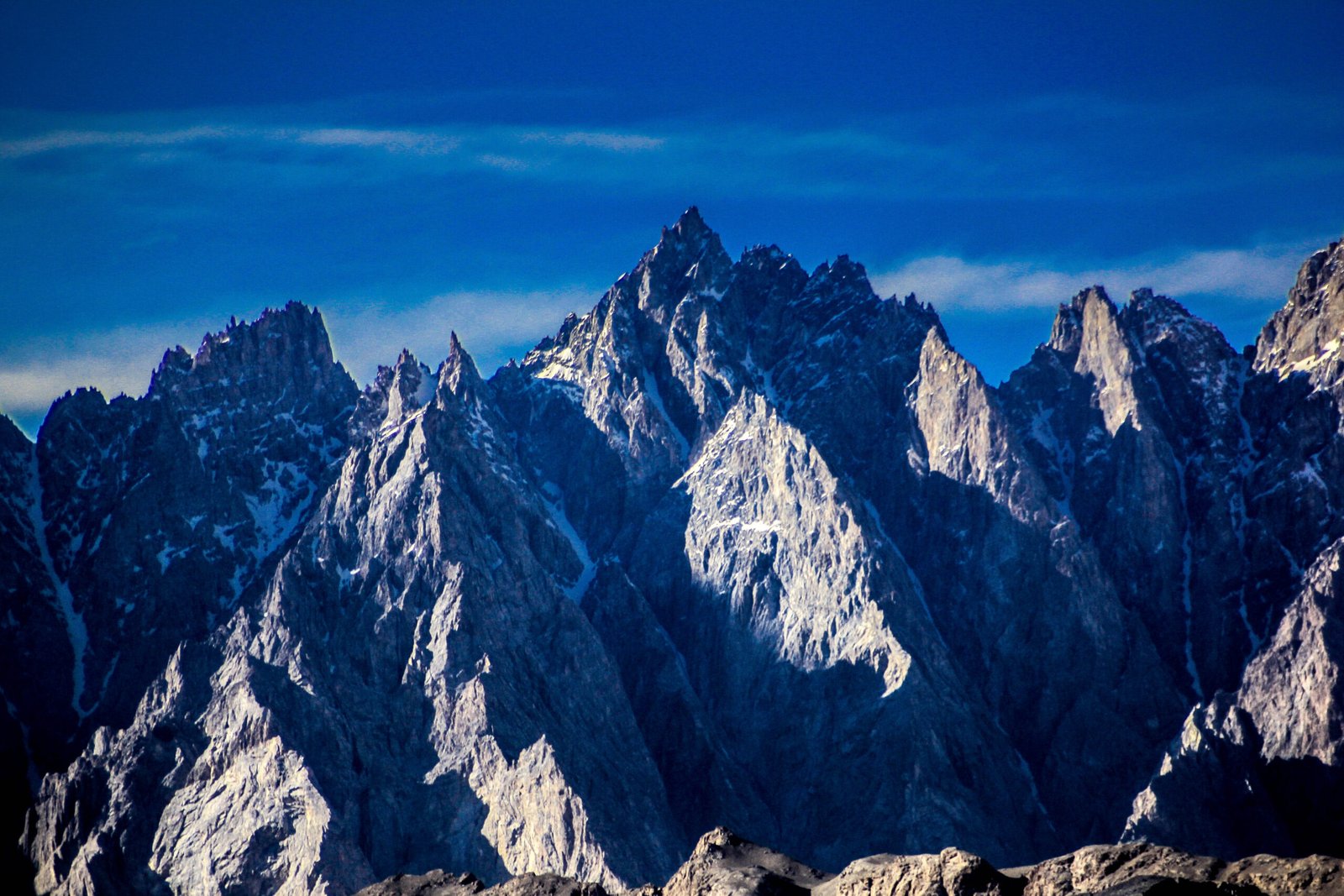
| Day 7 | Passu and Khunjerab | Passu Cones, Passu Glacier viewpoint and the Khunjerab Pass road (4,693 m), returning to Karimabad |
| Day 8 | A slow Hunza day | A village walk, apricot orchards in season, and a rest day before the Skardu crossing |
Hunza deserves 4 nights, not 2: the valley’s sights are spread along the Karakoram Highway, the Khunjerab day is a long drive, and a rest day prevents the trip from becoming a checklist. If you have to cut a Hunza day, cut the slow day, not the Khunjerab day — the border road is the trip’s high point, and it needs a full day.
How do you get from Hunza to Skardu, and what do you do there (Days 9–13)?
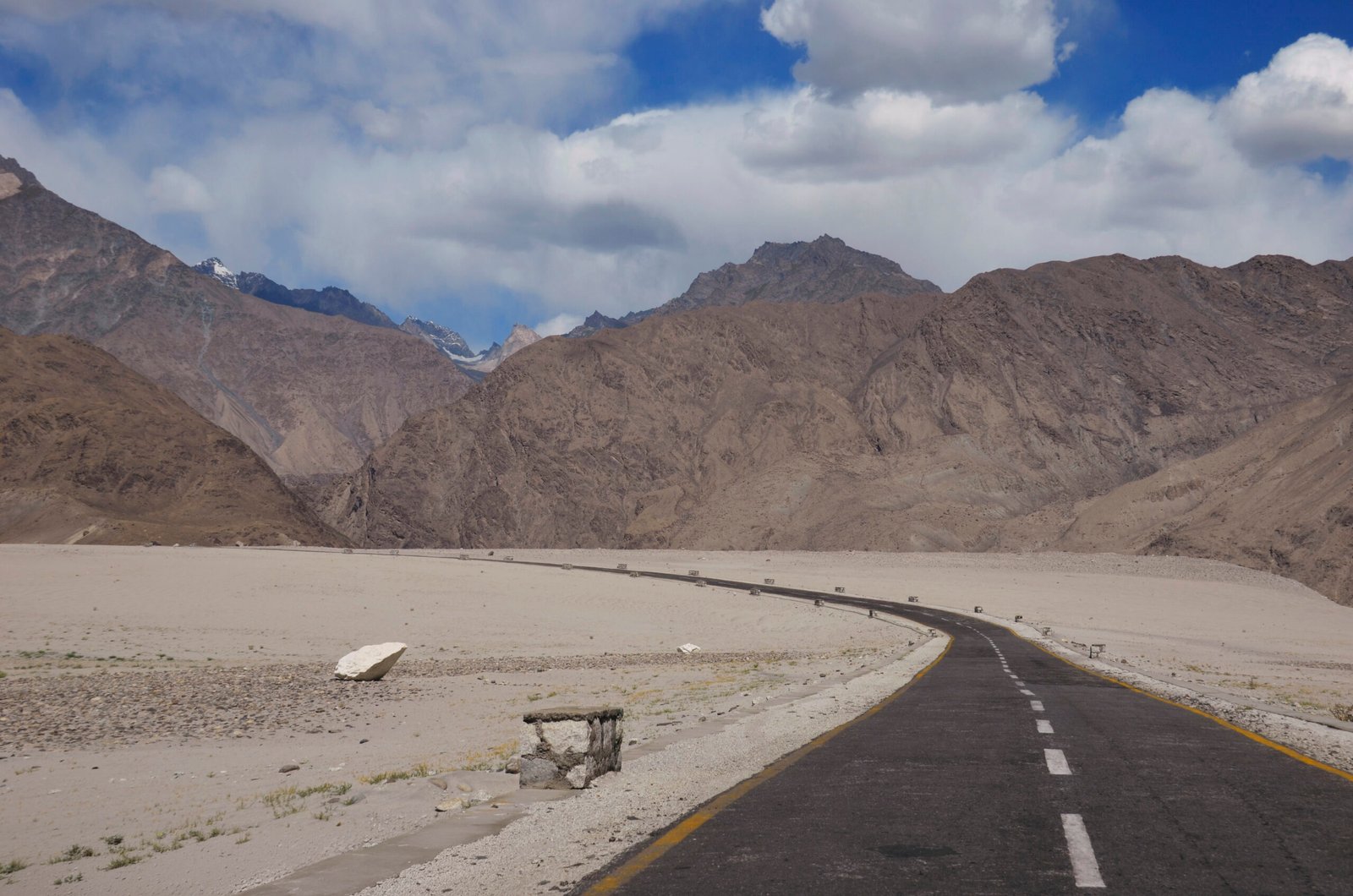
Day 9 is a full travel day: Hunza to Gilgit (about 100 km, 2 to 3 hours), then Gilgit to Skardu on the Gilgit–Skardu road, a mountain road that takes the rest of the day. Do not plan sightseeing on Day 9 beyond roadside stops. Days 10 to 13 in Skardu follow a simple pattern: Day 10, Skardu town, Upper Kachura Lake and Shangrila Resort; Day 11, Shigar Valley, with Shigar Fort and the cold desert at Sarfaranga; Day 12, Khaplu Valley, with Khaplu Palace and the valley’s villages; Day 13, a second Skardu day — Deosai Plains in summer, when the plateau is open, or a rest day with the Skardu bazaar and Kharpocho Fort. The site’s Skardu guides cover each of these valleys in detail; this itinerary’s job is pacing, not repetition.
How do you get home (Day 14), and what should you cut if time is short?
Day 14 is the return: fly from Skardu to Islamabad when flights operate, or drive back over 2 days via Gilgit and the KKH, which means this itinerary needs a buffer day in practice for road travellers. If your flight home is on Day 14, fly from Skardu, do not drive. If you have only 10 days, cut Skardu entirely and spend the extra days in Hunza and Naran: a 10-day Hunza-plus-Kaghan trip is relaxed and complete, while a 10-day Hunza-plus-Skardu trip is mostly road. If you have 17 days, add 2 days in Naran and Kaghan on the way north, and a day in Gilgit City on the way to Skardu. If you have 21 days, add a trek — Rakaposhi Base Camp from Minapin, or Rush Lake from Hoper — and a night in Passu rather than a day trip.
When is the best time for this itinerary?
June to September is the best window: Babusar Top is open, Deosai Plains are accessible, and the full Hunza–Skardu route is available. May and October are shoulder months, with quieter valleys and autumn colour in October, but Babusar and Deosai may be closed, and the route must use the KKH via Besham. November to April is winter: the KKH remains open, Hunza and Skardu are quiet and cold, and many high services close, so a winter version of this itinerary should be slower, with more nights in Karimabad and Skardu town and fewer high-valley days. Whatever the season, check flight reliability for Skardu and road status for Babusar and Deosai on the morning of each move, not at booking time.
Frequently asked questions
Is two weeks enough for Pakistan?
Two weeks is enough for a first trip focused on Islamabad, Hunza and Skardu, which is what this itinerary covers. It is not enough for the whole country: Lahore, Karachi, Swat, Chitral and the Kalash valleys, and the trekking regions each deserve their own trip. Treat this itinerary as a northern Pakistan trip, not a Pakistan-in-full trip.
Should I fly or drive between the main stops?
Fly into Islamabad, drive to Hunza, drive to Skardu, and fly home from Skardu if flights operate. Driving the full circuit gives you the Karakoram Highway and the valley roads, which are part of the experience, but flying Skardu to Islamabad on the last day protects your connection. Do not plan a same-day Skardu road return and an international flight.
What is the hardest part of this itinerary?
The long driving days: Islamabad to Hunza over 2 days, Hunza to Skardu in a day, and the Skardu return. The distances are not extreme by Pakistan standards, but mountain roads are slow, and landslide delays are normal. A private car and driver, daylight driving and a buffer day are the three things that make these days manageable.
Can I do this itinerary in winter?
Yes, with changes. The KKH via Besham remains open, but Babusar Top and Deosai Plains close, and many high guesthouses shut. Plan a slower winter version: more nights in Karimabad and Skardu town, fewer high-valley days, and warm clothing for sub-zero nights. Check road and flight status daily in winter, since both are more easily disrupted.
What should I pack for a two-week northern Pakistan trip?
Pack for three climates: warm Islamabad, cool Hunza and Skardu towns, and cold high passes. Layers, a waterproof jacket, sun protection, sturdy walking shoes and a daypack cover most days. The site’s What to Pack for Northern Pakistan guide covers this in detail, and the Altitude Sickness guide is worth reading before the Khunjerab and Babusar days.
Related itineraries
This broad-funnel pillar links to the detailed guides rather than repeating their day-by-day plans: