Yes, you can ice climb in Gilgit-Baltistan in winter. Frozen waterfalls in the Hushe Valley and around Hunza freeze solid from December to February, and local guides have run commercial trips there since 2025. It is a serious technical activity for experienced climbers, and for fit beginners only with a qualified guide, proper gear and a booked trip. Never climb alone, and never treat it as a casual walk.
Ice climbing in Gilgit-Baltistan at a glance
| Area | Where | Season | Level | Base |
|---|---|---|---|---|
| Hushe Valley | Ghanche District, Baltistan | December to February | Advanced, WI3+ to WI4+ | Skardu |
| Hunza | Karimabad, Attabad Lake, Nagar Valley | December to February | WI2 to WI4+ | Karimabad |
| Shimshal | Gojal, Hunza District | December to February | Advanced | Karimabad, then the Shimshal road from Passu |
| Manthokha Waterfall | Kharmang District, near Skardu | Frozen in January | A frozen waterfall to see, not a published climb | Skardu |
Where can you ice climb in Gilgit-Baltistan?
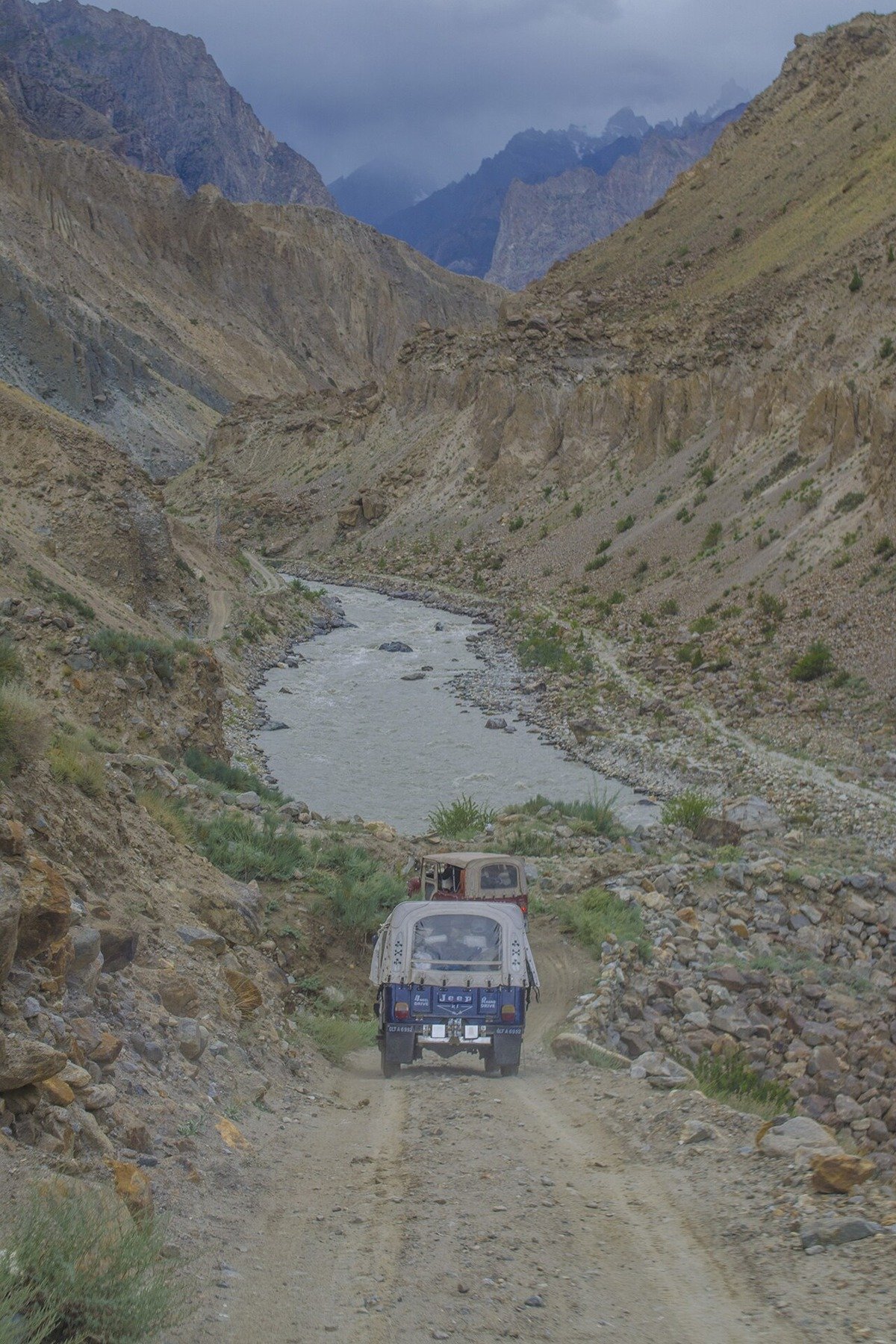
The two real centres are the Hushe Valley in Baltistan and the valleys around Karimabad in Hunza, with Shimshal as a third, harder to reach area. Go With Guide lists ice climbing at Hushe Valley, Hunza and Shimshal, with the season from December to February and the level as advanced.
Hushe is the main venue. In February 2024 a Spanish-French team spent two weeks in the Hushe Valley and climbed lines up to WI4+, including the 300 m Wasoq falls, while training local guides, according to Go With Guide and the American Alpine Journal. The valley sits below Masherbrum in Ghanche District, and the climbing areas lie north of Hushe village.
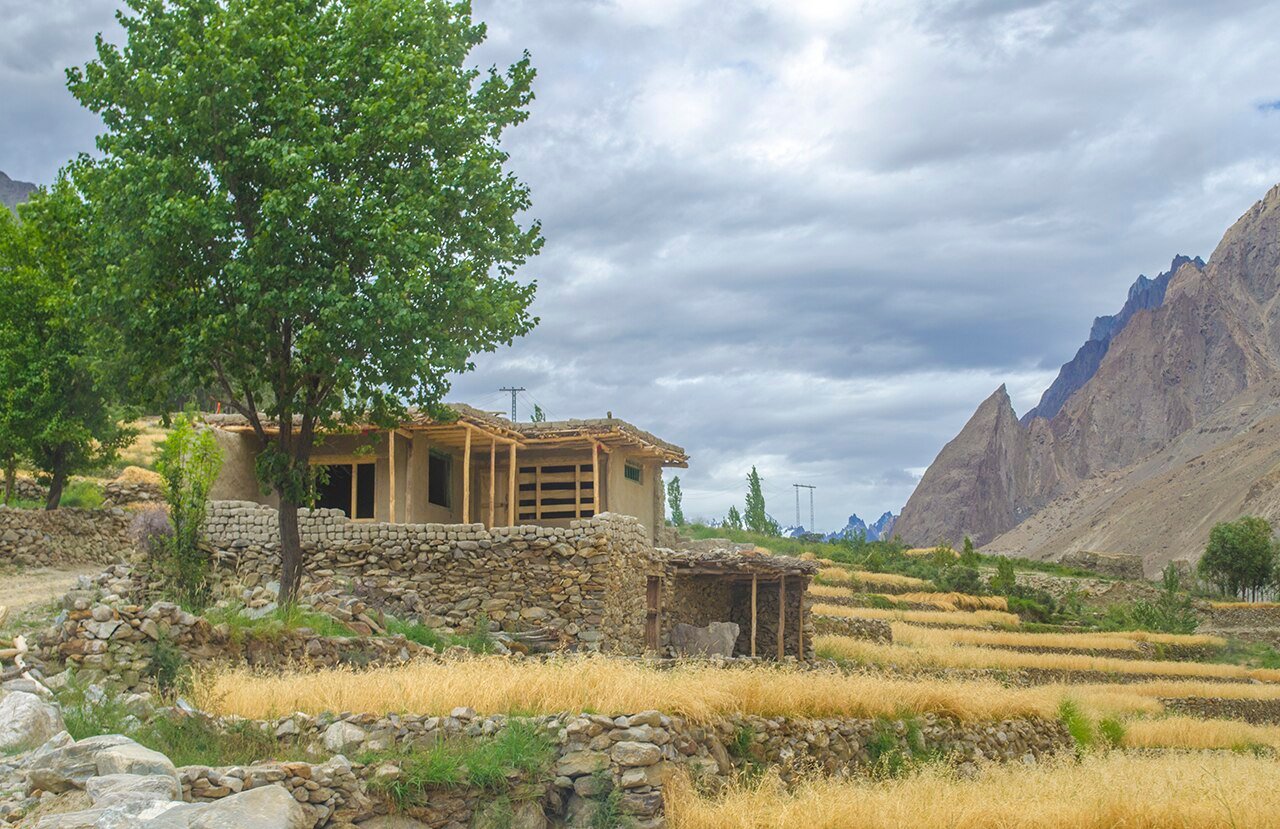
Hunza is the more accessible venue. In December 2018 the Italian-Australian climber Giovanni Trambaiolo teamed up with Pakistani climbers Javed Ali and Naveed Iqbal and climbed a number of probable new ice routes within 25 to 45 minutes’ drive from Karimabad, in the Nagar Valley southwest of Karimabad and near Attabad Lake, plus a waterfall near Shimshal village, according to the American Alpine Journal.
Shimshal also matters. Pakistan’s national ice climbing championship has been held on the Malangudi glacier in Shimshal, according to Go With Guide, and the 2018 team climbed a waterfall near Shimshal village.
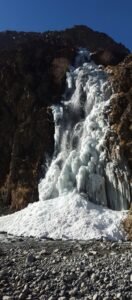
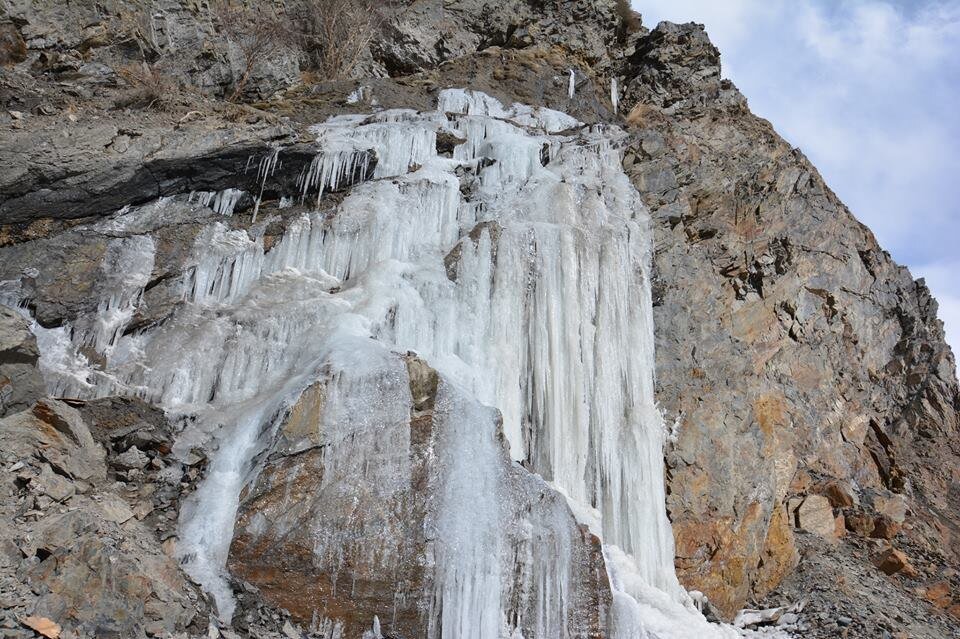
Manthokha Waterfall in Kharmang, Baltistan, freezes into a wall of ice in January, and it is worth a visit from Skardu to see a frozen waterfall, but no published source lists it as a climbed ice route, so this guide does not present it as one.
How did ice climbing start in Gilgit-Baltistan?
Ice climbing here is very new. The first routes around Hunza were climbed in December 2018 by Trambaiolo, Ali and Iqbal, and the biggest of those, Happy New Year Falls near Phakker village, was climbed in 12 pitches up to WI4+. The Hushe Valley routes followed in February 2024, when the Spanish-French team led by Rafa Vadillo climbed four routes north of Hushe village and trained local guides, with ice tools and crampons provided by the Italian brand CAMP for the local guides to keep. Guided ice climbing in Hushe began commercially in early 2025, and the Hushe-based operator Discover Karakoram says its guides have climbed the ice every winter since. That short history is exactly why a local guide matters so much: the ice is little documented, and the people who know it best are the handful of guides who have been climbing it since it began.
When is the ice climbing season in Gilgit-Baltistan?
The season runs from December to February, when temperatures stay well below freezing. Go With Guide, Discover Karakoram and the American Alpine Journal all give the same window. January and February are usually the most reliable months, when the ice is thickest and the cold is steadiest. December can work too, but early season ice may still be thin.
Ice is a living surface, not a fixed structure. It changes with temperature, sun and snowfall, so the same fall can climb very differently from one week to the next, and a route that was solid last winter may not form the same way this winter. Check conditions with your guide before you travel, and again on the day you climb.
| Month | What to expect |
|---|---|
| December | Season opens, ice forming, some falls still thin |
| January | Coldest and most reliable, ice at its thickest |
| February | Still reliable, the month the 2024 Hushe expedition climbed |
| March | Season ends, ice softens, no published guiding |
What skill level do you need for ice climbing here?
You need to be an experienced climber, or a fit beginner on a guided introductory course. There is no easy, casual end to this activity. Go With Guide rates ice climbing in the Karakoram as advanced, and the published Hushe routes run from WI3+ to WI4+, which is steep, technical ice. The Hunza routes range from WI2 to WI4+, so the easiest lines are gentler, but they still demand proper technique, a rope and a belay partner.
WI grades describe how steep and sustained the ice is, and they are subjective. Trambaiolo’s own 2019 guide warns that grades often will not reflect the difficulty of a route at any given time, because the ice itself changes. Treat every grade in this guide as a rough guide from the first climbers, not a promise.
If you have never climbed ice before, book a guided introduction, not a multi-pitch route. If you climb rock but not ice, say so when you book, because the movement, the gear and the risks are different. If you are an experienced ice climber, Hushe offers the longest and hardest lines in the country.
Why do you need a local guide?
Because the ice is new, little documented and far from help. The published record for the whole region is a handful of routes from 2018 and 2024, plus a local guiding community that is still small. Your guide knows which falls have formed this winter, which are safe to climb, how to reach them, and where the avalanche and rockfall danger sits on the approach.
A guide also brings the technical system: setting ice screw anchors, managing the rope, building abseil anchors and judging when the ice or the weather says turn back. Discover Karakoram, the Hushe-based operator that ran the first ice climbing expedition in the Pakistani Karakoram in 2024, is government licensed and based in Hushe and Skardu, and its guides have climbed these walls every winter since.
Book through a licensed local operator and book in advance. The season is short, the guiding community is small, and a trip arranged on arrival may find no guide free. Ask what is included before you pay, since rental gear in the valleys is limited.
What gear do you need for ice climbing?
Ice climbing gear is specialised, and skimping is not an option. The core kit is two technical ice tools, crampons with vertical front points, rigid insulated mountaineering boots, a climbing helmet, a harness and a dry-treated dynamic rope, usually 60 to 70 m long. Protection comes from ice screws, hollow tubes in lengths from about 13 cm to 22 cm that you twist into the ice, clipped with quickdraws. A V-thread tool lets you build retrievable abseil anchors in the ice.
| Gear | Why you need it |
|---|---|
| Two technical ice tools | Your hands on the ice, one per hand, with picks that bite and hold |
| Crampons with vertical front points | Front points kick into vertical ice, your feet do most of the work |
| Rigid, insulated mountaineering boots | A stiff platform for crampons, and warmth in far below zero cold |
| Climbing helmet | Falling ice is the everyday hazard, from pebbles to dinner plate chunks |
| Harness and belay device | Your link to the rope, worn over all your winter layers |
| Dry-treated dynamic rope, 60 to 70 m | Dry treatment stops it soaking up water and freezing |
| Ice screws, 13 to 22 cm | Your protection, screwed into the ice to clip the rope to |
| Warm layers, waterproof gloves, headlamp | Layers for standing still in the cold, gloves that still grip, light for short winter days |
Your guide normally provides the rope, the screws and the anchors, but confirm exactly what is included when you book. Bring your own boots if you can, because fit is everything and rental boots in the valleys are limited. Dress in layers, with a moisture wicking base, an insulating mid layer and a waterproof shell, and never wear cotton, which stays wet and cold.
Cold drains phone batteries fast, so keep a power bank in an inside pocket where your body keeps it warm. The Anker PowerCore 10000 is a light, pocket sized option for keeping a phone charged for navigation and emergency calls. As an Amazon Associate, we earn from qualifying purchases.
For the rest of your winter kit, see our guide to What to Pack for Northern Pakistan.
Is ice climbing in Gilgit-Baltistan safe?
It carries real risk, and no honest guide will call it safe. Trambaiolo’s 2019 guide to ice climbing around Hunza opens with a plain warning: ice climbing and its related activities are extremely dangerous and carry significant risk of personal injury, including paralysis and death. Falling and breaking ice, avalanches and rockfall are all named risks in that guide, and it stresses that the reader alone must verify all conditions before climbing.
The risk is managed, not removed. Climb only with a qualified local guide, wear a helmet at all times, even at the base of the climb, check conditions on the day, and turn back when the ice or the weather looks wrong. Never climb alone. Never climb under a fall that has had sun on it all day. Rescue services in these valleys are hours away, not minutes, so prevention is the whole safety plan.
Altitude adds its own risk. Hushe and the Hunza climbing areas sit high in the Karakoram, so arrive a few days early, move slowly and watch for symptoms. Read our guide to Altitude Sickness in Gilgit-Baltistan before you travel.
How do you arrange an ice climbing trip?
Start with a local operator, not a general booking site. Discover Karakoram, based in Hushe and Skardu, runs guided ice climbing in the Hushe Valley in January and February, and it is the operator that organised the first ice climbing expedition in the Pakistani Karakoram in 2024. For Hunza, ask a Karimabad based operator or your guesthouse for a guide who climbs the Attabad and Nagar falls.
When you enquire, ask for the dates, the group size, exactly what gear is included, what experience level the trip suits, and what happens if the ice has not formed. Book in advance, because the season is only about three months and the guiding community is small. No reliable published prices exist for guided ice climbing in Gilgit-Baltistan, so do not trust a price quoted from a blog. Ask the operator directly and get the full cost in writing before you travel.
Where should you base yourself?
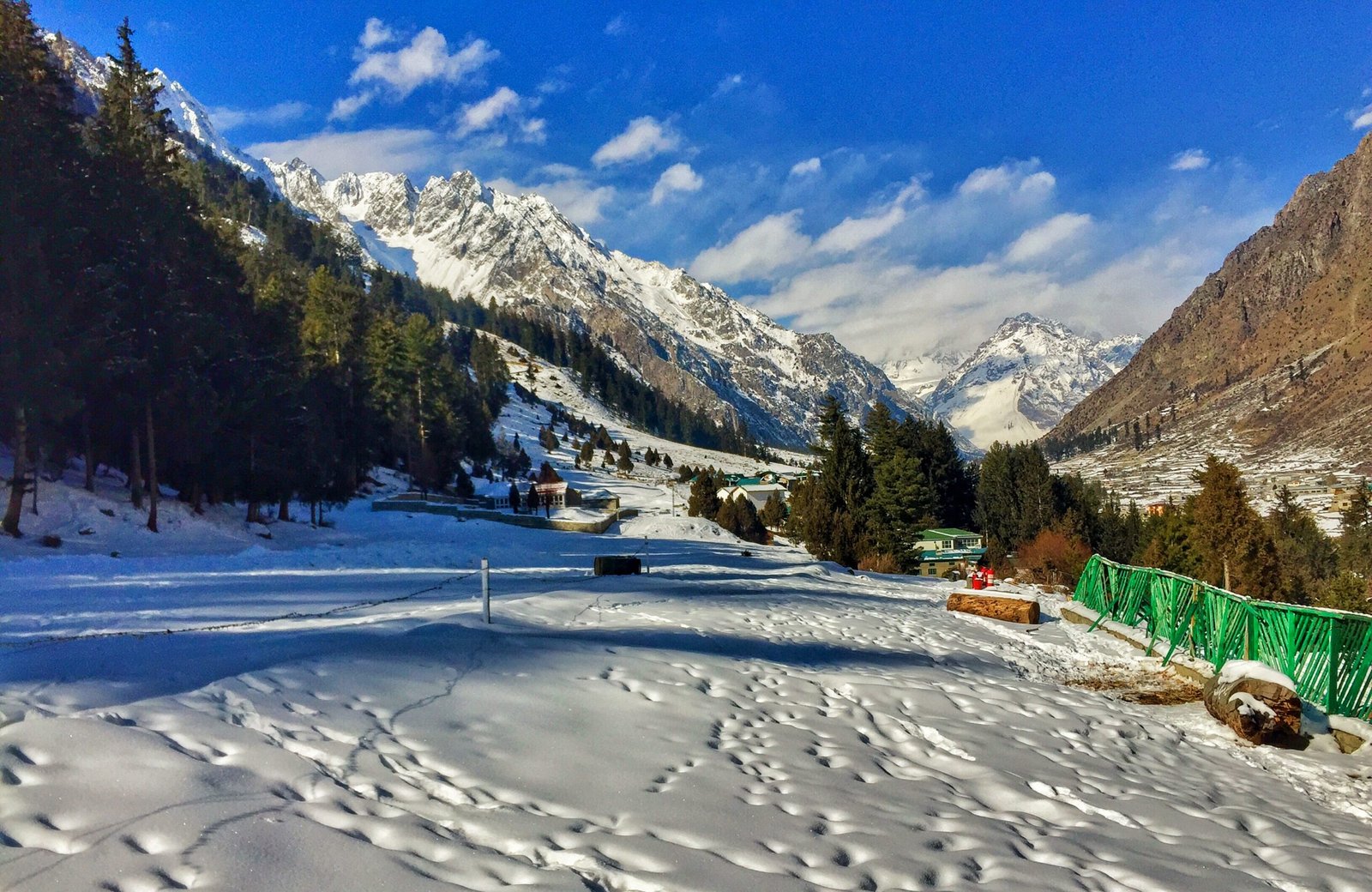
Base yourself in Skardu for Hushe Valley and in Karimabad for the Hunza falls. Both towns stay open in winter with guesthouses running, though the choice is smaller than in summer. Skardu is the gateway to Baltistan and the starting point for the road into Hushe Valley in Ghanche District. Karimabad puts the Attabad and Nagar falls within 25 to 45 minutes’ drive.
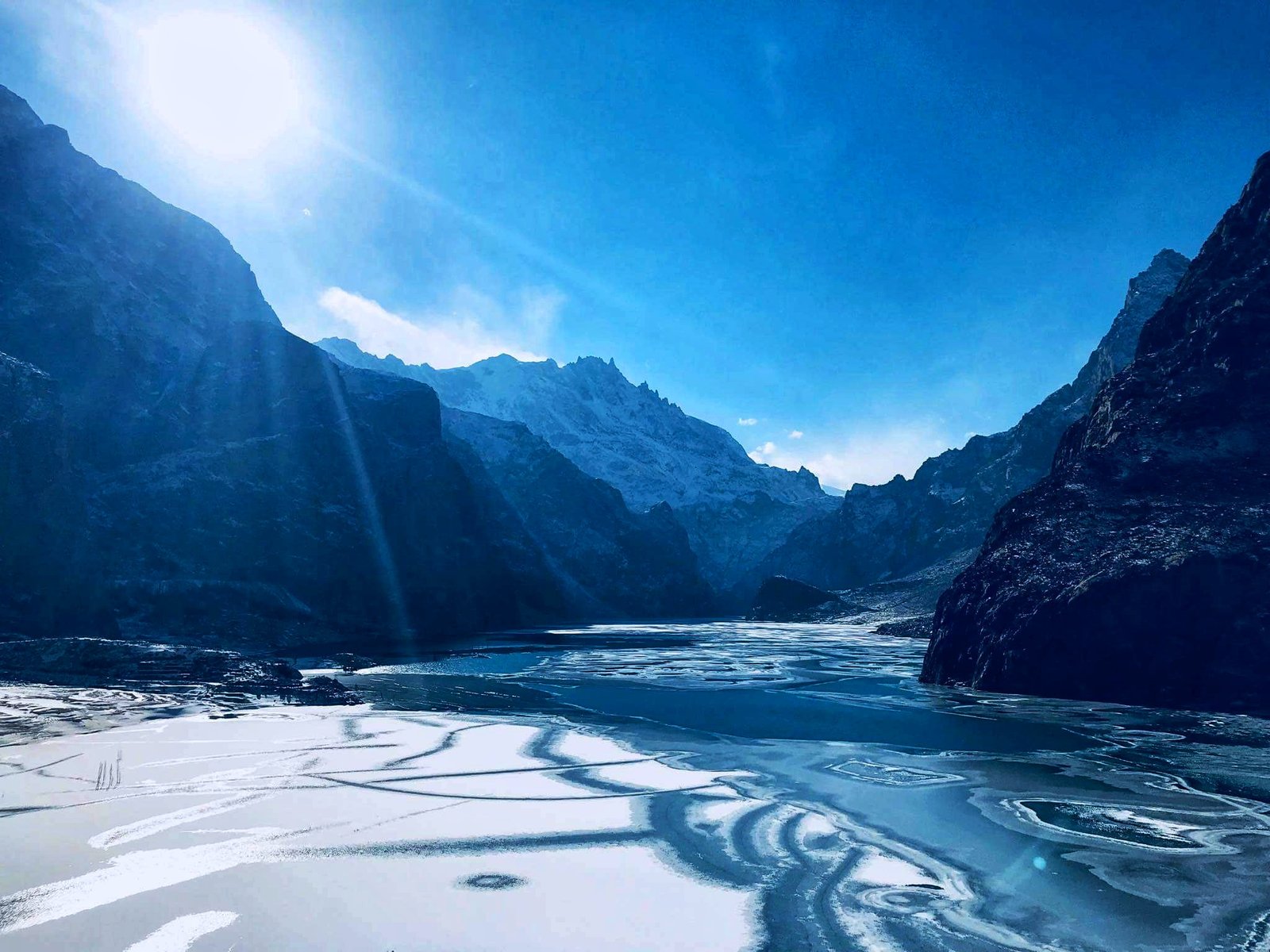
Book ahead and confirm heating and hot water when you book. Winter power cuts are common across Gilgit-Baltistan, and nights are far below freezing, so a guesthouse with reliable heating matters more in February than a view. Our winter guides cover what stays open: Skardu in Winter and Hunza Valley in Winter.
How do you get there in winter?
Winter access is by the Karakoram Highway and by flights. Babusar Pass has been closed since 11 October 2026, with reopening expected about June 2027, so the Karakoram Highway is the only road route in and out. Flights to Gilgit and Skardu run in winter but depend on visual weather clearance and are often delayed, so build a buffer day into any plan that depends on flying out.
Deosai is closed from November to May, so do not plan any route across the plateau in winter. Khunjerab Pass is officially open year round for trade since December 2024, but tourist trips there are unreliable in winter, so treat it as closed for tourists. For the full winter picture, see our Winter in Gilgit-Baltistan guide, and for the Hunza leg, How to Get to Hunza Valley.
Yes, you need either previous ice climbing experience or a guided introductory course with a qualified local guide. Hushe routes run from WI3+ to WI4+, which is steep, technical ice. Fit beginners can learn on easy ice with a guide, but nobody should climb here without instruction, proper gear and a belay partner who knows the area.
December to February is the season, and January and February are usually the most reliable months, when the ice is thickest and the cold is steadiest. December can work too, but early season ice may still be thin. Conditions change every year, so ask your guide about the current state of the falls before you travel.
No, not sensibly. The ice is new, little documented and far from rescue services, and local guides know which falls are formed, which are safe and how to reach them. A guide also supplies technical gear, sets anchors and manages the rope. Book through a licensed local operator in advance, and never climb alone.
Two technical ice tools, crampons with vertical front points, rigid insulated boots, a helmet, a harness and a dry-treated rope. Your guide provides ice screws and anchors. Bring warm layers, waterproof gloves and a headlamp. Ask your operator exactly what is included before you travel, since rental gear in the valleys is limited.
It carries real risk, and no honest guide will call it safe. Falling ice, breaking ice, avalanches and rockfall are all possible, and rescue is hours away. The risk is managed, not removed, by a qualified guide, good gear, checking conditions on the day and turning back when the ice or weather looks wrong.
Base yourself in Skardu for Hushe Valley and in Karimabad for the Hunza falls. Both stay open in winter with guesthouses running, though choice is smaller than in summer. Book ahead and confirm heating and hot water, since winter power cuts are common across Gilgit-Baltistan and nights are far below freezing.