Last updated: 28 October 2026
Short Answer
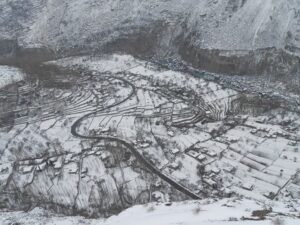
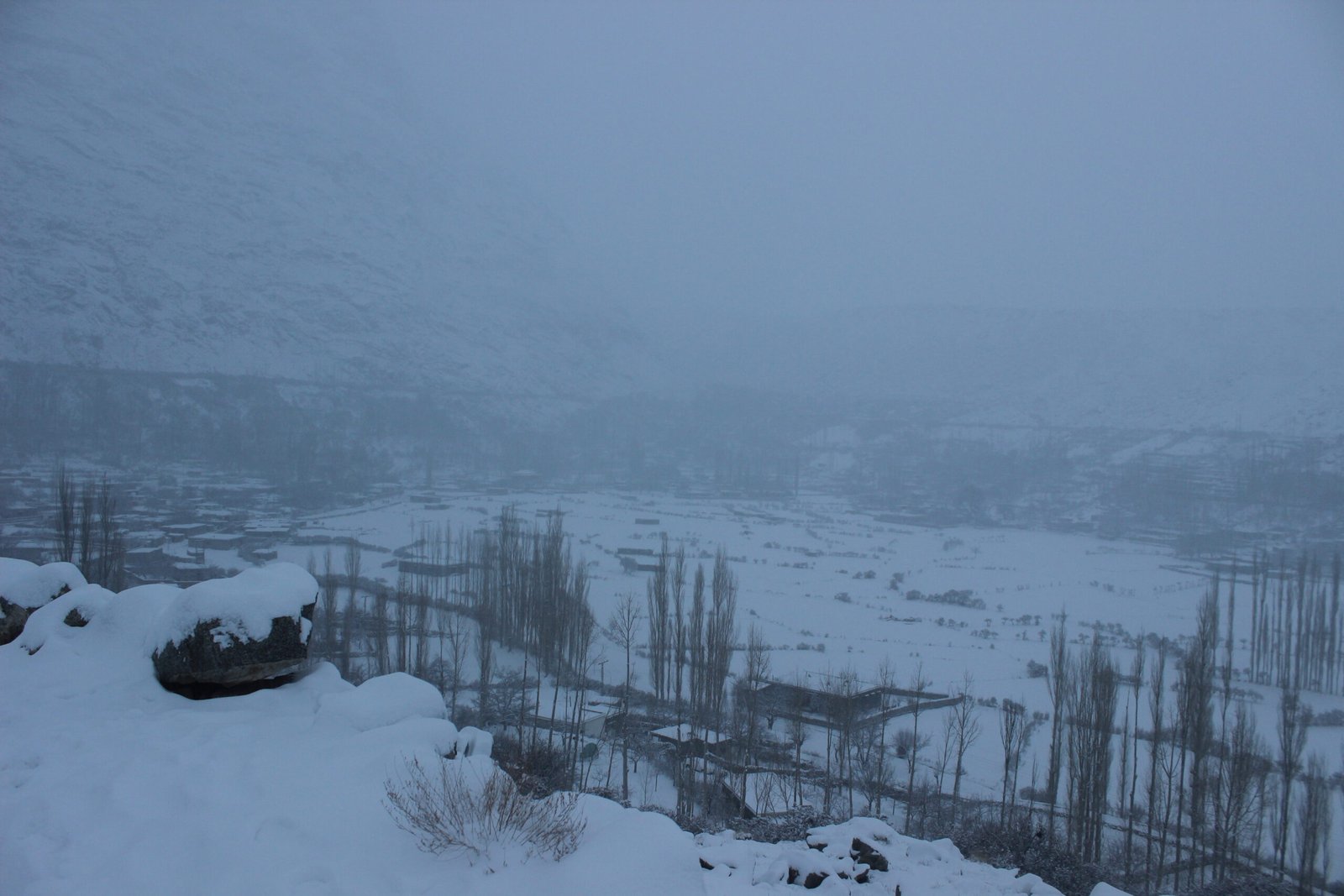
Yes, you can visit Gilgit-Baltistan in winter, but plan it as a winter trip, not as a quieter version of summer. From December to February, expect snow in the valleys, short days, fewer open hotels and restaurants, and plans that may change at short notice. The Karakoram Highway via Besham is the year-round road route into the region, while Babusar Pass is closed in winter. Flights to Gilgit and Skardu run in winter, but they are weather-dependent and cancellations are common. Come for snow-covered valleys, clear winter light and skiing at Naltar, and keep your itinerary flexible, with buffer days built in.
What is winter in Gilgit-Baltistan actually like?
Winter here is not one single experience. Gilgit city, Hunza and Skardu are valley towns at different heights and in different mountain systems, so snow, road access and services vary from place to place. Lower valley roads often stay passable, while higher side valleys, jeep tracks and high passes do not. Choose a base that stays connected, and treat higher places as day-by-day decisions, not fixed bookings.
This is also a much quieter season, with many seasonal guesthouses closed. Confirm accommodation before you arrive, and ask directly about heating, hot water, meals and whether the road to the property is normally kept open after snowfall. Build a winter trip around valley towns, short walks, cultural sights that remain open, and skiing at Naltar — not around high trekking routes or remote valleys. For the wider seasonal picture, see our guide to the best time to visit Gilgit-Baltistan.
When is winter in Gilgit-Baltistan?
For this guide, winter means December, January and February. November can already bring snow on higher ground, and March can still feel like winter in higher valleys, but December to February is the core period when winter conditions and reduced services are most likely to shape your trip.
| Month | What to expect | Best for | Watch out for |
|---|---|---|---|
| December | Winter sets in; snow more likely; short days | First snow scenes, quiet towns | Early road disruption; seasonal places closed |
| January | Coldest, most settled valley month | Snow photography, Naltar skiing, clear days | Flight cancellations; icy roads; fewer services |
| February | Still full winter; late snow possible | Skiing, snow walks, winter valley life | High routes stay closed; do not assume spring |
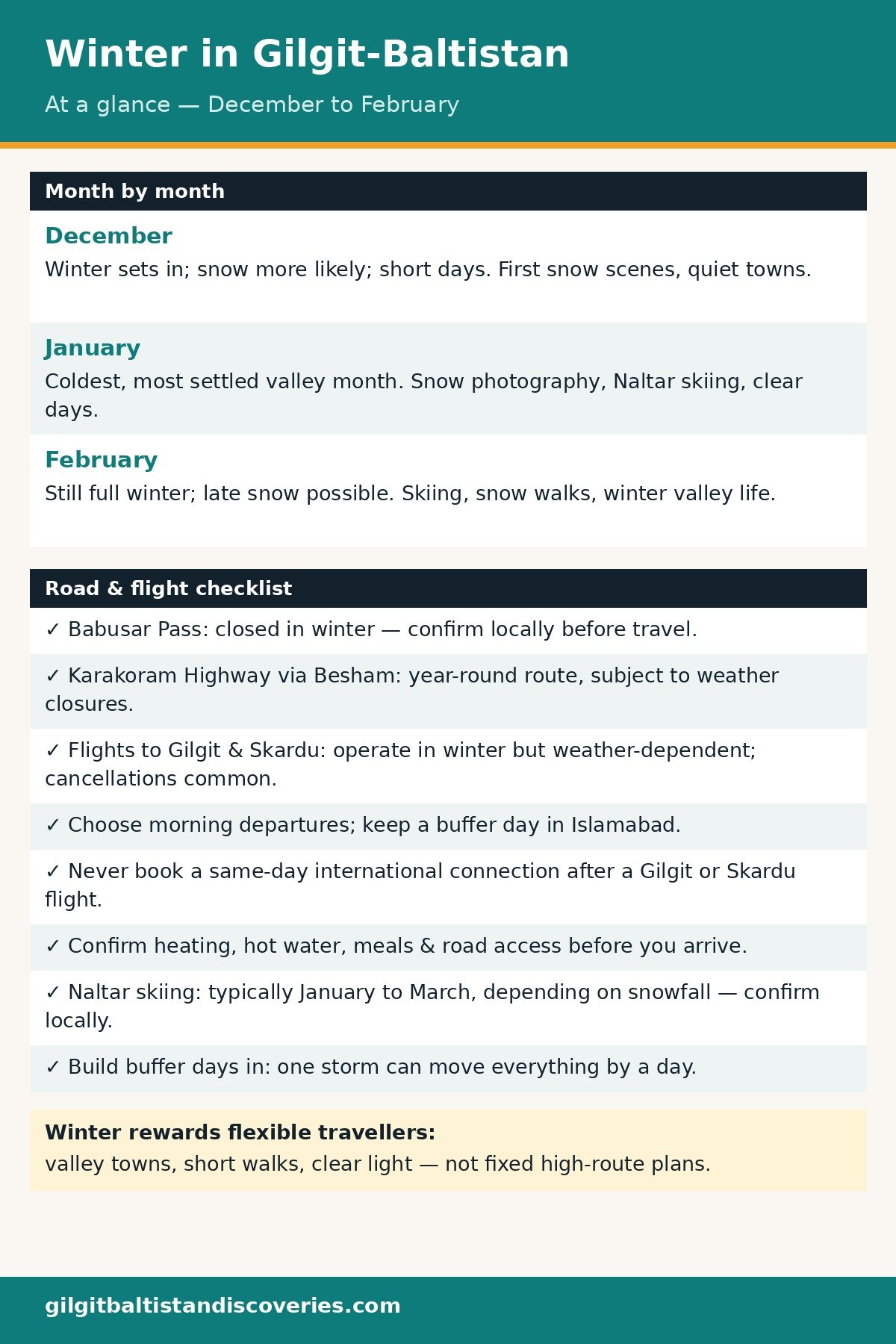
Treat this table as a planning guide, not a forecast. A single storm can change conditions for days, so check the forecast and local road advice close to your travel dates.
How do I get to Gilgit-Baltistan in winter?
Is Babusar Pass open in winter?
No. Babusar Pass is a seasonal summer route between Kaghan Valley and Chilas, closed in winter because of heavy snow and hazardous conditions. Published windows vary slightly, but the broad pattern is consistent: the pass is generally closed from around November until mid-May, with the exact opening depending on snow clearance in spring. Do not plan a December, January or February journey via Babusar, and do not treat any reopening date online as guaranteed.
Is the Karakoram Highway open in winter?
Yes, in the sense that matters for planning: the Karakoram Highway via Besham is the year-round road route into Gilgit-Baltistan, and the route to use when Babusar is closed. Pakistan’s national broadcaster has reported that the highway is kept open year-round, with Frontier Works Organisation teams working through the snowy season, including snow clearance and recovery services.
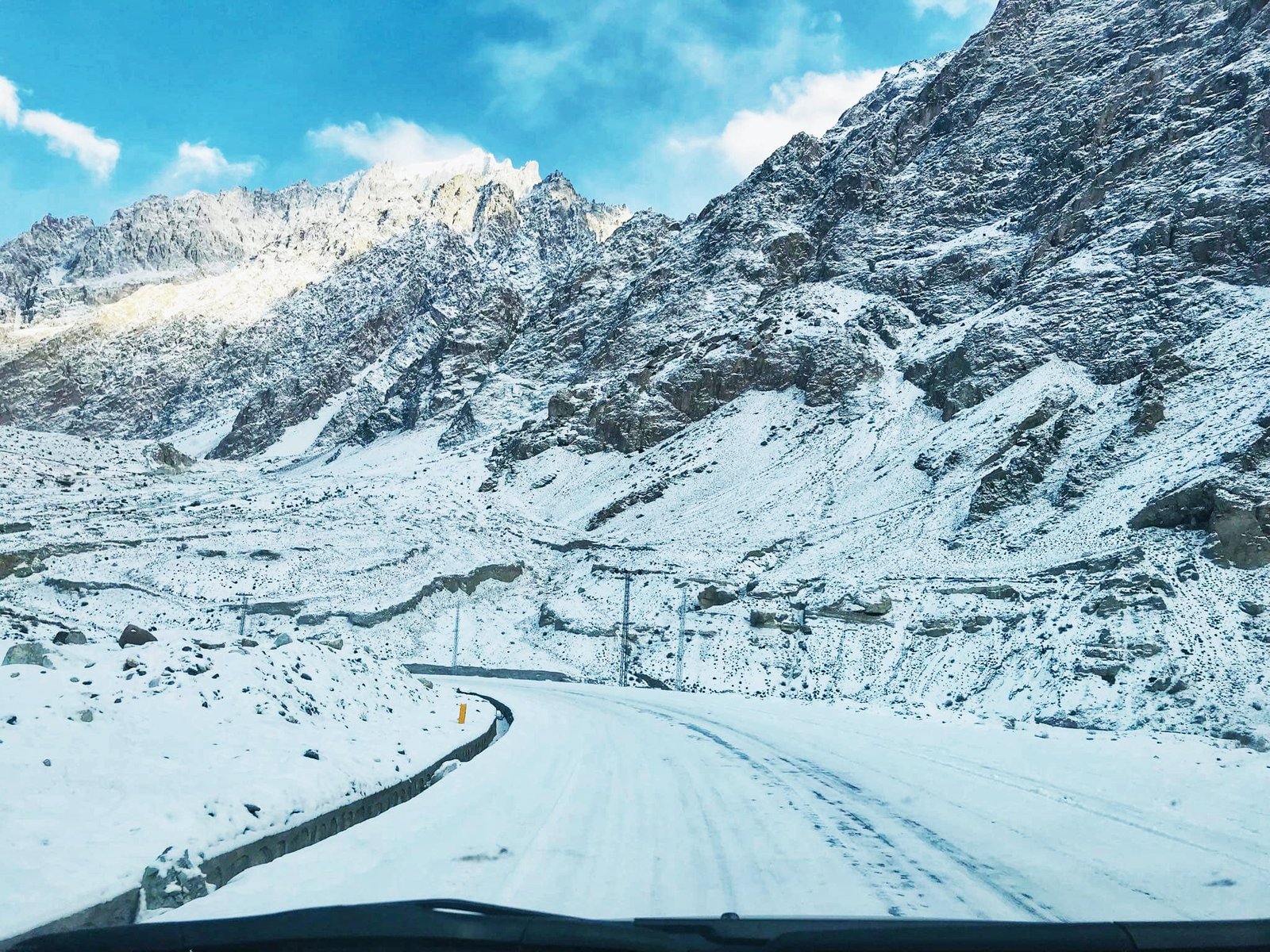
Year-round does not mean trouble-free. The highway can still be delayed or temporarily closed by snowfall, landslides or roadworks, especially on mountain sections. Build in extra time, avoid night driving on mountain roads, and check the day’s road status before you set out. Our guide to how to travel to Gilgit-Baltistan from Islamabad sets out the Besham route, distances and journey times.
What about flights to Gilgit and Skardu in winter?
Flights are the fastest way in when they operate, and the least predictable when winter weather closes in. Services to Gilgit need clear visibility for the mountain-valley approach, so cancellations and long delays are normal on this route, especially in winter. Skardu handles larger aircraft and is somewhat less fragile than Gilgit, but delays still happen.
Choose morning departures where possible, keep a buffer day in Islamabad at the end of your trip, and never book a same-day international connection after a Gilgit or Skardu flight. If a flight is cancelled, ask the airline about the next flight, rerouting or a refund, and keep a road journey via the Karakoram Highway as your backup.
| Route in winter | Status | What it means for you |
|---|---|---|
| Babusar Pass (Naran–Chilas) | Closed in winter | Do not use this route from December to February |
| Karakoram Highway via Besham | Year-round route, subject to weather closures | Use this route; check status daily; allow extra time |
| Islamabad–Gilgit flight | Operates in winter, weather-dependent | Morning flights preferred; cancellations common; keep a buffer day |
| Islamabad–Skardu flight | Operates in winter, weather-dependent | Less fragile than Gilgit, but delays still happen |
| High passes and jeep tracks | Generally closed or unsafe in winter | Leave these for the warmer months |
Where should I base myself in winter?
Gilgit city is the most practical winter base. It is a transport hub, it sits on the Karakoram Highway, and it gives you access to Naltar for skiing and to day trips that do not depend on a high pass. Our Gilgit city travel guide is a good starting point for sights and onward routes from the city.
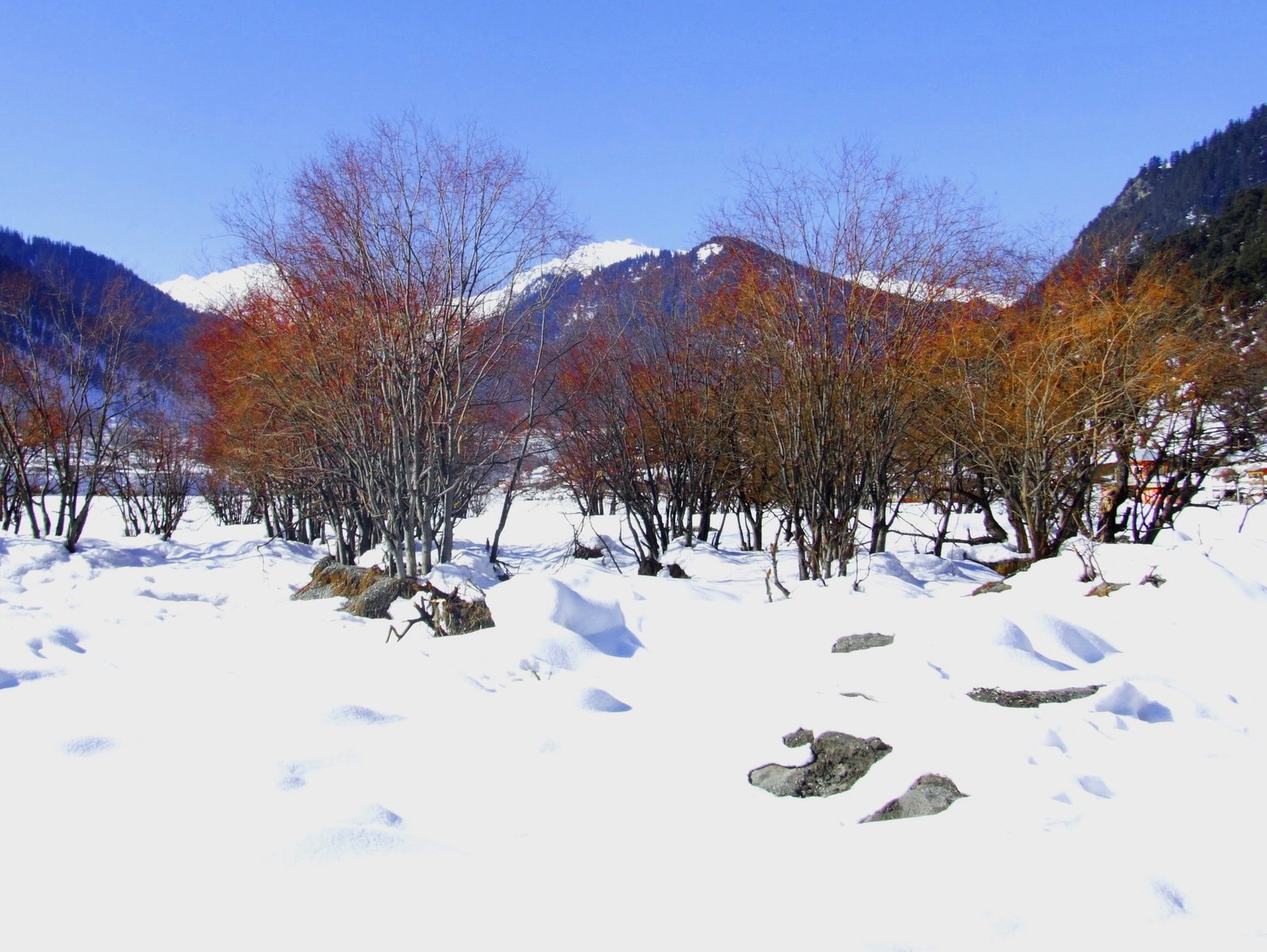
Hunza is also possible in winter, with Karimabad as its best-known base, but it is further north on the Karakoram Highway from Gilgit, so a delay has more knock-on effect. Skardu suits travellers who specifically want a snow-covered Baltistan base, but its winter access depends on the same flight and road uncertainties. Nagar Valley, across the Hunza River from Hunza, is a separate valley and district from Hunza, and should be planned as its own destination rather than assumed to share Hunza’s road or service conditions on any given day. Wherever you stay, book accommodation that confirms it is open in winter, with heating and meals.
What can I actually do in winter?
Can I ski in Gilgit-Baltistan in winter?
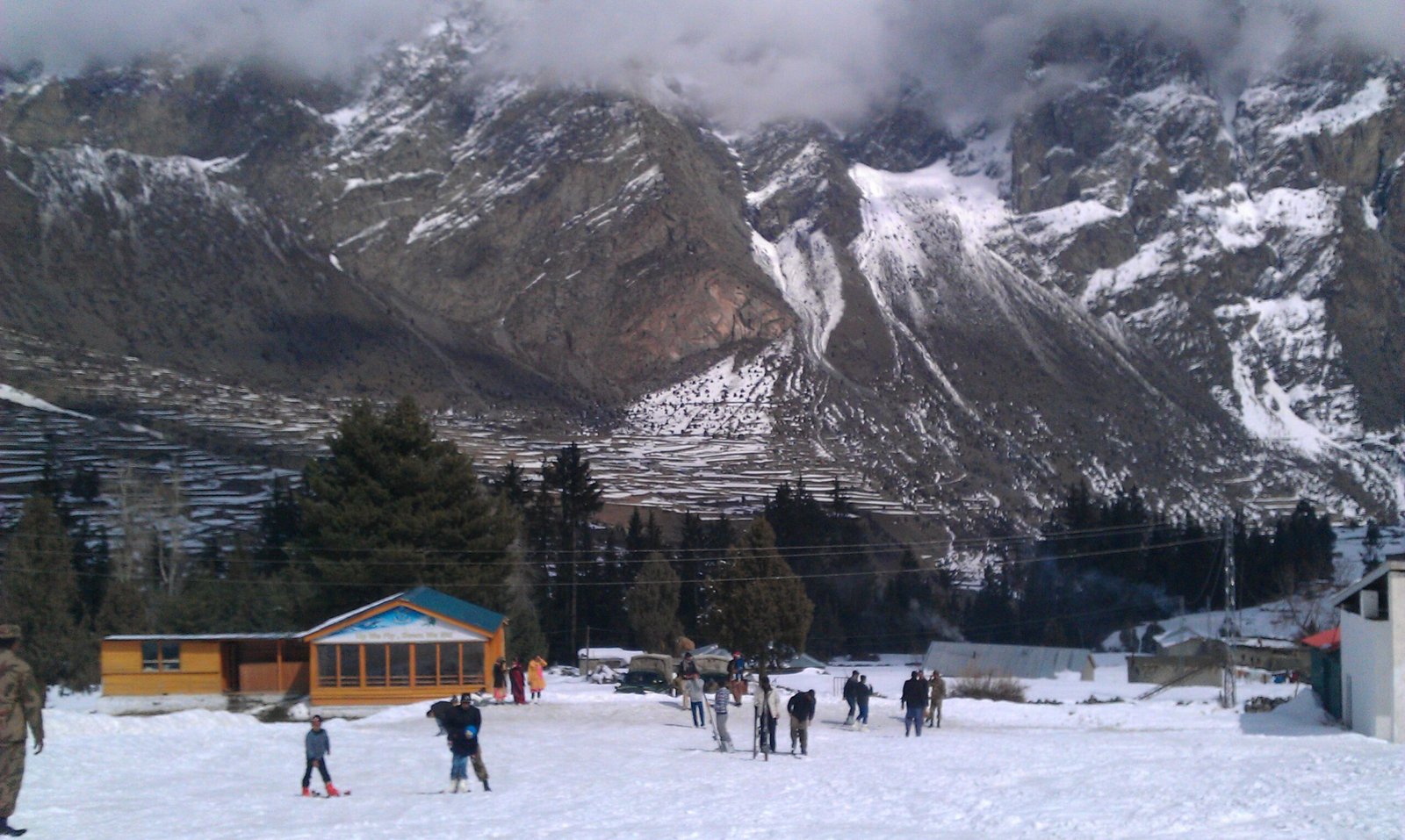
Yes, at Naltar. Naltar Valley, near Gilgit city, is home to Pakistan’s oldest ski resort, managed by the Pakistan Air Force, and its ski slope is a genuine winter attraction. Published guidance puts the typical ski season at January to March, depending on snowfall, so December visitors should not assume full ski operations, and February visitors should still confirm snow and slope conditions locally before travelling to Naltar.
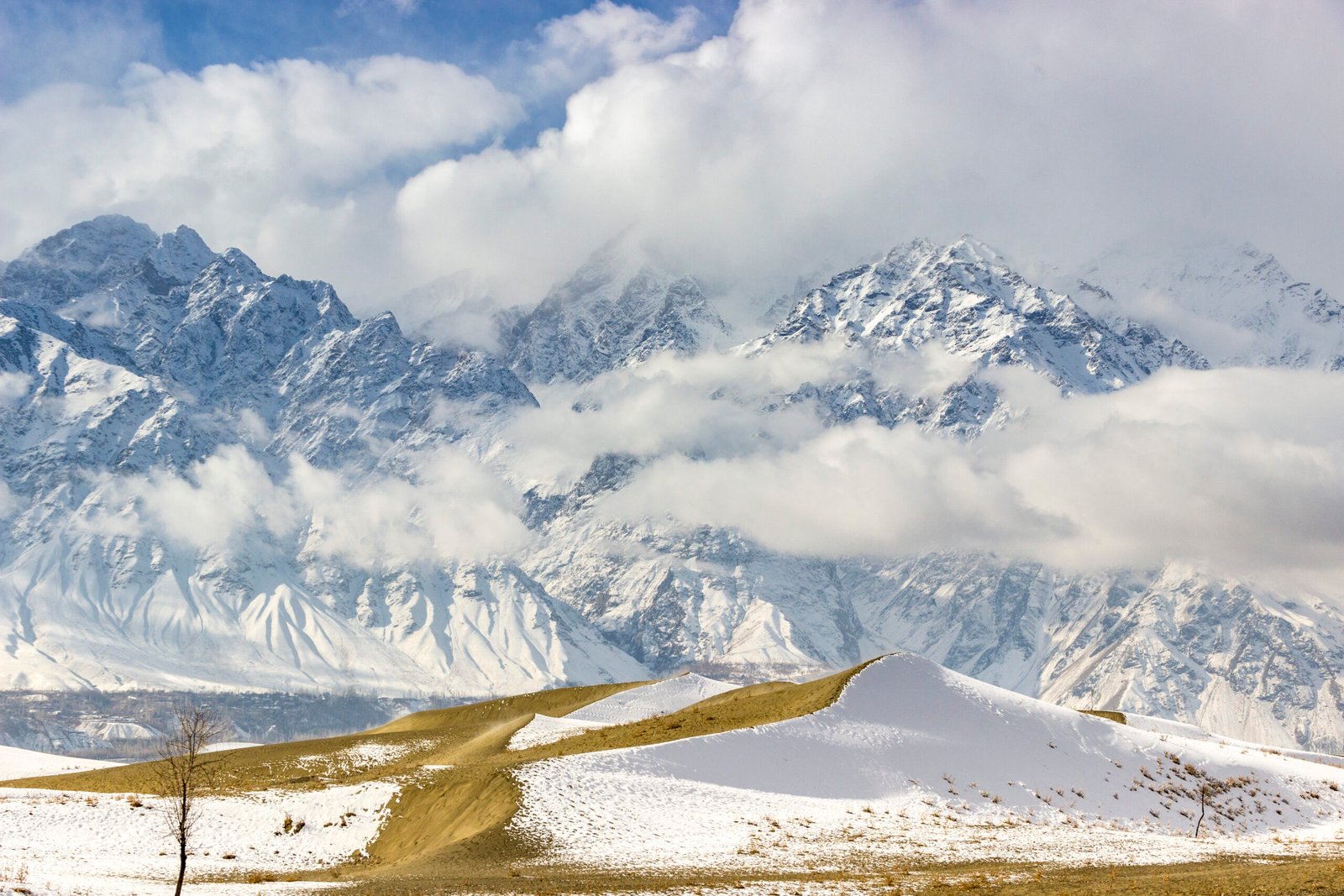
Naltar is not a large international resort: facilities are basic compared with major ski destinations, access is by jeep from Gilgit, and the road can be difficult after snowfall. If skiing is the main reason for your trip, build Naltar into a longer Gilgit stay so a storm day does not end the trip. Winter also rewards slow, low-altitude days: walk valley towns in clear morning light, visit forts, bazaars and viewpoints that stay accessible, and photograph snow-covered peaks from valley roads. In Hunza, Karimabad and nearby villages offer winter walks without a high pass, and a 7-day Hunza valley itinerary can help you judge distances and pacing, adapted to a shorter, slower winter version.
What should I pack for winter in Gilgit-Baltistan?
Pack for serious cold, even in valley towns. Layering matters most: thermal base layers, an insulating mid-layer, a windproof and waterproof outer layer, warm gloves, a hat that covers your ears, and sturdy, waterproof boots with good grip for ice and snow. Sunglasses and sunscreen still matter, because winter sun on snow is strong.
Cold drains phone batteries faster, so carry a power bank in an inside pocket. The Anker PowerCore is a practical choice for long road days when charging points are uncertain. Pack medicines, snacks and water for road journeys, and carry cash as well as cards, since smaller towns may have limited card or ATM access in winter.
What should I not plan in winter?
Do not plan to cross Babusar Pass, drive a high jeep track, trek at altitude, or cross into China via Khunjerab Pass on a winter itinerary without first confirming the current position locally. Do not book a tight, day-by-day itinerary with no slack: a single cancelled flight or closed road section can move everything by a day. Finally, do not assume a place, hotel or activity you read about for summer is available in winter — confirm locally, then book.
Frequently Asked Questions
Is Gilgit-Baltistan open to tourists in winter?
Yes. Gilgit-Baltistan is not closed in winter, but the experience is very different from summer. Valley towns, the Karakoram Highway via Besham, and winter activities such as Naltar skiing remain possible, while Babusar Pass and high routes close. Confirm accommodation, road and flight status locally before travelling.
Is Babusar Pass open in December, January or February?
No. Babusar Pass is closed in winter, generally from around November until mid-May, because of heavy snow and hazardous conditions. The exact reopening date depends on snow clearance each spring, so treat any published date as a window to confirm locally, never as a guaranteed opening day.
Can I fly to Gilgit or Skardu in winter?
Yes, flights operate in winter, but both routes are weather-dependent and cancellations are common, especially for Gilgit, where the mountain-valley approach needs clear visibility. Choose morning departures, keep a buffer day in Islamabad, avoid same-day international connections, and keep the Karakoram Highway as a backup.
Is it worth visiting Hunza in winter?
Yes, for the right traveller. Hunza in winter offers snow-covered valleys, quiet villages and clear light, without summer crowds. It suits visitors who accept flexible plans, cold days and reduced services. It does not suit travellers who need fixed schedules, full hotel choice or high-altitude trekking.
What is the best winter base in Gilgit-Baltistan?
Gilgit city is usually the most practical winter base because it sits on the Karakoram Highway and gives access to Naltar and nearby valley trips. Hunza and Skardu are also possible bases, but both add travel time and weather risk, so confirm accommodation, heating and onward transport before committing to them.