Short Answer
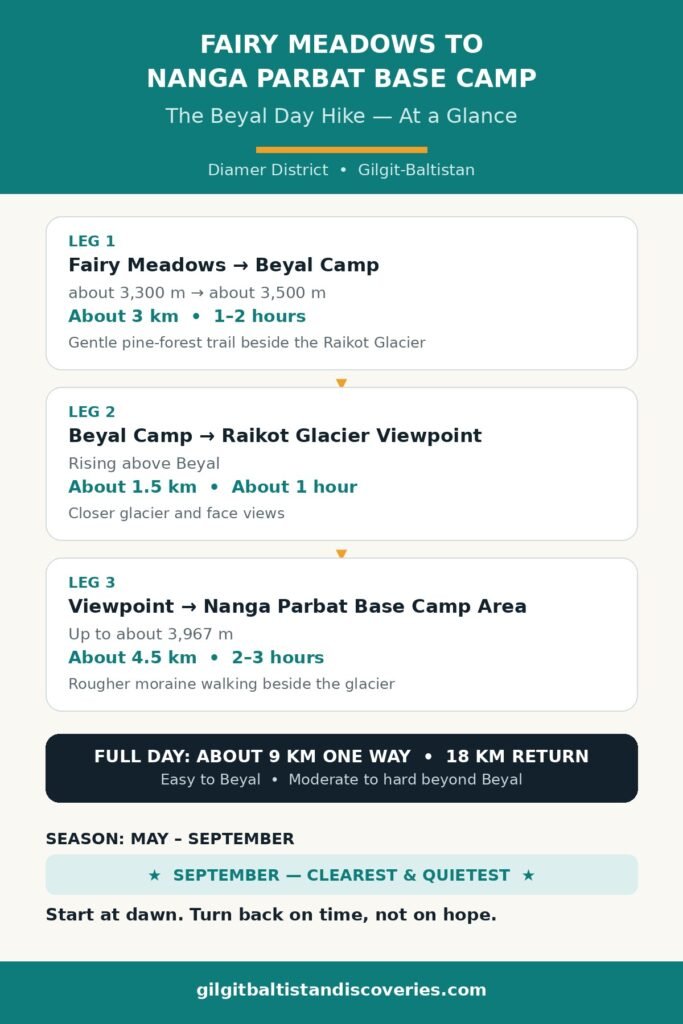
From Fairy Meadows, the walk to Beyal Camp is the easy, high-value leg: about 3 km, 1–2 hours, rising gently from about 3,300 m to about 3,500 m through pine forest beside the Raikot Glacier. Fit, acclimatised walkers can continue from Beyal past the Raikot Glacier viewpoint to the Nanga Parbat base camp area at about 3,967 m — about 9 km one way from Fairy Meadows, and a full, serious day out and back. If you do only one walk from the meadow, walk to Beyal; if you want the foot of the 8,126 m mountain itself, start at dawn, carry more water than you think you need, and set a turnaround time before you leave.
At a glance
| Fact | Detail |
|---|---|
| Starting point | Fairy Meadows, about 3,300 m, Diamer District, Gilgit-Baltistan |
| First leg | Fairy Meadows → Beyal Camp: about 3 km, 1–2 hours, to about 3,500 m |
| Second leg | Beyal Camp → Raikot Glacier viewpoint: about 1.5 km, about 1 hour |
| Final leg | Viewpoint → Nanga Parbat base camp area: about 4.5 km, 2–3 hours, to about 3,967 m |
| Full day hike | Fairy Meadows → base camp area: about 9 km one way, 18 km return |
| Difficulty | Easy to Beyal; moderate to hard beyond Beyal, on rougher moraine |
| Season | May to September; September is usually the clearest month |
| Best for | Walkers already sleeping at Fairy Meadows, with a spare day |
| Not for | Anyone unacclimatised, unfit for a full day on foot, or short on time |
How do you get to the trailhead?
This guide starts at Fairy Meadows on purpose. The jeep track from Raikot Bridge to Tato and the climb to the meadow are covered in full in our Fairy Meadows hiking track guide — read that first. Arrive the day before your walk, sleep at the meadow, and start fresh; combining the climb to the meadow with the base camp day is not realistic.
What is the route from Fairy Meadows to Beyal Camp?
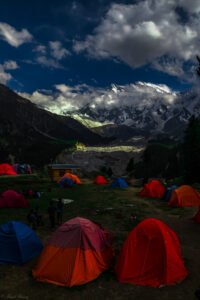
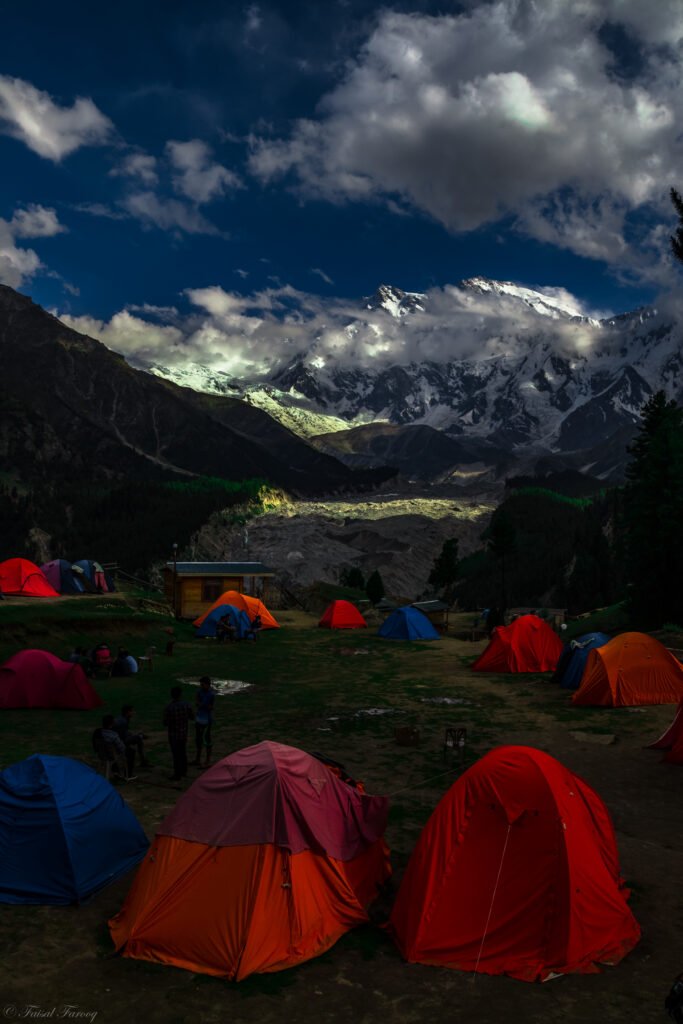
The trail leaves the meadow through pine forest along the terrace above the Raikot Glacier. It is gentle, well trodden and easy to follow in clear weather, mostly level with a gradual climb of about 200 m, and the Rakhiot Face grows larger as you walk. That is why Beyal works for almost everyone staying at the meadow.
Beyal itself is a smaller, quieter settlement and camping area, less crowded than Fairy Meadows. Some walkers stop here for tea or lunch and walk back; others use it as the halfway decision point — continue only if you feel strong, the weather is settled and the time is still early.
Route legs
| Leg | Distance | Time (one way) | Altitude | What to expect |
|---|---|---|---|---|
| Fairy Meadows → Beyal Camp | About 3 km | 1–2 hours | About 3,300 m → about 3,500 m | Gentle forest trail beside the Raikot Glacier |
| Beyal Camp → Raikot Glacier viewpoint | About 1.5 km | About 1 hour | Rising above Beyal | Closer glacier and face views |
| Viewpoint → Nanga Parbat base camp area | About 4.5 km | 2–3 hours | Up to about 3,967 m | Rougher moraine walking beside the glacier |
| Full route, Fairy Meadows → base camp area | About 9 km | A full day return | About 3,300 m → about 3,967 m | Start at dawn; allow a full day out and back |
What does the walk from Beyal to the base camp involve?
Beyond Beyal, the forest gives way to open, rocky moraine beside the Raikot Glacier, and the trail becomes steeper and rougher. This is non-technical walking — no climbing equipment is needed and you do not cross the active glacier — but it demands fitness, sure footing and good judgement, and the altitude gain to about 3,967 m makes every step feel harder.
The base camp area is the working foot of the mountain, used by expeditions climbing the Rakhiot Face: a stark, rocky bowl beneath ice and rock, not a serviced camp. Carry everything you need for the day in your daypack, and turn for home with plenty of daylight in hand — descending tired on loose moraine is where most slips happen.
When should you go?
The Fairy Meadows season runs May to September, and these walks share that window. Outside it, snow closes the upper valley.
| Month | What it is like | Who it suits |
|---|---|---|
| May–June | Greenest meadows, wildflowers, thinner crowds, cold nights | Walkers who prefer quiet trails and do not mind cold mornings |
| July–August | Warmest and busiest, fullest huts, monsoon landslide risk on approach roads | Travellers tied to summer holidays, with buffer days built in |
| September | Post-monsoon clarity, the most reliable Nanga Parbat views, cool bright days, crowds gone | Anyone who can choose — the best month for this walk |
| October–April | Outside the normal season; snow and closed access are likely | Not recommended for this day hike |
September is the month to pick if you have a free choice: clearer air, a more reliably visible face and a quieter trail. Whatever month you choose, check weather and approach roads the day before and keep a spare day — a cloudy day at Fairy Meadows is common.
Do you need a guide or porter for this walk?
To Beyal, most confident walkers manage without a guide in clear weather. Beyond Beyal, a Gilgit-Baltistan local guide is strongly recommended, especially if visibility drops or you are unsure about the moraine route; a guide also knows the trail’s current state and can pace the day realistically.
Porters and horses can be arranged at Fairy Meadows, but for a day hike walk with a light daypack and leave heavy luggage at your hut or camp. Agree any fee before anyone starts walking and confirm locally — rates change with the season, so this guide gives no prices. Carry cash, as there is no reliable card or mobile payment up here.
On permits and registration, sources differ: some operator pages describe a permit or licensed-guide requirement, others describe checkpoint registration. Ask at the Raikot checkpoint and your Fairy Meadows host what applies to you, and carry CNIC or passport and visa copies.
What should you pack for the day?
Pack for a full day at close to 4,000 m, where sun, wind, cold and rain can all appear before lunch. The full kit system is in our essential packing list for Gilgit-Baltistan; the day-hike essentials are:
| Item | Why it matters on this walk |
|---|---|
| Broken-in boots with good grip | Loose moraine and stony descents punish new or smooth-soled shoes |
| Trekking poles | Knees and balance on the moraine, especially on the way back |
| Warm layer plus waterproof shell | Cold wind at the viewpoint and base camp, even on a warm meadow morning |
| Sun hat, sunglasses, sunscreen | Strong sun at altitude, with glare off ice and rock |
| At least 2 litres of water, plus snacks | No reliable shops or water points beyond Beyal; carry more than you expect |
| Water filter or purification tablets | A Sawyer Squeeze water filter lets you treat stream water safely on the trail |
| Headlamp with spare batteries | Insurance if a long day runs late; never plan to need it, but carry it |
| First-aid kit, blister kit, personal medication | Help is hours away; small problems must be handled on the trail |
| Power bank | No grid electricity at the meadow; a portable power bank keeps phone and camera alive for navigation and photos |
| Cash, ID and insurance details | Cash for food and local help; insurance that covers high-altitude trekking |
If you are buying boots for this trip, broken-in KEEN Targhee 3 hiking boots are a solid, well-proven choice — but buy them weeks ahead and break them in before you reach Diamer District, not on the moraine.
How do you handle the altitude?
Fairy Meadows sits at about 3,300 m, Beyal at about 3,500 m and the base camp area at about 3,967 m — moderate altitude, but high enough for altitude sickness, especially after a fast arrival from the lowlands. Sleep at Fairy Meadows first, walk slowly, drink steadily, and do not push on if headache, nausea or dizziness is not easing with rest.
If symptoms worsen, or anyone becomes confused, loses coordination or struggles to breathe at rest, descend immediately and seek help. Tell your host or guide where you are going and when you expect to return.
What does a sensible two-day plan look like?
- Day 1 — Arrive and settle. Reach Fairy Meadows, settle in, and take a short afternoon meadow walk.
- Day 2 — Beyal, and base camp if conditions allow. Walk to Beyal in the morning (1–2 hours). Continue via the viewpoint only if fit, acclimatised, well supplied and early enough to return in daylight; otherwise enjoy Beyal and walk back.
- Day 3 — Descend. Keep the descent separate from a long drive if you can.
Two nights at Fairy Meadows is the minimum that does this place justice; one night leaves no margin for a cloudy day.
FAQs
How long does the walk from Fairy Meadows to Beyal Camp take?
The walk takes about 1 to 2 hours one way, covering roughly 3 kilometres on a gentle forest trail. Most walkers reach Beyal without a hard climb, so it suits a relaxed morning outing. Allow extra time for photographs, stream crossings and rest stops, and keep the return walk in your plan.
Can you walk from Fairy Meadows to Nanga Parbat base camp in one day?
Yes, fit and acclimatised walkers can do it as a full day, covering about 9 kilometres one way to the base camp area at about 3,967 metres. Start at dawn, carry plenty of water and food, and set a firm turnaround time. If weather, tiredness or poor visibility intervene, turn back; Beyal and the viewpoint still give a superb day.
Do you need a guide for Beyal and the base camp?
The trail to Beyal is well trodden and many walkers manage it without a guide, but a Gilgit-Baltistan local guide is wise beyond Beyal, where the route crosses rougher moraine beside the Raikot Glacier. A guide also helps with route-finding in poor visibility, local arrangements and pacing at altitude. Confirm current local practice before you set out.
When is the best time to walk from Fairy Meadows to Beyal and base camp?
May to September is the main season, with September often the clearest and quietest choice. May and June bring green meadows and wildflowers, while July and August are warmest and busiest, with monsoon landslide risk on approach roads. Outside the season, snow can close the upper valley, so do not plan this walk in winter.
What should you carry for the Beyal and base camp day hike?
Carry water, snacks, a warm layer, a waterproof shell, sun protection, a headlamp, a first-aid kit and broken-in boots with good grip. Add trekking poles for the moraine descent, a power bank for your phone and camera, and cash for food and local help. Leave heavy luggage at Fairy Meadows and walk with a light daypack.
Last updated: 29 October 2026