Last updated: 4 November 2026
Short Answer
Choose Swat first for the easier, greener, more family-friendly introduction to Pakistan’s north: a shorter journey from Islamabad, gentle valley walks, and a ski resort at Malam Jabba. Choose Hunza first for the bigger, drier, higher drama of the Karakoram — forts above Karimabad, turquoise Attabad Lake, the Passu Cones, and the road to Khunjerab Pass. In short: Swat is the softer landing, Hunza the grander spectacle.
One geography point first: Hunza is in Gilgit-Baltistan; Swat is in Khyber Pakhtunkhwa, not Gilgit-Baltistan. They are different provinces’ valleys, reached by different roads. Comparing them is fair; confusing them is not.
What kind of scenery does each valley offer?
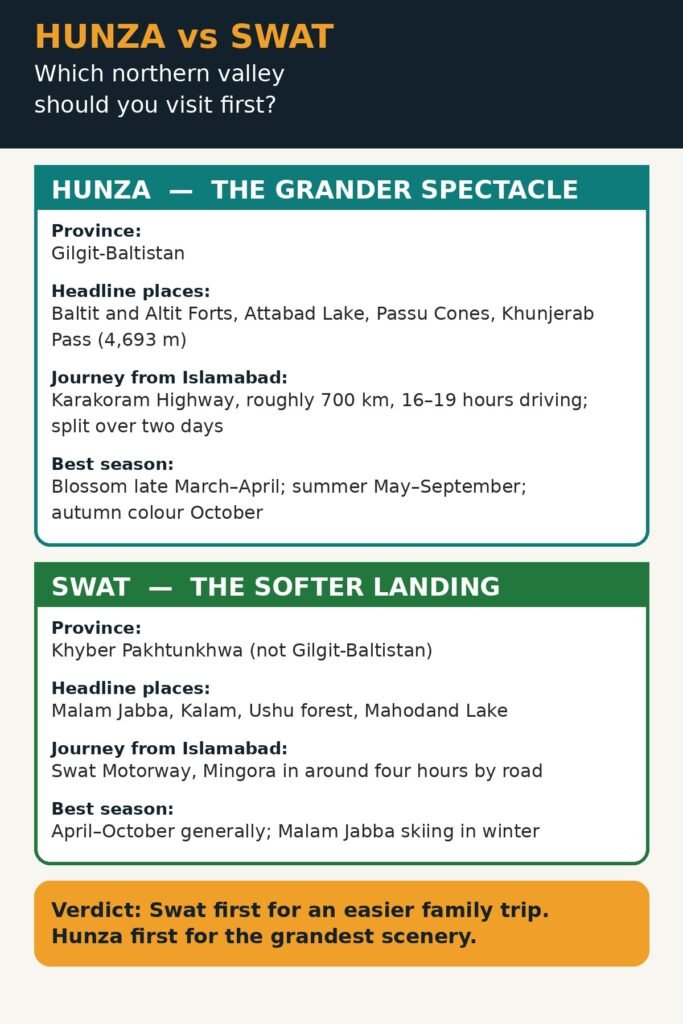
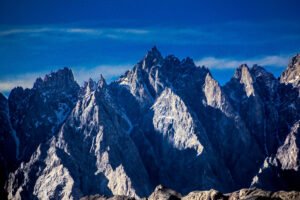
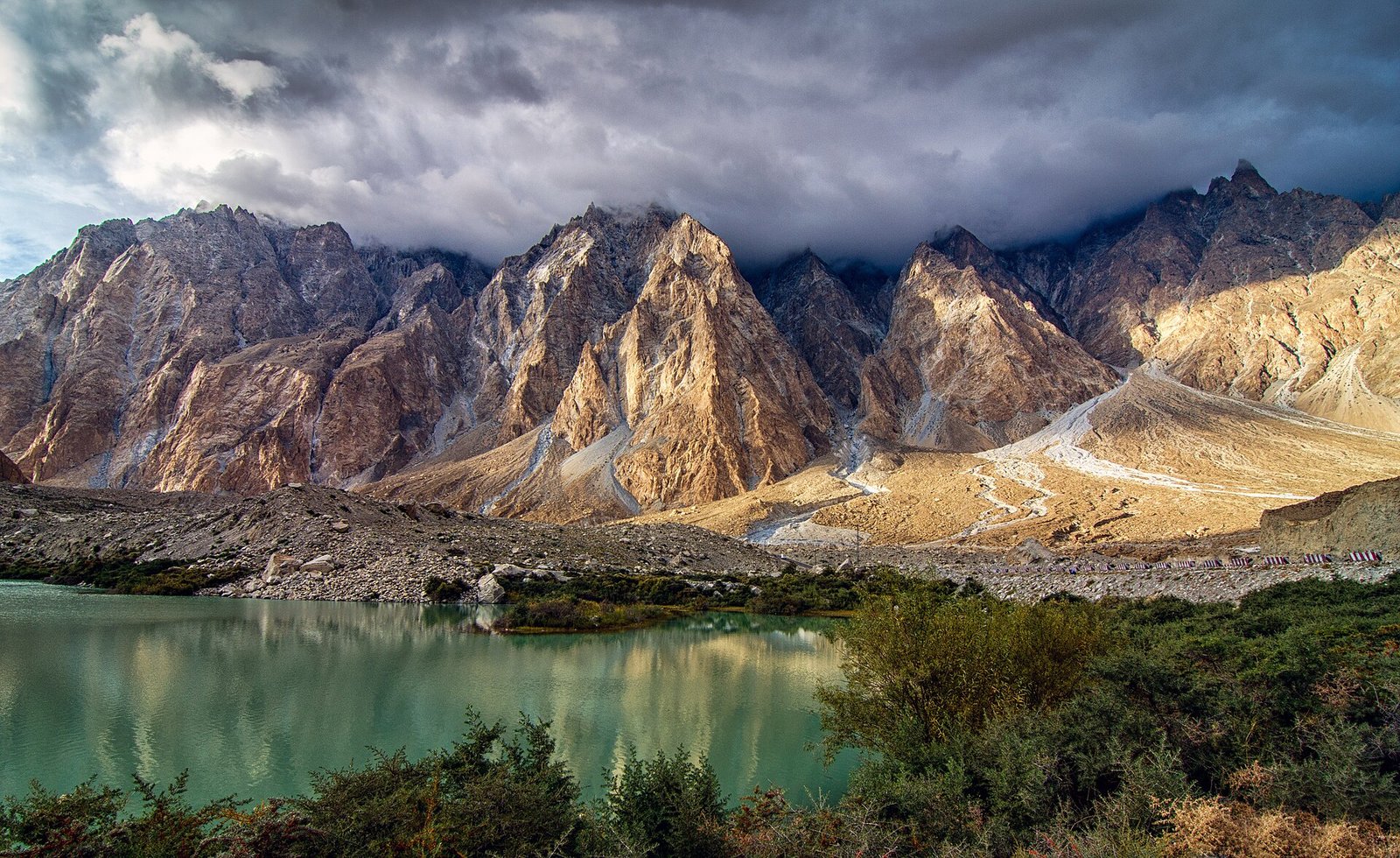
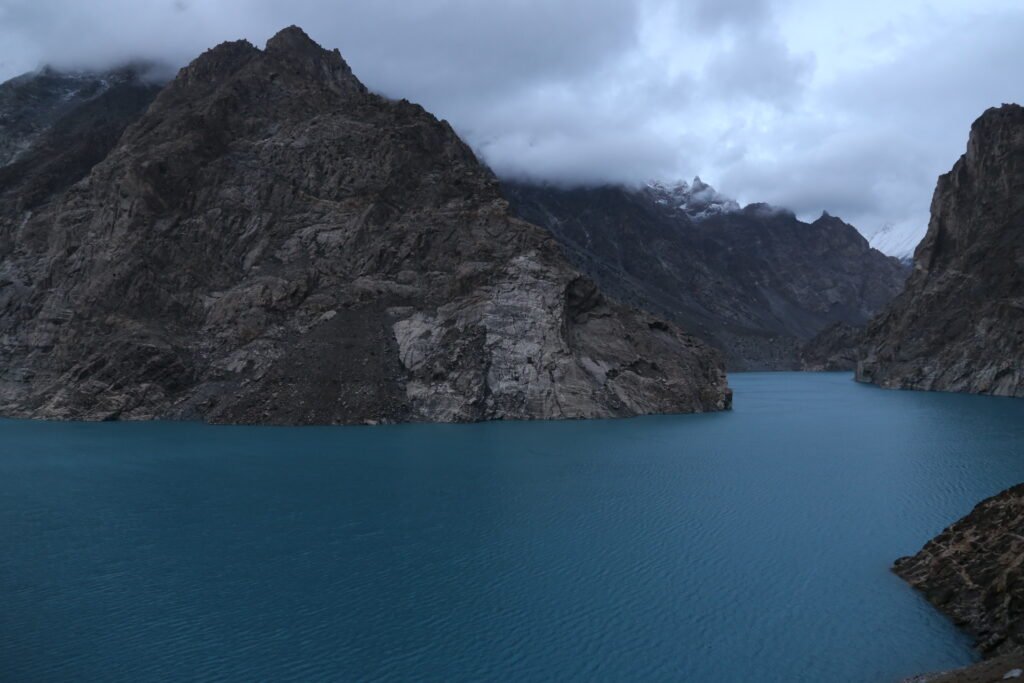
Hunza is a high, dry, vertical landscape. The valley floor around Karimabad sits at roughly 2,400–2,600 m (sources vary), beneath peaks among the most dramatic in Pakistan. Terraced apricot orchards and poplar-lined water channels cling to steep slopes beneath snow-covered giants such as Rakaposhi. Attabad Lake, formed when a landslide dammed the Hunza River in January 2010, adds an improbable stretch of turquoise water to a landscape that otherwise runs in greys, greens, and white.
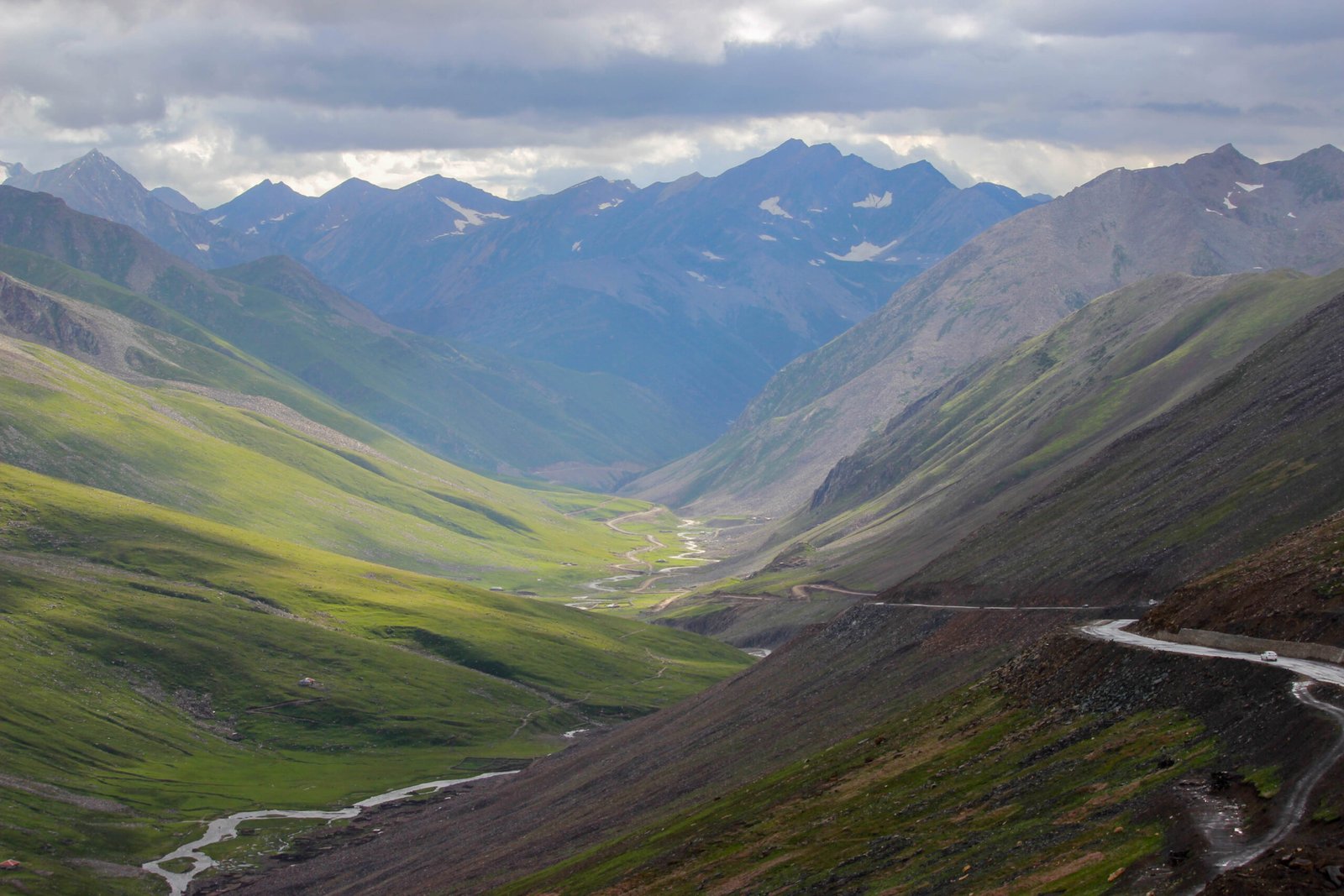
Swat is greener, softer, and lower. Its main town, Mingora, sits at under 1,000 m, and even Kalam, the upper valley’s base town, is only around 2,000–2,070 m. Pine and cedar forests, meadows, orchards, and the Swat River shape the scenery rather than bare rock and glacier. Ushu forest, the meadows around Mahodand Lake, and Malam Jabba’s green slopes give Swat a gentler, more pastoral beauty. Travellers often call it the Switzerland of Pakistan — Swat charms, while Hunza overwhelms.
How easy is each valley to reach?
This is where Swat wins clearly for first-time visitors. The Swat Motorway (M-16) has transformed the journey from Islamabad, and Mingora is commonly reached in around four hours by road. From Mingora, Malam Jabba is roughly 45 km away, and Kalam is about 100 km further up the valley. Beyond Mingora, expect slower mountain roads and check conditions before heading to Kalam or Mahodand Lake.
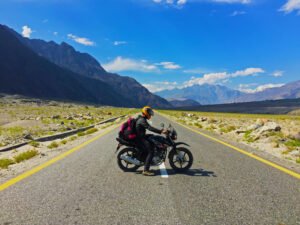
Hunza is a commitment. The Karakoram Highway (KKH, the N-35) from Islamabad to Karimabad is roughly 700 km and takes around 16–19 hours of driving in normal conditions, a journey to split over two days rather than attempt in one. You can also fly to Gilgit and drive on, but flights are weather-dependent and should never be the only plan. The KKH itself is one of the world’s great drives — but accept that getting there is part of the trip, not a minor detail.
If your time is short, Swat is the practical answer. If you have a week or more and want the journey to be an adventure in itself, Hunza earns the extra days.
What are the headline places in each valley?
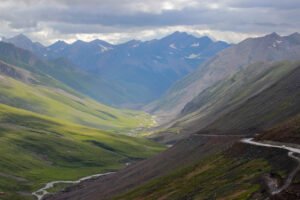
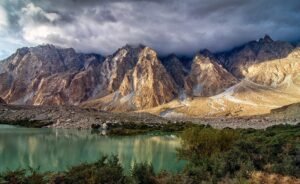
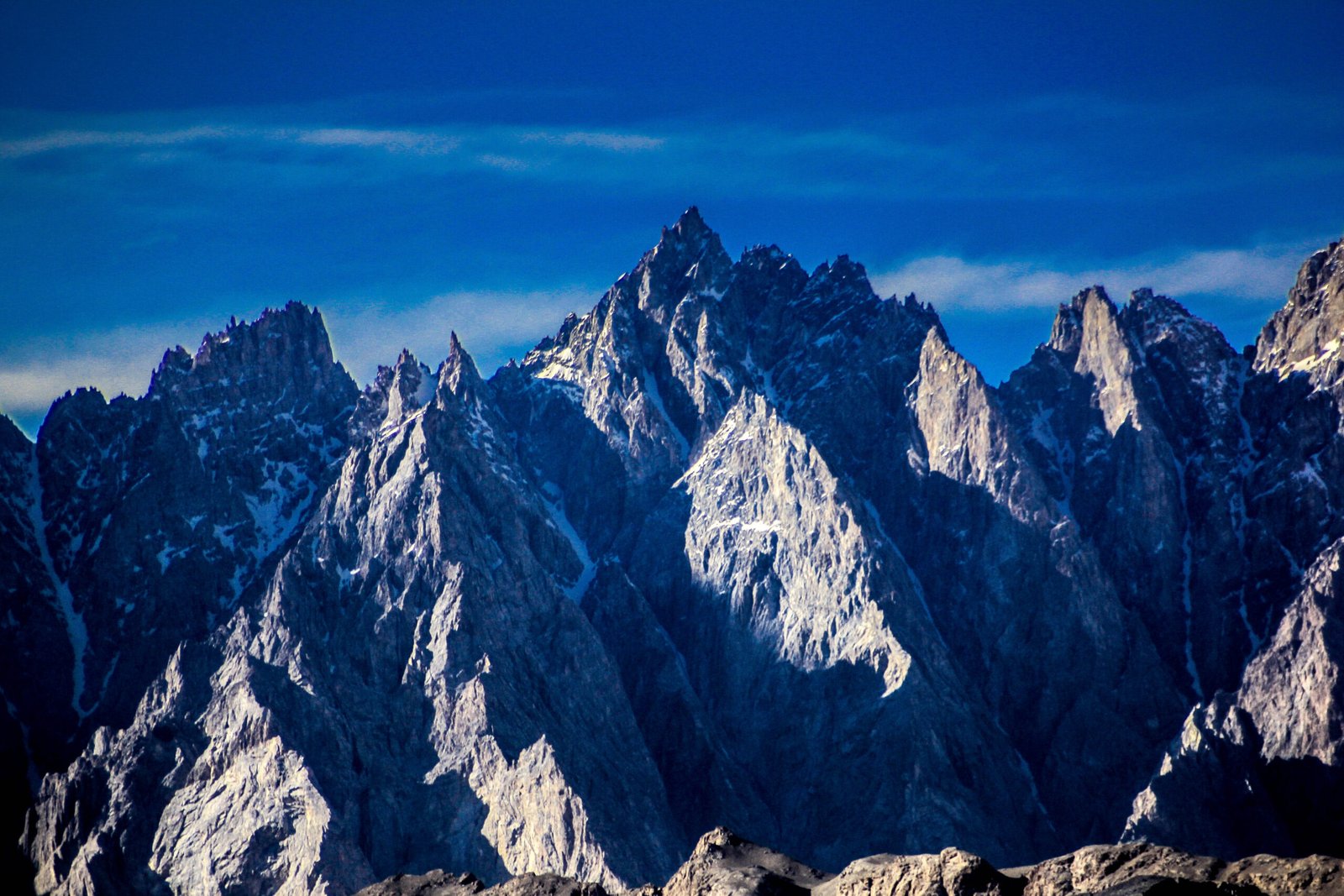
In Hunza, start in Karimabad, the valley’s main town and former seat of the Mirs. Baltit Fort rises above the old town, and Altit Fort, older still, sits nearby with its old settlement and royal garden below. Both are on UNESCO’s tentative World Heritage list and reward a guided visit. Attabad Lake is a short drive north for boating and photography, and the road continues through Gulmit to Passu, where the serrated Passu Cones rise above the valley floor. The ultimate extension is Khunjerab Pass at 4,693 m, the highest paved border crossing on Earth; May to October is the comfortable season.
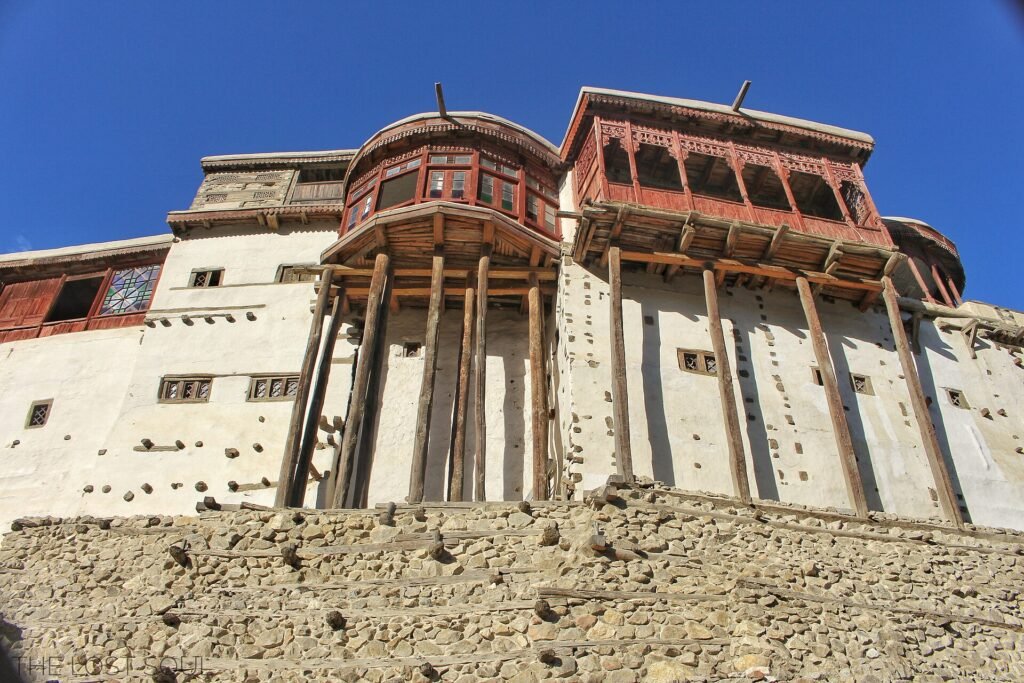
alls, red wooden balconies, and a stone base under a clear blue sky. Photo: Fassifarooq via Wikimedia Commons (CC BY-SA 4.0).
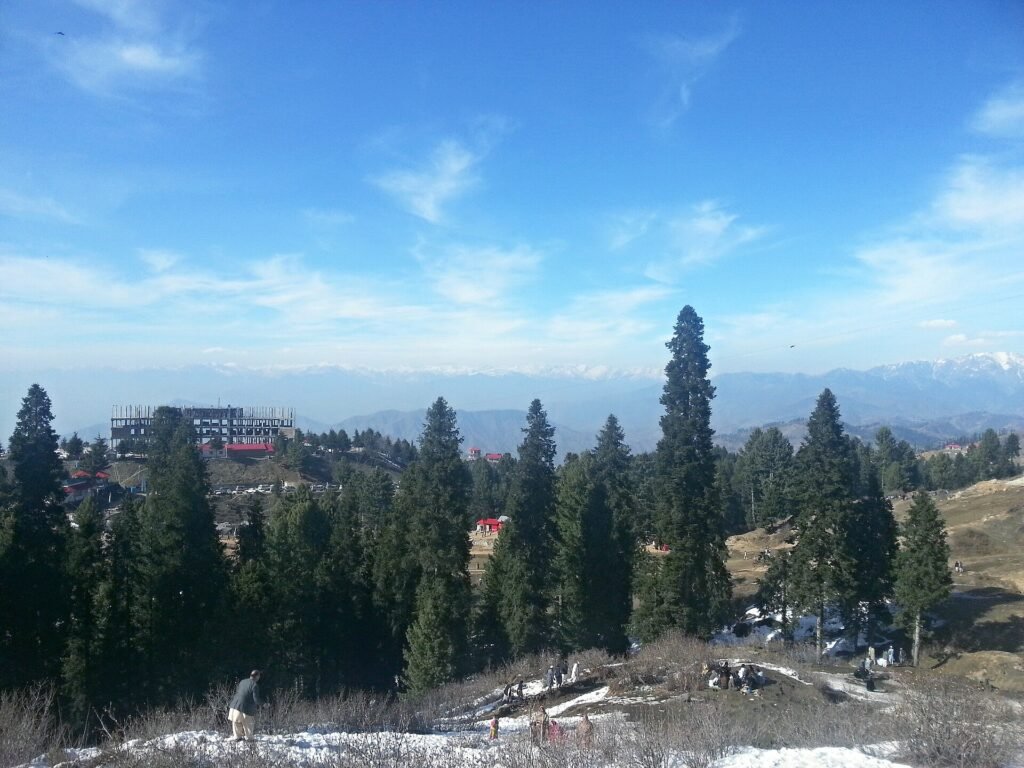
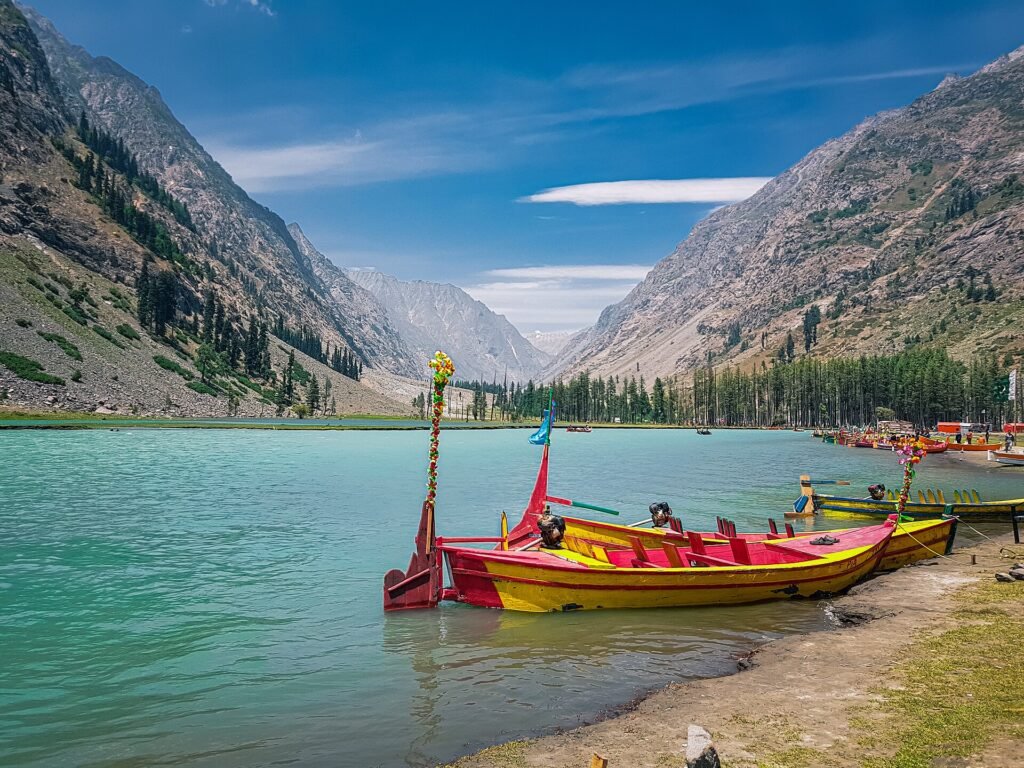
In Swat, start in Mingora, then choose your direction. Malam Jabba, about 45 km away at roughly 2,800 m, is Pakistan’s best-known public ski resort in winter and a green highland escape in summer, with a chairlift and forest walks. Kalam, roughly 100 km from Mingora, is the base for the upper valley: Ushu forest for easy walks, and Mahodand Lake, about 35–40 km beyond Kalam by jeep track, at roughly 2,850–2,930 m. Swat also carries a deep Buddhist heritage, with ancient sites scattered through the valley.
When is the best time to visit each valley?
Their calendars differ in useful ways. Hunza’s headline seasons: blossom late March–April, summer from May to September when the high valleys and Khunjerab Pass are fully open, and autumn in October, when the orchards turn gold. Winter in Hunza is beautiful but cold, with shorter days and some services closed.
Swat’s season is longer at the lower end. April to October covers the main window, with summer the peak for Kalam and Mahodand Lake, generally accessible from late spring to autumn. Winter is Malam Jabba’s moment, making Swat the only one of the two with a straightforward winter-sports option. The trade-off: the road to Kalam is typically closed or difficult through the coldest months, so winter Swat trips stay lower down, around Malam Jabba.
Which valley suits trekking, and which suits families?
Hunza is the stronger trekking valley, from gentle village walks along the water channels above Karimabad to serious glacier country around Passu and beyond. The honest catch is altitude: valley floors above 2,400 m and passes far higher, so acclimatise, build in buffer days, and take local advice. Families can still love Hunza — forts, lake, and viewpoints are all road-accessible — but the distances are longer and the days bigger.
Swat is the easier family valley: shorter drives, lower altitudes, greener picnic spots, and straightforward accommodation around Mingora, Kalam, and Malam Jabba. Trekking exists around Kalam, but it is generally less extreme than Hunza’s high Karakoram country. If anyone in your group struggles with altitude or long mountain drives, Swat is the kinder choice.
Hunza vs Swat at a glance
| Hunza | Swat | |
|---|---|---|
| Province | Gilgit-Baltistan | Khyber Pakhtunkhwa (not Gilgit-Baltistan) |
| Main town | Karimabad (roughly 2,400–2,600 m) | Mingora (under 1,000 m) |
| Signature scenery | Dry, high Karakoram drama; glaciers, terraces, turquoise lake | Green valleys, pine and cedar forests, meadows, river |
| Headline places | Baltit and Altit Forts, Attabad Lake, Passu Cones, Khunjerab Pass (4,693 m) | Malam Jabba, Kalam, Ushu forest, Mahodand Lake |
| Getting there from Islamabad | KKH, roughly 700 km, 16–19 hours driving; split over two days | Swat Motorway, Mingora in around four hours by road |
| Best seasons | Blossom late March–April; summer May–September; autumn colour October | April–October generally; Malam Jabba skiing in winter |
| Trekking | Stronger and higher; altitude needs respect | Gentler; good walking around Kalam and Ushu |
| Family ease | Very doable, but longer days and higher altitude | Easier: shorter drives, lower altitude, gentler terrain |
| Winter | Cold and quiet; a specialist winter trip | Malam Jabba ski season; upper valley roads often closed |
So, which valley should you visit first?
Visit Swat first if this is your first trip to Pakistan’s mountains, if you are travelling with children or older relatives, if you have only a few days, or if you want a winter ski trip. You will get green valleys, forests, lakes, a ski resort, and Buddhist heritage, all within a manageable journey.
Visit Hunza first if you want the grandest scenery Pakistan offers, if forts, Silk Route history, and glacier country draw you, if you have a week or more, or if the Karakoram Highway itself is part of the dream. Hunza asks more — more driving, more altitude, more planning — and gives more back in sheer scale.
And do not treat this as a final choice. The valleys complement each other: Swat teaches you to love the mountains gently, and Hunza shows you how high that love can go. Either order works. The only mistake is assuming they are the same trip, or the same province, when they are not.
A practical first-trip plan for each valley
Swat in four days: drive to Mingora on day one and settle in. Day two: Malam Jabba, chairlift and forest walks. Day three: drive to Kalam, stopping in Bahrain, and spend the afternoon in Ushu forest. Day four: jeep to Mahodand Lake if the track is open, or Kalam’s riverside trails, then back towards Mingora. Keep a buffer half-day: mountain roads do not respect tight schedules.
Hunza in seven days: break the KKH journey with an overnight stop, reaching Karimabad on day two. One full day for Baltit and Altit Forts and the old town, one for Attabad Lake and Gulmit, one driving to Passu for the Cones. Add a Khunjerab Pass day trip if season and conditions allow, keep one buffer day, and break the return over two days. Rushing Hunza is the most common planning mistake.
Frequently asked questions
Is Swat in Gilgit-Baltistan?
No. Swat is a valley and district in Khyber Pakhtunkhwa province, in Pakistan’s north-west. Hunza, by contrast, is a district in Gilgit-Baltistan. The two valleys sit in different provinces, are reached by different roads, and have distinct landscapes and cultures, so they should never be described as if they were in the same region.
Which is better for a first-time visitor, Hunza or Swat?
Swat is usually the better first trip, because it is closer to Islamabad, lower in altitude, and gentler for families and new mountain travellers. Hunza is the more spectacular valley, but it demands a longer journey and more planning. If you have limited time or are travelling with children, start with Swat and save Hunza for a longer trip.
How many days do I need for Hunza compared with Swat?
Swat works well in three to four days, with Mingora, Malam Jabba, and Kalam as a circuit from Islamabad. Hunza needs at least seven days, because the Karakoram Highway journey alone takes two days each way. Trying to compress Hunza into a long weekend means spending most of the trip in a vehicle rather than in the valley.
Can I visit Hunza and Swat in one trip?
Yes, but only with enough time — two weeks or more — because the valleys lie in different provinces and are reached by separate routes from Islamabad. Most travellers visit one valley per trip and save the other for next time. If you do combine them, plan the journey between them and keep buffer days for mountain roads and weather.
Is altitude a problem in Hunza or Swat?
Altitude matters more in Hunza, where Karimabad sits at 2,400–2,600 m and Khunjerab Pass reaches 4,693 m, so some visitors feel short of breath or tire more quickly. Swat is lower, with Mingora under 1,000 m and Kalam around 2,000 m, so most travellers notice little effect. In either valley, ascend slowly, drink water, and rest if you feel unwell.