If you’ve ever stepped off a 14-hour flight looking like you aged five years in the air, you’re not imagining things.
Long haul flights are genuinely brutal on your skin. The cabin environment is one of the most dehydrating places your skin will ever encounter. Humidity levels inside a plane sit somewhere between 10 and 20 percent. To put that in perspective, the Sahara Desert averages around 25 percent humidity. You are literally sitting in conditions drier than a desert for hours at a time.
For people with naturally dry skin, this is a serious problem. Your skin barrier is already working harder than most to retain moisture. Put it in a pressurized metal tube with recycled dry air for 14 hours and it has almost no chance of arriving at your destination in good condition without some help.
The good news is that a smart inflight skincare routine genuinely changes everything. Not a complicated 12-step situation. Not a bag full of products that TSA will confiscate. A simple, focused routine that keeps your skin hydrated, protected, and comfortable from takeoff to landing.
This guide covers exactly that. The science behind why your skin suffers on flights, what products actually help, and the step-by-step routine that will have you landing with skin that looks rested instead of wrecked.
Why Long Haul Flights Destroy Dry Skin
The Cabin Humidity Problem Is Worse Than You Think
Aircraft cabin humidity is regulated at somewhere between 10 and 20 percent to protect the plane’s structure and electronics. Human skin is comfortable at humidity levels of 40 to 60 percent. That gap is enormous and your skin feels every bit of it over a long flight.
When the air around you contains almost no moisture, it pulls moisture from whatever is nearby. In a cabin full of passengers, that means it pulls moisture directly from your skin. This process is called transepidermal water loss, and in dry skin types it happens significantly faster than in oily or combination skin.
Within the first two hours of a long haul flight, your skin begins losing moisture at an accelerated rate. By hour six, most people notice tightness and discomfort. By hour ten or twelve, dry skin types are dealing with visible flaking, heightened sensitivity, and that uncomfortable feeling where your skin feels like it might crack when you smile.
Recycled Air Makes Everything Worse
It’s not just the low humidity. Cabin air is recycled and filtered, which means it carries less oxygen than what you breathe on the ground. Lower oxygen levels mean your skin cells are receiving less of what they need to function and repair themselves. The result is that dull, grey, lifeless skin tone that many frequent flyers know too well.
The recycled air also carries traces of whatever everyone else on the plane is breathing out, including bacteria and environmental particles that settle on your skin during the flight. For dry skin with a compromised barrier, these particles can cause irritation that wouldn’t happen under normal circumstances.
Pressure Changes Affect Your Skin Too
Cabin pressure is maintained at a lower level than sea level, roughly equivalent to being at 6,000 to 8,000 feet altitude. At this pressure, blood circulation slows slightly. For your skin, that means nutrients and oxygen are being delivered to skin cells more slowly than usual. This contributes to the dullness and the slow recovery your skin experiences during and after long flights.
What Dry Skin Specifically Loses on a Flight
Dry skin already produces less sebum than other skin types. Sebum is your skin’s natural oil and it plays a crucial role in sealing moisture into the skin. Without enough of it, your skin barrier is naturally more permeable, meaning moisture escapes more easily.
On a long haul flight, this already-compromised barrier faces extreme conditions. The result is accelerated moisture loss, increased sensitivity, potential for micro-cracking in severely dry areas, and a compromised ability to protect itself from the environmental irritants in recycled cabin air.
Understanding this is important because it shapes what products you need. You’re not just moisturizing. You’re actively trying to seal a leaky barrier against an aggressively dehydrating environment for many hours.
What Your Inflight Skincare Routine Actually Needs to Do
Seal Moisture In, Not Just Add It
This is the most important concept for dry skin on flights. Products that only add water to your skin without sealing it in are almost useless in a dry cabin. The water you apply will evaporate even faster than what your skin naturally holds because the air is so much drier than what’s on your skin.
You need occlusives. These are ingredients that form a physical barrier on the surface of your skin and prevent moisture from escaping. Think petrolatum, lanolin, shea butter, and certain plant oils. These create that seal your skin desperately needs on a flight.
Provide Deep Hydration That Doesn’t Evaporate Quickly
Before you seal, you want to give your skin as much moisture as possible to lock in. Humectants are ingredients that attract water molecules and hold them in your skin. Hyaluronic acid is the most well-known, but glycerin is equally effective and often more affordable. Aloe vera and panthenol also work as humectants.
The key is to apply humectants to damp skin and then immediately follow with an occlusive layer. This traps the moisture the humectant has attracted rather than letting it evaporate into the dry cabin air.
Protect the Skin Barrier
Your skin barrier, technically called the stratum corneum, is the outermost layer of skin cells held together by a mix of proteins and lipids. In dry skin it’s already thinner and less robust than in other skin types. Products that support barrier function use ingredients like ceramides, cholesterol, and fatty acids, which are the natural building blocks of a healthy barrier.
On a long haul flight, barrier support isn’t optional for dry skin. It’s the foundation of your entire routine.
Stay Simple and TSA Friendly
The best inflight skincare routine is one you’ll actually do. That means it has to fit in your carry-on, comply with TSA liquid restrictions, and be simple enough to do in a small airplane bathroom or even in your seat with a little discretion.
What to Do Before You Even Board the Plane
Start Your Routine at Home, Not at the Airport
The biggest mistake dry skin travelers make is waiting until they’re on the plane to start thinking about hydration. By the time you board, you’ve already been in transit for hours, possibly in air-conditioned airports and taxis that are almost as dehydrating as the cabin.
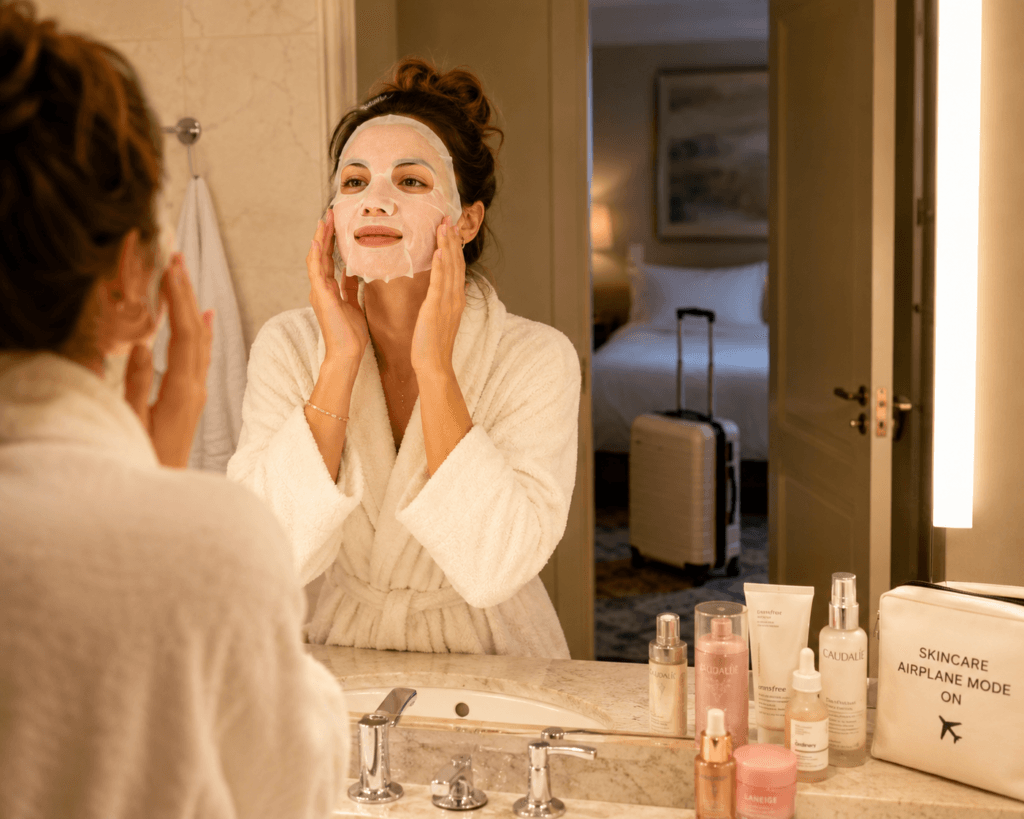
Prep your skin at home before you leave for the airport. Do a proper cleanse, apply your most hydrating serum, follow with a rich moisturizer, and if you’re flying during the day, add your SPF. Give your skin the best possible starting point before the dehydrating conditions begin.
Drink More Water Than You Think You Need
This sounds like generic advice but it genuinely matters for skin. Your skin’s moisture levels are directly connected to your overall hydration. Start drinking extra water the day before a long flight. Avoid alcohol and excessive caffeine in the 24 hours before flying as both are diuretics that pull water from your system.
Bring a large refillable water bottle to the airport, fill it after security, and keep drinking throughout the flight. Aim for at least 8 ounces of water per hour of flight time.
Skip Heavy Makeup on Flying Days
Makeup, especially foundation and setting powder, sits on top of your skin and can interfere with your ability to hydrate during the flight. It also traps pollutants and bacteria from recycled cabin air against your skin for hours. For long haul flights, especially if you’re not meeting anyone important right off the plane, going makeup-free or wearing minimal makeup makes a real difference for your skin.
If you can’t skip makeup entirely, a tinted moisturizer with SPF gives you light coverage without the barrier that heavy foundation creates.
The Complete Inflight Skincare Routine for Dry Skin
This routine is divided into three phases: pre-boarding prep, inflight maintenance, and post-landing recovery. Each phase matters and together they form a complete system for protecting dry skin through a long haul flight.
Phase 1: Pre-Flight Prep (Do This at Home or in the Airport Lounge)
Step 1: Gentle Cream Cleanser
Start with a cream or milk cleanser that cleans your skin without stripping it. Foaming cleansers and gel cleansers that create a lot of lather tend to remove too much of the natural oil that dry skin can’t afford to lose. A cream cleanser lifts dirt and excess product while leaving your skin’s natural lipids intact.
Massage it in gently, rinse with lukewarm water, and pat dry. Don’t rub. Rubbing creates friction that irritates already-dry skin.
Good ingredients to look for: glycerin, shea butter, ceramides, plant oils. Avoid: sulfates, alcohol listed as one of the first five ingredients, strong fragrance.
Step 2: Hydrating Toner or Essence
After cleansing, while your skin is still slightly damp, apply a hydrating toner or essence. These products add the first layer of water-based hydration and prepare your skin to absorb the layers that follow.
Look for toners that contain hyaluronic acid, glycerin, beta glucan, or panthenol. Skip anything that contains alcohol or astringent ingredients, as these are designed to tighten pores and reduce oil, which is the opposite of what dry skin needs.
Pat it in gently with your hands rather than wiping it on with a cotton pad. The patting motion helps the product absorb more effectively and is gentler on dry skin.
Step 3: Hyaluronic Acid Serum
This is where you load up on deep hydration before the flight begins. A hyaluronic acid serum applied to slightly damp skin can hold up to 1,000 times its weight in water, pulling moisture into your skin cells and holding it there.
Apply two or three drops across your face and press it in gently. Don’t tug or pull. You want the product to sit into the skin rather than being dragged across it.
If you can only bring one treatment product for a flight, make it a hyaluronic acid serum. The difference in how your skin feels after a long flight with and without this step is genuinely significant.
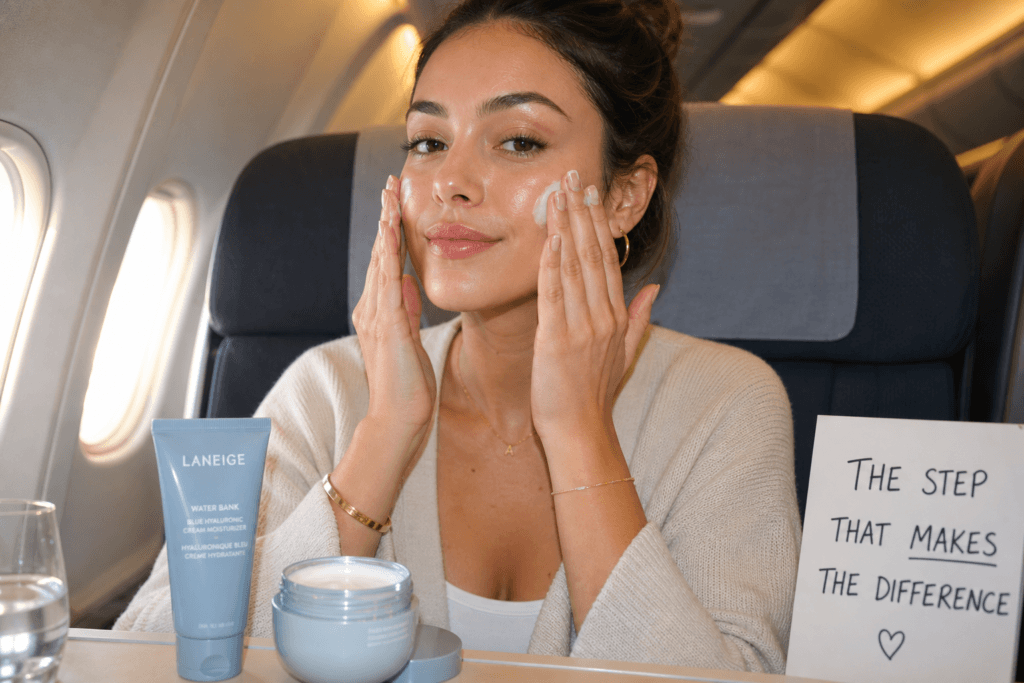
Step 4: Rich Ceramide Moisturizer
Follow immediately with a rich moisturizer that contains ceramides. Ceramides are lipid molecules that naturally occur in your skin barrier and are essential for holding it together. A ceramide-rich moisturizer actively repairs and supports your barrier while providing the occlusive layer that seals in the hydration from the previous steps.
Apply a slightly more generous amount than you would for a regular day. Your skin is going into a dehydrating environment for many hours and this layer is its primary defense.
Good product examples: CeraVe Moisturizing Cream, First Aid Beauty Ultra Repair Cream, La Roche-Posay Cicaplast Baume. All are available at drugstores, reasonably priced, and pack well for travel.
Step 5: Face Oil or Occlusive Layer
This is the step most people skip and it’s the most important one for dry skin on flights.
A face oil or occlusive balm applied over your moisturizer creates a physical barrier that dramatically slows down transepidermal water loss. It doesn’t add hydration on its own but it traps and holds the hydration from the layers underneath.
Options range from simple petroleum jelly, which is one of the most effective occlusives available, to more elegant options like squalane oil, rosehip oil, or dedicated facial balms. Apply a thin layer over your moisturizer, focusing on the driest areas like cheeks, around the nose, and the forehead.
If the idea of applying oil before a flight concerns you, squalane is the lightest option. It absorbs relatively quickly and doesn’t leave a heavy greasy feeling.
Phase 2: Inflight Maintenance (During the Flight)
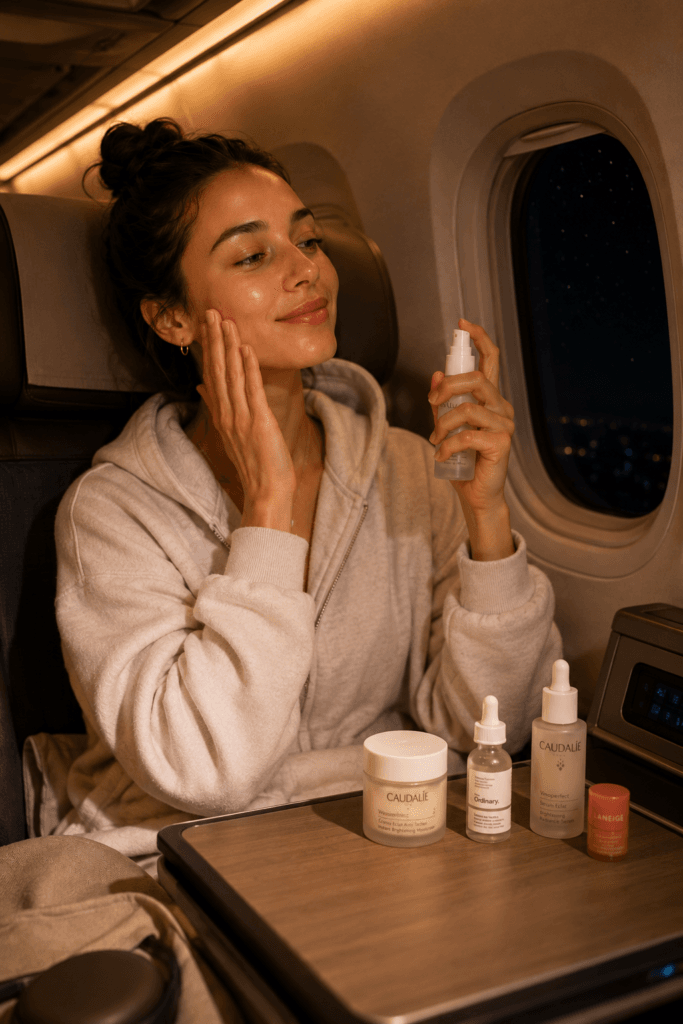
Step 6: Facial Mist for Hydration Refresh
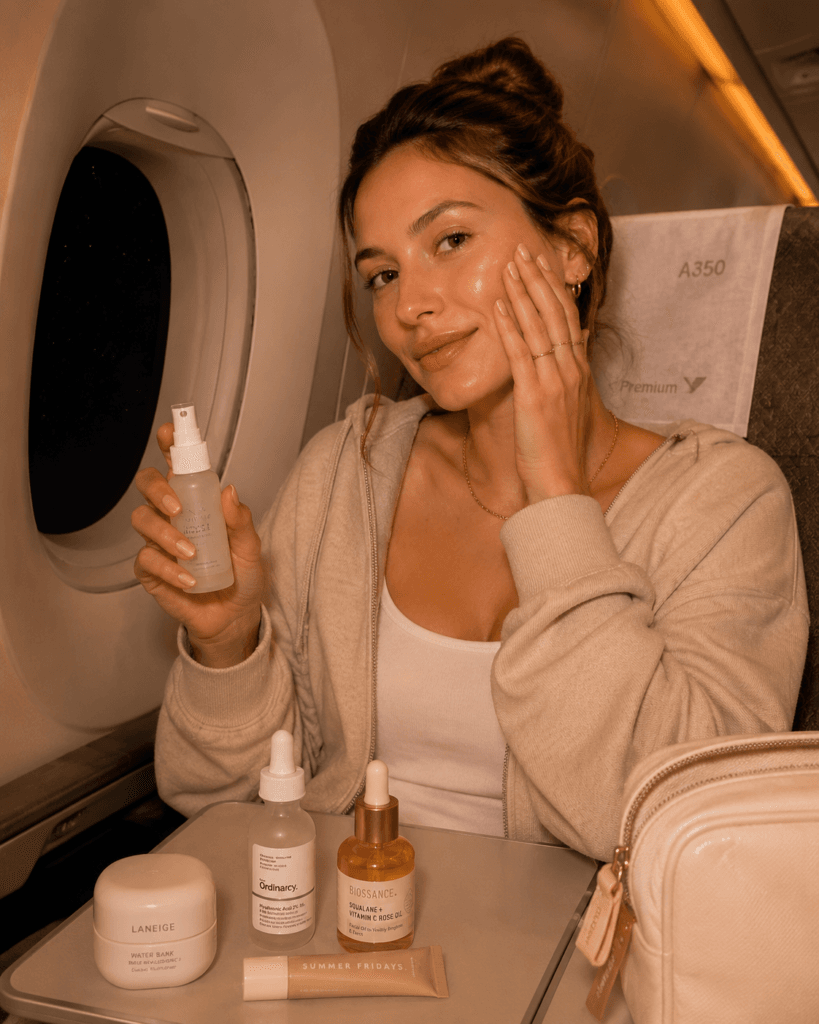
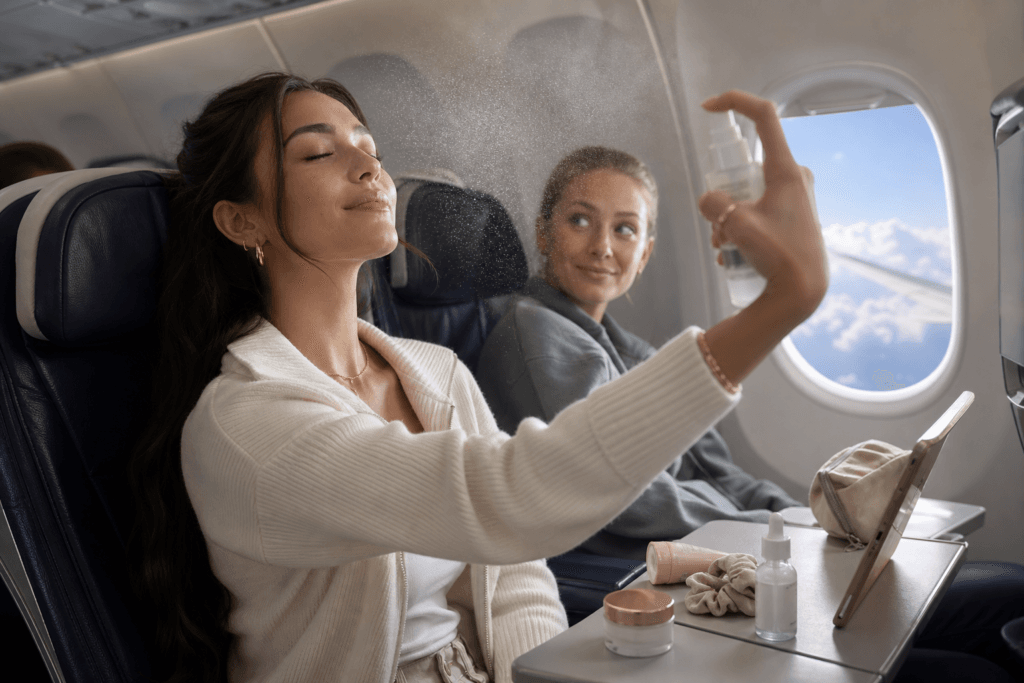
Every two to three hours during a long haul flight, mist your face with a hydrating facial spray. This replenishes some of the surface moisture that the dry cabin air continually pulls away.
The key is to mist and then immediately follow with a small amount of your occlusive product, either a face oil or a balm. If you mist and don’t seal, the water from the mist evaporates quickly and can actually pull a tiny amount of moisture from your skin as it goes. Mist, then seal. Every single time.
Good options: Avene Thermal Spring Water spray, Evian Facial Spray, Mario Badescu Facial Spray. All come in travel sizes that are TSA compliant and small enough to keep in your seat pocket.
Step 7: Reapply Your Occlusive Layer Mid-Flight
Around the midpoint of a very long flight, 7 or 8 hours in, do a proper reapplication of your occlusive layer. You don’t need to redo your full routine. Just press a small amount of your face oil or balm over your existing skincare.
This is easy to do in your seat without needing to visit the bathroom. A small pot of facial balm or a few drops of face oil pressed onto your skin takes about 30 seconds and makes a noticeable difference in how your skin feels for the second half of the flight.
Step 8: Lip Balm, Eye Cream, and Hand Cream
Your lips, the skin around your eyes, and your hands are three areas that get overlooked in inflight skincare but suffer just as much as your face.
Lips have no oil glands at all, which means they rely entirely on external moisture. In a dry cabin, they can become cracked and uncomfortable within a few hours without protection. Apply a thick balm before the flight and reapply every two hours. Aquaphor Healing Ointment works exceptionally well as a lip treatment on flights.
The skin around your eyes is the thinnest on your face and loses moisture faster than anywhere else. Apply a small amount of eye cream or simply dab your face oil gently around the orbital bone.
Your hands touch the tray table, the seat pocket, and every other surface on the plane. They’re also being washed or sanitized repeatedly, which strips natural oils. A small hand cream reapplied after each wash keeps your hands from becoming painfully dry.
Step 9: Stay Away from Airplane Tap Water
This applies to washing your face in the airplane bathroom. Airplane tap water is not clean enough for contact with your skin and has been found to contain bacteria in several studies. If you want to rinse your face during a long flight, use a bottle of still water poured carefully or use micellar water on a cotton pad instead.
If you do use the airplane bathroom for any skincare steps, micellar water is your best option. It cleanses gently without needing any water and leaves your skin clean without stripping it.
Phase 3: Post-Landing Recovery (First Hour After Landing)
Step 10: Proper Cleanse as Soon as You Can
Once you reach your hotel or destination, the first priority for your skin is a proper cleanse. You’ve had layers of skincare products, recycled air particles, and residual cabin environment sitting on your skin for hours. A gentle but thorough cleanse removes all of that and gives your skin a fresh surface to recover from.
Use your cream cleanser again. Take your time with it. This is also a good moment to do a gentle exfoliation with a mild enzyme or PHA product if your skin feels rough or flaky, but don’t over-exfoliate. Your skin barrier is stressed from the flight and aggressive exfoliation will make things worse, not better.
Step 11: Apply a Sheet Mask or Overnight Sleeping Mask
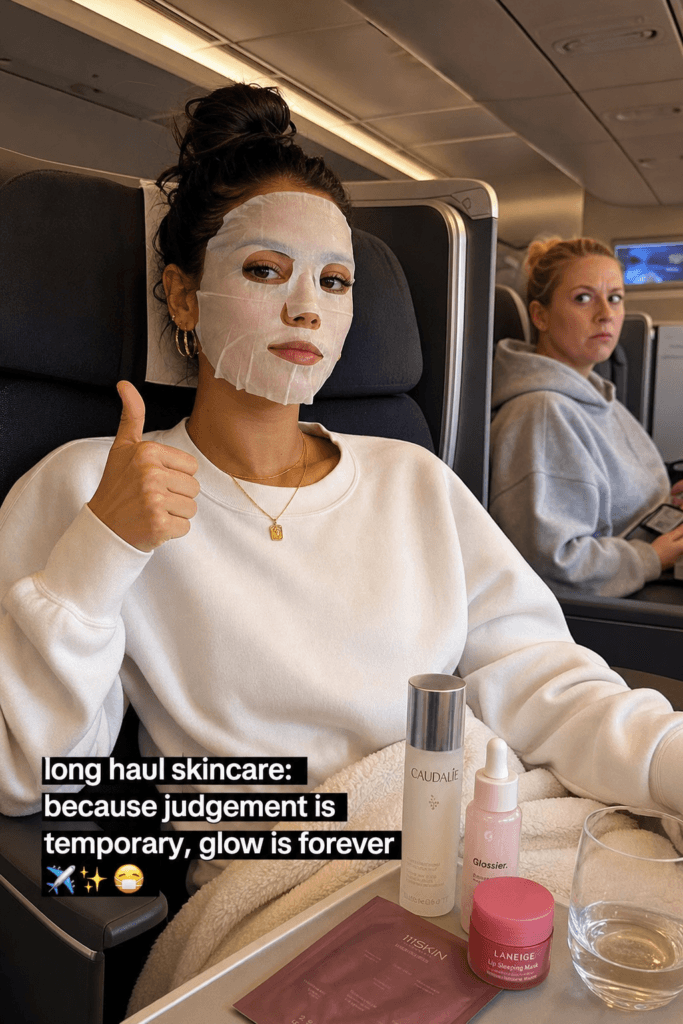
After cleansing, a hydrating sheet mask is one of the fastest ways to flood your skin with moisture after a long flight. Sheet masks work by creating a sealed environment that forces active ingredients into your skin rather than letting them evaporate. For post-flight dry skin, this is exactly what you need.
Leave it on for 15 to 20 minutes. When you remove it, don’t rinse. Pat the remaining serum into your skin and follow immediately with your moisturizer to seal it in.
If you’re too tired for a sheet mask, a sleeping mask applied over your moisturizer works while you sleep. Many sleeping masks use occlusive and humectant combinations that do genuinely restorative work overnight.
Step 12: Sleep with a Humidifier Running If Possible
Hotel rooms, especially those with air conditioning running all night, can be nearly as dehydrating as a plane cabin. If your hotel has a humidifier or if you’ve packed a small travel-size humidifier, running it while you sleep makes a significant difference in how your skin feels in the morning.
A small bowl of water placed near the air conditioning vent is a low-tech version of the same idea. It won’t be as effective as a real humidifier but it adds some moisture to the air.
Products to Keep in Your Carry-On: The Complete Dry Skin Flight Kit
Building your travel skincare kit for long haul flights doesn’t require a lot of products. You need focused, effective choices.
Your kit should include a cream cleanser in a travel size container or solid form to avoid TSA issues. A hydrating toner or essence in a small bottle or decanted into a travel container. A hyaluronic acid serum, many brands sell travel sizes or you can decant into a small dropper bottle. A ceramide-rich moisturizer, the CeraVe Moisturizing Cream travel size is widely available. A face oil or facial balm in a small pot or bottle. A facial mist in a travel size, these are almost always already TSA compliant. A thick lip balm or lip treatment. A small eye cream. Hand cream. And micellar water on cotton pads in a small zip bag for cleansing without water.
Everything listed above fits comfortably into a standard TSA quart-size zip bag. You don’t need to check products or sacrifice your routine for compliance.
Ingredients That Work Hardest for Dry Skin on Flights
The Humectants You Need
Hyaluronic acid draws moisture from the environment and from deeper skin layers. Glycerin is cheaper than hyaluronic acid and equally effective for surface hydration. Panthenol (Vitamin B5) hydrates and soothes simultaneously. Beta glucan is gentler than hyaluronic acid and particularly good for sensitive dry skin. Aloe vera provides light hydration with calming benefits.
The Occlusives That Seal Moisture In
Petrolatum (petroleum jelly) is the gold standard occlusive and one of the most effective ingredients available for dry skin. Lanolin is deeply moisturizing and excellent for very dry skin. Shea butter provides both occlusive and emollient benefits. Squalane is the lightest occlusive oil and is excellent for those who find heavier oils uncomfortable. Beeswax works well in lip balms and facial balms.
The Barrier Builders Your Skin Needs
Ceramides (look for ceramide NP, AP, or EOP on ingredient lists) directly replenish what your skin barrier loses. Cholesterol works synergistically with ceramides to repair barrier function. Fatty acids like linoleic acid and oleic acid are the other component of a healthy barrier and are found in plant oils.
Ingredients to Avoid on Flying Days
Retinol and strong vitamin C increase your skin’s sensitivity and can cause irritation in the already-stressed cabin environment. Strong acids like high-concentration AHAs or BHAs strip the barrier further rather than supporting it. Alcohol-based toners and astringents pull moisture from skin. Heavy fragrance in skincare can cause irritation when skin is already sensitized.
Frequently Asked Questions
How often should I reapply moisturizer during a long haul flight?
For dry skin on a long haul flight, reapplying your occlusive layer every three to four hours is ideal. You don’t need to redo your full routine each time. A small amount of face oil or balm pressed over your existing skincare is enough to maintain the moisture seal. At the midpoint of a very long flight, a more complete refresh with your mist and moisturizer is worth taking the time to do in the airplane bathroom.
Should I wear makeup on a long haul flight if I have dry skin?
Ideally, skip heavy makeup on flying days. Foundation and setting powder sit on top of your skin and create a barrier that interferes with your ability to hydrate during the flight. If you can’t skip makeup, a tinted moisturizer with SPF gives you light coverage without blocking your skin. Remove any makeup before the flight reaches the 4-hour mark so your skin can benefit from your hydrating routine for the remainder of the journey.
Is it okay to use a sheet mask on the plane?
Absolutely and it works really well for dry skin during long flights. Yes, you might get some looks from fellow passengers. But a hydrating sheet mask during a long flight floods your skin with actives in a way that regular moisturizer can’t match in the cabin environment. Apply it around the 4-hour mark of a long flight, leave it for 15 minutes, remove, and seal with your occlusive product.
Why does my dry skin feel even more sensitive after long flights?
Your skin barrier takes a significant hit during long haul flights. A compromised barrier is less able to protect your skin from irritants, which is why products that normally don’t bother you can cause reactions post-flight. This is your skin’s way of telling you its barrier needs rebuilding. Focus on ceramide-rich products and gentle ingredients for the first 48 hours after a long flight and avoid introducing new products or strong actives during this recovery period.
Can drinking water really help my skin during a flight?
Yes, but with realistic expectations. Drinking water supports your overall hydration, which your skin benefits from. But it won’t directly counteract the extreme transepidermal water loss that the dry cabin environment causes. Think of drinking water as internal support and your skincare routine as the external defense. You need both working together to genuinely protect dry skin during a long haul flight.
Final Thoughts
Long haul flights don’t have to wreck your skin. With the right routine and the right products, your skin can arrive at your destination in genuinely good condition, even after 14 or 16 hours in the air.
The key principles are simple. Start hydrated before you board. Layer humectants under occlusives to trap moisture. Reapply your occlusive layer throughout the flight. Support your skin barrier with ceramide-rich products. And give your skin a proper recovery routine as soon as you land.
For dry skin specifically, this routine isn’t optional. The cabin environment is too extreme and your skin’s natural defenses are already stretched thin. But the solution isn’t complicated or expensive. It’s focused, consistent, and based on understanding what your skin actually needs.
Pack smart, hydrate consistently, and arrive looking like you just had a great night’s sleep instead of surviving a transatlantic flight.
That’s the goal and now you have everything you need to get there.