Last updated: 4 November 2026
Short Answer
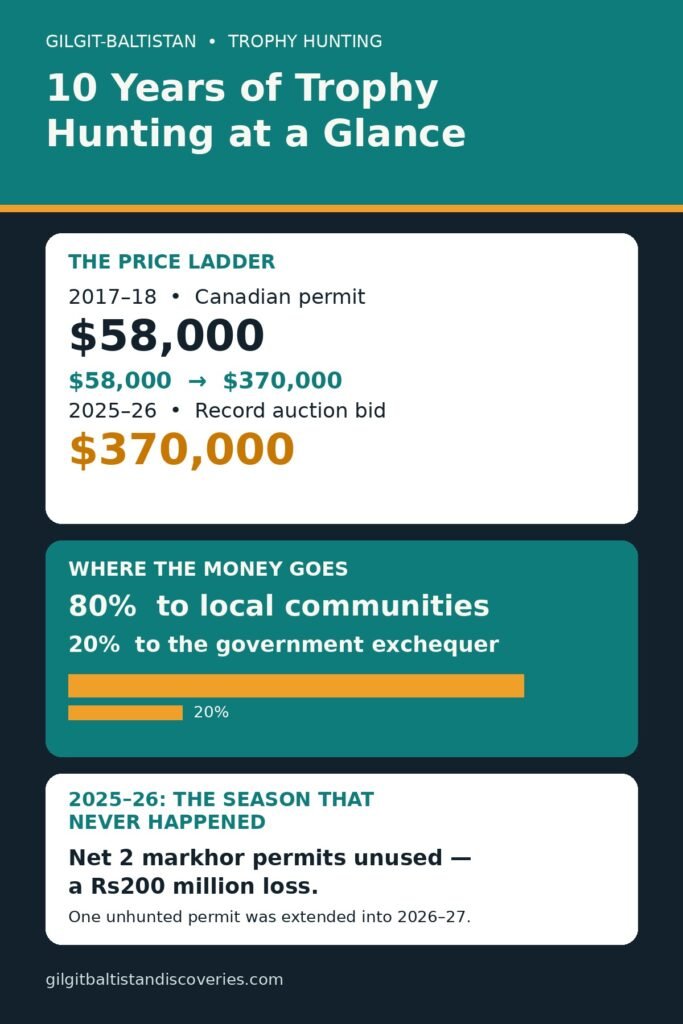
Over the last decade, Gilgit-Baltistan’s trophy hunting programme has been dominated by American hunters paying six-figure permit fees for a handful of Astore markhor each season — from a Canadian hunter’s $58,000 permit in 2017–18 to a record $370,000 auction bid in 2025–26. This article names every participant Dawn’s reporting actually identifies, season by season, with the permit price and hunting area for each. Where Dawn reported only auction totals or season revenue without naming hunters, this article says so instead of filling the gap with a guess. All figures below come from Dawn; the companion guide to the current season is our Trophy Hunting in Gilgit-Baltistan 2026–27 guide.
How This Article Was Put Together
Dawn’s Gilgit correspondents report trophy hunting the same way every season: the autumn auction, then individual hunts as they happen between November and April. That gives us named hunters for the seasons where Dawn covered individual hunts, and auction figures for the seasons it covered only in summary. Two limits apply throughout:
- Only markhor hunters are usually named. Blue sheep and ibex permits sell in far larger numbers (up to 100 ibex a season), and individual ibex or blue sheep hunters are almost never named in press reporting. This article therefore names markhor participants in full and reports blue sheep and ibex only as season totals.
- Outfitters vs hunters. Auction bids are often placed by outfitters (safari companies) on a client’s behalf. Where Dawn names the outfitter rather than the hunter, this article says “bid by” rather than “hunted by”.
The programme itself has not changed shape in the decade: it began in Nagar Valley in 1990, runs under the GB Trophy Hunting Guidelines 2019, and splits permit revenue 80% to the local community conservation areas and 20% to the government exchequer — a split every Dawn report in this article repeats.
Participants at a Glance: The Decade in One Table
| Season | Named markhor hunters (Dawn) | Top markhor permit | Season revenue (where reported) |
|---|---|---|---|
| 2017–18 | Adam (Canada) — Dashkin, Astore, $58,000 | $100,000 at auction | $248,000 (previous season, for comparison) |
| 2018–19 | John Amistoso (US) — Bunji, $100,000; Dianda Christopher Anthony (US) — $105,000; Bryan Kinsel Harlan (US) — Sassi-Harmosh, $110,000 | $110,000 (then a national record) | ~50 animals hunted in total |
| 2021–22 | James Kevin (US) — Jutial, $131,000; Viejo Gonzalez Jesus (Mexico) — Bunji, $136,000 | $136,000 | Not reported in Dawn’s hunt coverage |
| 2023–24 | Jan Jacob T. Dams (Belgium) — DMT, Astore, $177,000; Joseph Bradford Coors (US) — SKB, Roundu, $186,000; Colglazier John Michael (US) — Sai Damote, $171,000; Brian Douglas Williams (US) — Doyan, $181,000 | $186,000 (then a record) | Rs309.5 million |
| 2024–25 | No individual hunter named in Dawn’s reporting | $161,000 (top bid) | Government share over Rs30 million |
| 2025–26 | French citizen via Zoon Safari — Haramosh, $270,000 (the only markhor hunted); three markhor permits unhunted in season, one later extended — net loss 2 permits / Rs200 million | $370,000 at auction (world and Pakistan record bid) | Rs350 million collected vs Rs550 million target |
| 2026–27 (current) | Auction winners reported, hunts under way at time of writing | $356,000 (top bid) | Target Rs650 million |
Seasons 2016–17, 2019–20, 2020–21 and 2022–23 have no individually named hunter in the Dawn reporting this article could verify — they are covered below by auction and programme context only, not by invented names.
2017–18: The Canadian Who Opened the Decade’s Record Book
The earliest named hunter in this review is a Canadian citizen identified by Dawn only as Adam, who hunted the highest-rated Astore markhor in the Dashkin community-controlled hunting area in Astore, paying $58,000 to the GB Wildlife and Parks Department. The hunt was made with a single shot, as trophy rules allow only one shot with a specified gun, and the animal was an aged markhor with 43-inch horns, hunted with the support of a Pakistani guide and Astore conservation community members.
The context matters: the department had auctioned permits for 113 animals for 2017–18 — four Astore markhor, 14 blue sheep and 95 ibex — with markhor licences fetching $68,000 to $100,000, blue sheep $8,000 to $10,000, and ibex from $3,600. The $100,000 top licence was then described as the highest fee in the history of trophy hunting in Pakistan. Within a year, that record would be broken twice over.
2018–19: Three Americans, Three Records in Two Months
The 2018–19 season is the first in which Dawn names a run of individual hunters — all three Americans, all hunting Astore markhor, all within about two months:
- John Amistoso (US) hunted an Astore markhor in the community-controlled Bunji area of Gilgit, paying a $100,000 permit fee.
- Dianda Christopher Anthony (US) hunted the highest-rated Astore markhor on 21 January 2019, paying $105,000.
- Bryan Kinsel Harlan (US, Texas) hunted a flared-horned markhor in the Sassi-Harmosh community conservation area, paying $110,000 — described by Dawn as the highest permit fee ever offered in the country at the time. Harlan’s trophy measured 41 inches, considered a good-sized trophy.
About 50 animals were hunted by foreign and national hunters in total that season. The pattern set here — American hunters, six-figure markhor permits, community areas in Gilgit and Astore — would define the rest of the decade.
2021–22: A Mexican Hunter Tops the Americans
Dawn’s 14 January 2022 report names two foreign hunters who took the season’s highest-rated Astore markhor on the same day:
- James Kevin (US) hunted in the Jutial Conservancy area in Gilgit district, paying $131,000.
- Viejo Gonzalez Jesus (Mexico) hunted in Bunji, Astore district, paying $136,000 — the higher fee of the pair, and a reminder that the programme’s clientele, while mostly American, is not exclusively so.
The department had auctioned four Astore markhor licences, 14 blue sheep and 85 Himalayan ibex for 2021–22. As in every season, Dawn repeats the revenue split: 80% to the community for wildlife conservation, 20% to the exchequer.
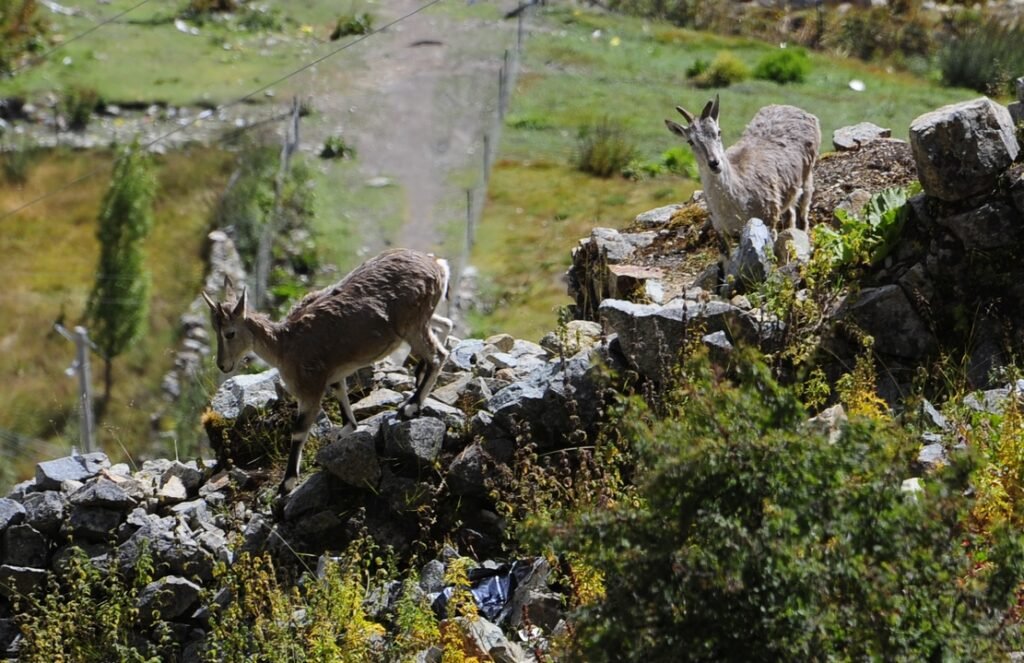
2023–24: The Fullest Season on Record
The 2023–24 season is the best-documented in this review, because Dawn reported all four markhor hunts individually (March 2024) and then the season totals (May 2024):
- Jan Jacob T. Dams (Belgium) — 2 December 2023, DMT hunting area, Astore — $177,000.
- Joseph Bradford Coors (US) — 27 January 2024, SKB community-controlled hunting area, Roundu (Skardu) — $186,000, the season’s highest and a new record.
- Colglazier John Michael (US) — 13 February 2024, Sai Damote CCHA, Gilgit — $171,000.
- Brian Douglas Williams (US) — Doyan CCHA, Astore — $181,000, with a 40-inch trophy.
The October 2023 auction had offered four markhor, 14 blue sheep and 88 ibex licences, with a markhor base rate of $90,000. By season’s end, all four markhor, six blue sheep and 51 ibex had been hunted, generating Rs309.5 million — up more than Rs89 million on the previous season’s Rs220 million. Conservationist Rashid Minhas told Dawn that from 1990 to 2023, trophy hunting of markhor alone had generated around $5 million, of which $4.3 million was invested in the social, economic and environmental development of local communities.
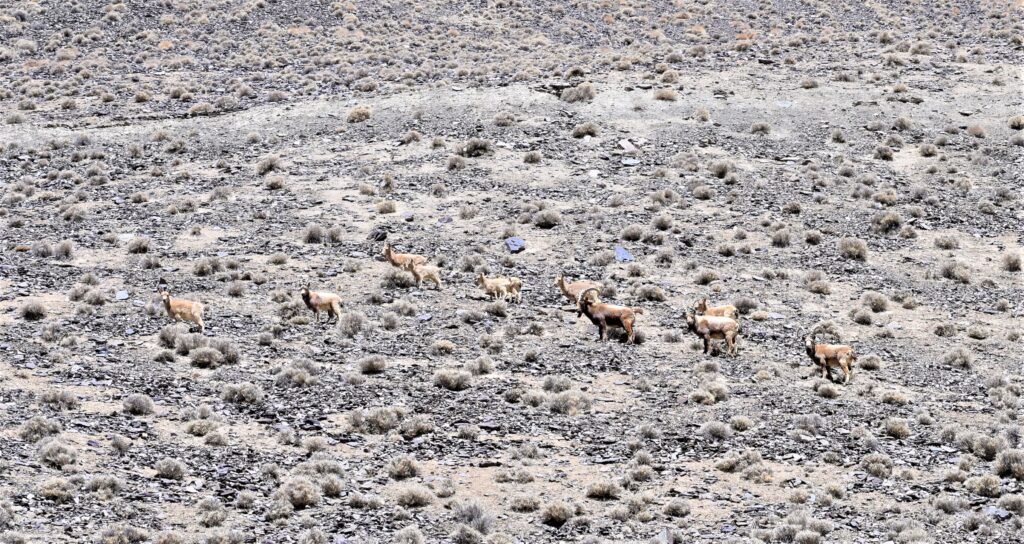
2024–25: A Quieter Season
Dawn’s reporting of 2024–25 gives auction figures but no individually named hunter. Base rates were $150,000 for markhor, $9,000 for blue sheep and $5,500 for ibex, and the highest markhor bid reached $161,000, generating more than Rs30 million for the government. This article does not attach a name to that bid: Dawn did not publish one in the reporting reviewed, and a name invented here would be worse than a gap admitted.
2025–26: The Record Auction — and the Season That Never Happened
The 2025–26 season is the decade’s strangest, and Dawn covered it twice: the record auction (September 2025) and the derailed season (April 2026).
The auction. The department auctioned permits for 118 animals — four Astore markhor, 100 ibex and 14 blue sheep. The top markhor permit fetched $370,000, described by GB Conservator Khadim Abbas as a record for the highest markhor hunting permit bid in the world and in Pakistan. The winning bid was placed by Shikar Safaris owner Raja Farhad Maqpoon for a permit in the Nanga Parbat conservancy area. The other markhor permits sold for $286,000, $270,000 and $240,000; the top blue sheep and ibex permits went for $40,000 and $13,000 respectively, both won by M Ali Nagri of Markhor Safaris. Base prices had been raised to $200,000 (markhor), $30,000 (blue sheep) and $10,000 (ibex), up from $150,000 the previous year.
The season. Three of the four markhor permits went unhunted during the season itself — the $370,000, $286,000 and $240,000 ones — along with five blue sheep and ten exportable ibex permits, after American and other foreign hunters cancelled following violent protests in Gilgit and Skardu and the wider Middle East conflict. Dawn’s April 2026 report put the in-season loss at Rs250 million. The final accounting, given by the same department to Dawn in August 2026, is different and this article uses it: one of the three unhunted markhor permits was extended into the 2026–27 season, so the net unused count is two markhor permits, five blue sheep and ten exportable ibex, a final loss of Rs200 million (consistent with Rs350 million collected against the Rs550 million target). The season’s only markhor hunt was by a French citizen from Zoon Safari, who hunted in the Haramosh conservation area in Gilgit on 11 March 2026, paying $270,000. Total collection for the season was Rs350 million against the Rs550 million target.
2026–27: The Current Season (See the Main Guide)
The current season is covered in full in our companion Trophy Hunting in Gilgit-Baltistan 2026–27 guide: 15 October 2026 to 10 April 2027, a quota of 3 Astore markhor, 14 blue sheep and 100 ibex, base rates of $200,000 / $25,000 / $11,000, and a 10 September 2026 auction in which markhor permits fetched $356,000, $301,000 and $294,000, the top blue sheep $31,200 (lowest $25,100) and the top ibex $13,200 (lowest $11,500). The department hopes for Rs650 million this season. Individual hunters for 2026–27 will be added to this article as Dawn reports them.
Beyond Gilgit-Baltistan: Chitral’s Record Hunts (For Context Only)
Dawn’s biggest trophy-hunting headlines of the last two years actually come from Khyber Pakhtunkhwa, not Gilgit-Baltistan, and readers comparing prices should know the difference:
- Thomas Garrick Steele (US, 75) hunted a Kashmir markhor in the Tushi-Shasha Conservancy, Lower Chitral, in December 2025, paying $243,000 for a 55-inch trophy shot from about 250 metres (Dawn, 12 December 2025).
- An 80-year-old American hunted an 11-year-old Kashmir markhor with 49.5-inch horns in Toshi-Shasha in January 2026, paying $271,000 — the previous national record before GB’s $370,000 bid.
- In October 2026, KP auctioned four international markhor permits for a record $1.21 million in total (Toshi-I $320,600; Toshi-II $335,600; Gahirat Gol $260,000; Kigah Khwar, Kohistan $295,600), described by the KP Wildlife Department as the highest-ever revenue from a trophy hunting programme in Pakistan’s history (Dawn, 9 October 2026).
These are Chitral/KP hunts under a separate provincial programme, not GB hunts — included here only because readers of the GB guide will meet these figures elsewhere and wonder how they compare.
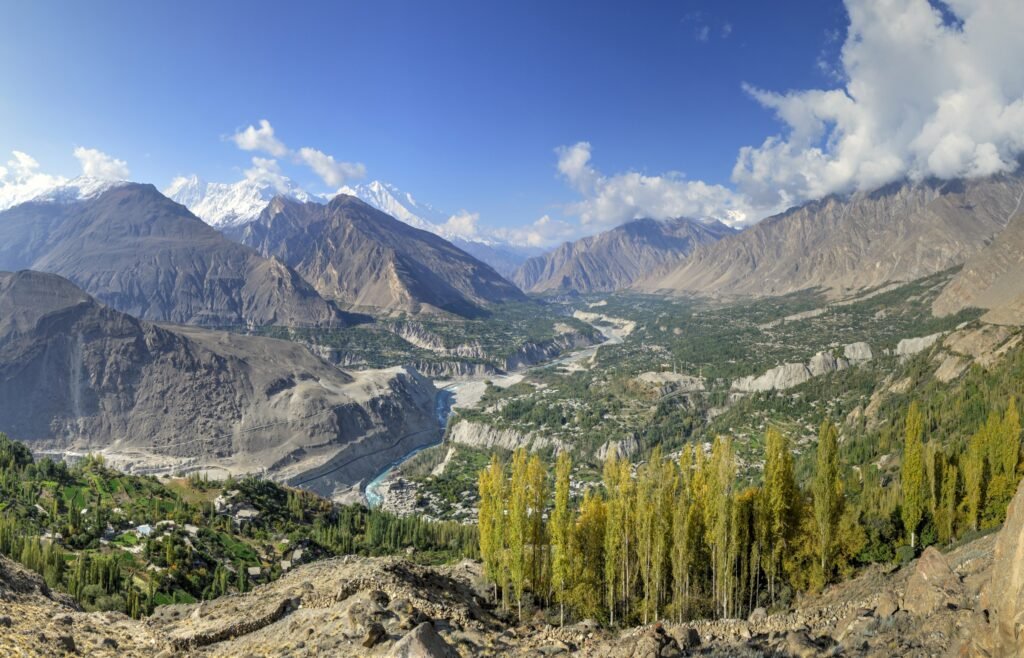
What 10 Years of Participants Show
- Americans dominate, but not exclusively. Of the 11 individually named GB markhor hunters in this review, eight are American; the exceptions are Canadian (2017–18), Mexican (2021–22), Belgian (2023–24) and French (2025–26).
- Prices rose roughly six-fold. From $58,000 (Canada, 2017–18) and a $100,000 auction record, to $110,000 (2019), $136,000 (2022), $186,000 (2024) and a $370,000 auction bid (2025) — before the current season’s $356,000 top bid.
- The same places recur. Bunji, Jutial, Sassi-Harmosh/Haramosh (Gilgit), Dashkin, DMT and Doyan (Astore), SKB Roundu (Skardu) and Nanga Parbat conservancy — the community conservation areas are the real map of the programme.
- The community share never changed. 80% to local communities, 20% to the exchequer, in every season Dawn reported — the programme’s central claim, and the reason communities protect the animals the rest of the year.
- The programme is fragile to world events. The 2025–26 season shows how fast a record auction can unravel: three of four markhor permits unused, Rs250 million lost, because of protests and a distant war.
If You Go to See Them Yourself
Disclosure: as an Amazon Associate, we earn from qualifying purchases made through links on this page, at no extra cost to you.
The same conservancies in this article also host wildlife viewing. For a trip to watch markhor, ibex or blue sheep in the wild: binoculars for wildlife viewing and an Anker PowerCore portable charger for cold-weather camera and phone use.
Frequently asked questions
Who pays the most for trophy hunting in Gilgit-Baltistan?
At auction, the record is the $370,000 bid placed by Shikar Safaris’ Raja Farhad Maqpoon for a Nanga Parbat conservancy markhor permit in September 2025. The highest completed hunt fee in Dawn’s reporting is the French hunter’s $270,000 Haramosh hunt in March 2026, since the $370,000 permit itself went unused.
Are most trophy hunters American?
Yes, in Dawn’s reporting. Eight of the 11 individually named GB markhor hunters over the decade are American; the others are Canadian, Mexican, Belgian and French.
How much of the money goes to local communities?
80% of permit revenue goes to the community-managed conservation area where the hunt took place, distributed to residents through formal ceremonies; 20% goes to the national exchequer. Dawn repeats this split in every season it reports.
Why are blue sheep and ibex hunters not named?
Because of volume. A season offers around 14 blue sheep and up to 100 ibex permits, and press reporting names only the headline markhor hunts. Season totals for blue sheep and ibex are reported where Dawn published them, but individual names are not available in the press record.
Where can I read about the current season?
Our companion guide covers 2026–27 in full — dates, quota, base rates, auction results and the community-revenue rules: Trophy Hunting in Gilgit-Baltistan 2026–27.