Last updated: 4 November 2026
Short Answer
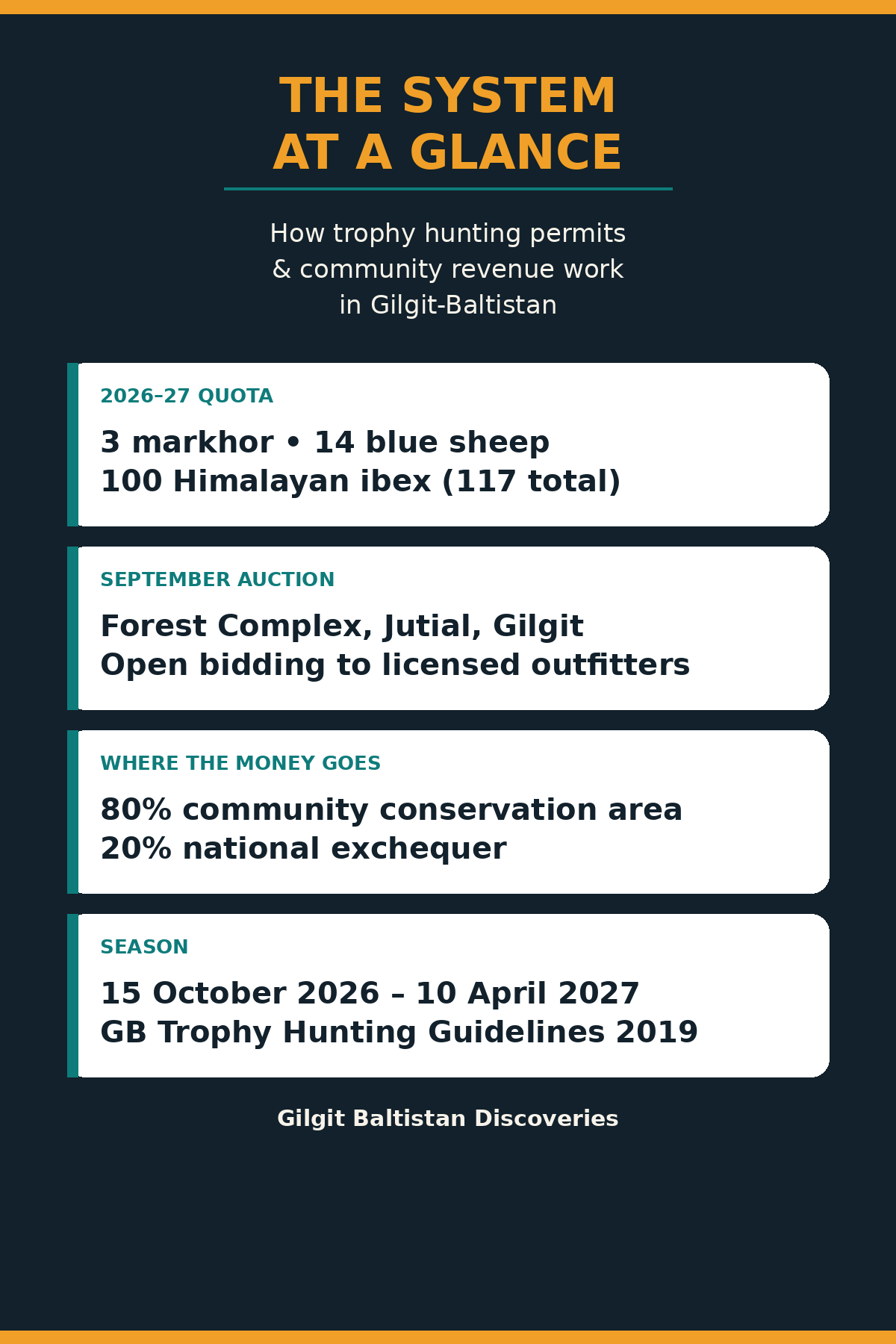
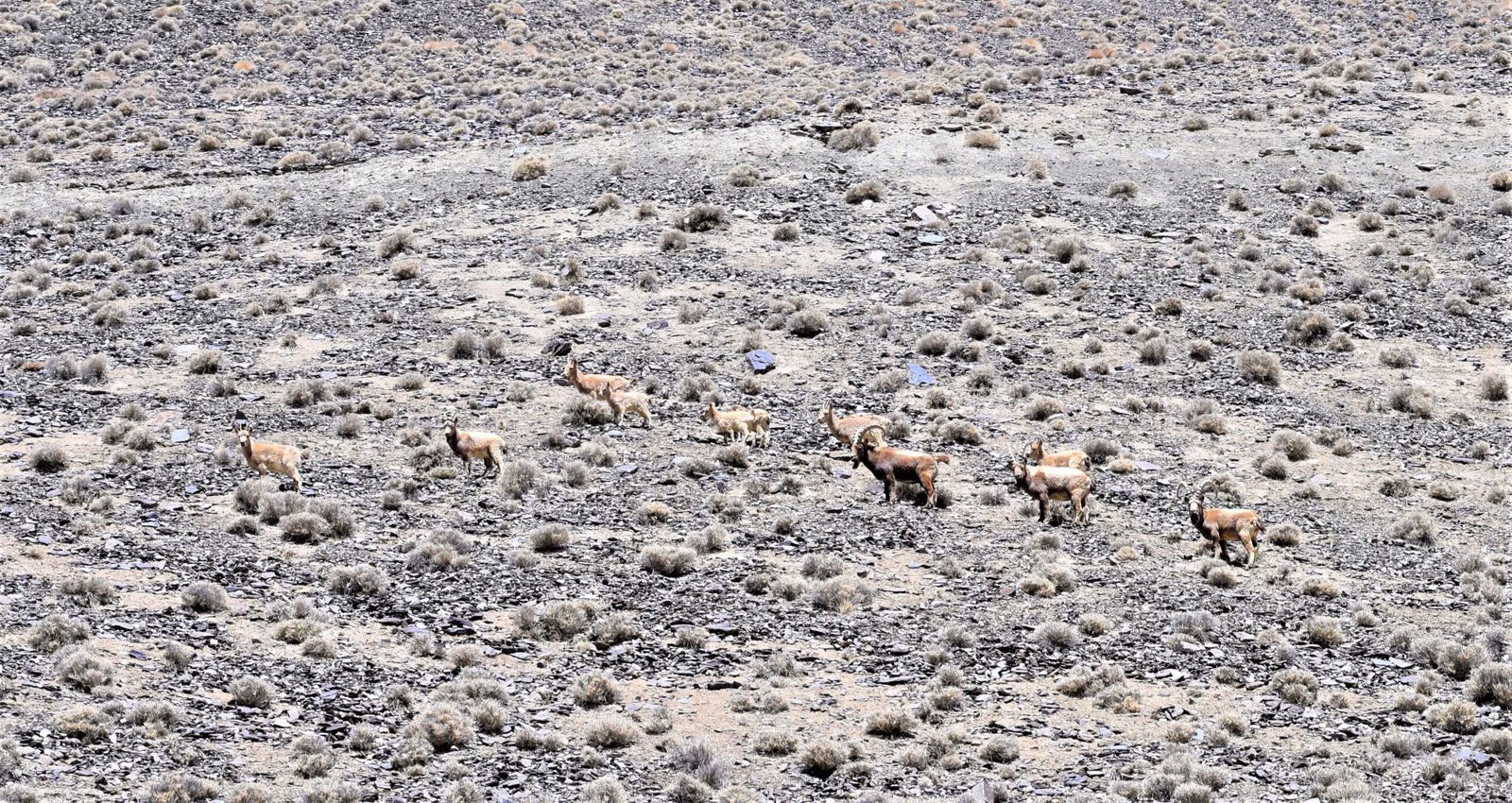
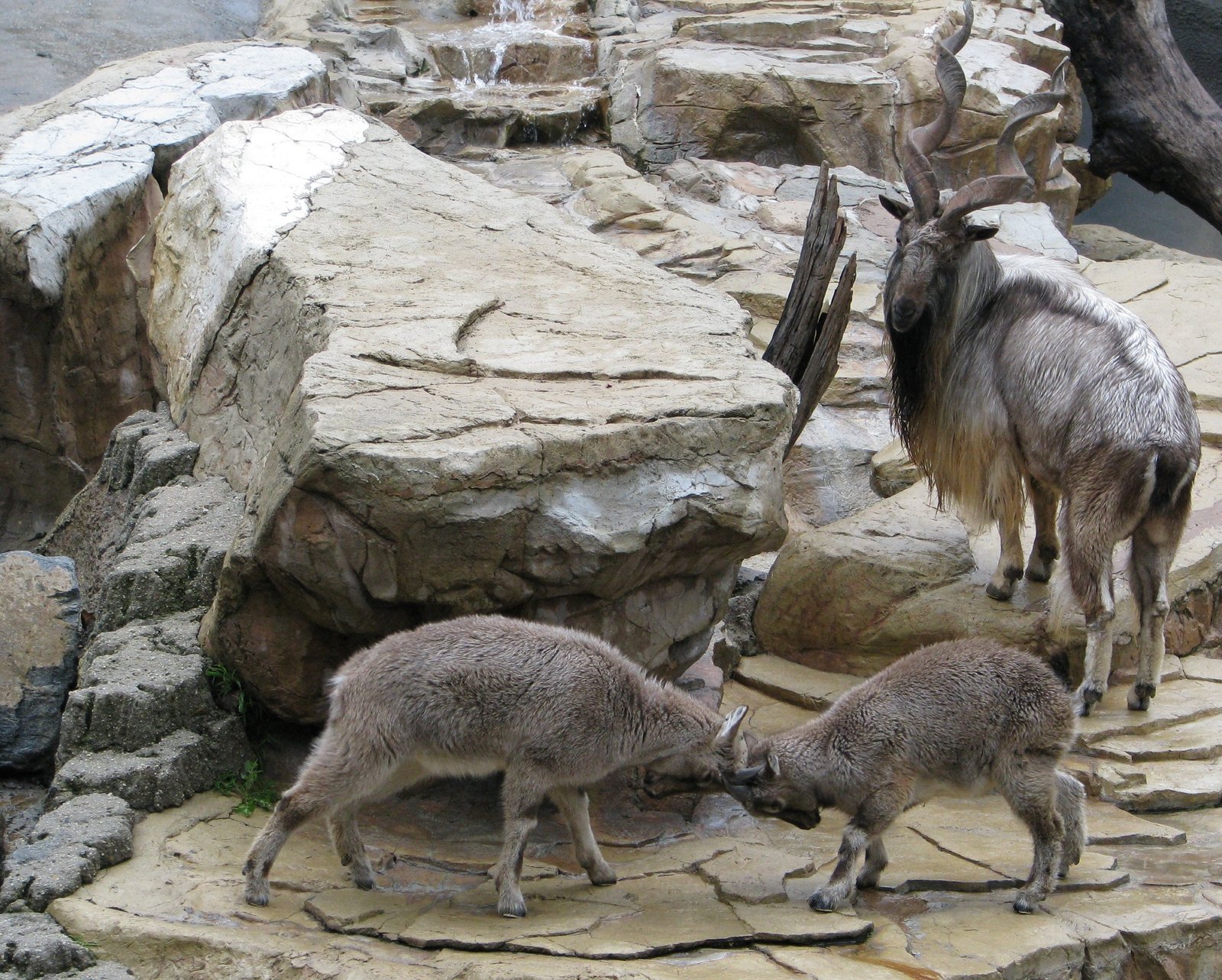
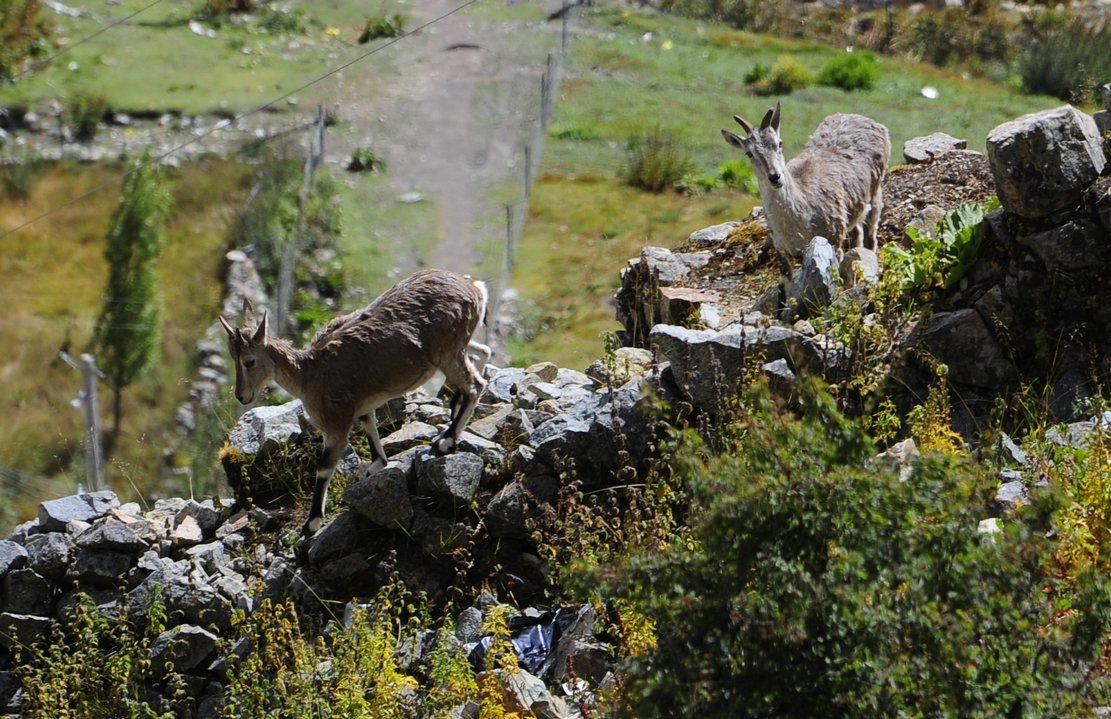
Gilgit-Baltistan’s trophy hunting system is a quota auction, not an open hunt. Every year the Wildlife Department sets a small quota of mature male animals — for 2026–27, just 3 Astore markhor, 14 blue sheep and 100 Himalayan ibex — auctions the permits to licensed outfitters in September, and splits the money 80% to the local community conservation area and 20% to the government. The community share is handed to residents at formal ceremonies and spent on local development, which is why villages that once poached now protect the same animals. The season runs from 15 October to 10 April under the GB Trophy Hunting Guidelines 2019, and every hunt is supervised by government observers and community game scouts.
The System in One Table
| Piece | How it works |
|---|---|
| Who sets the quota | GB Parks & Wildlife Department, from annual wildlife surveys by experts |
| 2026–27 quota | 3 Astore markhor, 14 blue sheep, 100 Himalayan ibex (117 total) |
| When permits are auctioned | September, open bidding at the Forest Complex, Jutial, Gilgit |
| Who can bid | Licensed outfitters, on behalf of hunters |
| Base rates 2026–27 | Markhor $200,000; blue sheep $25,000; ibex $11,000 |
| Season dates 2026–27 | 15 October 2026 – 10 April 2027 |
| Rules | GB Trophy Hunting Guidelines 2019; one mature male per permit; one shot (specified gun) in the reported hunts |
| Revenue split | 80% to the community conservation area, 20% to the national exchequer |
| Who watches | Government observers + community game scouts |
| Programme started | 1990, in Nagar Valley |
Step 1: The Quota — Why So Few Animals?
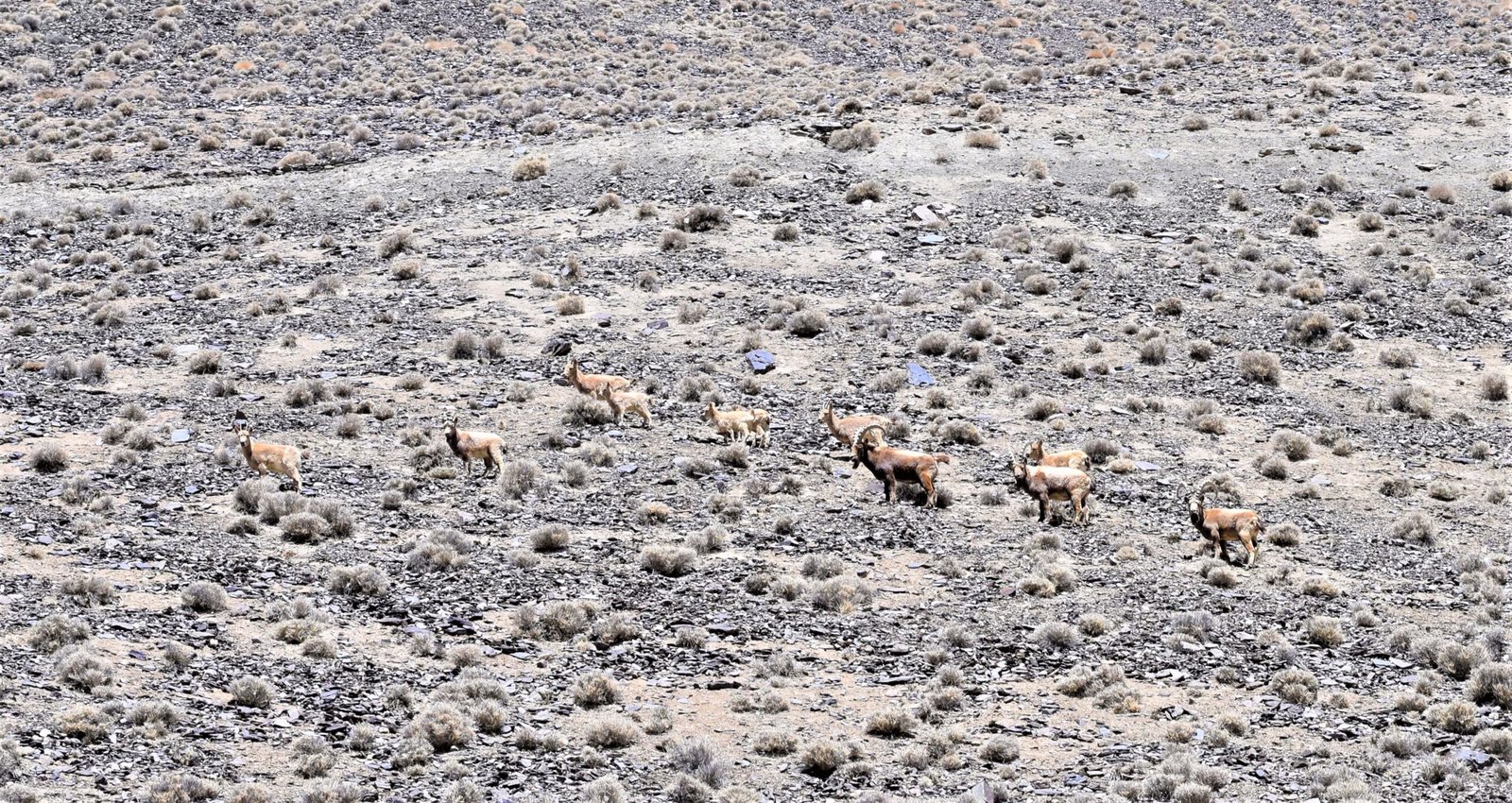
The quota is the whole point. GB’s programme does not sell hunting in bulk; it sells a tiny number of old males that surveys show the population can spare. For 2026–27 that is three markhor in the entire region — fewer than one per 24,000 square kilometres of GB. Blue sheep (14) and ibex (100) quotas are larger because those populations are larger and less threatened, but they are still a fraction of the animals in the mountains.
Quotas are set from annual wildlife surveys conducted by experts, according to GB officials quoted by Dawn. That survey link matters: if a population falls, the quota should fall with it. It is also why the programme’s defenders argue it is conservation, not just commerce — the money depends on the animals surviving in numbers year after year.
Step 2: The Auction — How a $370,000 Permit Happens
Permits are sold in an open auction, usually in September, at the Forest Complex in Jutial, Gilgit. Licensed outfitters bid against each other, and the highest bid wins. The base rate is only the floor — competition does the rest:
- 2023–24: markhor base $90,000; winning bids $171,000–$186,000.
- 2024–25: markhor base $150,000; top bid $161,000.
- 2025–26: markhor base $200,000; winning bids $240,000–$370,000.
- 2026–27: markhor base $200,000; winning bids $294,000–$356,000.
Outfitters named in Dawn’s auction coverage include Shikar Safaris (whose owner Raja Farhad Maqpoon placed the record $370,000 bid for a Nanga Parbat conservancy permit in 2025) and Markhor Safaris (M Ali Nagri, who won the top blue sheep and ibex permits that year). These are auction participants reported in the press, not recommendations — any licensed outfitter can bid.
Two kinds of permits exist: exportable (the hunter may take the trophy home under CITES rules) and non-exportable (the hunt happens but the horns stay with the wildlife department). The distinction matters for price and for what a hunter can legally take home, and it is covered in our companion booking guide.
Step 3: The Hunt — What the Rules Actually Say
Under the GB Trophy Hunting Guidelines 2019, the season for ungulate species runs from mid-October to early/mid-April (15 October 2026 – 10 April 2027 for the current season). The practical rules reported across Dawn’s coverage:
- One permit, one mature male. Permits are issued for mature, old males only — not females, not young animals, not breeding stock.
- One shot. Dawn’s 2018 reporting notes that only one shot with a specified gun is allowed for trophy hunting.
- Supervised throughout. Hunts are monitored by government observers and local community game scouts, and take place inside a named Community Controlled Hunting Area (CCHA) — Bunji, Jutial, Sassi-Harmosh, Haramosh, Dashkin, Doyan, SKB Roundu and others recur across the decade.
- The community is present. Hunts are facilitated with the help of the local community, whose members guide, scout and witness — they are not bystanders to their own conservation area.
Step 4: The Money — Where the 80/20 Split Goes
This is the part most coverage skips, and it is the part that decides whether the system works. Of every permit dollar:
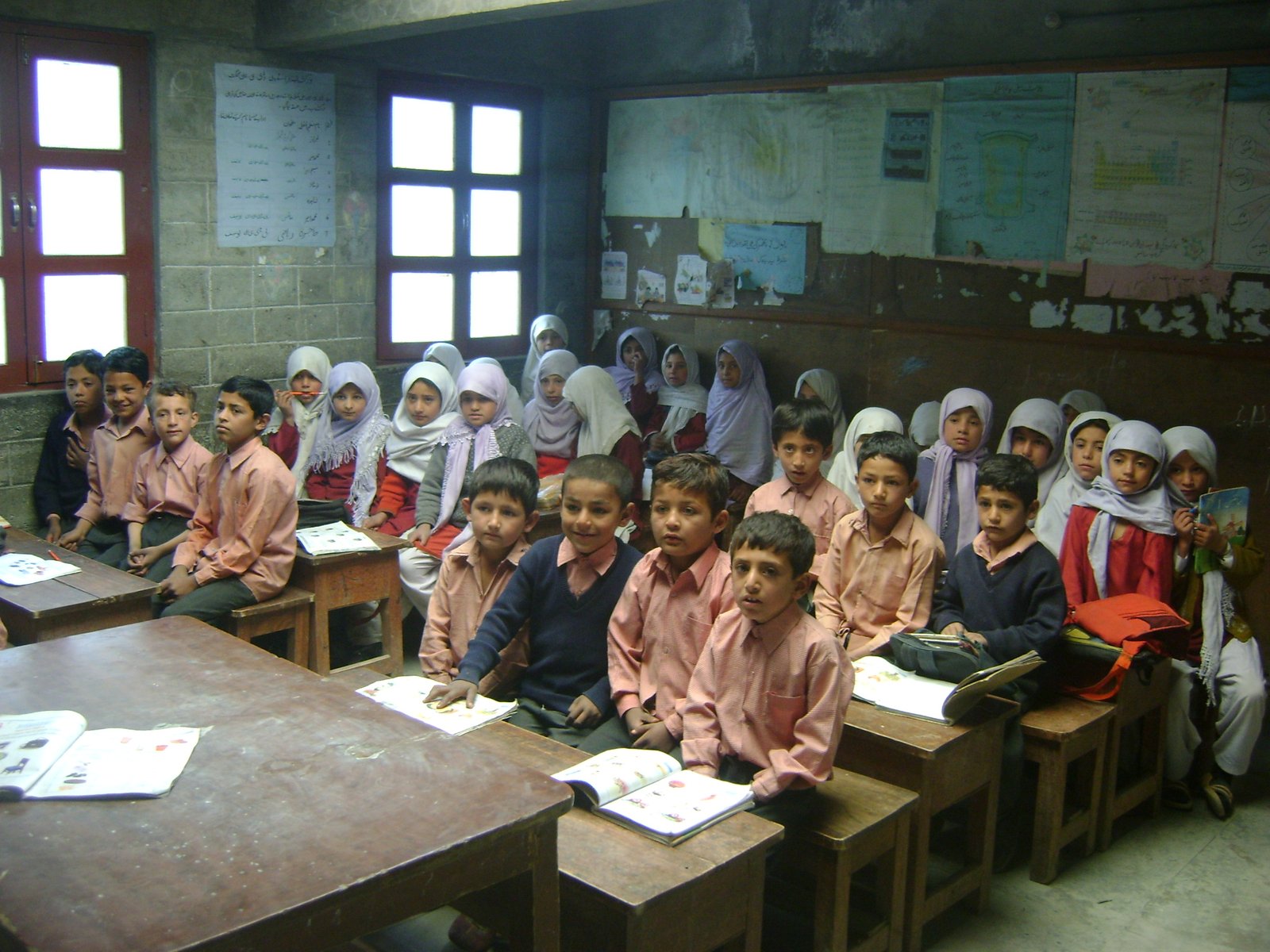
- 80% goes to the community-managed conservation area where the hunt took place, distributed among local residents through formal ceremonies. Conservationist Rashid Minhas told Dawn that from 1990 to 2023, trophy hunting of markhor alone generated around $5 million, of which $4.3 million was invested in the social, economic and environmental development of local communities.
- 20% goes to the national exchequer.
Recent season totals show the scale — and the volatility:
| Season | Revenue | Note |
|---|---|---|
| 2022–23 | Rs220 million | Baseline for the following year’s growth |
| 2023–24 | Rs309.5 million | 4 markhor, 6 blue sheep, 51 ibex hunted |
| 2024–25 | Government share over Rs30 million | Top markhor bid $161,000 |
| 2025–26 | Rs350 million collected vs Rs550 million target | Record auction, then mass cancellations; one unhunted markhor permit extended into 2026–27, net loss Rs200 million (see below) |
| 2026–27 | Target Rs650 million | Department’s hope at auction time |
When the System Breaks: The 2025–26 Warning
The 2025–26 season is the honest stress test of the whole model. The September 2025 auction was a record — $370,000 for one markhor permit — and then the season collapsed: three of four markhor permits, five blue sheep and ten exportable ibex permits went unhunted after American and other foreign hunters cancelled following violent protests in Gilgit and Skardu and the wider Middle East conflict. Dawn’s April 2026 report put the in-season loss at Rs250 million; the department’s final accounting to Dawn in August 2026 is the figure this guide uses: one unhunted markhor permit was extended into 2026–27, leaving a net loss of two markhor permits and Rs200 million (Rs350 million collected against a Rs550 million target). Only one markhor was hunted all season (a French hunter in Haramosh, $270,000).
There is also pushback from inside the trade that the department itself acknowledges: business owners and tour operators have opposed the permit rate hikes for the past two years, saying the increases damaged their businesses and the communities relying on trophy revenue. One Gilgit hunting-equipment seller told Dawn the department had raised the baseline price by more than 300% over two years without adequately considering stakeholders’ recommendations. That tension — record auction prices on one side, operators warning the price ladder is breaking the market on the other — is now part of the system, not a footnote to it.
The lesson is not that the model failed — the animals stayed protected and the community still received Rs350 million — but that the revenue is hostage to world events in a way no other conservation funding in GB is. A system that depends on a handful of foreign hunters arriving in a tense season will have years like this.
The Conservation Argument — and Its Limits
Supporters, including GB officials quoted by Dawn, argue the programme prevents poaching, empowers communities and funds conservation — and the population story supports part of that: the markhor was downlisted from Endangered to Near Threatened on the IUCN Red List in 2015, with numbers estimated to have risen about 20% over the preceding decade, and GB’s programme (running since 1990) is credited with helping protect endangered species.
The limits are equally real and this guide does not hide them. First, the system only works if quotas genuinely follow surveys, and survey quality is rarely published in full. Second, the money is concentrated: a few markhor permits dominate revenue, so a single cancelled season (2025–26) wipes out a quarter of a billion rupees. Third, the programme covers only three species — snow leopards, lynx, bears and the rest of GB’s wildlife get no trophy revenue at all, and still face poaching, habitat pressure and climate change. Trophy hunting is one conservation tool in GB, not a complete conservation strategy.
Seeing the Animals Yourself
Disclosure: as an Amazon Associate, we earn from qualifying purchases made through links on this page, at no extra cost to you.
You do not need a hunting permit to watch GB’s wildlife — the same community conservation areas run wildlife viewing, and a good pair of binoculars changes everything at 3,000 m. If you are planning a trip: binoculars for wildlife viewing, and an Anker PowerCore portable charger — cold mountain air drains phone and camera batteries fast.
Frequently asked questions
Who decides how many animals can be hunted?
The GB Parks & Wildlife Department, from annual expert wildlife surveys. For 2026–27 the quota is 3 markhor, 14 blue sheep and 100 ibex.
How are permits sold?
By open auction to licensed outfitters, usually in September at the Forest Complex in Jutial, Gilgit. The highest bid wins; the base rate is only the starting price.
Where does the money go?
80% to the community conservation area where the hunt happened, distributed to residents at formal ceremonies; 20% to the national exchequer.
What happens if a hunter cancels?
The 2025–26 season showed it: the permit goes unused and the money is lost. Three markhor permits worth $370,000, $286,000 and $240,000 went unused that season, costing Rs250 million.
Can a hunter take the trophy home?
Only on an exportable permit, under CITES rules. On a non-exportable permit the horns stay with the wildlife department.
Is trophy hunting legal in Pakistan?
Yes, under the provincial programme and the GB Trophy Hunting Guidelines 2019 — and only through it. Hunting markhor outside the programme is illegal; three men were arrested in Balochistan in 2025 for illegal markhor hunting.