A Senate committee has put Taxila’s Buddhist heritage back in the spotlight, backing a visitor plan that would add a meditation centre, lodges and a walking trail to one of Pakistan’s great heritage sites. The catch is that nothing gets built until UNESCO signs off.
Table of Contents
ToggleWhat happened
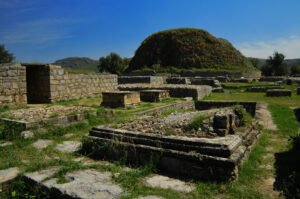
On Thursday, the Senate Standing Committee on National Heritage and Culture visited Taxila Museum, the archaeological site of Mohra Murado and the ancient city of Sirkap. The committee, headed by Senator Haji Hidayatullah Khan, was reviewing UNESCO’s reservations about development work at the Taxila complex, which is a UNESCO World Heritage property. Punjab’s Directorate General of Archaeology briefed the committee on a development and visitor management plan designed to make the museum and the surrounding sites more accessible and tourist friendly without damaging their historical integrity. A significant part of the plan is new facilities for international tourists and Buddhist pilgrims: accommodation, a meditation centre, five individual lodges and two family lodges, plus a dedicated trail to the archaeological remains. The committee directed that accommodation charges stay nominal while comfort and hospitality standards are maintained, particularly for foreign tourists and Buddhist pilgrims. The detailed development dossier has been submitted to UNESCO, with approval anticipated by February 2027. The archaeology department has set June 2028 as the target for completing the works, subject to the required international approvals.
What it means for travellers
Taxila is one of the most important centres of Buddhist civilisation and Gandhara art in South Asia, and it already draws pilgrims and history lovers from across Asia. If the plan goes ahead, a visit becomes easier: a proper trail between the sites, a meditation centre, and places to stay close to the ruins instead of a rushed day trip from Islamabad. For now, nothing changes on the ground. The sites stay open as they are, and the museum remains the starting point for any visit. Travellers planning a Gandhara trip should treat the new facilities as a 2028 prospect, not a 2026 one.
For the full picture, read our Gandhara Buddhist heritage guide, and our Swat Valley guide and Kalash Valleys guide.
What to watch
The February 2027 UNESCO decision is the next milestone. If approval comes, construction can start, but the committee stressed that every intervention must protect the site’s authenticity and outstanding universal value. Watch also for the proposed Buddhist visa category and meditation zones announced this week, which would bring more pilgrims to Taxila, Takht-i-Bahi and Swat. Together, the two moves point to a coordinated push to open Pakistan’s Gandhara heritage to visitors, with Taxila at its centre.
Source: Dawn, 20 November 2026. Read the original: https://www.dawn.com/news/2045730