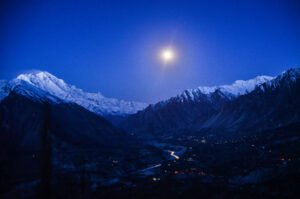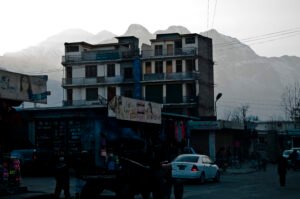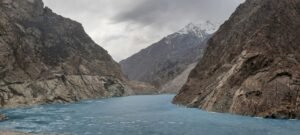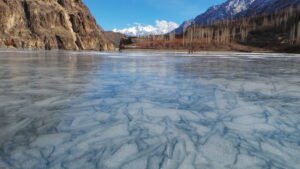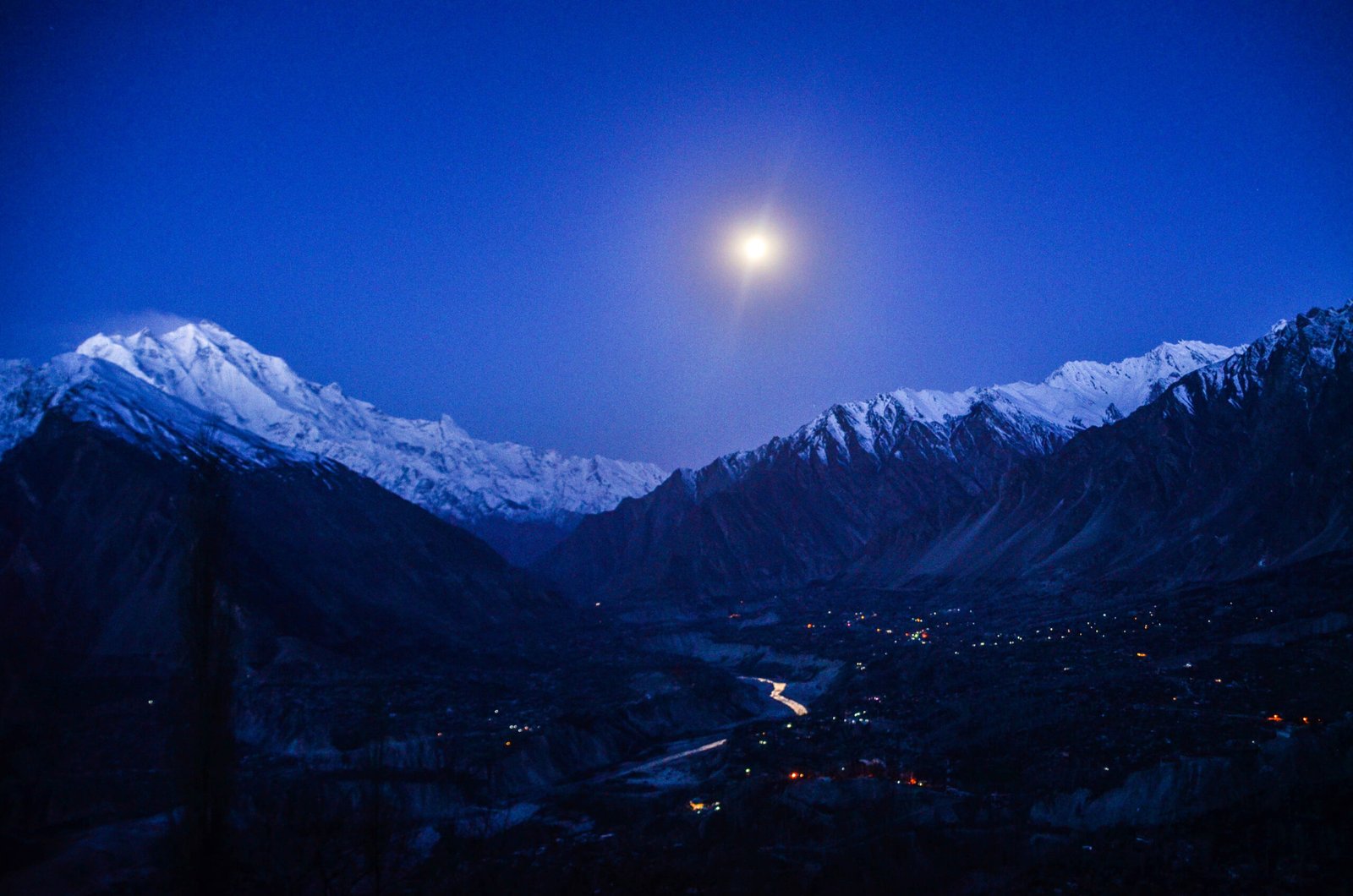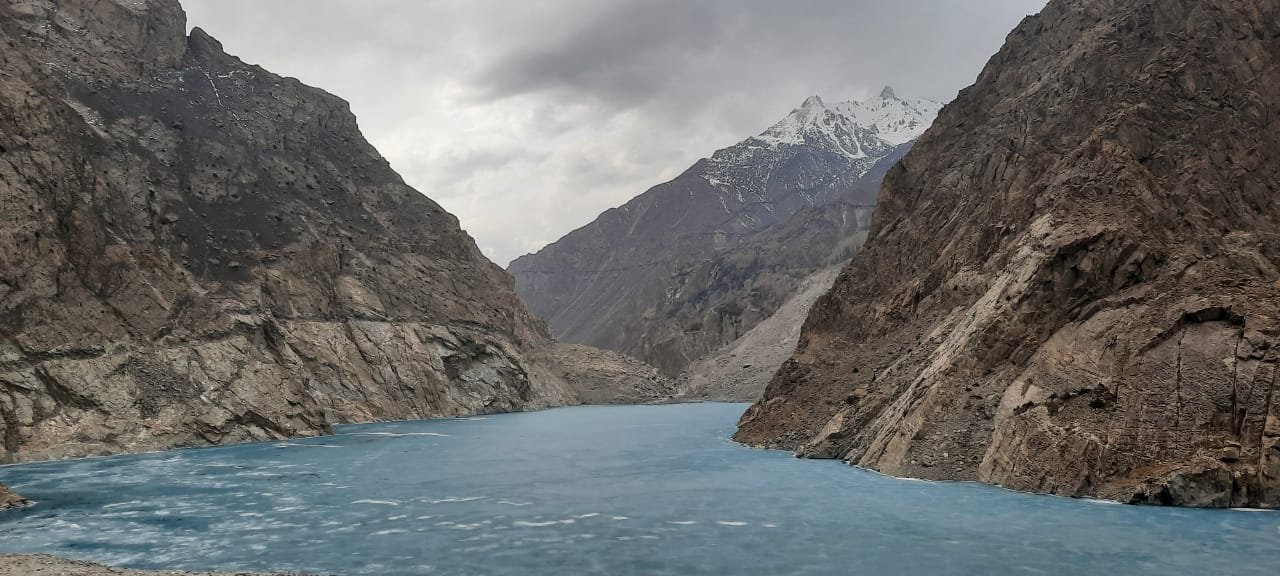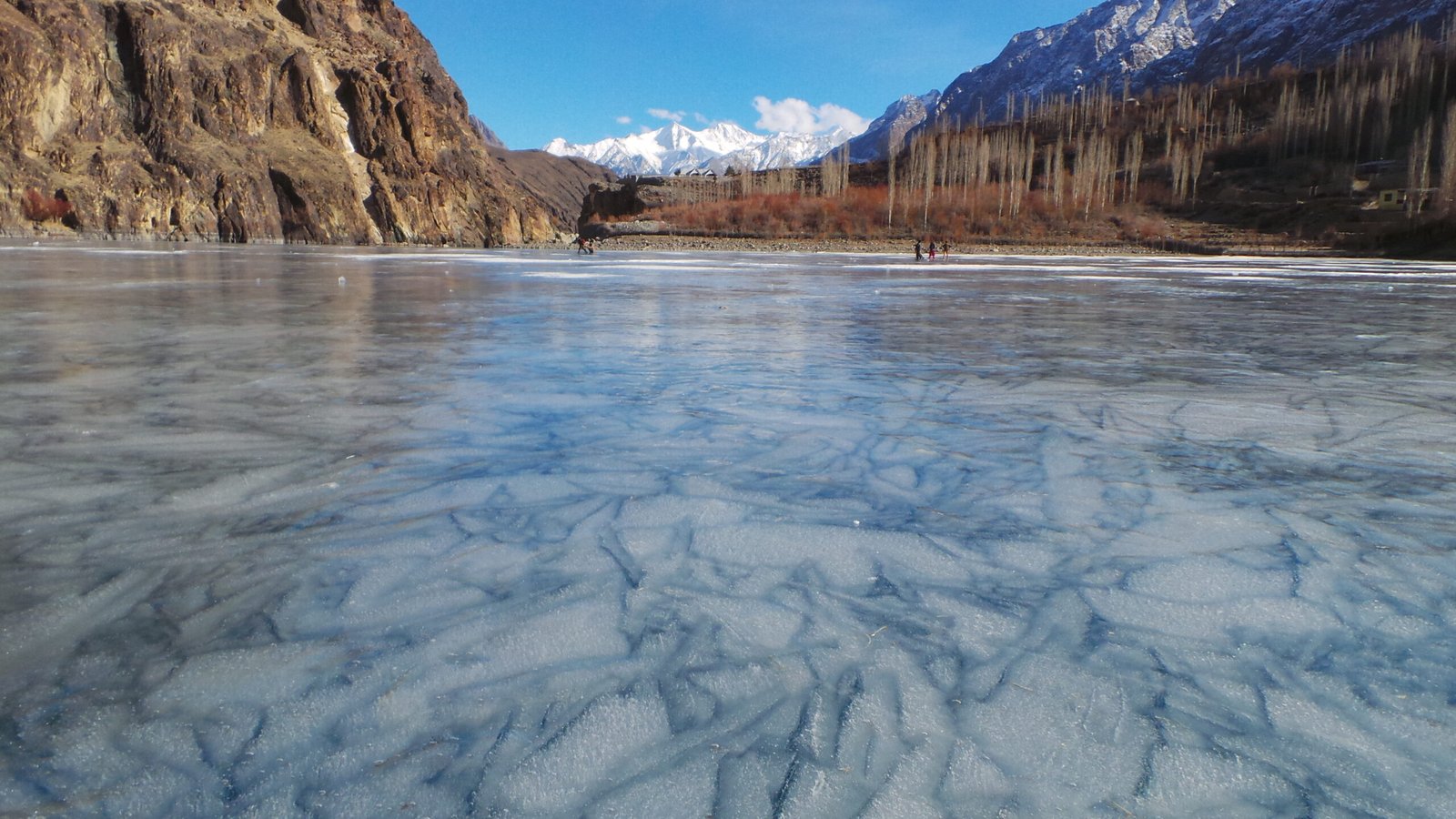
Yes, Gilgit works in winter, and it works better than any other town in the north. Gilgit sits at about 1,500 metres, so it is the mildest of the northern towns in the cold months. Days average 10 to 13C from December to February, nights fall just below freezing, the bazaar stays busy, Kargah Buddha stays reachable, and Naltar Valley, about 40 km away, runs Pakistan’s main ski slope. Come for 2 to 3 days as a base, keep buffer days for flights, and do not plan high treks, Deosai, or Khunjerab in winter. Most winter guides treat Gilgit as a place to pass through on the way to Hunza or Skardu. This guide treats it as the destination.
Gilgit in Winter at a Glance
| Month | Average day / night | What it feels like | Best for |
|---|---|---|---|
| December | 12C / minus 2C | Cold, dry, short days, about 10 hours of daylight | Arrival, bazaar, Kargah Buddha |
| January | 10C / minus 3C | Coldest month, clear mountain light | Skiing at Naltar, photography |
| February | 13C / 0C | Slight warm-up, snow still on the heights | Skiing, longer days, onward trips |
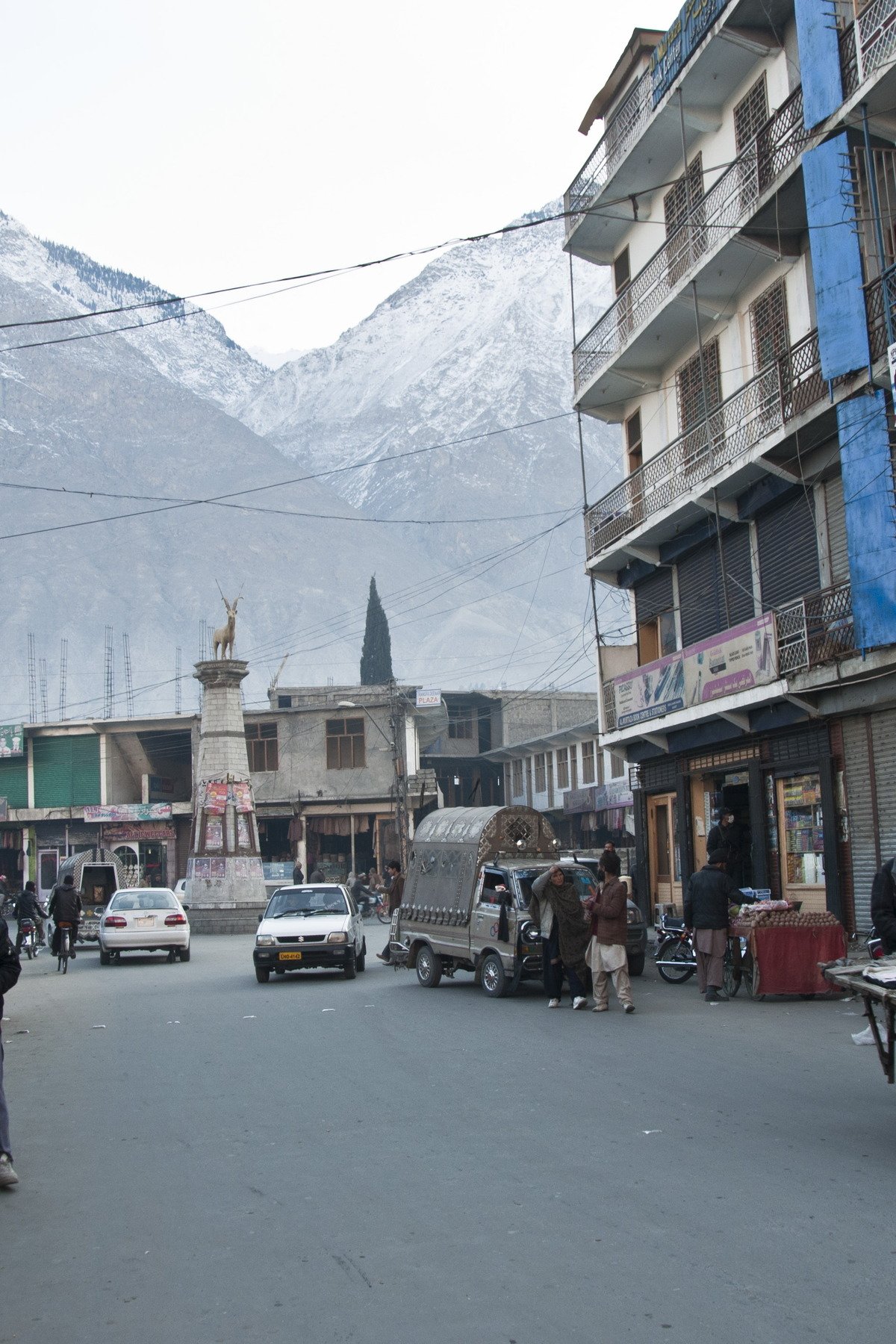
Temperatures are Pakistan Meteorological Department averages. Gilgit town itself gets little snow. The snow sits on the mountains above the city, which is why the town keeps working while the high valleys close.
What is Gilgit like in winter?
Gilgit in winter is cold, dry, and quiet, but it is not shut down. The town sits at about 1,500 metres on the Gilgit River, where the Karakoram, the Himalaya, and the Hindu Kush meet. That low height is the whole story. Hunza, at about 2,450 metres, runs a few degrees colder, and Skardu, at 2,230 metres, averages about 3C by day and minus 8C at night in January. Gilgit stays milder than both.
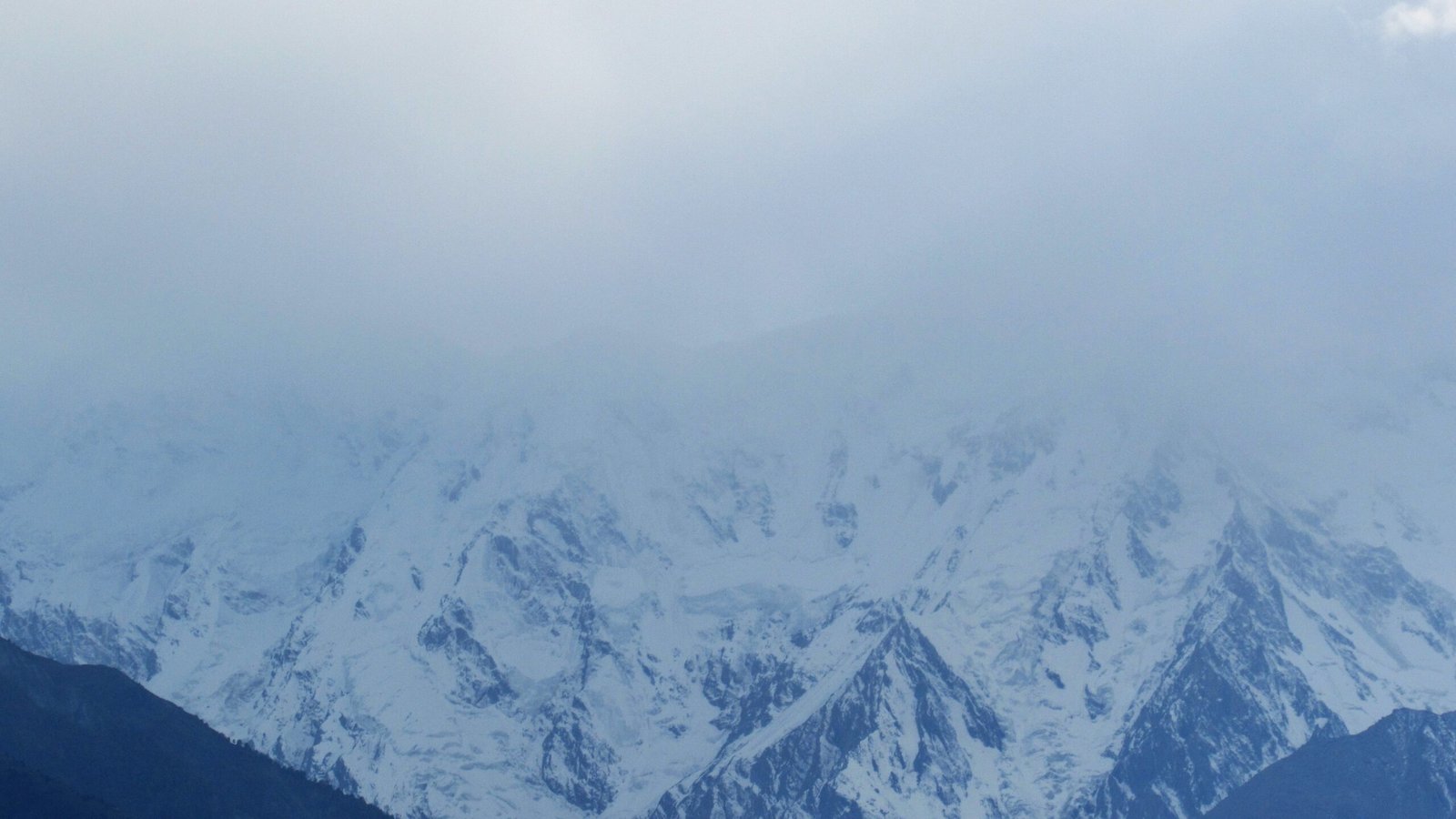
The Pakistan Meteorological Department averages for Gilgit city are December 12C by day and minus 2C at night, January 10C by day and minus 3C at night, and February 13C by day and 0C at night. Days are short, with around 10 hours of daylight, and the air is dry, so the cold feels sharper in the shade and milder in the sun. Nights in a cold snap go lower than the averages, so pack for minus 5C even if the forecast says minus 2C.
One honest note on the numbers. Some weather websites show far colder averages for Gilgit, down to minus 11C in January. Those figures do not match the Pakistan Meteorological Department station data, and they do not match what travellers report from the town, so this guide uses the PMD averages. Check the forecast the week you travel, and trust the local reading over any single website.
How do I get to Gilgit in winter?
You have two realistic options, fly or drive, and both need buffer days in winter.
Fly to Gilgit. Pakistan International Airlines operates the Islamabad to Gilgit route, with morning departures including PK601 at around 07:00, landing about 08:15, and PK603 at around 11:10. The flight itself is barely an hour, and on a clear morning it is one of the great flights in the world, threading between peaks to a short valley runway. But Gilgit flights are cancelled often in mountain weather, so never build a tight itinerary around one. If your flight is cancelled, the road is the fallback, so keep at least one spare day at each end of the trip. For the full comparison of routes into the region, see our guide on how to get to Hunza.
Drive the Karakoram Highway. The highway is the all-season option and the one to use when Babusar is closed. Babusar Pass closed on 11 October 2026 and is expected to reopen around June 2027, so the Kaghan route is not available in winter. The drive from Islamabad to Gilgit takes about 20 to 22 hours, split over two days with a night in Chilas. The highway stays open at valley level through winter, but expect ice in shaded sections and occasional closures after snowfall, and hire an experienced local driver rather than driving yourself. The NATCO bus from Rawalpindi or Islamabad to Gilgit costs around PKR 5,500 and takes 16 to 18 hours. It is slow, but it runs when flights do not.
What is open in Gilgit in winter?
More than most travellers expect. Gilgit is a working town, not a resort, so its bazaar, its river walks, and its historic sites do not close for the season. What closes are the high places around it, not the town itself.
| Place | Winter status | What to know |
|---|---|---|
| Saddar Bazaar | Open | The town’s commercial heart, busy all winter, best for dried fruit, apricot oil, gemstones, woollen caps, and Chinese trade goods |
| Kargah Buddha | Open | 7th-century carving, about 10 km out, reachable when the road is clear |
| Chinar Bagh | Open | Riverside park, the local evening walk, views over the Gilgit River |
| Jutial viewpoint | Open | 3 km from Saddar Bazaar, views over the river confluence, best at golden hour |
| Danyore Bridge | Open | Bridge over the Gilgit River, a viewpoint in its own right |
| Polo ground | Open as a landmark | Polo is a summer game, so winter visitors see the ground, not a match |
| Naltar ski slope | Open December to March | Pakistan Air Force slope, snow permitting, see below |
| Naltar lakes road | Often blocked | Deep snow, lakes frozen, do not plan on the lakes in winter |
| Babusar Pass | Closed | Closed 11 October 2026, reopening expected about June 2027 |
| Khunjerab Pass | Closed to tourists | Border crossing shut for the season |
| Deosai Plains | Closed | Under snow November to May |
| Fairy Meadows | Closed for regular trips | Jeep track snow-closed, guided winter expeditions only |
| High treks (K2, Rush Lake, Snow Lake) | Closed | Under snow October to May |
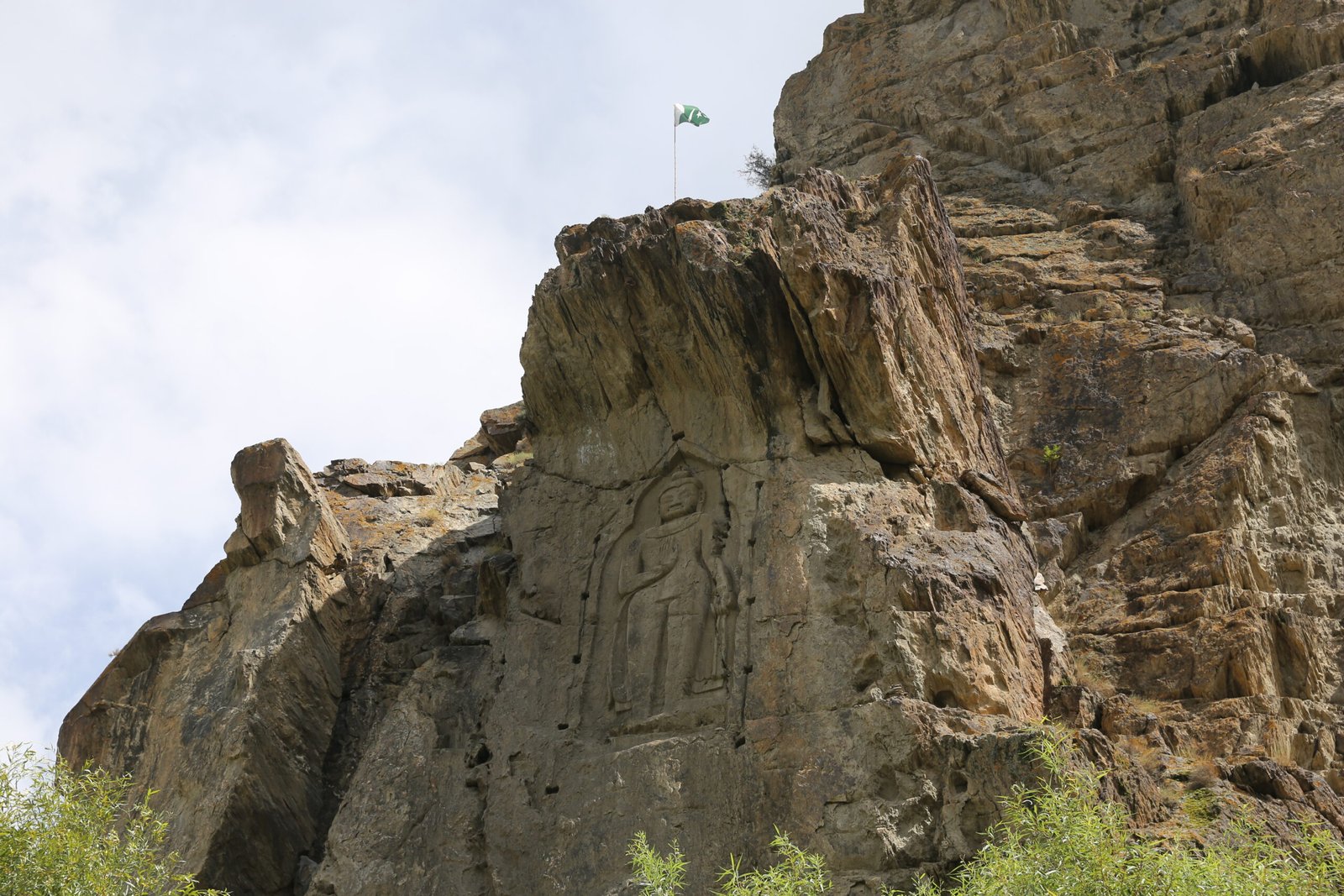
Kargah Buddha is the best short trip from town in winter. The standing Buddha, carved into a cliff at Kargah Nallah about 10 km from Gilgit, dates to the 7th century and stands about 15 metres tall. It is one of the last visible remnants of the Silk Road Buddhist period in the region, and the remains of a monastery and stupas found nearby yielded the Gilgit manuscripts in 1931. A taxi or hired car takes 20 to 30 minutes, with a short walk at the end, and the visit takes 30 minutes to an hour. Winter is cold, but the site stays accessible when the road is clear. Go in the morning, when the sun is on the rock face, and bring water, as there are few services at the site.
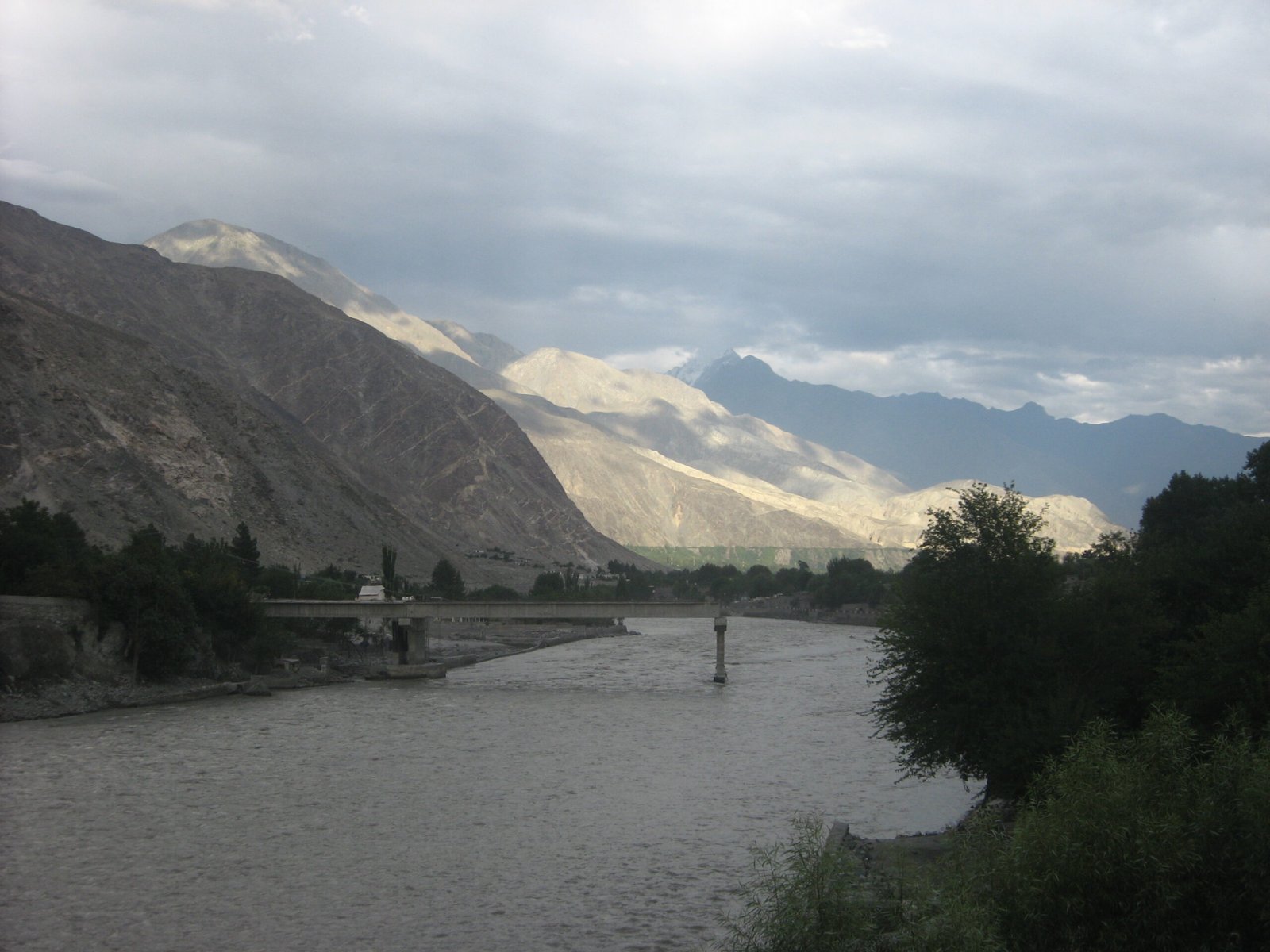
The bazaar and the river are the rest of the town day. Saddar Bazaar is where travellers stock up on dried apricots, walnuts, apricot oil, gemstones, and pakol caps, and it is also where you hire jeeps for Naltar and arrange onward transport. Chinar Bagh, the riverside park, is the local evening walk, with views over the Gilgit River and the Karakoram foothills. From Jutial, the ridge suburb 3 km from Saddar Bazaar, you get the wide view over the river confluence and the highway corridor, best at golden hour. The full town guide, with the bazaar, the bridges, and the crossroads history, is in our Gilgit City guide.
Where should I stay in Gilgit in winter?
Gilgit is the safest winter base in the region because it has the most reliable hotels, heating, and transport, and our winter-open guide names two Gilgit city hotels verified for winter stays: Gilgit Serena Hotel in Jutial and Ramada Resort by Wyndham Gilgit. Confirm directly before booking, as winter operations can change, and ask specifically about heating and hot water, because that matters more than any other amenity in January. Many smaller hotels and guesthouses in the region close from December to February or run a skeleton service, so do not assume a summer listing is open. For the full list of Gilgit hotels, see our Best Hotels in Gilgit City guide, and for the verified winter-open list across the region, see our Hotels Open in Winter guide.
Choose a room with heating that does not depend on electricity alone. Power cuts are more frequent in winter, and a room with a gas heater or a stove beats a room with an electric heater that stops when the power does. Keep a power bank charged, keep it warm in an inside pocket, and carry cash as well as cards, since small shops and drivers may not take cards. For the full picture on winter power, see our Winter Power Cuts guide below.
Can I ski at Naltar on a day trip from Gilgit?
Yes, and this is the best winter day trip in Gilgit-Baltistan. Naltar Valley sits about 40 km from Gilgit, and the Pakistan Air Force operates Pakistan’s main ski slope at Naltar Bala, at about 2,950 metres, with a chairlift, basic equipment rental, a ski school, and a base lodge. The ski season runs December to March, snow permitting, and January and February are the genuine ski months. The winter sports festival, organised with the Pakistan Air Force and the Winter Sports Federation of Pakistan, usually runs in late January or early February, with skiing, snowboarding, and ice hockey competitions.
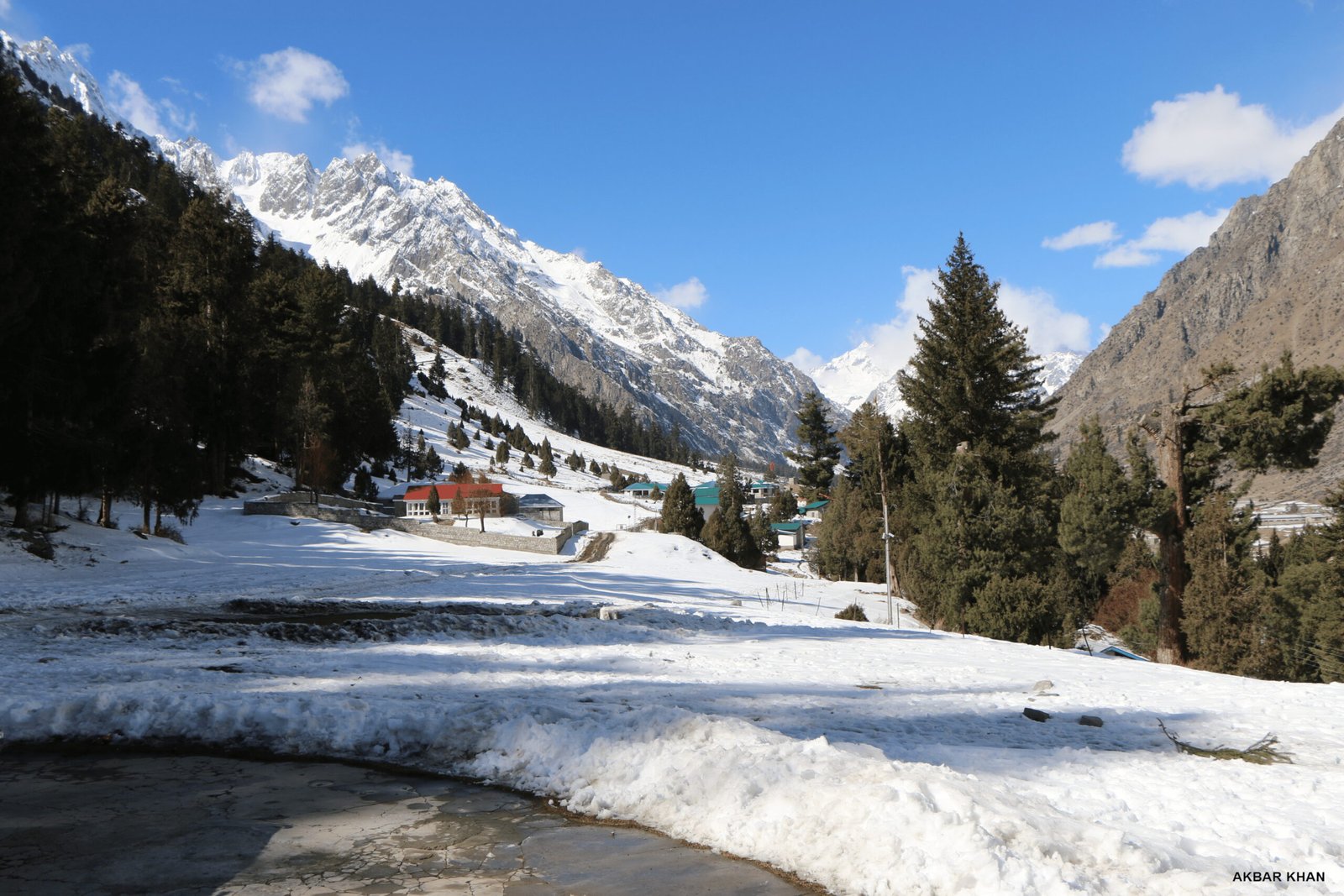
Allow 1.5 to 2 hours by jeep from Gilgit. The lower road via Nomal has been rebuilt as the Naltar Expressway, opened in November 2024, so the run to Naltar Bala is faster than the old jeep track used to be, but the track beyond Bala to the lakes still needs a 4×4, and in winter the lakes road can be blocked by snow while the lakes themselves freeze. Come in winter for the skiing and the quiet, not for the lakes. A day trip from Gilgit is possible, but the jeep road plus the altitude makes a long day, so an overnight stay in Naltar is better if you can arrange it. Hire the jeep in Gilgit through your guesthouse or operator, agree the price before departure, and do not attempt the upper track in a low-clearance car, especially in snow. There are no ATMs in the valley, and phone signal fades above Nomal, so take cash and tell someone your plan. For the full Naltar detail, including the lakes and the road, see our Naltar Valley guide and our Naltar Valley Ski Guide.
What about power cuts in winter?
Expect them, and plan around them, because they are the single most practical fact of a Gilgit winter. Floods since June cut Gilgit-Baltistan’s hydropower from 211.6 megawatts to about 157 megawatts, against summer demand of 285 megawatts. Gilgit city has about 70 megawatts installed, but only about 33 megawatts are generated in winter. An 18 megawatt rooftop solar programme on 499 government buildings is due by December, and a regional grid linking Gilgit, Hunza, Astore, and Skardu was approved in 2023, but neither fixes this winter. Those figures come from Dawn’s 18 November 2026 editorial, cited in our Winter Power Cuts guide, which is the full account of what travellers should know.
In practice, that means evenings without power are normal, rooms get cold when heaters stop, and charging points are uncertain. Choose a hotel with heating that works without electricity, keep a power bank charged and warm, and carry a headlamp. Cold drains phone batteries faster, so the power bank goes in an inside pocket, not in a daypack. If you need reliable power for work, Gilgit in winter is not the place to count on it.
Disclosure: This article contains affiliate links. As an Amazon Associate, we earn from qualifying purchases.
The Anker PowerCore is a practical choice for long winter road days and power-cut evenings, when charging points are uncertain and cold drains batteries faster.
What should I pack for Gilgit in winter?
Pack for cold days, colder nights, and warm rooms that are only warm near the stove. Daytime valley temperatures sit around or below 10C, nights fall below freezing, and cold snaps go lower. The system is heavyweight thermal base layers, a thick fleece or wool mid-layer, a serious down jacket, and a windproof shell for the valley wind. Insulated waterproof boots with room for thick socks, a warm hat, a buff, lined gloves with liner gloves beneath, and microspikes for icy lanes earn their space daily. Pack a four-season sleeping bag liner to boost guesthouse bedding, a hot-water bottle, a headlamp for power cuts, lip balm and heavy moisturiser for the dry cold, and sunglasses and sunscreen for snow glare. Keep twice the power-bank capacity you think you need, and keep it warm. For the full layering system, see our What to Pack for Northern Pakistan guide.
Is Gilgit a good winter base for Hunza and beyond?
Yes, and that is the point of this guide. Gilgit is the base other winter travellers use without writing about it. Hunza is about 100 km up the Karakoram Highway, a 2 to 2.5 hour drive to Karimabad, and the highway generally stays open at valley level, so a Hunza day trip or an overnight in Karimabad is realistic from Gilgit in winter. Naltar is the ski day trip. The bazaar, the transport offices, and the jeep stands are all in Gilgit, so onward plans are easier to arrange here than in any valley town.
Know the limits before you plan. Deosai is closed under snow until around June. Khunjerab Pass is closed to tourists for the season, with the border crossing shut around the end of November. Fairy Meadows is closed for regular trips, with the jeep track under snow. High treks, including K2 Base Camp, Rush Lake, and Snow Lake, are closed until summer. What Gilgit gives you in winter is the town itself, the ski slope at Naltar, and the road north to Hunza, and that is enough for 2 to 3 real days. For the wider winter picture across the region, see our Winter in Gilgit-Baltistan guide, and for safety, our honest guide to whether Gilgit-Baltistan is safe for tourists.
What should I not plan in Gilgit in winter?
Do not plan a tight schedule around a flight, because Gilgit flights are cancelled often in mountain weather. Do not plan Deosai, Khunjerab, Fairy Meadows, or any high trek, because they are all closed. Do not plan on the Naltar lakes, because the lakes road can be blocked and the lakes freeze. Do not plan on driving yourself, because ice in shaded sections and sudden closures punish inexperience, and this is not the season for self-driving experiments. Do not assume a hotel or cafe from a summer list is open, because many close or run a skeleton service. And do not plan on reliable power or phone signal in the side valleys, because both fail in winter. Plan around what winter does offer, valleys, culture, skiing, and snow scenery, keep two buffer days, and Gilgit will reward you.
Yes, if you want the north without the crowds. Gilgit is the mildest town in the region in winter, with 10 to 13C days, an open bazaar, Kargah Buddha, and the Naltar ski slope 40 km away. It suits photographers, slow travellers, and skiers. Skip it if you want Deosai, Khunjerab, and the high treks, since all three are closed.
Days average 12C in December, 10C in January, and 13C in February, with nights at minus 2C, minus 3C, and 0C. Those are Pakistan Meteorological Department averages. Cold snaps go lower, so pack for minus 5C at night. The town itself gets little snow, and the snow sits on the mountains above the city.
Yes, PIA flies Islamabad to Gilgit, with morning departures including PK601 at around 07:00 and PK603 at around 11:10, and the flight takes about an hour. But cancellations are common in mountain weather, so keep at least one spare day at each end of your trip and treat the Karakoram Highway as your backup.
Yes. Naltar Valley is about 40 km from Gilgit, a 1.5 to 2 hour jeep ride, and the Pakistan Air Force ski slope at about 2,950 metres runs December to March. January and February are the genuine ski months. A day trip is possible but long, so an overnight stay is better.
The bazaar, Kargah Buddha, Chinar Bagh, the Jutial viewpoint, and Danyore Bridge all stay open, and the Naltar ski slope runs December to March. Gilgit Serena Hotel and Ramada Gilgit are verified for winter stays. What closes are Babusar Pass, Khunjerab Pass, Deosai, Fairy Meadows for regular trips, and all high treks.
Plan 2 to 3 days, plus buffer days for flights. One day covers the town, the bazaar, Kargah Buddha, and the river walks. A second day covers the Naltar ski trip. A third day gives you a Hunza day trip or a spare day if weather closes the road or cancels a flight.