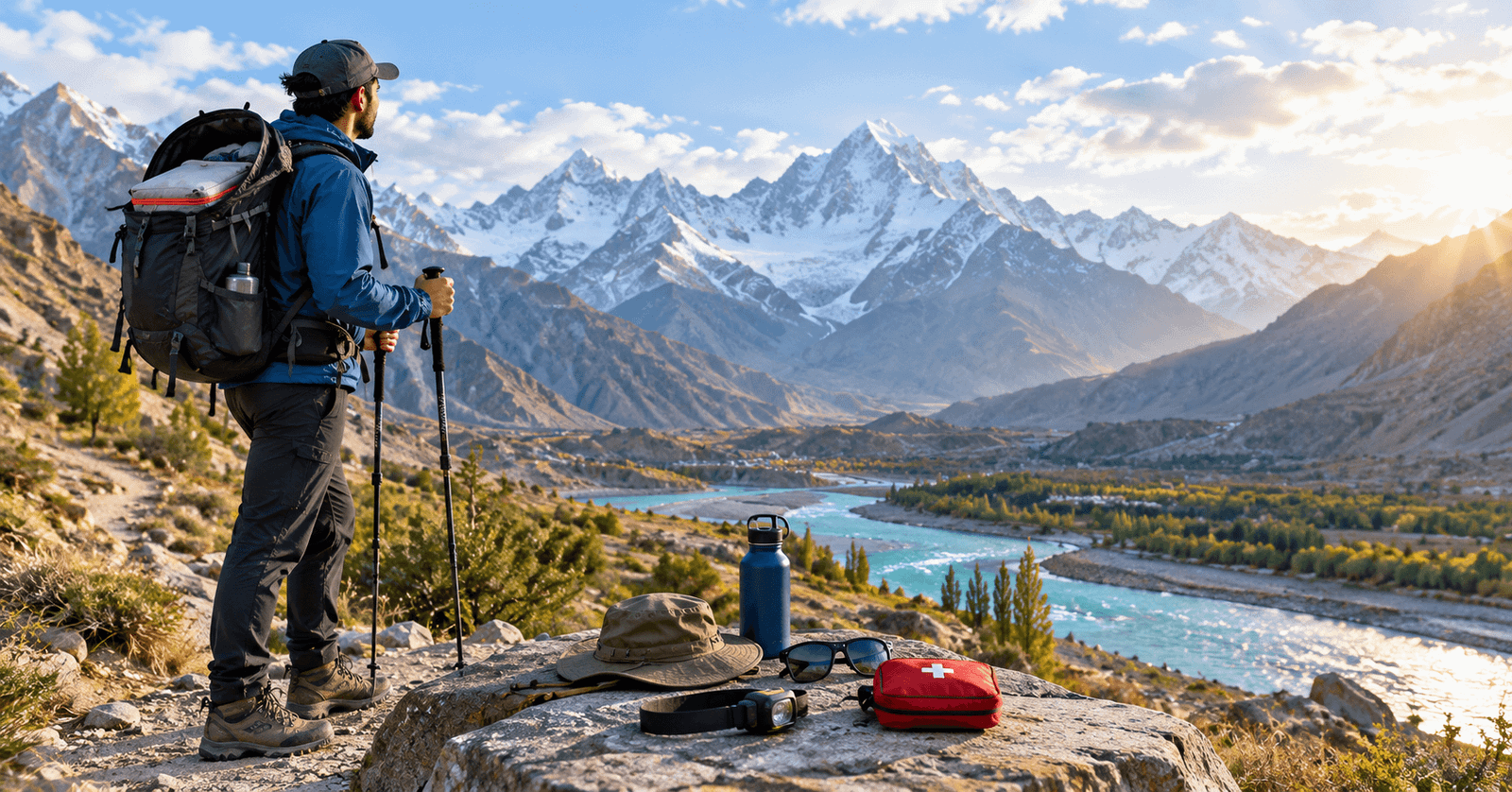
Gilgit-Baltistan is not just a destination of towering mountains and scenic valleys it is one of the most naturally gifted gemstone regions on Earth. Hidden beneath its dramatic landscapes lies a mineral wealth so vast and diverse that it rivals famous gemstone hubs like Brazil, Afghanistan, Sri Lanka, and Myanmar.
What makes Gilgit-Baltistan truly exceptional is not just the variety of gemstones, but their natural quality, crystal size, purity, and geological rarity. This region produces some of the finest aquamarine, ruby, emerald, tourmaline, topaz, garnet, peridot, and quartz varieties found anywhere in the world.
Let’s break down exactly why Gilgit-Baltistan holds this global gemstone power:
Unique Geological Collision Zones
Gilgit-Baltistan sits at the rare intersection of three major tectonic plates:
- The Indian Plate
- The Eurasian Plate
- The Karakoram geological belt
This intense collision over millions of years created:
- Extreme underground pressure
- High-temperature mineral zones
- Deep crystal-bearing veins
These conditions are perfect for forming large, high-quality natural gemstones, especially aquamarine, ruby, topaz, and tourmaline.
Very few places on Earth share this kind of multi-plate geological environment, which is why gemstones from this region display exceptional color saturation and structural strength.
One of the World’s Highest Natural Crystal Belts
Gilgit-Baltistan is home to:
- The Karakoram Range
- The western Himalayas
- Parts of the Hindu Kush
These are some of the highest crystal-bearing mountains in the world.
- High-altitude crystal formation leads to:
- Slower mineral growth (which means better clarity)
- Larger gemstone crystals
- Stronger internal structure
- Higher resistance to fractures
This is one key reason why large aquamarine and tourmaline crystals from this region often dominate international gemstone auctions.
Wide Diversity of Gemstones in a Single Region
Very few gemstone regions in the world produce such a wide variety of stones from one area. Gilgit-Baltistan naturally yields:
- Aquamarine
- Ruby
- Emerald
- Topaz
- Tourmaline
- Garnet
- Peridot
- Quartz varieties
- Zircon
- Spinel
This diversity makes the region a one-stop gemstone source for:
- Jewelry manufacturers
- Wholesale traders
- Private collectors
- International exporters
This alone places Gilgit-Baltistan among the top gemstone-producing geological zones worldwide.
High Ratio of Untreated, Natural Gemstones
Unlike many global gemstone markets where stones are heavily:
- Heat-treated
- Chemically enhanced
- Color-altered
A large percentage of gemstones from Gilgit-Baltistan are:
✅ Naturally colored
✅ Untreated or minimally processed
✅ Earth-mined without industrial alteration
This natural authenticity dramatically increases:
Their long-term investment value
- Buyer trust
- Auction demand
- Collector preference
In today’s gemstone market, untreated stones sell faster and at higher premiums than lab-enhanced alternatives.
Massive Untapped Mining Potential
Unlike commercialized mining hubs like Africa or South America, Gilgit-Baltistan still operates largely on:
- Small-scale manual mining
- Seasonal excavations
- Local tribal extraction methods
This means:
- Huge gemstone reserves remain undiscovered
- Many valleys are still untouched by modern mining
- New gemstone pockets are found almost every year
Experts believe that only a small percentage of the region’s total gemstone wealth has been explored so far, making Gilgit-Baltistan one of the last great untapped gemstone frontiers in the world.
Strong International Demand for GB Gemstones
Gemstones from Gilgit-Baltistan are widely traded in:
- Dubai
- Bangkok
- Hong Kong
- China
- Europe
- United States
However, many stones are exported quietly and resold under foreign labels, especially as:
- Brazilian aquamarine
- Afghan ruby
- African tourmaline
This hidden rebranding proves the international acceptance and high commercial value of Pakistan’s gemstone output.
A Rare Combination of Beauty, Rarity & Investment Value
What makes this region extraordinary is the perfect mix of three critical factors:
- Natural visual beauty
- Geological rarity
- Strong global resale value
- Few places on Earth offer all three at the same time.
This is why gemstone traders, investors, luxury jewelry brands, and private collectors closely watch new discoveries from Gilgit-Baltistan every year.
How These Gemstones Are Formed in the Karakoram & Himalayas
The extraordinary gemstones of Gilgit-Baltistan are not created by chance. They are the result of millions of years of intense geological forces deep beneath the world’s most powerful mountain systems — the Karakoram Range and the Himalayas. These two giants of the natural world act like massive gemstone factories, producing some of the purest and rarest crystals found on Earth.
Let’s break down exactly how nature creates these precious stones in this region:
Tectonic Plate Collision: The Birth of Gemstones
Around 50 million years ago, the Indian Plate crashed into the Eurasian Plate. This violent impact did three critical things:
- Created enormous underground pressure
- Generated extreme heat inside the Earth’s crust
- Forced mineral-rich rocks upward toward the surface
This process led to the formation of:
- Ruby
- Emerald
- Aquamarine
- Topaz
- Tourmaline
- Garnet
Without this plate collision, Gilgit-Baltistan would never have become a gemstone region. This same tectonic activity is also what formed Mount Everest and K2 — meaning the gemstones and the world’s tallest peaks share the same origin.
Extreme Heat + Pressure Create Crystal Perfection
Deep inside the Earth, minerals are exposed to:
- Temperatures above 700°C
- Pressure thousands of times stronger than at sea level
- Under these extreme conditions:
- Liquid minerals slowly crystallize
- Atoms align tightly and perfectly
- Strong, transparent gemstones form instead of fragile stones
This is why Gilgit-Baltistan produces:
- High-clarity aquamarine
- Deep red natural rubies
- Strong, fracture-resistant tourmaline
- Dense emerald crystals
Slow crystal growth equals better color, fewer cracks, and higher value.
Pegmatite Veins: Nature’s Gemstone Pipelines
One of the biggest reasons aquamarine, topaz, and tourmaline are so abundant in the region is due to pegmatite veins.
Pegmatites are:
- Mineral-rich molten rock channels
- Underground crystal highways
- Perfect environments for large gemstone formation
When these molten fluids cool slowly inside mountain cracks, they form:
- Large aquamarine crystals
- Giant tourmaline rods
- Transparent topaz blocks
This is why museum-sized gemstone specimens come from valleys like Skardu, Nagar, Shigar, and Haramosh.
High Altitude = Higher Gemstone Quality
Most gemstone regions in the world are found at:
- Low mountains
- Flat mining belts
- But Gilgit-Baltistan gemstones form at:
- Extremely high elevations
- Deep inside glaciers, cliffs, and remote valleys
High altitude crystal environments produce:
- Slow cooling of molten minerals
- Better molecular bonding
- Stronger internal crystal structure
- Deeper natural colors
This is one of the hidden reasons why:
- GB aquamarine often beats Brazilian aquamarine in clarity
- GB tourmaline shows richer natural shades
- GB ruby displays intense blood-red tones
Natural Fracturing Pushes Gemstones to the Surface
Another key process is mountain uplift and erosion.
As the Karakoram and Himalayan ranges continue to rise:
- Rocks crack and split naturally
- Gemstone-bearing veins get exposed
- Rain, snow, and glaciers loosen crystal pockets
- Stones slide into riverbeds and mountain slopes
This is why:
- Many gemstone miners in Gilgit-Baltistan still find stones by hand excavation
- Gemstones are often discovered in natural landslides and glacier melt zones
- This natural exposure keeps mining organic, low-impact, and sustainable.
Each Gemstone Forms Differently
Here’s a simplified formation snapshot:
- Aquamarine & Topaz → Form in pegmatite veins
- Ruby & Spinel → Form in metamorphic marble rocks
- Emerald → Forms where beryllium meets chromium-rich rocks
- Tourmaline & Garnet → Form in high-pressure metamorphic zones
- Quartz & Zircon → Form in hydrothermal mineral streams
This explains why one single region produces so many different gemstones naturally — a rare phenomenon worldwide.
Why This Natural Formation Process Increases Global Value
Because these gemstones form under:
- Natural pressure
- Natural heat
- Natural cooling
- Minimal chemical interference
They carry:
✅ Higher durability
✅ Better resale value
✅ Lower treatment requirement
✅ Strong demand from collectors
✅ Greater long-term investment stability
This natural formation story is one of the biggest reasons why international buyers trust and prefer Gilgit-Baltistan gemstones.
Are Gilgit-Baltistan Gemstones Natural or Treated?
One of the most asked questions by international buyers, collectors, and investors is whether gemstones from Gilgit-Baltistan are natural or artificially treated. The answer is one of the biggest strengths of this region:
A very high percentage of Gilgit-Baltistan gemstones are completely natural and untreated.
This single fact alone places GB gemstones among the most trusted stones in the global market.
Let’s break this down with total transparency.
What “Natural” Really Means in the Gemstone Industry
A natural gemstone means:
- It is mined directly from the Earth
- It has not been chemically enhanced
- It has not been lab-grown
- Its color, clarity, and structure are original
In contrast, many gemstones sold worldwide are:
- Heat-treated
- Dye-treated
- Resin-filled
- Irradiated
- Or fully lab-created
The majority of gemstones from Gilgit-Baltistan fall into the pure natural category.
Why Gilgit-Baltistan Stones Are Mostly Untreated
There are three powerful reasons why GB gemstones remain natural:
✅ A. Remote Mining Locations
Most gemstone mines in Hunza–Nagar, Skardu, Shigar, and Astore are:
- High in the mountains
- Difficult to access
- Operated manually by local miners
There are no large industrial treatment facilities near these mining zones, which means:
- Stones are sold in original raw form
- No mass heat processing takes place at the source
✅ B. Strong Natural Color Eliminates the Need for Treatment
Many gemstones require treatment because their natural color is weak.
But GB stones naturally show:
- Deep blue aquamarine
- Rich green emerald
- Intense red ruby
- Vibrant pink and green tourmaline
Since the color is already strong, there is no commercial need to enhance them.
✅ C. Global Demand for Untreated Stones Is Higher
International buyers now strongly prefer:
- Untreated rubies
- Natural emeralds
- Unheated aquamarine
- Because untreated stones:
- Sell at higher prices
- Hold investment value longer
- Are preferred by luxury jewelry brands
- Perform better in auctions
This has encouraged Pakistani exporters to preserve the natural state instead of treating stones.
Which Gilgit-Baltistan Gemstones Are Mostly Untreated?
The following stones are commonly found in untreated form:
- ✅ Aquamarine
- ✅ Topaz
- ✅ Tourmaline
- ✅ Garnet
- ✅ Peridot
- ✅ Quartz (Smoky, Crystal, Amethyst)
- ✅ Zircon
These stones usually enter the market with:
- No heating
- No dye
- No filling
- No chemical coating
Which Stones Are Sometimes Treated? (Truth for Buyer Safety)
To stay fully transparent:
Ruby → Sometimes heat-treated
Emerald → Sometimes oil-treated to improve clarity
⚠️ These treatments are:
- Industry-accepted
- Legal worldwide
- Only used to enhance clarity, not change identity
However, many untreated rubies and emeralds also exist in GB, especially in smaller mining pockets of Hunza–Nagar and Astore.
How to Identify Natural vs Treated Gemstones (Buyer Guide)
If you or your clients want to verify authenticity:
✅ Always ask for:
- Gemological lab certificate
- Treatment disclosure report
✅ Trusted global labs:
- GIA (USA)
- IGI (International)
- GRS (Switzerland)
- AIGS (Asia)
Minor internal inclusions
✅ Visual signs of natural stones:
- Slight natural color zoning
- No glassy shine from filling
Are Gilgit-Baltistan Gemstones Better Than African or Lab Stones?
In most cases — YES for collectors & investors.
- Feature GB Natural Stones African Treated Stones Lab Stones
- Natural Origin ✅ Yes ✅ Yes ❌ No
- Chemical Treatment ❌ Very Low ✅ High ❌ Not needed
- Investment Value ✅ High ⚠️ Medium ❌ None
- Auction Demand ✅ Strong ⚠️ Moderate ❌ Weak
- Long-Term Worth ✅ Increases ⚠️ Fluctuates ❌ Drops
This is why untreated Gilgit-Baltistan gemstones are quietly becoming elite investment stones.
What This Means for Buyers, Tourists & Investors
If you:
- Buy gemstones for resale
- Collect rare stones
- Invest for long-term value
- Or source for luxury jewelry
Then Gilgit-Baltistan offers one of the safest natural gemstone supplies in the world today.
Aquamarine – The Pride of Gilgit-Baltistan
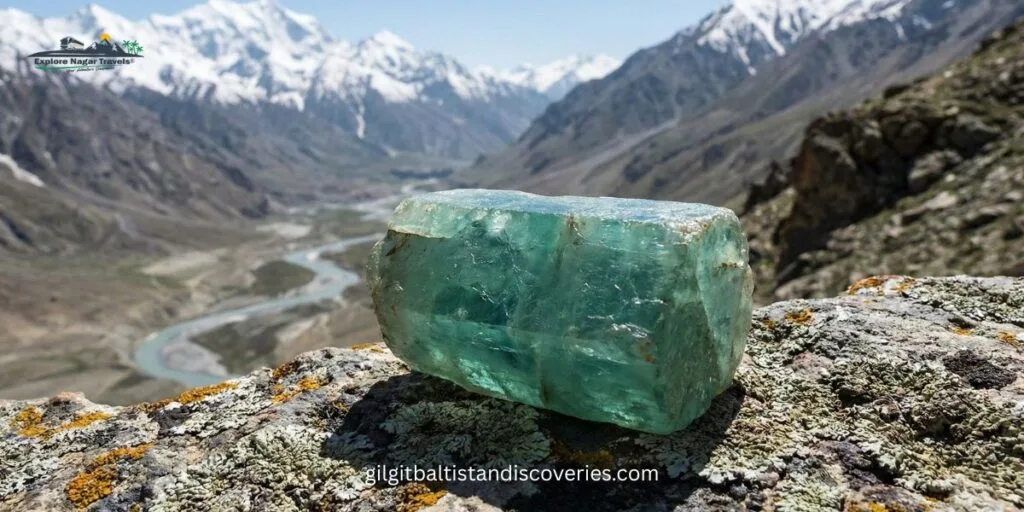
Aquamarine is the most famous and internationally demanded gemstone from Gilgit-Baltistan. Known for its ocean-blue color, crystal clarity, and high market value, this gemstone has made Pakistan one of the top natural aquamarine producers in the world.
Where Aquamarine Is Mined in Gilgit-Baltistan
Aquamarine is mainly extracted from:
- Skardu Valley
- Shigar Valley
- Khaplu
- Nagar Valley
- Haramosh Mountains
These regions lie deep within the Karakoram mountain range, where extreme geological pressure creates large, natural aquamarine crystals with minimal chemical treatment.
Why Gilgit-Baltistan Aquamarine Is World-Famous
What makes GB aquamarine superior:
- Naturally vibrant blue to sea-green color
- Mostly untreated (no artificial heating)
- Large crystal sizes (rare globally)
- High clarity with fewer inclusions
- Strong demand in Europe, UAE, China & Thailand
Many international dealers actually rebrand Pakistani aquamarine as Brazilian due to its premium quality.
Aquamarine Market Value (Price Indicator)
- Small jewelry grade: Medium Price
- Deep blue investment pieces: High Price
- Museum-grade crystal specimens: Ultra-Rare & Premium
This makes aquamarine ideal for:
- Jewelry designers
- Stone collectors
- Gem investors
Uses of Aquamarine
Fine jewelry (rings, pendants, bracelets)
- Luxury watches
- Healing crystal industry
- Private gemstone collections
- Export gemstone trade
Why Buyers Prefer Pakistani Aquamarine
- More natural than African stones
- Larger raw crystals than Brazilian supply
- Stronger color saturation
- Lower treatment ratio
- Better long-term investment value
✅ Status:
Top exporting gemstone of Gilgit-Baltistan
High demand in international gemstone auctions
Ruby – The Blood Red Treasure of Hunza & Nagar
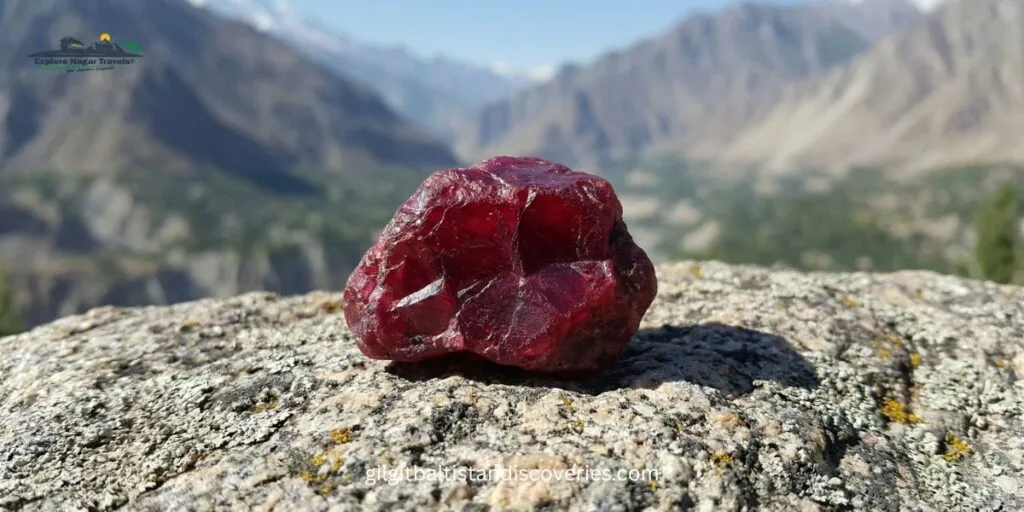
Ruby is one of the most valuable and emotionally powerful gemstones on Earth, and the natural rubies found in Hunza–Nagar are among the rarest and most desired in Pakistan’s entire mineral industry. Known as the “Stone of Kings”, ruby symbolizes power, protection, passion, and wealth — and when it comes from high mountain regions like Hunza–Nagar, its value increases even further.
While Myanmar (Burma) dominates the global ruby market, Pakistan’s Hunza–Nagar rubies are silently gaining international attention due to their deep natural color, high crystal strength, and low chemical treatment ratio.
Where Rubies Are Found in Hunza–Nagar
The main ruby-bearing zones in Hunza–Nagar include:
- High-altitude marble rock belts
- Remote mountain pockets near glacier zones
- Deep metamorphic rock formations
These rubies form inside marble-hosted metamorphic rocks, the same type of formation that produces the world’s most expensive Burmese rubies. This geological similarity is the main reason Hunza–Nagar rubies have serious investment potential.
Because of the rough terrain and extreme altitude, mining is:
- Mostly manual
- Seasonally accessible
- Low in industrial interference
This keeps the stones closer to their natural state.
Color, Quality & Natural Beauty
- Hunza–Nagar rubies are famous for:
- Deep blood-red tones
- Strong internal crystal structure
- Natural glow under sunlight
- High durability (9 on Mohs scale)
Some stones display a nearly “pigeon blood” red hue, which is the highest valuation category for rubies worldwide.
Unlike many African rubies that rely heavily on heat and glass filling, Hunza–Nagar rubies often enter the market with minimal enhancement.
Natural vs Treated Reality of Hunza–Nagar Rubies
To stay fully transparent:
✅ Many rubies from Hunza–Nagar are naturally untreated
⚠️ Some stones may undergo standard heat treatment to improve clarity
However:
- Glass-filled rubies (low-grade) are not naturally produced in these valleys
- Untreated stones carry significantly higher auction value
This makes Hunza–Nagar rubies attractive for:
- Serious collectors
- Luxury jewelers
- High-end private investors
International Market Value of Hunza–Nagar Rubies
Rubies are placed in the Ultra-Premium Gemstone Category globally.
- Quality Grade Market Status
- Commercial Grade Medium–High
- Jewelry Grade High
- Untreated Collector Grade Very High
- Pigeon Blood Grade Ultra-Rare & Investment Level
Top buyers come from:
- UAE
- Thailand
- Hong Kong
- China
- Europe
- United States
Many buyers actively search for:
“Natural untreated ruby from Pakistan”
Uses of Ruby
- Luxury rings & pendants
- High-end watches
- Crown and royal jewelry replicas
- Emotional gifting
- Long-term gemstone investment
- Astrological use
Ruby is one of the few gemstones whose value consistently rises over time.
Common Scams in the Ruby Market (Buyer Safety)
Because ruby is highly valuable, it is also the most commonly faked gemstone. Tourists and new buyers must beware of:
- Glass-filled rubies sold as “natural”
- Dyed low-grade stones
- Synthetic lab rubies
- Composite ruby slices
✅ Always ask for:
- Gemological certificate
- Treatment disclosure
- Return policy
Why Hunza–Nagar Rubies Are Still Underrated Globally
Despite their quality, Hunza–Nagar rubies remain undervalued because:
- Limited international marketing
- Low digital presence
- Minimal global branding
- Middlemen controlling exports
This creates a rare opportunity for early investors and smart buyers.
Emerald – Pakistan’s Green Diamond from the Mountains
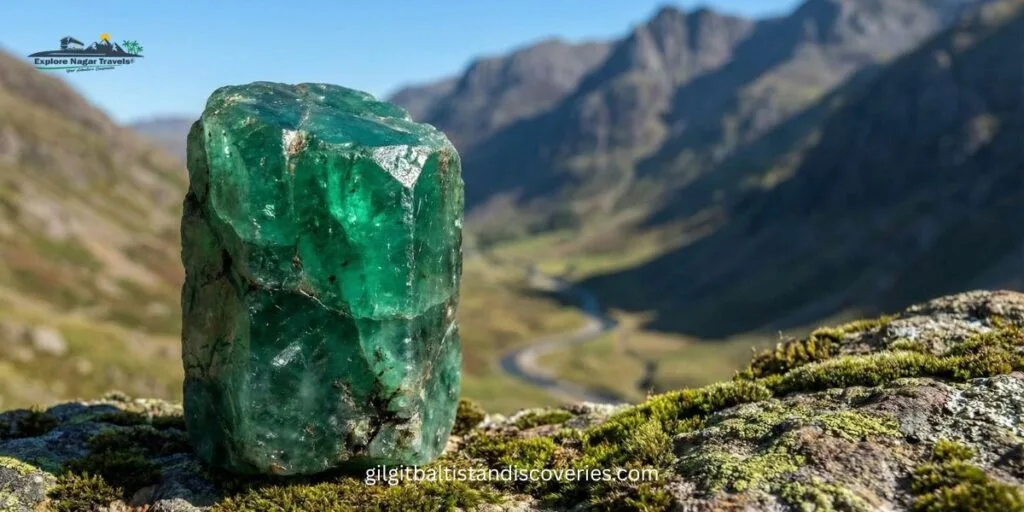
Emerald is often called the “Green Diamond” because of its royal beauty, rarity, and unmatched luxury appeal. Among the world’s emerald sources, Pakistan holds a special place for producing deep green, high-crystal, natural emeralds that are highly demanded by luxury jewelry brands and serious collectors.
Although emerald mining in Pakistan is most famously linked with the northern mountain belts near Swat, a large portion of Pakistan’s emerald trade, cutting, resale, and export movement passes through Gilgit-Baltistan, making it a key commercial hub for emerald buyers and dealers traveling to the north.
Where Pakistan’s Emeralds Come From (Mountain Origin)
Pakistan’s emeralds originate from:
- High-altitude metamorphic mountain belts
- Chromium-rich rock zones
- Deep fault-line mineral pockets
The same extreme geological pressure that creates aquamarine and ruby in Nagar, Skardu, and surrounding valleys also contributes to the crystal-rich emerald environment in Pakistan’s northern mountains.
Because these emeralds form in high-stress natural zones, they usually show:
- Rich color saturation
- Powerful inner glow
- Strong crystal structure
Why Pakistani Emeralds Are So Valuable
Pakistan’s emeralds are famous for:
- Deep forest-green to bluish-green color
- Natural internal “jardin” (emerald garden inclusions)
- Strong light reflection
- High durability for daily jewelry wear
- Strong demand without aggressive heat treatment
International gem dealers often compare fine Pakistani emeralds with:
- Colombian emeralds (world’s benchmark)
- Zambian emeralds (commercial leader)
- ✅ When untreated and well-cut, Pakistani emeralds can reach premium luxury pricing.
- 💎 Natural vs Oiled Emeralds – The Reality
To be fully transparent for buyers:
✅ Many Pakistani emeralds are naturally untreated
⚠️ Some emeralds receive standard oil treatment to improve surface clarity
Important truth:
- Oil treatment is globally accepted
- It does not devalue the stone when disclosed
- Untreated emeralds carry exceptionally higher collector value
✅ Certified untreated emeralds from Pakistan are considered top-tier investment stones.
Strong buyers come from:
- UAE
- Europe
- Hong Kong
- USA
- Thailand
Global buyers frequently search:
“Natural untreated emerald from Pakistan”
Uses of Emerald
- Royal jewelry & bridal sets
- Luxury rings and pendants
- Designer watches
- Healing & energy crystals
- High-end private collections
- Wealth and legacy investments
Emerald has always symbolized:
✅ Power
✅ Wisdom
✅ Love
✅ Financial growth
Common Emerald Scams Tourists Must Avoid
Emerald is among the most imitated gemstones in the world. Tourists must beware of:
- Green glass sold as emerald
- Heavy resin-filled emerald
- Dyed quartz sold as “cheap emerald”
- Lab-created emerald sold as natural
✅ Always demand:
- Lab certification
- Treatment disclosure
- Return or exchange policy
Why Pakistani Emeralds Are Still Underrated Globally
Despite their quality, Pakistani emeralds remain:
- Under-marketed internationally
- Limited in digital branding
- Controlled by middlemen
- Rarely promoted directly to collectors
This creates a massive opportunity window for smart buyers and early investors.
Topaz – Skardu’s Golden Crystal of Gilgit-Baltistan
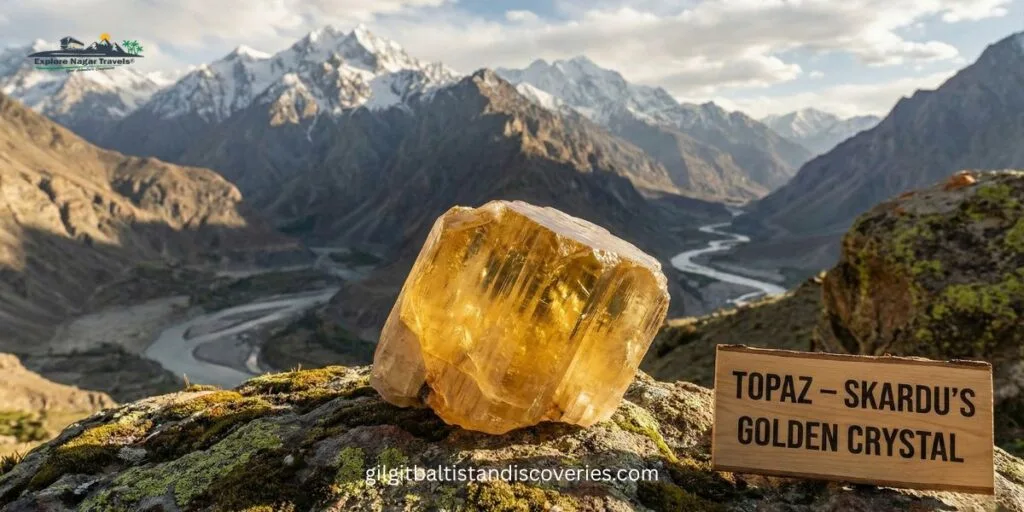
Topaz is one of the most abundant yet highly valuable gemstones found in northern Pakistan, and the valleys surrounding Skardu are internationally recognized for producing large, naturally transparent, golden-yellow and sky-blue topaz crystals.
Unlike many countries where topaz is heavily treated for color, Skardu topaz is famous for its natural clarity, size, and crystal perfection, making it a favorite among:
- Gemstone exporters
- Jewelry designers
- Museum collectors
- Wholesale traders
Where Topaz Is Mined Around Skardu
Topaz is extracted from:
- Shigar Valley
- Khaplu region
- Dassu mountain belts
- High-altitude pegmatite zones around Skardu
These areas are rich in pegmatite mineral veins, which are the natural factories of topaz and aquamarine. Miners often discover:
- Long crystal rods
- Transparent gemstone blocks
- Golden and champagne-colored topaz
Natural Colors of Skardu Topaz
Skardu produces topaz in multiple natural shades:
- Golden yellow
- Champagne
- Light honey brown
- Sky blue
- Colorless crystal-grade topaz
✅ The golden variety is the most demanded internationally
✅ The natural blue topaz is rare and top-tier for collectors
Many “blue topaz” sold worldwide is actually colorless topaz treated with radiation, while Skardu naturally produces real sky-blue stones — a massive commercial advantage.
Natural vs Treated Topaz – Hidden Market Truth
✅ Most Skardu topaz is completely untreated
⚠️ Treated blue topaz in global markets often comes from:
- Brazil
- Nigeria
- Sri Lanka
This means:
Untreated Skardu blue topaz holds higher long-term value
- Natural stones are preferred by:
- Luxury jewelry brands
- Private collectors
- Ethical gemstone buyers
Market Value of Skardu Topaz
- Topaz Type Market Position
- Colorless Topaz Medium
- Golden Topaz High
- Natural Blue Topaz Very High
- Museum-Size Crystals Ultra-Rare & Premium
Skardu is also famous for producing giant crystal specimens that sell:
- Directly to museums
- To high-end crystal collectors
- At international mineral exhibitions
Uses of Topaz
- Luxury rings & earrings
- High-end pendants
- Healing & energy crystal industry
- Gemstone carving
- Export specimen trade
- Watch dials & decorative luxury art
Topaz is also believed to symbolize:
✅ Success
✅ Confidence
✅ Mental clarity
✅ Business growth
Topaz Buyer Warning – Common Scams
Tourists and first-time buyers should beware of:
- Treated colorless stones sold as “natural blue”
- Synthetic coated stones sold as “aura topaz”
- Cheap glass imitation marketed as golden topaz
✅ Always verify with:
- Gem lab certificate
- UV and refractive testing
- Treatment disclosure
Why Skardu Topaz Is Still Underrated
Despite massive production, Skardu topaz is:
- Poorly branded internationally
- Sold cheaply to middlemen
- Rarely marketed under “Pakistan Origin”
- Often re-exported as foreign stock
This creates a huge resale and investment advantage for informed buyers.
Tourmaline – The Color-Changing Marvel of Gilgit-Baltistan
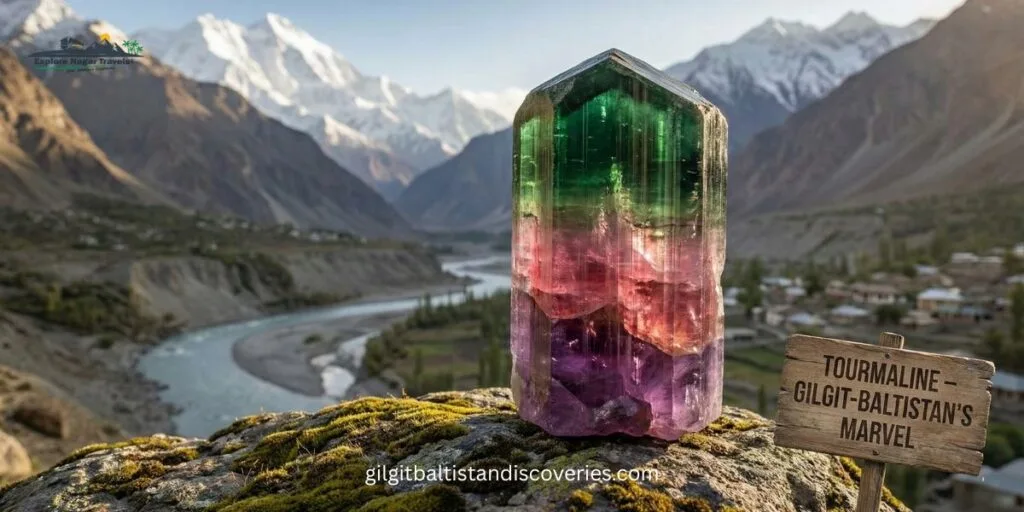
Tourmaline is one of the most visually diverse and luxurious gemstones on Earth, and Gilgit-Baltistan is home to some of the finest natural tourmaline crystals in Asia. What makes tourmaline truly special is its ability to appear in multiple colors within a single stone — a phenomenon known as color zoning.
From deep emerald green to neon pink, watermelon bi-color, and rare electric blue, GB tourmaline dominates:
- Luxury jewelry markets
- Designer gemstone collections
- High-end crystal specimen trade
- Rare gemstone investment circles
Where Tourmaline Is Mined in Gilgit-Baltistan
Tourmaline is mainly extracted from:
- Shigar Valley
- Skardu mountain belts
- Haramosh Range
- Nagar Valley (major bi-color tourmaline zone)
- Remote pegmatite cliffs above river gorges
These areas contain high-energy pegmatite veins, the same geological system that produces aquamarine and topaz — but tourmaline forms when additional rare chemical elements mix into these molten rock channels.
Why Gilgit-Baltistan Tourmaline Is World-Famous
GB tourmaline is globally respected for:
- Naturally vivid neon colors
- Strong crystal transparency
- Rare bi-color and tri-color zoning
- Large raw crystal sizes
- Minimal chemical treatment
Unlike many African tourmalines that are routinely heat-treated, most tourmaline from Gilgit-Baltistan enters the market in its original natural state.
Rare Types of Tourmaline Found in GB
Gilgit-Baltistan produces several high-value varieties:
- ✅ Green Tourmaline (Verdelite)
- ✅ Pink Tourmaline (Rubellite)
- ✅ Bi-Color “Watermelon” Tourmaline
- ✅ Chrome Tourmaline (Ultra-Rare)
⚠️ True Paraíba-type electric blue tourmaline is extremely rare in Pakistan, but neon-quality green and bi-color stones from Nagar rival Brazilian visual appeal.
Natural vs Treated Tourmaline – Buyer Truth
✅ The majority of GB tourmaline is:
- Untreated
- Unheated
- Naturally saturated
Some low-grade stones in global markets may be:
- Heat-enhanced
- Resin-coated
- Glass-filled (outside Pakistan)
✅ Untreated tourmaline holds far higher long-term resale value and is preferred by luxury designers.
Market Value of Gilgit-Baltistan Tourmaline
- Tourmaline Type Market Position
- Dark Green (Commercial) Medium
- Pink & Clean Green High
- Bi-Color Watermelon Very High
- Chrome Tourmaline Ultra-Rare & Investment Tier
Luxury buyers actively search:
“Natural bi-color tourmaline from Pakistan”
Uses of Tourmaline
- Designer rings & couture jewelry
- Fine pendants & bracelets
- Crystal healing industry
- Museum gemstone collections
- Luxury export market
- Custom gemstone carvings
Tourmaline symbolizes:
✅ Creativity
✅ Emotional balance
✅ Wealth attraction
✅ Confidence
Tourmaline Buyer Warning (Common Scams)
Tourmaline is often faked using:
- Dyed quartz
- Glass-filled composites
- Synthetic lab stones
- Plastic color coatings
✅ Always verify with:
- Gemological certificate
- Refractive index testing
- Color zoning inspection
- Treatment disclosure
Why GB Tourmaline Is Still Undervalued Globally
Despite its quality, GB tourmaline remains:
- Under-branded internationally
- Sold in bulk to middlemen
- Rarely marketed under Pakistan origin
- Exported as foreign rebrand stock
This creates a huge profit window for early exporters, investors, and luxury designers.
Garnet – The Ancient Warrior Stone of Gilgit-Baltistan
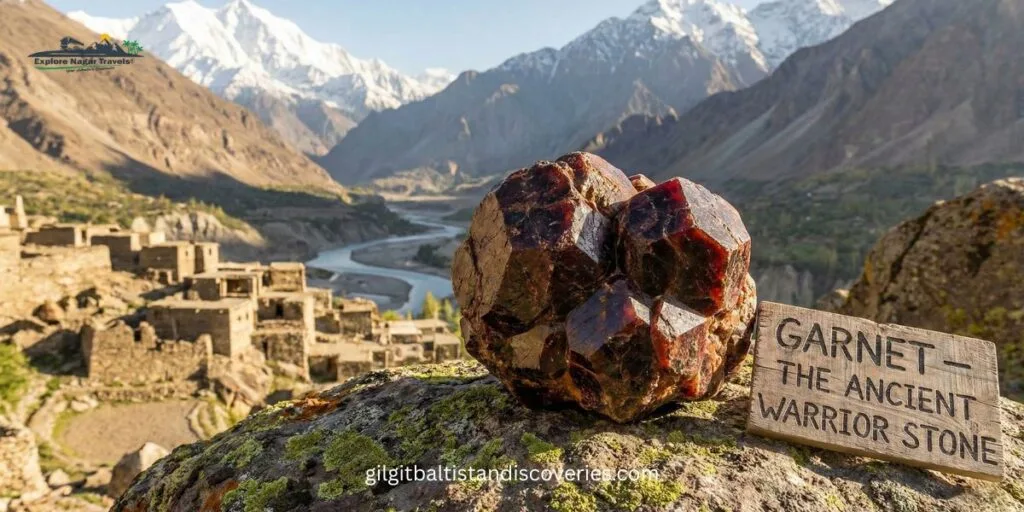
Garnet is known as the “Ancient Warrior Stone” for its historic association with strength, protection, and vitality. While garnet is globally common, Gilgit-Baltistan produces high-quality varieties that are crystal-clear, richly colored, and highly sought after by collectors, jewelers, and export markets.
From deep red almandine to rare green tsavorite, garnet in GB offers color diversity, durability, and natural brilliance that rival garnets from Africa and India.
Where Garnet Is Found in Gilgit-Baltistan
Key garnet-producing areas include:
- Shigar Valley
- Skardu mountains
- Hunza–Nagar high-altitude mineral belts
- Remote Astore pegmatites
These gemstones are mostly found in metamorphic and pegmatite rock formations, where heat and pressure over millions of years created high-density crystals with excellent clarity and luster.
Natural Colors and Varieties
Gilgit-Baltistan garnets are prized for:
- Almandine (Deep red – jewelry grade)
- Pyrope (Bright red – collector grade)
- Tsavorite (Green – rare luxury variant)
- Spessartine (Orange to reddish-brown – decorative use)
✅ The rich red garnet is the most internationally demanded.
✅ Green tsavorite garnet from GB is rare and considered premium collector quality.
Natural vs Treated Garnet
Most GB garnets are naturally colored and untreated, unlike garnets imported from some other regions that may be heated or coated.
- Red garnets generally require no treatment.
- Green garnets occasionally undergo minor polishing to enhance surface luster.
- This makes Gilgit-Baltistan garnets a trusted choice for jewelers and investors.
Market Value of Gilgit-Baltistan Garnet
Garnet Type Market Position
Red Almandine Medium
Pyrope (Jewelry Grade) High
Green Tsavorite Very High & Rare
Museum Specimens Ultra-Rare & Investment Tier
Strong buyers include:
- UAE and Dubai jewelry traders
- European luxury designers
- North American collectors
- Asia-Pacific export markets
Uses of Garnet
- Jewelry: rings, earrings, necklaces
- Luxury pendants
- Spiritual healing and chakra therapy
- Decorative carvings and gemstone art
- Collector-grade investment stones
Garnet is also historically associated with:
✅ Courage
✅ Protection
✅ Strength
✅ Vitality
Common Garnet Scams & Buyer Tips
- Low-grade garnets sold as high-grade red almandine
- Dyed stones to enhance color
- Synthetic garnets misrepresented as natural
Always request:
- Lab certification
- Treatment disclosure
- Seller reputation confirmation
Why GB Garnets Are Still a Hidden Gem Globally
Despite high quality, garnets from GB remain:
- Underrepresented in global trade
- Largely exported to middlemen
- Rarely marketed directly under “Pakistan Origin”
This provides a lucrative opportunity for collectors and gemstone investors.
Peridot – The Gem of the Sun from Gilgit-Baltistan
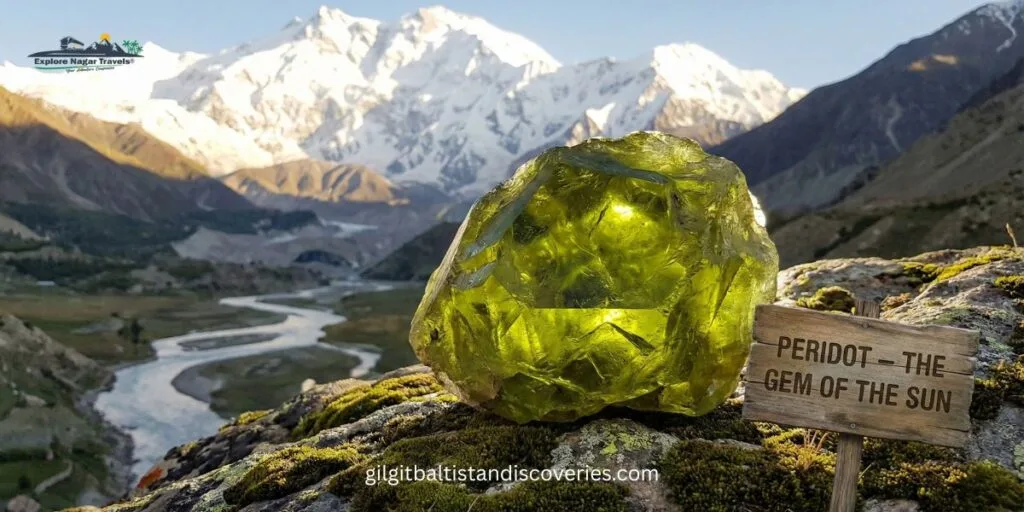
Peridot, famously called the “Gem of the Sun,” is one of the most radiant green gemstones in the world, prized for its bright, lime-green color, clarity, and vibrant glow. In Gilgit-Baltistan, especially in valleys like Hunza–Nagar and Skardu, peridot is produced in high-quality crystals that rival the famed Egyptian and Myanmar peridot.
Its natural vibrancy, combined with low treatment requirements, makes Gilgit-Baltistan peridot highly desirable among:
- Luxury jewelry designers
- International gemstone collectors
- Exporters seeking rare natural stones
- Astrological buyers
Where Peridot Is Mined in Gilgit-Baltistan
The best peridot deposits in GB are located in:
- Shigar and Skardu mountain belts
- Hunza–Nagar high-altitude mineral veins
- Remote pegmatite cliffs and riverbed alluvial deposits
These peridot crystals form in ultramafic rocks, where magnesium-rich minerals interact with oxygen under high heat, resulting in large, naturally transparent green gemstones.
Natural Colors and Quality
Gilgit-Baltistan peridot is distinguished by:
- Pure lime-green to yellowish-green hues
- Transparent crystals with minimal inclusions
- Natural brilliance under sunlight
- Excellent durability (Mohs hardness: 6.5–7)
✅ Stones from Hunza–Nagar are particularly prized for their consistent and radiant green, making them ideal for rings, pendants, and collector displays.
Natural vs Treated Peridot
✅ The vast majority of GB peridot is completely natural and untreated, unlike stones from some other regions that are artificially enhanced for color or clarity.
- Minor polishing may be applied to improve shine
- No chemical treatments are required due to the natural vibrancy of the stone
- This guarantees high investment value and buyer confidence.
Market Value of Gilgit-Baltistan Peridot
- Peridot Type Market Position
- Jewelry-Grade Medium–High
- Transparent Collector-Grade High
- Rare Large Crystals Very High & Investment Tier
Key buyers include:
- UAE and Dubai luxury jewelers
- European gemstone collectors
- North American private investors
- Asia-Pacific crystal markets
Peridot is often sought by buyers searching for rare, untreated green gemstones with strong resale potential.
Uses of Peridot
- Fine jewelry: rings, earrings, pendants
- Spiritual & healing gemstones
- Astrology-related purchases
- Museum-quality crystal collections
- Export and wholesale gemstone trade
Peridot symbolizes:
✅ Prosperity
✅ Protection
✅ Positive energy
✅ Creativity
⚠️ Buyer Tips and Common Scams
Tourists and first-time buyers should beware of:
- Dyed or synthetic green stones misrepresented as peridot
- Glass imitations of peridot crystals
- Heat-treated stones sold as natural
✅ Always verify with:
- Gemological lab certification
- Visual clarity and color inspection
- Seller credibility
Why GB Peridot Is a Hidden Gem Globally
Despite its brilliance, Gilgit-Baltistan peridot is:
- Largely unknown to mainstream international buyers
- Often exported as unbranded stones
- Rarely directly marketed under “Pakistan Origin”
This makes it a unique opportunity for early collectors and gemstone investors.
Quartz – The Clear Crystal Treasure of Hunza & Nagar
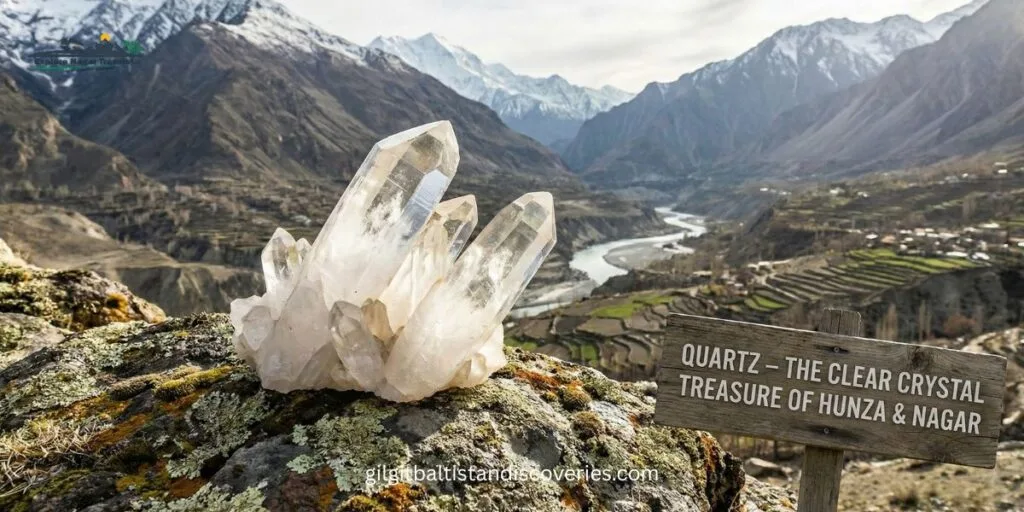
Quartz is one of the most versatile and widely admired gemstones in the world, and the valleys of Hunza–Nagar in Gilgit-Baltistan are home to high-quality, naturally clear quartz crystals. Known for their transparency, natural energy, and aesthetic appeal, these crystals are not only popular among jewelers but also with collectors, spiritual practitioners, and luxury decorative markets.
From clear crystal quartz to smoky and amethyst varieties, GB quartz combines natural beauty, size, and clarity in ways that make it highly sought after internationally.
Where Quartz Is Found in Hunza & Nagar
Quartz in Gilgit-Baltistan is typically mined from:
- High-altitude metamorphic and pegmatite zones
- Shigar and Hunza riverbeds
- Remote cliff and glacier-adjacent pockets in Nagar
- Mineral-rich mountain slopes near Skardu
These locations produce large, transparent crystals that often remain untouched and unenhanced, preserving their natural brilliance.
Varieties and Natural Colors
Gilgit-Baltistan quartz comes in several desirable varieties:
- Clear Crystal Quartz – Colorless and transparent, ideal for jewelry and collector specimens
- Smoky Quartz – Light to dark brown, highly decorative and spiritual
- Amethyst – Purple quartz with natural color zoning
- Rose Quartz – Rare soft-pink variety, high aesthetic appeal
✅ Quartz from Hunza–Nagar is mostly untreated, giving collectors and jewelers a premium natural product.
Natural vs Treated Quartz
✅ Most quartz from Gilgit-Baltistan is completely natural and requires no enhancement.
⚠️ In rare cases, low-grade quartz may be polished or cut to improve aesthetics, but chemical treatments are extremely uncommon, unlike in some international markets.
This makes GB quartz a trusted choice for buyers seeking natural clarity and high-quality crystal structure.
Market Value of Gilgit-Baltistan Quartz
- Quartz Type Market Position
- Clear Crystal Quartz Medium–High
- Smoky Quartz High
- Amethyst High
- Large Collector Crystals Very High & Investment Tier
Major buyers include:
- Luxury jewelers
- International mineral collectors
- Spiritual and crystal healing enthusiasts
- Exporters seeking raw crystal specimens
Uses of Quartz
Jewelry: rings, pendants, earrings
- Decorative crystals and carvings
- Healing and energy practices
- Museum-quality specimens
- Luxury export market
Quartz symbolizes:
✅ Clarity of thought
✅ Spiritual energy
✅ Healing power
✅ Creativity and positivity
Buyer Tips & Common Scams
Quartz is frequently imitated or misrepresented. Buyers should beware of:
- Dyed quartz sold as natural amethyst or rose quartz
- Low-quality crystals sold as premium collector specimens
- Glass imitations
✅ Always verify with:
- Gemological certification
- Visual clarity inspection
- Trusted sellers
Why Hunza & Nagar Quartz Remains Undervalued Globally
Despite the large and high-quality deposits, Hunza Nagar quartz is:
- Largely under-marketed internationally
- Rarely sold under “Pakistan Origin”
- Mostly exported through middlemen
This offers a prime opportunity for collectors, jewelers, and investors looking for natural, untreated crystals.
Zircon – The Rare Sparkling Gem of Gilgit-Baltistan
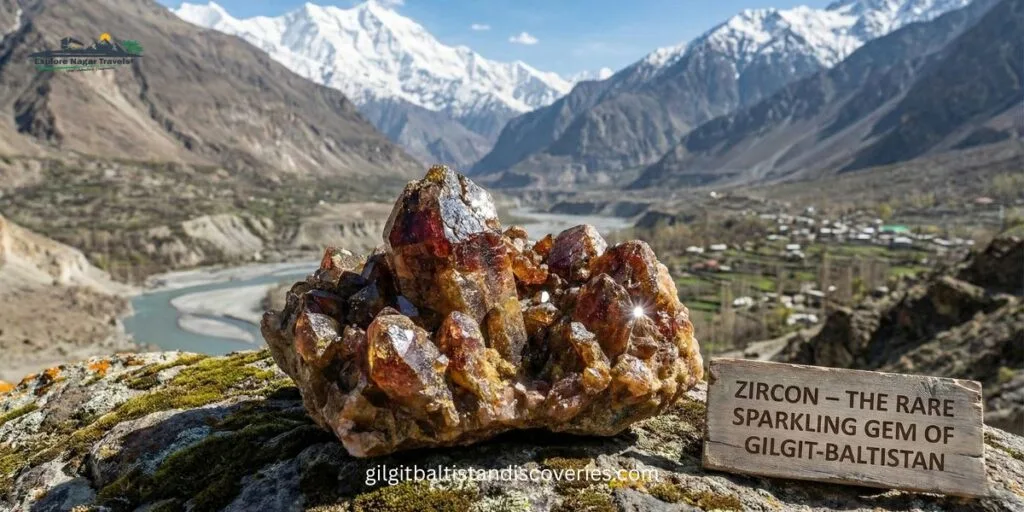
Zircon is a highly refractive, sparkling gemstone known for its brilliant fire and clarity, making it one of the most prized collector gems from Gilgit-Baltistan. Though less famous than ruby or emerald, GB zircon stands out due to its natural brilliance, size, and rarity, attracting gemstone investors, luxury jewelers, and international collectors.
From colorless crystal zircon to warm golden and reddish-brown varieties, the region produces highly transparent stones with minimal inclusions, ideal for fine jewelry and museum-quality collections.
Where Zircon Is Found in Gilgit-Baltistan
Zircon deposits in GB are mainly located in:
- Skardu and Shigar Valley pegmatites
- Hunza–Nagar high-altitude metamorphic belts
- Remote cliffside mineral veins and alluvial deposits
These areas allow miners to extract pristine zircon crystals, often in large, naturally formed blocks, retaining maximum clarity and brilliance.
Natural Colors and Varieties
Gilgit-Baltistan zircon comes in several natural shades:
- Colorless Zircon – Diamond-like brilliance, jewelry grade
- Golden Yellow Zircon – Warm, rich tone, highly decorative
- Brown to Reddish Zircon – Collector-grade crystals
- Rare Blue Zircon – Naturally rare, very high value
✅ GB zircon crystals are mostly untreated, making them highly valued in the luxury and collector market.
Natural vs Treated Zircon
✅ Most GB zircons are completely natural and untreated.
⚠️ Some exported zircon may undergo:
- Heat treatment to enhance blue or golden hues
- Minor polishing to improve surface clarity
- Even with minor treatments, the majority of GB zircon retains natural integrity, giving it strong investment appeal.
Market Value of Gilgit-Baltistan Zircon
- Zircon Type Market Position
- Colorless Crystal Zircon Medium–High
- Golden Yellow Zircon High
- Reddish-Brown / Collector Zircon Very High
- Rare Blue Zircon Ultra-Rare & Investment Tier
Key buyers include:
- UAE and Dubai jewelry markets
- European luxury jewelers
- International collectors and museums
- Export traders seeking premium natural zircon
Uses of Zircon
- Luxury rings and pendants
- Fine earrings and jewelry sets
- Museum-grade mineral specimens
- Investment-grade collector stones
- Astrological and spiritual use
Zircon is also believed to symbolize:
✅ Prosperity
✅ Wisdom
✅ Spiritual balance
✅ Protection
Buyer Tips & Common Scams
- Low-quality zircon misrepresented as high-grade collector stones
- Glass imitations marketed as natural zircon
- Heat-treated stones not disclosed properly
✅ Always verify with:
- Gemological certificates
- Lab reports for treatment disclosure
- Trusted suppliers
Why GB Zircon Is Still Under the Radar Globally
Despite its brilliance and rarity, Gilgit-Baltistan zircon is:
- Largely exported as unbranded stones
- Rarely marketed internationally
- Controlled by middlemen
This creates a unique opportunity for early investors, luxury jewelers, and collectors seeking rare natural gemstones.
Spinel – The Forgotten Royal Gem of Gilgit-Baltistan
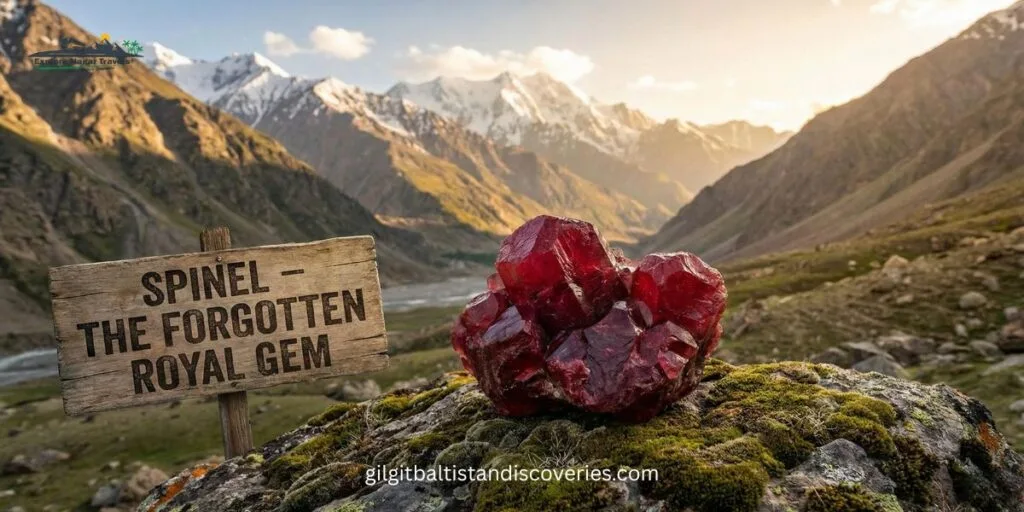
Spinel, often called the “Forgotten Royal Gem,” has a fascinating history. Many historic crowns and royal jewelry pieces that were once thought to hold ruby were actually natural red spinel. Gilgit-Baltistan, especially regions like Hunza–Nagar and Skardu, produces high-quality spinel crystals that are gaining recognition among collectors, luxury jewelers, and gemstone investors.
Spinel is admired for its:
- Deep red and pink hues
- Exceptional brilliance
- Durability (Mohs hardness: 8)
- Rarity in large, clean crystals
Its untreated, natural form makes it highly desirable and often more affordable than ruby, while still holding significant investment value.
Where Spinel Is Mined in Gilgit-Baltistan
Spinel deposits are primarily found in:
- Hunza–Nagar high-altitude metamorphic belts
- Skardu mountain pegmatites
- Remote mineral veins along river gorges
These difficult-to-access locations ensure that most spinel stones are:
- Manually mined
- Preserved in their natural state
- Rarely treated, keeping authenticity intact
Natural Colors and Quality
Gilgit-Baltistan spinel comes in several captivating colors:
- Rich Red (most prized)
- Deep Pink
- Lavender and Violet (rare collector stones)
- Blue Spinel (extremely rare)
✅ The red and pink spinels from Hunza–Nagar are especially valued for their royal saturation and natural brilliance, making them excellent for jewelry and collector investment.
Natural vs Treated Spinel
✅ The majority of GB spinels are completely natural and untreated, unlike other global markets where heat treatment is common.
⚠️ Some lower-grade stones may undergo minor polishing, but chemical enhancement is rare, giving buyers confidence in the authenticity and value of their purchase.
Market Value of Gilgit-Baltistan Spinel
- Spinel Type Market Position
- Red Spinel High
- Pink Spinel High
- Lavender / Violet Spinel Very High
- Rare Blue Spinel Ultra-Rare & Investment Tier
Key buyers include:
- Luxury jewelry brands
- Private gemstone collectors
- Exporters targeting high-end international markets
Uses of Spinel
- Luxury rings, pendants, and earrings
- Collector-grade gemstone sets
- Museum-quality specimens
- Jewelry and spiritual investment
Spinel symbolizes:
✅ Passion
✅ Vitality
✅ Courage
✅ Prosperity
Buyer Tips & Common Scams
- Red spinel often misrepresented as ruby
- Dyed or synthetic spinels marketed as natural
- Low-grade stones sold as collector-grade
✅ Always verify with:
- Gemological lab certificates
- Treatment disclosure
- Trusted sellers and export channels
Why Spinel Is Still Undervalued Globally
Despite its royal history and natural quality, spinel from GB is:
- Rarely branded internationally
- Mostly exported through middlemen
- Often unrecognized in collector markets
This makes it a hidden gem for informed buyers, collectors, and investors.
How to Identify Original Gilgit-Baltistan Gemstones?
For anyone looking to buy, invest, or collect Gilgit-Baltistan gemstones, knowing how to identify authentic stones is critical. GB gemstones, whether ruby, emerald, topaz, tourmaline, or spinel, are mostly natural and untreated, but the market is full of imitations, synthetics, and treated stones.
Here’s a complete guide for tourists, collectors, and buyers:
1. Look for Natural Inclusions
Natural gemstones from Hunza, Nagar, Skardu, and surrounding areas often contain tiny inclusions:
- Thread-like mineral veins
- Minute crystal spots
- Color zoning and natural striations
✅ Tip: A completely flawless crystal may indicate synthetic or lab-grown origin, as natural high-altitude GB stones typically have minor inclusions.
2. Color Consistency and Saturation
GB gemstones are prized for:
- Rubies – deep pigeon blood to red
- Emeralds – intense green with natural jardin
- Topaz – golden yellow or sky blue
- Tourmaline – vibrant bi-color
- Peridot – bright lime-green
✅ Natural stones exhibit slight color variation under sunlight.
⚠️ Overly uniform color may indicate dyed or treated stones.
3. Crystal Structure and Clarity
- Genuine GB stones are hard, durable, and maintain their crystal structure
- Look for sharp edges in raw crystals; natural quartz, zircon, and spinel often have distinct crystal faces
- Stones that look too smooth or glassy may be polished imitations
4. Weight and Density Check
- GB gemstones are generally denser than glass or synthetic imitations
- Real rubies, sapphires, emeralds, and spinels feel heavier for their size
- Use a precision scale and gemstone density charts for verification
5. Transparency and Luster
- Natural stones have a subtle glow and depth under sunlight
- Untreated stones do not appear overly reflective or shiny like glass
- Look for inner fire and brilliance that appears within, not just on the surface
6. Lab Certification
For high-value stones, always demand:
- Gemological lab certificate (GIA, IGI, GRS, or AIGS)
- Treatment disclosure (untreated, heat-treated, or oiled)
- Authenticity and origin verification
✅ Certified stones increase buyer confidence and resale value.
7. Trusted Sources & Local Experts
Buy from verified dealers in Hunza, Nagar, Skardu
- Work with experienced exporters familiar with GB gemstones
- Avoid street vendors or unverified online sellers
- This ensures authentic origin and natural quality.
8. Price vs Quality Awareness
Extremely low prices may indicate synthetic or low-grade treated stones
- Real GB gemstones, even small sizes, carry premium value
- Compare market rates and check international gemstone price guides
Why Identifying Original GB Gemstones Matters
- Protects against fraud and imitation
- Preserves investment value
- Ensures ethical purchasing
- Guarantees luxury-grade quality for collectors or jewelry designers
Common Scams in the Pakistan Gemstone Market
While Gilgit-Baltistan produces some of the world’s finest gemstones, the market is unfortunately riddled with fraudulent practices, imitation stones, and hidden treatments. Whether you’re a tourist, collector, or investor, knowing the common scams can save you from costly mistakes.
1. Mislabeling Stones
- Red spinel sold as ruby
- Low-quality quartz marketed as emerald
- Dyed gemstones presented as natural stones
✅ Always request lab certification and treatment disclosure to avoid being misled.
2. Treated or Dyed Stones Without Disclosure
- Many imported stones may be heat-treated, oiled, or dyed to enhance color
- Sellers sometimes hide treatments, claiming the stone is untreated and natural
✅ Verify with gemological labs like GIA, IGI, or AIGS.
3. Glass or Synthetic Imitations
Glass crystals may be sold as natural topaz, zircon, or ruby
Synthetic gemstones (lab-grown spinel, ruby, or emerald) are sometimes misrepresented as natural
✅ Check for weight, density, and internal inclusions.
4. Misleading Origin Claims
- Some stones may be sourced from other countries but labeled as “Hunza, Nagar, or Skardu”
- Middlemen often rebrand imported stones to claim higher value
✅ Buy only from trusted local dealers or verified exporters.
5. Overpriced Low-Grade Stones
- Uninformed buyers may pay premium prices for commercial-grade stones
- High-value stones often require expert inspection before purchase
✅ Compare market prices and consult experienced gemstone dealers.
6. Fake Gemstone Certificates
- Some sellers provide fake or forged lab reports
- Certificates without recognized lab logos or serial numbers are often invalid
✅ Always check official lab verification before buying high-value stones.
Why Awareness Is Crucial
Understanding scams helps buyers to:
- Make informed decisions
- Protect their investment
- Ensure authenticity and natural quality
- Maintain trust in the Pakistan gemstone market
Best Places in Gilgit-Baltistan to See Gemstone Mines & Markets
Gilgit-Baltistan is not only a treasure trove of gemstones but also a visual paradise for travelers and gemstone enthusiasts. If you want to experience the origin, culture, and market of gemstones, these locations are must-visits.
1. Hunza & Nagar Valleys
- Why Visit: Heart of Gilgit-Baltistan’s gemstone production.
- What to See: Emerald, ruby, peridot, spinel, and quartz mines.
- Market Experience: Local bazaars where miners and jewelers sell raw and cut stones.
- Tourist Tips: Hire a local guide familiar with mines; never attempt unauthorized mining.
2. Skardu
- Why Visit: Famous for topaz, aquamarine, and golden quartz.
- What to See: Pegmatite formations in Shigar and Skardu valleys.
- Market Experience: Skardu gemstone market offers raw crystals, polished gems, and jewelry.
- Tourist Tips: Early morning visits are best for market exploration; ask for origin verification certificates.
3. Shigar Valley
- Why Visit: Remote and scenic with access to tourmaline, topaz, and garnet veins.
- What to See: High-altitude mining areas and natural rock formations.
- Market Experience: Limited but authentic local trade; ideal for collectors seeking rare stones.
4. Astore & Deosai Regions
- Why Visit: Lesser-known areas with untapped gemstone potential, especially for garnet and peridot.
- What to See: Untouched mining cliffs and riverbeds with raw mineral deposits.
- Tourist Tips: Requires permits and local guides due to challenging terrain.
5. Gilgit City Market
- Why Visit: Central hub for wholesale and retail gemstone trading.
- What to See: Polished and cut gemstones, jewelry, and export-ready specimens.
- Tourist Tips: Bargaining is common; always check certificates for high-value stones.
Why These Places Are Special
- Experience natural gemstone origins
- Interact with local miners and expert jewelers
- Witness raw and polished stones side by side
- Opportunity to purchase authentic, investment-grade gemstones
Can Tourists Visit Gemstone Mines in Hunza, Nagar & Skardu?
Yes! Tourists can explore gemstone-rich regions of Hunza, Nagar, and Skardu, but it’s essential to understand the rules, safety measures, and local customs. Visiting gemstone mines offers a unique glimpse into Gilgit-Baltistan’s natural treasures and mining culture, but requires planning and guidance.
1. Permits & Legal Guidelines
- Some mines are government-regulated and require official permits.
- Mining areas often fall under restricted zones for safety reasons.
- Tour companies in Hunza, Nagar, and Skardu can help secure access.
✅ Always ensure legal permission before entering any mine.
2. Guided Tours Are Recommended
- Local guides provide:
- Safety equipment and instructions
- Knowledge about gemstone types and geological formations
- Cultural insights from Hunza, Nagar, and Skardu communities
- Solo visits are discouraged due to steep cliffs and remote locations.
3. What Tourists Can Experience
- Observation of raw gemstone veins in mines
- Hands-on demonstrations of gem extraction (without actual mining)
- Visiting local gemstone workshops to see cutting, polishing, and jewelry making
- Purchasing authentic, locally-sourced gemstones
✅ A guided trip provides a safe and educational experience.
4. Best Time to Visit
- Spring (April–June) and Autumn (September–November) are ideal for clear weather
- November offers tranquil landscapes, fewer crowds, and opportunities to explore mineral-rich riverbeds
- Avoid heavy snow months for safety
5. Tourist Safety Tips
- Wear sturdy boots and protective gear
- Never attempt unauthorized mining or extraction
- Respect local culture and private mining lands
- Keep lab certification and receipts if purchasing stones
Why Visiting Gemstone Mines Is Worth It
- Educational and cultural experience for gemstone enthusiasts
- Opportunity to observe rare gemstones in their natural habitat
- Supports local miners and communities
- Enhances understanding of Gilgit-Baltistan’s gemstone industry
Why Gilgit Baltistan Is the Future of the Global Gemstone Market?
Gilgit-Baltistan is quickly emerging as a strategic hub for the global gemstone industry. With its rich variety of high-quality, natural, and mostly untreated gemstones, this region is catching the attention of investors, luxury jewelers, and international collectors.
From Hunza and Nagar to Skardu and Shigar, the region produces world-class rubies, emeralds, topaz, spinel, tourmaline, garnet, peridot, quartz, and zircon—many of which are rarer and more vibrant than similar stones from other countries.
1. Unmatched Natural Quality
- GB gemstones are mostly untreated, giving them superior authenticity and investment value
- Unique color zoning, crystal clarity, and size distinguish GB stones from global competitors
- Stones like natural blue topaz from Skardu or watermelon tourmaline from Nagar are rare in international markets
2. Strategic Export Potential
- Pakistan’s location provides easy access to Middle East, Europe, and Asia
- Growing networks of trusted miners and exporters are professionalizing the trade
- Direct exports from GB allow competitive pricing for high-quality natural gemstones
✅ Buyers can source rare gemstones at origin prices, creating a global market advantage.
3. Diversity of Gemstones
- GB offers a wide range of gemstone types, more than most single regions worldwide
- Buyers can access colorful rubies, deep green emeralds, radiant peridot, and bi-color tourmaline
- This diversity supports luxury, jewelry design, collector, and investment markets
4. Growing Recognition & Branding
- International buyers are starting to recognize Gilgit-Baltistan as a premium origin
- Increasing interest in untreated, ethically sourced gemstones boosts GB’s market value
- Branding opportunities exist for exclusive “Pakistan Origin” gemstone collections
5. Ethical & Sustainable Mining
- Local mining is largely small-scale and family-operated, preserving community livelihoods
- Ethical sourcing aligns with global demand for sustainable gemstones
- Transparency in origin, treatment, and quality increases market trust and premium pricing
Why Investors & Buyers Should Focus on Gilgit-Baltistan
- Access to high-quality, rare gemstones not widely available elsewhere
- Competitive pricing for untreated, ethically sourced stones
- Emerging infrastructure for export, branding, and certification
- Opportunity to capitalize on a market before global branding matures
Conclusion (Discover, Collect, and Invest in Gilgit-Baltistan Gemstones)
Gilgit-Baltistan is not just a breathtaking travel destination; it is a hidden treasure trove of the world’s most exquisite gemstones. From the ruby-rich peaks of Hunza & Nagar to the sparkling zircon and tourmaline veins of Skardu, every gemstone tells a story of nature’s artistry, rarity, and timeless value.
For tourists, visiting the mines and markets offers a once-in-a-lifetime opportunity to witness these jewels in their natural habitat. For collectors and investors, GB gemstones present a premium opportunity untreated, ethically sourced, and increasingly recognized in global markets.
Whether you’re looking to buy your first natural gemstone, expand a luxury collection, or explore investment-grade stones, Gilgit-Baltistan is a destination that cannot be overlooked.
Take Action Now:
- Plan Your Visit: Explore Hunza, Nagar, Skardu, and Shigar to see gemstone mines and markets firsthand.
- Buy Authentic Gems: Connect with trusted local dealers to acquire certified, natural gemstones.
- Invest Wisely: Discover rare and investment-grade stones before global branding catches up.
- Experience the Culture: Immerse yourself in the local mining communities and heritage of Gilgit-Baltistan.
Don’t just admire these treasures, own a piece of Gilgit-Baltistan’s natural luxury today!