Last updated: 9 November 2026
Short Answer
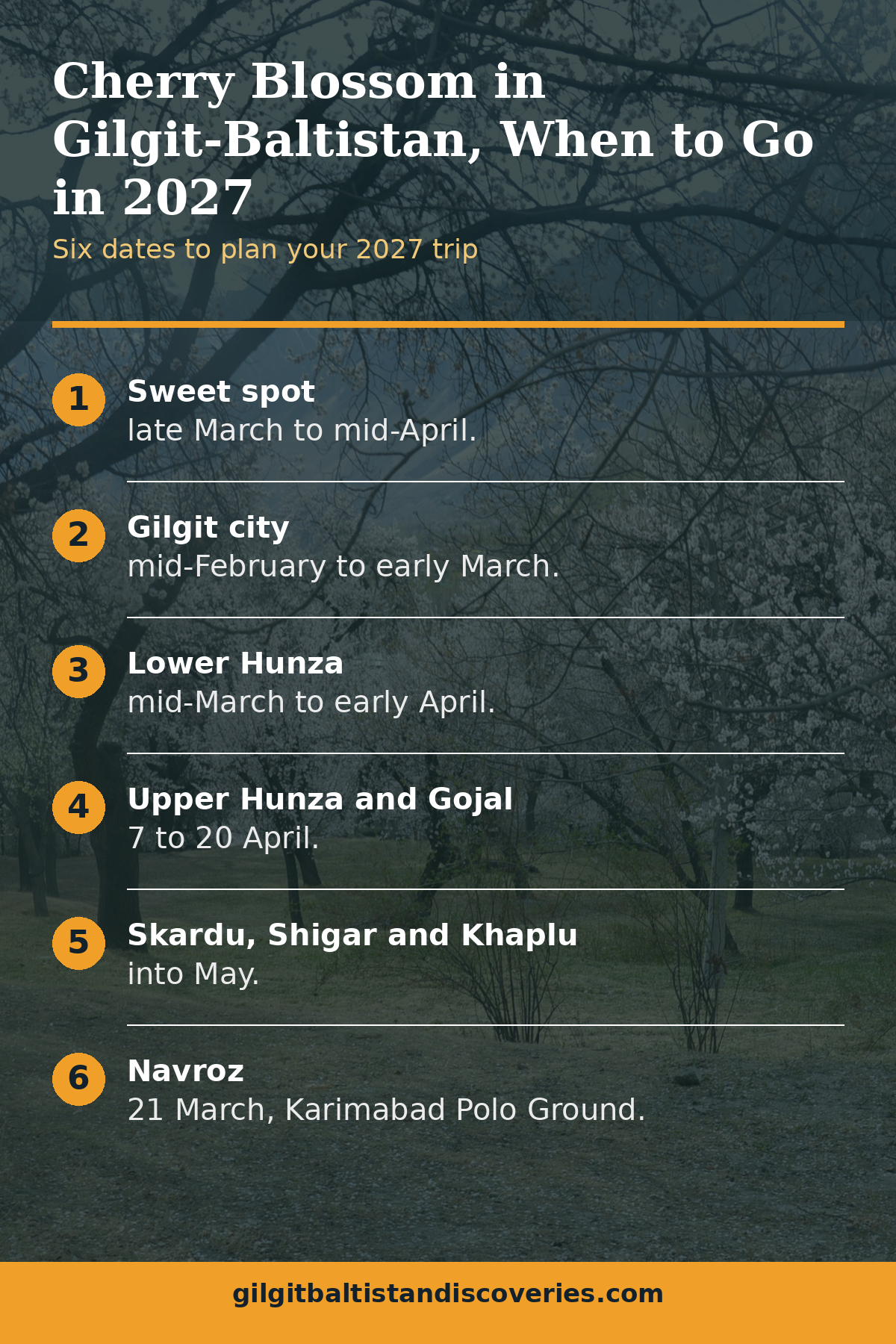
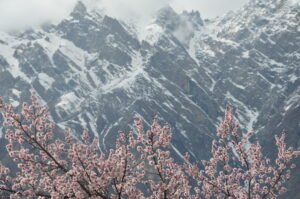
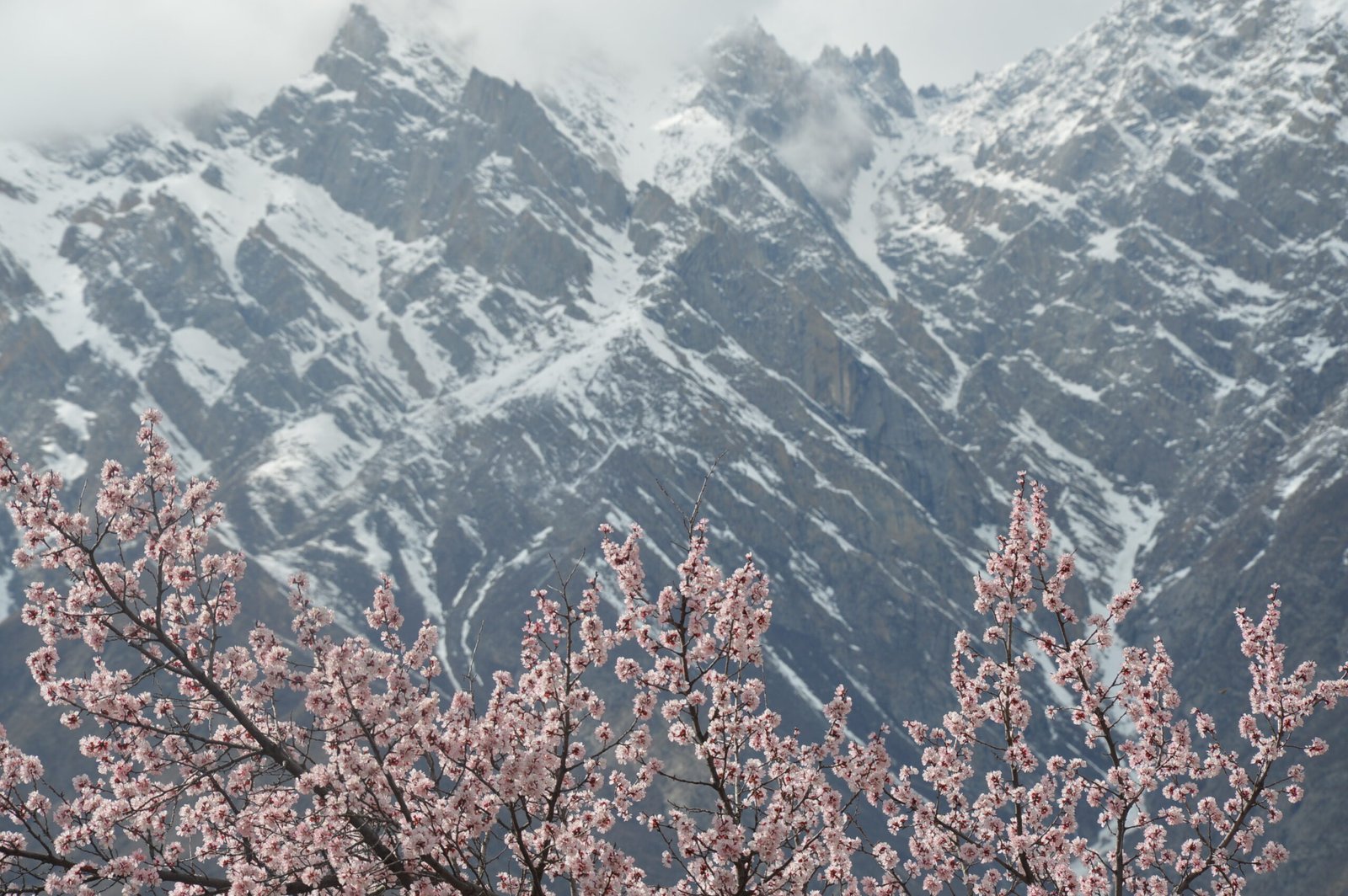
The best time to see cherry blossom in Gilgit-Baltistan in 2027 is late March to mid-April. That is the sweet spot when lower Hunza, central Hunza and Nagar are all in flower at once, with snow still sitting high on the peaks behind the orchards.
The season is longer than most visitors expect. Gilgit city and the lower valleys bloom first, from mid-February to early March. Upper Hunza and Gojal bloom last, from 7 to 20 April. Skardu, Shigar and Khaplu stretch into May, and Astore peaks in late April to May.
Bloom follows altitude like a slow wave. It starts low, climbs the valleys week by week, and the exact dates shift by one to three weeks depending on how much snow the winter brought and whether a cold snap hits in March. Every date in this guide is a typical range. Confirm locally before you book.
When is cherry blossom season in Gilgit-Baltistan?
Cherry blossom season in Gilgit-Baltistan runs from mid-February to May, but no single week covers the whole region. The valleys sit at very different altitudes, so the bloom opens in the low valleys first and moves uphill as spring warms the mountains.
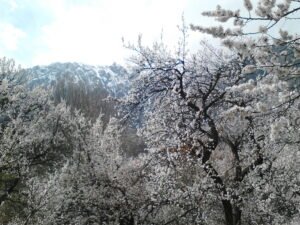
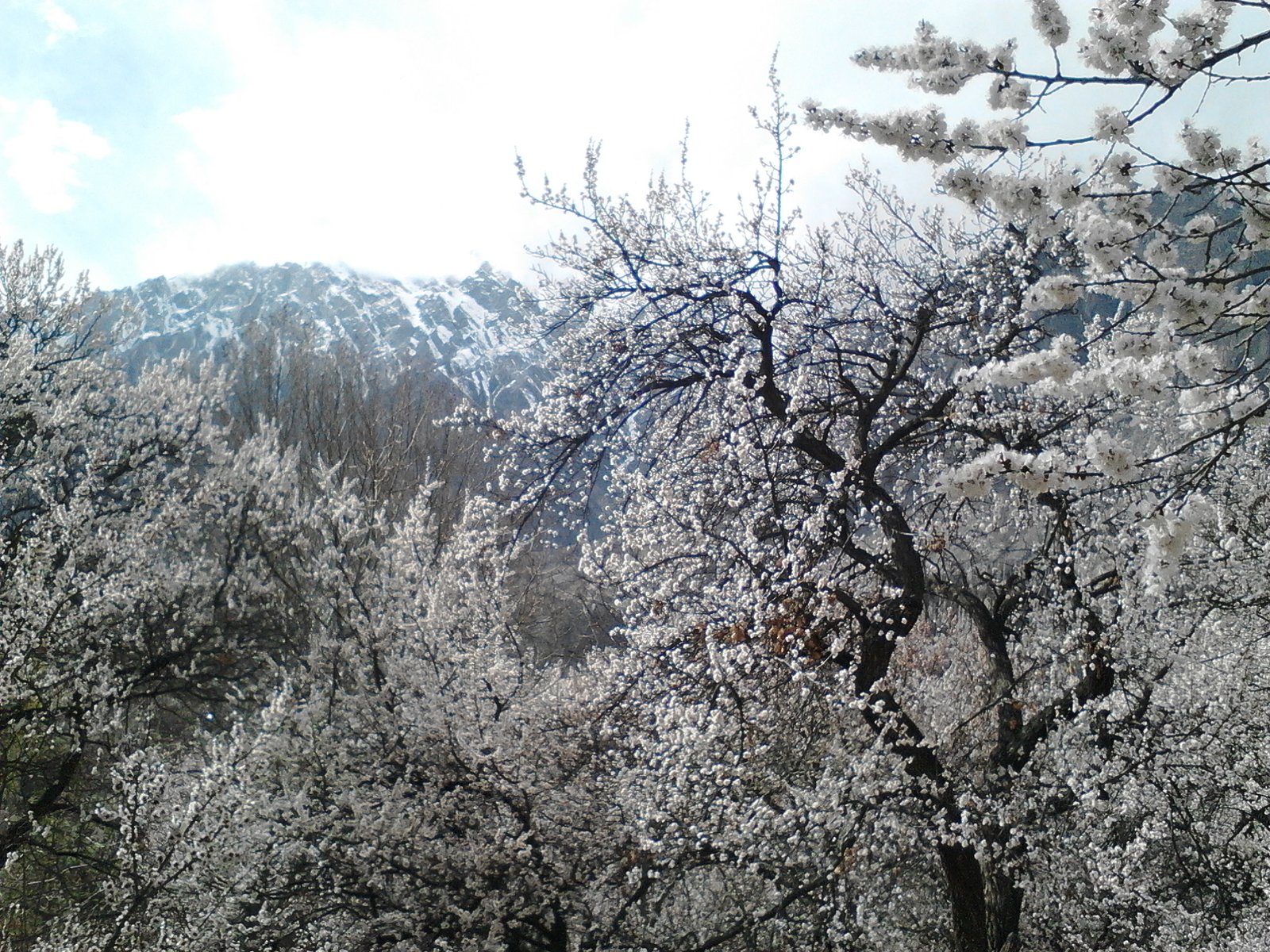
Think of it as a wave, not a date. Almond trees open first, then plum, then cherry and apricot together, with peach and apple flowering alongside them. Cherry and apricot dominate the photographs, because they grow in thick orchard bands around the villages, but a good week in late March can show six or seven varieties flowering at once.
This is the zone by zone calendar for the 2027 season. Use it to pick your week, then check with a local hotel or guide before you travel. A warm winter pulls everything earlier and a cold March can delay the bloom by a week or two.
| Zone | Typical bloom window | Peak week | Best base |
|---|---|---|---|
| Gilgit city and lower valleys | Mid-February to early March | Late February | Gilgit |
| Lower Hunza (Karimabad, Aliabad) | Mid-March to early April | Last week of March | Karimabad |
| Central Hunza (Altit, Ganish) | Late March to early April | First week of April | Karimabad or Altit |
| Upper Hunza and Gojal (Gulmit, Ghulkin, Passu, Sost) | 7 to 20 April | Mid-April | Gulmit or Passu |
| Nagar (Minapin, Hoper) | Late March to mid-April, Hoper into early May | First week of April | Minapin |
| Skardu, Shigar and Khaplu | Mid-March to May | Mid to late April | Skardu |
| Ghizer (Gahkuch, Gupis, Yasin, Phander) | Mid-March to early May | Mid-April, Phander late April | Phander or Gahkuch |
| Astore (Astore town, Gorikot, Chillam) | Late April to May | Early May | Astore town |
If you can only pick one week, pick the last week of March or the first week of April. That window catches lower and central Hunza and Nagar at their best, and Skardu is already open. If you want the high valleys, come in mid-April for upper Hunza, or late April for Skardu, Khaplu and Astore.

Our valley by valley hub, Spring Blossom in Gilgit-Baltistan, covers the whole season in one place. The district guides linked in each section below go deeper on one valley at a time.
Is Gilgit city worth visiting for blossom in February?
Yes, if you are already in Gilgit or passing through. Gilgit city and the lower valleys bloom first, from mid-February to early March, weeks before Hunza opens. The orchards around the city and along the river turn pink and white while the high valleys are still deep in snow.
Nobody plans a whole trip around Gilgit blossom alone. The bloom here is scattered, not the thick orchard bands of Hunza. But if your dates fall in late February, it is a genuine early taste of spring.

Come here as a stop, not a destination. Fly into Gilgit, spend a night, then drive up the Karakoram Highway toward Hunza as the bloom climbs with you. Our month by month guide, Best Time to Visit Gilgit-Baltistan, puts the February bloom in the context of the full year.
When does Hunza bloom, and where should you go?
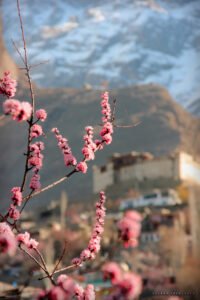
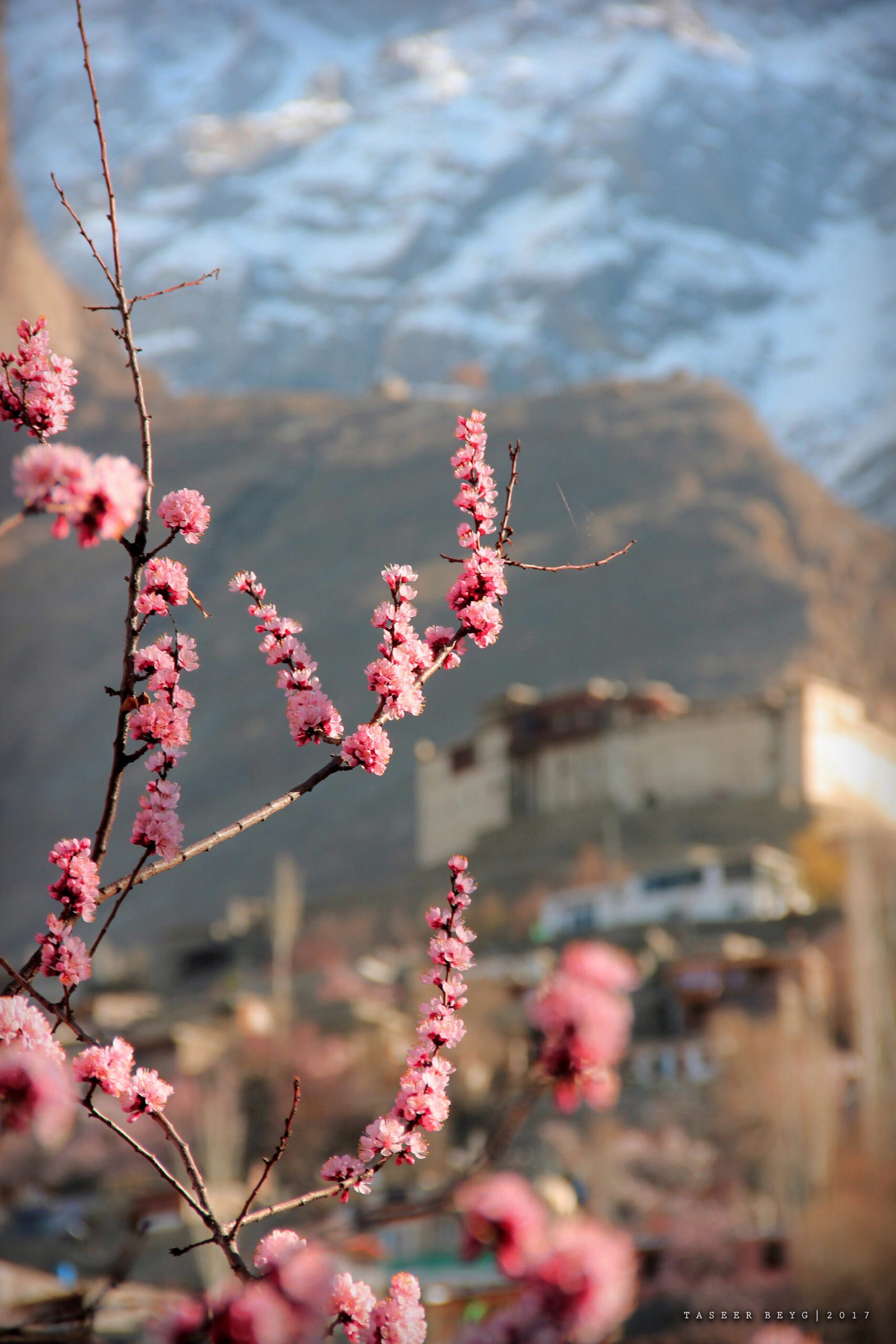
Hunza is where most blossom trips are aimed, and for good reason. The valley sits around 2,400 metres at Karimabad, its terraced orchards have been tended for centuries, and the blossom sits directly under Rakaposhi, Ultar and the other great peaks. Lower Hunza blooms from mid-March to early April, and central Hunza follows from late March to early April.
Karimabad is the base. From here you can walk the orchard lanes of Ganish, one of the oldest settlements in the valley, and climb to Altit Fort, where cherry blossom frames the old stone walls. Aliabad, just below Karimabad, blooms a touch earlier because it sits lower. The peak week for lower Hunza is the last week of March, and central Hunza peaks in the first week of April.
Two honest notes. First, most of what you see in Hunza is apricot, not cherry. Apricot trees outnumber cherry trees, and the pink wash in the photographs is mostly apricot blossom. Cherry is there, but do not expect whole valleys of cherry alone. Second, Hunza in blossom week is busy. Hotels fill up fast, so book at least a month ahead, and six weeks ahead if you want Karimabad itself in peak week.

Our deep dive, Cherry Blossom in Hunza Valley, covers where to stand, when to go, and which villages bloom first. For the wider question of when to visit at all, see Best Time to Visit Hunza Valley.
What about upper Hunza and Gojal in April?
Upper Hunza and Gojal bloom last. Gulmit, Ghulkin, Passu and Sost flower from 7 to 20 April, with mid-April the peak. If you arrive in the last week of March, you will find the lower valley in full bloom and the upper valley still waiting. That is not a problem. It is the whole point of the wave.
Come in mid-April and the upper valley repays the wait. The orchards around Gulmit and Ghulkin sit under Passu Cathedral and the Batura wall, and the blossom here feels wilder and less crowded than Karimabad. Passu is the best base for photography, Gulmit for a slower village stay, and Sost, near the Chinese border, is the last stop before the Khunjerab Pass, which usually reopens in early April.
One practical note. The Karakoram Highway to upper Hunza stays open through spring, but the side valleys are a different matter. Check locally whether the road to a particular village is clear before you set out.
Photo: needs visual check. No licence-verified blossom photo of upper Hunza or Gojal (Gulmit, Ghulkin, Passu) was found on Wikimedia Commons. Do not use a lower Hunza blossom photo captioned as upper Hunza.
When does Nagar bloom?
Nagar blooms from late March to mid-April, a little longer than Hunza, because the valley climbs from Nilt at the bottom to Hoper at the top. Minapin, the valley’s main blossom village, peaks from late March to mid-April, with Rakaposhi View Point and the orchard lanes below it the best place to stand. The lower villages, Nilt and Nagar Khas, open first in early April. Hoper, at around 2,800 metres beside its glacier, blooms last, into early May.
Apricot blooms first in Nagar and cherry follows a few days later, and apricot is usually the dominant tree. That is the honest picture. Nagar is quieter than Hunza in blossom week, the orchards are just as thick, and the view across to Rakaposhi from Minapin is one of the best blossom views in the region.
Nagar is a separate district and valley from Hunza, across the Hunza River. Its district headquarters is at Harespo, not Nagar Khas. Visitors often treat the two as one place. They are not, and Nagar deserves its own day.

Our Nagar deep dive, Apricot Blossom in Nagar Valley, covers Minapin, Hoper and the Rakaposhi side in detail.
Is Skardu blossom later than Hunza?
Yes, and that is what makes Skardu worth a second trip. Cherry blossom season in Skardu Valley runs from mid-March to the end of April, with lingering blooms into early May in the higher valleys. Skardu city sits around 2,228 metres, higher than Hunza, so its bloom runs later.
The main Skardu valley peaks from mid-March to mid-April. Chunda Valley, about 45 minutes from Skardu, peaks from late March to early April and is the single best blossom spot in the region for many photographers. Shigar Valley peaks from late March to mid-April, with apricot and cherry beside the Katpana Desert sands. Khaplu, about 100 km away along the Shyok River in Ghanche District, blooms about two weeks later than Skardu, into late April, so it extends the season when Hunza is already green.
Almond blooms first in Skardu, then plum, then cherry and apricot together. On a good week in late March you can see six or seven varieties flowering at once. Flights to Skardu run in blossom season but they are weather dependent, so keep a buffer day in your plan and confirm the flight the day before.

Our Skardu deep dive, Cherry Blossom in Skardu Valley, covers Chunda, Shigar and Khaplu in detail. Khaplu is an overnight trip from Skardu, not a day trip, so plan it that way.
What about Ghizer and Astore, the late spring?
Ghizer and Astore are the late spring, and they suit travellers who miss the Hunza peak or want a quieter second week.
Ghizer blossom runs from mid-March to early May, but it does not arrive all at once. The valley climbs from Gahkuch on the river to Phander at 2,800 to 2,900 metres. Lower Ghizer, around Gahkuch and Gupis, blooms from mid-March to mid-April. Yasin Valley peaks around mid-April. Phander, the high valley, blooms late, from late April to early May. Cherry, apricot and peach are the trees named for Ghizer. One honest note: only one licence-verified blossom photo of Ghizer exists on Wikimedia Commons, the peach tree below, so this section is built around that single photo rather than a borrowed blossom shot from another valley.
Astore blooms last of all, typically late April to May. Astore town sits around 2,600 metres, higher than Hunza, so its orchards open weeks behind the lower valleys. The bloom is a lower valley affair: Astore town, Gorikot, Chillam and Tarishing, where cherry, apricot and almond flower in the orchards. Rama and the high valleys stay snowbound into June, so their blossom, if it comes at all, is reported rather than promised. No licence-verified blossom photo of Astore exists on Wikimedia Commons, so the photo below is an honest spring photograph of Astore town, captioned as spring and never as blossom.


Our district guides go deeper: Blossom in Ghizer Valley and Blossom in Astore Valley. Note that Phander, Yasin and Ishkoman are in Ghizer District, and Gupis and Yasin are a separate district since 2019, so they are not called Ghizer District in the guides.
What is Navroz, and why does it open the season?
Navroz, the spring new year, falls on 21 March, and it is the verified season opener for blossom in Hunza and Nagar. The main celebration is at Karimabad Polo Ground in Hunza, and Navroz is also celebrated in Nagar. If your trip lands on 21 March, you get the festival and the first lower valley blossom in the same week.
Do not confuse Navroz with a cherry blossom festival. There is no single fixed-date cherry blossom festival in Gilgit-Baltistan. Jashn-e-Baharan, the spring blossom celebration in Hunza and Nagar, runs across the season from mid-March to late April, not on one day. Any guide or tour that gives you a single fixed date for a blossom festival is inventing it.
Navroz is a community and cultural celebration first, and a travel moment second. Go as a respectful guest, ask before photographing people closely, and let the day set the tone for the rest of your trip.
Photo: needs visual check. No licence-verified photo of Navroz in Hunza or Nagar was found on Wikimedia Commons. Do not use a generic festival photo captioned as Navroz.
How do you plan a trip around the blossom wave?
Plan around the wave, not around a single date. Pick your zone first, then your week, then book.
First, choose your zone. If it is your first blossom trip, choose lower and central Hunza in the last week of March or the first week of April. If you have been before, choose upper Hunza in mid-April, or Skardu and Khaplu in late April. If you want the quietest trip, choose Ghizer or Astore in late April to May.
Second, book early. Hotels in Karimabad fill up fast in blossom week, and the good rooms go first. Book at least a month ahead, and six weeks ahead if you want Karimabad itself in peak week. Flights to Gilgit and Skardu are weather dependent in spring, so keep a buffer day at the start of your trip and confirm the flight the day before.
Third, travel by road in spring. The Karakoram Highway through Besham is the way in, since Babusar Pass stays shut through winter and usually reopens around June. Break the long drive from Islamabad with a night in Besham or Chilas.
Fourth, pack for two seasons in one day. Spring days are mild, typically around 12C in March and 17C in April, but mornings and evenings stay chilly. Layers matter more than any single jacket. Good walking shoes matter too, because the best blossom is on village lanes and orchard paths, not on main roads. A sturdy pair like the KEEN Targhee 3 handles those lanes well. Long photo days also drain a phone fast, so a power bank like the Anker PowerCore is worth its weight. If you want a small tripod for low light mornings, search Amazon for a compact travel tripod and pick a light one you will actually carry.
As an Amazon Associate, we earn from qualifying purchases.

Finally, stay flexible. The bloom shifts by one to three weeks with the winter, and no calendar can promise you a single tree on a single day. Build in a spare day, keep two zones in mind, and ask your hotel or guide what is flowering when you arrive.
Last updated: 9 November 2026. Bloom windows are typical ranges for the 2027 season. Confirm locally before you travel, because dates shift by one to three weeks with winter snowfall and spring cold snaps.
Frequently asked questions
When is the best time to see cherry blossom in Hunza?
Late March to mid-April is the best time for Hunza. Lower Hunza, around Karimabad and Aliabad, blooms from mid-March to early April and peaks in the last week of March. Central Hunza, around Altit and Ganish, peaks in the first week of April. Upper Hunza and Gojal bloom later, from 7 to 20 April.
How long does blossom season last in Gilgit-Baltistan?
The full season runs from mid-February to May, about three months from the first Gilgit bloom to the last Astore and Khaplu flowers. No single valley blooms for that long. Each zone flowers for roughly three to four weeks, and the season feels long only because the bloom climbs from valley to valley with altitude.
Which valley has the best cherry blossom?
Hunza has the most famous blossom, with thick orchards under Rakaposhi and the best roads and hotels. Skardu has the best photography, especially Chunda Valley, and a longer season. Nagar is the quietest of the three, with the same orchards and fewer visitors. Choose Hunza first, Skardu for photos, Nagar for quiet.
Is Navroz a good time to visit Hunza?
Yes. Navroz falls on 21 March, and the main celebration is at Karimabad Polo Ground in Hunza. It opens the blossom season and lower Hunza is already flowering that week. Book early, because the festival week is popular, and go as a respectful guest rather than a spectator.
Can I see blossom in Skardu in May?
Yes, in the higher valleys. Skardu town peaks from mid-March to mid-April, but Khaplu blooms into late April, and lingering blooms reach into early May in the higher valleys. Astore also peaks in late April to May. If May is your only window, aim for Khaplu or Astore, not Skardu town.
How far ahead should I book a blossom trip?
Book at least a month ahead, and six weeks ahead if you want Karimabad in peak week. Hotels in Hunza fill up fast during blossom season, and the best rooms go first. Flights to Gilgit and Skardu are weather dependent, so keep a buffer day in your plan and confirm the flight the day before you travel.