Last updated: 9 November 2026
This article contains affiliate links to Amazon. If you buy through them, I earn a small commission at no extra cost to you. It helps keep this site running and the chai hot.
The Short Answer
Pack one three-layer clothing system and let the layers do the work. A wicking base, an insulating mid layer and a windproof shell will carry you from a warm blossom orchard at noon to a freezing pass viewpoint by afternoon, because spring in Gilgit-Baltistan is not one season. It is several, stacked on top of each other by altitude.
Bring two merino or synthetic base tops, one set of thermal bottoms, a fleece or light insulated jacket, a mid-weight down jacket, and a windproof waterproof shell with a hood. Add broken-in walking shoes, a 20 to 25 litre daypack, a 20,000 mAh power bank, a water filter, cash in small notes, a local SIM, SPF 50 and sunglasses. Leave the hard suitcase, the jeans and the cotton hoodies at home. The bazaars will fill the space you save.
If you already own a general kit, start with our full guide to what to pack for northern Pakistan. This guide is the spring version of that system, tuned for March and April blossom season.
How Cold Does Spring Actually Get?
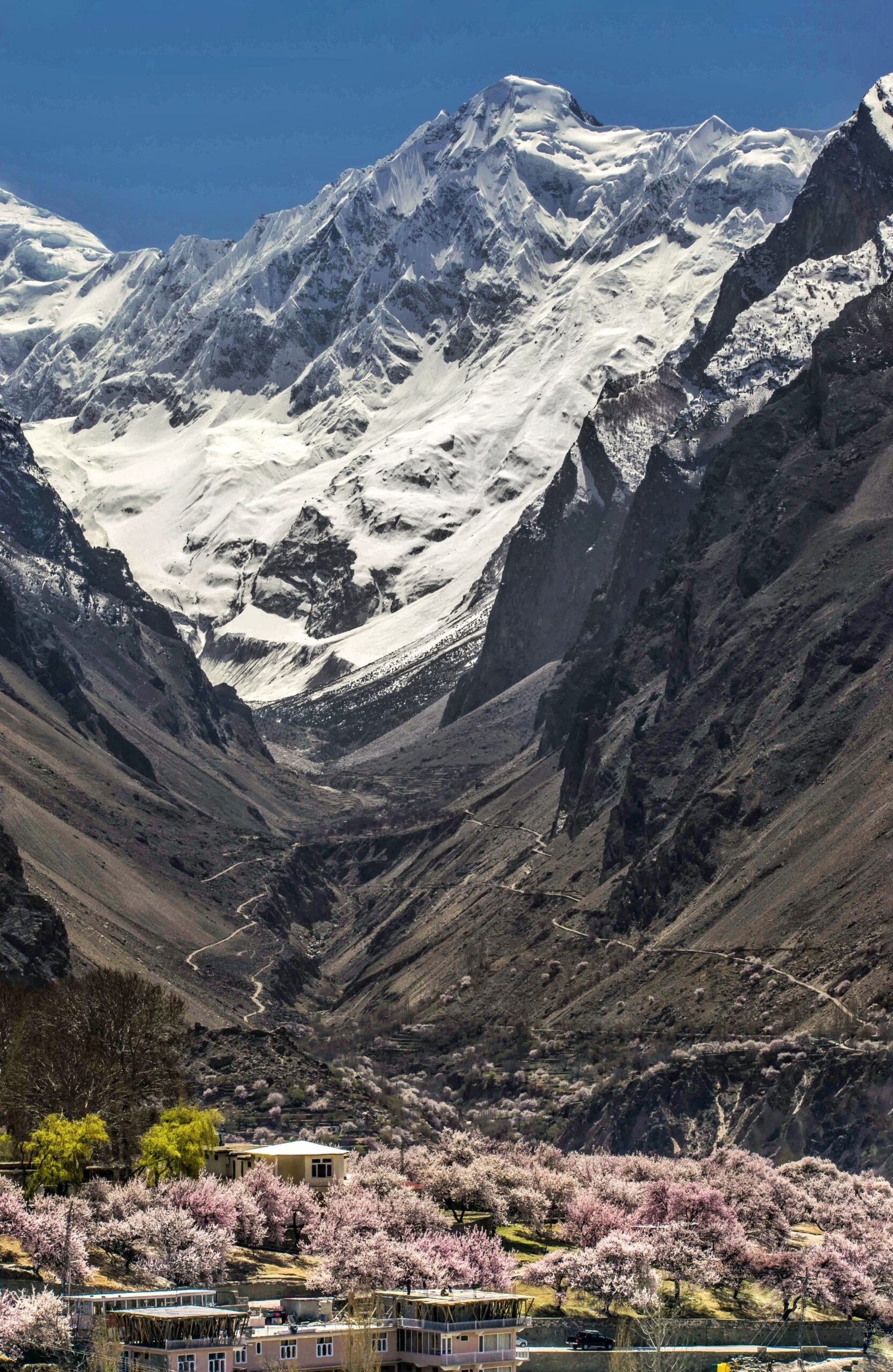
Spring in the valleys feels gentle, and that is the trap. A March morning in Karimabad can start near freezing, warm to a t-shirt afternoon under blossom, and drop again the moment the sun goes behind Rakaposhi. The same day, a drive to Khunjerab Pass at 4,693 metres can put you in wind off the snowfields, in a down jacket and gloves. That is arithmetic. Air cools roughly 6 degrees C for every 1,000 metres you climb, and a road trip here can climb more than 2,000 vertical metres between lunch and tea.
Use these ranges as planning bands, not promises. They vary by altitude and by year, and a cold snap in March can shift everything by a week.
| Place | Spring day | Spring night | What it means for packing |
|---|---|---|---|
| Karimabad, Hunza (about 2,450 m) | 12 to 22 C | 2 to 9 C | T-shirt afternoons, thermal nights. |
| Skardu (about 2,230 m) | 14 to 24 C | 3 to 10 C | Slightly warmer days, still cold after dark. |
| Gilgit city (about 1,500 m) | 15 to 25 C | 5 to 12 C | Warmest of the three. Layers return uphill. |
| Khunjerab Pass (4,693 m) | Around 0 to 5 C, wind chill lower | Not an overnight stop | Full winter kit. Down jacket, gloves, shell. |
| Deosai plateau (over 4,000 m) | Usually still snowbound in early spring | Not accessible | Stays closed until summer. Do not plan spring travel there. |
The night is the part people forget. Guesthouse rooms are often colder than the street at noon, because stone walls hold the night cold and heating is usually one stove or a small heater. Pack a warm layer for evenings indoors. A fleece you can sleep in beats a jacket you only wear outside.
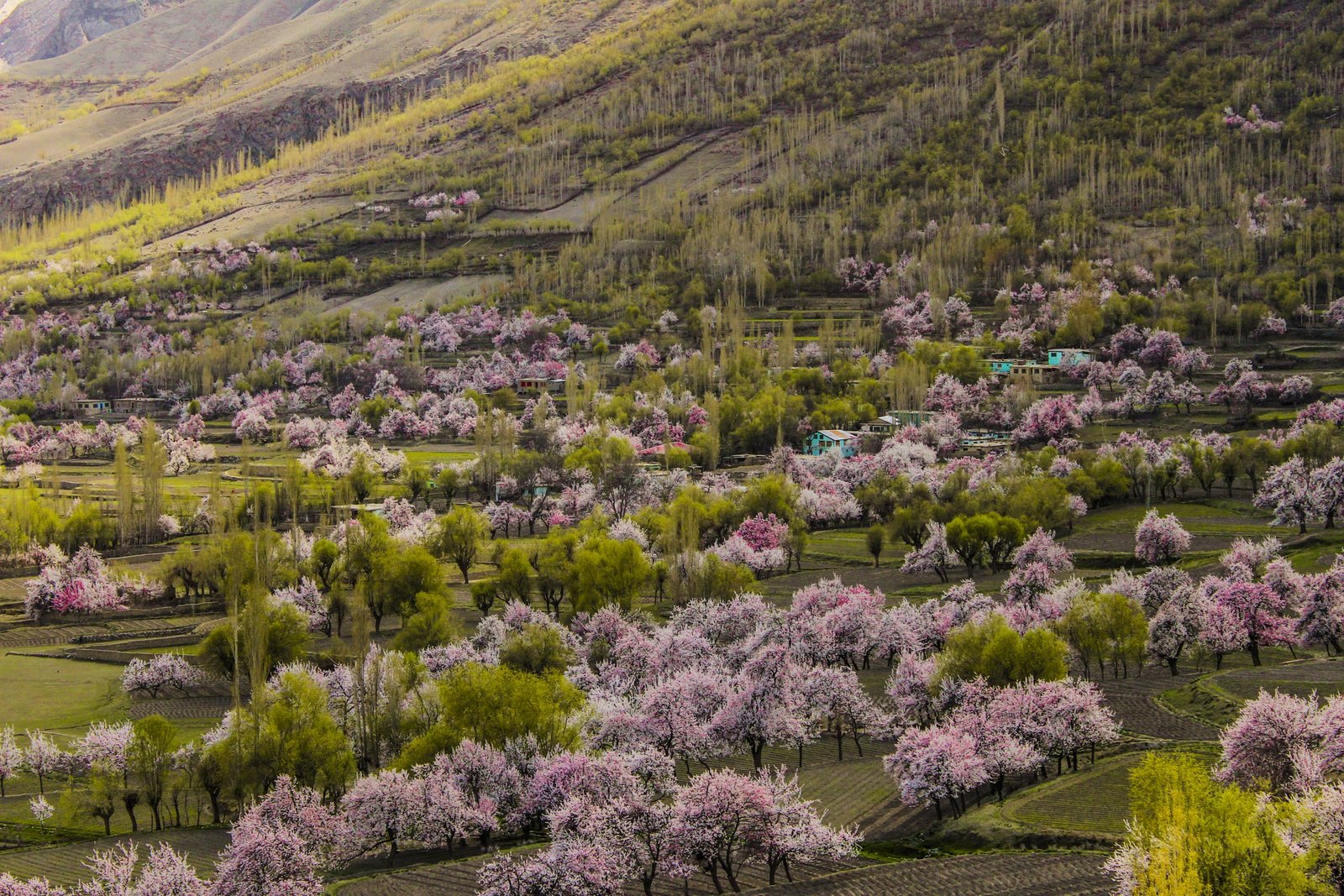
When Is Blossom Season, and How Does It Change the Packing?
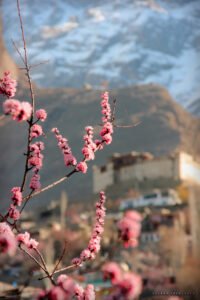
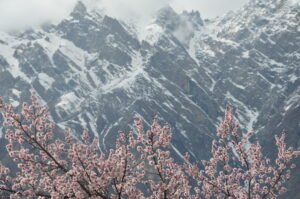
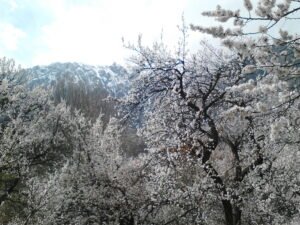
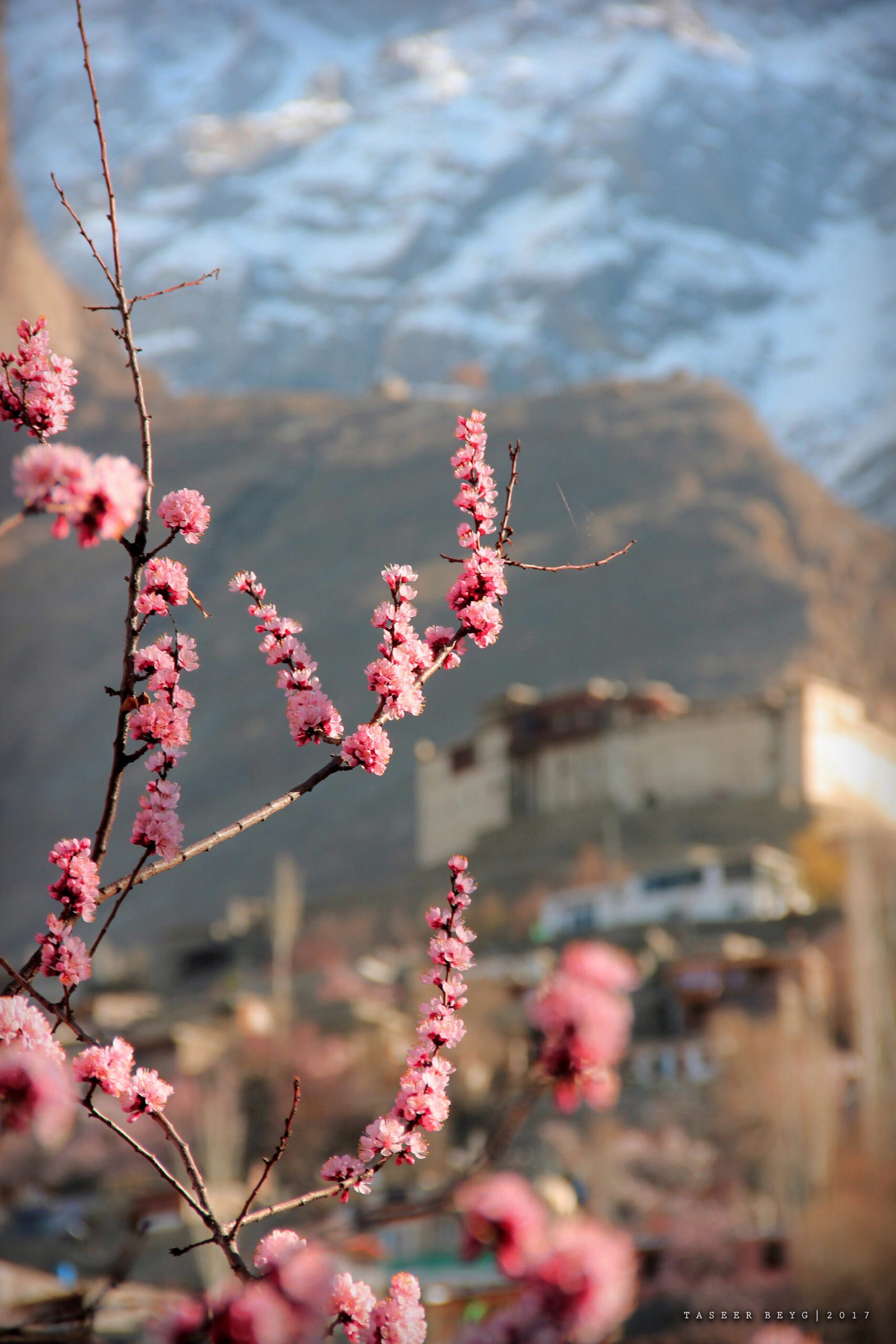
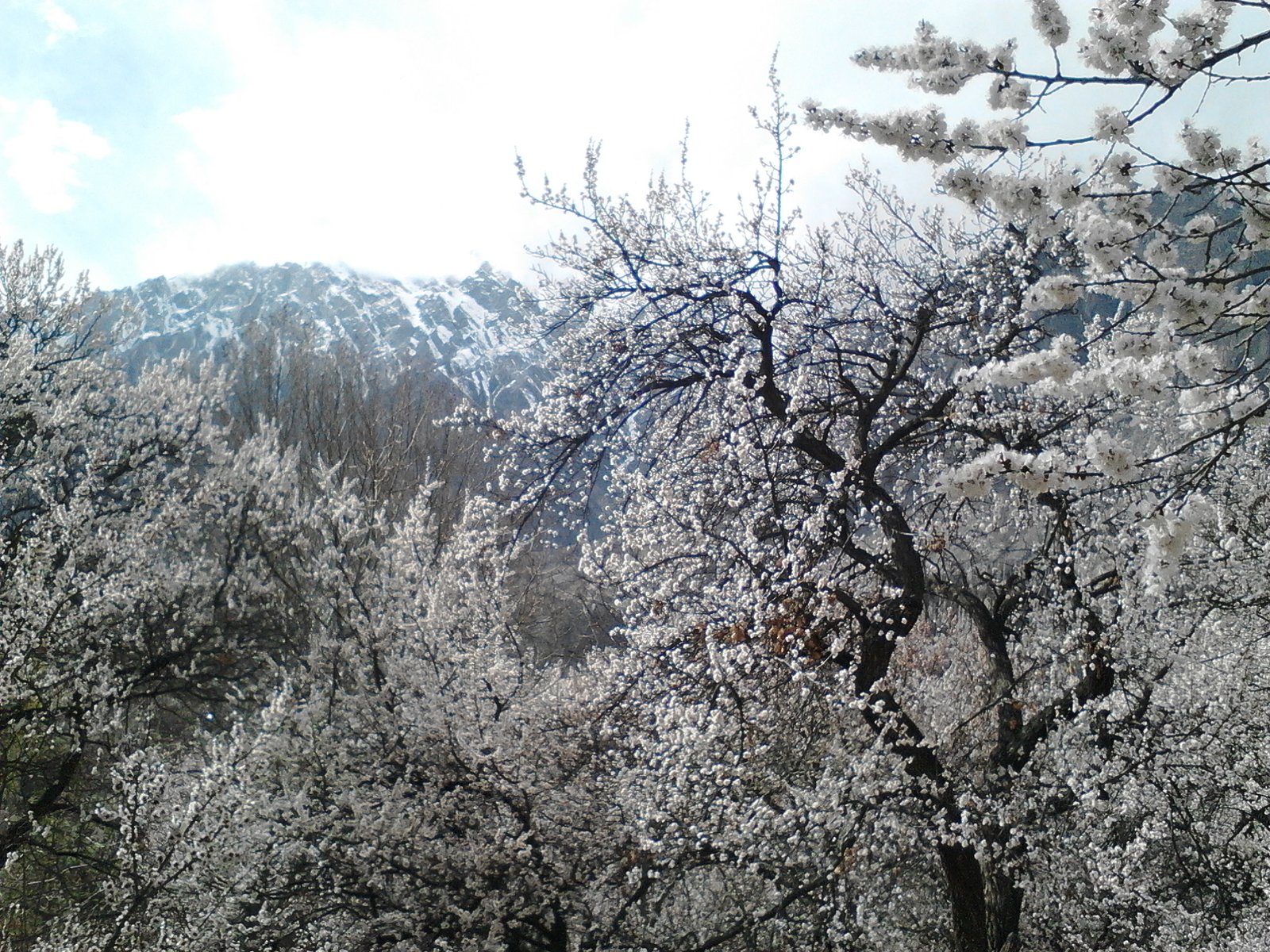
Blossom does not happen all at once. It starts low and climbs with the temperature, so the week you travel decides which valleys are pink and how cold your mornings will be. These are typical windows. Confirm locally, because a warm winter pulls blooms earlier and a cold March can delay them by a week or two.
| Valley | Typical bloom window | Packing note |
|---|---|---|
| Gilgit city and lower valleys | Mid-February to early March | Warmest spring walking. Lightest layers of the trip. |
| Lower Hunza | Mid-March to early April | Peak blossom walking. Mornings near freezing, afternoons warm. |
| Central Hunza | Late March to early April | A few days later. Bring the down jacket. |
| Upper Hunza and Gojal | 7 to 20 April | Latest bloom, coldest mornings. Gloves and warm hat still needed. |
| Nagar | Late March to mid-April | Same window as Hunza. Nagar is a separate district, with its own roads and villages. |
| Skardu, Shigar and Khaplu | Late March to May | The longest window. Skardu town blooms first, Khaplu last. |
If you are chasing blossom across more than one valley, pack for the coldest valley on your route, not the warmest. Warm layers can always come off. Cold cannot be improvised.
For the full valley-by-valley picture, see our spring blossom guide for Gilgit-Baltistan and the cherry blossom guide for Hunza Valley. Our month-by-month guide to the best time to visit Gilgit-Baltistan and the best time to visit Hunza Valley cover the date trade-offs.
What Is the Spring Layering System?
The system has three layers, each with a single job. Together they carry you from a sunny orchard at noon to a windy pass at three in the afternoon, without changing your bag, only your layers.
Base layer: what touches your skin. Choose merino wool or a technical synthetic. Both move sweat off your skin and keep insulating when damp. Cotton does the opposite. It soaks up sweat, stays wet, and then stays cold, which is how a pleasant walk turns miserable. Pack two base tops and one set of thermal bottoms. The thermal bottoms are for evenings, early mornings and pass days, not every day.
Mid layer: the warmth you can shed. This is a fleece or a light insulated jacket, plus, in spring, a mid-weight down jacket. The down jacket is the single most useful item on a spring trip. It weighs almost nothing, packs into its own pocket, and turns a freezing viewpoint into a comfortable one in thirty seconds. Do not bring your heaviest winter down unless you are going to Khunjerab in March. A mid-weight one is right for spring, and it doubles as your evening layer.
Shell: the layer that fights the wind. A windproof, waterproof jacket with a hood. In spring, wind is what actually bites, not temperature. A 15 degree afternoon with a hard wind off the snowfields feels far colder than the thermometer says, and the shell is what stops it. The hood matters more than the pockets.
For legs, pack two pairs of trekking trousers, one convertible, plus one warm layer for nights. Jeans are heavy, slow to dry and cold when wet. Leave them at home. For footwear, sturdy walking shoes, broken in before you travel, will handle 90 percent of a spring trip. Roads, bazaars and village paths are the trip. Boots are only needed if you hike most days. If you need one pair that does both, the KEEN Targhee 3 is a waterproof walking shoe that handles village paths and light trails without feeling like a boot.
What Goes in the Bag, Piece by Piece?
This is the full spring checklist. Everything here fits in one soft duffel and a daypack, and the system does the work, not the suitcase.
| Category | Pack this | Why |
|---|---|---|
| Base layer | 2 merino or synthetic tops, 1 set of thermal bottoms | The engine of the whole system. Cotton stays cold when wet. |
| Mid layer | Fleece or light insulated jacket, plus a mid-weight down jacket | Trapped air is your warmth, added and shed in minutes. |
| Shell | Windproof, waterproof jacket with a hood | Wind, not temperature, is what actually bites. |
| Legs | 2 trekking trousers, 1 convertible, 1 warm layer for nights | Jeans are heavy, slow to dry and cold when wet. |
| Footwear | Sturdy broken-in walking shoes, 1 pair of warm socks per day plus a spare | Boots only if you hike most days. Blisters end trips. |
| Hands and head | Light gloves, warm hat, sun hat or cap, buff or scarf | Mornings and passes need gloves. Midday sun needs a cap. |
| Daypack | 20 to 25 litre pack that rides in the vehicle with you | Your layers live here, not in the roof-racked main bag. |
| Power | 20,000 mAh power bank (Anker PowerCore), Type C and D adapter | Guesthouse sockets are few and load-shedding is real. |
| Water | Squeeze filter (Sawyer Squeeze) or 0.1-micron filter bottle | Tap water is not for visitors, and bottled water adds up over two weeks. |
| Money | Cash in small notes, plus a USD backup stash | Working ATMs effectively stop at Gilgit and Skardu. |
| Documents | Passport, printed and phone copies of passport and visa | Checkpoints on the Karakoram Highway ask, often. |
| Connectivity | SCOM SIM bought in Gilgit or Skardu, offline maps downloaded | The only network that follows you into the valleys. |
| Health | SPF 50, sunglasses, lip balm, basic meds, any altitude medication your doctor approves | Sun at 3,000 metres is not the sun you know. |
| Photography | Lens cloth, spare batteries, memory card, small dry bag | Dust and cold are the two things that stop cameras here. |
Pack the daypack as if the main bag will not be reachable until evening, because on mountain roads it often is not. The layers, water, snacks, camera and power bank all ride with you in the vehicle. The main bag holds the spares and the night kit.
What Extra Kit Does Blossom Photography Need?
Blossom photography is a cold-morning activity. The best light is early, the orchards are still in shade, and your hands are the first thing to go numb. Pack light gloves that let you work camera buttons, and keep a spare warm pair in the daypack. A buff does double duty. It keeps wind off your neck and dust off your face on a jeep track.
Dust is the quiet enemy. The Karakoram Highway and the jeep tracks throw up fine dust that settles on lenses and sensors. Carry a lens cloth in a pocket, not at the bottom of your bag, and keep a small dry bag for the camera when the wind picks up. Change lenses indoors or inside the vehicle. Do it on a windy ridge and you will be cleaning spots out of every photo for a week.
Cold drains batteries faster than you expect. Carry at least one spare, keep it in an inside pocket close to your body, and charge everything whenever you have power, not when the battery is low. Guesthouse power is not guaranteed overnight. The power bank in the checklist is not a luxury for photographers. It is the difference between shooting the sunrise at Eagle’s Nest and watching it through someone else’s photos.
A tripod is a judgement call. For blossom portraits and village scenes, you will not use it. For early morning landscapes and the Milky Way, you will want it. If you bring one, make it a travel tripod that fits in the daypack. A full-size tripod is dead weight that spends the holiday in the hotel room.
What About Wind, Dust and Sun?
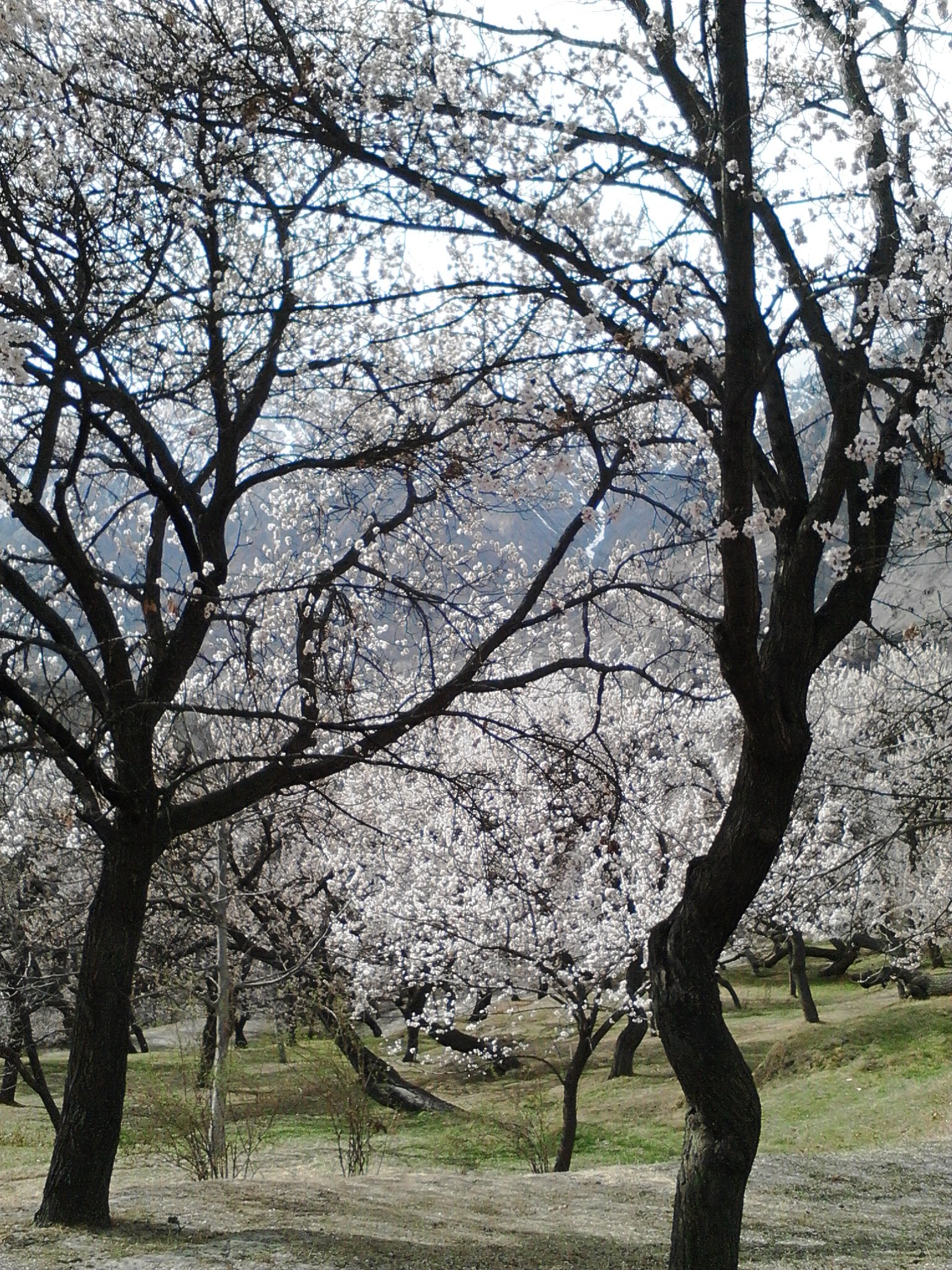
Three things shape spring comfort more than the temperature on a weather app.
Wind. The valleys funnel wind, and the passes make their own. A windproof shell and a buff matter more than an extra degree of insulation. If you feel cold while walking, check the wind first. Put the shell on before you add a layer underneath.
Dust. March and April are dry months on the Karakoram Highway. Road works, jeep tracks and dry fields all put fine dust in the air. Sunglasses are not a fashion choice here. They keep dust out of your eyes on a jeep ride and cut the glare off snowfields. A buff over your nose and mouth on a dusty track is worth more than any cream.
Sun. At 2,400 metres and above, the sun is stronger than it looks, and spring sunburn is the most common souvenir in Hunza. The air is cool, so you do not feel hot, and by the time your skin tells you, it is too late. SPF 50 on your face, neck and ears every morning, reapplied at midday. Lip balm with sun protection is not optional at altitude.
What Should You Leave Behind?
The hard suitcase. Mountain roads, jeep transfers and guesthouse stairs all punish hard cases. A soft duffel fits in a jeep, on a roof rack and under a bed. If your bag has wheels, you will carry it more than it carries you.
Jeans and cotton hoodies. Heavy, slow to dry, cold when wet. One pair for dinner in Gilgit city is fine if you must, but do not hike in them.
A single heavy coat instead of layers. One big coat gives you exactly one temperature. Three layers give you a dozen, and they pack smaller.
Too many shoes. One pair of walking shoes and one pair of light camp shoes for evenings. That is enough. Every extra pair is weight you carry up every hill.
A drone, unless you have checked the rules. Check the current drone rules before you pack one. If you have not confirmed them, leave it at home. A drone you cannot fly is an expensive brick, and it takes the space of a down jacket.
Too much bottled water. Bring the filter and one bottle. Buying a fresh bottle in every village is heavy, expensive and wasteful when the streams and taps can be filtered.
What Should You Buy in the Bazaars Instead?
Leave a quarter of your bag empty on purpose. The bazaars in Gilgit, Karimabad and Skardu will fill it better than you can at home.
A hand-knitted wool cap or a local shawl is warmer than anything in a city outdoor shop, and it is made for exactly this climate. Dried apricots, mulberries and walnuts from Hunza are the best trail food you will find anywhere, and they travel home well. Buy the cap in Gilgit on the way in, not in Karimabad on the way out, because you will want it for the cold mornings before you get there.
Frequently Asked Questions
Is March too cold to visit Hunza?
March is cold in the mornings and at night, with days warming up nicely in the lower valleys. Pack the full layering system, including thermal bottoms, gloves and a warm hat, and you will be comfortable. Early March is quieter, with fewer travellers and the first blossom in the lower valleys.
Do I need a down jacket for spring in Gilgit-Baltistan?
Yes. A mid-weight down jacket is the single most useful item on a spring trip. You will use it at viewpoints, on pass days and in cold guesthouse rooms in the evening. It packs into its own pocket and weighs almost nothing, so there is no reason to leave it behind.
What shoes should I pack for a spring trip?
Sturdy walking shoes, broken in before you travel, will handle almost everything. Roads, bazaars and village paths are the trip. Bring proper hiking boots only if you plan to hike most days, and add one pair of light camp shoes for evenings at the guesthouse.
How do I keep my camera working in the cold and dust?
Keep spare batteries in an inside pocket close to your body, because cold drains them fast. Carry a lens cloth in a pocket, not at the bottom of your bag, and change lenses indoors or in the vehicle. A small dry bag protects the camera when wind and dust pick up.
Is tap water safe to drink in Gilgit-Baltistan?
No, tap water is not for visitors. Bring a squeeze filter or a 0.1-micron filter bottle and refill from taps and streams, or buy bottled water in towns. The filter pays for itself in a few days and saves carrying heavy bottles on every walk.
Can I buy warm clothes in Hunza if I forget something?
Yes. Karimabad and Gilgit have shops selling fleece jackets, wool caps, shawls and gloves, and the local wool cap is warmer than most imported gear. Prices are reasonable, but the choice is limited, so do not rely on the bazaar for specialist items like a good shell jacket or proper walking shoes.