Last updated: 6 November 2026
Short Answer
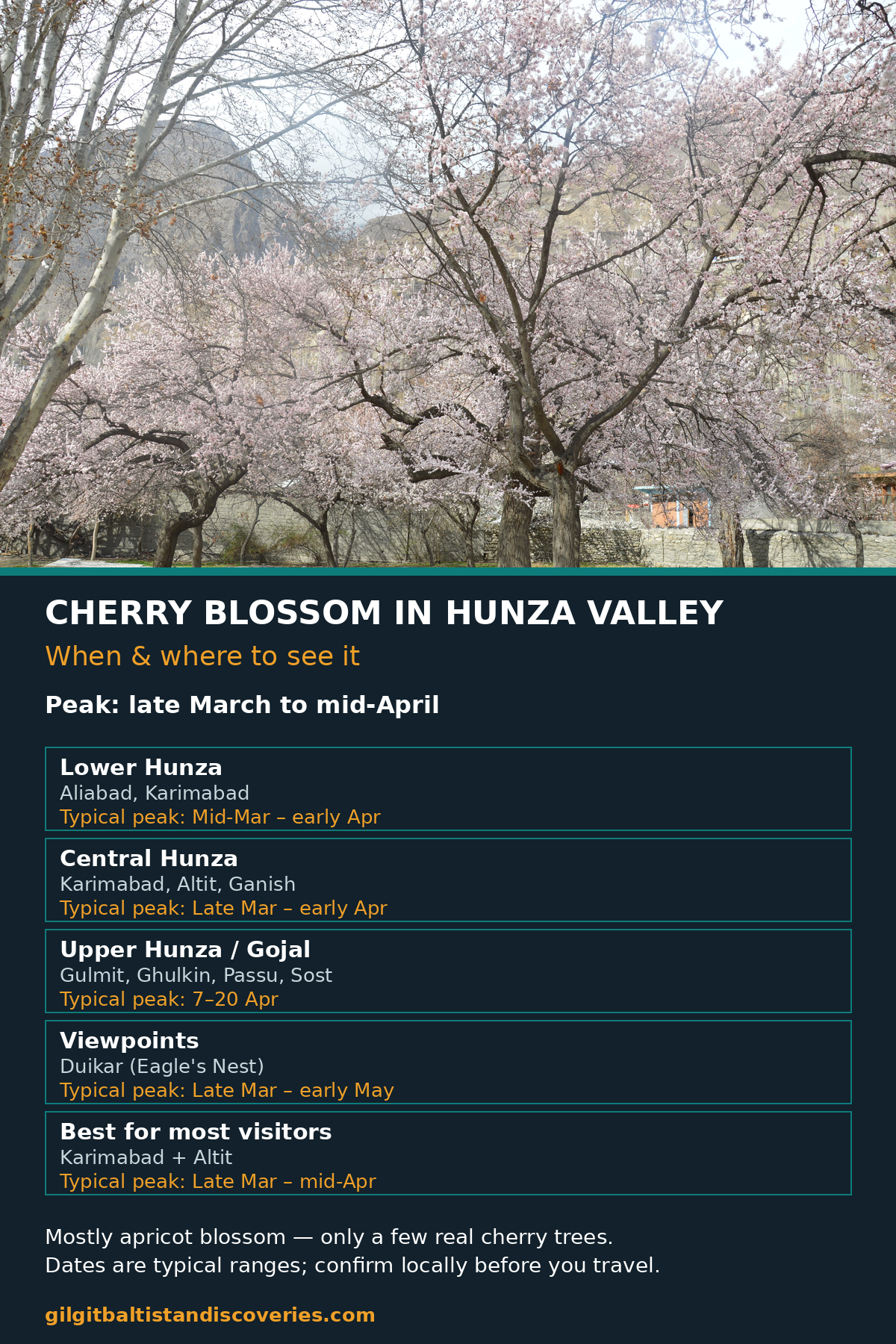
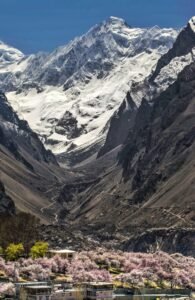
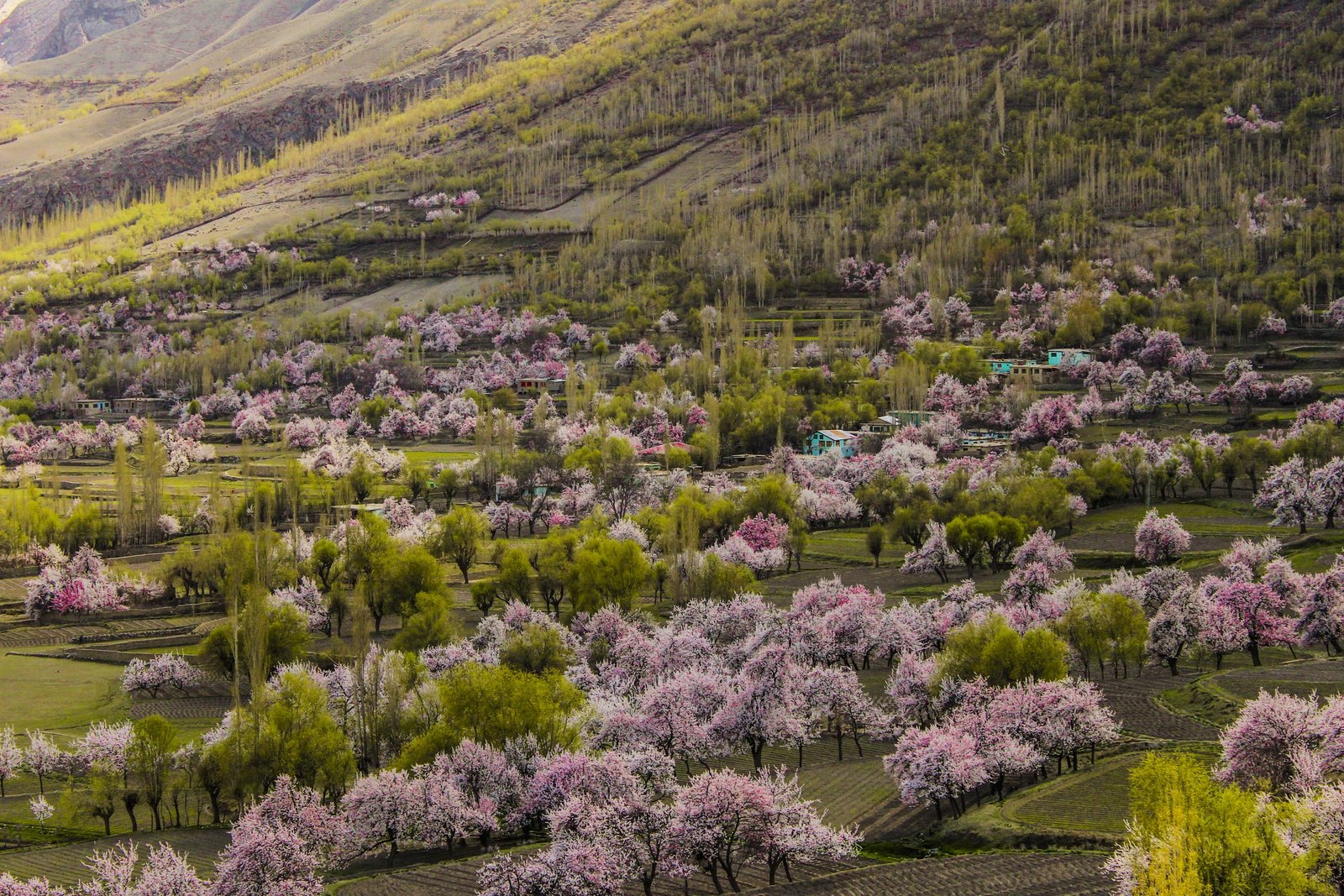
Cherry blossom season in Hunza Valley runs from mid-March to late April, with the sweet spot in late March to mid-April. Bloom starts in lower Hunza (Aliabad, Karimabad) in mid-March, peaks in central Hunza (Karimabad, Altit, Ganish) in late March to early April, and reaches upper Hunza (Gulmit, Ghulkin, Passu) 7–10 days later, around 7–20 April. One honest note first: the show is mostly apricot blossom — almond, peach, apple, plum and pear flower too, and only a few real cherry trees exist. “Cherry blossom” is the popular name for the whole display, and this guide uses it that way while naming the real trees where it matters.
Hunza blossom at a glance
| Zone | Villages | Typical peak | Trees |
|---|---|---|---|
| Lower Hunza | Aliabad, Karimabad | Mid-March – early April | Apricot, almond, cherry |
| Central Hunza | Karimabad, Altit, Ganish | Late March – early April | Apricot, cherry, apple, plum |
| Upper Hunza / Gojal | Gulmit, Ghulkin, Passu, Sost | 7–20 April | Apricot, cherry, apple |
| Viewpoints | Duikar (Eagle’s Nest) | Late March – early May | Apple blossom in the fields below |
| Best for most visitors | Karimabad + Altit | Late March – mid-April | All of the above |
Timing shifts 1–3 weeks with the winter — a warm winter brings bloom forward, a cold snap in March delays it. Treat every date in this guide as a typical range and confirm locally before you travel.
When is cherry blossom season in Hunza?
The season does not arrive all at once. Hunza stretches across dramatically different altitudes, and the bloom follows altitude like a slow wave moving northward. Lower Hunza warms first: Aliabad and Karimabad (around 2,400 m) start in mid-March. Central Hunza — Altit and Ganish — peaks in late March to early April. Upper Hunza and Gojal — Gulmit, Ghulkin, Passu, Sost (2,600–2,900 m) — run 7–10 days behind Karimabad, typically 7–20 April.
If you can only pick one window, pick late March to mid-April. At that point Karimabad is at its most vivid, the snowline still sits high enough on the peaks to give contrast, and the Karakoram Highway is normally open. Navroz, the Persian New Year on 21 March, marks the start of spring culturally — the main gathering is at Karimabad Polo Ground — and lower-Hunza blossom usually opens in the same week.
Where are the best places to see blossom in Hunza?
Karimabad is the base and the best first stop. Blossom fills the terraces below Baltit Fort, runs along the old stone lanes, and frames Rakaposhi across the valley. Walk the lanes in the early morning, when the light is soft and the lanes are quiet.
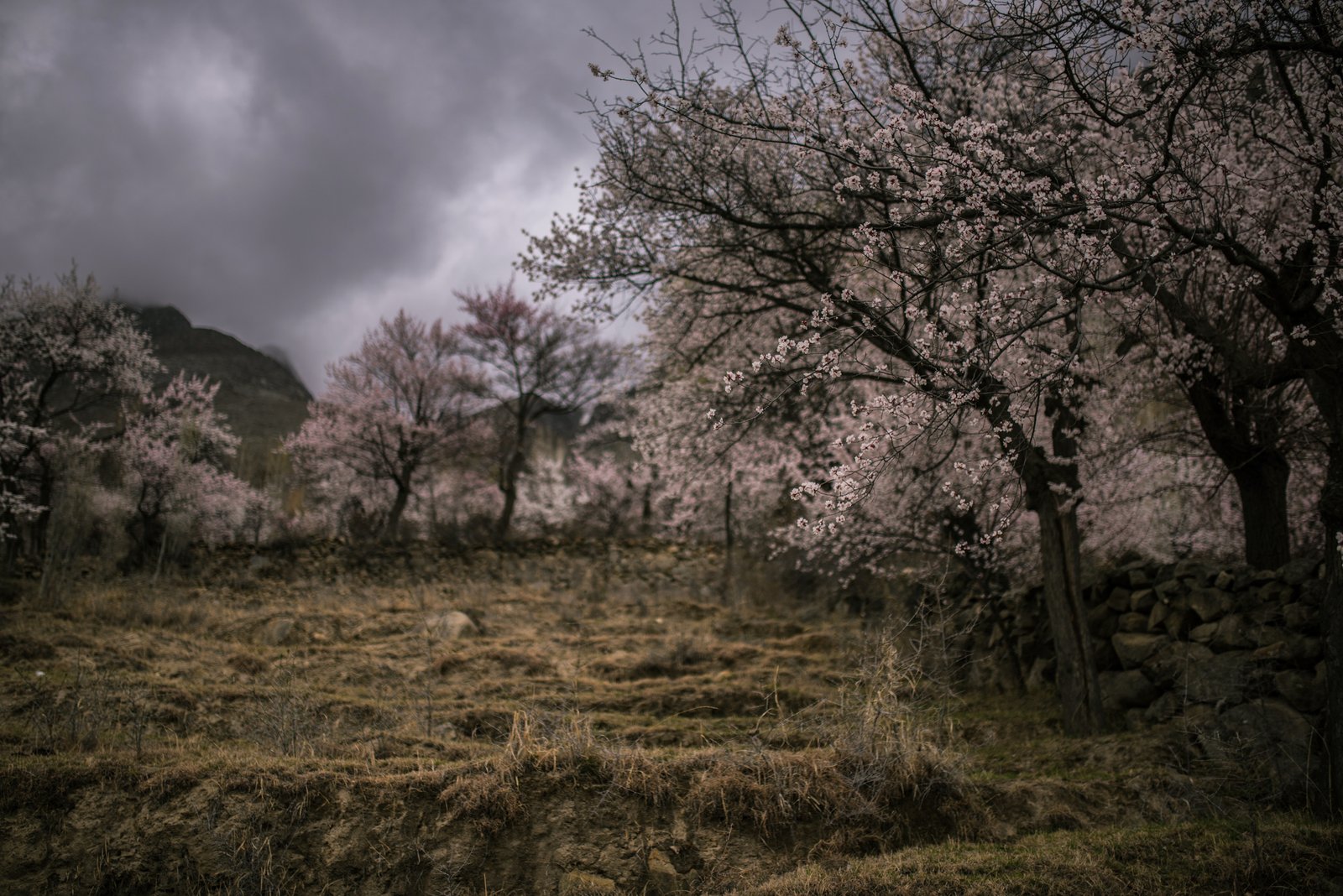
Altit Fort and the royal garden sit a short walk from Karimabad. Blossom around the 900-year-old fort is the valley’s most photographed combination — pink and white bloom against old stone and snow peaks. Go at sunrise if you can.
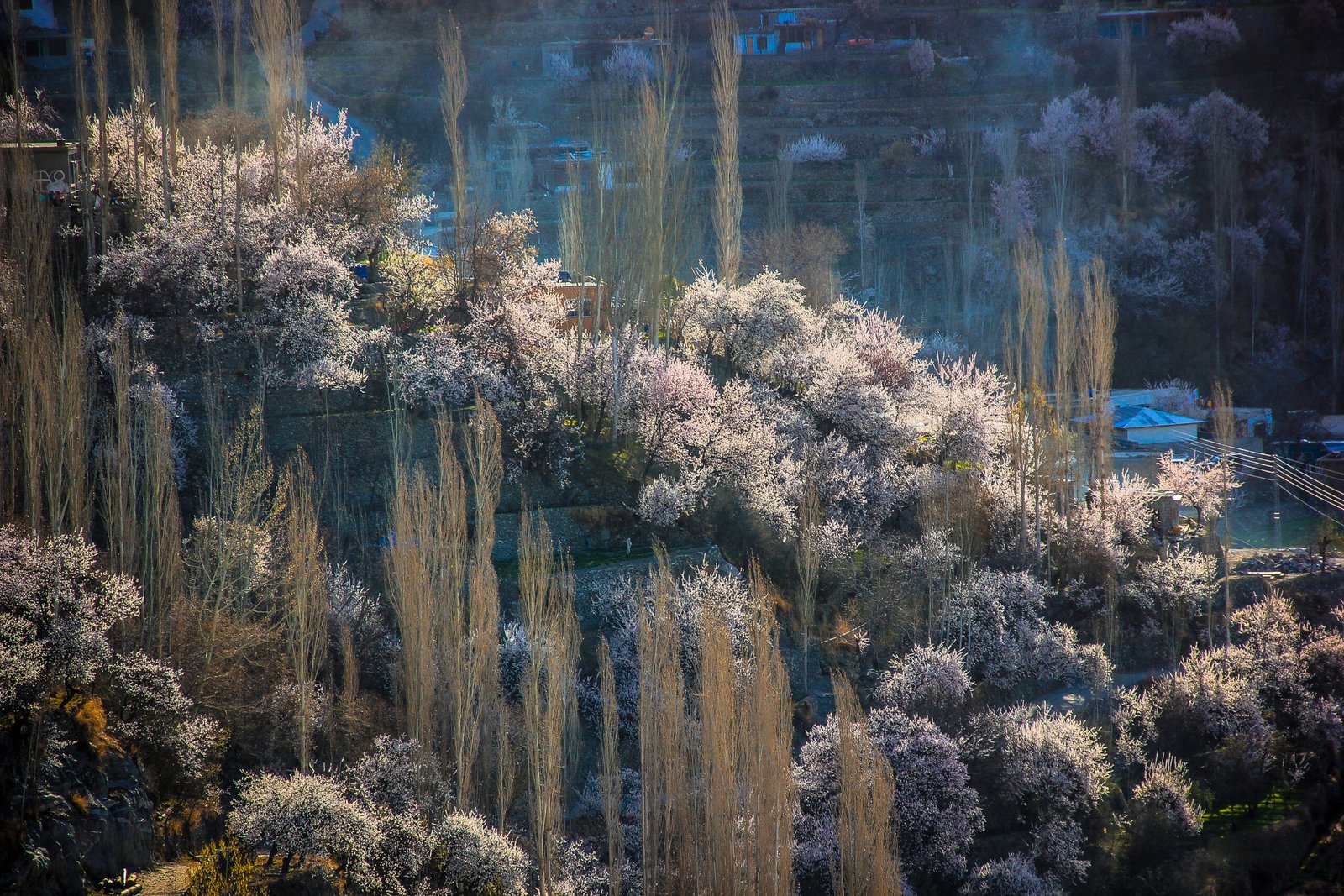
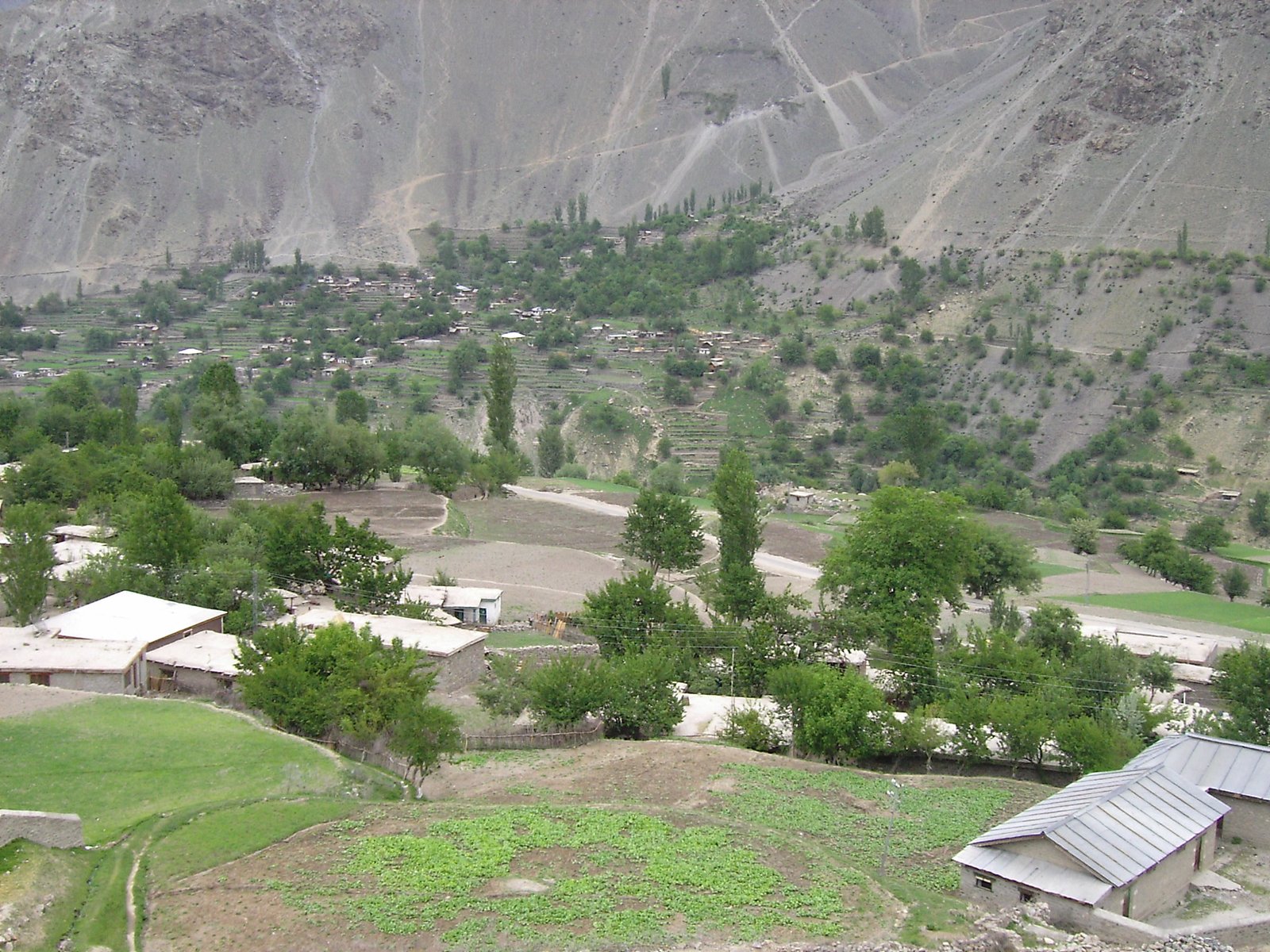
Ganish, the oldest settlement in Hunza, has orchards along the Karimabad–Ganish road. It is quieter than Karimabad and the blossom here feels like village life rather than a viewpoint.
Duikar (Eagle’s Nest), the viewpoint above Karimabad, is for the wide shot: the whole valley floor in bloom with Rakaposhi and Ultar Sar behind. Apple blossom flowers in the fields below Duikar into early May at this altitude.
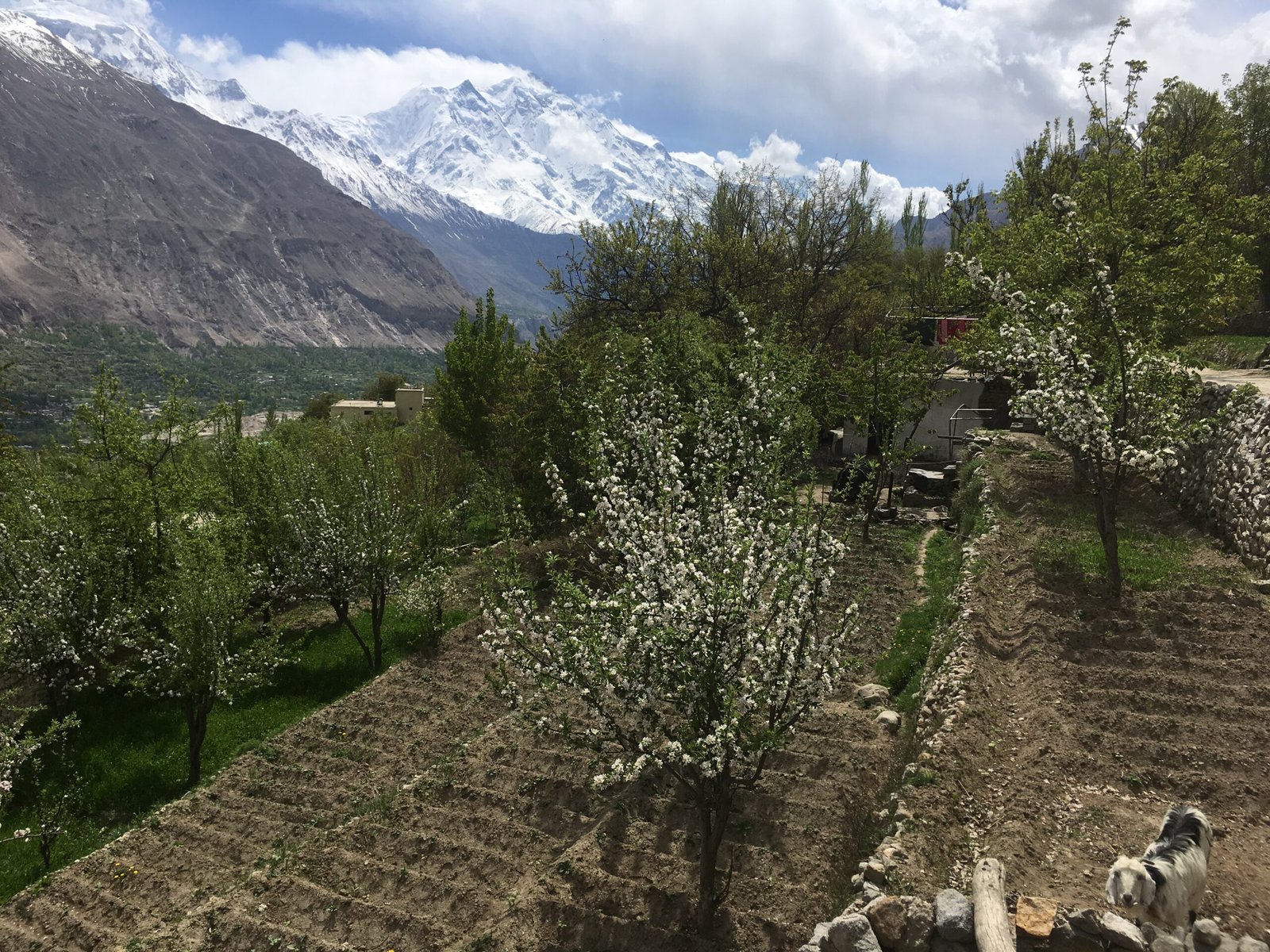
Gulmit, Ghulkin and Passu in upper Hunza bloom last, and the wait is worth it. Blossom at Passu sits against the Passu Cones, and the light in Gojal in mid-April is extraordinary. Plan for the extra days — upper Hunza is a different trip from Karimabad, not a day trip.
What trees are actually blooming?
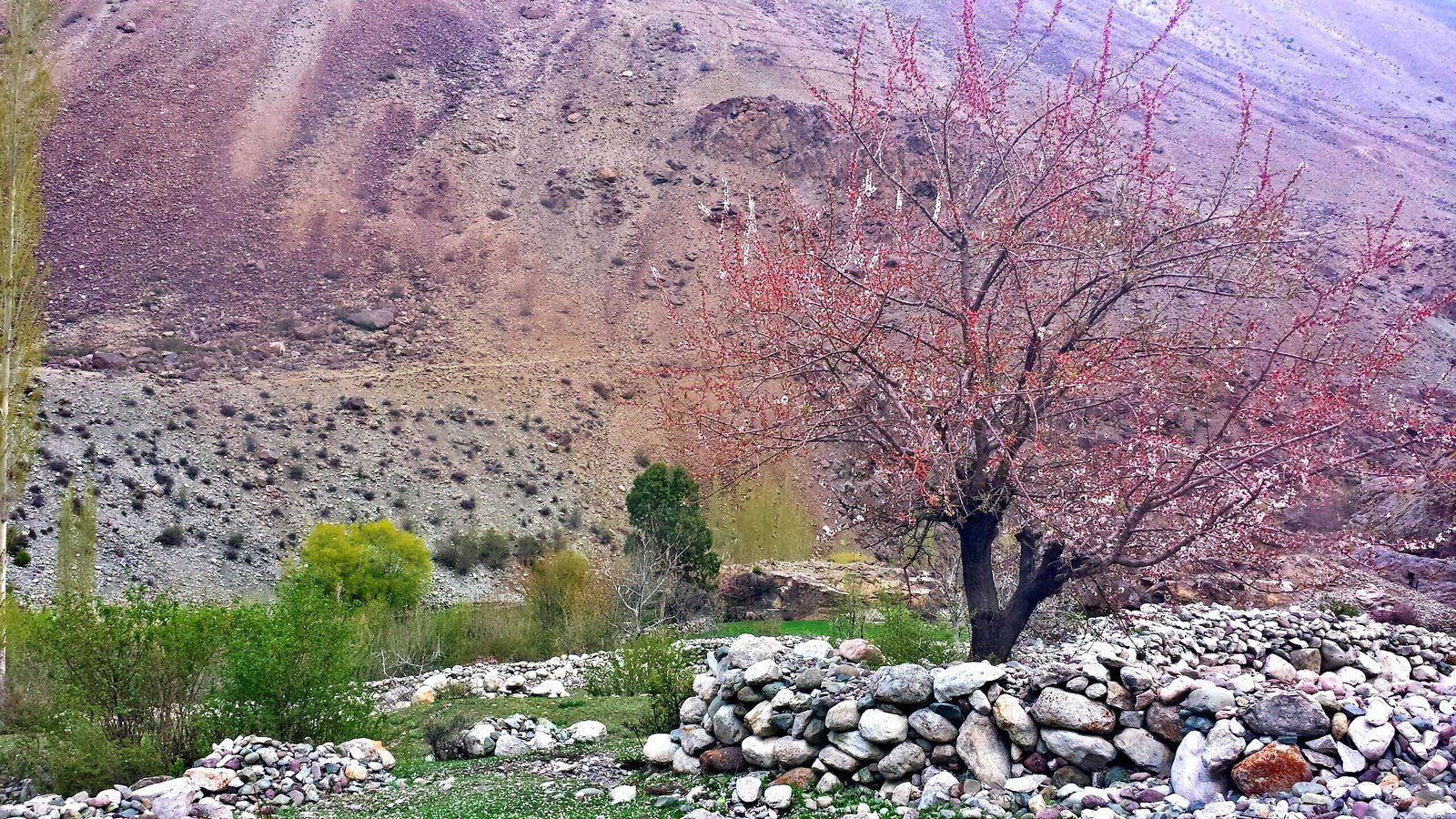
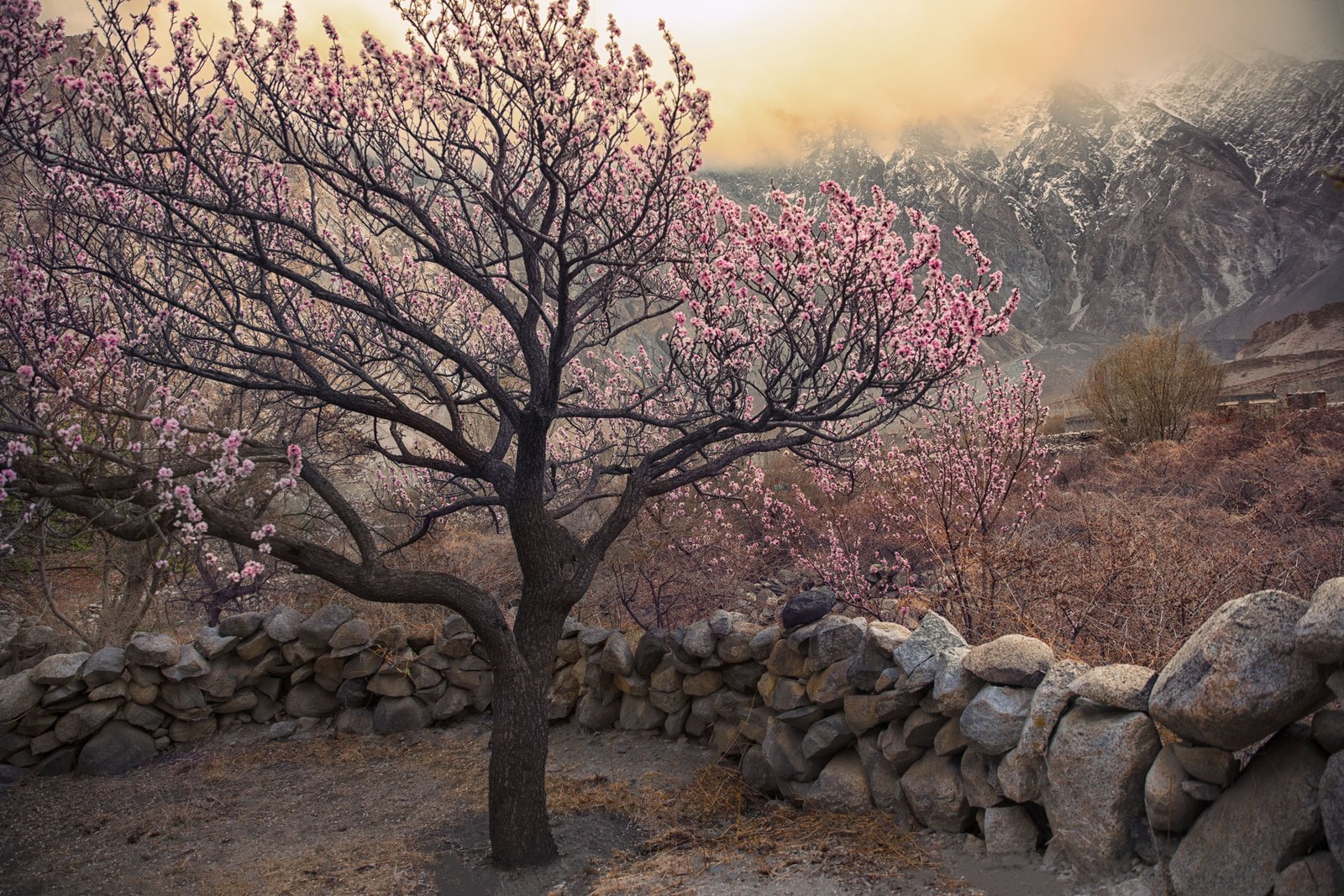
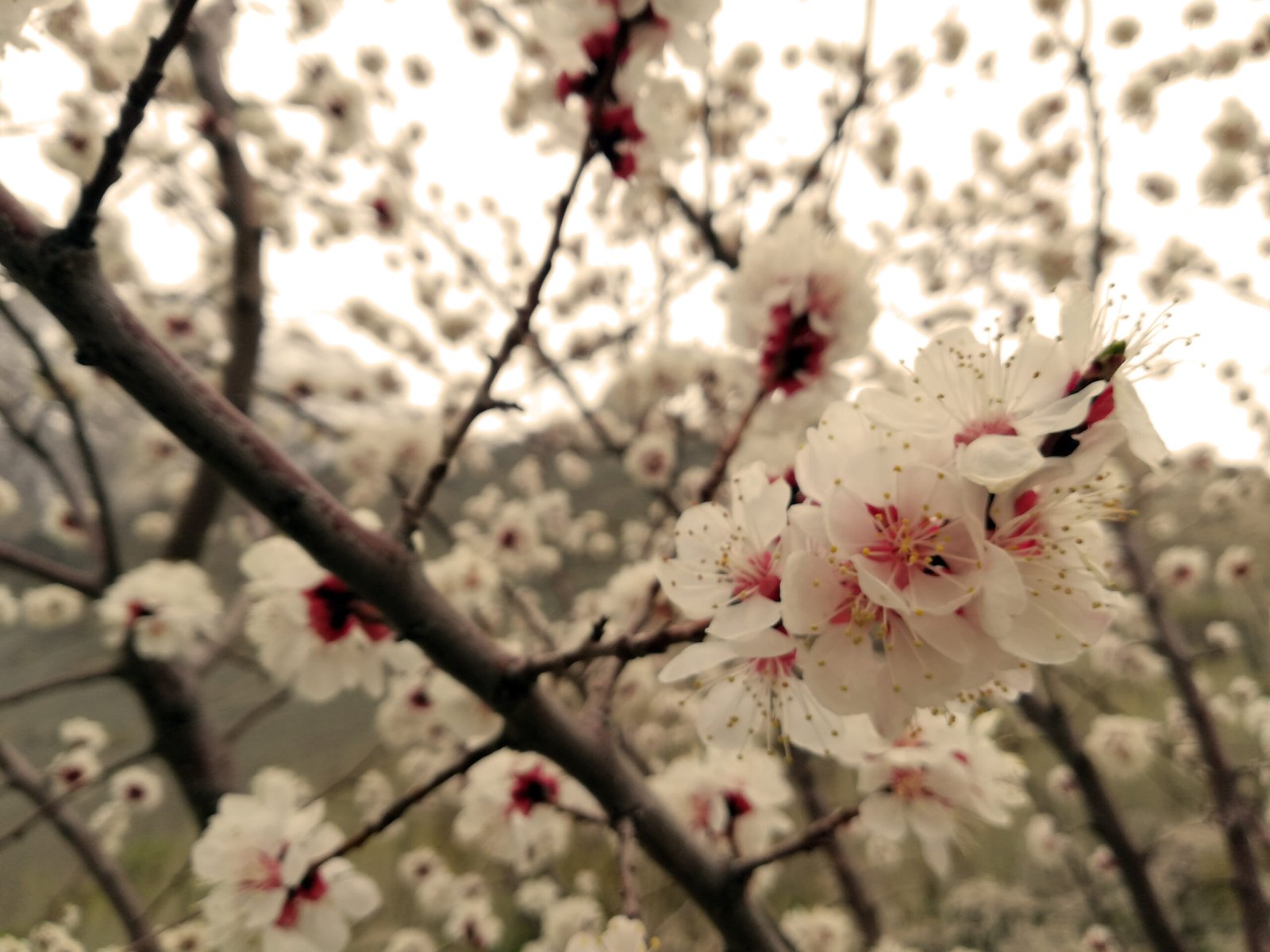
Cherry, apricot, almond, peach, plum, apple and pear all flower in Hunza, in waves across a few weeks. But the display is mostly apricot — almond blooms first, apricot follows in the biggest drifts of white and pale pink, and only a few real cherry trees exist in the valley. Operators and guides call the whole season “cherry blossom” because the name is famous, and travellers do too. This guide does the same, but it does not claim the valley is carpeted in cherry trees. If you want to know what you are looking at: white petals with a red calyx are apricot; pale pink clouds on a big spreading tree are usually apricot too; true cherry is the deeper pink, and it is the rarest of the three.
How do I plan a blossom trip to Hunza?
Book early. Hotels in Karimabad and Gulmit book out fastest in blossom season — book accommodation at least three weeks ahead, and at least a month ahead if you are travelling in April. The best-reviewed places fill first, and blossom season overlaps with Pakistani school holidays, so the valley is busy even though spring is noticeably quieter than summer.
Base yourself in Karimabad for the lower and central valley, then move to Gulmit or Passu for the upper valley if your dates allow. Two nights in Karimabad and two in Gojal covers both waves of bloom.
Pack for two seasons in one day. March in Karimabad is typically around 8°C in the day and −2°C at night; April is around 15°C in the day and 4°C at night. Mornings are cold, middays are warm, and the wind at Duikar and Passu bites. Layers, a warm jacket, sun protection and sturdy walking shoes cover it.
Confirm before you go. Bloom timing shifts with the winter, and road conditions on the Karakoram Highway can change. Check with your hotel or a local operator a week before departure, and again the day before you travel. For the wider seasonal picture across the region, see our Best Time to Visit Gilgit-Baltistan guide.
Is Hunza blossom worth it compared to Skardu?
Hunza is the easiest blossom trip in Gilgit-Baltistan and the most photographed: the KKH runs through the valley, the villages are close together, and the forts give you a foreground no other valley has. Skardu blooms later and feels wilder — Chunda Valley and Khaplu are quieter and the season runs into May. If you have one spring trip, do Hunza. If you have two, do Hunza in late March and Skardu in mid-April. Our Spring Blossom in Gilgit-Baltistan guide covers the whole region valley by valley, and our Best Time to Visit Hunza Valley guide puts blossom in the full year-round picture.
What to pack for blossom season
As an Amazon Associate, we earn from qualifying purchases. Prices change — check the live listing before you buy.
Blossom season means early mornings, cold viewpoints and long days on foot. Two things that earn their place in the bag: a power bank (cold drains phone batteries fast at Duikar and Passu) and comfortable walking shoes for the stone lanes and terraces.
- Anker PowerCore 10000 Portable Charger
- KEEN Targhee III Waterproof Hiking Shoes
- Lightweight travel tripod for blossom photography
Frequently asked questions
When is the peak cherry blossom season in Hunza?
Peak bloom in central Hunza (Karimabad, Altit, Ganish) is typically late March to early April. Lower Hunza starts in mid-March and upper Hunza (Gulmit, Passu) runs 7–10 days later, around 7–20 April. The sweet spot for most visitors is late March to mid-April, though timing shifts 1–3 weeks with the winter.
How long does the blossom last?
About two to three weeks in any one village, and roughly five weeks across the whole valley as the bloom wave climbs from Aliabad to Passu. A single tree is usually at its best for 7–10 days. Plan your dates around a zone, not a single day.
Is it really cherry blossom?
Mostly apricot. Cherry, apricot, almond, peach, plum, apple and pear all flower in Hunza, but apricot dominates the display and only a few real cherry trees exist. “Cherry blossom” is the popular name for the whole season, and this guide uses it that way.
Where should I stay for blossom season?
Karimabad for the lower and central valley, then Gulmit or Passu for the upper valley. Book at least three weeks ahead — a month ahead for April — because the best-reviewed places fill fast in blossom season.
Do I need a guide for blossom season?
No, not for Karimabad, Altit and Ganish — the lanes and viewpoints are easy to walk on your own. A local guide earns their fee in upper Hunza and for photography, where they know which orchards are open and when the light is best.
Can I combine blossom season with Navroz?
Yes. Navroz falls on 21 March, and lower-Hunza blossom usually opens in the same week. The main gathering is at Karimabad Polo Ground. If your trip lands on 21 March, plan around the crowds and book even earlier.