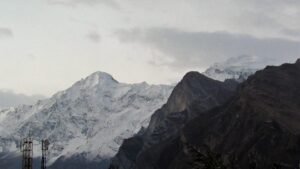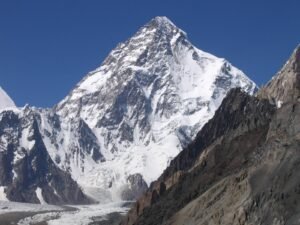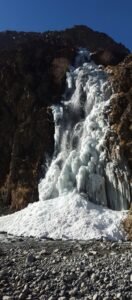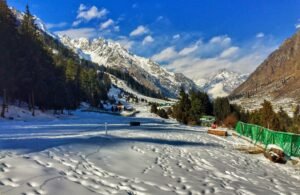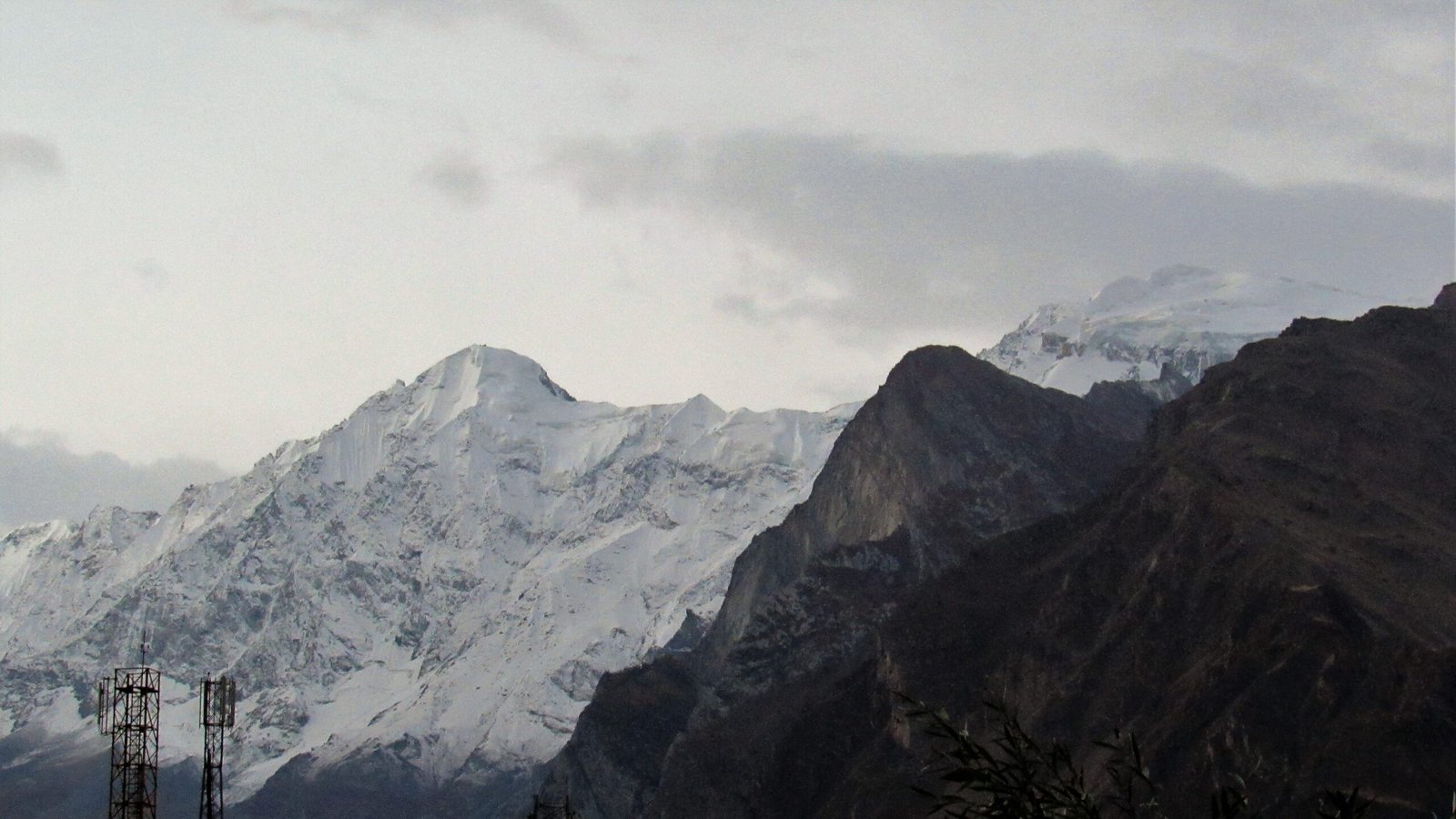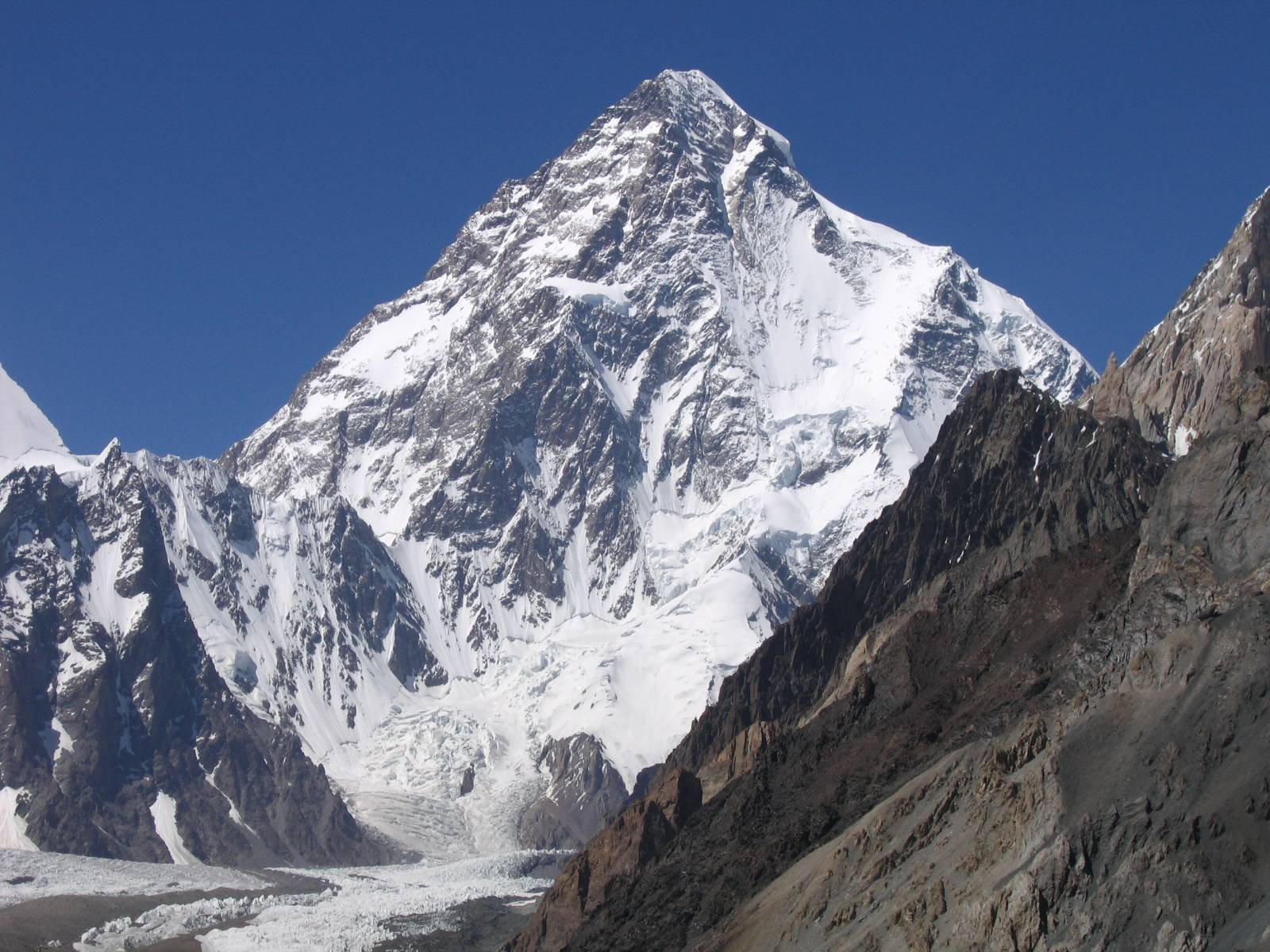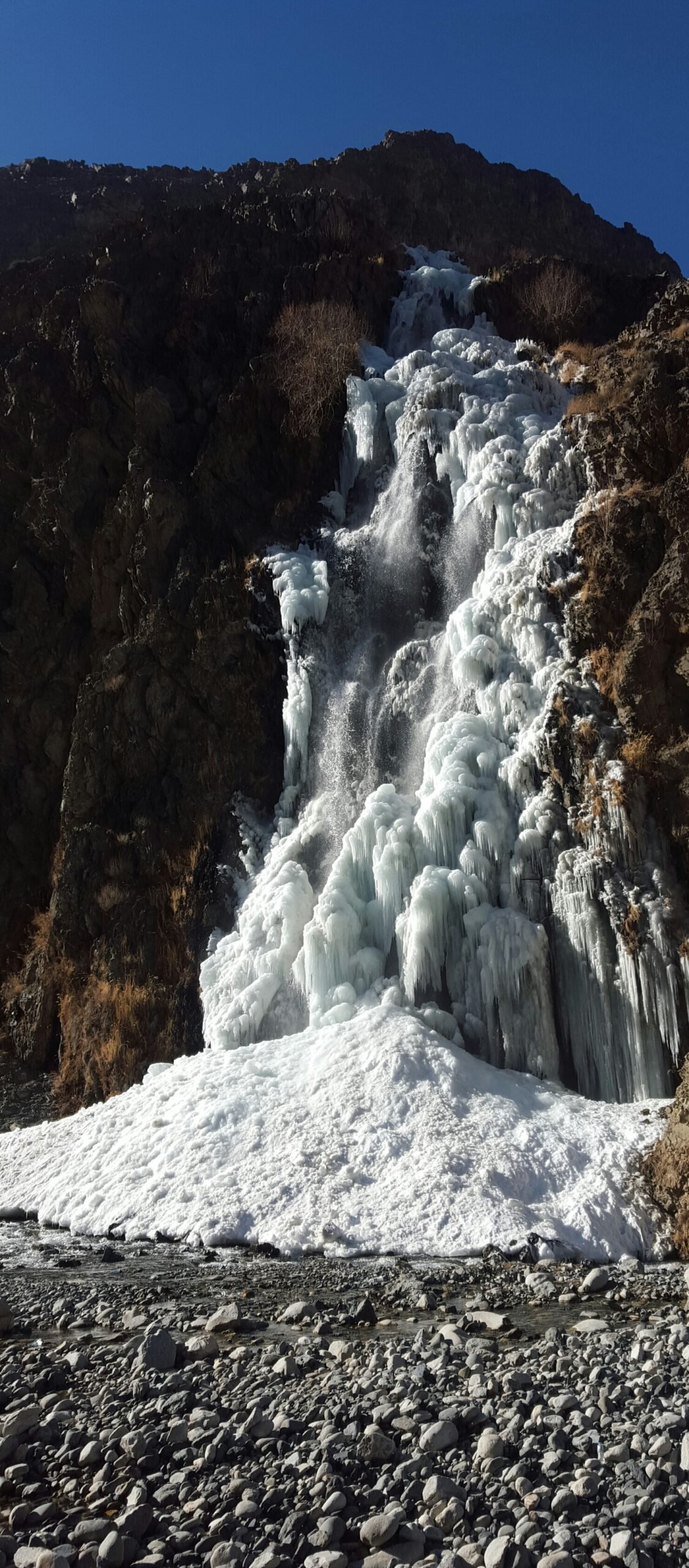
Skardu in January is the coldest and quietest month in Baltistan. Days barely reach 3C, nights average about minus 8C, and cold snaps push nights to minus 10C to minus 15C. The town stays open, a small number of hotels run with heating, Satpara and Lower Kachura lakes partly freeze, and the Katpana Cold Desert wears snow. Flights and the Gilgit to Skardu road are often disrupted by fog, snow and ice, so keep one or two spare days, confirm your hotel heating in advance, and treat the itinerary as flexible. January suits photographers, solitude seekers and return visitors who are fully prepared for the cold. It does not suit tight schedules, first-time winter travellers or anyone who needs reliable heating and electricity.
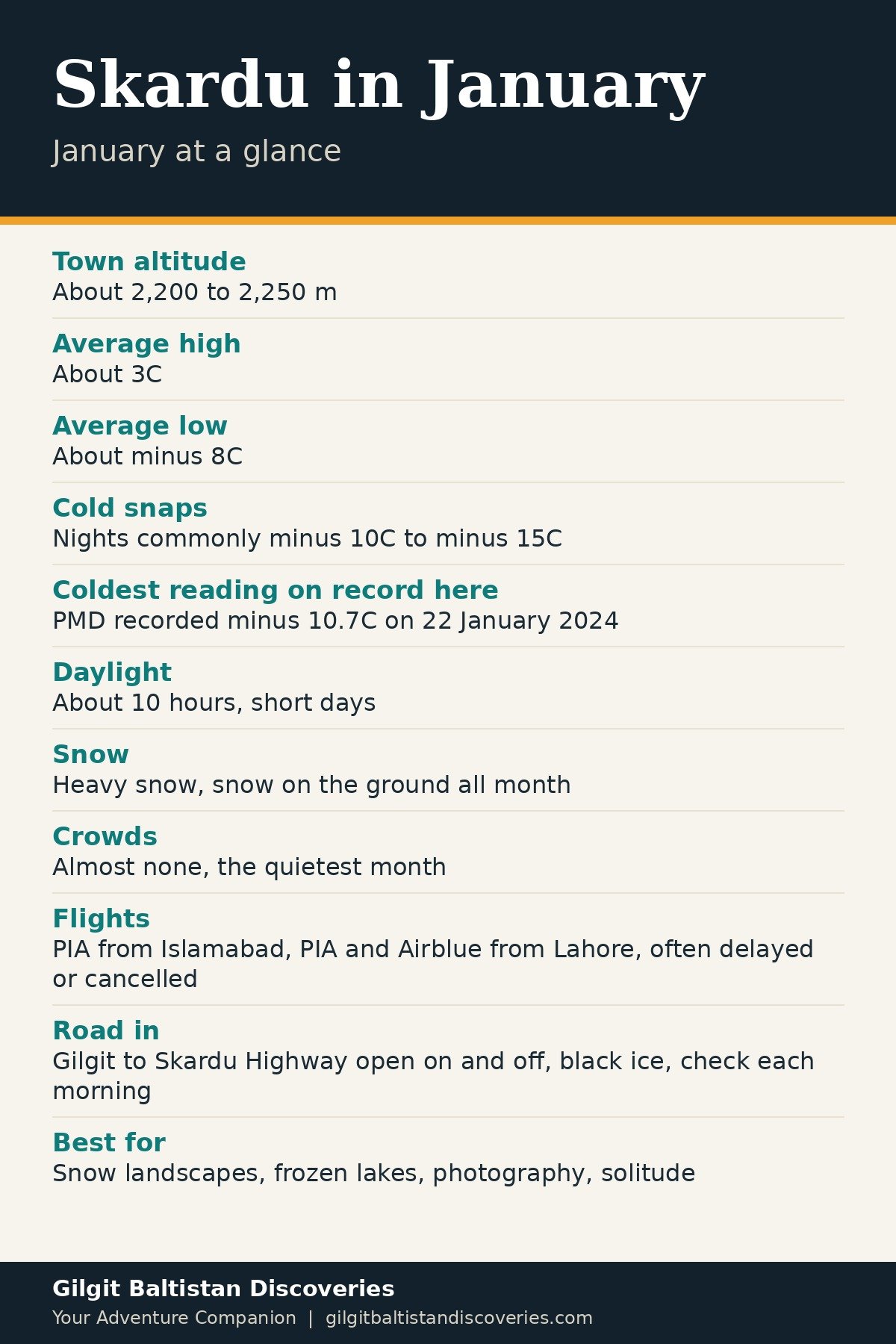
Skardu in January at a Glance
| Fact | January in Skardu |
|---|---|
| Town altitude | About 2,200 to 2,250 m |
| Average high | About 3C |
| Average low | About minus 8C |
| Cold snaps | Nights commonly minus 10C to minus 15C |
| Coldest reading on record here | PMD recorded minus 10.7C on 22 January 2024 |
| Daylight | About 10 hours, short days |
| Snow | Heavy snow, snow on the ground all month |
| Crowds | Almost none, the quietest month |
| Flights | PIA from Islamabad, PIA and Airblue from Lahore, often delayed or cancelled |
| Road in | Gilgit to Skardu Highway open on and off, black ice, check each morning |
| Best for | Snow landscapes, frozen lakes, photography, solitude |
How cold does Skardu get in January?
January is the coldest month in Skardu. Using Pakistan Meteorological Department figures, days barely reach 3C and nights average about minus 8C. That is the monthly average, not the worst of it. Cold snaps are common, with nights falling to minus 10C to minus 15C, and the department recorded minus 10.7C on 22 January 2024, the coldest reading anywhere in Pakistan that month. In December 2019 the department recorded minus 20.7C at Skardu, described as breaking a roughly 40-year station record.
Some websites repeat a minus 24C figure for Skardu. It traces to sources that do not cite a primary PMD document, so treat it as uncited rather than as fact. Our Skardu in Winter guide carries the same caution, and our Best Time to Visit Skardu guide gives the same monthly averages used here.
The cold is dry and the light is sharp. Days are short, with about 10 hours of daylight, and the sun sits low, which makes the snow-covered peaks and the Indus Valley glow in the morning and late afternoon. Wind chill on open ground, at the cold desert or by a lake, makes it feel colder than the thermometer says, so windproof layers matter as much as warm ones.
How do you get to Skardu in January?
There are two ways in, by air or by road, and both are weather dependent in January. Keep one or two spare days in the plan and treat the itinerary as flexible, because a single storm can move everything by a day.
By air, PIA flies from Islamabad to Skardu, and from Lahore PIA flight PK453 runs about three times a week while Airblue flight PA704 runs most days. The Lahore to Skardu flight is scheduled at about 1 hour 20 minutes, often about 1 hour 5 minutes in the air. Skardu is a visual flight rules airport at about 2,230 m, so low cloud, fog or poor visibility grounds flights outright, and cancellations cluster from December to March. Never book a tight onward connection after a Skardu flight. Our Lahore to Skardu by air guide covers flight delays and your rights when a flight is cancelled, and our Flights to Skardu guide covers the routes in full.
By road, the Gilgit to Skardu Highway (S-1) is the way in. It stays open on and off from late November to February, with black ice, landslides and heavy snow, so check conditions each morning and travel in daylight. Babusar Pass has been closed since 11 October 2026, with reopening expected about June 2027, so there is no shortcut from the south, and the Karakoram Highway is the road route in and out. The Karakoram Highway itself stays open weather permitting, but winter driving on it is a different matter from summer, with ice in shaded sections and occasional closures after heavy snowfall.
What is open in Skardu in January, and what is closed?
January strips Skardu back to its essentials. The town works, the valleys around it mostly do not, and knowing the split before you travel is the whole trip.
| Place | January status |
|---|---|
| Skardu town | Open, bazaar operating, reduced hours |
| Katpana Cold Desert | Open, snow-dusted dunes, best in daylight |
| Satpara Lake | Partly frozen, viewing only, stay off the ice |
| Lower Kachura Lake | Freezes in the coldest weeks, viewing only |
| Shigar Valley | Day trip possible on clear days if the road is open |
| Khaplu Valley | Long day trip only in a clear weather window |
| Shigar Fort | Open as a Serena heritage hotel and museum, confirm winter dates |
| Khaplu Palace | Serena heritage hotel and museum, confirm winter dates |
| Deosai National Park | Closed under snow, November to May |
| Babusar Pass | Closed since 11 October 2026 |
| Khunjerab Pass | Officially open year round for trade, tourist trips unreliable in winter |
| High treks (K2 Base Camp, Gondogoro La, Snow Lake) | Closed by snow, no winter trekking season |
| Fairy Meadows | Closed, jeep track snowbound |
Deosai deserves a plain sentence. Deosai National Park closes under snow from November to May, and its season runs roughly from mid-June to late October. The plateau is unreachable in January, and Sheosar Lake sits frozen but out of reach. Plan Deosai for summer instead.
Khunjerab Pass is officially open year round for trade since December 2024, but tourist trips there are unreliable in winter, and it is not a realistic day trip from Skardu in January in any case. Do not build a Skardu plan around it.
What can you do in Skardu in January?
Winter strips Skardu back to its essentials, and that is the point. Walk the snow-dusted Katpana Cold Desert, watch Satpara Lake freeze, photograph the sharp winter light on the peaks, and enjoy a town with almost no other tourists in it.
See the frozen lakes, from the shore
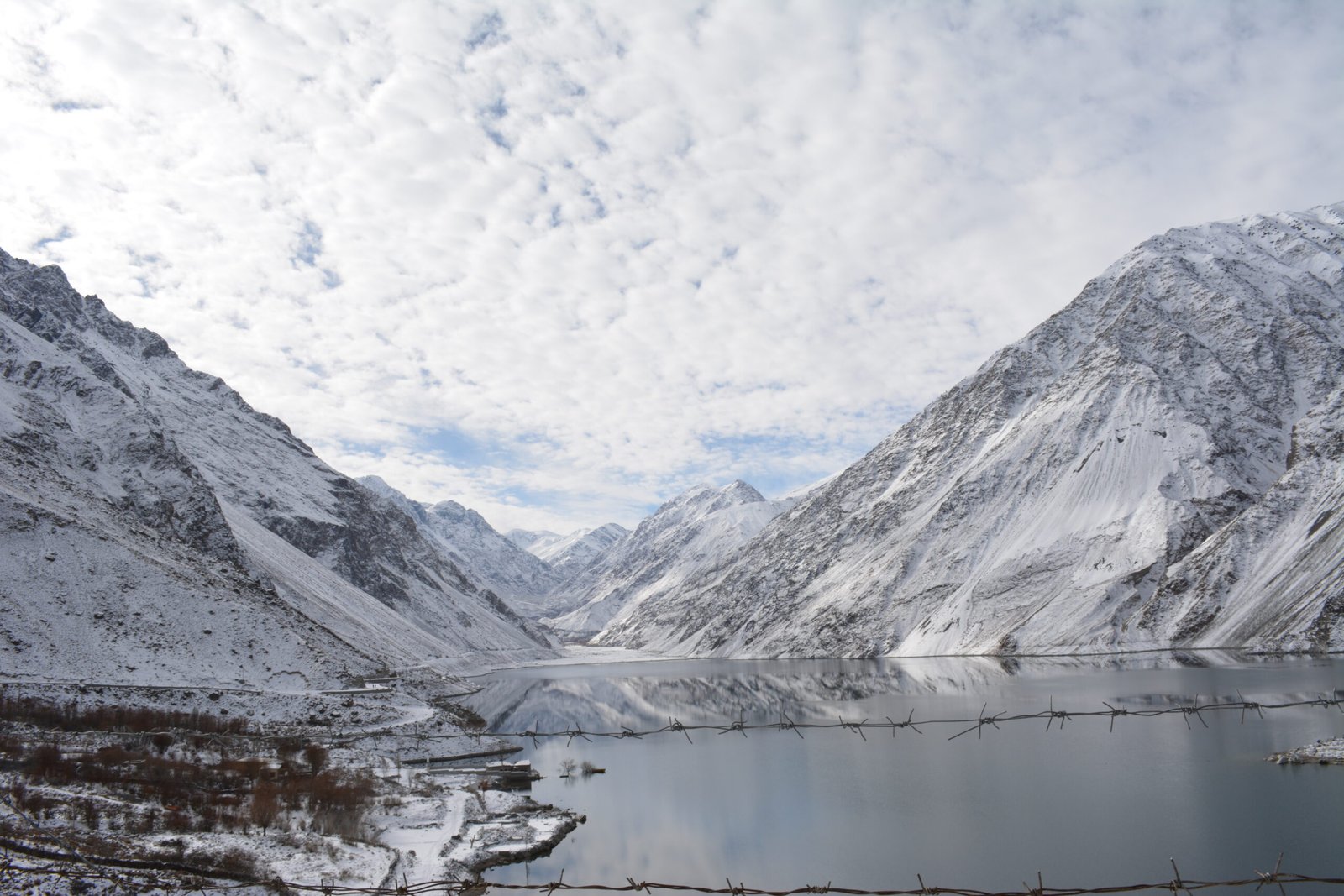
Satpara Lake, about 9 km above Skardu town, partly freezes in January. It is Skardu town drinking water supply, so stay off the ice completely. Go for the view: the frozen edge against dark open water, snow on the hills behind, and the dam wall below. Lower Kachura Lake, beside Shangrila Resort, can freeze in the coldest weeks, but it is for viewing, not skating, and the freeze varies every year. No frozen lake in Gilgit-Baltistan has a verified safe walking surface. Our Frozen Lakes of Gilgit-Baltistan guide covers every lake in the region, including Attabad Lake in Hunza, which only partly freezes and is never safe to walk on.
Walk the Katpana Cold Desert in snow
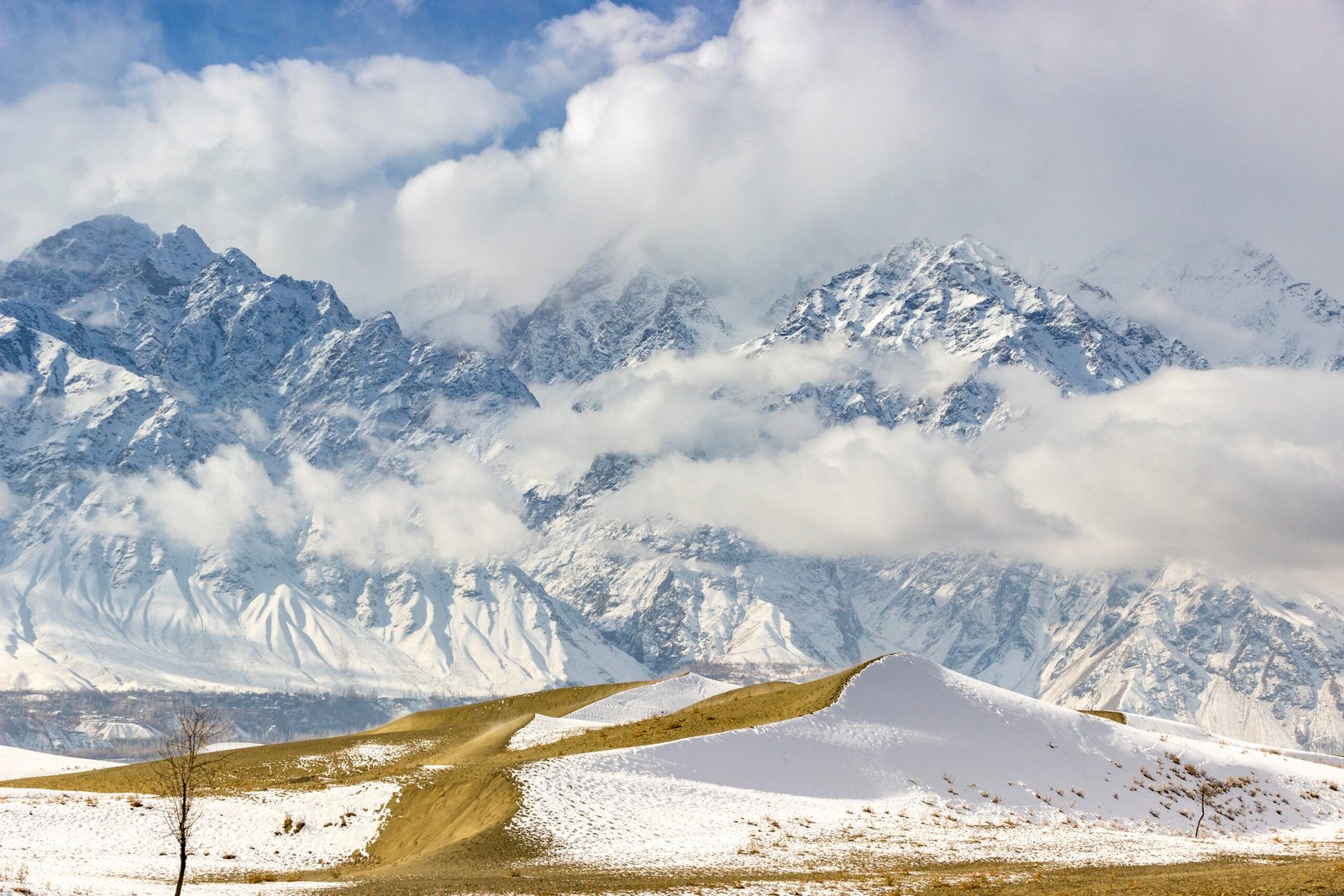
The Katpana Cold Desert, a short drive from Skardu town, is one of the highest cold deserts in the world, and in January its dunes wear snow against frozen peaks. Go in daylight, when the light is best and the cold is manageable, and wear insulated boots, because the sand is cold and the wind cuts across open ground. The desert is a photography stop and a short walk, not a full day, and it pairs naturally with Satpara Lake on the same morning.
Take the Shigar day trip
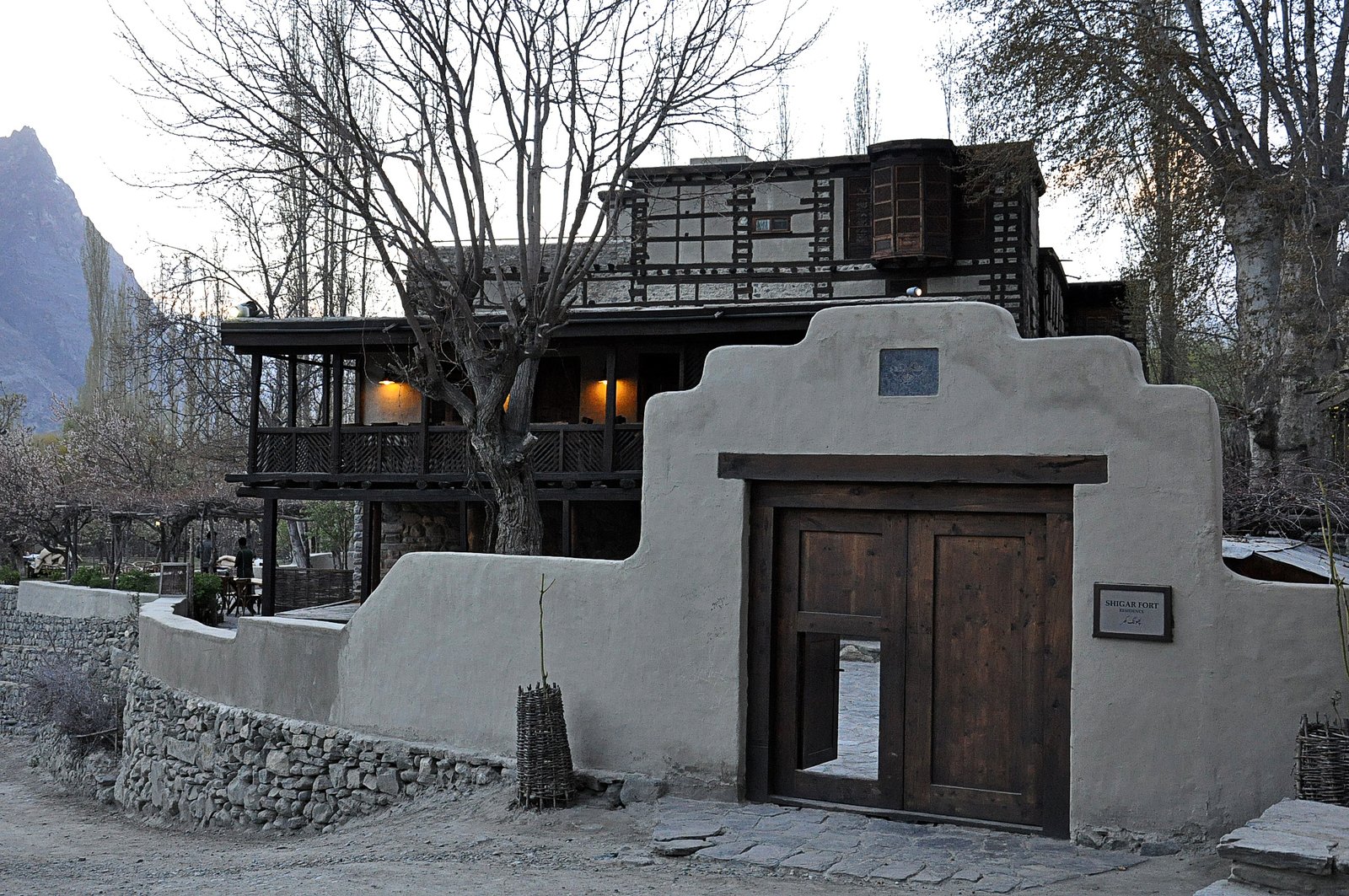
Shigar Valley is a half-hour to an hour drive from Skardu along the Shigar River, and it is the easiest winter day trip from town. Shigar Fort is the centrepiece: a 17th-century royal residence of the Amacha dynasty, restored by the Aga Khan Trust for Culture and now operated as a Serena heritage hotel, with a museum of Balti life. Even if you are not staying, the carved wooden balconies, stonework and gardens are worth an unhurried hour. Blind Lake, locally Jarba Zhou, is a short drive from Shigar town, a small still lake fed by springs, and a morning photography stop. The Sarfaranga cold desert sits on the way. In January, treat the trip as conditional: go on a clear day, check the road in the morning, and be ready to stay in Skardu town instead if snow or ice closes the valley road. Our Shigar Valley guide covers the valley in full for the open season.
Consider Khaplu only in a clear window
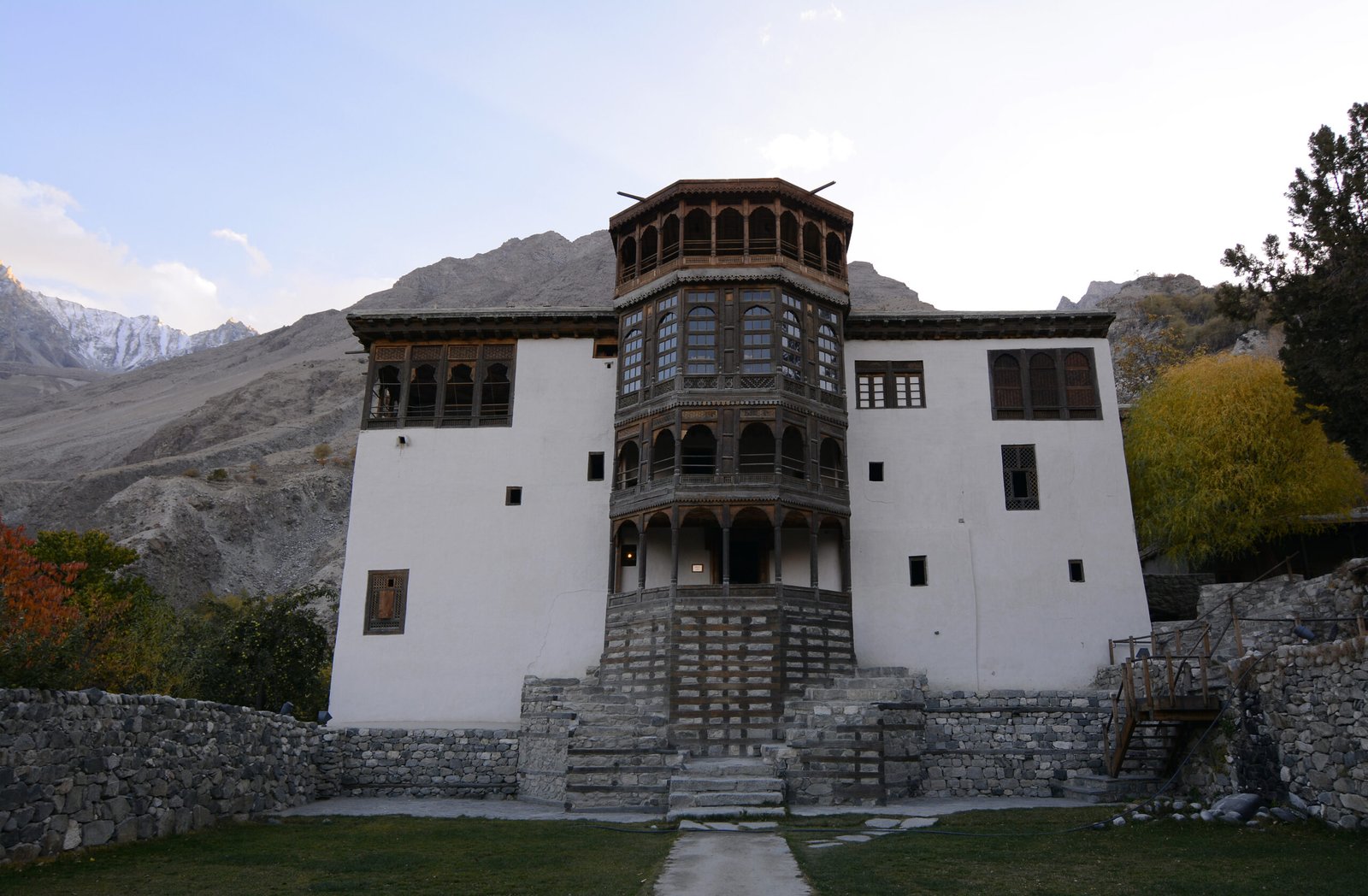
Khaplu, the capital of Ghanche District in eastern Baltistan, sits at about 2,600 m on the Shyok River, several hours by jeep from Skardu. Khaplu Palace, locally Yabgo Khar, was built in 1840 by the Yabgo Raja Daulat Ali Khan, restored by the Aga Khan Trust for Culture between 2005 and 2011, and now houses a Serena-operated heritage hotel and a museum, with only about 21 rooms. In January, Khaplu is a long day trip that only works in a clear stretch of weather, with an early start and a willingness to turn back. If the forecast is uncertain, drop it and spend the day in Skardu town instead. Our Khaplu Valley guide covers the palace and the valley in full for the open season.
Photograph the winter light
January gives Skardu its clearest winter light: bare poplars, snow peaks, frozen lake edges and empty viewpoints. The best hours are the first two after sunrise and the last two before sunset. Skardu Fort, above the town, gives the classic view across the Indus Valley, and the Indus River banks at the edge of town are at their quietest. Dress for standing still in the cold, because photography means long waits outdoors.
Where should you stay in Skardu in January?
Many facilities close in winter, and many accommodations lack proper heating, so do not assume a hotel that is open in summer is warm in January. Our Hotels Open in Winter in Gilgit-Baltistan guide names Rivage Resort Skardu, Shigar Fort Residence (Serena) and Concordia Motel as reported open in winter around Skardu, but winter-open status changes from year to year, so treat every name as reported open and confirm it for your exact dates before you travel.
Ask directly whether rooms have central heating or a heater, hot water, and food on site, because restaurants and shops around town also run reduced hours in January. Confirm heating, hot water and winter opening dates with the hotel before you pay anything, because a listing that is open does not always mean it is heated. Lakefront resorts around Lower Kachura mostly close from November to March or run at reduced capacity, so do not plan a January stay around a lakefront property without confirming it directly.
Winter rates run lower than peak-season rates, and January is the cheapest month to stay in Skardu, but no Skardu-specific discount figure is published anywhere verifiable, so treat any percentage a listing quotes as a claim to confirm, not a fact. Book ahead where you can, because the few heated hotels fill first, and ask what happens to your booking if your flight is cancelled.
What about power cuts in January?
Power cuts are part of daily life in Gilgit-Baltistan in winter. Hydropower generation falls across the region in the cold months: generation dropped from 211.6MW to about 157MW after the floods since June, and in Gilgit city only about 33MW is generated in winter against about 70MW installed. No Skardu-specific generation figure is published, so this guide does not invent one. The practical point for a January visitor is the same everywhere in the region: choose a hotel that confirms heating and backup power, keep a power bank charged, and carry a headlamp. Our Winter Power Cuts guide explains the figures and what they mean for travellers in full.
A power bank is the one piece of gear that earns its weight in January, for phones, cameras and a headlamp. The Anker PowerCore 10000 is a compact option that fits a day pack. As an Amazon Associate, we earn from qualifying purchases.
What should you pack for Skardu in January?
Pack for far colder than the average, because the average hides the cold snaps. A down jacket rated well below freezing, insulated waterproof boots with grip for ice, thermal base layers, a windproof outer shell, warm gloves, a hat that covers the ears, and a neck gaiter are the core. Add a headlamp for the short days and the power cuts, a power bank, lip balm and moisturiser for the dry cold air, and sunscreen, because the high-altitude sun on snow burns even in January. Bring cash in small notes, because ATMs and card machines are less reliable in winter, and carry any medicines you need, because pharmacies run reduced hours. If you take prescription medicine, bring more than the trip needs, in case a delay adds days.
A realistic 3-day January itinerary
This plan assumes you arrive by air and keeps one spare day in hand. If your flight is cancelled, the whole plan slides by a day, which is why nothing here is booked back to back.
| Day | Plan |
|---|---|
| Day 1 | Arrive in Skardu, settle into your hotel and confirm heating and hot water. Afternoon walk around Skardu town and the bazaar, then sunset at the Katpana Cold Desert if the road is clear. Early dinner at the hotel, early night. |
| Day 2 | Morning at Satpara Lake and Lower Kachura Lake, both for viewing from the shore. Afternoon at Skardu Fort for the view across the Indus Valley, then the Indus riverbank for photography in the late light. |
| Day 3 | Shigar day trip if the morning road check is clear: Shigar Fort, Blind Lake and the Sarfaranga desert on the way. If the road is closed, spend the day in Skardu town instead, with a slow morning and a second visit to the cold desert. |
| Spare day | Keep one spare day after Day 3 for a delayed flight out, or use it for Khaplu if a clear weather window opens and you are willing to start early. |
Is January a good time to visit Skardu?
January is the best month in Skardu for snow, solitude and photography, and the worst month for easy travel. The town is at its quietest, the lakes are at their most frozen, the cold desert is at its most dramatic, and hotel rates are at their lowest. The price is real cold, short days, disrupted flights and roads, reduced services and power cuts. If you are fully prepared, flexible and happy with a short list of things to do, January is worth it. If you want Deosai, the high treks, lake boating or a full programme of day trips, come between June and September instead. Our Best Time to Visit Skardu guide compares every month so you can pick the one that fits your trip.
Yes. Skardu town stays open all year, and January is its coldest and quietest month. Roads and flights run when the weather allows, and a small number of hotels stay open with heating. Come only if you are ready for sub-zero nights, short days and flexible plans, and keep one or two spare days for delays.
January days barely reach 3C and nights average about minus 8C, using Pakistan Meteorological Department figures. Cold snaps are common, with nights falling to minus 10C to minus 15C, and the department recorded minus 10.7C on 22 January 2024. Pack for far colder than the average, with a down jacket, insulated boots and warm layers.
Yes, but they are often delayed or cancelled. PIA flies from Islamabad, and from Lahore PIA flight PK453 runs about three times a week while Airblue flight PA704 runs most days. Skardu is a visual flight rules airport, so fog and low cloud can ground flights, and cancellations cluster from December to March, so keep a spare day.
No. Satpara Lake only partly freezes and is Skardu town drinking water supply, so stay off the ice completely. Lower Kachura Lake can freeze in the coldest weeks, but it is for viewing, not skating, and the freeze varies every year. Enjoy them from the shore and never test the ice.
Yes, a small number stay open. Our winter hotels guide names Rivage Resort Skardu, Shigar Fort Residence and Concordia Motel as reported open in winter, but winter-open status changes every year. Confirm heating, hot water, in-house dining and your exact dates with the hotel before you pay, because a listing that is open does not always mean it is heated.
No. Deosai National Park closes under snow from November to May, and its season runs roughly from mid-June to late October. The plateau is unreachable in January, and Sheosar Lake sits frozen but out of reach. Plan Deosai for summer instead, and use January for Skardu town, the cold desert, the frozen lakes and the Shigar and Khaplu valleys.