January is the coldest month in Hunza, and the quietest. Aliabad averages about 1.4C by day and minus 7.3C at night, Karimabad runs colder after dark, and the valley sees its fewest visitors of the year. What January gives back is the clearest winter light, frozen lakes at their best, snow leopards down in the valleys of lower Gojal, and skiing at Naltar. Karimabad stays open and functional, both forts stay open, and hotel prices run about 40 to 50 percent cheaper than in peak season. Come for the quiet, the photography and the wildlife, not for trekking. Pack for deep cold, expect power cuts, keep your plans flexible, and build in a buffer day for the flight or the road.
Hunza in January at a Glance
| Question | Answer |
|---|---|
| How cold? | Aliabad about 1.4C by day, minus 7.3C at night; Karimabad colder after dark |
| Coldest month? | Yes, January is the coldest month in Hunza |
| Frozen lakes? | At their best; Borith and small lakes freeze well, Attabad only partly |
| Snow leopards? | In season; lower Gojal valleys, mid November to early March |
| Skiing? | Naltar, December to March; January and February are the real ski months |
| What is open? | Karimabad, both forts, bazaar, viewpoints, winter open hotels |
| What is closed? | Deosai, Fairy Meadows jeep track, high treks, Babusar Pass, Khunjerab for tourists |
| Festivals? | No major festival in Hunza in January; Khalti ice hockey festival in Ghizer |
| Crowds? | The fewest visitors of the year |
| Daylight? | About 10 hours, lengthening slowly through the month |
How cold does Hunza get in January?
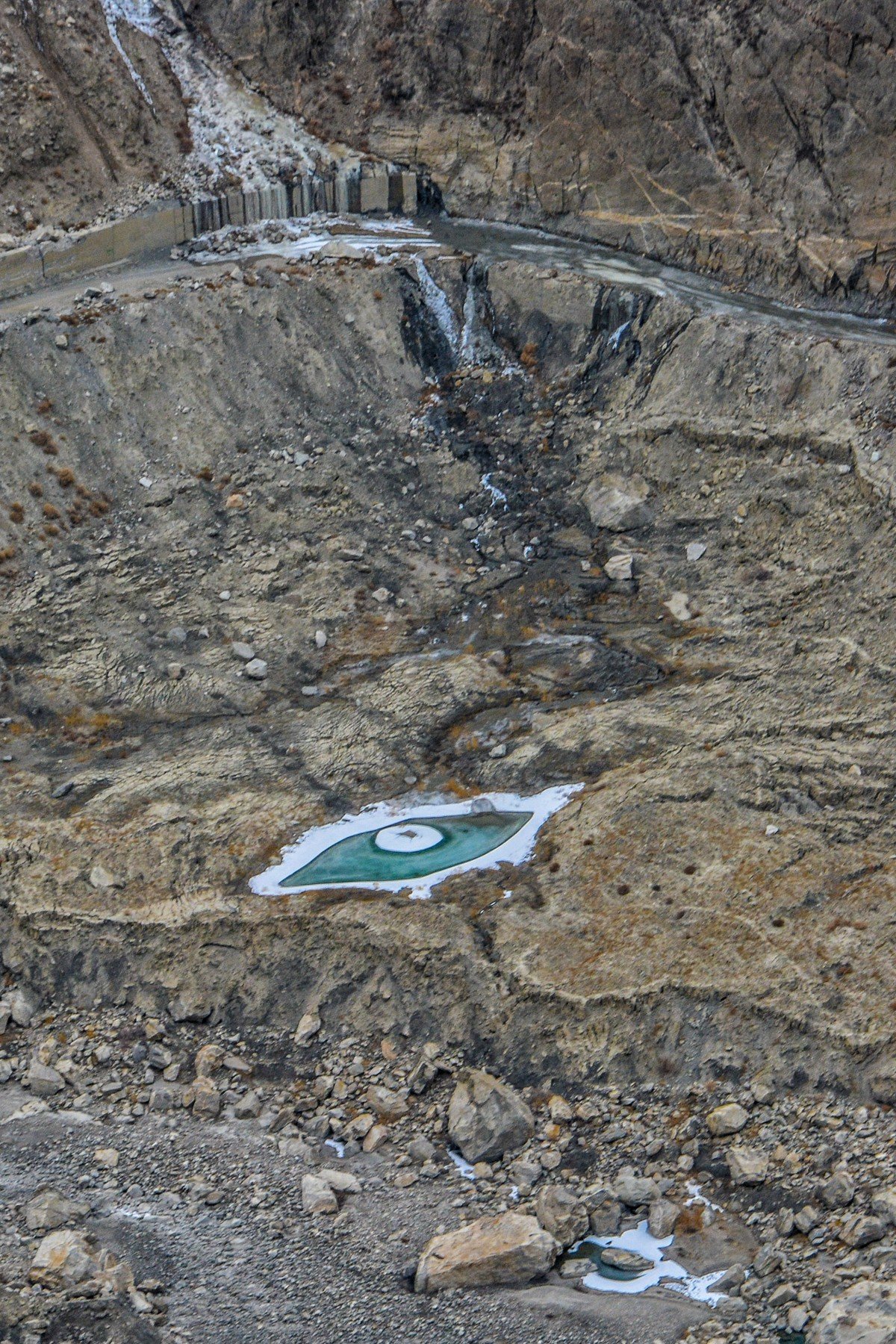
January is the coldest month in Hunza, and the numbers are straightforward. The climate table for Aliabad, the administrative town of Hunza at about 2,206 metres, gives a January mean daily maximum of 1.4C, a daily mean of minus 3.0C and a mean daily minimum of minus 7.3C, with only about 6 mm of precipitation for the month. Hunza is a cold desert climate, so January is dry as well as cold, with clear skies far more often than snow.
Karimabad sits higher, at about 2,500 metres, so its nights run colder than Aliabad. Plan on daytime highs around freezing in Karimabad, and nights well below freezing every night. Upper Hunza and Gojal run colder still. A winter photograph of Ghulkin village in Gojal notes temperatures of minus 3C to minus 4C during the day, and the high villages feel colder than the valley floor towns.
| Place | January high | January low | Notes |
|---|---|---|---|
| Aliabad, Hunza (2,206 m) | About 1.4C | About minus 7.3C | Valley floor station, climate table |
| Karimabad (about 2,500 m) | Around freezing | Well below freezing | Colder nights than Aliabad |
| Gilgit (1,500 m) | About 10C | About minus 3C | Milder base, PMD figures |
| Gojal and upper Hunza | Below Karimabad | Much colder nights | Highest villages, wind chill |
One honest warning about the numbers. Some weather websites show far colder figures for Hunza in January, with daytime highs near minus 13C and nights near minus 26C. Those figures do not match the valley floor station data, and they appear to model higher elevations or different station data. Use the station figures above for Karimabad and Aliabad, and expect it to feel colder in Gojal, in the wind, and after sunset.
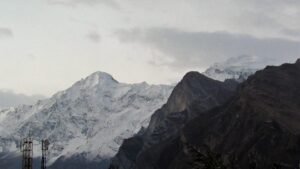
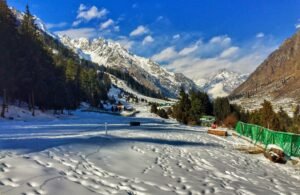
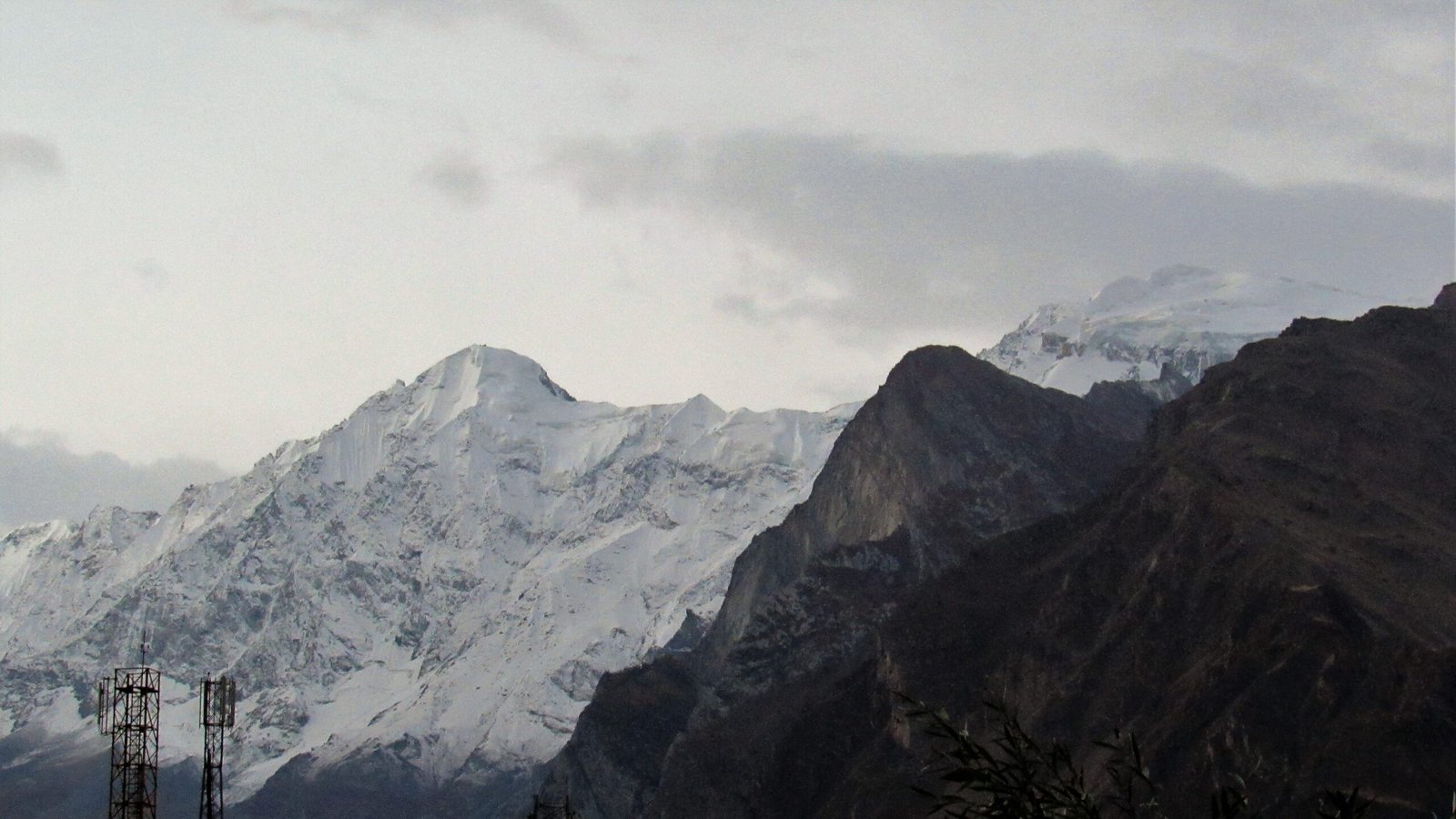
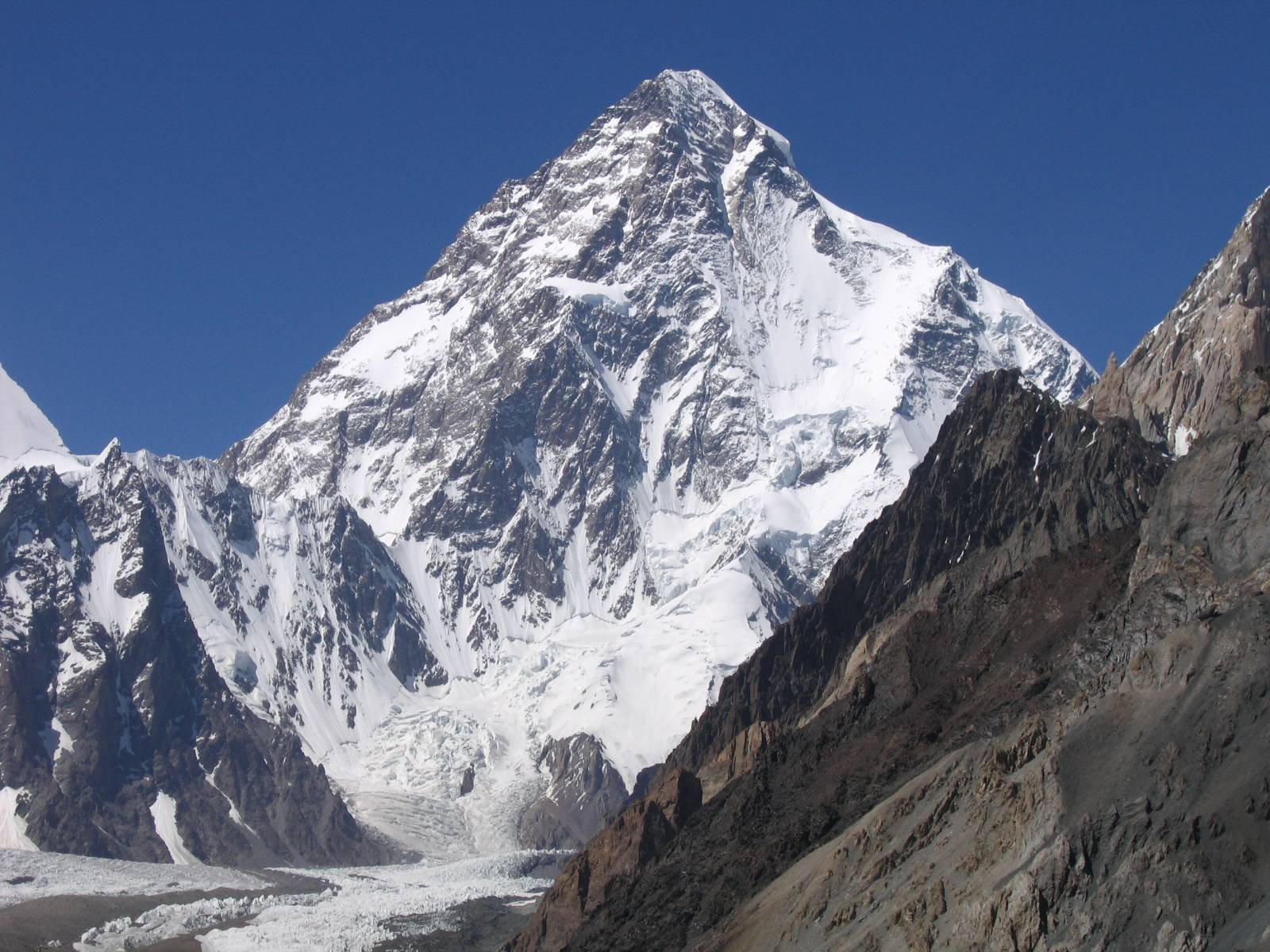
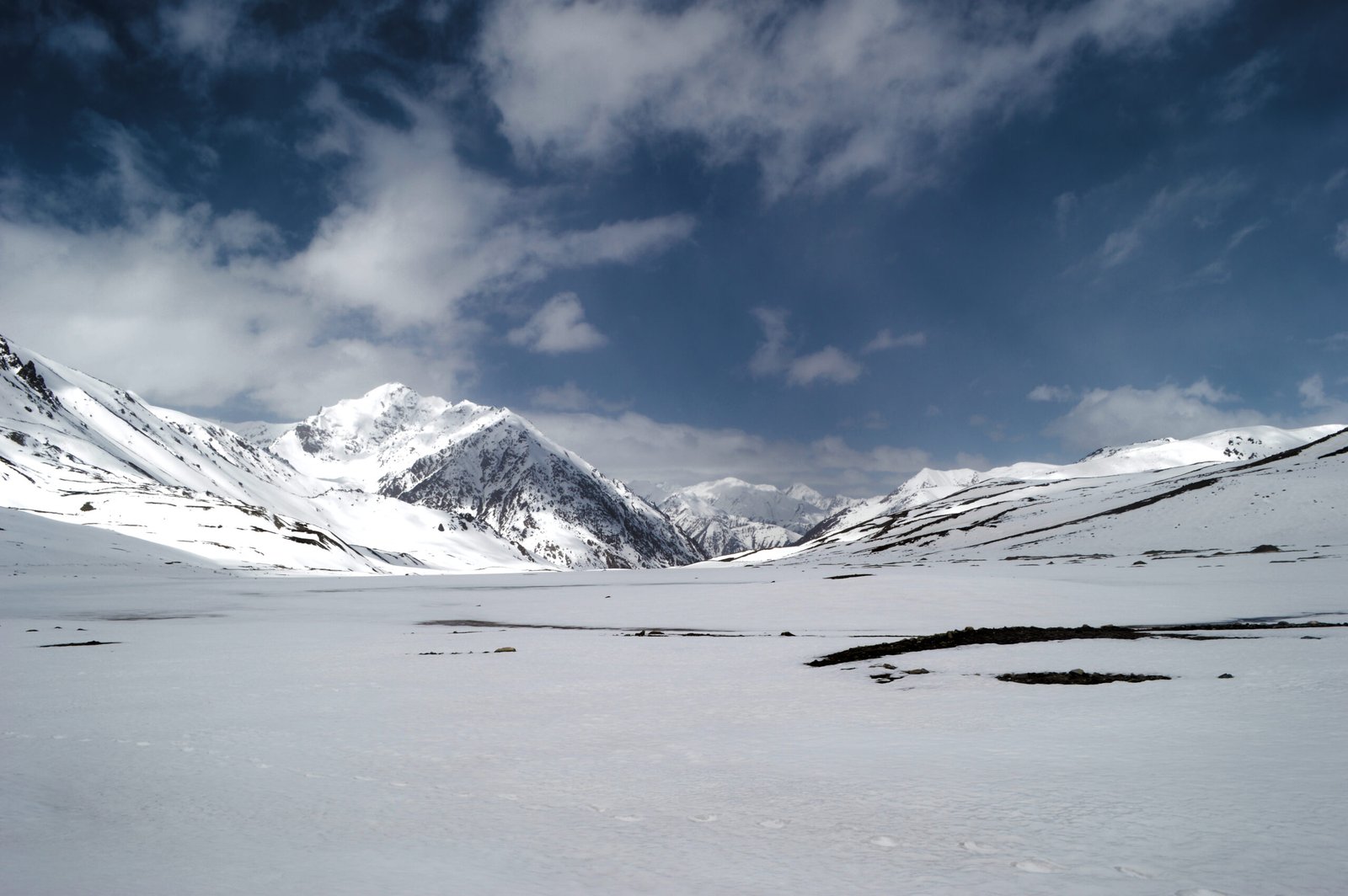
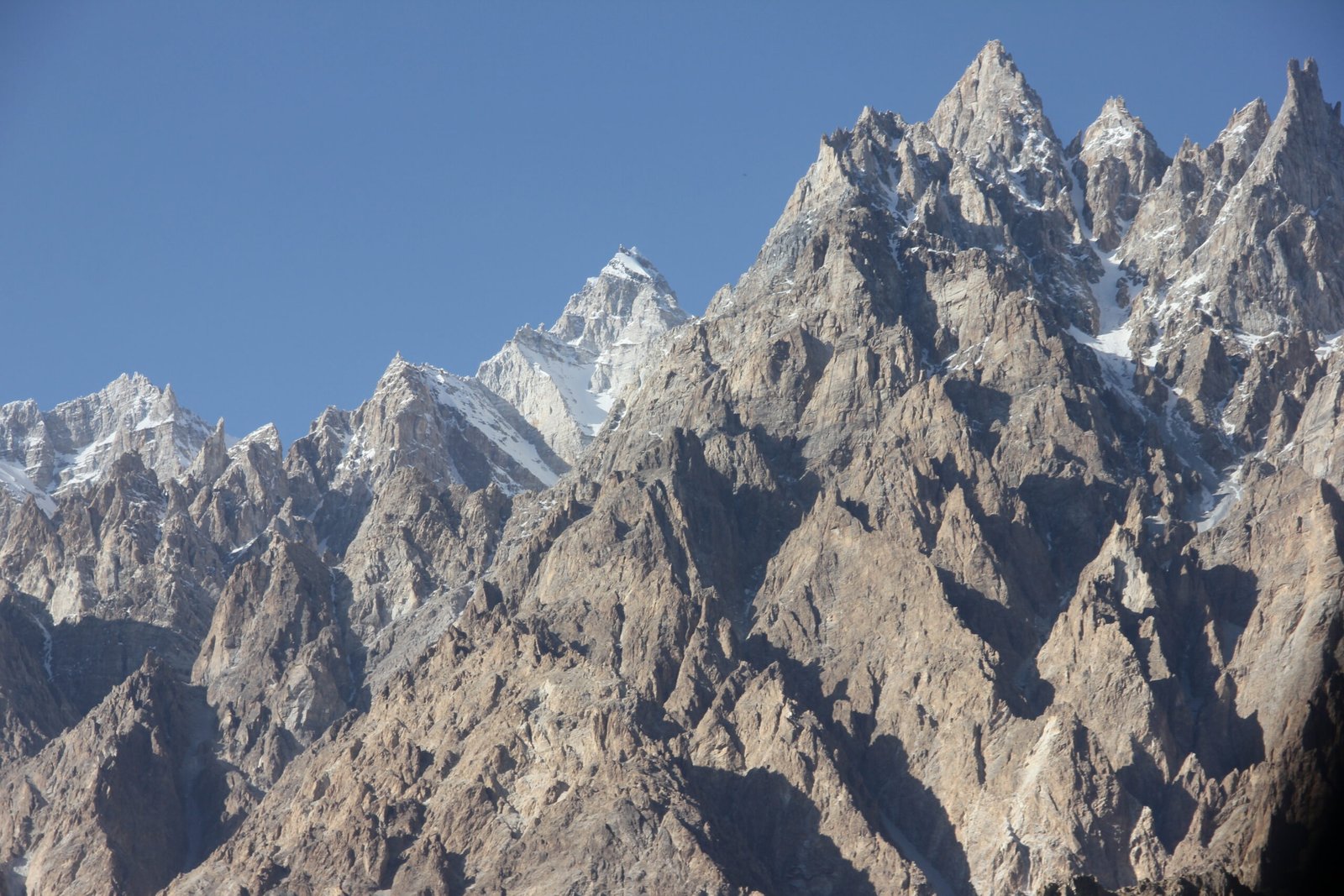
January days are short but the light is the clearest of the year. Expect about 10 hours of daylight, a little longer by the end of the month, with sharp low sun, bare poplars, and Rakaposhi, Ultar Sar and the Passu Cones standing out against clear winter skies. Snow usually arrives in the upper valleys first and settles over Karimabad and the lower villages by December, so by January the valley is white.
What is open in Hunza in January?
Karimabad stays open and functional all year, and January is no exception. The bazaar operates, guesthouses that stay open through winter serve guests, and local life carries on. Both forts stay open through winter, and the fort courtyards under snow are some of the best photographs in the valley. The viewpoints still work, including the Eagle’s Nest viewpoint above Duikar for sunrise and sunset, and the short walks around Karimabad and Altit village stay possible in good weather.
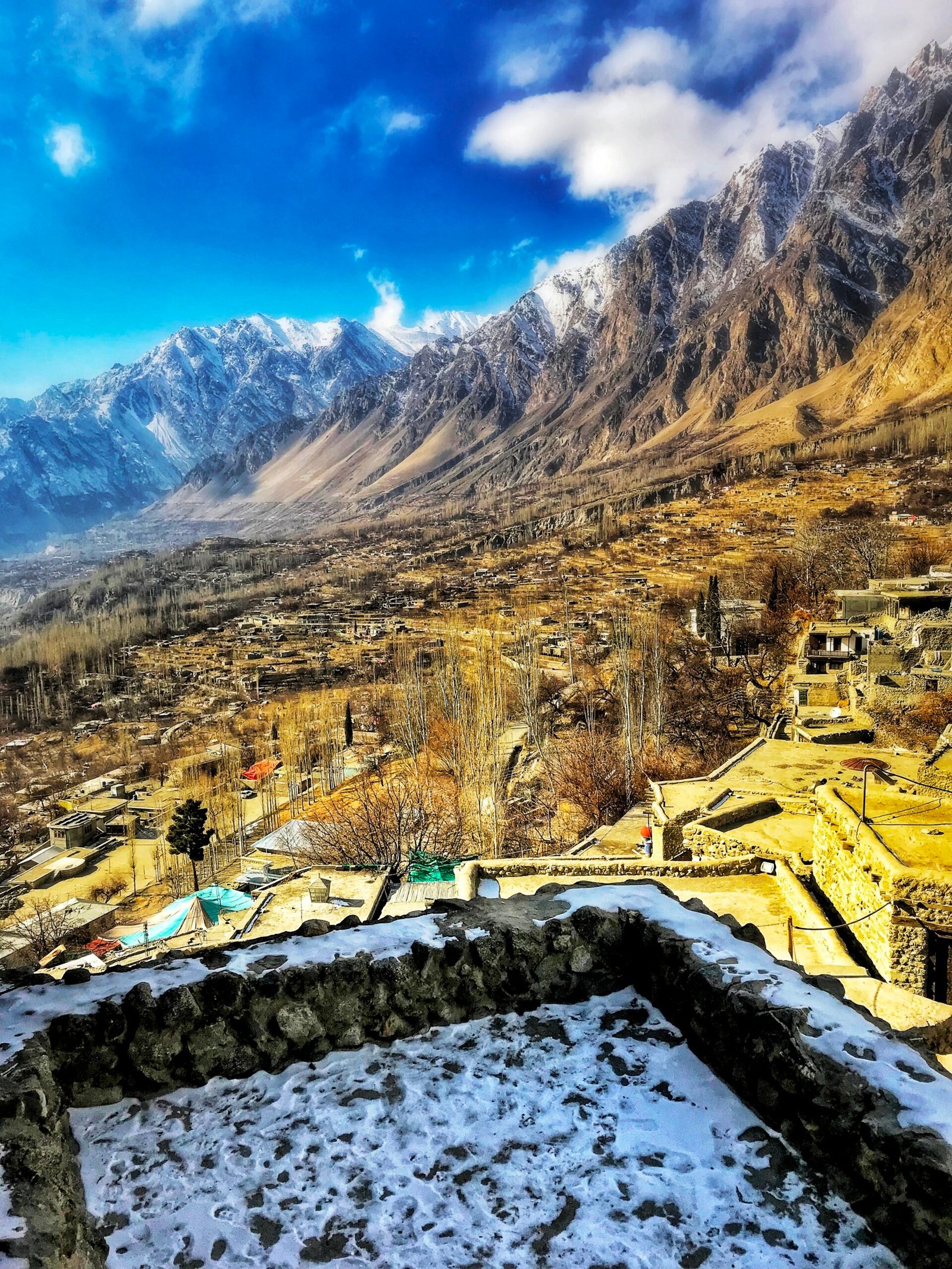
What January adds is quiet. With the crowds gone, you share viewpoints with locals rather than tour buses, and the valley belongs to the people who live there. Hotel prices run about 40 to 50 percent cheaper than in peak season, which is the practical reward for travelling in the coldest month. Our Hunza Valley in Winter guide has the full open and closed picture, and our Karimabad guide has the full story of the old capital.
What is closed in Hunza in January?
The high country is closed. Deosai is closed under snow from November to May. The jeep track to Fairy Meadows is snow closed from late October to April or May, and winter there means guided expeditions only, not independent trips. The high treks, K2 Base Camp, Rush Lake and Snow Lake, are closed by snow from about October to May.
Babusar Pass is closed. It closed on 11 October 2026, and reopening is expected about June 2027, so the Karakoram Highway is the only road route in and out of Hunza in January. Khunjerab Pass needs care in how it is described. It is officially open year round for trade since the December 2024 agreement, formally inaugurated on 22 April 2025, but tourist trips there are unreliable in winter, so do not plan a January trip around reaching the pass. Treat it as a trade crossing in January, not a sightseeing day trip. The jeep track to Fairy Meadows is snow closed from late October to April or May, and winter there means guided expeditions only, as our Fairy Meadows in Winter guide explains.
| Place or route | January status |
|---|---|
| Karimabad and Altit village | Open, functional all year |
| Baltit Fort and Altit Fort | Open through winter |
| Attabad Lake and Passu | Reachable by road, weather permitting |
| Deosai plateau | Closed November to May |
| Fairy Meadows jeep track | Snow closed, guided expeditions only |
| K2 Base Camp, Rush Lake, Snow Lake | Closed by snow |
| Babusar Pass | Closed since 11 October 2026, reopening about June 2027 |
| Khunjerab Pass | Open for trade, tourist trips unreliable in winter |
Which lakes freeze in January?
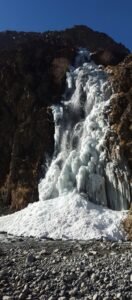
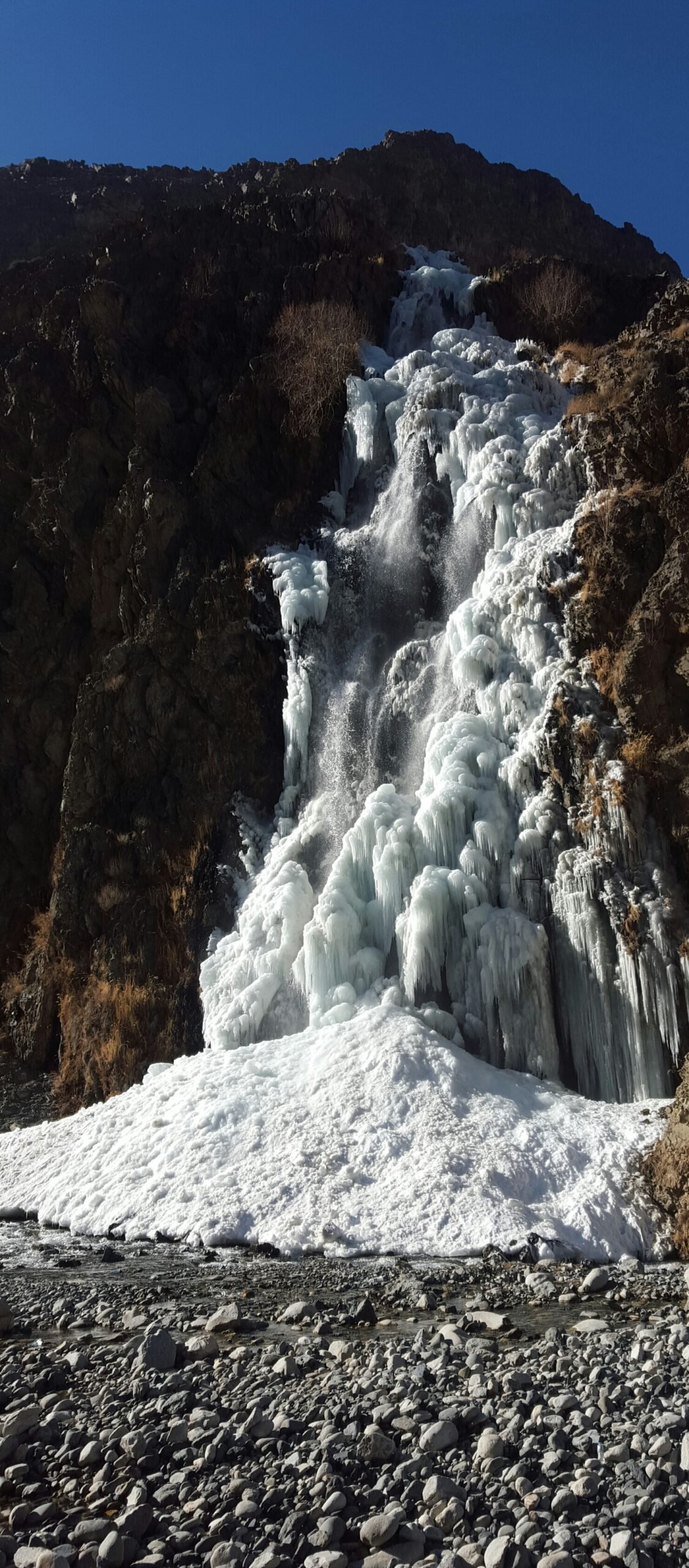
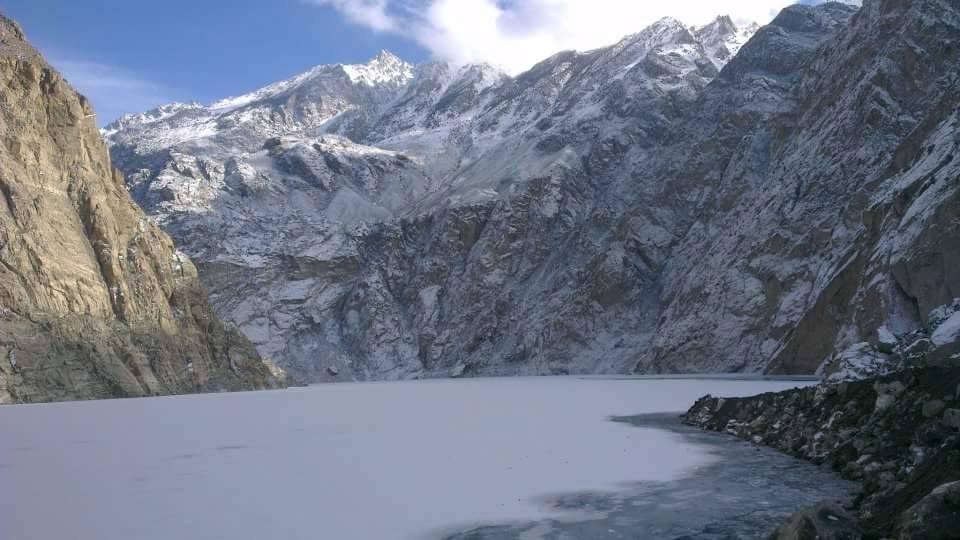
January is the best month for frozen lakes in Gilgit-Baltistan, and Hunza is the centre of it. Borith Lake and the small lakes freeze well in the deep cold, and the frozen lake surfaces are at their most reliable in January and February. But not every lake freezes the same way, and the distinction matters for safety.
Attabad Lake only partly freezes, never frozen solid. The lake is long and deep, and even in the coldest weeks only stretches of it freeze, while open water stays visible elsewhere. Never walk on Attabad Lake. The frozen stretches look solid in photographs, and they are not.
Khalti Lake in Ghizer freezes solid, and it is the lake with a real winter use. It hosts the Khalti Ice Hockey Festival each January, a Gilgit-Baltistan Tourism Department calendar event, and it is the lake where skating happens. Khalti sits at about 2,217 metres, about 110 kilometres from Gilgit via Gahkuch and Gupis, and it is about 30 to 70 feet deep, not shallow. Our Frozen Lakes of Gilgit-Baltistan in Winter guide has the per lake windows for Attabad, Khalti, Borith, Satpara, Phander and Lower Kachura, and our Khalti Lake guide has the festival and the skating detail.
Satpara Lake near Skardu freezes only partly, and it is a drinking water reservoir with no verified organised skating, so see it, do not walk on it. Lower Kachura varies by year. Sheosar Lake is out entirely, because Deosai is closed from November to May. The rule for every frozen lake in January is the same. Check ice conditions locally on the day, never trust a photograph, and never step onto ice you have not had confirmed by someone local.
Can you see a snow leopard in January?
January sits inside the snow leopard season, which runs from mid November to early March, when the cats follow ibex down toward the valleys. The tracking happens in the lower Gojal valleys, around Khyber Village, Misgar and Koksar, not at the closed high passes. Pakistan has only about 155 to 167 snow leopards, and about 80 percent of them live in Gilgit-Baltistan, according to the Snow Leopard Foundation census reported by Dawn in October 2026.
Be honest about the odds. A sighting is never guaranteed, and the realistic odds are roughly a coin flip across a 7 to 9 day tracking trip. A single day in Gojal is a valley visit, not a tracking trip. Book through a local operator, dress for long cold waits at altitude, and treat any sighting as a bonus. Tracking helps local villages, because the guiding and hosting income gives the cats a value alive. Our Snow Leopard Watching in Gilgit-Baltistan guide has the full season, the valleys, the odds and the ethics.
Can you ski in January?
You cannot ski in Hunza itself, but Naltar Valley, about 40 kilometres from Gilgit, is the real ski destination in Gilgit-Baltistan. The Pakistan Air Force operates a working ski slope with a chairlift at Naltar Bala, at about 2,950 metres, used for national competitions and training, with basic equipment rental, a ski school and a base lodge. It is a real but modest facility, not a European resort, so equipment is limited and best arranged in advance through an operator.
The ski season runs from December to March, snow permitting, and January and February are the genuine ski months. The Winter Sports Festival, organised with the Pakistan Air Force and the Winter Sports Federation of Pakistan, usually runs in late January or early February, with skiing, snowboarding and ice hockey competitions. Confirm festival dates locally, because they move with snow and the competition calendar. A Naltar ski day trip from Gilgit is the most practical way to ski in January. Stay in Gilgit, drive up in the morning, ski the day, and return the same evening. Our Naltar Valley guide has the road, the lakes and the winter access, and our Naltar ski guide has the slope detail.
Malam Jabba in Swat is the other lift served ski area in Pakistan, but it is outside Gilgit-Baltistan, so Naltar is the ski trip that belongs in a Hunza January plan. Our Skiing in Pakistan guide compares both resorts.
Is there a festival in Hunza in January?
There is no major festival in Hunza in January, and no Salgirah. Salgirah now falls on 12 October, not 13 December. The 13th of December is a remembrance of the late Aga Khan IV, who was born on 13 December 1936 and died on 4 February 2025, and there is no public lights festival in December. Chawmos, the Kalash winter festival, runs about 7 to 22 December and ends before January, as our Chawmos Festival guide explains. So January in Hunza is a quiet month, and that is the point of it.
January does have winter sport. The Khalti Ice Hockey Festival takes place each January at Khalti Lake in Ghizer, and winter festivals with ice hockey and snow activities are held in mid to late January at venues that change from year to year, including Skardu, Ghizer, Astore, Hunza and Naltar. Dates depend on snow and ice, so confirm locally before travelling for any of them. The Naltar winter sports festival, usually late January or early February, is the most fixed of the January events.
How do you get to Hunza in January?
Fly or drive, and in January both need a buffer day. The fastest route is the PIA flight from Islamabad to Gilgit, about 45 minutes in the air. In winter these flights depend on visual weather clearance and are often delayed, sometimes for several days, so never book a tight international connection on the back of a Gilgit flight in winter. From Gilgit, Karimabad is about 100 kilometres up the Karakoram Highway, normally a drive of two to three hours.
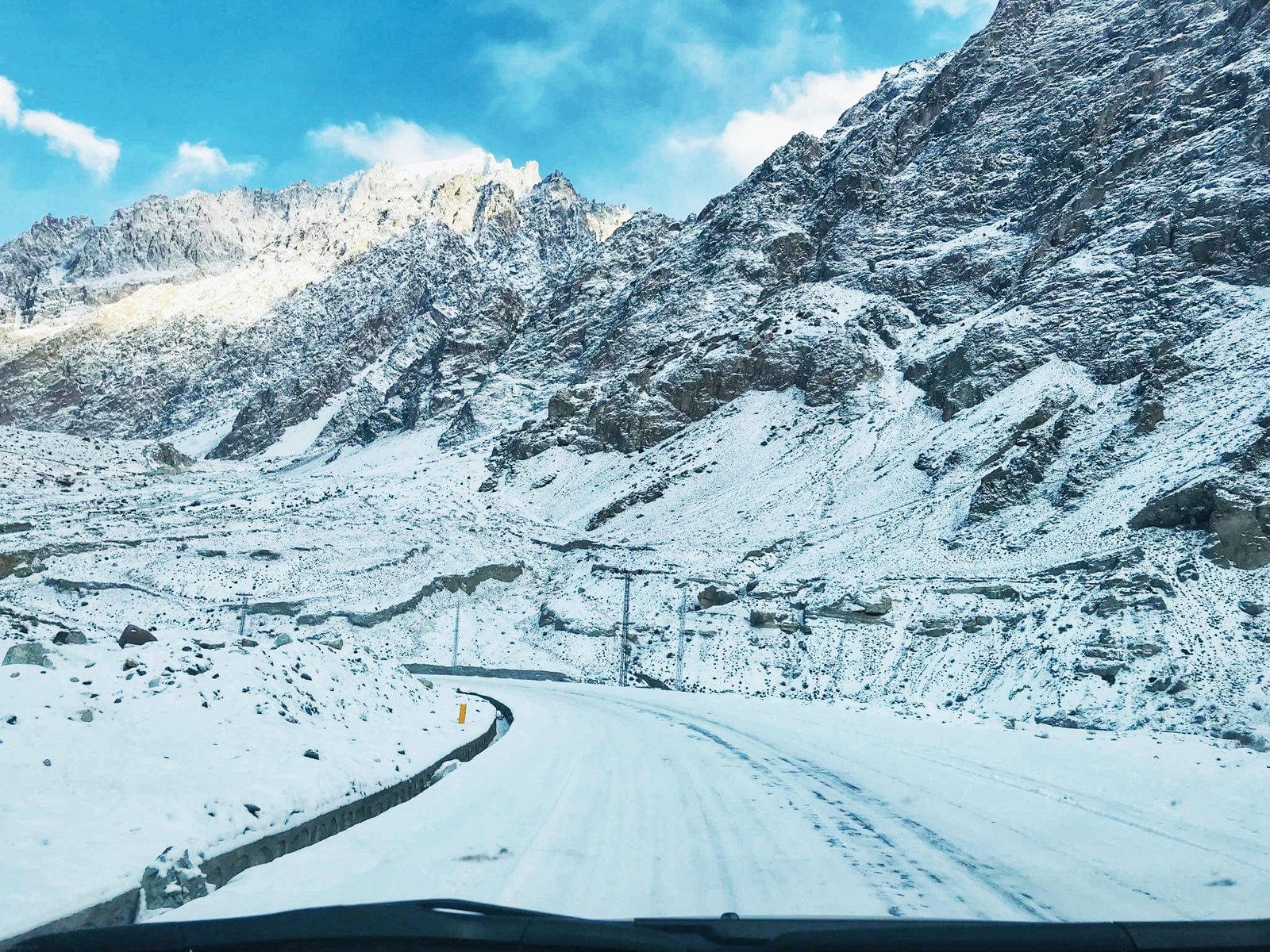
The road alternative is the overnight NATCO bus from Islamabad, about 16 to 18 hours to Gilgit, for about PKR 5,500, with evening departures from Pirwadhai terminal. The Karakoram Highway stays open in January, weather permitting, but winter driving on it is a different matter from summer. Expect ice in shaded sections, especially in the narrow stretches between Gilgit and Karimabad, and occasional closures after heavy snowfall. Babusar Pass is closed, so the highway is the only road in and out. Our How to Get to Hunza Valley guide compares the flights, the road and the bus, and our Gilgit in Winter guide has the January road and flight picture from the Gilgit side.
Where should you stay in January?
Stay in Karimabad or Aliabad, and confirm heating before you book. Not every hotel and guesthouse stays open through winter, so use a winter open list rather than a summer list. Our Hotels Open in Winter in Gilgit-Baltistan guide names the properties that stay open across Gilgit-Baltistan, and our Best Hotels in Hunza Valley guide covers Karimabad, Aliabad and Passu. For the wider picture on where to stay, see our Where to Stay in Gilgit-Baltistan guide. Ask four questions before booking anywhere in January. Is the hotel open in January, and is that confirmed for this winter? What heating does the room have, and does it run through the night? Is there hot water in the morning? And what happens to power and heating during a power cut? A hotel with a generator or solar backup is worth more in January than a hotel with a better view.
Prices run about 40 to 50 percent cheaper than in peak season, and January is the cheapest month of the year. That discount is the reward for the cold, and it makes a longer stay affordable. Book directly with the property or through a local operator, and reconfirm a day before arrival, because winter opening plans can change with the weather.
What about power cuts in January?
Expect them. Power cuts are part of daily life in Gilgit-Baltistan in winter, and January is the hardest month. Hydropower generation falls to about 157MW from 211.6MW after the floods since June, while summer demand runs to 285MW, and Gilgit city has about 70MW installed but only about 33MW generated in winter, according to the Gilgit-Baltistan Water and Power Department figures cited by Dawn in November 2026. Rooftop solar of 18MW on 499 government buildings was due by December 2026, and a regional grid linking Gilgit, Hunza, Astore and Skardu was approved by ECNEC in 2023, but neither changes a January night yet.
The practical answer is to carry your own power. Keep a charged power bank for your phone and camera, charge everything whenever power is on, and carry a headlamp. A power bank is the one piece of kit that matters every day in a Hunza January. We use the Anker PowerCore 10000, which is light enough for a day bag and charges a phone several times over. You can find it here: https://www.amazon.com/dp/B00X5RV14Y?tag=haical0e-20
Disclosure: As an Amazon Associate, we earn from qualifying purchases made through links on this page, at no extra cost to you.
Our Winter Power Cuts guide has the full figures and the traveller advice.
What should you pack for January?
Pack for deep cold, dry air and long nights, and use a layering system rather than one heavy coat. A thermal base layer, a fleece or down mid layer, and a windproof and waterproof outer shell will carry you through a January day in Karimabad, with a warm hat, gloves, a neck gaiter and insulated, waterproof boots with good grip for ice. Sunglasses matter in January, because the low sun on snow is bright, and lip balm and moisturiser matter too, because the air is very dry.
Carry a power bank and a headlamp for the power cuts, and keep batteries and your phone in an inside pocket, because the cold drains them fast. Bring any medicines you need, because pharmacies in Karimabad carry a limited range in winter. Our What to Pack for Northern Pakistan guide has the full layering system, and our Altitude Sickness guide covers the acclimatisation and the symptoms to watch for at Karimabad and above.
A realistic 4 day January itinerary
January rewards a slow plan with buffer time. This is a realistic four day plan, not a packed one.
Day 1, arrive in Karimabad. Fly to Gilgit or arrive by road, then drive up the Karakoram Highway to Karimabad. Settle in, check the heating and the hot water, walk the bazaar, and watch the sunset from the Eagle’s Nest viewpoint above Duikar if the weather is clear. Keep the evening free, because the flight or the road can run late.
Day 2, Karimabad and the forts. Visit Baltit Fort and Altit Fort in the morning, when the light is sharp and the courtyards are quiet under snow. Walk Altit village in the afternoon, and spend the evening in Karimabad, where the bazaar stays open and local life carries on.
Day 3, Attabad Lake, Borith and Passu. Drive up the Karakoram Highway to Attabad Lake, then on to Borith Lake and Passu. See the frozen lakes, photograph the Passu Cones, and remember that Attabad only partly freezes and is never safe to walk on. For the Passu area in detail, see our Passu and Gojal guide. Return to Karimabad for the night.
Day 4, Naltar ski day trip or Gojal. From Gilgit, drive to Naltar for a ski day at the Pakistan Air Force slope, and return the same evening. Or spend the day in Gojal, around Ghulkin and Passu, for the winter valley at its quietest. Do not try to fit both into one day. If you are tracking snow leopards, this is a different trip entirely, and it needs 7 to 9 days in lower Gojal, not a day.
Hunza in January vs December vs February
| Month | Weather | Best for | Watch out for |
|---|---|---|---|
| December | Snow settles, about 4C days in Aliabad | First snow, quiet valleys, Chawmos ends 22 December | No major festival, shortest days |
| January | Coldest, about 1.4C days, minus 7.3C nights | Frozen lakes at their best, snow leopards, Naltar skiing | Deepest cold, power cuts at their worst |
| February | Still cold, about 4.2C days, minus 5.2C nights | Frozen lakes, skiing, longer days | Ramadan expected from about 8 February 2027 |
December is the gentler start to winter, and our Hunza in December guide covers it. February is nearly as cold as January, with longer days and the same frozen lakes, and Ramadan is expected from about 8 February 2027, depending on moon sighting, which changes eating and opening hours. March brings Navroz on 21 March. January is the month for the cold itself, for the clearest light and the fewest people. For the wider seasonal picture, see our Best Time to Visit Hunza Valley guide.
Should you book summer 2027 expeditions in January?
Yes, if you are planning a summer expedition, January is when to book it. The 2027 season opens while the mountains are still snowbound, and the fixed departures are already published. K2 expedition departures for 2027 start on 20 June, with 50 day programmes from Islamabad, and K2 Base Camp treks run 21 day departures from 22 June 2027. Prices are operator prices and change, so confirm directly before paying anything. Our K2 Base Camp Trek Cost guide and our K2 Base Camp Trek Itinerary have the route, the costs and the planning detail. Book the summer expedition in January, travel the winter valley in January, and keep the two trips separate in your head. One is a booking window, the other is a journey.
Is January a good time to visit Hunza?
January is a good time to visit Hunza if you want the valley at its quietest, and a bad time if you want it easy. It suits photographers, return visitors, snow leopard trackers and skiers who do not mind the cold. It does not suit trekkers, tight schedules, or anyone who needs reliable heating and electricity. The high treks are closed, the passes are closed, and the power cuts are real.
If you pack for deep cold, keep your plans flexible, and build in a buffer day, January gives you Hunza without the crowds, at the lowest prices of the year, under the clearest light of the winter. That is the trade, and for the right traveller it is a good one.
January is the coldest month in Hunza. Aliabad averages about 1.4C by day and minus 7.3C at night, and Karimabad, higher at about 2,500 metres, runs colder after dark. Upper Hunza and Gojal are colder still. Expect bright, dry days with very cold nights, and pack for temperatures well below freezing every night.
Yes, January is the best month for frozen lakes, but not every lake freezes the same way. Borith and the small lakes freeze well, while Attabad Lake only partly freezes and is never safe to walk on. Khalti Lake in Ghizer freezes solid for skating and the January ice hockey festival. Always check ice conditions locally first.
January sits inside the snow leopard season, mid November to early March, when the cats follow ibex down toward the valleys of lower Gojal. Sightings are never guaranteed, and the odds are roughly a coin flip across a 7 to 9 day trip. Book through a local operator, dress for long cold waits, and treat any sighting as a bonus.
You cannot ski in Hunza itself, but Naltar Valley, about 40 kilometres from Gilgit, has the ski slope, run by the Pakistan Air Force, with a chairlift, a ski school and rental. The season runs December to March when snow allows, and January and February are the ski months. The winter sports festival falls in late January or early February.
Yes, the Karakoram Highway to Hunza stays open in January, weather permitting, but winter driving is a different matter, with ice in shaded sections and occasional closures after heavy snow. Babusar Pass is closed, so the highway is the only road in. Flights to Gilgit are weather dependent and often delayed, so build in a buffer day.
January suits photographers, return visitors, snow leopard trackers and skiers who want the valley at its quietest, with the clearest winter light and the lowest prices. It does not suit trekkers, tight schedules or anyone who needs reliable heating and power. If you pack for deep cold and keep your plans flexible, January gives you Hunza without the crowds.