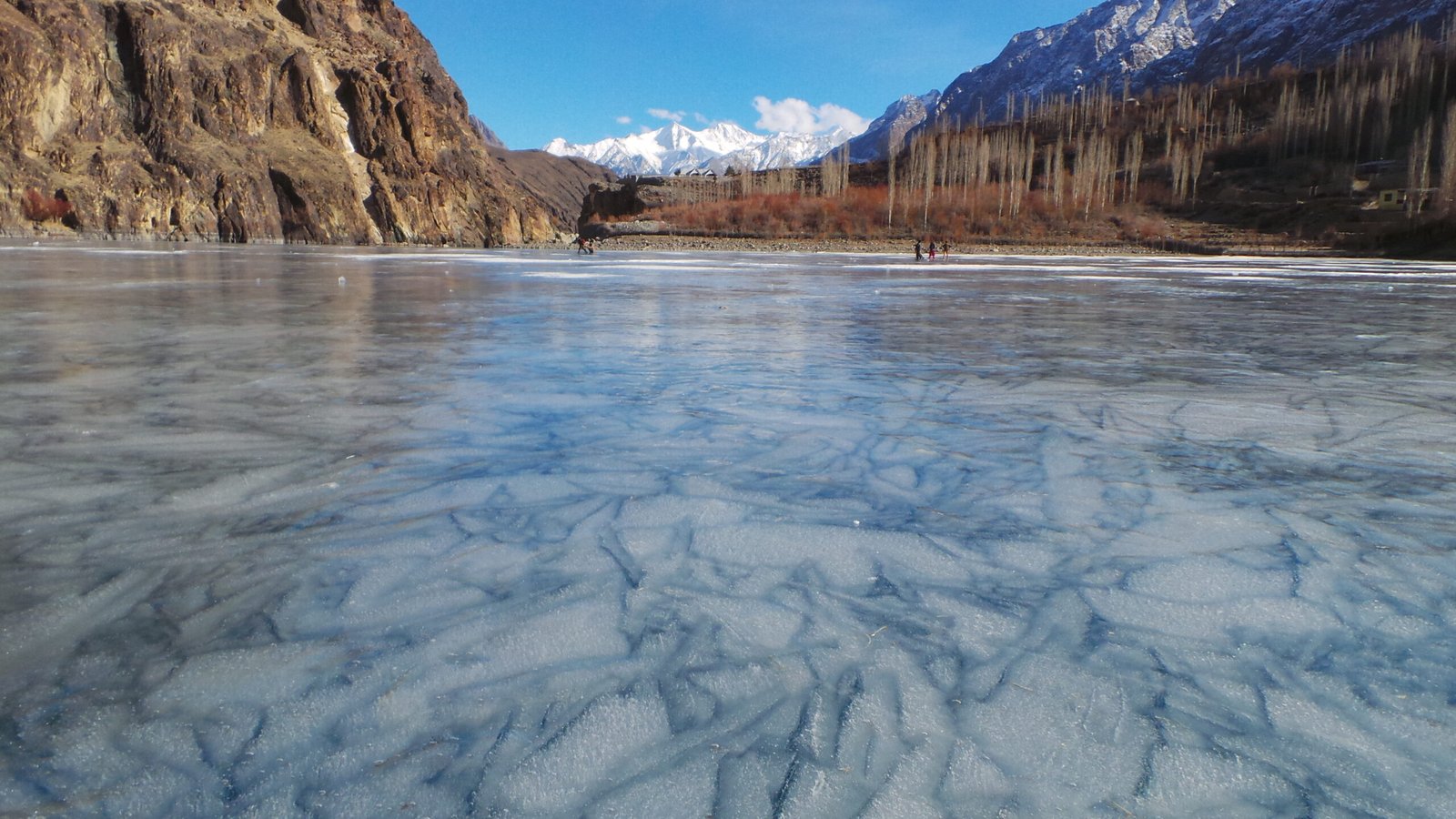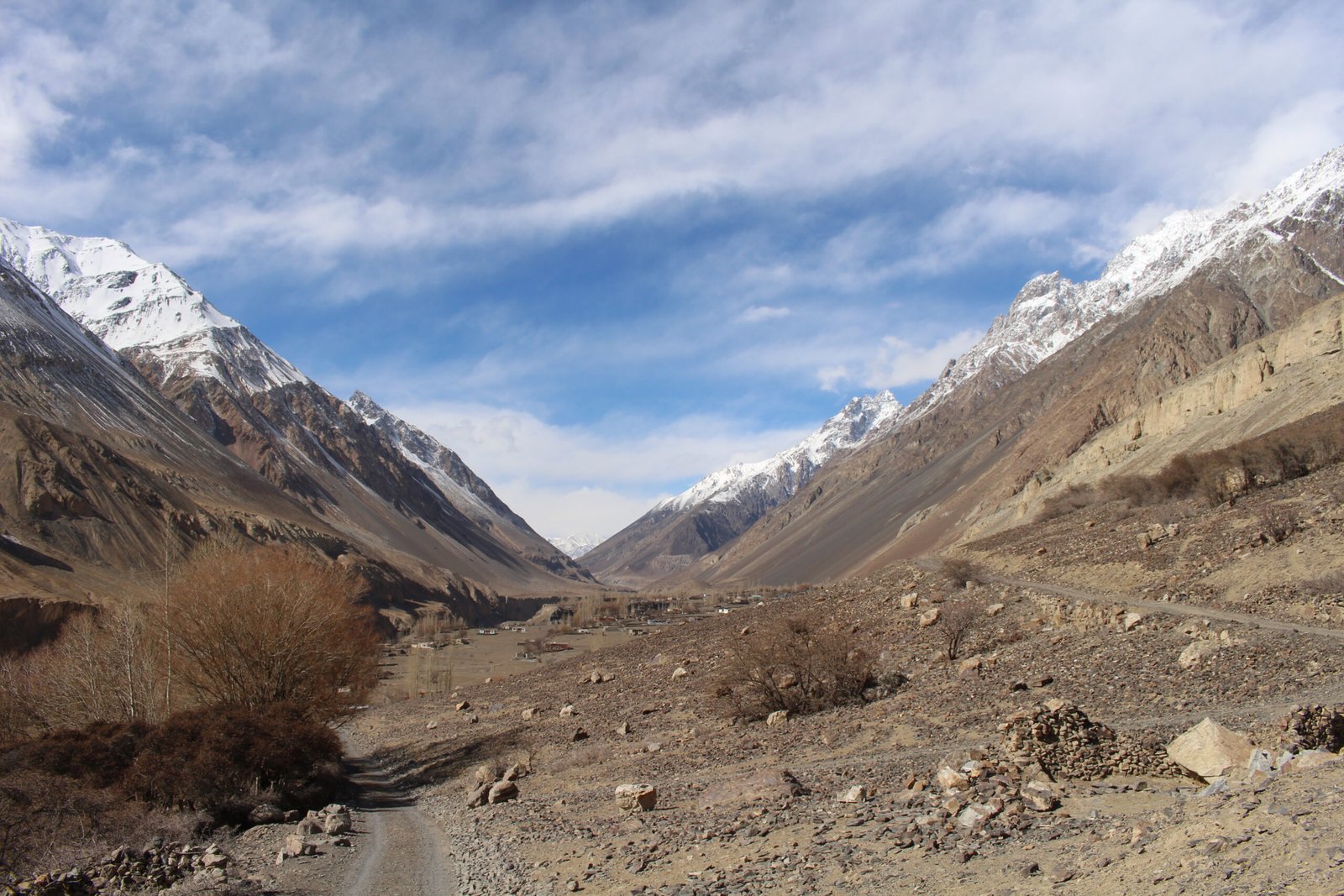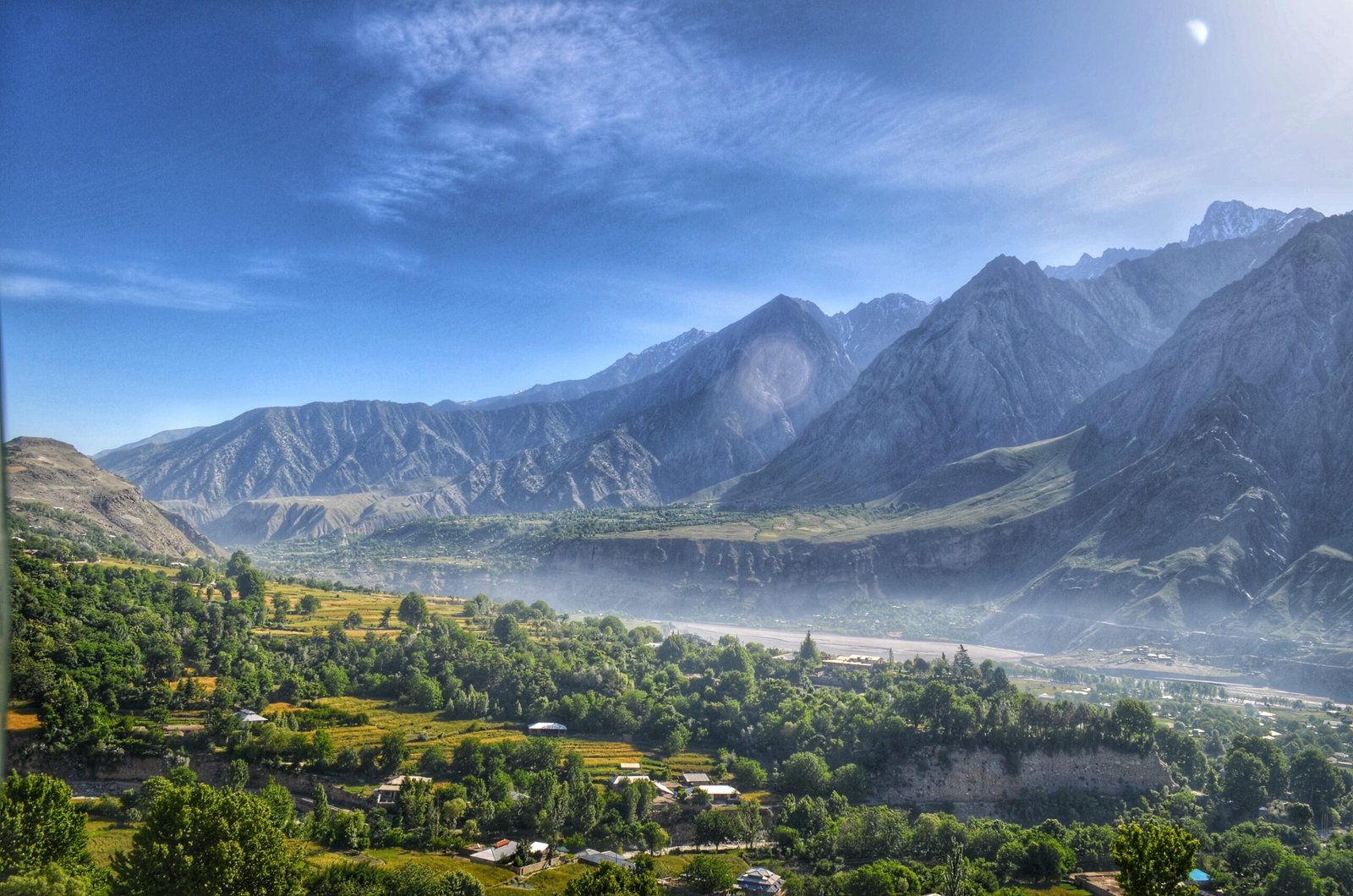
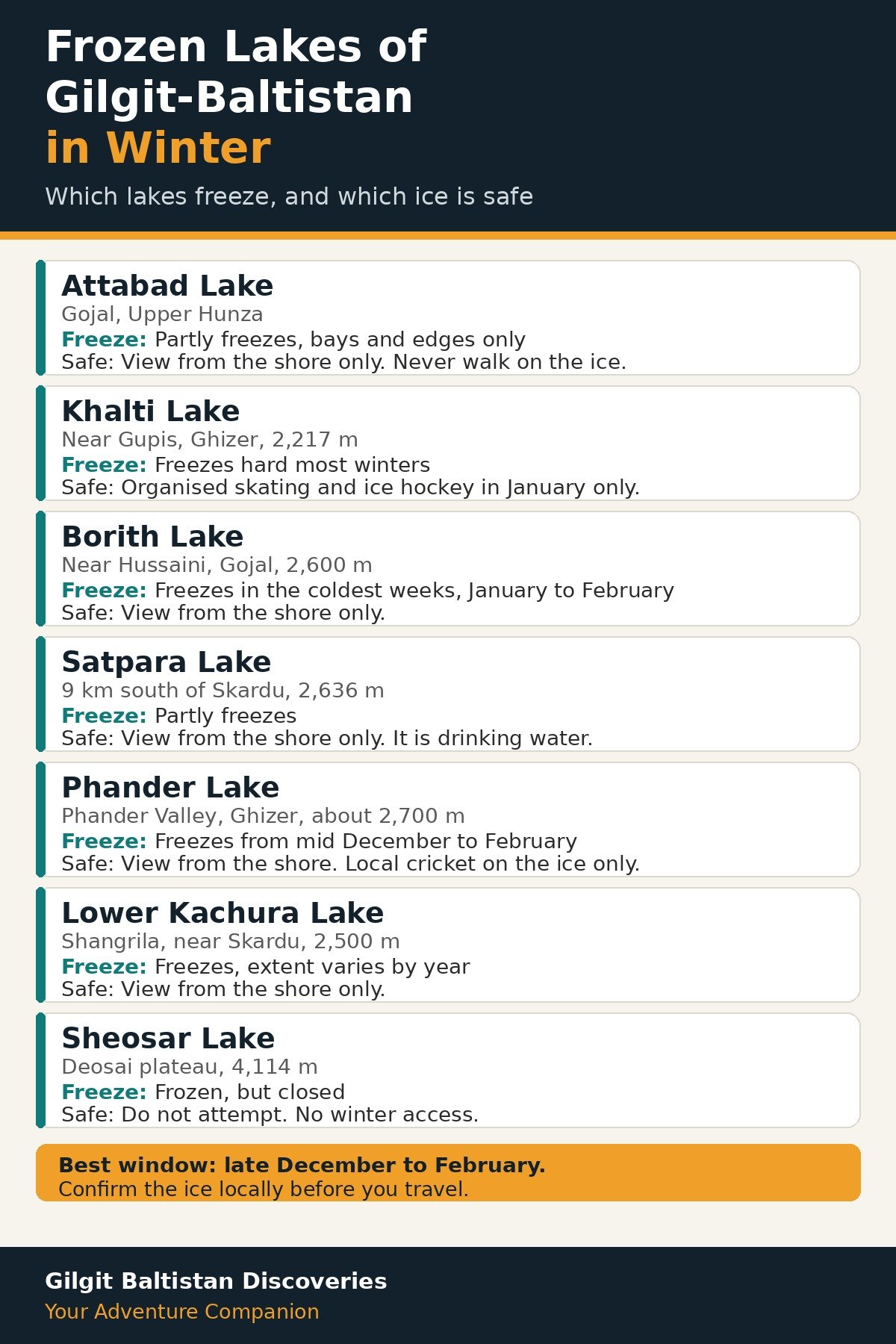
Six lakes freeze in Gilgit-Baltistan in winter, but only one, Khalti Lake in Ghizer, has organised skating and ice hockey. Attabad Lake partly freezes and is never safe to walk on. Satpara Lake partly freezes and is Skardu’s drinking water, so stay off it. Borith, Phander and Lower Kachura lakes freeze in the coldest weeks and are for viewing, not skating. Sheosar Lake in Deosai is frozen but unreachable, because Deosai closes from November to May. The best window is late December to February, and the freeze varies every year, so confirm locally before you travel.
Which lakes in Gilgit-Baltistan freeze in winter?
Every lake below freezes in some form, but no two freeze the same way. A shallow lake at 2,217 metres and a 21 kilometre lake that is 109 metres deep do not behave alike, and the guides that lump them together get the safety advice wrong. Here is the lake by lake picture, with the freeze, the access and the safe activity for each one.
| Lake | Where | Winter freeze | Winter access | Safe activity |
|---|---|---|---|---|
| Attabad Lake | Gojal, Upper Hunza | Partly freezes, bays and edges only | Karakoram Highway, 30 to 40 minutes from Karimabad | View from the shore only, never walk on the ice |
| Khalti Lake | Near Gupis, Ghizer, 2,217 m | Freezes hard most winters | Gilgit to Gupis road, about 110 km from Gilgit | Organised skating and ice hockey in January only |
| Borith Lake | Near Hussaini, Gojal, 2,600 m | Freezes in the coldest weeks, usually January to February | Short drive or walk from Hussaini village | View from the shore only |
| Satpara Lake | 9 km south of Skardu, 2,636 m | Partly freezes | Short drive from Skardu town | View from the shore only, it is drinking water |
| Phander Lake | Phander Valley, Ghizer, about 2,700 m | Freezes from mid-December to February | About 184 km from Gilgit, 5 to 6 hours by road | View from the shore, local cricket on the ice only |
| Lower Kachura Lake (Shangrila) | Kachura, 20 to 25 km from Skardu, 2,500 m | Freezes, extent varies by year | Road from Skardu, resort runs limited capacity | View from the shore only |
| Sheosar Lake | Deosai plateau, 4,114 m | Frozen, but closed | No winter access | Do not attempt |
For the summer picture of the same lakes, see our Lakes of Gilgit-Baltistan overview.
Does Attabad Lake freeze in winter?
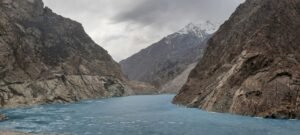
Partly, and only in the coldest winters. Attabad Lake formed on 4 January 2010, when a landslide dammed the Hunza River. Today it stretches for up to 21 km and is about 109 metres deep at its deepest point. A lake that big and that deep does not freeze solid. In deep winter, ice sheets creep over the bays and the edges, boats stop, and the basin goes quiet. The main body of water stays open or thinly iced.
Do not walk on Attabad’s ice. The ice thickness varies, the water below is deep and glacially cold, and nobody measures the ice for you. This is the single most important safety rule in this guide. A photograph on Wikimedia Commons taken in February, at the peak of the cold wave, shows the lake unfrozen, which tells you how unreliable the freeze is from year to year.
Boat rides generally run from April to November. In deep winter, boating and jet ski operators are not running. Go for the photographs, the snow-dusted cliffs and the silence, not for time on the water. Read our Hunza Valley in Winter guide for the full winter picture in the valley.
Where can you actually skate on a frozen lake?
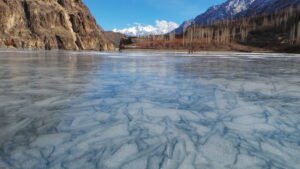
Khalti Lake, near Gupis in Ghizer, is the one place with organised skating and ice hockey. The lake sits at 2,217 metres, about 110 km from Gilgit on the road towards Shandur. It is shallow for a mountain lake, and it freezes hard most winters. The Gilgit-Baltistan Tourism Department lists the Khalti Ice Hockey Festival in January every year as an annual calendar event, and the lake becomes a playground for skating, ice hockey, football and cricket.
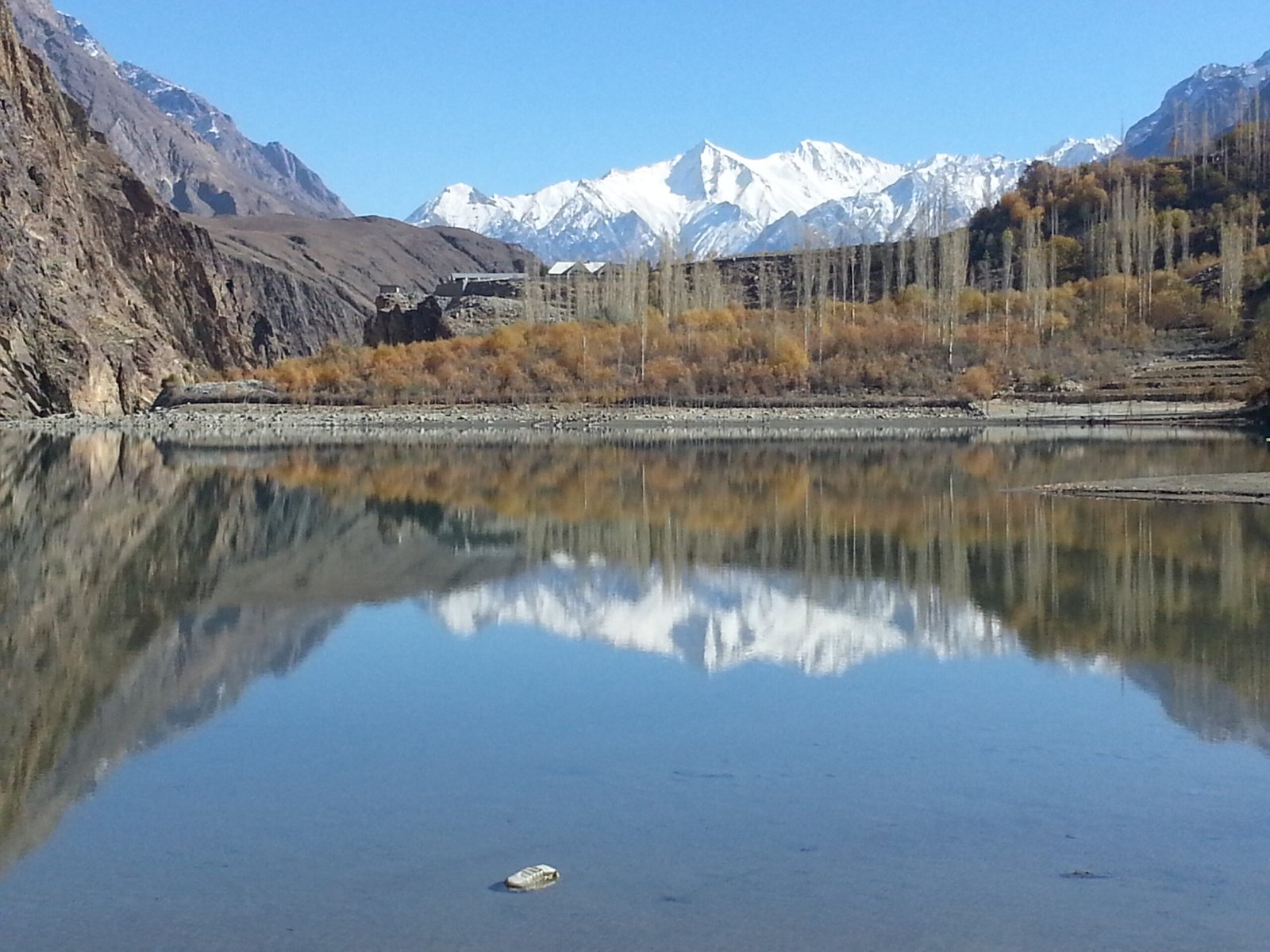
Go only for the organised gatherings, and only when locals confirm the ice. The freeze still varies with the weather and the river flow beneath the lake, and no visitor should test the ice alone. Ask in Gupis before you step on, and skate only where an event is running.
The second organised venue is in Hunza, not on a lake but on a frozen reservoir. The Karakoram Winterlude festival plays ice hockey and ice skating on a frozen reservoir near Altit, with championship games held in Ghulkin valley in Gojal. Like Khalti, it is an organised event with local people who know the ice, not an open invitation to skate anywhere.
For the wider winter sports picture, see our Naltar Valley Ski Guide and our Ice Skating in Gilgit-Baltistan guide.
Does Borith Lake freeze?
Yes, in the coldest weeks, usually January to February. Borith Lake sits at about 2,600 metres on a plateau above the Karakoram Highway, near Hussaini village in Gojal, between Gulmit and Passu. Its water is brackish and slightly salty, with no fish, and it is a resting place for migratory birds in spring and autumn.
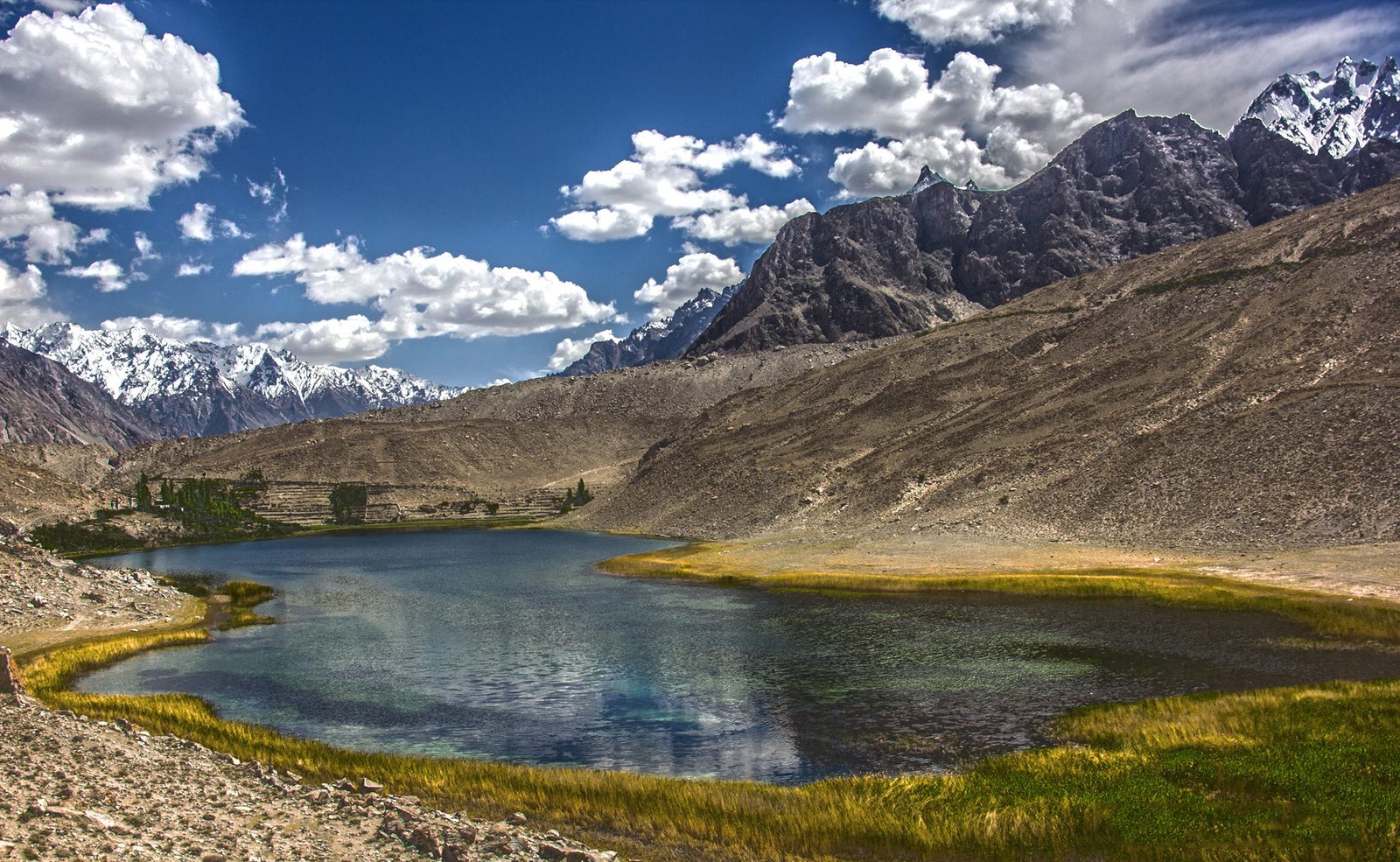
Travellers have reported the lake completely frozen in February, and other sources say it only partly freezes. The honest position is that the freeze varies by year, and the lake is for viewing, not skating. There is no organised skating at Borith, no one checks the ice, and the plateau is very cold with most guesthouses shut in winter. Go on a cold, clear day, walk the shore, photograph the Passu Cones and the glaciers, and do not step onto the ice.
Borith is a short drive or a walk from Hussaini village, and walkers often combine it with the trail to the Passu Glacier or the Hussaini Suspension Bridge. See our Passu and Gojal guide for the area.
Does Satpara Lake freeze?
Partly. Satpara Lake sits at 2,636 metres, about 9 km south of Skardu town, and it is Skardu’s drinking water supply, held back by a dam. In winter it partly freezes, with ice forming on the surface while open water remains. Winter temperatures at the lake run from about minus 12C to 0C, and the landscape is snow covered from November to March.
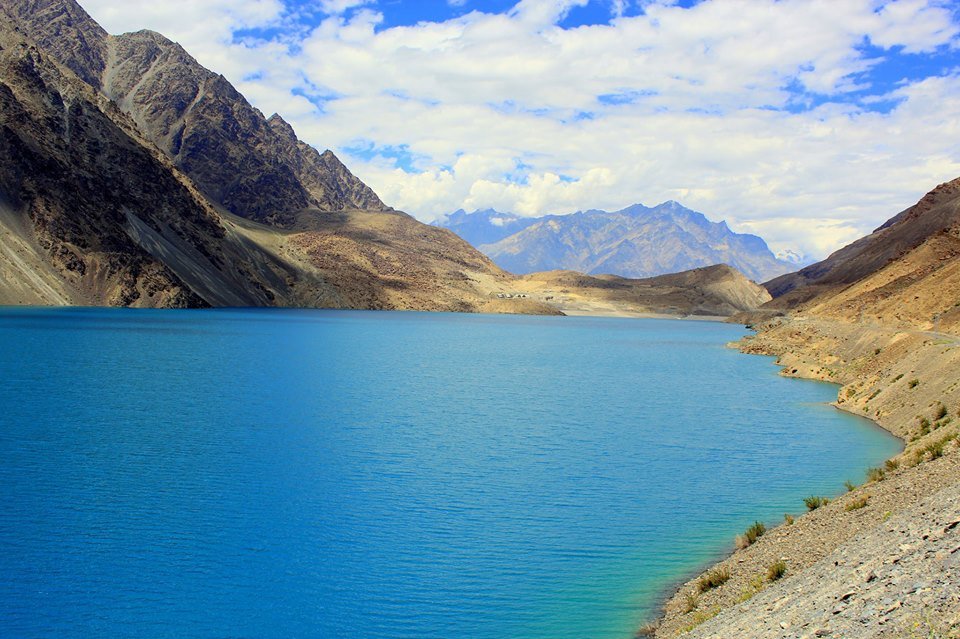
Do not walk on Satpara Lake. Two things make it different from Khalti. First, the freeze is partial, so the ice is not uniform. Second, it is a drinking water reservoir, not a playground, and there is no verified organised skating event there. Some tour pages sell “ice skating on frozen Satpara Lake” and describe it freezing into a thick, glass-like sheet. That is tour marketing, not a verified fact, and it contradicts the careful sources, which all say the lake partly freezes.
Go to look, not to skate. The frozen edges and the snow peaks around the lake are beautiful from the shore, and Skardu town is a short drive away. Read our Skardu in Winter guide before you plan the trip.
What about Phander Lake and Lower Kachura Lake?
Phander Lake freezes from mid-December to February. It sits in Phander Valley in Ghizer at about 2,700 metres, about 184 km from Gilgit, a 5 to 6 hour drive on the road towards Shandur Pass. The ice gets thick enough that local youth play cricket on it, and the lake is the centre of a quiet, snow-covered valley in winter. There is no organised skating for visitors, so the rule is the same as everywhere else: view from the shore, and step onto the ice only if local people are already playing on it and tell you it is safe. Winter in Phander is harsh, with limited access and few places open, so this is a trip for travellers who are prepared for real cold. See our Phander Valley guide.
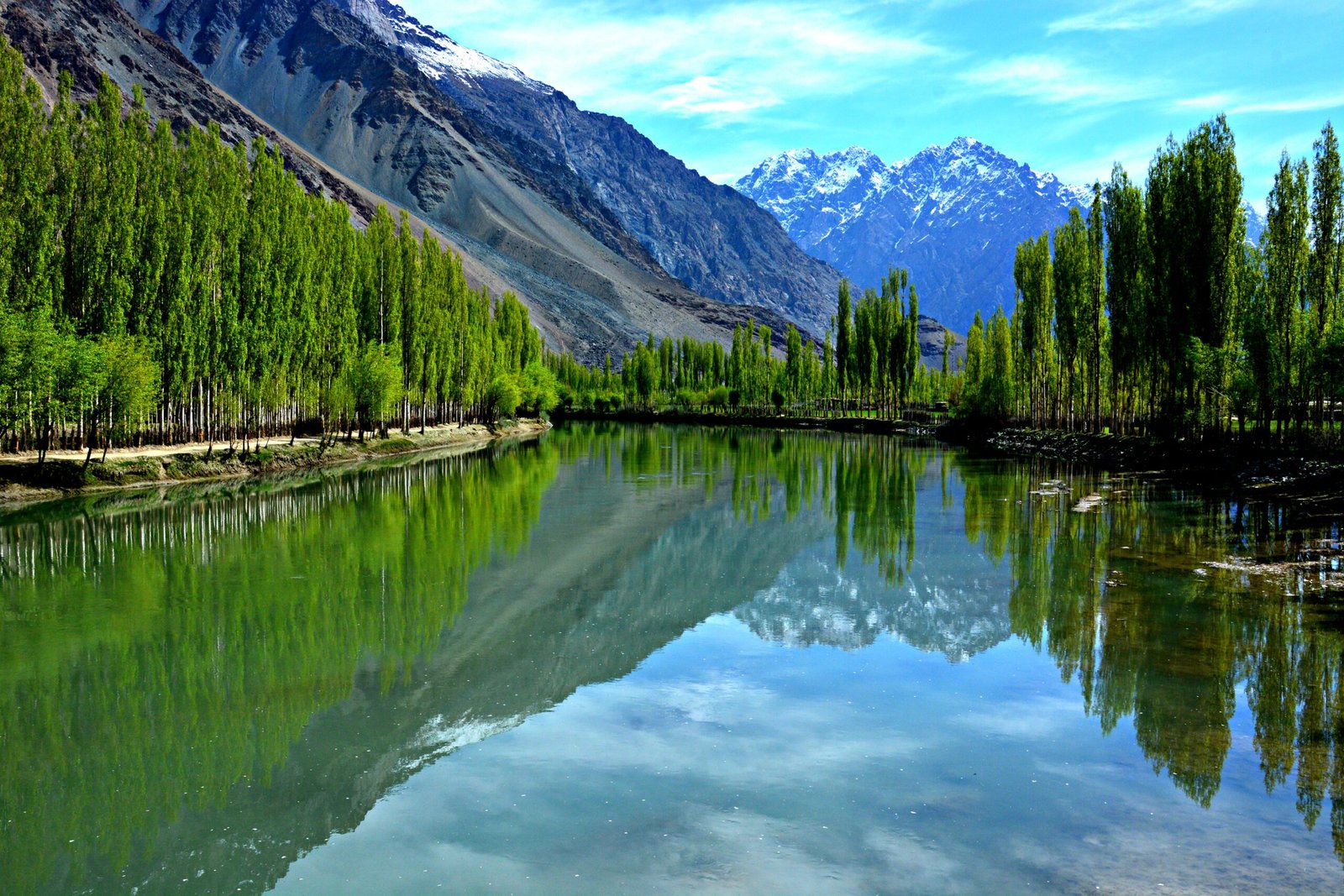
Lower Kachura Lake, also called Shangrila Lake, freezes in winter, but sources disagree on how much. Some say the surface freezes solid, others say it partly freezes. The lake sits at 2,500 metres, about 20 to 25 km from Skardu, and the Shangrila Resort runs with limited capacity in winter. Treat it as a viewing lake: go for the frozen surface and the snow pines, stay off the ice, and confirm with the resort whether the road is open before you drive out. This section has no photo by design, because no verified winter photo of the lake was used.
Which frozen lakes should you not try to visit?
Sheosar Lake, in Deosai National Park. It freezes, and it is beautiful, and you cannot reach it in winter. Deosai sits at about 4,114 metres and is closed under snow from November to May. The plateau is buried, the jeep roads are shut, and there is no winter access. Do not attempt it. Visit in summer instead, roughly mid-June to late October. See our Deosai in Winter guide and our Deosai National Park guide.
The same applies to Rush Lake, the high alpine lake above Hoper in Nagar. It freezes, but the trek to it is a 3 to 4 day summer trek, and the trail is snowbound in winter. It is not a winter destination.
How do you stay safe on a frozen lake?
Frozen water in the mountains is not a rink. These five rules cover every lake in this guide.
- Never walk on Attabad Lake or Satpara Lake. Attabad is deep with variable ice, and Satpara only partly freezes.
- Skate only at organised gatherings, at Khalti in January or at the Karakoram Winterlude in Hunza, where local people manage the ice.
- Ask locally on the day. Freeze dates shift every year, and a lake that held people last January may not hold them this January.
- Never go onto the ice alone, at night, or after fresh snow, which hides thin spots.
- Keep children close, and carry a charged phone and a power bank. Cold kills batteries fast, and help is far away in winter. A reliable power bank is worth carrying on any winter lake trip, and the Anker PowerCore is the one we recommend for cold trips: https://www.amazon.com/dp/B00X5RV14Y?tag=haical0e-20
Disclosure: this article contains an Amazon affiliate link. If you buy through it, we may earn a small commission at no extra cost to you.
When is the best time to see the frozen lakes?
Late December to February is the peak window for most lakes, with January the most reliable month. Khalti’s ice hockey festival runs in January. Borith usually freezes in January to February. Phander freezes from mid-December to February. Attabad and Satpara freeze only partly, and only in cold winters.
One warning the ranking guides skip: winters are getting warmer. Reuters reported in January 2026 that warmer winters were leaving Pakistan’s ice festival on thin ice, and local reports from Hunza said a natural rink at Altit failed to freeze that January. Climate data quoted by The News in February 2026 suggested winter precipitation in the region had fallen by about 30 percent since the late 2010s, with some winters 2 to 3C milder than normal. Treat every freeze date in this guide as a usual pattern, not a promise, and confirm the ice locally before you travel.
How do you plan a frozen-lake trip in winter?
Base yourself in one valley and see its lakes, rather than chasing all six in one trip. Hunza covers Attabad and Borith from Karimabad, with the Winterlude in the same valley. Ghizer covers Khalti and Phander from Gupis, with the January festival as the anchor. Skardu covers Satpara and Lower Kachura from town.
Fly to Gilgit or Skardu where the weather allows, or drive the Karakoram Highway, which stays open at valley level in winter but can close briefly after snow. Keep two buffer days for flights and roads, because winter cancellations are common. Book rooms with stove heating, not electric heating, because power cuts are more frequent in winter. Pack heavyweight thermals, a serious down jacket, insulated boots and microspikes for icy lanes. Read our Winter in Gilgit-Baltistan guide for the full winter planning picture.
Khalti Lake near Gupis in Ghizer is the best and the only organised option. It freezes hard most winters, and the Gilgit-Baltistan Tourism Department runs the Khalti Ice Hockey Festival there each January. Skate only at the organised event, and ask local people about the ice on the day.
No. Attabad Lake only partly freezes, and it is up to 21 km long and about 109 metres deep. The ice thickness varies, the water below is glacially cold, and nobody measures the ice for visitors. A February photograph shows it unfrozen at the peak of the cold wave. Enjoy it from the shore.
Most lakes freeze from late December to February, with January the most reliable month. Khalti usually freezes hard, Phander freezes from mid-December to February, and Borith freezes in January to February. Attabad and Satpara only partly freeze, and only in cold winters. Confirm locally, because the freeze shifts every year.
No. Satpara Lake only partly freezes, so the ice is not uniform, and it is Skardu’s drinking water reservoir, not a playground. No verified organised skating event exists there. Tour pages that sell skating on Satpara are marketing, not fact. View the frozen edges from the shore instead.
No. Sheosar Lake sits on the Deosai plateau at about 4,114 metres, and Deosai is closed under snow from November to May. The jeep roads are shut and there is no winter access. Visit Sheosar in summer instead, roughly mid-June to late October, when the plateau is open.
You do not need a guide to view the lakes from the shore, but you do need local advice before stepping onto any ice. Ask in Gupis for Khalti, in Karimabad for Attabad, and in Skardu for Satpara. Hire a local driver in winter, keep buffer days for weather, and never go onto the ice alone.