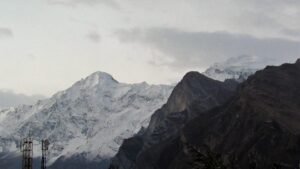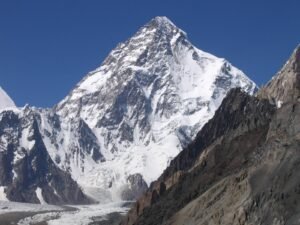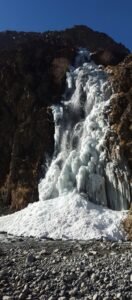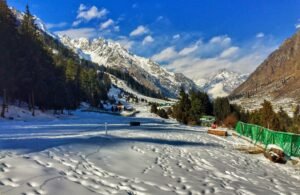
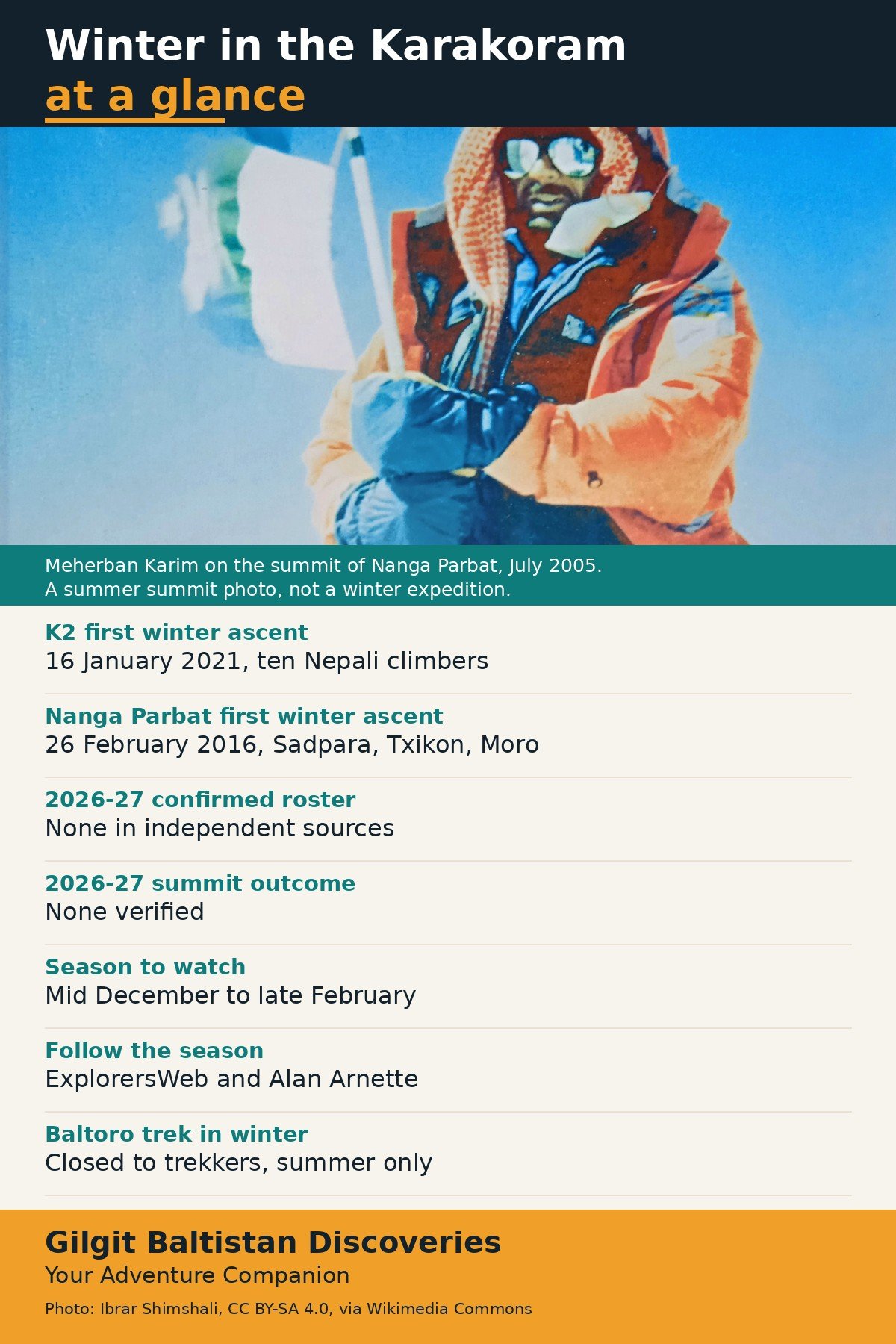
Winter climbing on K2 and Nanga Parbat is the hardest game in mountaineering. Both peaks have been climbed in winter only once each, Nanga Parbat on 26 February 2016 and K2 on 16 January 2021. For the 2026-27 season, a Pakistani operator is advertising winter expedition dates for both peaks, but that is marketing, not confirmation. As of mid November 2026 there is no confirmed team roster, no dated field report and no verified summit outcome in independent sources. Follow the season through ExplorersWeb and Alan Arnette, and treat any winter attempt as real only when a named team reports from base camp.
Why is winter climbing on an 8,000 m peak so different?
Summer climbing on an 8,000 m peak is already extreme. Winter changes the mountain completely. The jet stream, a band of very fast high altitude wind, sits over the Karakoram in winter. Winds at high camp can top 100 km/h and temperatures can fall below minus 50C. Days are short, with about 10 hours of daylight in December, so climbing and descending must fit into a narrow window. Snow is unstable after winter storms, avalanche exposure is high, and a descent in the dark and cold after a summit push is often the most dangerous part of the climb. Rescue is also far harder: helicopters cannot fly in winter storm conditions, and there are few other teams on the mountain to help.
| Factor | Summer on an 8,000 m peak | Winter on an 8,000 m peak |
|---|---|---|
| Wind at high camp | Strong, with calm windows of days | Routinely over 100 km/h, calm windows measured in hours |
| Temperature at high camp | Around minus 20C to minus 30C | Can fall below minus 50C |
| Daylight in December | About 14 hours in June | About 10 hours |
| Snow and avalanche risk | Present, managed on fixed routes | Much higher after winter storms |
| Other teams on the mountain | Several expeditions, shared fixed ropes | Often one team alone, or none |
| Rescue options | Helicopter possible in good weather | Helicopter often grounded, help far away |
Which two peaks are in play this winter?
Two peaks dominate every winter season conversation in Pakistan: K2 in the Karakoram and Nanga Parbat at the western end of the Himalaya. Both are eight-thousanders, both have a winter history, and both are being talked about for 2026-27. Everything else in the Karakoram in winter, including the Baltoro trek to K2 base camp, is closed to normal travel.
| Peak | Height | Range | First ascent | First winter ascent |
|---|---|---|---|---|
| K2 | 8,611 m | Karakoram | 1954, Lino Lacedelli and Achille Compagnoni | 16 January 2021, ten Nepali climbers together |
| Nanga Parbat | 8,126 m | Western Himalaya | 1953, Hermann Buhl | 26 February 2016, Muhammad Ali Sadpara, Alex Txikon and Simone Moro |
What is the winter history of K2?
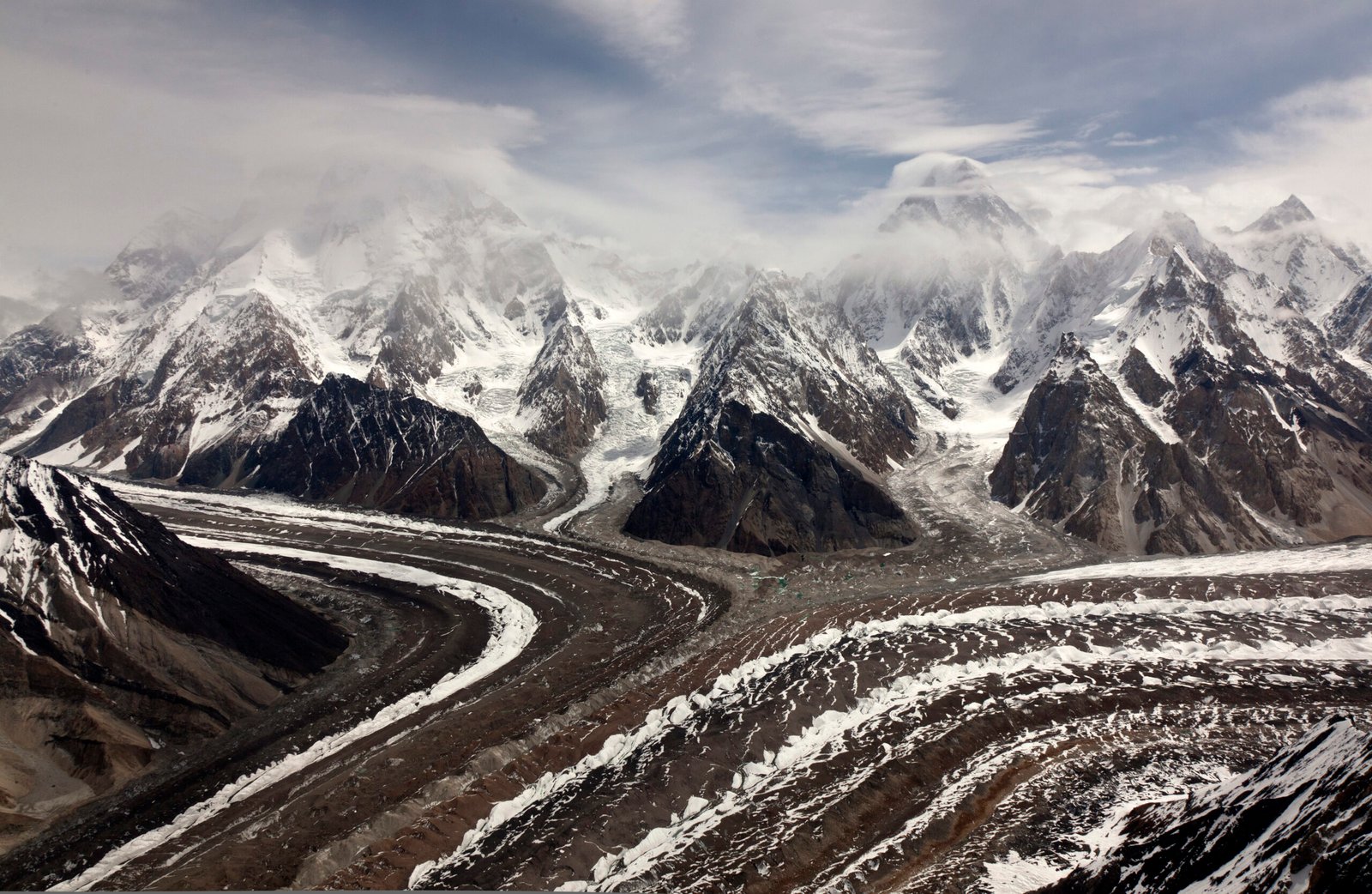
K2 was the last of the fourteen 8,000 m peaks to be climbed in winter, and it held out for decades. Winter attempts failed year after year through the 1980s, 1990s, 2000s and 2010s, beaten back by wind, cold and the mountain’s steep upper slopes. The Bottleneck, a steep couloir at about 8,200 m with a hanging wall of ice above it, is dangerous in any season and far worse in winter, when spindrift and wind make it hard to move at all.
The breakthrough came on 16 January 2021, when ten Nepali climbers reached the summit together, led by Nirmal Purja. It was the last of the fourteen eight-thousanders to receive a winter ascent, and it closed one of the longest open chapters in mountaineering. No winter ascent of K2 has been reported since that day. For the full summer picture of the mountain, including cost and logistics, see our K2 base camp trek cost guide and our K2 base camp trek itinerary.
What is the winter history of Nanga Parbat?
Nanga Parbat is the ninth highest mountain in the world and carries the nickname Killer Mountain from its early history: 31 climbers died trying to climb it before Hermann Buhl made the first ascent in 1953. Its Rupal Face, on the south side, is one of the largest mountain faces on earth. Read our Nanga Parbat Rupal Face base camp trek guide for the summer route to its base camp.
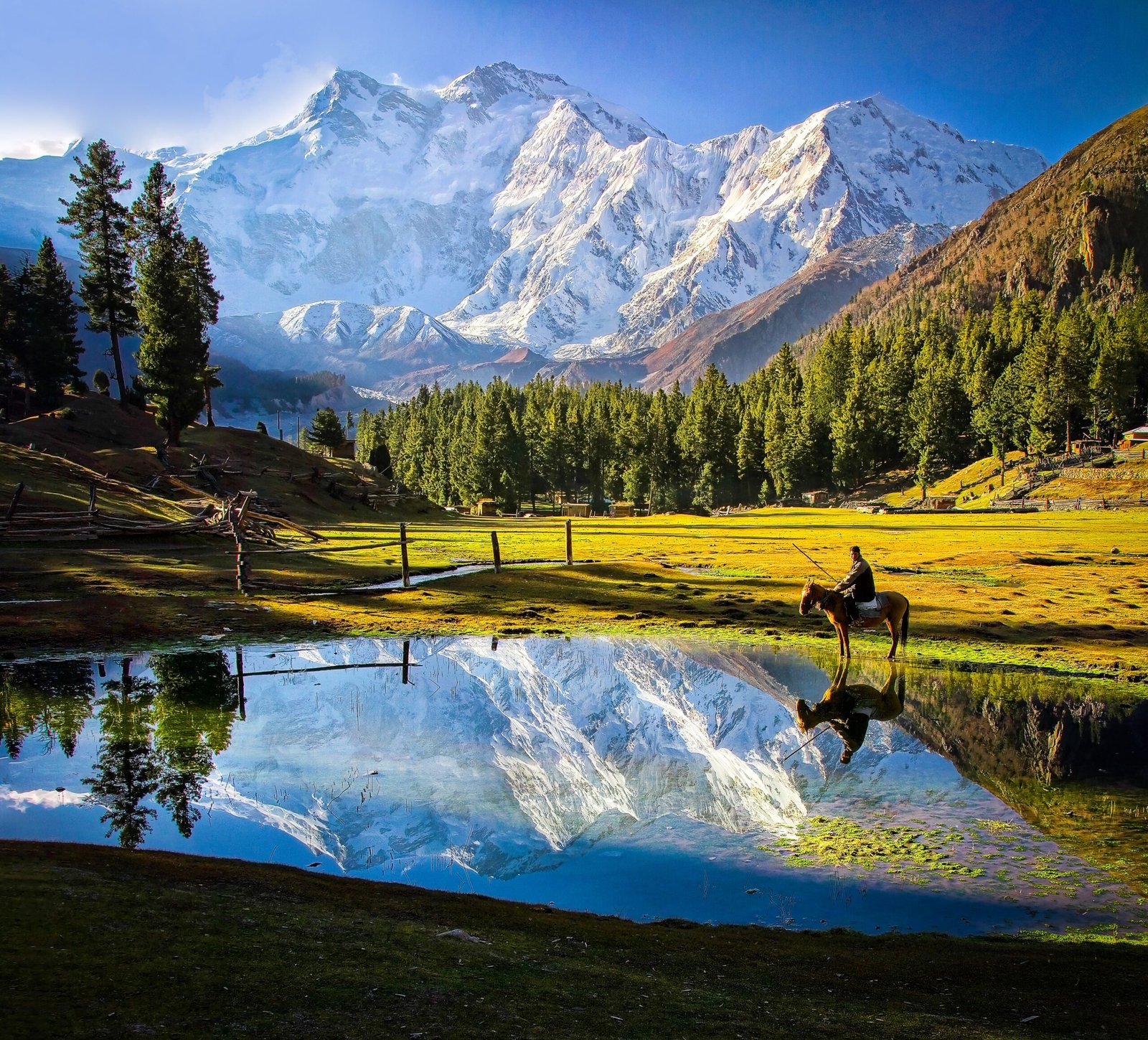
Winter attempts on Nanga Parbat also ran for decades before success. The first winter ascent came on 26 February 2016, when Muhammad Ali Sadpara of Pakistan, Alex Txikon of Spain and Simone Moro of Italy reached the summit together. Sadpara, from Sadpara village near Skardu, became a national figure in Pakistan, and his later death on K2 in February 2021, during a winter attempt with John Snorri and Juan Pablo Mohr, is a reminder of how thin the margin is in winter at 8,000 m. Winter ascents of Nanga Parbat remain extremely rare.
What is actually confirmed for winter 2026-27?
This is the question that matters most, and the honest answer is short: very little. A Pakistani operator is advertising 2026-27 winter expedition dates for both K2 and Nanga Parbat. An advertised departure is evidence of a marketed programme. It is not independent confirmation of a roster, permits, readiness or departures. As of mid November 2026, no confirmed team roster and no dated field report from base camp has appeared in independent sources, and there is no verified 2026-27 summit outcome to report. The season preview published by Global Summit Guide on 16 November 2026 makes the same point: listings on one operator’s website show possible logistical activity, not a reason to infer actual teams, summit dates or safety outcomes.
| Claim | Status as of mid November 2026 |
|---|---|
| Winter expedition dates advertised for K2 and Nanga Parbat | Yes, by a Pakistani operator |
| Named team roster confirmed in independent sources | No |
| Permits confirmed in independent sources | No |
| Dated field reports from base camp | No |
| Summit outcome for 2026-27 | None verified |
| First winter ascents (history) | Nanga Parbat 26 February 2016; K2 16 January 2021 |
Treat any 2026-27 winter attempt as real only when three things exist: a named team with named climbers, dated field reports from base camp with photos from the mountain, and independent coverage from a source such as ExplorersWeb or Alan Arnette. Until then, what is being sold is a programme, not an expedition that is happening.
What should you watch from December to February?
The winter season runs roughly December to February, and each month has its own signal to watch for.
| Month | What to watch |
|---|---|
| December | Teams that are genuinely going usually travel in and establish base camp this month. Look for named climbers arriving in Skardu and Askole, and for first dispatches from base camp. Silence in December usually means no attempt is under way. |
| January | The historic summit window month. K2 was first climbed in winter on 16 January 2021. Watch for acclimatisation rotations, fixed ropes going up, and any summit push announced with a date. January is also the coldest month, so a push needs a rare calm window. |
| February | The late season window. Nanga Parbat was first climbed in winter on 26 February 2016. Watch for last attempts before spring conditions end the season, and for teams turning back, which is normal and honest news, not failure. |
Between real updates, expect long quiet stretches. Winter expeditions report in bursts: days of silence, then a dispatch when something changes. A source that posts daily summit claims with no base camp evidence is not reporting, it is marketing.
How do you follow the season reliably?
Two English language sources have covered Karakoram winter seasons for years and are the ones to check first.
ExplorersWeb (explorersweb.com) reports expedition news with named climbers and dated updates, and it distinguishes clearly between an announced plan and a team on the mountain. Alan Arnette (alanarnette.com) tracks 8,000 m seasons with detailed posts on teams, routes and conditions, and he is careful about what is confirmed and what is only rumoured.
When you read any winter report, check four things: is the team named, is the report dated, does it come from base camp or from an office, and does an independent source carry the same news? If the answer to all four is yes, the report is worth trusting. If a claim appears only on an operator’s own sales page, treat it as advertising until independent coverage confirms it.
Can you trek to K2 base camp in winter?
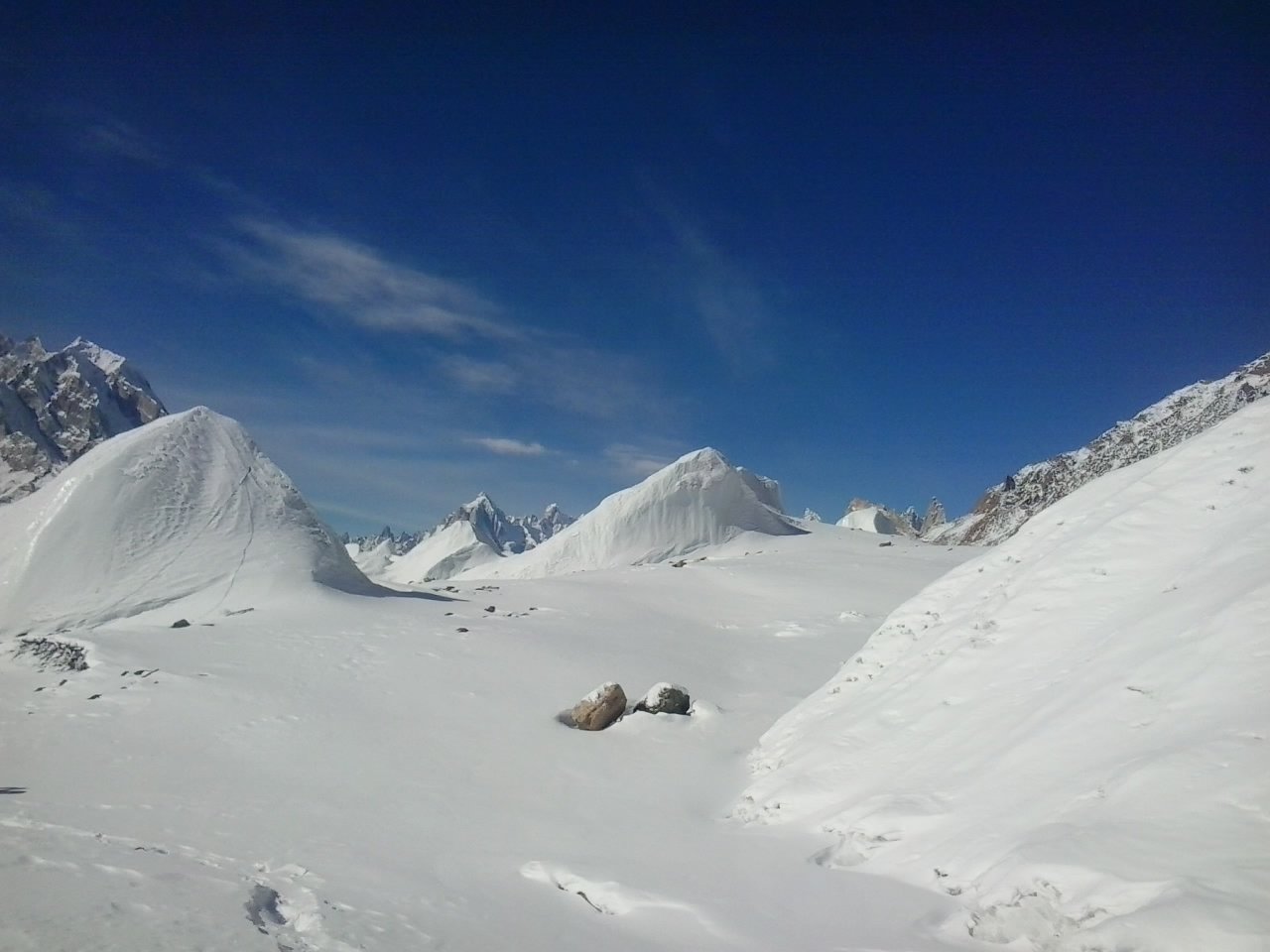
No. The Baltoro trek to K2 base camp and Concordia is a summer route, roughly June to September. In winter the same trail becomes an expedition undertaking, with deep snow, extreme cold and no trekking infrastructure, no porters working a normal season and no guesthouses open along the way. The high passes on the route, including Gondogoro La, are not crossable in winter by trekkers. Read our Gondogoro La trek guide for what that pass demands even in summer.
If you want to experience the Karakoram in winter as a traveller rather than a climber, stay in the valleys. Our Winter in Gilgit-Baltistan guide covers what stays open, what closes and how to plan a winter trip that works. If you are planning a summer K2 trek instead, start with our K2 base camp packing list.
What about summer 2027?
Summer is a separate season: K2 summer expeditions run fixed departures from 20 June 2027, a 50 day programme via the Abruzzi Spur. That season is covered in our summer K2 guides, not here.
Yes. K2 was the last of the fourteen 8,000 m peaks to be climbed in winter. Ten Nepali climbers reached the summit together on 16 January 2021, led by Nirmal Purja. Before that day, every winter attempt on K2 had failed, some after decades of trying. No winter ascent has been reported since.
Yes. Nanga Parbat was first climbed in winter on 26 February 2016 by Muhammad Ali Sadpara of Pakistan, Alex Txikon of Spain and Simone Moro of Italy. The mountain had resisted winter attempts for decades and carries the nickname Killer Mountain from its early history. Winter ascents there remain extremely rare.
No, not in independent sources. A Pakistani operator is advertising winter expedition dates for both peaks, but an advertised departure is not a confirmed expedition. As of mid November 2026 there is no confirmed team roster, no dated field report and no verified summit outcome. Treat any such claim as marketing until a named team reports from base camp.
No. The Baltoro trek to K2 base camp is a summer route, roughly June to September, and winter turns it into an expedition undertaking with deep snow, extreme cold and no trekking infrastructure. If you want to stand at Concordia, plan for summer and read our K2 base camp itinerary first.
From mid December to late February. Teams that are genuinely going usually reach base camp in December, and the historic summit dates fall in January and February: K2 on 16 January 2021 and Nanga Parbat on 26 February 2016. Check ExplorersWeb and Alan Arnette weekly, and expect long quiet stretches between real updates.
Ask for three things: a named team with named climbers, dated field reports from base camp with photos from the mountain, and independent coverage from a source such as ExplorersWeb or Alan Arnette. If a listing shows only dates and a price, it is a programme for sale, not evidence that anyone is climbing.