Last updated: 30 October 2026
Short Answer
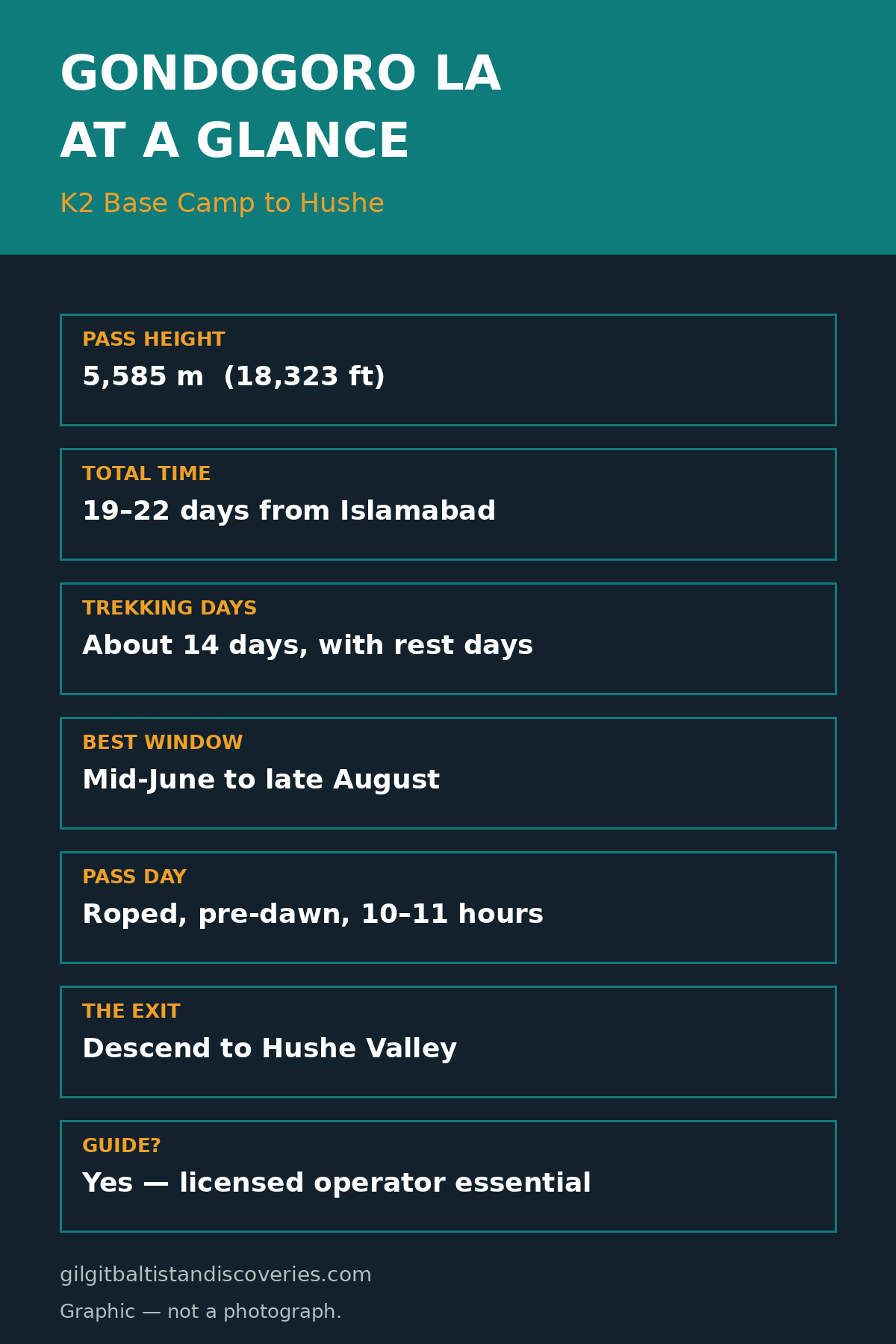
The Gondogoro La trek turns the classic K2 Base Camp walk into a one-way traverse: instead of returning down the Baltoro Glacier to Askole, you cross the 5,585 m Gondogoro La from Concordia into the Hushe Valley. Allow about 19–22 days from Islamabad, including travel, acclimatisation and a spare weather day, with roughly 14 days of trekking. The pass crossing itself is a long, roped, pre-dawn climb on steep snow, followed by a steep descent — this is a strenuous trek for experienced, well-acclimatised walkers with a guide, not a first high-altitude trek.
Why Cross Gondogoro La Instead of Walking Back?
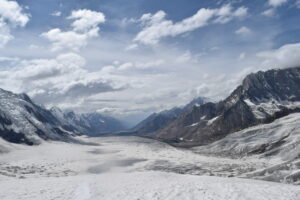
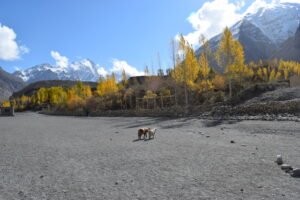
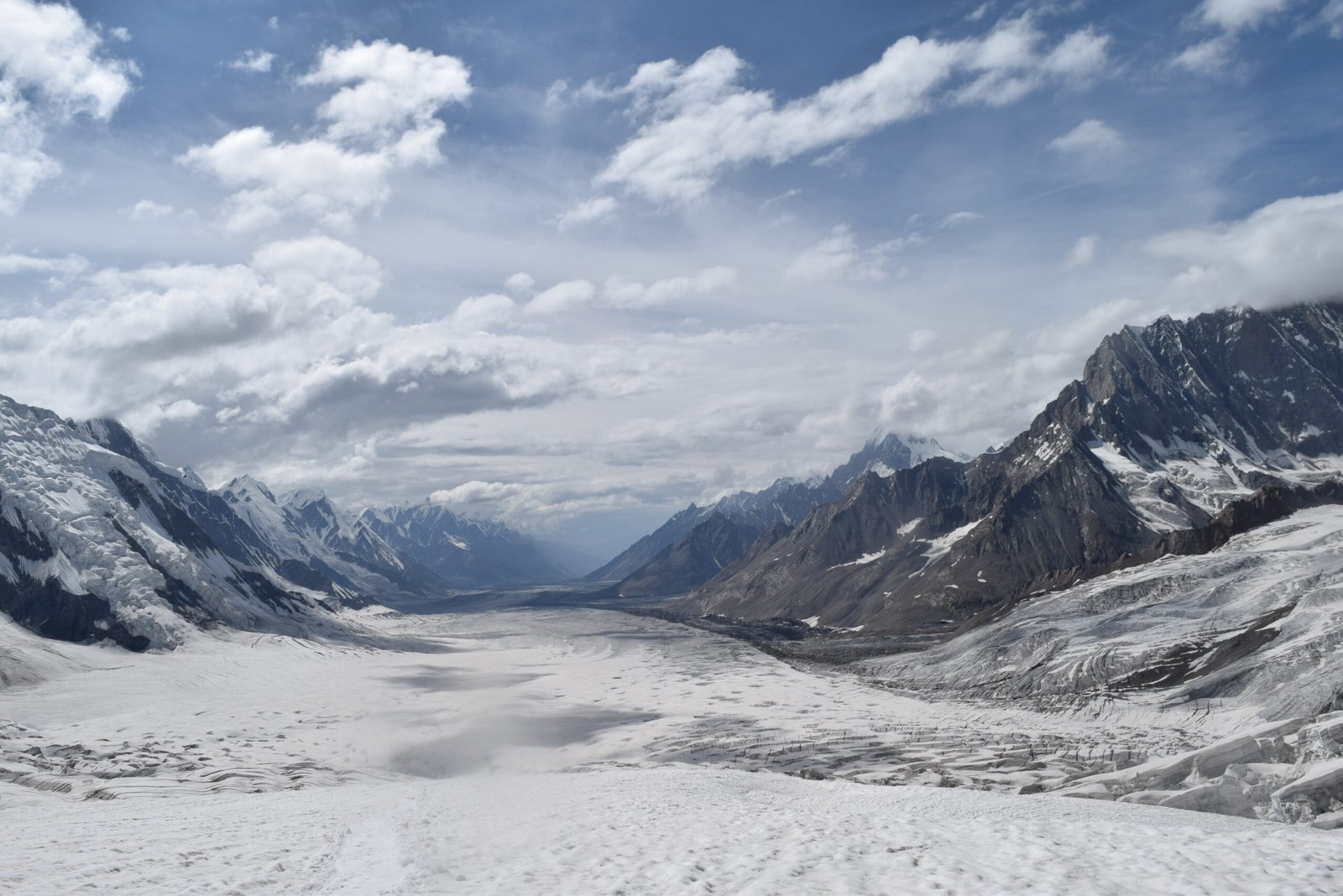
The standard K2 Base Camp trek walks up the Baltoro Glacier to Concordia and K2 Base Camp, then retraces its steps to Askole. The Gondogoro La variant keeps the same approach — Askole, Paiju, Urdukas, Goro II, Concordia — and then leaves the Baltoro behind. From Concordia you move onto the Vigne Glacier to Ali Camp, cross the pass in the dark, and descend through the Gondogoro Valley to Hushe, a green Balti village that feels like a different world after two weeks on ice.
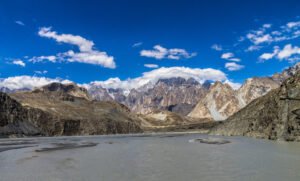
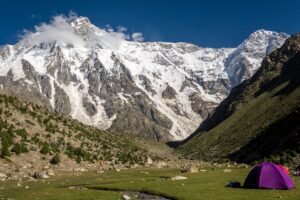
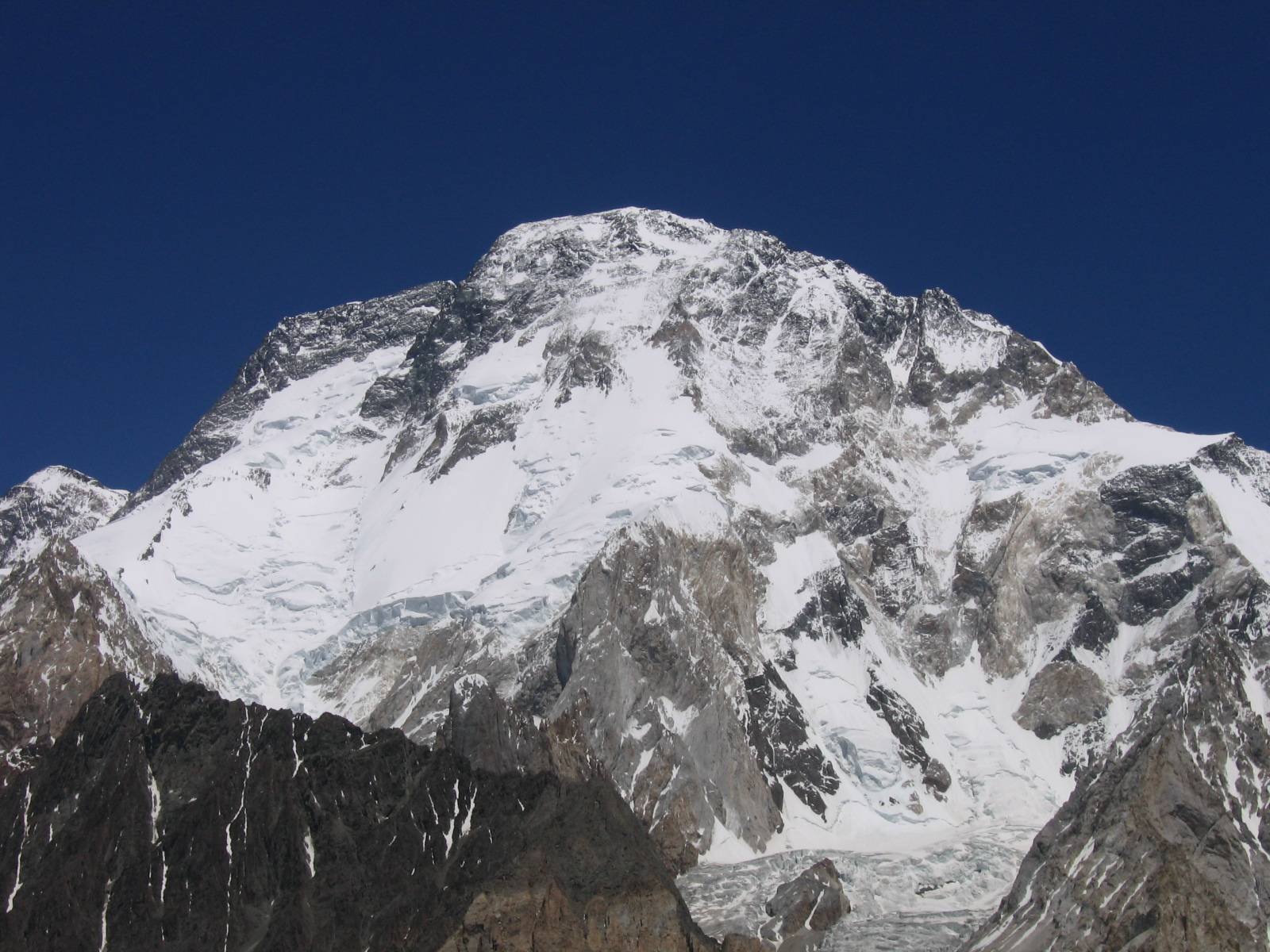
The reward is the view from the pass at sunrise: K2 (8,611 m), Broad Peak (8,051 m), Gasherbrum I (8,080 m) and Gasherbrum II (8,035 m) in a single panorama, with Masherbrum and the Trango Towers behind you. The price is a genuinely technical day. If you want the K2 Base Camp experience without a roped pass crossing, walk back to Askole instead — the views up the Baltoro are the same, and the risk is far lower.
What Is the Route, Day by Day?
The table below follows the commonly used itinerary. Operators vary the number of rest days and the exact camps, so treat this as the shape of the trek, not a fixed schedule.
| Stage | What happens | Approx. altitude |
|---|---|---|
| Islamabad → Skardu | Fly (weather-dependent) or drive the Karakoram Highway; prepare and check gear | Skardu ~2,230 m |
| Skardu → Askole | Jeep drive, roughly 6–7 hours, to the last village in the Braldu Valley | ~3,000 m |
| Askole → Paiju → Urdukas | Walk up the Braldu gorge and onto the Baltoro Glacier; rest day at Paiju or Urdukas for acclimatisation | Paiju ~3,400 m; Urdukas ~4,000 m |
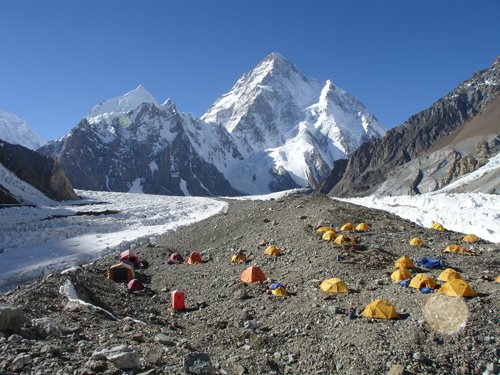
| Urdukas → Goro II → Concordia | Glacier days past the Trango Towers and Masherbrum to the “Throne Room of the Mountain Gods” | Concordia ~4,600 m |
| Concordia → K2 Base Camp | Day excursion up the Godwin-Austen Glacier, then back to Concordia | K2 Base Camp ~5,150 m |
| Concordia → Ali Camp | Cross onto the Vigne Glacier; early night before the pass | ~5,000 m |
| Ali Camp → Gondogoro La → Khuspang | Pre-dawn start around midnight; fixed ropes on snow slopes up to about 50 degrees; steep, loose descent | Pass 5,585 m; Khuspang ~4,600 m |
| Khuspang → Saicho → Hushe | Descend the Gondogoro Valley to fields and villages | Hushe ~3,050 m |
| Hushe → Skardu | Jeep drive back to Skardu | — |
For the approach in detail, see the K2 base camp trek packing list and the best time to visit Gilgit-Baltistan. For getting to Skardu in the first place, see how to travel to Gilgit-Baltistan from Islamabad.
When Is the Best Time to Cross Gondogoro La?
Mid-June to late August is the usual window, with many operators narrowing it to June–August. The pass needs stable snow for the fixed ropes and a firm surface for the pre-dawn ascent; too early and the route is not yet established, too late and soft snow and storms make the crossing unreliable. Even inside the window, build in a spare day before the pass: guides will not cross in bad weather, and a forced wait at Ali Camp is normal, not a failure of planning.
How Hard Is the Gondogoro La Crossing?
The trek is graded strenuous by every operator listing it, and the pass day is the reason. Expect a 10–11 hour day from Ali Camp: a midnight start so the snow is firm, a roped ascent on steep snow, and a descent on the Hushe side that is steeper and looser than the ascent. Crampons and an ice axe are required, and you will be roped with your guide’s team for the steep sections. Previous high-altitude trekking — ideally above 5,000 m — and good fitness are effectively prerequisites, not nice-to-haves.
Acclimatisation is built into the approach: the slow walk up the Baltoro, with rest days at Paiju and Urdukas, is what makes Concordia and the pass survivable. Do not shortcut it. Altitude sickness above 5,000 m is a medical emergency, not a badge of honour: headache, nausea, breathlessness at rest or confusion mean stop and descend, and your guide’s word on this is final.
What Should You Pack Differently for Gondogoro La?
Beyond the standard K2 Base Camp kit, the pass day adds mountaineering gear: crampons that fit your boots, an ice axe, a harness, and a helmet. Your operator normally supplies group gear such as ropes, but confirm exactly what is included before you pay — “technical gear included” means different things to different operators. Clothing must handle a midnight start at around 5,000 m: a warm insulated layer, windproof shell, warm gloves plus spares, and glacier sunglasses for the snow glare on the descent.
Charging is scarce for two weeks on the glacier, so a power bank earns its weight; for example, the Anker PowerCore. Carry water treatment for glacier streams and keep documents, insurance details and emergency contacts in a waterproof pouch.
Do You Need a Guide, Porters and Permits?
Yes, in practice. The Gondogoro La route is listed as a restricted trek, it crosses crevassed glaciers, and the pass requires fixed ropes set by experienced local teams — most of them from Hushe, the village at the end of the route. Book through a licensed operator that provides a guide, porters and the rope-fixing arrangements, and confirm permit and fee arrangements with that operator before you travel, because trekking permit rules and fees for the Baltoro region change and are not reliably quoted in older guides.
Costs are deliberately not quoted here: operator prices for a 19–22 day expedition vary widely with group size, inclusions and season, and any single figure would be out of date quickly. Get itemised quotes from two or three licensed operators and compare what is actually included — porters, food, group gear, Skardu logistics and the Hushe exit — rather than the headline price.
Frequently Asked Questions
How long does the Gondogoro La trek take?
About 19–22 days from Islamabad to Islamabad, including flights or drives to Skardu, the jeep to Askole, roughly 14 days of trekking with rest days, and the return from Hushe. Operators vary by a day or two depending on rest days and the spare weather day before the pass, so compare itineraries by trekking days, not just total days.
How high is Gondogoro La?
The pass is consistently quoted at 5,585 m (18,323 ft). That makes the crossing day the highest point of the trek, above Concordia at about 4,600 m and K2 Base Camp at about 5,150 m. The altitude, the pre-dawn start and the steep snow together make it far more demanding than the height alone suggests.
Is Gondogoro La harder than K2 Base Camp itself?
Yes. The walk to K2 Base Camp is long and high but non-technical for most trekkers. Gondogoro La adds a roped, steep-snow pass crossing with a loose descent, a midnight start and a 10–11 hour day. Trekkers who are comfortable on the Baltoro should still treat the pass as a separate, harder undertaking.
Can you cross Gondogoro La without a guide?
No, not sensibly. The route crosses crevassed glaciers, the pass requires fixed ropes, and the trek is listed as restricted. Licensed operators from Hushe provide the guides, porters and rope work. Going without that support would mean navigating crevasses and setting ropes alone at 5,585 m.
What happens if the weather stops the crossing?
You wait. Guides build a spare day into the itinerary and will not cross in poor weather or soft snow. If the window does not open, the fallback is to walk back down the Baltoro to Askole, the standard K2 Base Camp return. Keep a buffer day before any onward flight.