Chawmos is the winter solstice festival of the Kalash people, and the longest and most sacred event in their year. It runs for about two weeks in December, roughly 7 to 22 December, across the three Kalash valleys of Bumburet, Rumbur and Birir in Chitral District, Khyber Pakhtunkhwa. It marks the Kalash New Year and honours the god Balimain, believed to visit the valleys from the mythical homeland of Tsyam for the length of the feast.
Two facts first. The Kalash valleys are in Chitral, Khyber Pakhtunkhwa, not in Gilgit-Baltistan, and a Chawmos trip is a Chitral trip first. And the festival is not happening now. It runs only in December, so December is the month to plan for. The first week, about 7 to 14 December, is private, for the Kalash only. Visitors can watch the public second week, about 15 to 22 December, with torch processions, singing, goat sacrifices at the clan shrines and dancing in the snow.
What is the Chawmos festival?
The Kalash, also written Kalasha, are a small Indigenous community of a few thousand people living in three side valleys south of Chitral town, in the Hindu Kush near the Afghan border. They follow their own ancient religion and calendar. Their year is framed by three great festivals: Chilam Joshi in spring, Uchal in late summer, and Chawmos at midwinter.
Chawmos comes after the Kalash have finished their fieldwork and stored their cheese, fruit, vegetables and grain for the year. It is the turning of the year. The old rules are set aside for the feast, the god Balimain is welcomed, food is offered to the ancestors at the clan shrines, called jeshtak, goats are sacrificed, and purification with juniper fire runs through the whole two weeks.
You will see the name spelled many ways: Chawmos, Chaumos, Choimus, Cawmos, or Chitrimas, which is how many Chitralis say it. All refer to the same winter feast.
Do not confuse Chawmos with Chilam Joshi. Chilam Joshi is the famous spring festival in mid-May, all colour and crowds and new dress. Chawmos is the opposite: cold, quiet, solemn, indoors for much of it, and the holiest time of the Kalash year.
When is the Chawmos festival?
Chawmos is tied to the winter solstice, so it falls in the same window every year. Most sources, including the Wikipedia entry on Chawmos, give the span as roughly 7 to 22 December. Pakistani press reports for 2024 described a 15-day festival ending on 22 December. Treat every date as approximate. The exact day of each ritual is set by Kalash elders, who read the sun from the ridgelines through their traditional calendar, Suri Jagek, and it can shift by a day or two.
| Period | Dates | Who can attend |
|---|---|---|
| First week, private | About 7 to 14 December | Kalash only. Purification rituals, offerings to the ancestors, much of it indoors. Visitors should not attend. |
| Second week, public | About 15 to 22 December | Visitors welcome. Torch processions, singing, goat sacrifices at the clan shrines, dancing in the snow, often through the night. |
| New Year declaration | During the festival | Elders watch the sun from a high point and declare the advent of the New Year. |
If you can only spare a few days, aim to be in the valleys for the second half of the festival, roughly 15 to 21 December. Build in one spare day at each end for weather on the Lowari Tunnel road.
One correction to a common mistake: some winter roundups give the festival dates as only 15 to 22 December. That is the public week, not the festival. The full feast runs about two weeks, and the first week is closed to outsiders.
What actually happens during Chawmos?
The festival has two halves, and they feel like different events.
In the first week, the valleys turn inward. The whole population stays largely indoors. Homes are cleaned and decorated. Kalash girls select their bridegrooms after certain rituals. Feasting goes on until the elders, sitting on a hilltop and watching the sun reach its turning point, declare the New Year. Children go up the mountain, divide into boys and girls, and light a big bonfire. Outsiders are not part of this week, and that is the point. Do not try to attend it.
In the second week, the festival opens. People thank their god with dance and music, and many goats are sacrificed. Food is offered to the ancestors at the jeshtak shrines. The main ritual takes place at a Tok tree, at a place called Indrunkot, or Indra’s place. Ancestors are impersonated by young boys, called onjeshta, meaning pure, who are offered bread and form a chain that snakes through the village. Later, a procession climbs to open ground for long nights of singing and dancing, sometimes in snow. Men split into groups that sing different styles of song, and the roles of men and women are playfully swapped, a carnival-like turning of the normal rules at year end. Girls dance in cold weather and snowfall, and boys play winter games.
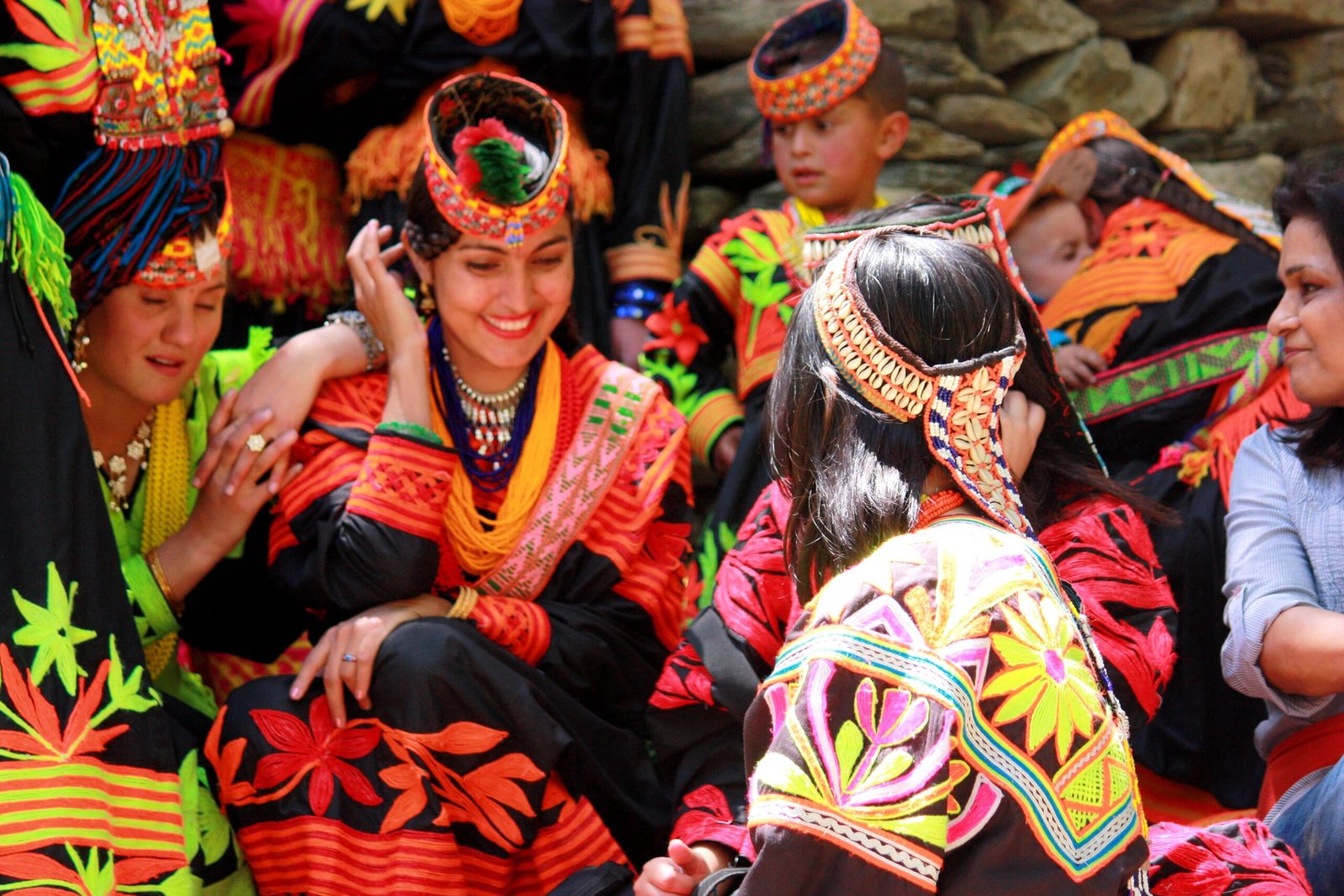
Everyone taking part must be purified first. Women and children have a burning brand waved over them. Men are purified by a shaman waving juniper brands. Impure and uninitiated people are not admitted to these rites, and visitors count as impure for this purpose, so stay where your hosts tell you to stand.
One valley difference matters for what you will hear. Chawmos is celebrated without musical instruments in Rumbur and Bumburet, but with instruments in Birir.
The ritual sequence, day by day
The Kalasha archives of the Aristotle University of Thessaloniki publish an outline of the winter festival based on fieldwork. Slightly simplified, the sequence looks like this. Dates are approximate, and Pakistani reports use slightly different names for the same events, so treat this as a guide to what the two weeks contain, not a timetable to plan around.
| Approx. date | Ritual | What happens |
|---|---|---|
| 9 to 10 Dec | Sarazari | Freshly cut cedar branches are burned |
| 13 Dec | Cuinari | A spiral, circular dance called the hus’at’ik |
| 14 Dec | Sharabirayak | Dough figures of goats, called kut’amru, are made and baked |
| 15 Dec | Mandahik | The spirits of the dead are fed |
| 16 Dec | Sawel’ik Hari | Dancing in disguise, for fun |
| 18 Dec | Women’s and men’s purification | Pure bread for women, goat blood and juniper fire for men |
| 19 Dec | Chel’ik Sambiek | A child is dressed in Kalasha clothing and enters the community |
| 20 Dec | Grohonyak and C’anj’arat | Women weave conical baskets singing to Balimain, a night of lit torches |
Pakistani press accounts describe the same days under other names: Chhoi Nari, when young people climb a sacred hillside and light fires; Shara Beraik, when flour figures of wild goats and shepherds are cooked and shared with neighbours; and Mundahik, when people gather around a cedarwood fire and keep five minutes of silence for the dead.
Which valley should you watch it in?
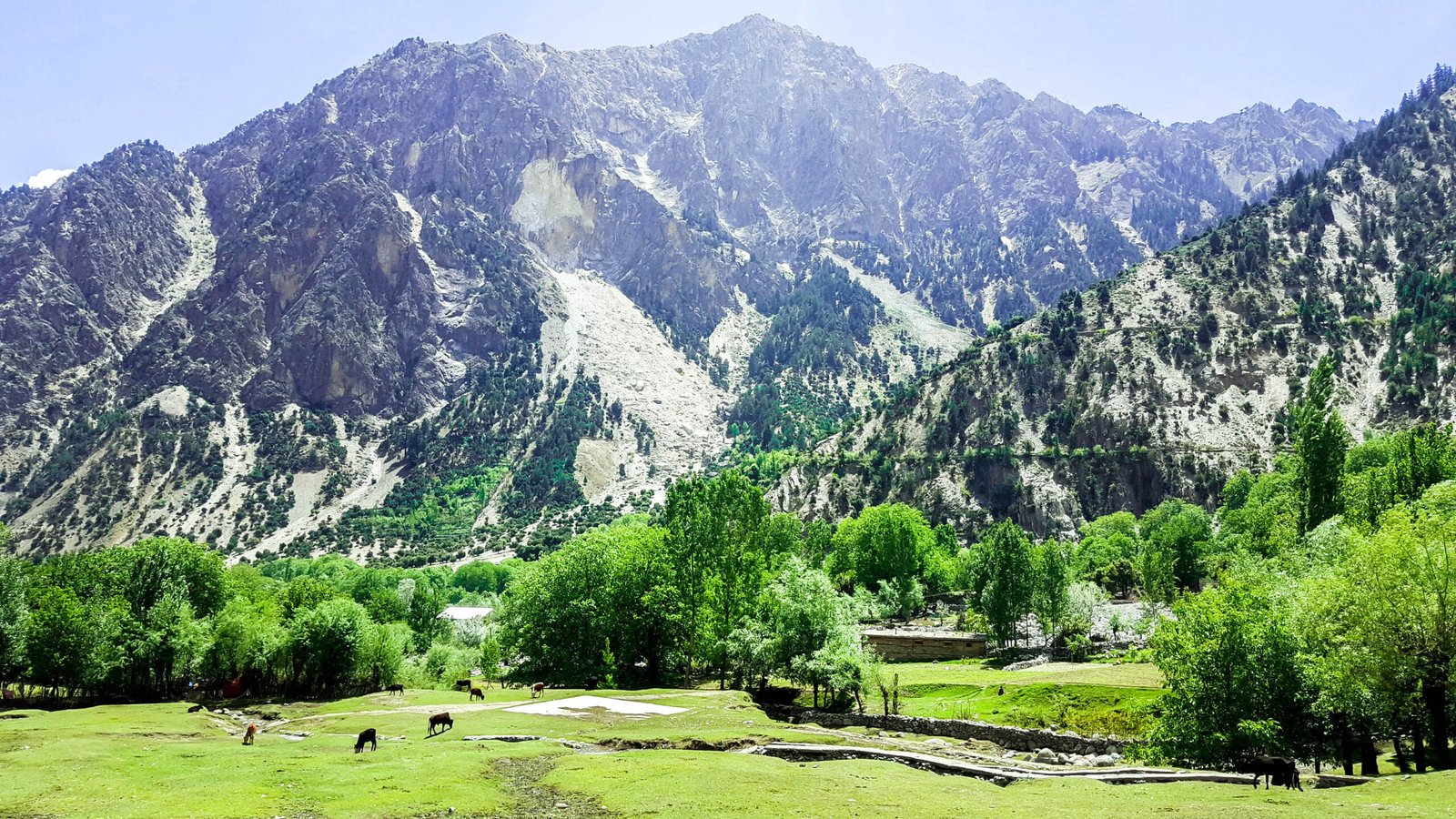
Chawmos is celebrated in all three valleys, but each has its own character. The celebrations run side by side, each with its own rites, and every village has its own dancing ground, the charsu, so the festival moves between them over several days.
| Valley | Character | Best for |
|---|---|---|
| Bumburet | Largest and most developed, most guesthouses, easiest road. Joins the main Chitral valley at Ayun, about 20 km south of Chitral town. | First-time visitors, base for the festival. |
| Rumbur | Smaller and quieter, branching off Bumburet’s approach. By most accounts the valley where traditional life is most visible. | A quieter, more traditional experience. |
| Birir | Smallest, least commercialised, hardest to reach. The only valley where Chawmos is celebrated with musical instruments. | Travellers who want the most remote valley and live music. |
Whichever valley you choose, stay in a Kalash-run guesthouse if you can. It keeps money in the community and gives you a host who can tell you what is happening each day and where visitors are welcome.
How do you get to Chitral and the Kalash valleys in winter?
All routes start from Chitral town, at about 1,500 metres. The valleys sit roughly 800 metres higher, so expect colder nights and snow on the ground in many years.
By road through the Lowari Tunnel
For most of history, Chitral was cut off in winter when the Lowari Pass filled with snow. The Lowari Tunnel, two bores totalling about 10.4 km under the pass on the N-45, changed that. It opened to traffic in 2017 and now allows all-weather travel between Dir and Chitral.
From Islamabad, the drive to Chitral is a full day on the road, usually 10 to 12 hours depending on road works, checkpoints and weather. From Chitral town, the Kalash valleys are a further 1.5 to 2 hours by jeep via Ayun, about 35 to 40 km to Bumburet. Rumbur branches off before Bumburet, and Birir is reached by a separate road from the Chitral river. In December, use a private vehicle with an experienced mountain driver rather than public transport, and start drives early, because winter daylight is short and mountain roads freeze after sunset.
One route you cannot use in December: the scenic summer road over Shandur Pass from Gilgit. It is not a winter option. Coming from Hunza or Gilgit in December means going back down to Islamabad and then up through Dir. Do not plan the Babusar and Naran route either. Naran is cut off by snow from November to April, and our Naran and Kaghan Valley guide explains why.
By air
Islamabad to Chitral takes about 50 minutes by air, but flights are small and cancelled whenever the weather turns. Pakistan International Airlines announced in March 2025 that it would restart the route from April 2025, initially once a week. Winter flights are rare and weather-dependent, so never plan a Chawmos trip around a single flight. Keep at least two buffer days around any flight, and have the road as your backup.
In December 2025, The Express Tribune reported Tourism Police deployed along the Lowari Tunnel and the roads into the valleys, with a 1422 tourism helpline for visitors.
Where do you stay during Chawmos?
Bumburet has the most guesthouses, so most visitors base themselves there. Rumbur and Birir have fewer places to stay, and winter capacity across the valleys is limited, so book a local guesthouse in advance. Chitral town has hotels if the valleys are full, and it makes a sensible first and last night.
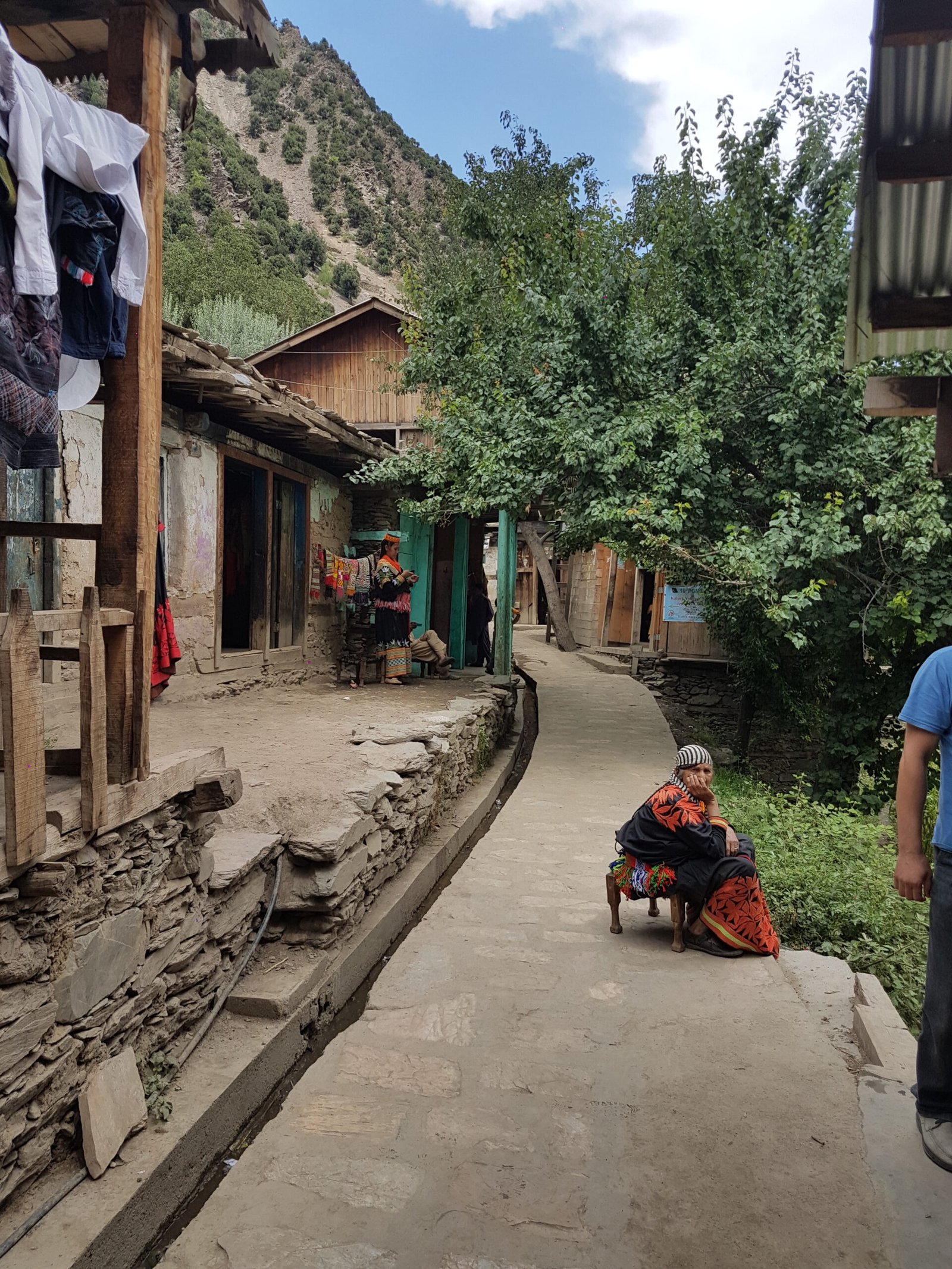
Guesthouses are simple, and heating is usually a wood stove, not central heating. Confirm heating before you book, and expect limited hot water. There are few or no ATMs in the valleys, so carry cash in rupees. Our Kalash Valleys and Chitral guide covers the valleys in their open season, with a practical 5-day itinerary you can adapt for December.
How should visitors behave at Chawmos?
Chawmos is a religious event, not a performance. Kalash festivals have suffered from overcrowding and harassment by visitors in the past, and the community is understandably cautious. These rules matter more here than at any other time of year.
- Stay away from the first week. It is private, for the Kalash only. Arrive for the public second week.
- Ask before every photo. Many Kalash women do not want to be photographed, and children should never be photographed without a parent’s consent.
- No filming without permission. Ahead of the 2023 festival, Aaj News reported that vloggers and YouTubers were barred from recording without permission from the authorities. Drones are a firm no unless you have explicit approval.
- Respect closed rituals. If you are asked to leave, or not to enter a space, leave without argument. Purity rules are central to the faith.
- Do not touch shrines or sacred objects, and do not step into areas marked off for women.
- Keep your distance from dancers. Do not push into circles for a better angle.
- Dress modestly and warmly, and do not hand out sweets or money to children.
- A long lens lets you photograph dances from the edge without crowding anyone. Show people the photo afterwards and delete it if they ask.
Registration, permits and the community fee
Pakistan scrapped the general No Objection Certificate, or NOC, for foreigners in 2019, and Chitral was among the areas opened up. Foreigners need no NOC to visit the Kalash valleys or attend the festivals. Two steps still apply. In July 2025 the Khyber Pakhtunkhwa tourism authority launched an online registration, widely called an NOC, for foreign tourists heading to Chitral, Swat and Upper Dir, so expect to register online in advance. You will also register your passport at police checkposts on the way in, so carry copies.
Foreign visitors have also paid a small community fee at the valley entrance, earmarked for Kalash welfare projects. It was last widely reported at Rs 600 per person. The current amount may differ, so confirm it locally before you travel.
What should you pack for Chawmos in December?
Chitral town averages about 9 to 12 degrees C by day in December and January, with nights around freezing and record lows near minus 12 degrees C. The Kalash valleys sit roughly 800 metres higher than the town, so expect colder nights and snow on the ground. Buildings are heated only where the stove is, so pack to be warm while sitting still indoors, not just while walking.
- Down jacket, thermal base layers, warm hat and gloves
- Insulated, waterproof boots with good grip for icy paths
- Headtorch and spare batteries, because power cuts are common in winter
- A warm sleeping bag liner for unheated rooms
- Modest clothing. Women may want a scarf in Chitral town.
- Cash in rupees, since there are few or no ATMs in the valleys
- A power bank, kept warm. Cold drains batteries fast, and charging points are scarce in the valleys. We use the Anker PowerCore 10000 for trips like this.
As an Amazon Associate, Gilgit Baltistan Discoveries earns from qualifying purchases made through links on this page.
For the full cold-weather checklist, see our Winter in Gilgit-Baltistan guide, which covers the same mountain winter, just further east.
Is it safe to visit the Kalash valleys in winter?
Check your government’s advice and your travel insurance before you book. The US State Department’s June 2026 advisory rates Pakistan at Level 3 and lists all of Khyber Pakhtunkhwa, which includes Chitral, as Do Not Travel. Other governments say different things, and your cover may depend on it.
On the ground, the picture is more specific. The provincial government deploys Tourism Police for the Chawmos festival, and Chitral’s district administration manages arrangements each year. The main risks for a December visitor are practical, not political: icy roads, cancelled flights, hard cold and short days. Keep buffer days, travel with an experienced local driver, and do not drive at night. Our Is Gilgit-Baltistan Safe guide explains how to read advisories honestly, and the same approach applies here.
Can you combine Chawmos with Gilgit-Baltistan?
Yes, but not by the short road. The Shandur Pass route between Chitral and Gilgit is a summer road, closed in winter. A December combination means flying or driving back to Islamabad, then travelling up again through Dir or the Karakoram Highway. Allow at least two extra days for the detour, and treat the two trips as separate legs. Our Winter in Gilgit-Baltistan guide covers what the Gilgit side offers in the same month, and our Festivals of Gilgit-Baltistan guide covers the festival calendar on the Gilgit side. Chawmos itself is a Chitral festival, not a Gilgit-Baltistan one.
Chawmos runs for two weeks around the winter solstice, roughly 7 to 22 December. The first week, about 7 to 14 December, is private and for the Kalash only. The public second week, about 15 to 22 December, is the part visitors can watch. Exact ritual days are set by Kalash elders and can shift by a day or two.
Yes, visitors can watch the public parts, especially the dances and bonfires in the second week, about 15 to 22 December. The first week is closed to outsiders, and some rituals are closed at all times. Anyone not purified is not admitted to the rites, so stay where your Kalash hosts tell you to stand.
Only with permission. Always ask before photographing anyone, especially women and children, and never photograph a child without a parent’s consent. Filming for social media has been restricted without official permission, and drones need explicit approval. Show people the photo afterwards and delete it if they ask.
Fly or drive from Islamabad to Chitral town, then take a jeep 1.5 to 2 hours via Ayun into the valleys. The road runs through the Lowari Tunnel, which keeps Dir to Chitral open in winter. The flight takes about 50 minutes but is often cancelled, so never plan around a single flight. Allow two buffer days.
Base yourself in Bumburet, which has the most guesthouses, and stay in a Kalash-run guesthouse if you can. Rumbur and Birir have fewer places to stay. Book in advance, because winter capacity is limited. Chitral town has hotels if the valleys are full. Confirm heating before you book, and carry cash, since ATMs are scarce.
No. Chilam Joshi is the Kalash spring festival in mid-May, usually 13 to 16 May, all colour and crowds and new dress. Chawmos is the winter solstice festival in December, the longest and most sacred event of the Kalash year. Uchal, the harvest festival in August, sits between them. All three take place in the same three valleys.