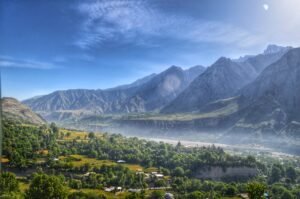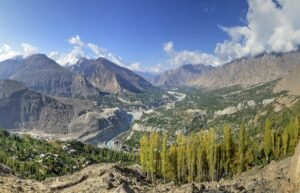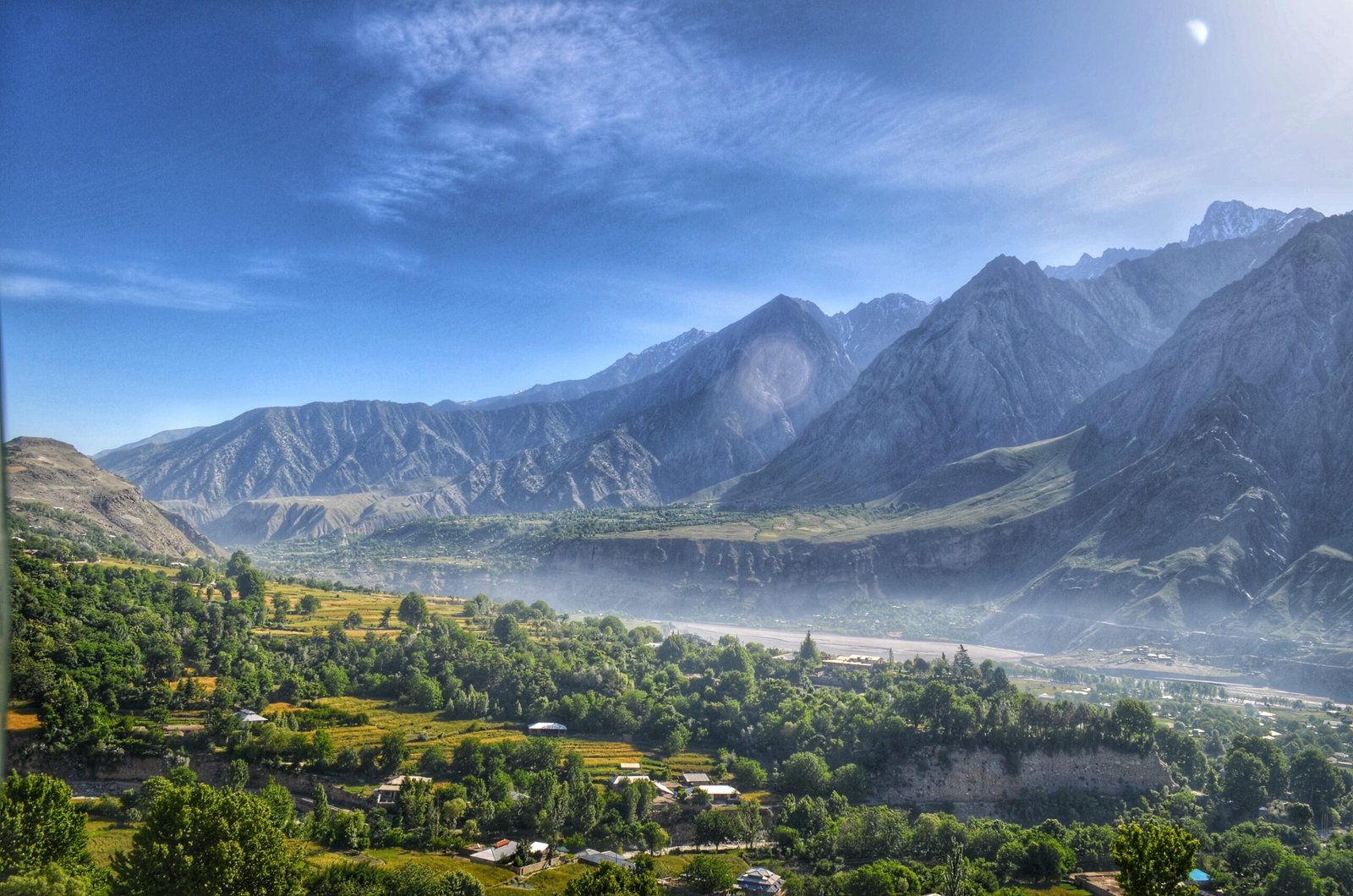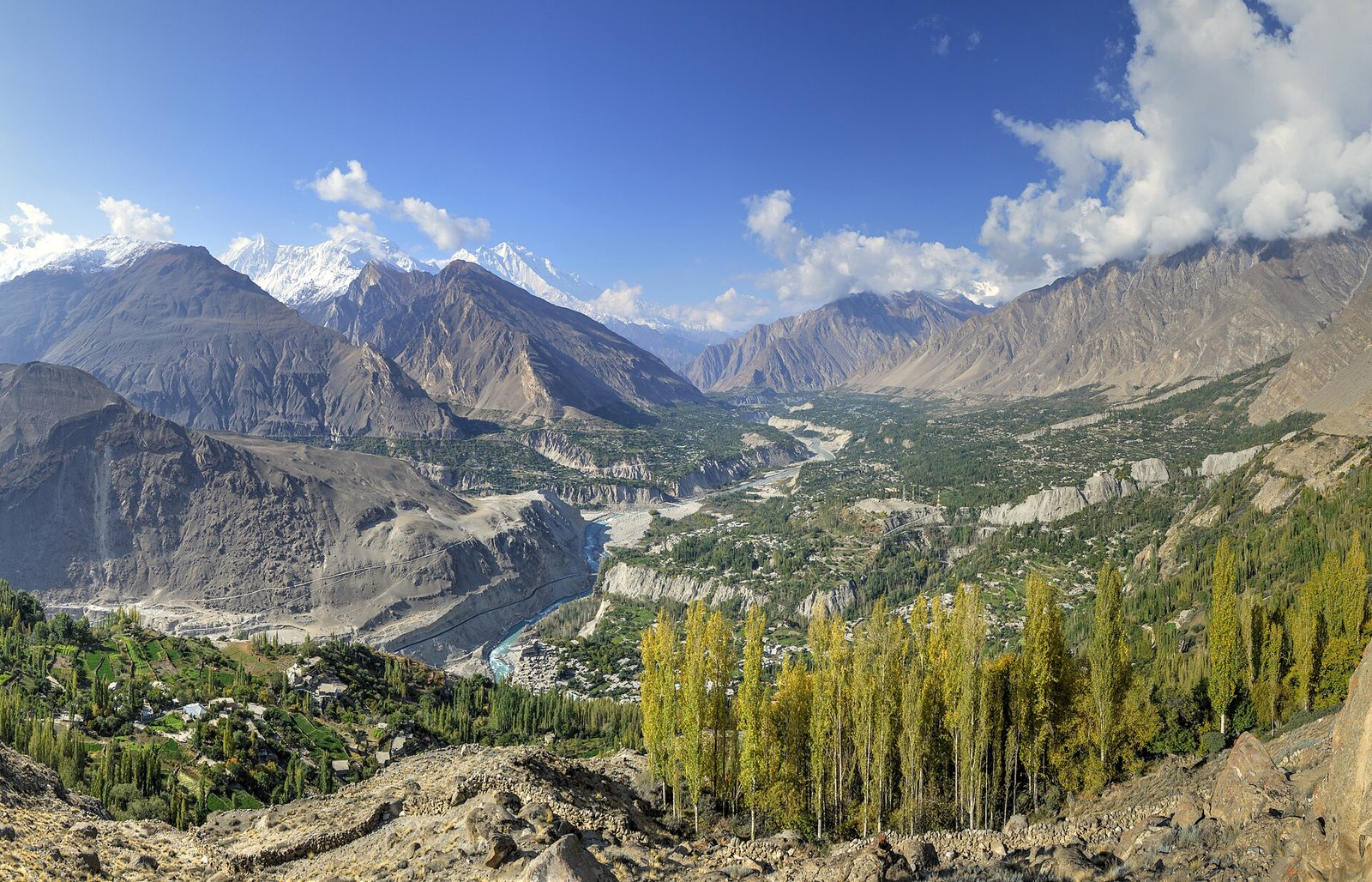
Yes, Hunza is open in December, and it is one of the quietest months to visit. Expect cold, clear days with daytime highs around 2 to 6 C in Karimabad and nights around minus 7 to minus 8 C, about 9.5 to 10 hours of daylight, and snow on the peaks with bare orchards in the valley. The forts, the bazaar, Attabad Lake and the Passu Cones are all reachable. The Khunjerab Pass, Babusar Pass, Deosai and the high treks are not December destinations. Book a hotel that can prove it has heating and backup power, keep two spare days for flights and roads. Note that Salgirah, the Ismaili festival, now falls on 12 October, not 13 December, so December has no major festival.
| Fact | December figure |
|---|---|
| Karimabad daytime high | About 2 to 6 C (sources differ, see the weather section) |
| Karimabad night low | About minus 7 to minus 8 C, colder in cold snaps |
| Aliabad daytime high / night low | 4.0 C / minus 4.6 C (long-term average) |
| Gilgit daytime high / night low | About 12 C / minus 2 C |
| Daylight | About 9.5 to 10 hours, shortest day around 20 to 21 December |
| Sunrise / sunset in Karimabad | About 6:55 to 7:10 am / about 4:45 to 5:00 pm |
| Rain and snow | December is one of the driest months, valley snow is possible but not guaranteed |
| Crowds | Very low, almost no tour groups |
| Big date | No major festival in December, the valley is at its quietest |
| What is closed | Khunjerab Pass for tourist trips, Babusar Pass, Deosai, Fairy Meadows jeep track, high treks |
| Spare days to keep | At least 2, for flights and road delays |
How cold does Hunza get in December?
December in Hunza is properly cold, but it is a dry cold, and the skies are often clear. The numbers depend on exactly where you stand, because the valley climbs almost 1,000 metres from Gilgit to Karimabad, and sources disagree by a few degrees. Here is the honest picture.
Aliabad, the district town on the Karakoram Highway at about 2,206 metres, has the best published long-term figures. Wikipedia, using Climate-Data.org, gives December a mean daily high of 4.0 C and a mean daily low of minus 4.6 C, with a daily mean of minus 0.3 C. Gilgit, about 1,500 metres and much lower, averages about 12 C by day and minus 2 C at night in December, according to Pakistan Meteorological Department figures.
Karimabad, at about 2,450 to 2,500 metres, is colder than Aliabad. Published estimates for a December day in Karimabad range from about 2 C to about 6 C, with nights around minus 7 to minus 8 C. The range exists because there is no weather station in Karimabad with long-term published records, so every figure is either an approximation from Gilgit data or a model estimate. Treat any single number for Karimabad as approximate, and expect cold snaps to push nights far lower, especially in upper Hunza around Gulmit, Passu and Sost.
Two things matter more than the exact average. First, December is one of the driest months of the year. Aliabad gets only about 125 mm of precipitation in a whole year, and December is the driest month, so you are more likely to get crisp blue days than heavy snowfall in the valley itself. Snow on the valley floor is possible but not guaranteed in any given week. Second, the cold bites hardest indoors. Many buildings are heated only around the wood stove, so pack to be warm while sitting still inside, not just while walking outside.
What is open and what is closed in Hunza in December?
| Place or route | December status |
|---|---|
| Karakoram Highway, Islamabad to Gilgit to Hunza | Open year round, weather permitting, ice in shaded sections |
| Baltit Fort and Altit Fort, Karimabad | Open, reduced winter hours, check locally |
| Karimabad bazaar and old villages | Open, quieter, some cafes closed |
| Attabad Lake viewpoint | Open, boats generally not running when the lake is iced |
| Borith Lake, near Hussaini | Reachable on foot in dry weather, partly frozen in cold spells |
| Passu Cones viewpoint and Hussaini Bridge | Open, viewpoint only, bridge crossing is your own judgement in wind and ice |
| Eagle’s Nest viewpoint, Duikar, about 2,800 m | Open if the road is clear, best at sunrise |
| Khunjerab Pass, 4,693 m | Not a December sightseeing trip, see below |
| Babusar Pass, 4,173 m | Closed, shut 11 October 2026, reopening expected about June 2027 |
| Deosai Plateau | Closed under snow |
| Fairy Meadows jeep track | Snow closed, guided winter expeditions only |
| High treks, Rush Lake, Patundas, Batura Glacier | Snowbound, off the table |
| Many small guesthouses and cafes | Seasonal closure, confirm before booking |
The Khunjerab Pass in December, corrected
This is the point where the ranking guides get it wrong, so read it carefully. The Khunjerab Pass traditionally opened only from 1 April to 30 November under a 1985 agreement between Pakistan and China. One popular guide still presents “closed on 30 November, reopened on 1 April” as the current rule. That pattern is out of date.
In December 2024, Pakistan and China agreed to keep the border open all year, and year-round trade and travel were formally inaugurated on 22 April 2025. The border is therefore officially open in December. In practice, that does not make it a December sightseeing trip. Heavy snow can close the Sost to Khunjerab road at short notice, the pass has already closed for short periods in 2026, including for China’s National Day in early October, and tourist access in winter depends on the weather and the rules in force on the day. Our advice is simple: do not build a December trip around Khunjerab. If the road happens to be open and your driver and hotel both say go, treat it as a bonus, not a plan. For the full winter picture, see our Hunza Valley in Winter guide.
How do I get to Hunza in December?
You have two ways in, and both need spare days.
Flying is fastest when it works. The PIA flight from Islamabad to Gilgit takes about 45 minutes in the air, and from Gilgit it is about 100 km up the Karakoram Highway to Karimabad, normally a drive of two to three hours. In December, Gilgit flights depend on visual weather clearance and are often delayed, sometimes for several days. Never book a tight international connection on the back of a Gilgit flight in winter. Keep at least two spare days in your plan.
Driving is the reliable fallback. The Karakoram Highway runs north from Islamabad through Besham, Dasu and Chilas to Gilgit and on to Hunza, and it stays open through winter, though snow, ice and rockfall can close sections for a time. By road from Islamabad, the journey can take as long as 24 hours, and most people break it overnight in Chilas or Besham. The summer shortcut over the Babusar Pass is closed, so winter traffic uses the longer KKH route along the Indus. Hire an experienced local driver. December is not the season for self-driving experiments on icy mountain roads. For the full comparison of flights, road and bus, see How to Get to Hunza Valley.
What is there to do in Hunza in December?
December in Hunza is about scenery, culture and slow days, not big hikes. The high routes are snowbound, so the pleasure is in the valley itself.
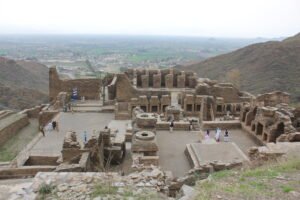
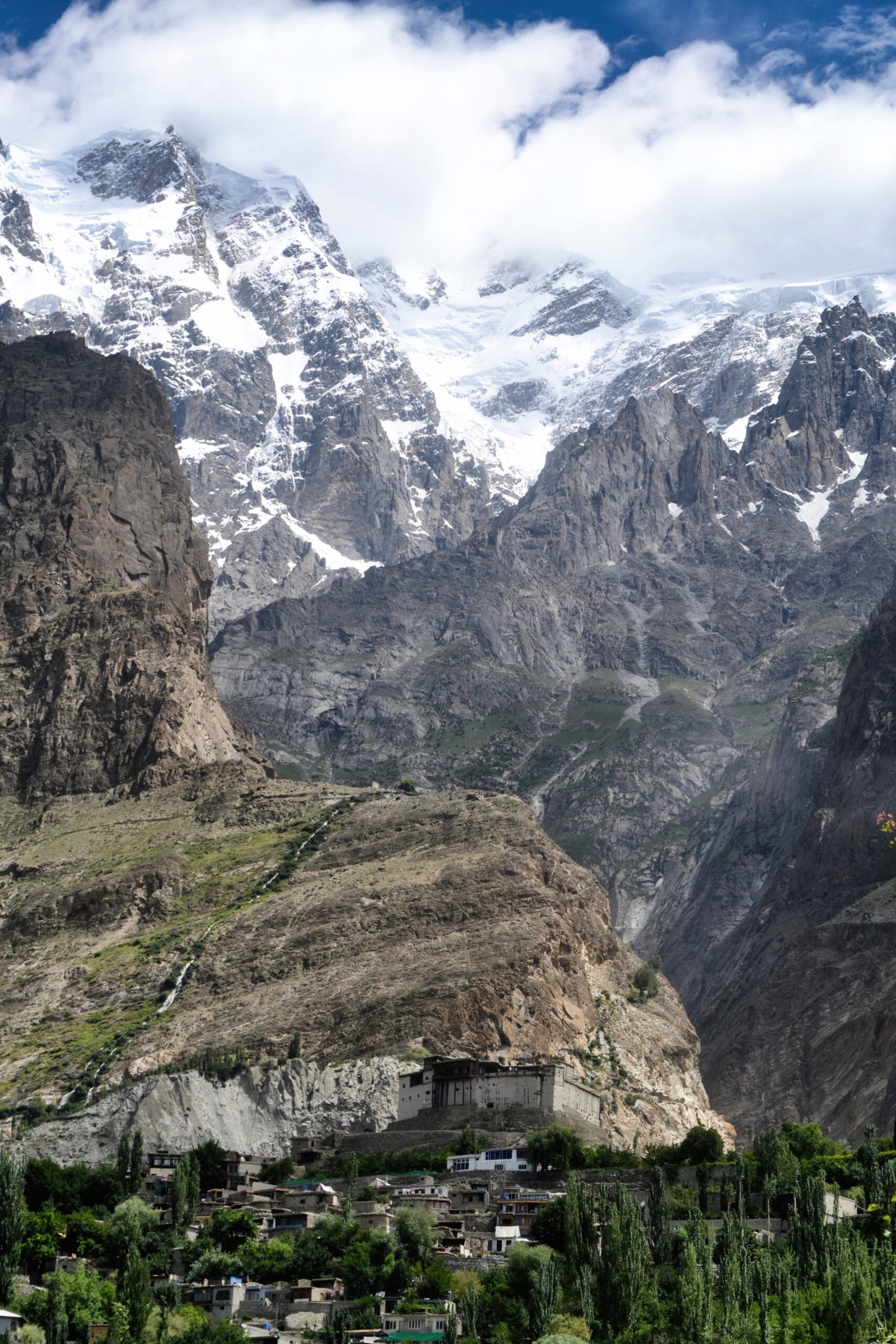
Walk up to Baltit Fort and Altit Fort in the snow, when the old lanes of Karimabad are quiet. Altit Fort is about 1,100 years old, and both forts are the highlights of Karimabad in any season. Check opening hours locally in winter, as staff and hours may be reduced. For the full story of the old capital, see our Karimabad guide.
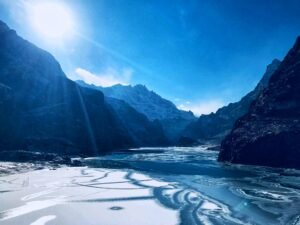
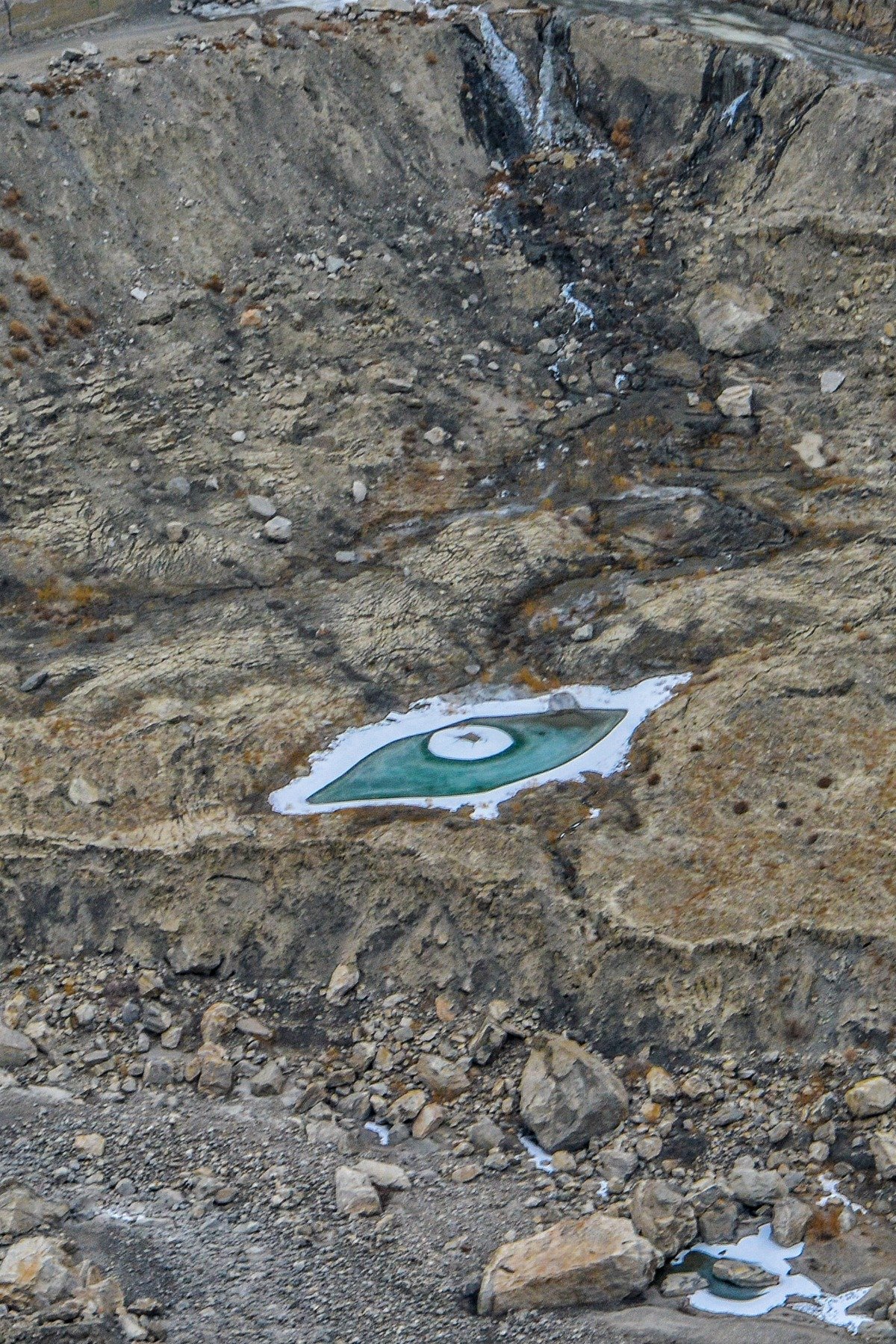
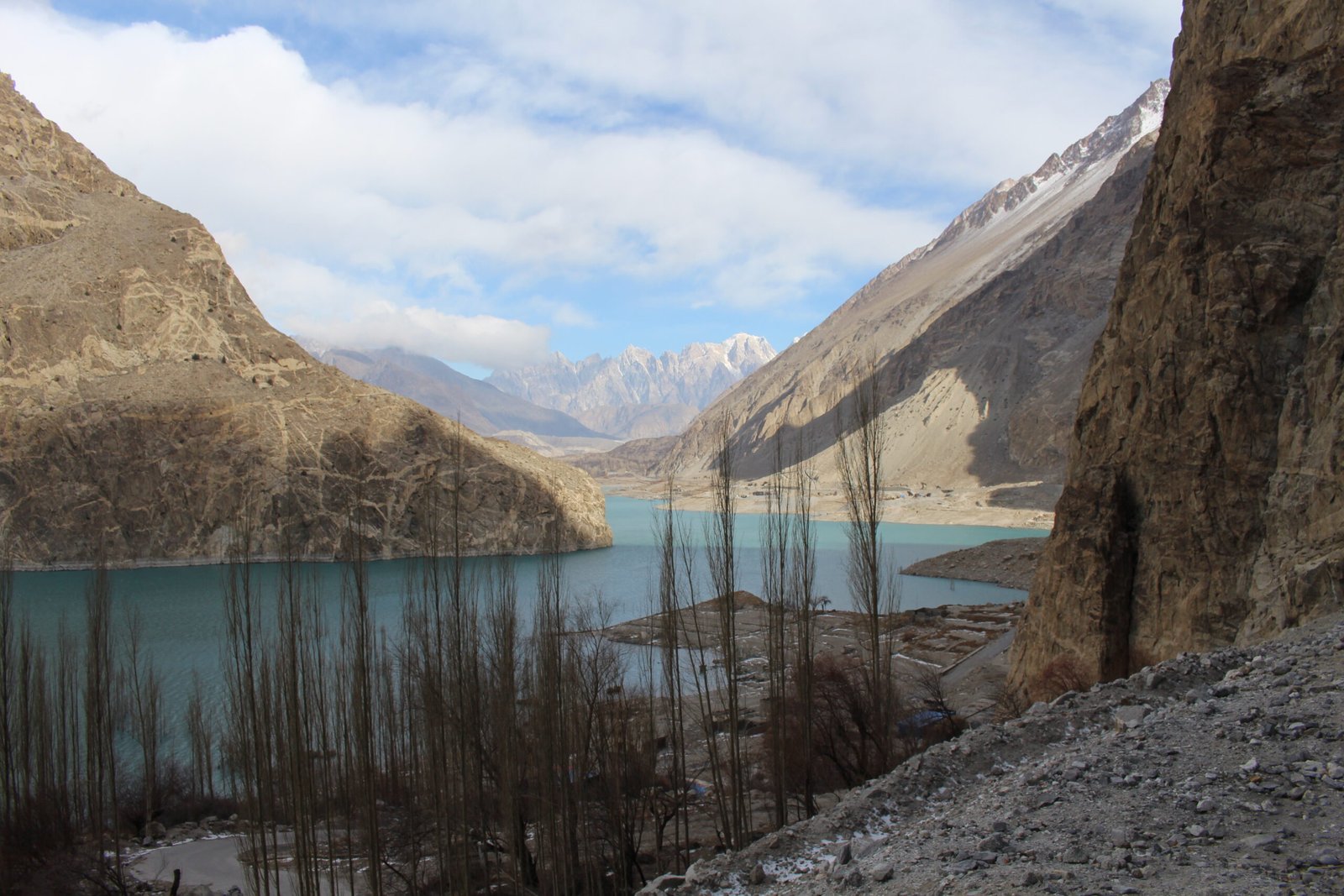
Drive to Attabad Lake and stand on the shore. The lake formed when a landslide dammed the Hunza River in January 2010, and today it stretches about 21 km between ochre cliffs. In a cold December, parts of the surface freeze at the edges. Do not walk on the ice. It is deep water, and the ice thickness varies. Boating and jet-ski operators, which run in summer, are generally not operating when the lake is iced up. Further up the valley, Borith Lake sits at about 2,600 m above Hussaini village near Gulmit, and in cold spells it partly freezes too.
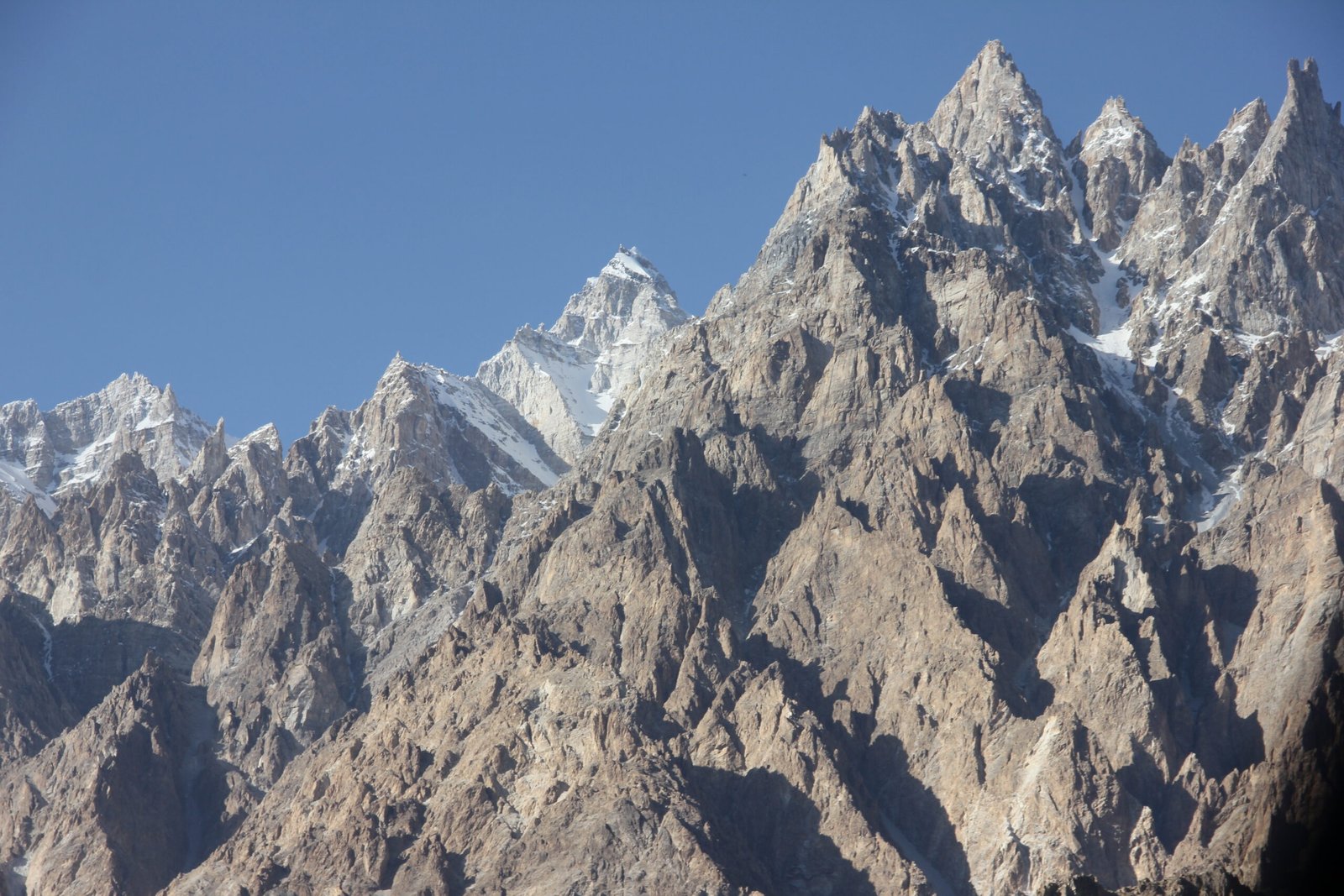
Watch the sunrise from Eagle’s Nest at Duikar, about 2,800 m, if the road is clear. Rakaposhi and Ultar Sar stand out sharply against clear winter skies, and the low gold light is the best photography light of the year. The Passu Cones, seen from the road near Passu, wear snow on every serration. For the Passu area in detail, see our Passu Gojal guide.
Walk the villages. With the poplars bare, you see the shape of the valley, the terraced fields and the old settlements in a way summer never shows. December is when the valley belongs to the people who live there, and a homestay evening in January teaches you more about the region than a hotel week in July, which is just as true in December.
One thing to leave for January: the community ice hockey tournament at Altit, the Karakoram Interlude, is a January event, not a December one. In 2026, thin ice forced part of it to move north to Sost. If you are in Hunza in late December, ask locally whether any early-season ice gathering is planned, but do not travel for it.
Is there a festival in Hunza in December?
No major festival falls in December, and this is where both ranking December guides, and our first draft, got Salgirah wrong, so read this carefully.
Salgirah is the birthday of the Ismaili Imam, the spiritual leader of the Ismaili Muslim community, which forms the majority in Hunza and Ghizer. It used to fall on 13 December, the birthday of Aga Khan IV, born 13 December 1936. Aga Khan IV died on 4 February 2025, and his son Prince Rahim became Aga Khan V, born 12 October 1971, so Salgirah is now 12 October. The 55th birthday was celebrated on 12 October 2026 in Hunza, Gilgit and Ghizer (Dawn, 13 October 2026). 13 December is now a remembrance of the late Imam, and no public lights festival in December 2026 is confirmed, so do not plan a December trip around it. If you want the lights, come in October instead, and read our Salgirah in Hunza guide first.
A note on respect: Salgirah is a religious community celebration, not a tourist show. Do not expect access to Jamatkhana gatherings, and do not photograph people at prayer or inside community halls. If a local family invites you to share the evening, accept with thanks. That invitation is the experience.
The other December date worth knowing is the winter solstice, around 21 December, the shortest day of the year, with about 9.7 hours of daylight in Karimabad. There is no verified public solstice festival in Hunza, despite one tour seller advertising “winter solstice celebrations”. The date matters for planning, not for parties: plan your days around the short light.
Where should I stay in Hunza in December?
This is the practical question both ranking guides answer badly, so here is the honest version: there is no reliable published list of which Hunza hotels stay open in December, and you should not trust one.
Many smaller guesthouses and seasonal hotels close from December to February, while larger hotels in Karimabad, Aliabad and near Attabad Lake generally stay open, with reduced services. Tour operators list names like Serena Hunza, Eagle’s Nest Hotel, Luxus Hunza and Darbar Hotel as winter-open, but we could not independently verify December opening for any of them, and booking platforms contradict the tour sellers. Expedia-group listings for Hunza Serena Hotel, for example, carry a confusing seasonal closure notice that cannot be reconciled with the tour operators’ claims. That contradiction is exactly why a list of names would mislead you.
Do this instead. Before you book, ask the property these four questions directly, by phone or message, and get the answers in writing: Are you open through December? What heating does the room have, wood stove, gas or electric? Is there a generator or solar backup for power cuts? Is hot water available in the morning? A hotel that answers all four clearly is a safe booking. A hotel that cannot answer is not. For the wider picture on where to stay, see our Best Hotels in Hunza Valley and Where to Stay in Gilgit-Baltistan guides, and confirm December opening with the property itself.
How do I handle power cuts and stay warm?
Expect long power cuts. This is the part of a December trip that most guides skip or soften, and it matters more than the temperature.
Gilgit-Baltistan relies heavily on hydropower, and when streams freeze, output drops sharply. Figures from the Gilgit-Baltistan Water and Power Department, reported by Dawn in November 2026, put the region’s hydropower at about 211.6 MW before the 2025 floods, down to about 157 MW after them, against summer demand of about 285 MW. Gilgit city has about 70 MW installed and generates only about 33 MW in winter. An 18 MW rooftop solar programme on 499 government buildings is due by December, but that does not fix household supply. For the full story, see our Winter Power Cuts report.
What that means for you: choose a hotel with a generator or solar backup and wood or gas heating, not electric heating alone. Bring a power bank, or two, and a headtorch. Keep phones and camera batteries warm, because cold drains them fast. Carry some cash, because card machines and ATMs depend on power and connectivity. A four-season sleeping bag liner helps in guesthouses where the bedding is thin. The Anker PowerCore 10000 is the power bank we carry ourselves: Anker PowerCore 10000 on Amazon. As an Amazon Associate, we earn from qualifying purchases made through that link, at no extra cost to you.
What should I pack for Hunza in December?
Pack for temperatures well below freezing at night and only a few degrees above by day, and for rooms that are warm only near the stove.
A proper down jacket, plus fleece and thermal base layers, top and bottom, because you will sleep in them. Warm hat, neck gaiter, insulated gloves with liner gloves beneath. Waterproof, insulated boots with good grip, and microspikes for icy village lanes. Warm socks and sleepwear for chilly rooms. Sunglasses and sunscreen, because snow glare is strong at altitude. Lip balm and heavy moisturiser for the dry air. A headlamp for power cuts, and twice the power-bank capacity you think you need, kept warm. For the full system, see What to Pack for Northern Pakistan.
One health note: Karimabad sits at about 2,450 to 2,500 metres, and Duikar at about 2,800 metres, so altitude deserves respect even on a gentle trip. Ascend gradually, drink water, and do not rush the climb to Eagle’s Nest on your first morning. If symptoms get worse, stop and go down. For the full guidance, see our Altitude Sickness guide.
What does a realistic 5-day December itinerary look like?
Because of flight delays and short days, keep a December plan simple. Daylight is limited to about 9.5 to 10 hours, so start early and aim to be at your hotel before dark, when temperatures drop fast.
Day 1: Fly Islamabad to Gilgit, or start the drive if the flight is cancelled. Continue to Karimabad. If driving, overnight in Chilas or Besham and reach Karimabad on Day 2.
Day 2: Baltit Fort, Altit Fort and the old villages of Karimabad, then the bazaar. At dusk, watch the valley lights come on from a viewpoint above Karimabad.
Day 3: Drive to Attabad Lake, Gulmit and Borith Lake, with the Hussaini Bridge viewpoint on the way. Back to Karimabad for the night.
Day 4: Sunrise at Eagle’s Nest, Duikar, if the road is clear. Then Passu and the Passu Cones, with the Rakaposhi viewpoint on the way down to Karimabad.
Day 5: A spare day in Karimabad for weather, shopping, or a second attempt at anything the weather blocked. Do not schedule your flight home on this day.
Day 6: Drive to Gilgit and fly to Islamabad, weather permitting. Keep one more spare day after this if your international flight allows it. For the wider seasonal picture, see our Best Time to Visit Hunza Valley and Winter in Gilgit-Baltistan guides.
Is December a good time to visit Hunza?
December suits photographers, return visitors and travellers who like quiet places and do not mind the cold. You get the year’s most dramatic light on snowbound forts, empty viewpoints, and a valley that belongs to its people.
December does not suit first-time visitors who want the greatest-hits circuit, trekkers, travellers on a tight schedule, or anyone who needs reliable heating and electricity. With Deosai, the high passes, boating and trekking all closed, a first trip in December would miss much of what makes the region famous.
A fair test: if the phrase “we may wait two days in Gilgit for the weather” sounds like part of the adventure, December will reward you. If it sounds like a ruined holiday, come in late March for blossom or in October for autumn instead.
Yes, if you want quiet, clear views and a frozen landscape, and you can cope with cold and power cuts. The forts, the bazaar, Attabad Lake and the Passu Cones are all reachable, and December is the quietest month of the year. It is not the season for trekking, boating or tight schedules.
In Karimabad, expect daytime highs around 2 to 6 C and nights around minus 7 to minus 8 C, with colder snaps in upper Hunza. Aliabad averages 4.0 C by day and minus 4.6 C at night. Gilgit is milder, about 12 C by day and minus 2 C at night. These are long-term averages, not forecasts.
Officially, yes. The border moved to year-round operation in December 2024 and was formally inaugurated for year-round trade and travel on 22 April 2025. In practice, snow can close the Sost to Khunjerab road at short notice, so do not plan a December sightseeing trip to the pass. Treat it as a bonus, not a plan.
Open: the Karakoram Highway, Baltit and Altit Forts with reduced hours, Karimabad bazaar, Attabad Lake viewpoint, Borith Lake, Passu Cones and Eagle’s Nest when roads are clear. Closed: Babusar Pass, Deosai, the Fairy Meadows jeep track, high treks, and most small seasonal guesthouses and cafes.
Yes, PIA flies Islamabad to Gilgit in about 45 minutes, but December flights depend on visual weather clearance and are often delayed, sometimes for several days. Keep at least two spare days, never book a tight international connection on the back of a Gilgit flight, and have the road as a backup.
A proper down jacket, fleece and thermal base layers, warm hat, neck gaiter, insulated gloves with liners, waterproof insulated boots with microspikes, warm socks and sleepwear, sunglasses and sunscreen, lip balm and moisturiser, a headlamp, and twice the power-bank capacity you think you need, kept warm against the cold.