Last updated: 12 November 2026
Short answer
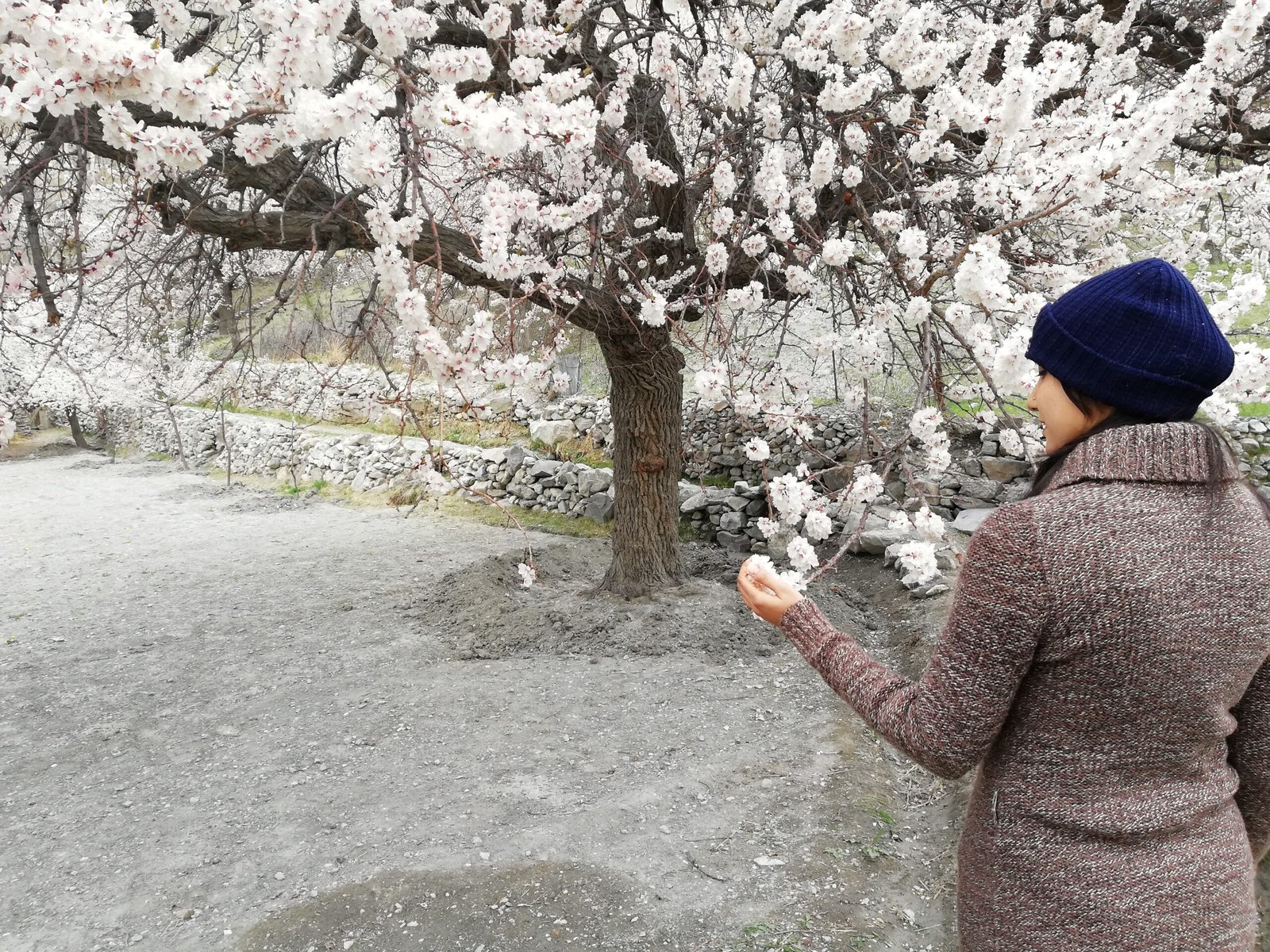
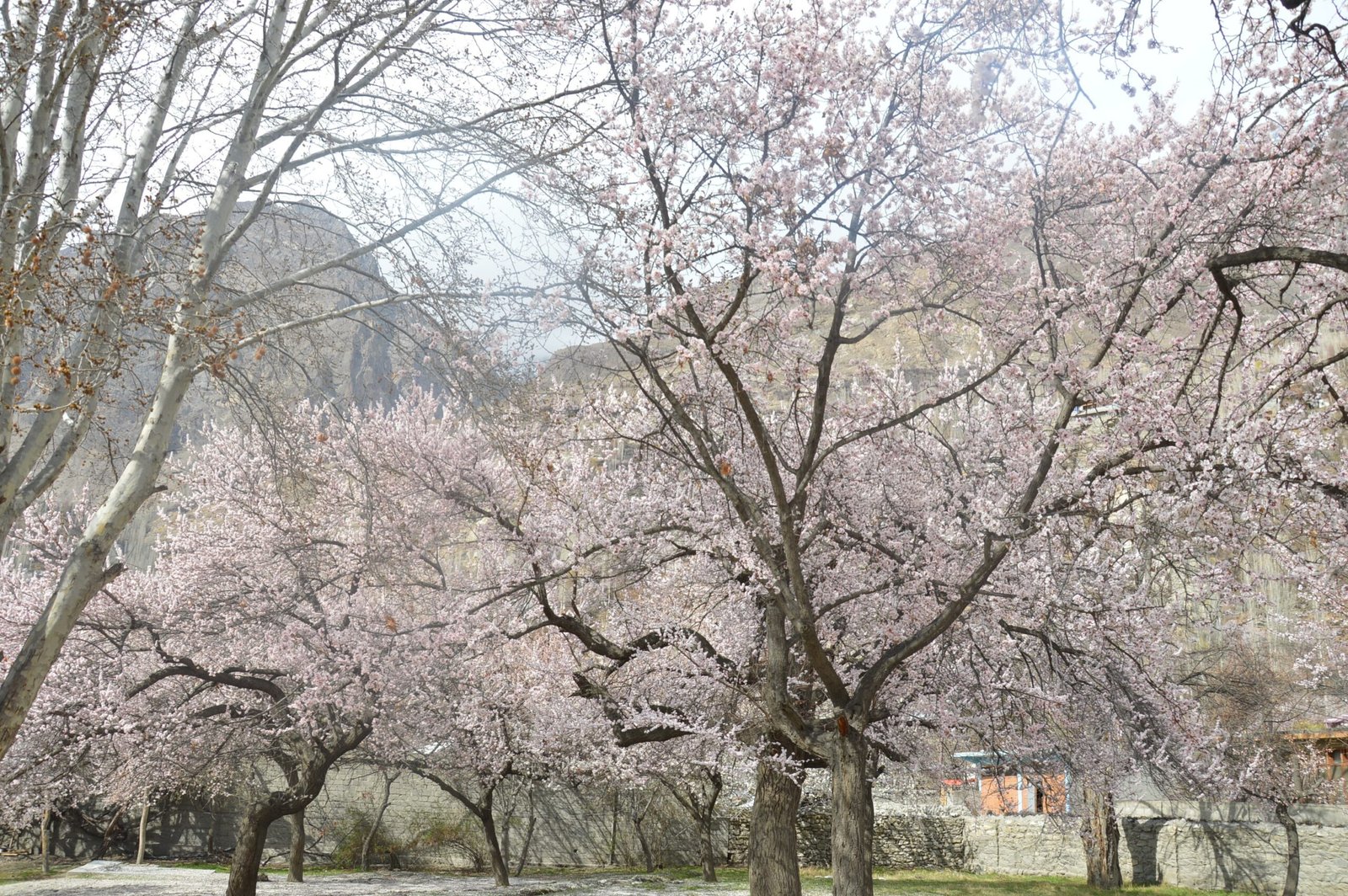
A 5-day Skardu blossom tour runs from late March to late April, with peak blossom in early to mid April. Skardu town is the base for the first three days, then the route moves to Shigar Valley and Khaplu in Ghanche District, with Chunda Valley as the blossom highlight. Cherry, apricot and apple blossom fills the orchards while snow still sits on the peaks above. Deosai stays closed under snow until mid-June, so this tour does not include the plateau.
When is the best time for a Skardu blossom tour?
Aim for late March to late April, and plan the core days for early to mid April. Bloom follows altitude, so lower orchards flower first and higher villages follow a week or two later. The exact week shifts with each winter, so treat every date below as typical and confirm locally before you travel.
| Place | Typical blossom window | What flowers |
|---|---|---|
| Skardu town and lower orchards | Late March to mid April | Cherry, apricot, apple |
| Chunda Valley | Late February to mid April, peak early to mid April | Apricot and cherry |
| Shigar Valley | Late March to late April | Apricot, cherry, apple |
| Khaplu and Ghanche | Late March to May | Apricot, cherry, almond |
| Deosai plateau | Closed, opens mid-June | No blossom, wildflowers in July and August |
Skardu in April is mild by northern Pakistan standards. Days usually reach about 12 to 19C and nights fall to about 0 to 7C, with high villages colder. Our best time to see cherry blossom guide covers the same timing valley by valley across Gilgit-Baltistan, and our best time to visit Skardu guide puts April in the full year-round picture.
How do you get to Skardu in spring?
Fly or drive. PIA and Airblue fly Islamabad to Skardu in about 1 hour 20 minutes, but spring flights are weather dependent, so keep a buffer day at the start. Our flights to Skardu guide compares the routes, and our Lahore to Skardu by air guide covers the Lahore option.
By road, the Karakoram Highway via Besham and Jaglot stays open year round, weather permitting, and the Jaglot to Skardu road is fully paved. Babusar Pass is closed in spring. It shut on 11 October 2026 and is expected to reopen around June 2027, so the Naran route is not an option for a blossom trip. The drive from Islamabad to Skardu takes about 20 to 22 hours, so most travellers fly in and drive out, or break the road journey overnight.
Day 1: Arrive in Skardu and the first blossom
Land at Skardu Airport, about 10 km from town, and take the first afternoon slowly. Skardu sits at about 2,230 m, so rest, drink water and let your body adjust before any climbing. Walk the bazaar, look for the first blossom in the town orchards, and climb to Kharpocho Fort for the sunset view over the town, the Indus River and the cold desert.
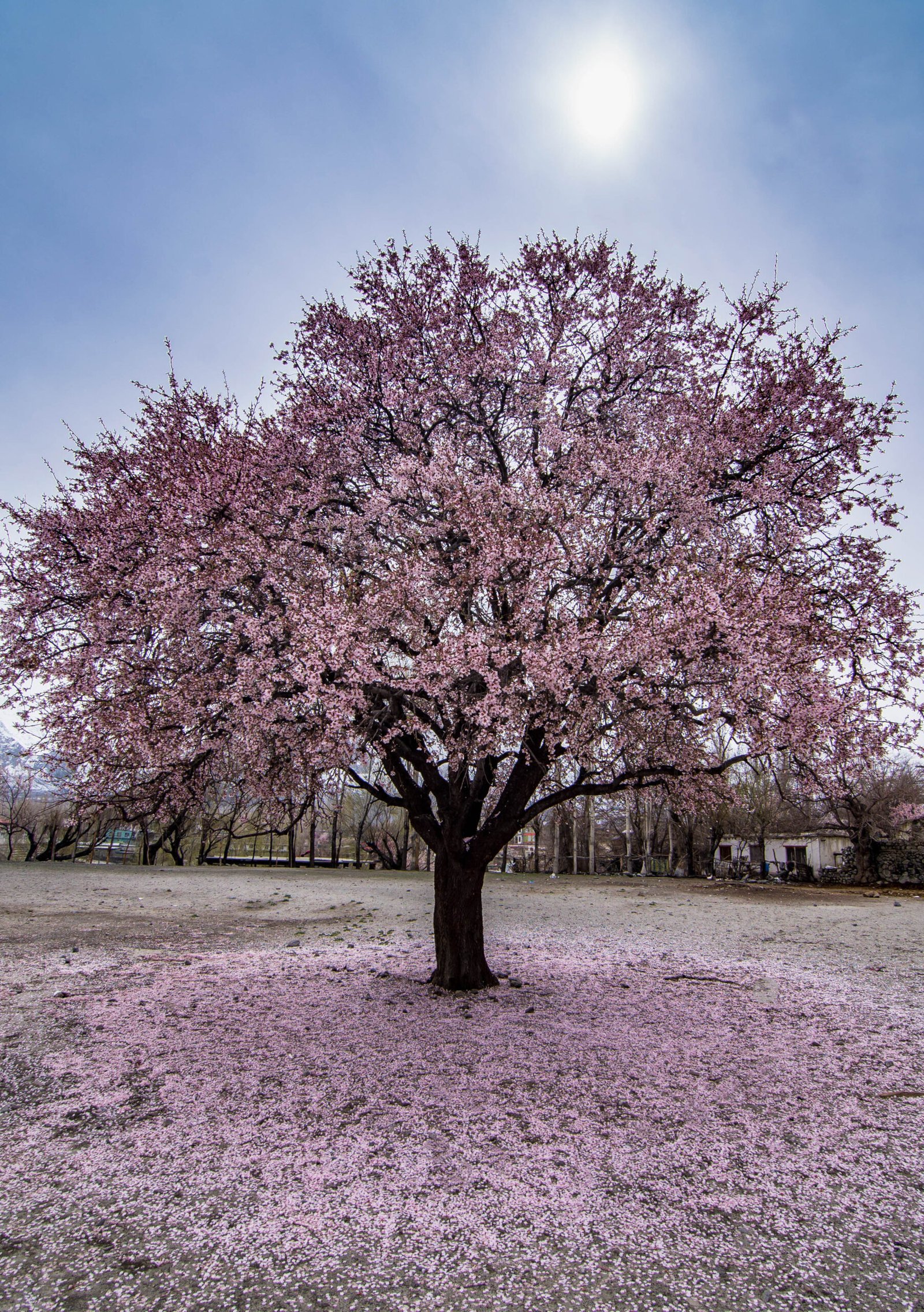
Keep Day 1 light on purpose. The fort climb is short but steep, and the altitude is real. Our things to do in Skardu guide lists the town sights in full if you arrive early and want more.
Day 2: Chunda Valley, the apricot heartland
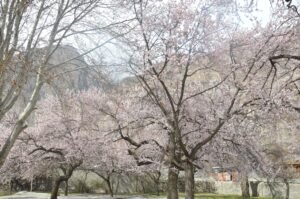
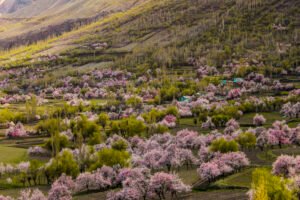
Chunda Valley is the blossom highlight of this tour. It sits about 500 m above Skardu town at roughly 2,500 m, a terraced hillside of apricot and cherry orchards with views over the Indus and Shigar rivers. Go in the morning light, when the blossom is brightest and the peaks are clearest.
The drive takes about 30 to 60 minutes by 4×4 jeep on steep, partly unpaved roads. Published distances genuinely vary, from about 10 km to about 35 km depending on the route and starting point, so confirm the route and the fare with your driver before you set off. A normal car can struggle on the rough upper track, so a jeep with a local driver is the safer choice.
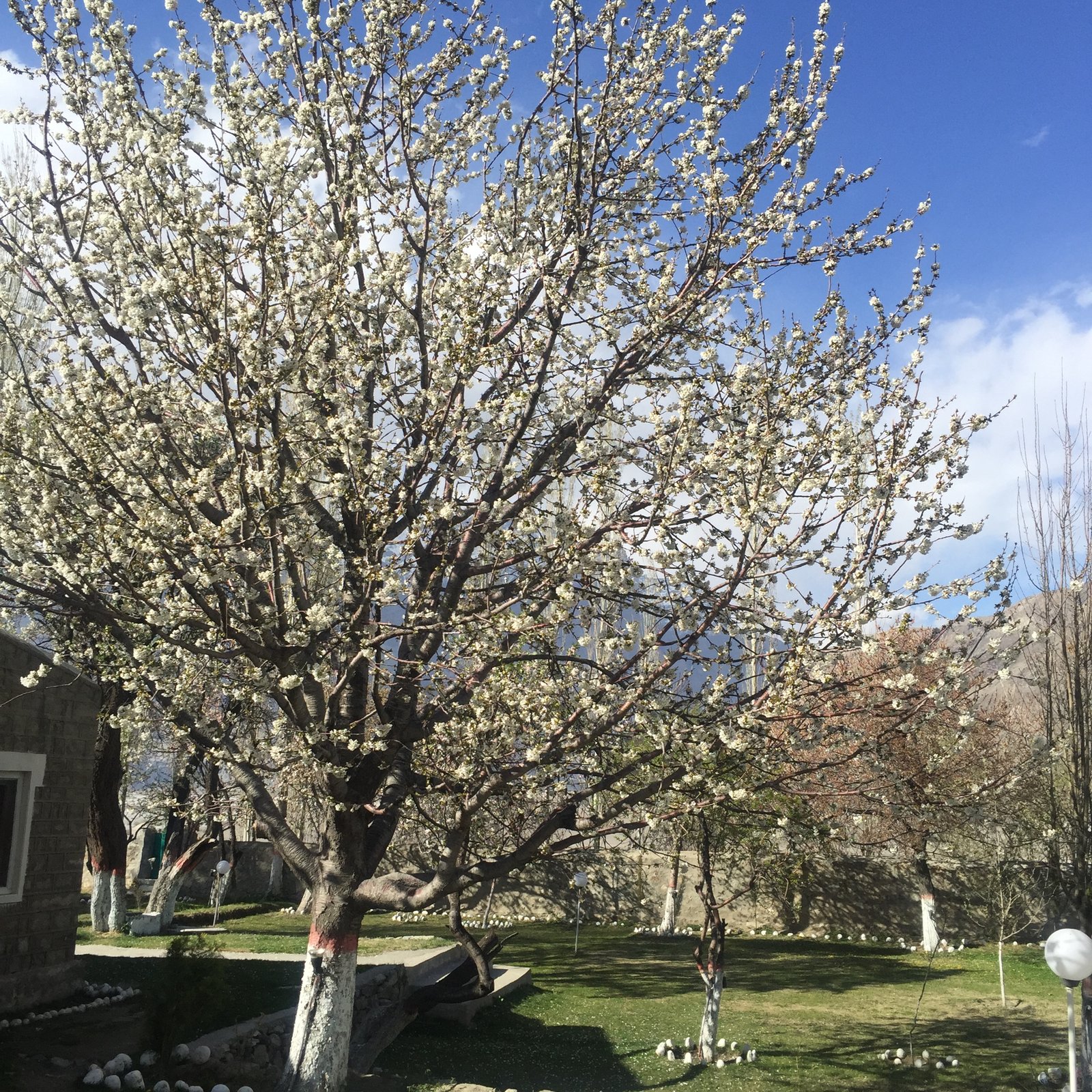
Walk between the villages, photograph the orchards from the viewpoints, and visit the small Chunda Fort if it is open. Half a day is enough. Return to Skardu for the afternoon and the cold desert dunes at Katpana, which look their best in the low evening light. Our cherry blossom in Skardu Valley guide covers Chunda, Shigar and Khaplu in more depth.
Day 3: Shigar Valley and Shigar Fort
Drive north to Shigar Valley in Shigar District, about 30 to 40 km from Skardu and roughly 1 to 1.5 hours each way on a paved road. The valley is lined with poplar trees and apricot orchards, and in spring the blossom runs along the whole road.
Visit the 400-year-old Shigar Fort, restored as a heritage hotel and museum, and the old wooden Amburiq Mosque nearby. Walk through the orchard villages, where the blossom is often quieter and less photographed than Chunda. Return to Skardu in the evening, or stay overnight in Shigar if you want a slow morning among the orchards.
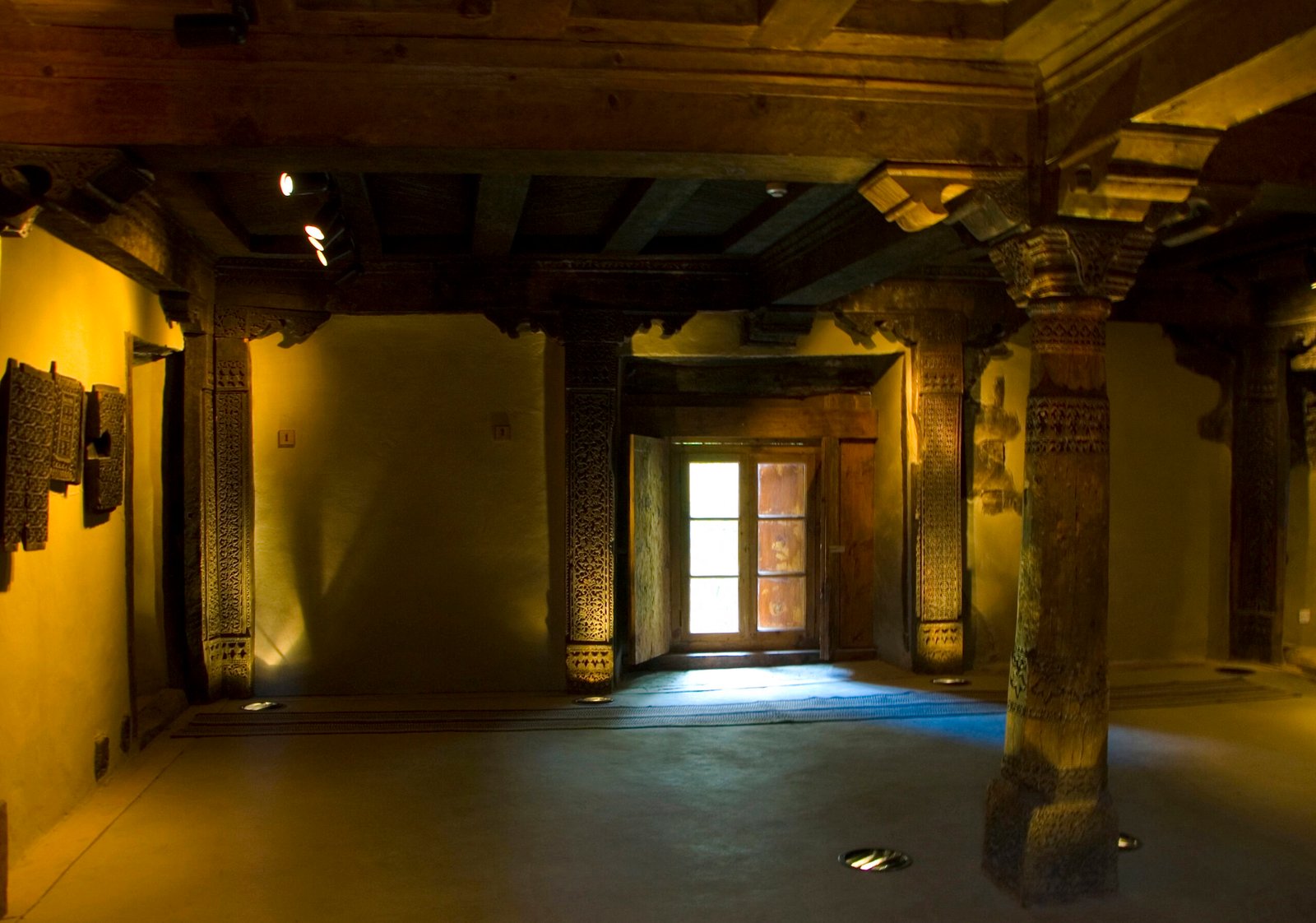
Day 4: Khaplu and the Shyok River
Day 4 is the longest drive of the tour. Khaplu, in Ghanche District, sits about 100 km east of Skardu along the Shyok River, about 2.5 to 3 hours each way, with some operators quoting up to 4 hours. Leave early, book the vehicle for the whole day, and treat it as a full-day trip.
Khaplu Palace, also called Yabgo Khar, is the main stop, a restored 19th-century palace above the town. The Chaqchan Mosque, built in 1370 AD, is one of the oldest mosques in the region. Apricot and cherry orchards surround the town, and the valley blooms later than Skardu, so Khaplu can still be in flower when the lower valleys are past peak.
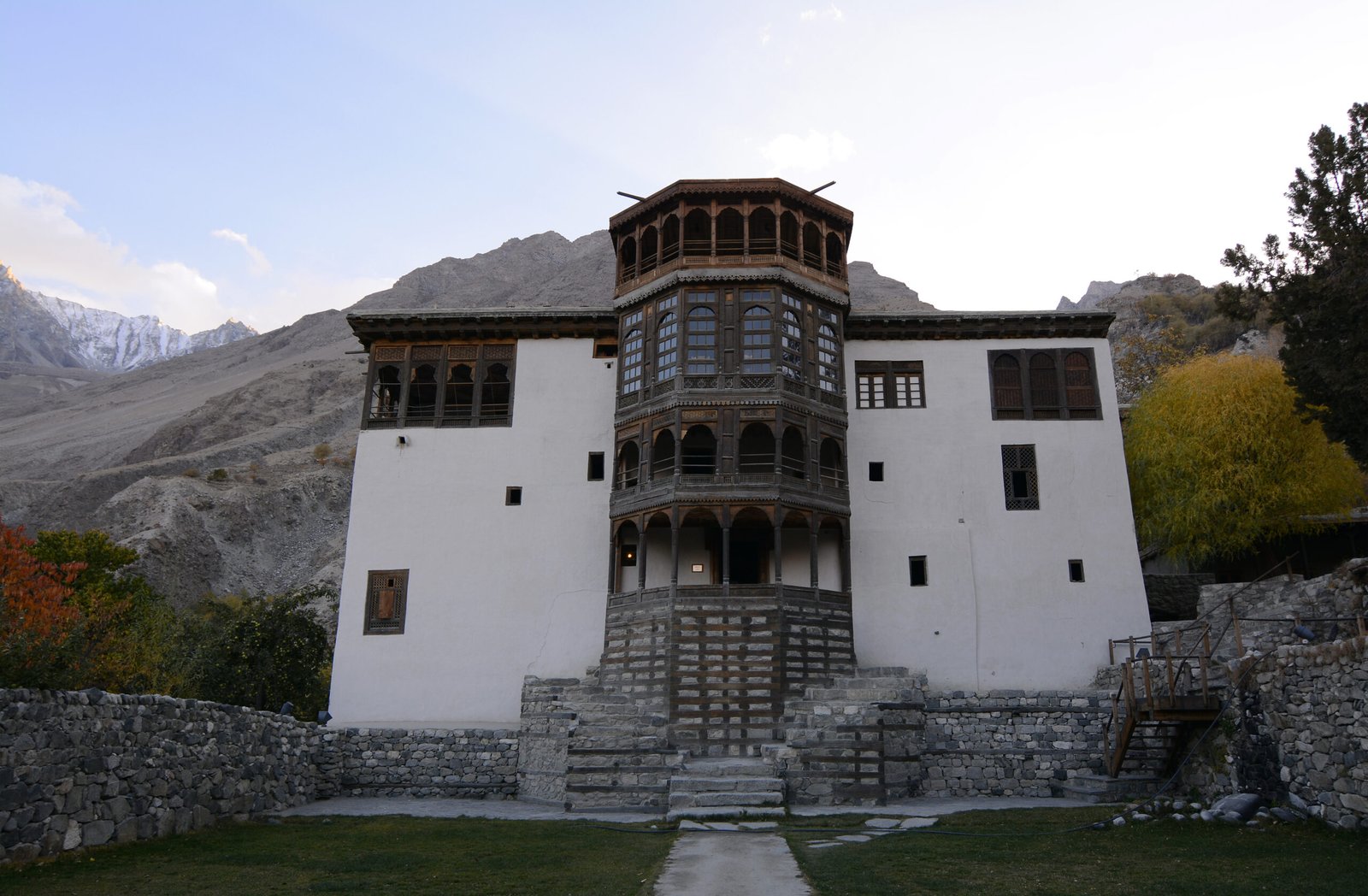
No licence-verified photo of blossom in Khaplu itself was found on Wikimedia Commons, so the palace photo stands in for this day and the orchards are described in the text. If you stay overnight in Khaplu, the next morning gives you a quiet walk through the orchards before the drive back.
Day 5: Lakes, desert and departure
Spend the last morning on the lakes. Satpara Lake sits 7 to 9 km south of Skardu, about 20 to 30 minutes by road, at 2,636 m. The Kachura lakes, including Lower Kachura Lake and Shangrila Resort, are 30 to 45 minutes from town. In spring the lakes are cold and clear, with snow on the peaks behind them, and the crowds are thinner than in summer.
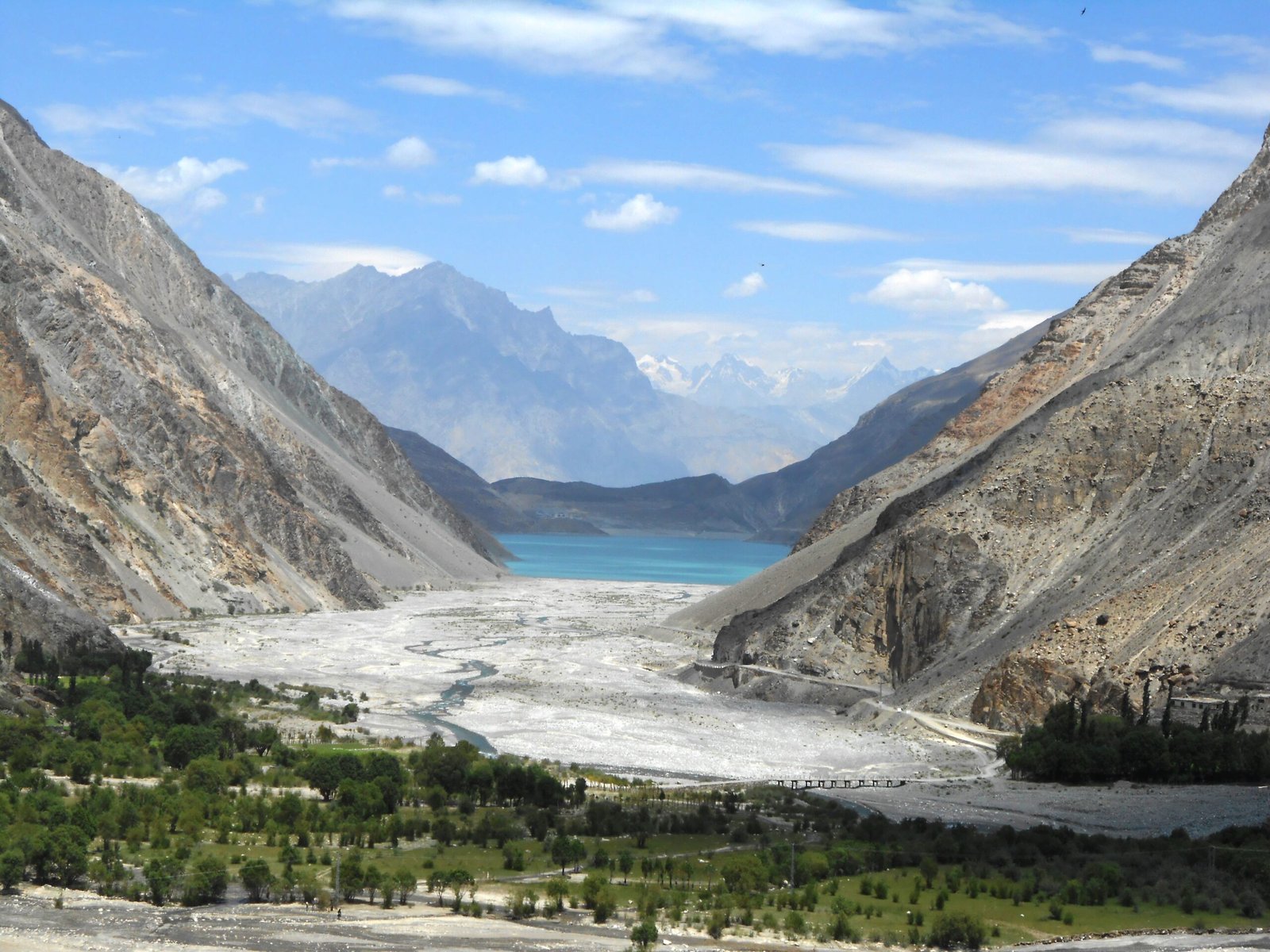
Return to town for lunch, a last walk through the bazaar for dried apricots and local handicrafts, and the flight or drive out. If your flight is delayed, and spring flights often are, the lakes and the desert are the easiest places to fill a spare half day. Our 5-day Skardu itinerary covers the same lakes and valleys outside blossom season, if you want a non-spring version of the route.
| Leg | Distance | Typical drive time |
|---|---|---|
| Skardu Airport to Skardu town | About 10 km | 20 to 30 minutes |
| Skardu to Chunda Valley | 10 to 35 km, sources vary | 30 to 60 minutes by jeep |
| Skardu to Shigar Valley | About 30 to 40 km | 1 to 1.5 hours |
| Skardu to Khaplu | About 100 km | 2.5 to 3 hours, some quote 4 |
| Skardu to Satpara Lake | 7 to 9 km | 20 to 30 minutes |
| Skardu to Kachura lakes | About 20 km | 30 to 45 minutes |
What should you pack for a spring trip to Skardu?
Pack layers. April days are mild but mornings, evenings and high villages are cold, and a spring shower can arrive with little warning. A warm jacket, a fleece, a waterproof shell, sturdy walking shoes and sun protection cover most days. Our what to pack for spring guide has the full layering list for Gilgit-Baltistan in March and April.
One item worth carrying is a power bank. Cold drains phone batteries faster, and you will be photographing all day with few charging stops on the valley roads. The Anker PowerCore 10000mAh is a light, reliable option for a day out. As an Amazon Associate, Gilgit Baltistan Discoveries earns from qualifying purchases made through links on this page.
What does this tour not include?
Three honest limits. First, Deosai is not on this tour. The plateau is buried under snow from late October to May and reopens around mid-June, so a spring trip cannot reach it. If Deosai is the reason for your trip, come in July or August instead.
Second, Hushe Valley is not included. The road beyond Khaplu is rough, the drive is 3 to 4 hours each way, and it needs its own day. Add it only if you have a sixth day.
Third, this guide gives no prices. Hotel rates, jeep fares and flight fares change through the season and are set by local operators, so confirm them directly before you book.
How do you book this trip?
This itinerary is a self-drive plan, not a package. Book your own flights, rooms and jeep, and use the route above as the day-by-day shape. If you want the same route arranged for you, tell us your dates and group size on our Plan Your Trip page and Explore Nagar Travels will plan it around the blossom timing.
Frequently asked questions
When is the best time for a Skardu blossom tour?
Late March to late April, with peak blossom in early to mid April. Lower orchards around Skardu town flower first, then Chunda Valley, then Shigar and Khaplu. The exact week shifts with each winter, so confirm the timing with a local operator a few weeks before you travel.
How many days do you need for a Skardu blossom tour?
Five days covers the route well. Day 1 is arrival and Skardu town, Day 2 is Chunda Valley, Day 3 is Shigar, Day 4 is Khaplu, and Day 5 is the lakes and departure. Four days works if you skip Khaplu, but the Shyok River drive is worth the extra day.
Can you drive to Chunda Valley in a normal car?
A normal car can reach the lower road, but the upper track to the viewpoints is steep and partly unpaved, so a 4×4 jeep with a local driver is the safer choice. The drive takes about 30 to 60 minutes from Skardu. Confirm the route and fare with your driver before setting off.
Is Deosai open during blossom season?
No. Deosai is closed under snow from late October to May and usually reopens around mid-June. A spring blossom trip cannot reach the plateau. Come in July or August for Deosai wildflowers, or in September for golden grass and clear skies.
Is Skardu cold in April?
April days are mild, usually about 12 to 19C, but nights fall to about 0 to 7C and high villages are colder. Pack a warm jacket and layers even on sunny days, and expect a cold morning in Chunda Valley and Shigar. A spring shower is possible, so carry a waterproof shell too.
Can I do this tour without a guide?
Yes, for the most part. Skardu town, the lakes and Shigar are easy to visit on your own with a hired car. Chunda Valley and Khaplu are easier with a local driver who knows the roads and the orchard villages. A guide is not required, but one helps you find the best blossom spots.