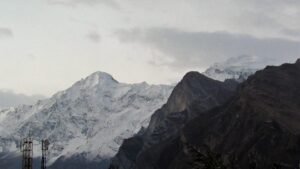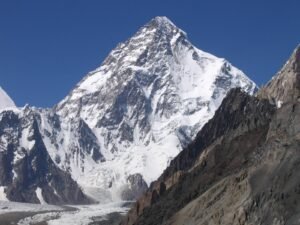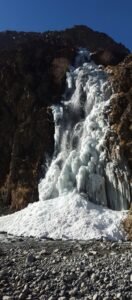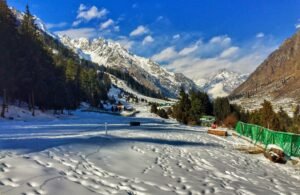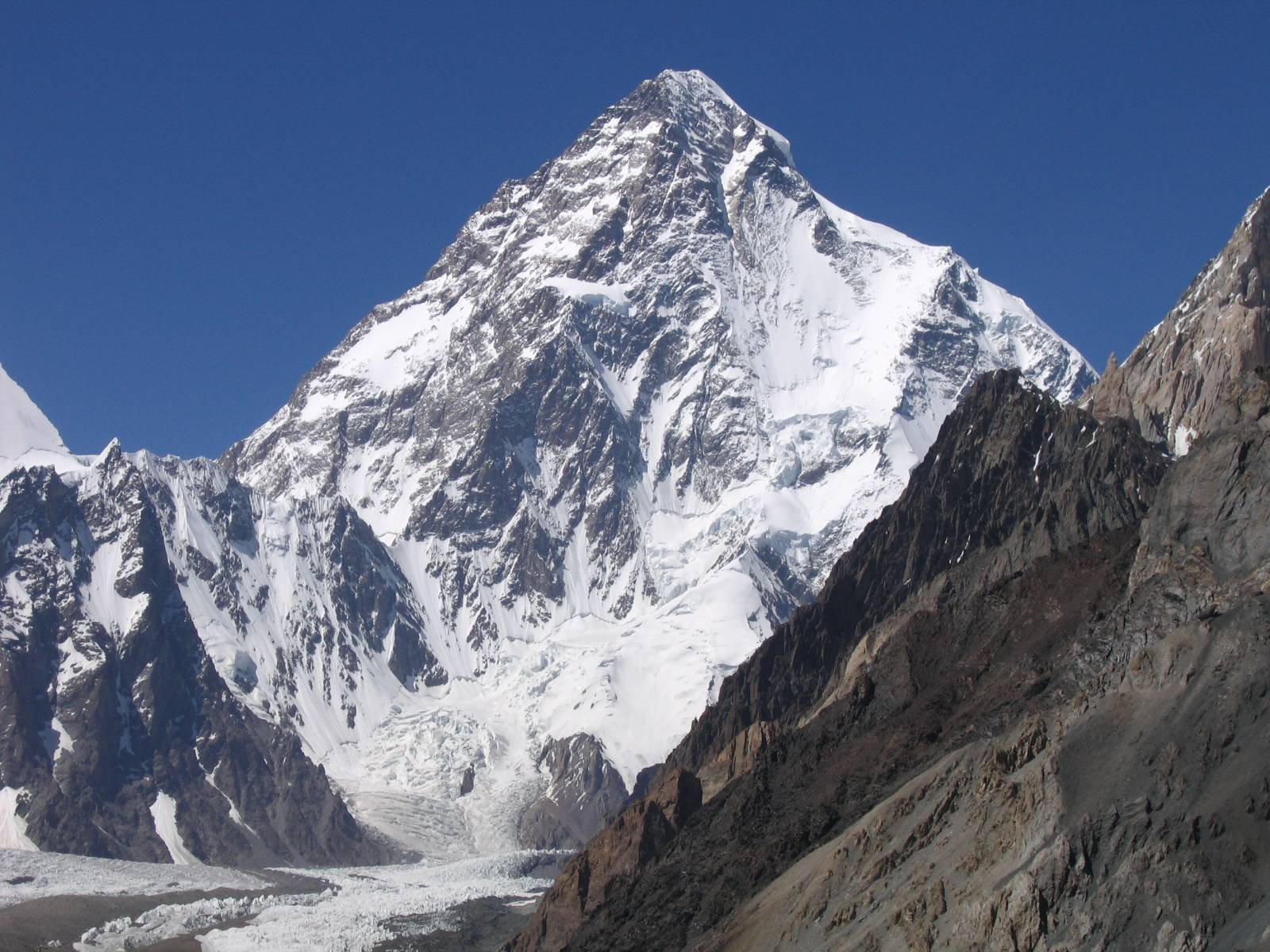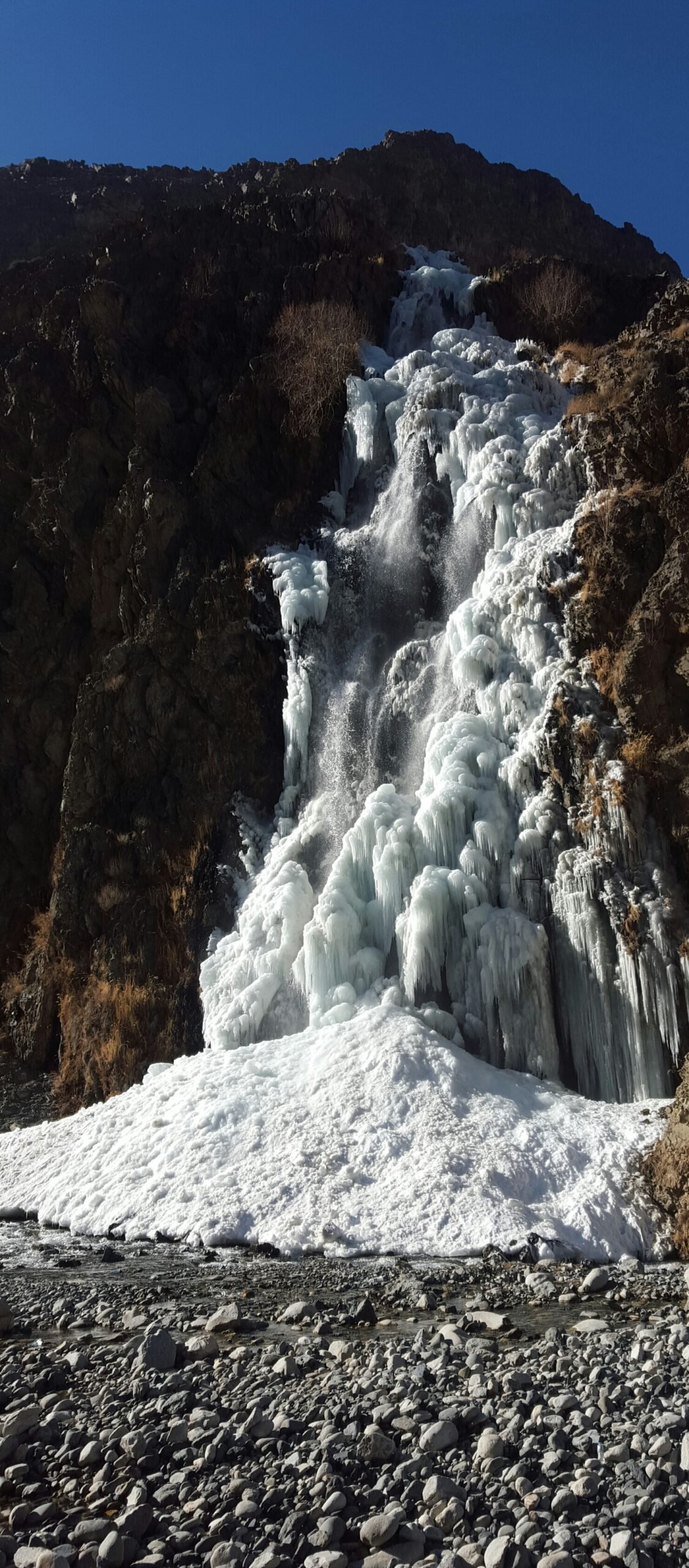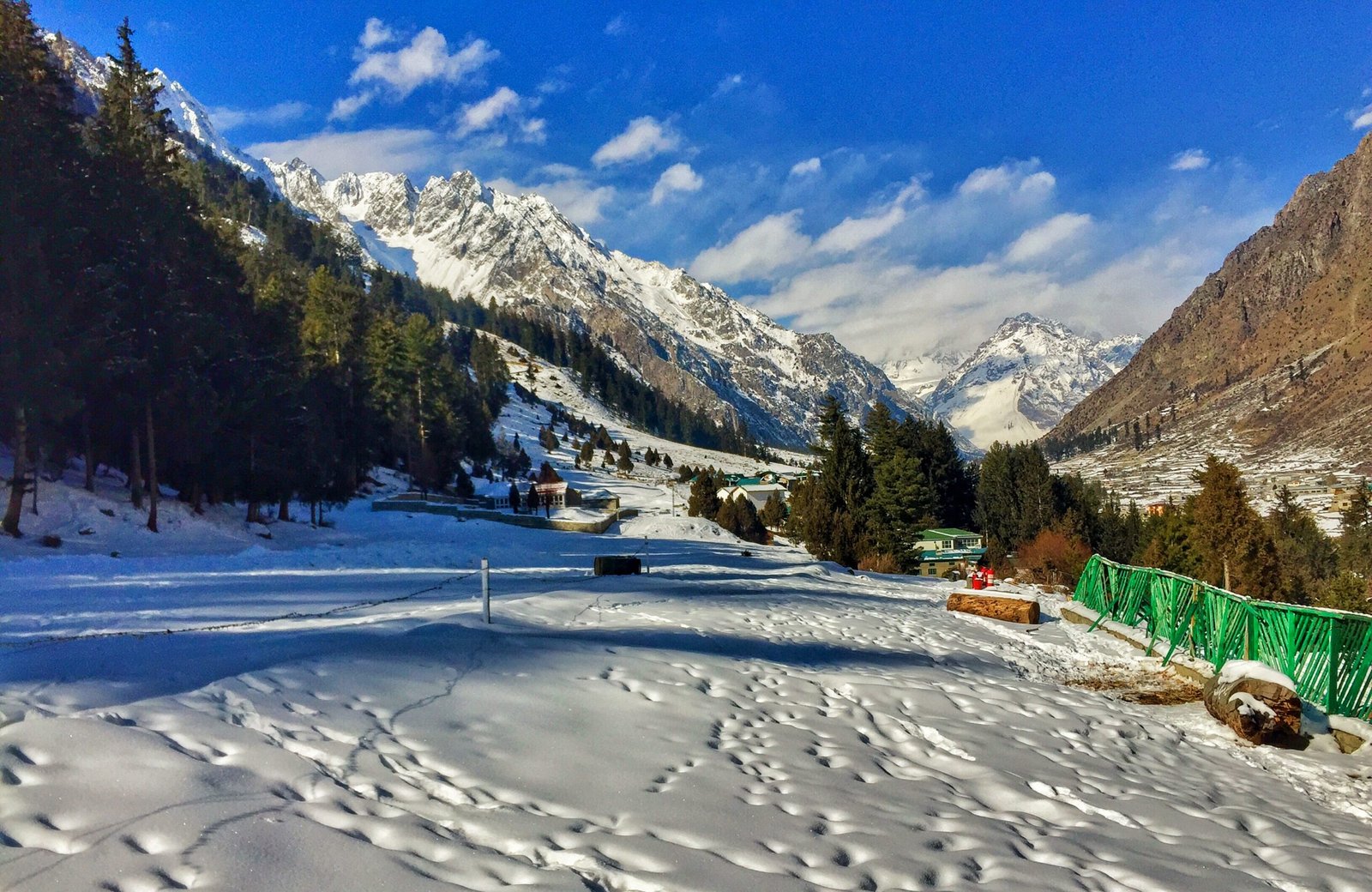
February is the last full month of deep winter in Hunza, and in many ways the best of it. The days are getting longer, the snow is still deep in the upper valleys, the frozen lakes are at their best, and the Naltar ski season is still running. It is slightly warmer than January, with Karimabad averaging about 4.2C by day and minus 5.2C at night, but it is still properly cold, the power cuts continue, and the high passes stay shut. Ramadan is expected to begin about 8 or 9 February 2027, which changes daytime eating and hotel meal timings. Come in February for quiet valleys, clear winter light and frozen lakes, not for blossom, which is still weeks away.
February at a glance
| What | February in Hunza |
|---|---|
| Karimabad, about 2,500 m | Days about 4.2C, nights about minus 5.2C on average |
| Gilgit, about 1,500 m | Days about 13C, nights about 0C on average |
| Daylight | About 10.5 hours on average, lengthening through the month |
| Crowds | Very few visitors, the valley at its quietest |
| Snow | Deep snow in the upper valleys, snow on the peaks above Karimabad |
| Frozen lakes | At their best, Attabad only partly frozen |
| Skiing | Naltar ski season running, December to March, snow permitting |
| Ramadan 2027 | Expected to begin 8 or 9 February, moon sighting decides |
| Blossom | None, cherry and apricot blossom starts late March at the earliest |
| Hotel prices | About 40 to 50 percent cheaper than peak season |
What is open and what is closed in February
| Place or route | February status |
|---|---|
| Karimabad bazaar and guesthouses | Open, quiet, hotels running on winter staffing |
| Baltit Fort and Altit Fort | Open through winter |
| Eagle’s Nest viewpoint, Duikar | Open, road icy, go in daylight |
| Attabad Lake | Open to visit, only partly frozen, boat rides depend on open water |
| Passu Cones and Gojal villages | Open, cold, snow on the ground |
| Naltar ski slope | Open, December to March, snow permitting |
| Karakoram Highway, Gilgit to Karimabad | Open year round, weather permitting, ice in shaded sections |
| Khunjerab Pass | Officially open year round for trade, tourist trips unreliable in winter |
| Babusar Pass | Closed since 11 October 2026, reopening expected about June 2027 |
| Deosai Plateau | Closed November to May |
| Fairy Meadows | Closed, jeep track snowbound, guided winter expeditions only |
| K2 Base Camp and high treks | Closed by snow, season runs about June to September |
How cold does Hunza get in February?
February is the second coldest month in Hunza, just behind January, and the difference is small. The climate table for Aliabad, the main town of central Hunza at about 2,206 m, gives February a mean daily maximum of 4.2C, a daily mean of minus 0.5C and a mean daily minimum of minus 5.2C. January is colder on every measure, at 1.4C, minus 3.0C and minus 7.3C, while December sits close to February by day, at 4.0C, with milder nights at minus 4.6C. Karimabad sits higher, at about 2,500 m, so expect its nights to run a little colder than Aliabad.
Gilgit, lower down at about 1,500 m, is noticeably milder. Pakistan Meteorological Department averages give Gilgit about 13C by day and 0C at night in February, against about 10C and minus 3C in January. The upper valleys, Gojal, Passu and the villages above Karimabad, run several degrees colder than the town, and wind chill on an open viewpoint can make it feel colder still.
The real change in February is the light. Days lengthen through the month, with about 10.5 hours of daylight on average, against about 9.5 to 10 hours in December. Sunrise comes earlier and sunset later, which matters more than the temperature: you get a longer window for driving, walking and photography, and the low winter sun stays golden for hours. Mornings are still sharp, with ice on shaded roads, and nights stay well below freezing all month.
| Place | February average high | February average low |
|---|---|---|
| Aliabad, Hunza, about 2,206 m | 4.2C | minus 5.2C |
| Karimabad, about 2,500 m | Slightly colder than Aliabad, especially at night | Slightly colder than Aliabad, especially at night |
| Gilgit, about 1,500 m | 13C | 0C |
| Upper Gojal and Passu | Several degrees colder than Karimabad | Several degrees colder than Karimabad |
Is February a good time to visit Hunza?
February suits a particular kind of traveller, and it is honest to say who that is. It is a good month if you want the valley to yourself, if you photograph snow and light, if you want to see the frozen lakes at their best, or if you want to ski at Naltar. Hotel prices run about 40 to 50 percent cheaper than in peak season, the forts are open, the bazaar is operating, and local life carries on without the summer crowds.
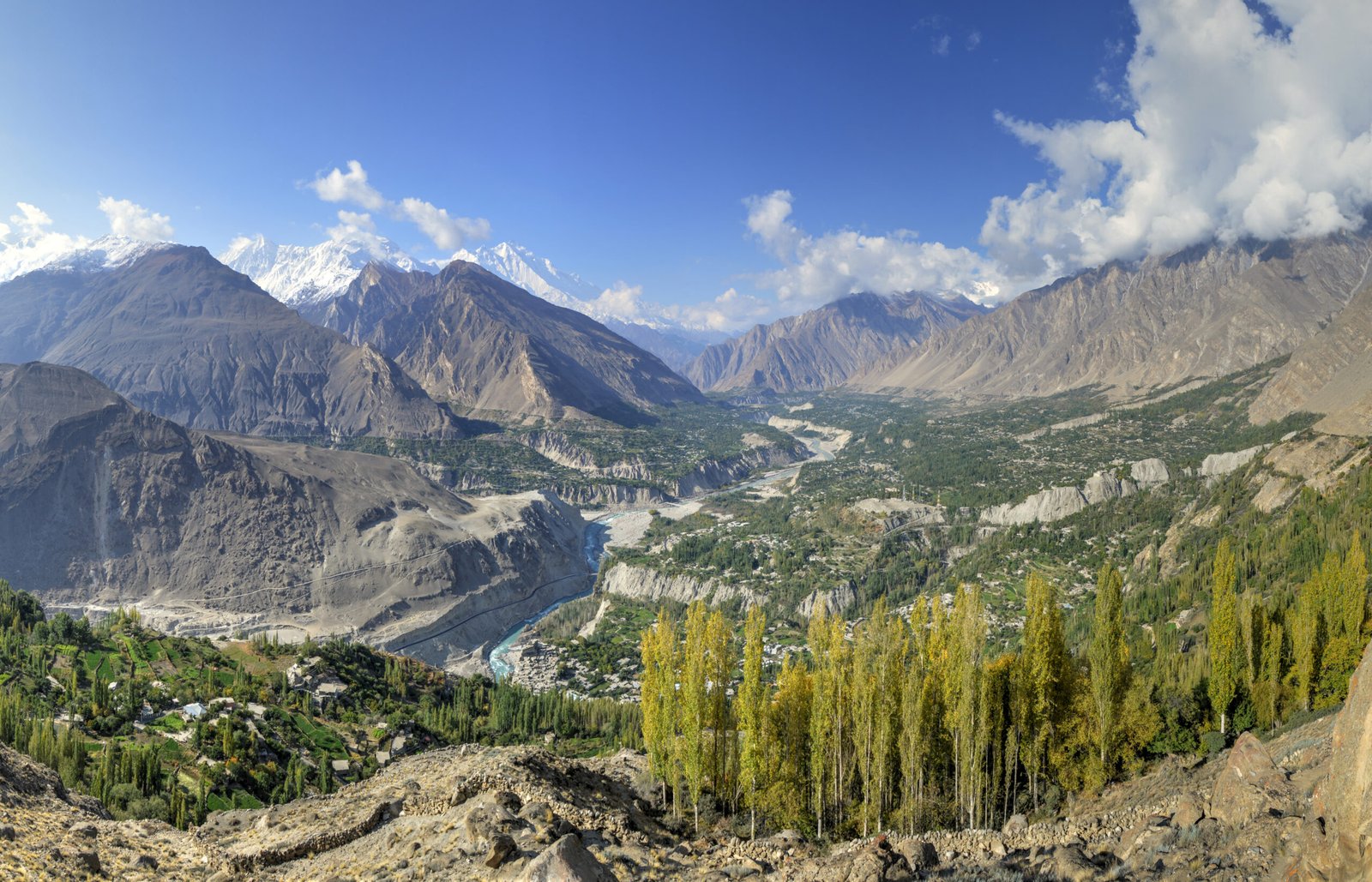
It is not a good month if you want trekking, if you need reliable electricity and heating, if you are on a tight schedule, or if you want blossom. The high routes are snowbound, the power cuts that shape winter life in Gilgit-Baltistan continue through February, and the cherry and apricot blossom does not start until late March at the earliest. A few early almond trees in the lowest villages are sometimes reported in flower in the last days of February, but this is not reliable and it is not the blossom season.
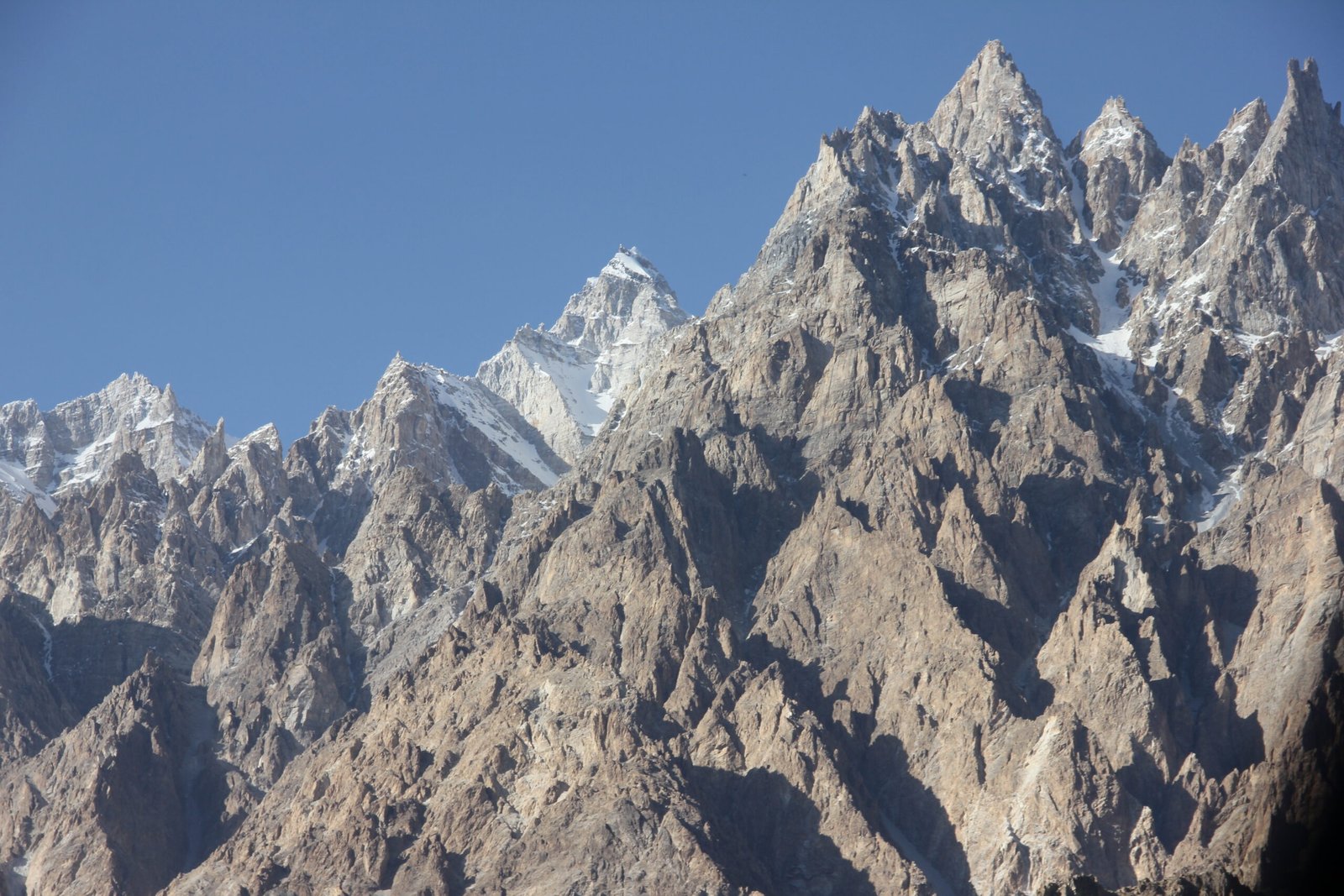
February is also the quietest month for festivals. Chawmos in the Kalash valleys ended about 22 December, the Baltistan winter bonfire festival Mey Phang falls around 21 December, and there is no major festival in Hunza in February. What February offers instead is the ordinary winter life of the valley: wood smoke, frozen irrigation channels, school children walking to school in the snow, and clear, hard light on Rakaposhi, Ultar Sar and the Passu Cones.
What is open in Hunza in February?
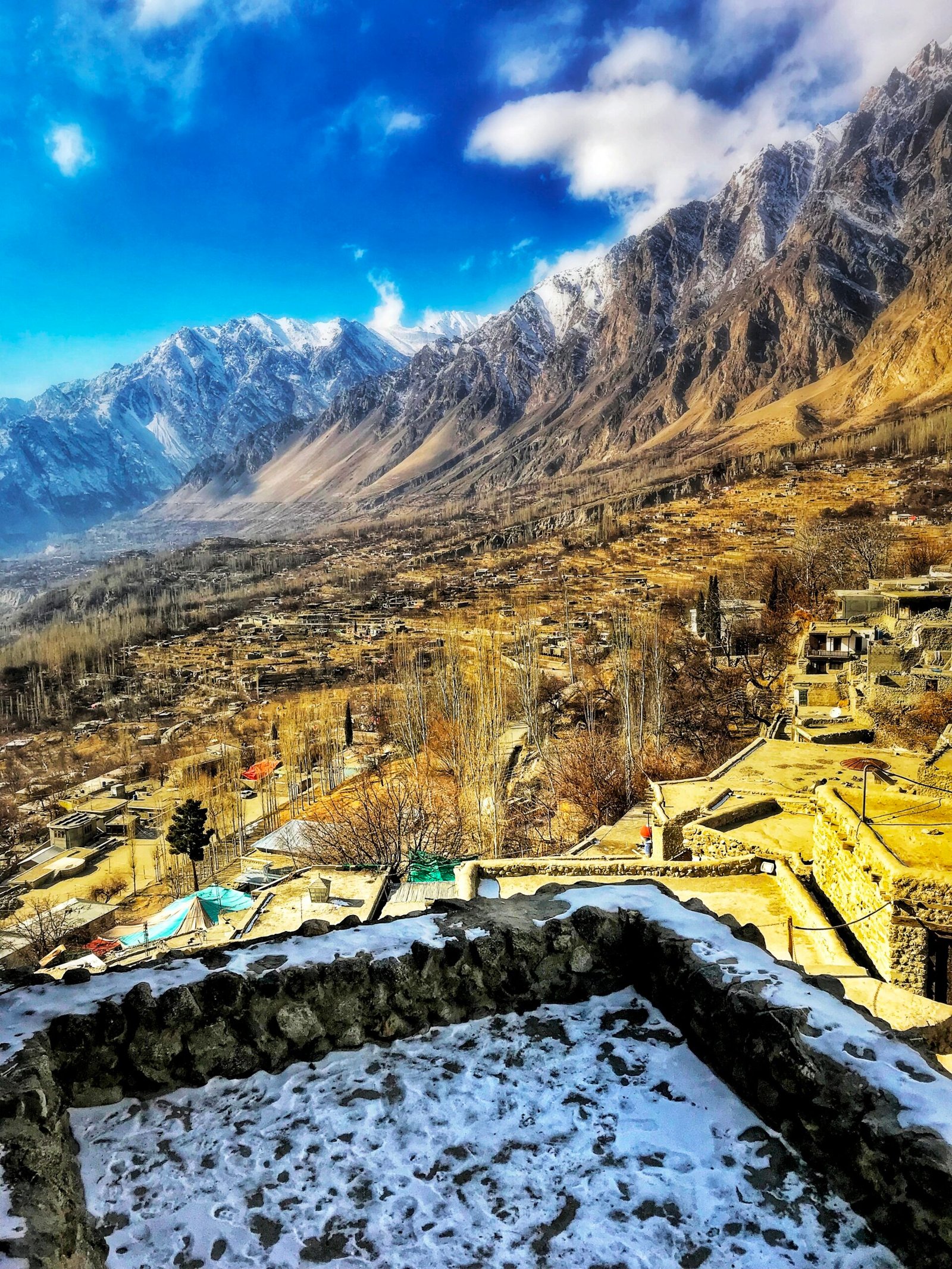
Karimabad stays functional all year, and February is no exception. Guesthouses stay open, the bazaar operates, and local life carries on. Baltit Fort and Altit Fort both stay open through winter, and the fort courtyards under snow are some of the best photographs in the valley. The Eagle’s Nest viewpoint above Duikar works in February, and the sunset light on the peaks is at its clearest, but go in daylight and expect an icy road.
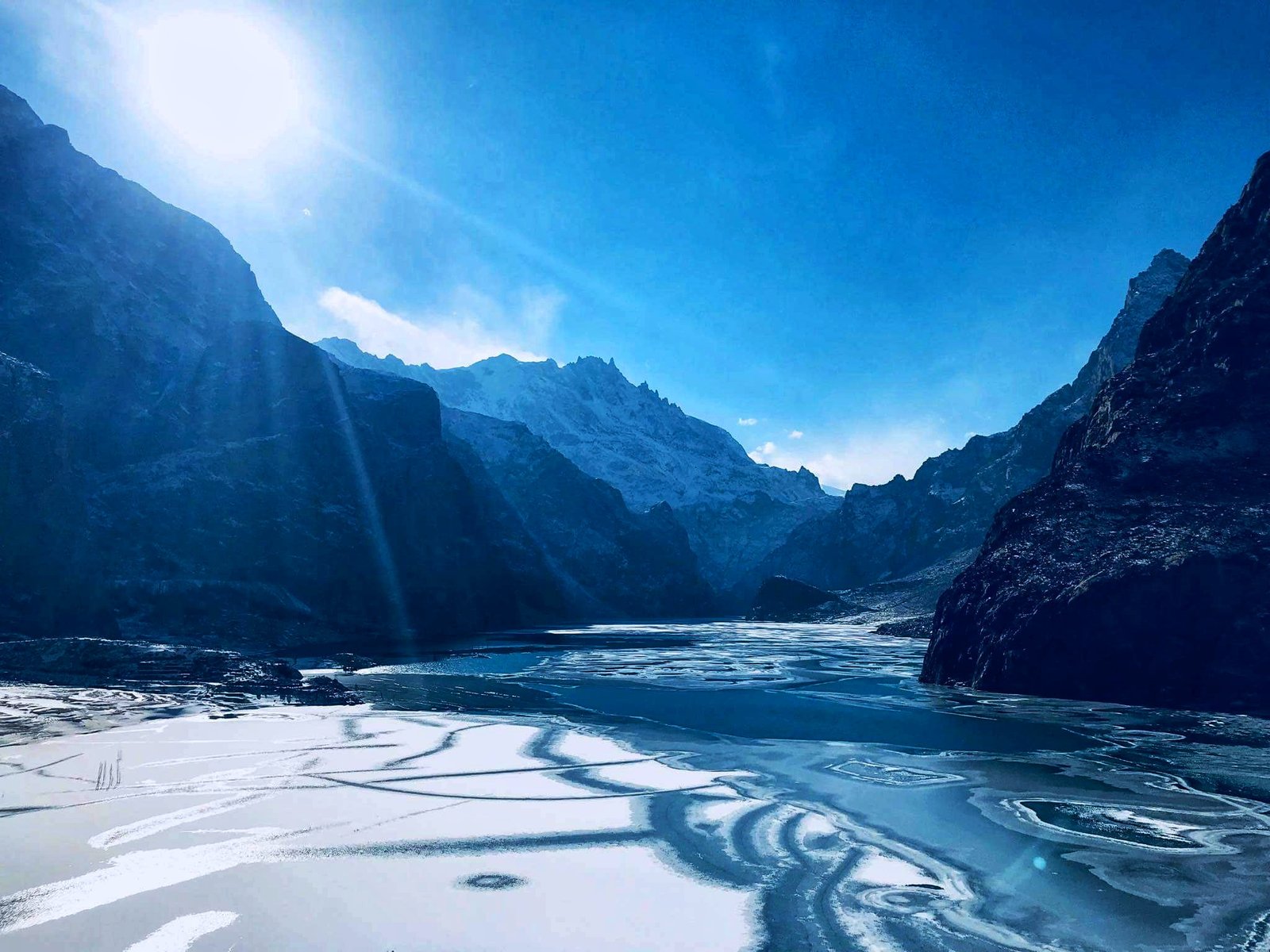
The valley road up to Gojal stays open, weather permitting, so Passu, Gulmit and the Attabad Lake viewpoint are all reachable. Attabad Lake is worth the drive in February, with one honest limit: the lake only partly freezes, so you will see a sheet of ice on the sheltered stretches and open, dark water elsewhere. It is never frozen solid, and nobody should walk on it.
Naltar, about 40 km from Gilgit, is the winter exception that makes February special. The Pakistan Air Force ski slope at Naltar Bala runs from December to March, snow permitting, with a chairlift, basic equipment rental, a ski school and a base lodge. The winter sports festival usually runs in late January or early February, so a February trip can coincide with the races, but confirm the dates locally, because they move with snow and the competition calendar.
What is closed in February?
The high country is shut. Deosai Plateau is closed under snow from November to May, and the Fairy Meadows jeep track is snowbound from late October to April or May, so Fairy Meadows in winter means guided expeditions only, not an independent trip. The K2 Base Camp trek, Rush Lake, Snow Lake and every high trek are closed by snow, with the season running about June to September.
Babusar Pass has been closed since 11 October 2026, and reopening is expected about June 2027, so the Karakoram Highway is the only road route in and out of Gilgit-Baltistan all winter. Khunjerab Pass needs a careful sentence, because two wrong versions circulate. The pass is officially open year round for trade since December 2024, formally inaugurated on 22 April 2025, but tourist trips there are unreliable in winter, so treat it as not assured for tourists from November to April and confirm locally before driving up.
What is Ramadan like in Hunza in February 2027?
Ramadan in 2027 is expected to begin on Monday 8 February, or on Tuesday 9 February if the crescent moon is not sighted on the evening of Sunday 7 February. The exact day is decided by moon sighting, so treat 8 or 9 February as expected, never fixed. Eid ul-Fitr is expected around 9 or 10 March 2027. Ramadan therefore covers most of February 2027, and it changes the practical shape of a trip.
Hunza is a mostly Muslim valley, and daytime eating options shrink during Ramadan. Restaurants in Karimabad bazaar may close in the daytime or shorten their hours, and shops keep shorter days. Hotels and guesthouses still serve their guests, usually around sehri before dawn and iftar after sunset, but meal timings shift, so confirm with your hotel in advance rather than assuming a normal lunch service. Non-fasting travellers should eat discreetly and avoid eating or drinking in public in front of people who are fasting.
The month also has a quiet upside. Evenings come alive after iftar, the bazaar stays open later, and the atmosphere is warm and communal. If you travel in the second half of February, plan your days around the fast: a slow morning, sightseeing in the afternoon light, and dinner after sunset. If you would rather avoid the question entirely, the first week of February, before Ramadan begins, runs on normal winter timings.
Can you ski in February?
Yes, February is still ski season. Naltar is the home of skiing in Pakistan, and the Pakistan Air Force slope at Naltar Bala, at about 2,950 m, runs from December to March when the snow allows. January and February are the genuine ski months, with deep snow in the upper valley, and the winter sports festival usually falls in late January or early February, with skiing, snowboarding and ice hockey competitions.
Naltar is a real but modest facility, not a European resort. Equipment is limited and best arranged in advance through an operator, and the road from Gilgit is a jeep road that climbs through Nomal to the two main villages, Naltar Paain and Naltar Bala. The lakes above the resort are frozen and out of reach by vehicle in winter, so come in February for the skiing and the snow, not for the lakes. Confirm snow conditions and festival dates locally before you set off, because both move with the weather. Read the full Naltar guide before planning the day trip.
Which lakes are frozen in February?
February is the best month for frozen lakes in Gilgit-Baltistan, because the ice is at its thickest after two months of cold, and the days are long enough to reach the lakes and enjoy them. But not every lake freezes, and not every frozen lake is safe, so the honest version is lake by lake.
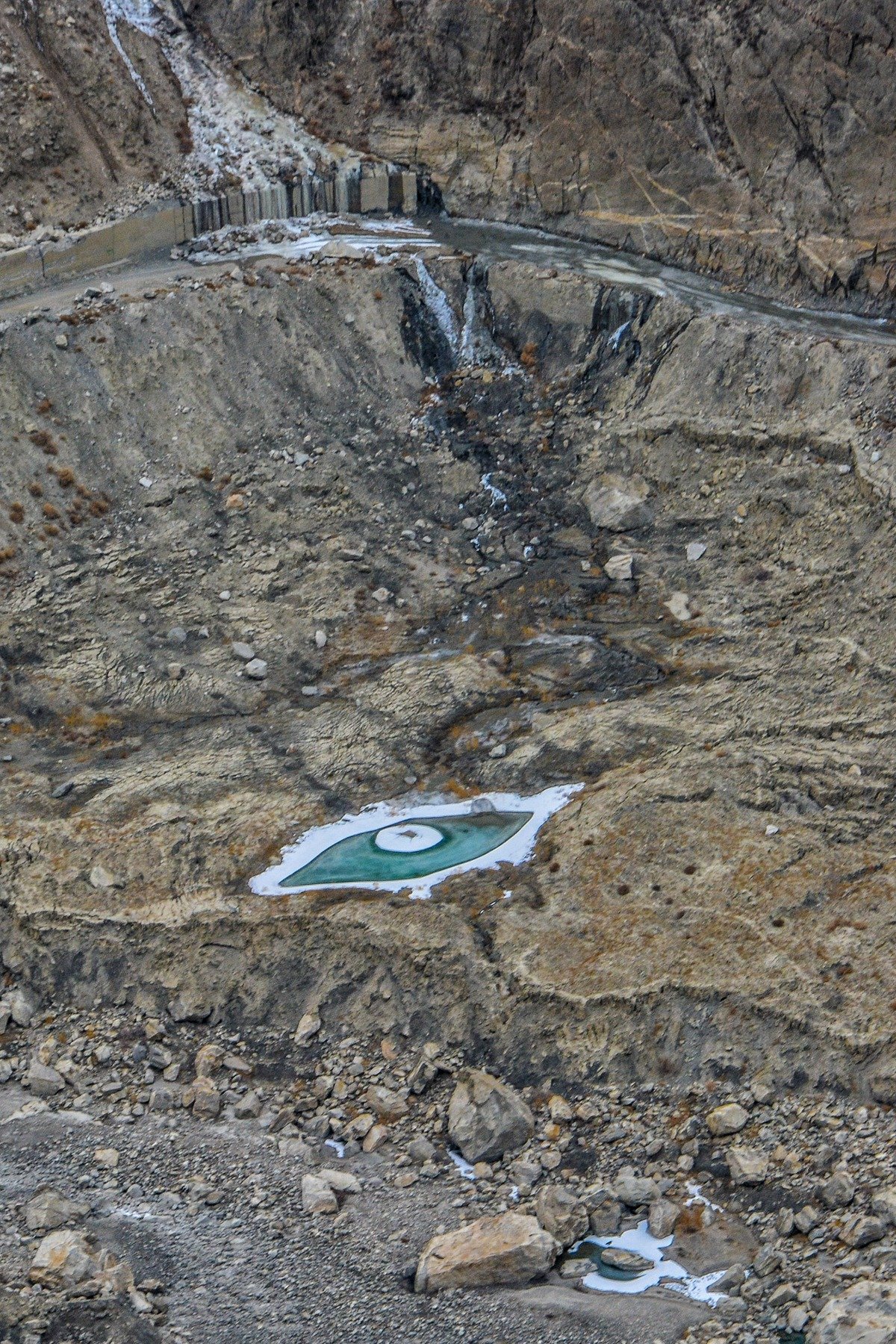
Attabad Lake only partly freezes, and the open water never disappears, so admire it from the viewpoint and never walk on it. Khalti Lake in Ghizer freezes solid enough for skating, and its January ice hockey festival has already taken place by February, but the ice itself is still there. Borith Lake in Gojal is at its coldest in January and February, and its surface is the one most often described as properly frozen. Satpara Lake near Skardu freezes only partly, and it is a drinking water reservoir with no organised skating, so see it and do not walk on it. Lower Kachura Lake varies by year. Sheosar Lake is out of reach, because Deosai is closed from November to May. Read the full frozen lakes guide for the lake by lake detail.
Can you still see snow leopards in February?
Yes, February is still inside the snow leopard season, which runs from mid-November to early March. In winter the cats come down towards the valleys after their prey, and tracking happens in the lower Gojal valleys around Khyber Village, Misgar and Koksar, not at the high passes, which are closed. Pakistan has only about 155 to 167 snow leopards, with about 80 percent of them in Gilgit-Baltistan, according to the Snow Leopard Foundation census reported by Dawn in October 2026.
Be honest with yourself about the odds. On a 7 to 9 day tracking trip the chance of a sighting is roughly a coin flip, never guaranteed, and the work is cold, slow and patient: dawn starts, long hours behind a spotting scope, and days when nothing appears. Book through a local operator with community trackers, because the tracking fees support the villages that live alongside the cats. Read the full snow leopard watching guide before you commit to a trip.
How do you get to Hunza in February?
Most visitors reach Hunza the same way in winter as in summer, through Gilgit, but winter adds a buffer day to every plan. The fastest route is the PIA flight from Islamabad to Gilgit, about 45 minutes in the air, but in winter these flights depend on visual weather clearance and are often delayed, sometimes for several days. Never book a tight international connection on the back of a Gilgit flight in winter. Flights to Skardu run on a similar weather dependent pattern.
The road alternative is the Karakoram Highway from Islamabad, which stays open year round, weather permitting. In February expect ice in shaded sections, especially in the narrow stretches between Gilgit and Karimabad, and occasional closures after heavy snowfall. From Gilgit, Karimabad is about 100 km up the Karakoram Highway, normally a drive of two to three hours. Babusar Pass is closed, so the Karakoram Highway is the only road in. Read the full guide on how to get to Hunza for the route detail, fares and timings.
Where do you stay and what does it cost in February?
February is the cheapest month to stay in Hunza, with hotel prices running about 40 to 50 percent below peak season. Not every hotel stays open: some properties close for the winter, and others run on reduced staffing with limited heating, so confirm that your hotel is open, that the rooms are heated, and that hot water runs before you book. The winter-open hotels guide lists the properties that stay open through the cold months.
Stay in Karimabad or Aliabad for the forts, the bazaar and the Eagle’s Nest sunset, and in Gulmit or Passu if you want Gojal and the Attabad Lake viewpoint. Ask four questions before you pay: is the hotel open in February, is the room heated through the night, does hot water run in the morning, and what are the meal timings during Ramadan. A hotel that answers all four clearly is a better choice than a cheaper one that does not. Read the best hotels in Hunza guide for the property by property detail.
Power cuts are part of February in Hunza, and they shape what a hotel stay feels like. Gilgit-Baltistan’s hydropower falls sharply in winter, and Gilgit city generates only about 33MW against about 70MW installed in the cold months, according to the figures in our winter power cuts guide. Expect scheduled load shedding, carry a charged power bank, and keep your phone and camera batteries topped up whenever the power is on. A 10,000 mAh power bank is the single most useful piece of kit in a Hunza winter: Anker PowerCore 10000. As an Amazon Associate, we earn from qualifying purchases made through this link, at no extra cost to you.
What should you pack for Hunza in February?
Pack for minus 5C nights and wind chill, not for the daytime high. The list below is the February version of the full packing guide, with the winter items first.
| Item | Why it matters in February |
|---|---|
| Insulated jacket, rated below freezing | Nights at minus 5C and colder in the upper valleys |
| Thermal base layers, top and bottom | Days start below freezing and stay cold in shade |
| Waterproof winter boots with grip | Ice on roads and paths, snow in the villages |
| Warm hat, gloves and a neck gaiter | Wind chill at viewpoints like Eagle’s Nest |
| Sunglasses and sunscreen | Snow glare is strong on bright February days |
| Power bank, 10,000 mAh or larger | Power cuts through the winter, charge when you can |
| Headlamp | Short days and early dark in the villages |
| Water bottle, insulated if possible | Water freezes in a normal bottle overnight |
| Personal medicines and altitude tablets | Karimabad sits at about 2,500 m, see the altitude guide |
| Cash in rupees | ATMs in Karimabad can run dry, card machines are rare |
Altitude deserves a line of its own. Karimabad sits at about 2,500 m, and the viewpoints above it are higher, so take the first day slowly, drink water, avoid alcohol on arrival, and read the altitude sickness guide before you travel.
A realistic 5-day February itinerary
This plan assumes you arrive by road or by a flight that lands, and it keeps one buffer day for weather. It does not try to cover the high valleys, which are closed.
| Day | Plan |
|---|---|
| Day 1 | Arrive in Gilgit, drive to Karimabad, settle in, short walk in the bazaar, early night |
| Day 2 | Baltit Fort in the morning, Altit Fort in the afternoon, sunset from Eagle’s Nest, Duikar |
| Day 3 | Drive to Gojal, Passu Cones viewpoint, Attabad Lake, return to Karimabad by dark |
| Day 4 | Naltar ski day trip from Gilgit, or a slow day in Karimabad if the snow is poor |
| Day 5 | Buffer day for flights and weather, morning in Karimabad, drive to Gilgit, fly or drive out |
If your flight is delayed, Day 5 absorbs it. If the weather closes the road to Gojal, swap Day 3 and Day 4. If Ramadan has begun, shift sightseeing to the afternoon and eat after sunset. Do not add Khunjerab, Deosai or Fairy Meadows to this plan: all three are out of reach in February.
No, February is slightly warmer than January. Aliabad averages 4.2C by day and minus 5.2C at night in February, against 1.4C and minus 7.3C in January. The difference is small, and nights stay well below freezing all month, but the days are longer and the light is better.
No, but it changes the shape of the day. Ramadan is expected to begin about 8 or 9 February 2027, and daytime restaurants may close or shorten hours. Hotels still serve guests around sehri and iftar, so confirm meal timings in advance and eat discreetly in public during fasting hours.
Yes, February is still ski season. The Pakistan Air Force slope at Naltar Bala runs from December to March, snow permitting, and January and February are the genuine ski months. Arrange equipment in advance through an operator, and confirm snow and festival dates locally before you go.
Only partly. Attabad Lake freezes on its sheltered stretches in deep winter, but open water remains all year, so it is never frozen solid. Admire it from the viewpoint, and never walk on the ice. Khalti and Borith lakes freeze more completely in February.
Not reliably. Khunjerab is officially open year round for trade since December 2024, but tourist trips there are unreliable in winter, and the pass road is subject to snow and closures. Treat it as not assured for tourists and confirm locally before driving up.
Yes, February is one of the best months for photography. The air is clear, the snow is deep, the light stays low and golden for hours, and there are almost no other visitors in the frame. Bring spare batteries, because cold drains them fast, and charge whenever the power is on.