Short Answer
A stone dealer in Gilgit-Baltistan can sell to international buyers by doing four things in order. First, get each stone tested by a recognised laboratory and keep the written report. Second, photograph the stone honestly, with its real colour, its weight, and something in the photo that shows its size. Third, list it where foreign buyers already shop, such as Instagram, Etsy, eBay, or your own website. Fourth, price it in US dollars, ship it insured with tracking, and take payment through a bank channel your bank has confirmed. No single step works without the others. Trust comes first, and everything else follows from it.
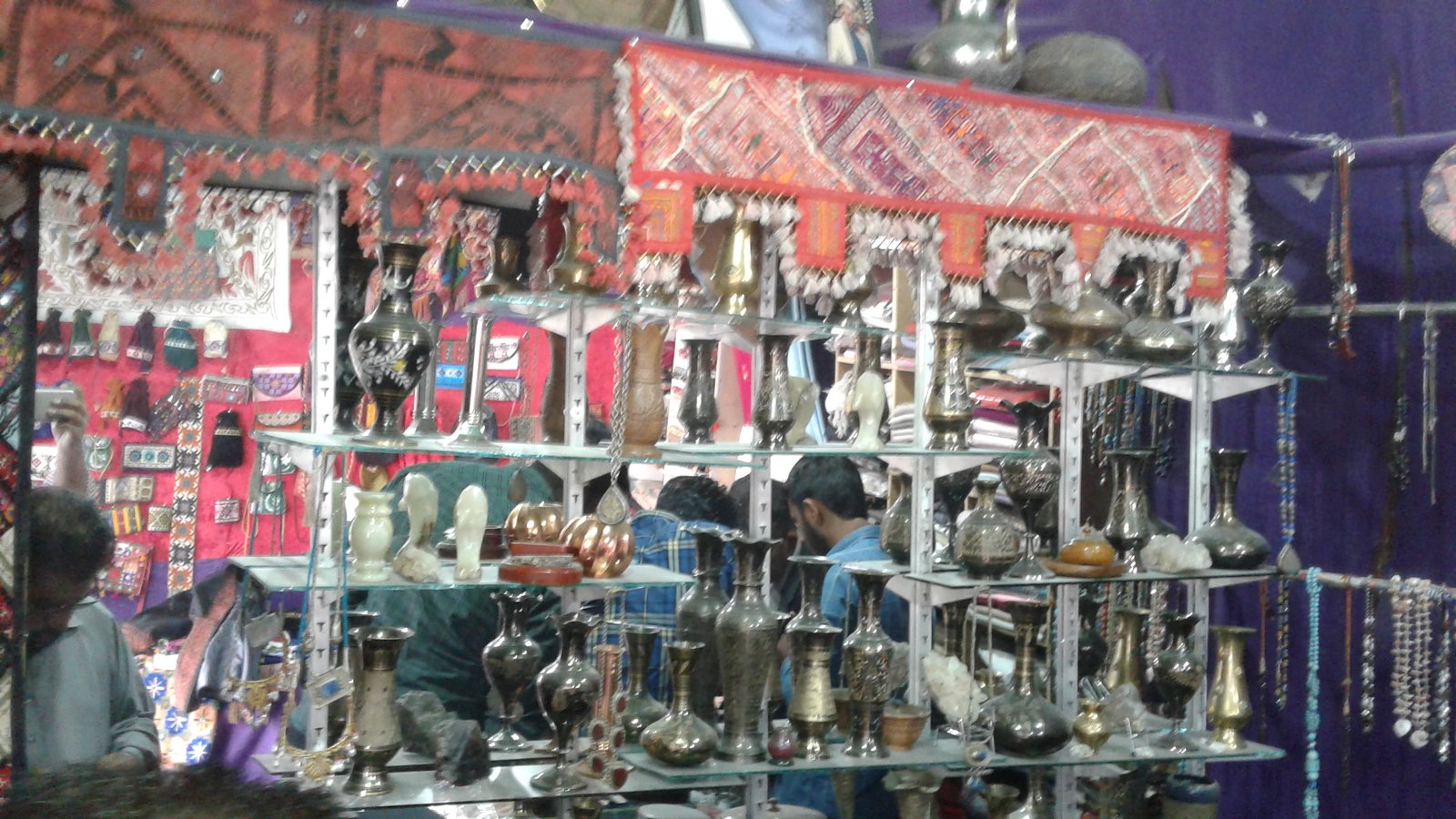
Picture a dealer in Gilgit city
Picture a stone dealer with a small shop in Gilgit city. His shelves hold good material. There is blue aquamarine from Nagar, pink and green tourmaline from Haramosh, golden topaz from Shigar, and a few pieces of ruby from Hunza. Local buyers come and go. A tourist walks past now and then and buys a small piece. The dealer knows his stones are worth more abroad, where collectors and jewellers pay in dollars, but he has never sold to a buyer he cannot see face to face.
This guide is written for that dealer. It starts from zero. It explains every term in plain words the first time it appears. It moves in order, from what buyers look for, to certification, to photography, to where to sell, to pricing, shipping and payments. Follow it stage by stage, and use the visual guides at each stage. They show the same steps as pictures, so you can follow by seeing, not just by reading.
What do international buyers actually look for?
An international buyer cannot hold your stone. They cannot tilt it to the window or read your face across a table. So they buy your evidence instead. Before you list a single stone, learn the six words every buyer uses.
Carat. A carat is a unit of weight for gemstones. One carat equals 0.2 grams. A 5 carat stone weighs 1 gram. Buyers always ask the weight in carats, so weigh every stone and write the number down.
Rough and cut. Rough means the stone as it came out of the ground, unshaped. Cut means the stone has been shaped and polished by a cutter, usually with flat faces called facets that catch the light. Rough sells to collectors and cutters. Cut stones sell to jewellers and to people who want to wear them.
Treatment. Treatment means anything done to a stone after mining to improve its colour or clarity, most often heating. A treated stone is not a fake stone, but the buyer must be told. Aquamarine is often heated, and some topaz is irradiated or coated. If you do not know whether a stone was treated, say so plainly. Never guess.
Certification and lab report. A lab report is a written test result from an independent laboratory. The lab checks the stone, names the variety, records the weight, the cut, the colour and any treatment, and gives the report a number the buyer can check. Certification means the stone carries such a report. The labs buyers recognise include GIA, IGI, GRS, SSEF and Gubelin.
Origin. Origin means where the stone was mined. Buyers pay more for a named origin they trust, such as Shigar aquamarine, but only claim an origin your report supports. Stones from different valleys can look the same, and material from Afghanistan and other parts of Pakistan passes through the same Gilgit and Skardu markets. If you are not sure of the origin, say the valley you bought it in, or say nothing at all.
Disclosure. Disclosure means telling the buyer everything that affects the stone before they pay, including treatment, damage, and anything repaired. A buyer who finds a surprise after paying does not come back, and leaves a review that warns the next buyer too.
Buyers fall into three groups. Collectors buy rare crystals and specimens, often rough, and care most about origin, size and condition. Jewellers buy cut stones to set in rings and necklaces, and care most about colour, clarity and price per carat. Dealers buy to resell, and care most about margin and reliable supply. Your listings should speak to one of these groups, not to all three at once.
Which rare stones does Gilgit-Baltistan actually produce?
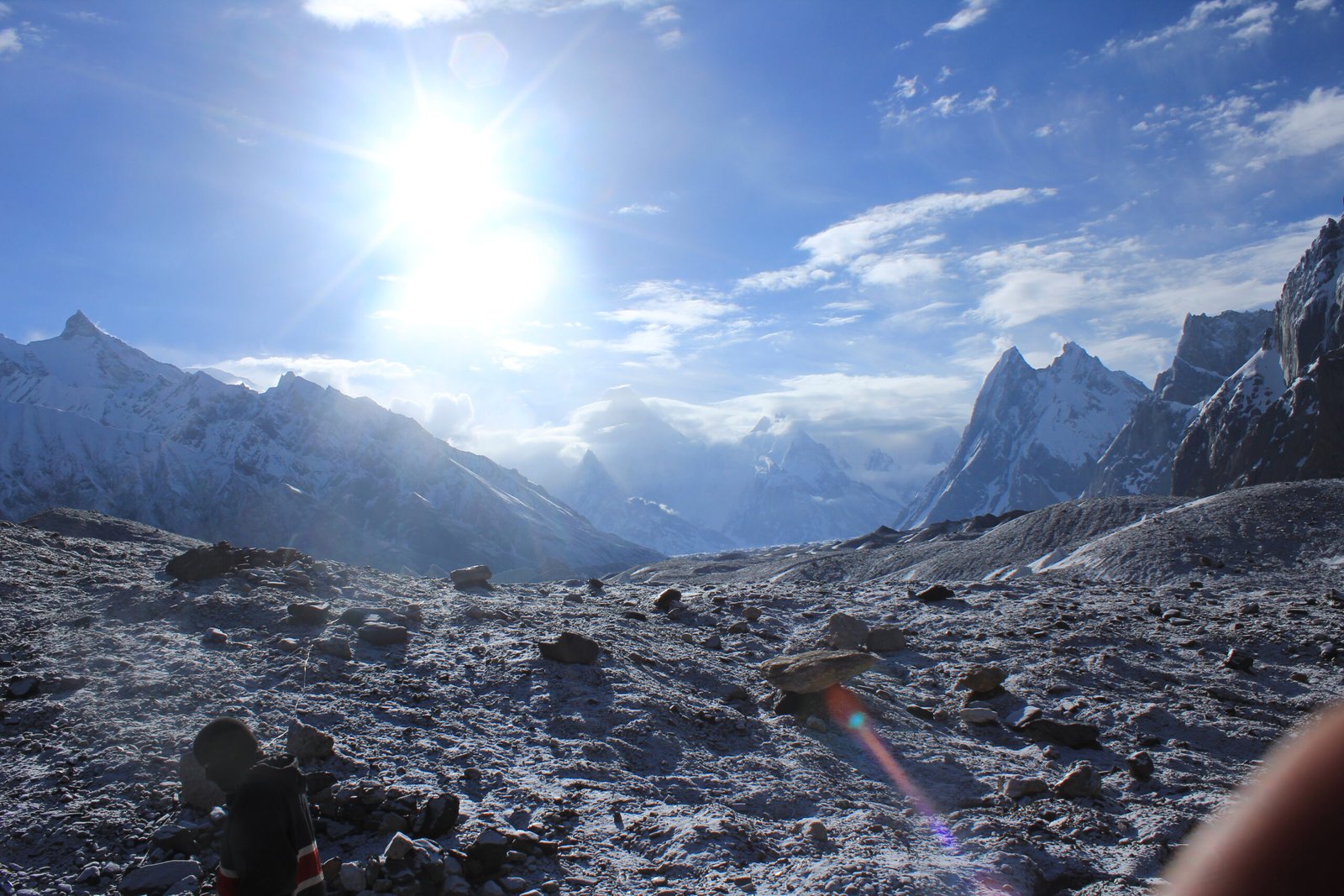
Gilgit-Baltistan sits where the Karakoram, Himalaya and Hindu Kush ranges meet. The collision pushed mineral rich pegmatites toward the surface. A pegmatite is a coarse grained igneous rock, a rock formed from cooled molten granite, whose last fluid rich part hardened into veins where large crystals had room to grow. That geology is why the region produces the stones in this table. Every valley named here is backed by a published source, and the table leaves out stones that belong to other regions.
| Stone | Main valleys in Gilgit-Baltistan | What buyers look for |
|---|---|---|
| Aquamarine | Nagar (Sumayar and Chumar Bakor), Hunza, Shigar (Dassu and Yuno) | Clean blue crystals, large well formed pieces, colour from pale ice blue to deeper saturated blue |
| Tourmaline | Haramosh, Shigar, Nagar, Hunza, Chilas; bicolour stones from Stak Nala and Shengus | Pink, green, blue and bicolour crystals, including watermelon tourmaline, pink at the core and green at the rim |
| Topaz | Shigar, Haramosh, Hunza, Chilas | Colourless, pale blue, sherry and golden crystals |
| Emerald | Haramosh range, rare | Colour quality and transparency, since emerald almost always carries internal fractures |
| Garnet | Hunza, Shigar, Haramosh, Gilgit area | Orange spessartine and red brown almandine crystals |
| Ruby | Hunza, Nagar | Pink red to purplish colour, mostly translucent rather than transparent |
| Spinel | Hunza, Nagar | Red, pink and purple crystals |
| Morganite | Shigar | Pale pink beryl, the pink variety of the same mineral as aquamarine |
| Fluorite, quartz, apatite | Several valleys | Collector specimens, bought for shape and colour rather than jewellery |
Three honest notes. First, Swat is the famous emerald source in Pakistan, but Swat is outside Gilgit-Baltistan, so do not sell a Swat emerald as a Gilgit-Baltistan stone. Second, the pink topaz of Katlang comes from Mardan in Khyber Pakhtunkhwa, not from Gilgit-Baltistan. Third, peridot comes from Kohistan and the Supat valley, also outside Gilgit-Baltistan. If a stone did not come from a Gilgit-Baltistan valley, do not say it did. Buyers who discover the truth stop trusting everything else you say.
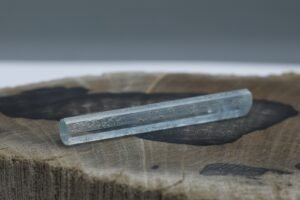
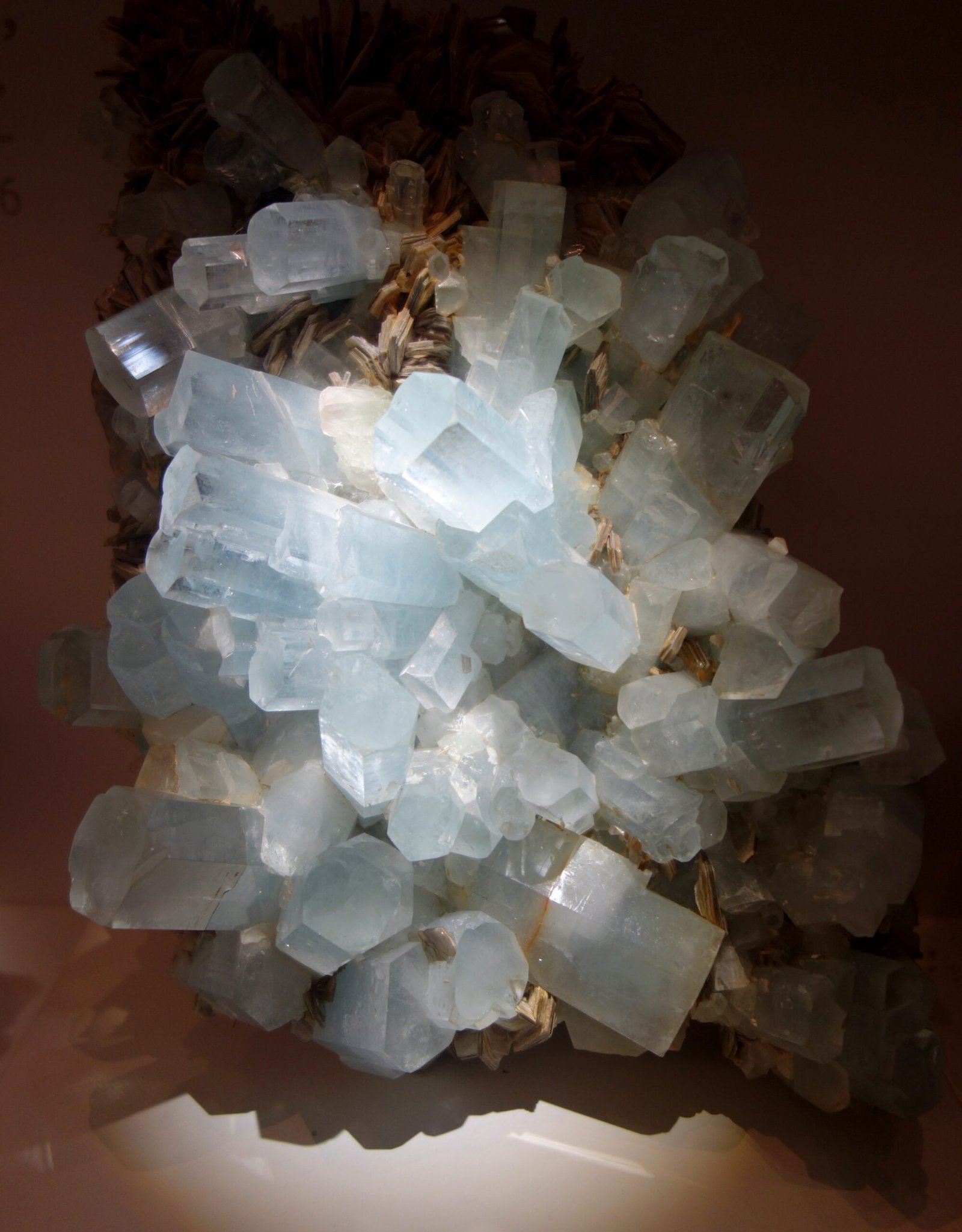
Aquamarine is the region’s signature stone. The most celebrated material comes from Nagar, particularly Sumayar and Chumar Bakor, and from Hunza, where large well terminated crystals with strong transparency are found. Shigar material is admired for clarity and softer blue tones. For collectors, a well formed aquamarine crystal on its matrix, the rock it grew on, is often more desirable than a faceted stone cut from the same rough. Most workings are small scale and high altitude, reachable only in the short summer window, which is why the material stays scarce and large clean crystals command premiums.
What is certification, and why does trust decide everything?
A buyer eight thousand kilometres away is buying your word. Everything that would normally happen across a table has to be replaced by evidence. That is what certification is for.
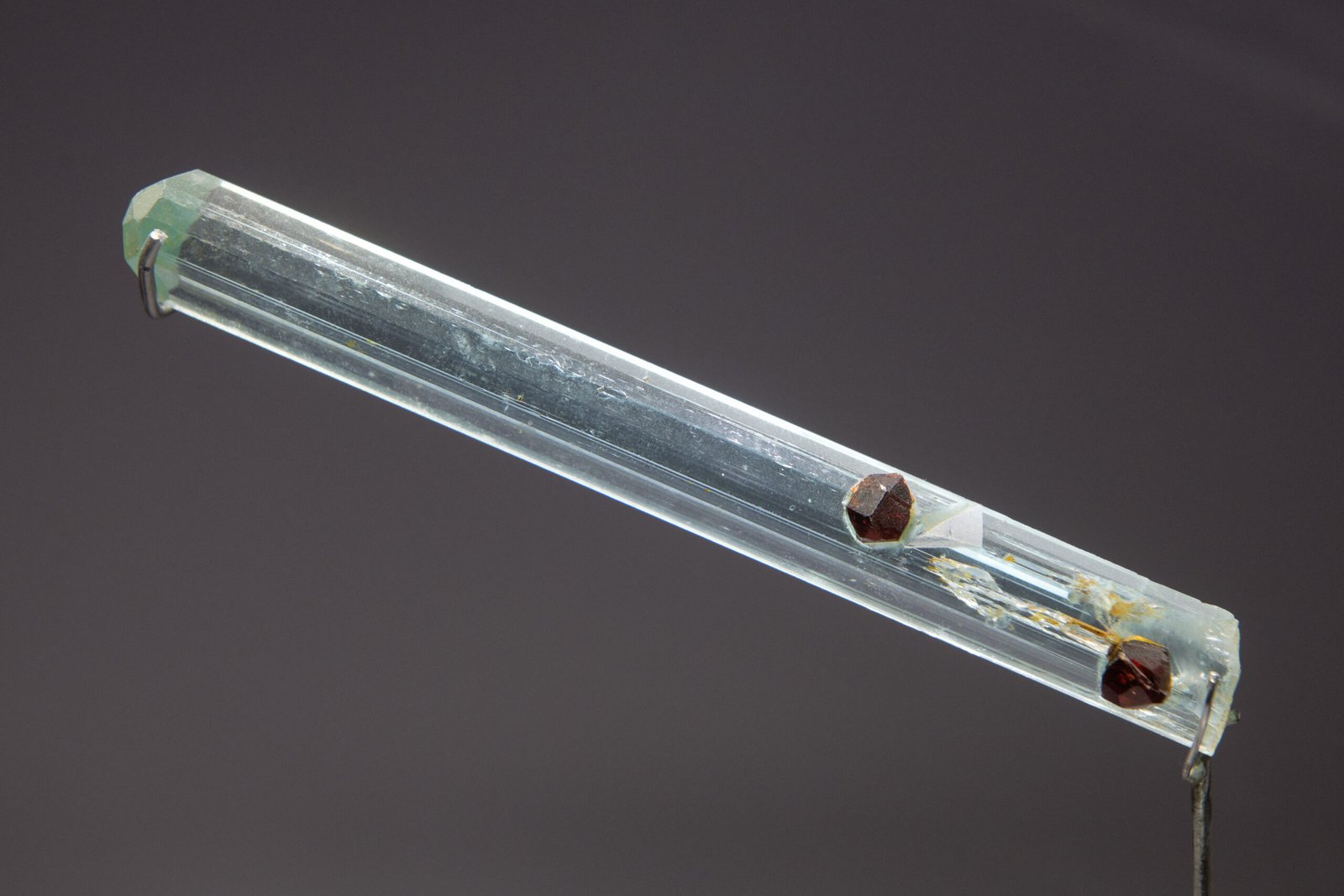
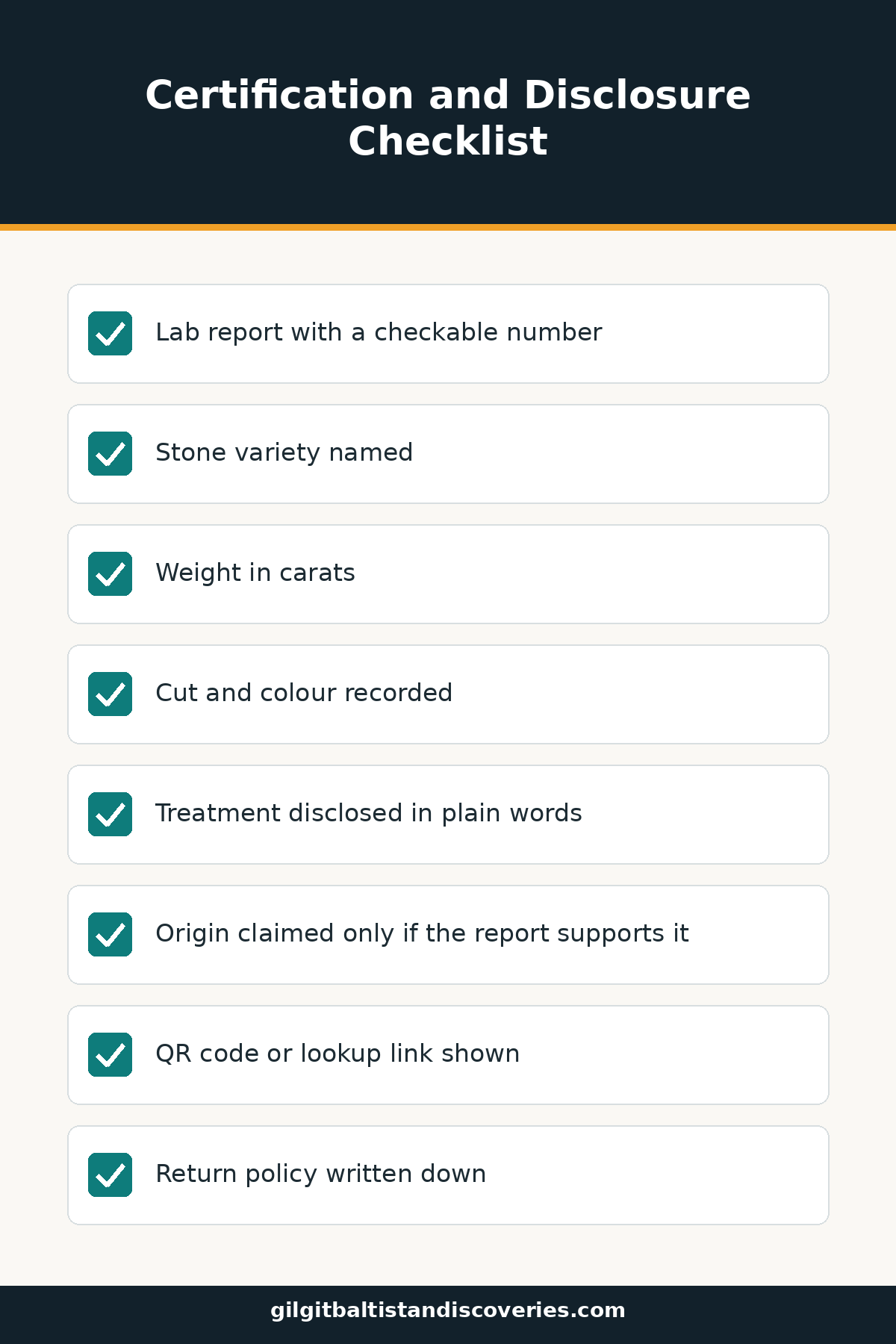
A lab report does four things. It proves the stone is what you say it is. It records the weight, cut, colour and treatment in standard words. It carries a report number the buyer can check with the lab, often with a QR code, a square barcode the buyer scans with a phone to open the report online. And it lets the buyer send the stone to a lab of their own choice during an inspection period if they want a second opinion.
Send your best stones to a recognised lab before you list them. GIA is the best known name worldwide, and IGI, GRS, SSEF and Gubelin are also recognised by trade buyers. A report costs money, so start with the stones worth the most, and say plainly on each listing whether it carries a report or not. A listing without a report can still sell, but only at a lower price, and only to a buyer who accepts the risk.
Disclosure is the other half of trust. State the treatment in plain words on every listing. State any damage, chips or repairs. State the return policy before the buyer asks. Give your real name, your real address, and a phone number and email where a real person replies. Offer a video call so the buyer can see the stone in your hand and ask questions live. Every question you answer before it is asked is one more reason for the buyer to say yes.
One more rule decides whether an online stone business survives. Your website and your safe must agree, every hour of every day. A one of a kind stone can only be sold once. When a stone sells in the shop, at a show, or on another platform, take it off every listing in the same moment. A buyer who pays for a stone that is already gone does not come back.
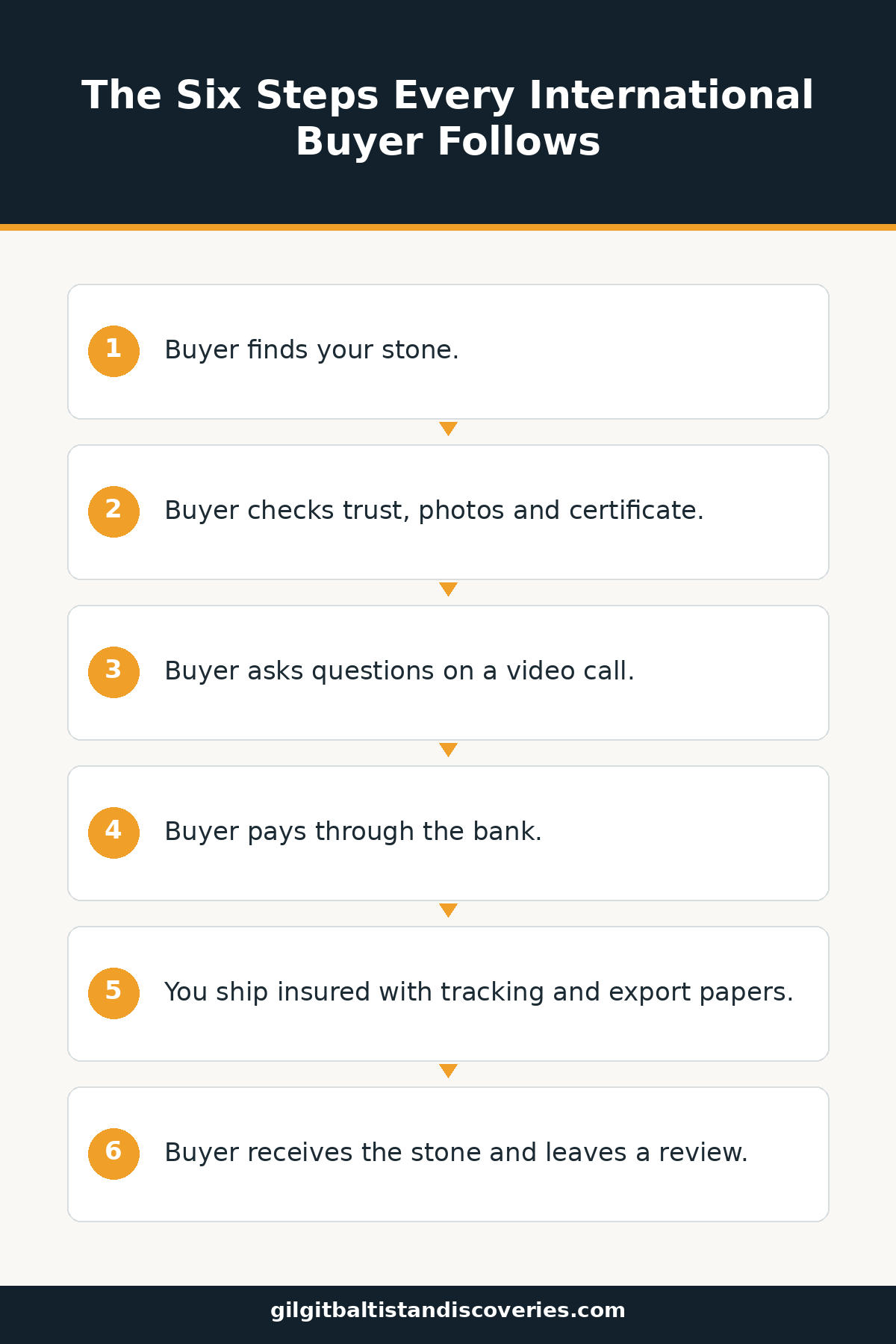
The diagram below shows the six steps a foreign buyer follows, from finding your stone to leaving a review, so you can check that every step is covered before you list.
How do you photograph a stone so it sells?
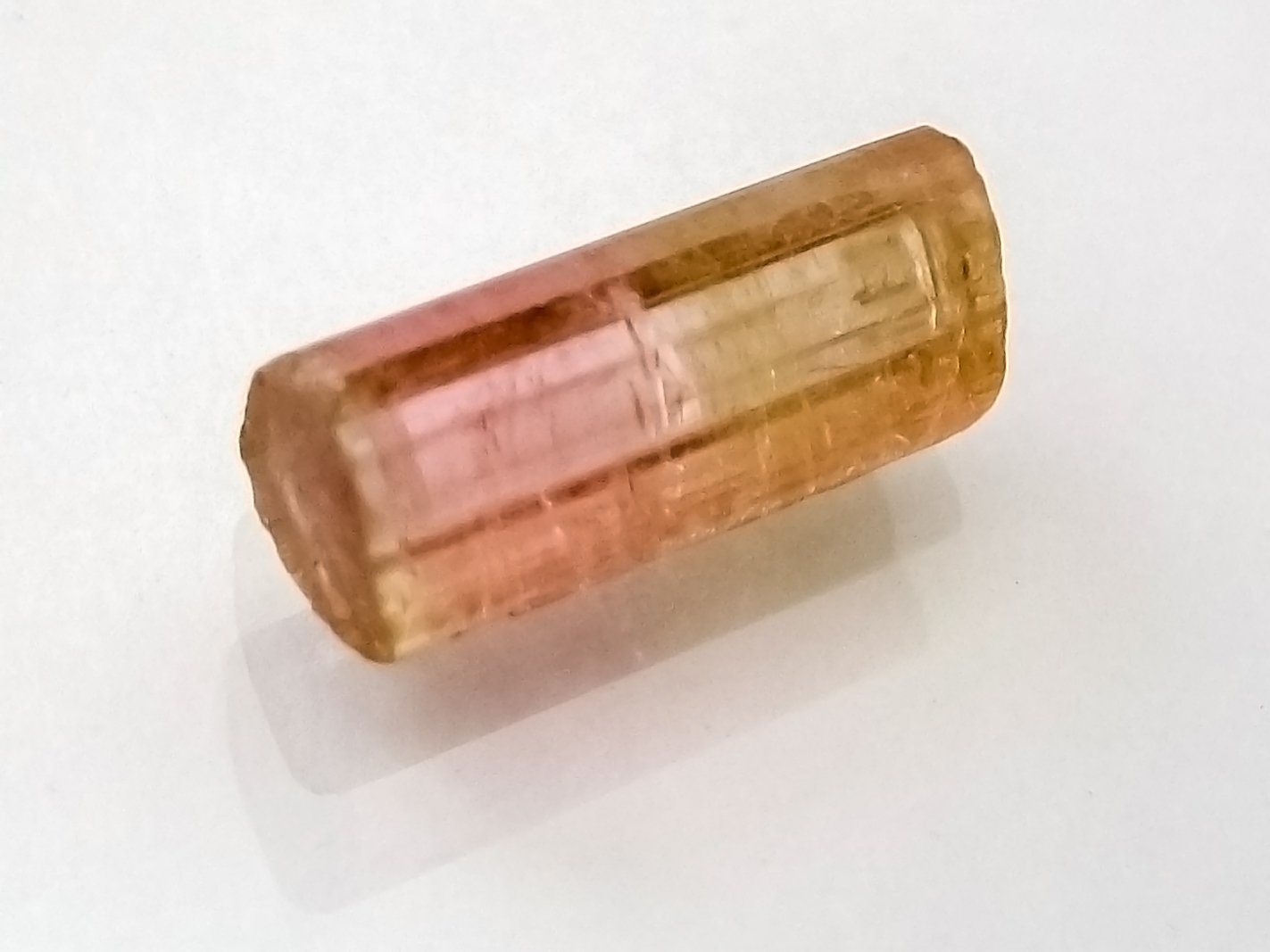
Gemstone photography has one job: to make the buyer’s reaction on opening the parcel match their reaction to the screen. Use one setup for everything. Same light, same background, same distance, so buyers can compare stones fairly.
Use natural daylight or a daylight lamp, never a coloured bulb, because colour is what the buyer is paying for. Photograph the stone from several angles, including the back and the sides, and show inclusions, the tiny marks inside a stone, rather than hiding them. Put something in the photo that shows size, a coin or a ruler, because a photo alone tells the buyer nothing about scale. Take a short video too, turning the stone slowly in your hand, because video shows the colour and the sparkle in a way a still photo cannot. Do not edit the colour. A buyer who opens a parcel and sees a different colour asks for their money back.
Keep the background plain and the stone clean. Dust and fingerprints show up large in a macro photo, a very close up photo. Photograph new stones as soon as they are ready, and publish them the same day, while the stone is still in your hand and its details are fresh in your mind.
Where do you sell? Instagram, Etsy, eBay, your own website, WhatsApp, or a gem show
No single channel is best for everyone. Each one suits a different kind of stone and a different kind of buyer. Start with one or two, and add more only when the first ones work.
| Channel | Best for | Cost to the seller | What to know |
|---|---|---|---|
| Story, video and direct chat with collectors and jewellers | Free to post, ads cost extra | No built in checkout, buyers pay by chat, best for showing the mine and the hands that found the stone | |
| Etsy | Small and one of a kind pieces, crystals and handmade jewellery | 0.20 US dollars to list an item, 6.5 percent transaction fee, about 3 percent plus 0.25 dollars payment processing, about 10 to 11 percent in total, about 25 percent if an Offsite Ad brings the sale | Built in buyers, about 95 million active buyers, accepts handmade, vintage and natural items only, no generic reselling |
| eBay | Auctions and fixed price sales to serious collectors | 250 free listings a month, then 0.35 dollars per listing, final value fee about 13.6 percent, about 15 percent for jewellery | Over 130 million active buyers, strong for rare and collectible pieces, returns and disputes usually favour the buyer |
| Your own website | Your best stones and repeat buyers | Lowest fees, but you pay for the store, the domain and the marketing | You keep the full margin and own the customer, but no one finds you without search, content and ads |
| Closing a sale after the buyer found you elsewhere | Free | Direct and personal, good for video calls and negotiation, but no new buyers discover you there | |
| Gem shows | High value stones and trade buyers | Travel, a table fee and time away from the shop | Face to face trust, the best place to meet dealers and jewellers, and to learn real market prices |
Etsy deserves a warning. Its Offsite Ads fee is mandatory once your sales pass 10,000 US dollars a year, and it can take the total cost of a sale to about 25 percent. Price your Etsy listings with that in mind. eBay deserves a different warning. Its Money Back Guarantee and return policies favour buyers in disputes, so describe every stone with complete honesty and keep your photos and messages as evidence.
The best order for a beginner is simple. Start on Instagram, because it is free and it is where your story lives. Add Etsy or eBay for buyers who want the protection of a marketplace. Build your own website once you have repeat buyers and a catalogue worth showing. Use WhatsApp to close sales, not to find them.
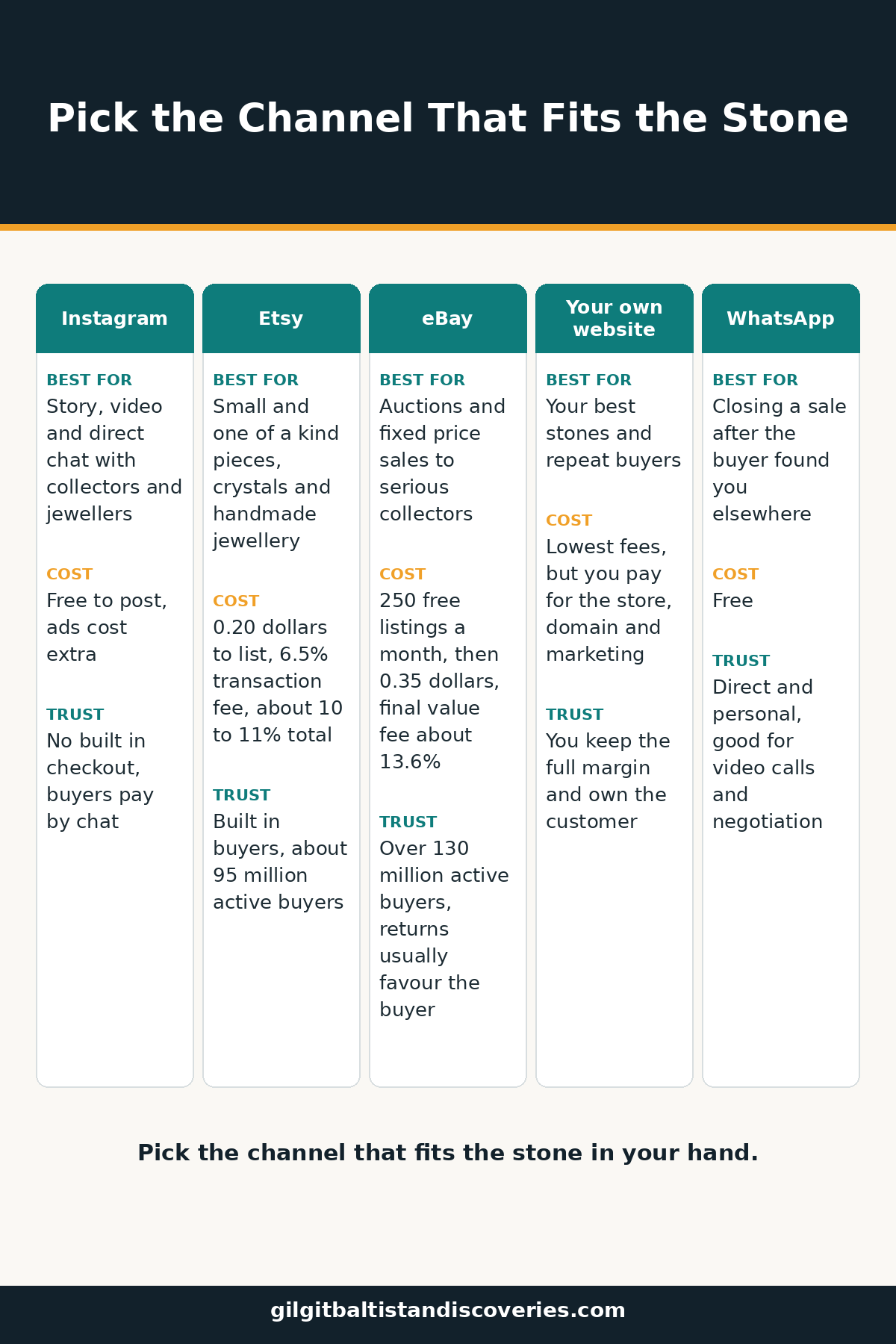
The diagram below shows the same five channels side by side, so you can pick the one that fits the stone in your hand.
How do you price a stone in dollars?
Price in US dollars, because your buyers think in dollars. Work out your true cost first, then add your margin. Your true cost is the price you paid for the rough, plus cutting, plus the lab report, plus packaging, plus the platform fee, plus shipping and insurance. A stone priced below its true cost is not a bargain, it is a loss, and buyers who know the market distrust prices that look too cheap.
Do not copy another seller’s price. Two stones that look alike can differ widely in colour, clarity, size and treatment, and the price follows those differences. Check what similar stones actually sold for, not what they were listed for. On eBay, look at completed sales. At gem shows, ask dealers what a stone like yours fetched. Price with a reason you can explain in one sentence, such as clean colour, large size, or a lab report from GIA.
Underpricing hurts twice. It loses you money, and it tells experienced buyers that something is wrong with the stone. A fair price, stated plainly with the certificate and the full description beside it, sells better than a low price with no proof.
Never promise a buyer that a stone is an investment or that its price will rise. No honest seller can promise that. Sell the stone for what it is, a beautiful natural object, not for what it might be worth one day.
How do you ship a stone abroad, and what do Pakistan export rules say?
Shipping a gemstone abroad is not like posting a parcel of dry fruit. The stone is small, light and valuable, which makes it easy to ship and easy to lose. Use tracked and insured shipping on every order, and keep the tracking number and the insurance papers until the buyer confirms delivery. Pack the stone so it cannot move inside the box, with padding on all sides, and put the papers in a separate waterproof pouch.
Pakistan has written rules for exporting precious and semi precious stones, and you must follow them. Under the official procedure, SRO 131(KE)/96, export of indigenous precious and semi precious stones, both rough and finished, is allowed only by air or by parcel post, and by sea in the case of semi precious stones in rough and uncut form. Export is allowed against advance payment, an irrevocable letter of credit, a firm order, or consignment sale. When goods go by parcel post, the sealed parcels are delivered to the postal authorities under customs supervision.
Under the Import and Export of Precious Metals Jewellery and Gemstones Order, 2013, exporters of gemstones must be registered with the Trade Development Authority of Pakistan, known as TDAP, and exports run under two schemes, the Entrustment Scheme and the Self-Consignment Scheme. Export proceeds must be realised within 120 days, through the usual Form-E procedure of the State Bank of Pakistan. Form-E is the export declaration form your bank certifies for every export. The kind, value and weight of the gemstones must be shown separately in the export documents.
In November 2025, the Ministry of Commerce issued SRO 2198(I)/2025, lifting the ban on the import and export of jewellery and precious metals that had been imposed in May 2025, with stricter documentation and traceability conditions. Trade is now permitted under the two schemes named above.
One practical rule to remember: foreign nationals and overseas Pakistanis may personally take gemstones out of Pakistan up to a value of 10,000 US dollars, against a foreign currency encashment certificate and itemised purchase receipts. Above that value, the normal export procedure applies.
Rules change. Before your first export, visit your bank and the customs office and ask what papers your shipment needs today. Do not rely on what another dealer did last year.
How do you get paid from abroad?
This is the part that surprises many sellers in Pakistan. PayPal is not available in Pakistan. As of October 2026, Pakistan is not on PayPal’s list of supported countries, so a Pakistani resident cannot open a PayPal account that receives payments. Stripe also does not support businesses based in Pakistan. Do not build your shop around either one, and do not use a foreign account or address to work around it. That puts your money outside documented banking channels and risks the account being frozen.
The routes Pakistani online sellers actually use are Payoneer, Wise, and direct bank transfer. Payoneer gives you receiving accounts in US dollars, pounds and euros, so a foreign client can pay you as if paying a local vendor, and you withdraw to your Pakistani bank. Payoneer partnered with HBL in Pakistan in 2023 for real time payouts into your bank account. Wise works when the client sends the money: a client abroad can send funds to your Pakistani bank account through Wise, usually at a transparent exchange rate, but a Pakistani resident generally cannot hold a Wise multi currency account themselves. Direct bank transfer through SWIFT, the international network banks use to send money across borders, suits larger payments: the client sends money to your Pakistani bank using your IBAN and the bank’s SWIFT code. Xoom, PayPal’s remittance service, sends personal transfers to Pakistan only, so it is for family money, not for business sales.
For an export sale, the money must come through normal banking channels, with the Form-E procedure your bank certifies, and the export proceeds must be realised within 120 days. Before you promise a buyer any payment method, ask your bank which route it accepts for gemstone export proceeds, and test it with a small real transaction first. Never advertise a payment method you have not tested.
How do you tell your stone’s story and get found online?
A stone with a story sells better than a stone with only a price. Your story is real, and no dealer in another country can copy it. Tell the buyer where the stone came from, the valley and the mine, who found it, and how it travelled from a high mountain pocket to their hands. Show the mine, the mountains, and the people, with honest photos and short video. Say plainly that the mining is small scale and seasonal, because that explains why your material is scarce.
Search is how foreign buyers find you. Use the exact words they type. The phrases buyers search include “how to sell gemstones online internationally”, “sell Pakistani gemstones online”, “rare gemstones Gilgit Baltistan”, “aquamarine Hunza Pakistan”, “how to market gemstones to international buyers”, and “gemstone export Pakistan”. Use those words in your listing titles, your product descriptions and your page headings, in the exact form buyers use. A listing titled “Natural Aquamarine Crystal, Shigar Valley, Gilgit-Baltistan, 12.4 carats, GIA certified” tells a buyer everything in one line. A listing titled “Beautiful blue stone for sale” tells them nothing.
Post regularly, not in bursts. One short video a week of a real stone, a real mine, or a real customer opening a parcel does more than ten posts in one day and silence for a month. Answer every comment and every message the same day. A buyer who waits three days has already bought from someone else.
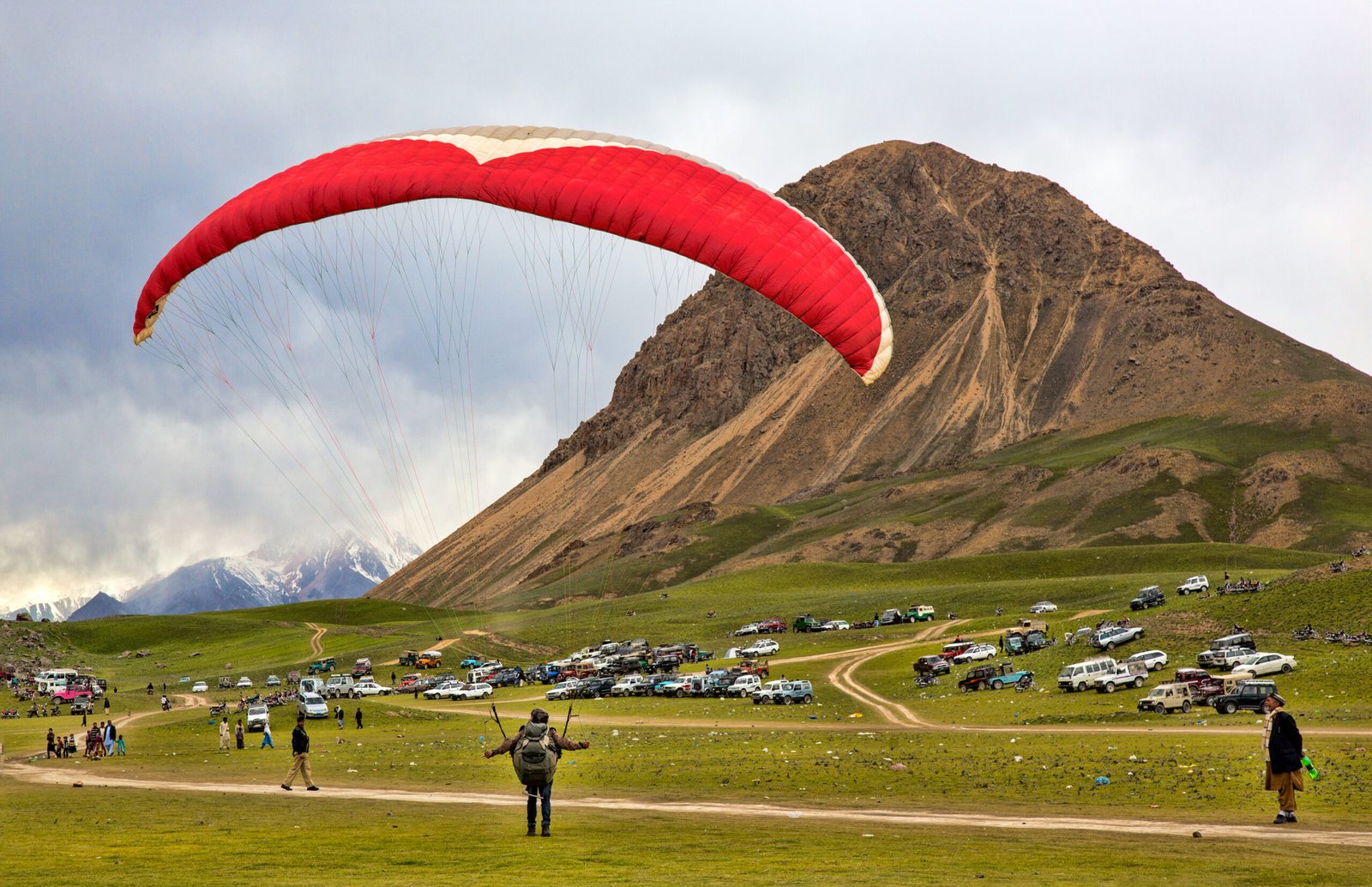
Many of your buyers first came to Gilgit-Baltistan as travellers, so make it easy for them to plan a return trip.
What mistakes lose buyers?
Learn these before you list, because each one costs trust that is hard to win back.
A fake certificate ends a business. Never show a certificate that is not real, and never borrow another stone’s report. Buyers check report numbers with the lab.
Stock photos lose buyers. Never use a photo of a different stone, or a photo from the internet, to sell yours. The buyer will compare the photo with the parcel, and the difference will be obvious.
A photo with no scale misleads buyers. Always show the size, with a coin or a ruler, and state the weight in carats.
No certificate on an expensive stone loses the sale. A buyer will not pay a high price on trust alone. Certify the best stones first.
Underpricing makes experienced buyers suspicious. Price fairly, and explain the price with the certificate and the description beside it.
Promising investment returns is dishonest. Never tell a buyer a stone will rise in value. Sell what the stone is, not what it might become.
Selling the same stone twice ends the business. Keep one stock record, and remove a stone from every listing the moment it sells anywhere.
Your first month, week by week
| Week | Do this | Done when |
|---|---|---|
| Week 1 | Pick your five best stones, weigh each one in carats, and send the two most valuable for a lab report | You hold two reports with numbers you can check |
| Week 2 | Photograph the five stones with one setup, natural light, several angles, a coin for scale, and a short video of each | Every stone has photos and a video that show its true colour |
| Week 3 | Open one sales channel, list the five stones with full descriptions, and post your first story video about where one stone came from | Five live listings, each with weight, treatment, price in dollars and your return policy |
| Week 4 | Answer every enquiry the same day, offer a video call to serious buyers, and visit your bank to confirm the payment and export papers for your first sale | You know exactly how a buyer pays you and how the stone leaves Pakistan |
Start with certification, then honest photos, then a sales channel. Get a lab report for your best stones, photograph each one in natural light with a coin for scale, and list it on Instagram, Etsy, eBay or your own website with the weight in carats, the treatment and the price in dollars.
Aquamarine from Nagar, Hunza and Shigar is the region’s signature stone and the easiest to sell. Tourmaline, topaz, garnet, ruby and spinel also sell well. Collectors pay most for large clean crystals on matrix, while jewellers pay most for cut stones with good colour and clarity.
No, but you need one for every expensive stone. A lab report from GIA, IGI, GRS, SSEF or Gubelin proves the stone is what you say it is, and buyers pay more for that proof. Start with your most valuable stones, and say plainly on each listing whether it carries a report or not.
PayPal is not available in Pakistan, and Stripe does not support Pakistani businesses. Use Payoneer, Wise sent by the client, or a direct SWIFT bank transfer, and confirm the route with your bank first. Export proceeds must come through normal banking channels with the Form-E procedure.
Exports run under the Import and Export of Precious Metals Jewellery and Gemstones Order, 2013, through the Entrustment Scheme or the Self-Consignment Scheme, with TDAP registration and the Form-E procedure. Proceeds must be realised within 120 days. A ban imposed in May 2025 was lifted in November 2025 with stricter documentation rules.
Work out your true cost first: the rough, the cutting, the lab report, packaging, the platform fee, shipping and insurance. Then add your margin and price in US dollars. Check what similar stones actually sold for, not what they were listed for, and never promise a buyer the price will rise.
Want help marketing your stones?
Rakalogics is a marketing agency that runs Meta and Google ads and builds online stores for local businesses. If you want help reaching international buyers for your stones, visit Rakalogics to see what the agency does.